Below is an excerpt from the novel All This by Chance by Vincent O’Sullivan, which is shortlisted for this year’s Acorn Foundation Fiction Prize at the Ockham New Zealand Book Awards. 

*                    *                    *

About the writer:

Vincent O’Sullivan is the author of two previous novels — Let the River Stand, which won the 1994 Montana NZ Book Award for fiction, and Believers to the Bright Coast, which was shortlisted for the 2001 Tasmania Pacific Region Prize — and many plays and collections of short stories and poems. His most recent collection of short fiction is The Families. His work has been much awarded and he was made a Distinguished Companion of the New Zealand Order of Merit in the 2000 Queen’s birthday honours. Vincent O’Sullivan was the New Zealand poet laureate 2013–2015. He lives in Dunedin.

About the book:

Esther’s grandparents first meet at a church dance in London in 1947. Stephen, a shy young Kiwi, has left to practise pharmacy on the other side of the world. Eva has grown up English, with no memory of the Jewish family who sent their little girl to safety. When the couple emigrate, the peace they seek in New Zealand cannot overcome the past they have left behind.

Following the lives of Eva, her daughter Lisa and her granddaughter Esther, All This by Chance is a moving multigenerational family saga about the legacy of the Holocaust and the burden of secrets never shared, by one of New Zealand’s finest writers.

‘In part All This By Chance tells us much about how different generations of young New Zealanders have interpreted the big world called Overseas. Stephen in the 1940s, Lisa in the 1960s and a granddaughter in the 2000s react to Europe in very different ways.

More essential, though, is what the novel says about the hold that the past has over us, how the past shapes us whether we like it or not, and how lethal it can be to pretend uncomfortable parts of the past never happened. This novel is about time, remembrance and the persistence of family traits, even when they have been ignored.

And it is at least possible that the title “All This By Chance” is ironical. Various characters in the novel hold firm religious beliefs, which do not see blind chance as shaping us, while others have an agnostic looseness that does not speculate on such matters. O’Sullivan’s prose is densely detailed, picking up fine nuances in the culture of each age and generation. It is as outstanding a novel as has been produced in this country in the last 10 years.’

(From a review by Nicolas Reid on Stuff.co.nz, March 2018)


(Victoria University Press)


Through the night there is rain that makes her think again of back home, its soft beating against the window in her room, the runnels of water on the pane when she draws back the curtain and the street light level with her wobbles behind the moving glass. In the morning the rain is light, almost a kind of veiling Englishness. Then later the sky clears, the heat is sudden, the streets steam: it is summer again of the kind that tourists travel for.
……..Esther checks her maps, the notes she carries in her folder, and in twenty minutes she has crossed Rynek and the smaller square that leads from it with banks of flowers outside shops, restaurants as everywhere, groups of young people here for a youth conference assembling under flags. She takes a narrow alley and is away from the tourist centre. She follows a broad road and crosses tramlines, finds other names she checks on her maps, is struck by the occasional ornate and grimed old commercial buildings, among the drab post-war office blocks, much as they might be in any city. Soon she stands before a high tiled building in quiet curving Włodkowica Street. She recognises it from the photograph in her guidebook. She passes through a short vaulted archway and finds herself in a large courtyard, the windows of several storeys rising on three sides, and facing her on the fourth, the façade of the synagogue, the tall flat white columns against painted stone, classical Greek detail flowering at their tops. She feels a quick stab of disappointment. There is nothing obviously religious, Jewish, about the building she looks at. It is like a concert hall, what she has waited to see.
……..The White Stork, that oddest of names for a synagogue, a long time back the name of a drinking house that stood there first, so there is no surprise in that. A pub, a place to stay, nothing to do with them, until the families of whom her own must have been one were rich enough to buy the land, to build in a style that showed their wealth, their education, their being like anyone else apart from this, apart from their wanting their God to have a place which no one would doubt belonged to them. To decorate it with fine galleries, with the white-and-gold patterns and designs and elegance that made it worthy of Him, and themselves worthy of it. This was the nineteenth century, this was Germany, the people she came from were part of what sustained the fineness of both. This was not a place where peasants, where mutterers in Yiddish or local dialects came to declare descent, but an educated people were proud to be seen. She had heard as much for years from David and now saw why his version was another world. But the building is a shell of what it may have been, expanses of raw distempered walls as she enters its big spaces, the derelict rooms, where workmen seem in the process of attempting to bring them back from its general sense of neglect, loss, decay. The rough concrete tubs, the tangle of pipes, as she walks down to the female baths. Back on ground level she makes out the dim high gallery where the women would have sat, the glaring emptiness of the windows whose patterned glass they would have faced. But the stairs she might take up to it are closed off with wooden barriers. The dull reality that this is what the past must first journey through, before it is retrieved. And her accepting too as she reads a summary account of where she stands, the further scouring disappointment that her family, those at least that she knows the names for, would not have attended services here in any case but have gone to the larger Reformed synagogue streets away, so grand and handsome, so certain and established, destroyed the night of the other Jewish fires across the country they once were part of. Yet to say so much as ‘was’ is surely to say it in the present: the past is here or not at all.
……..‘They were significant people.’ How she remembered her father saying that. And the quick snap of her irritation as a teenager, her demanding why he had to drag his bourgeois snobbery even into this, as if it mattered a damn whether a great-uncle as he claimed was a famous scholar? She had shouted what difference would it make if he couldn’t read a word or was fucking Einstein? When they came to get him? When he died wherever it was they decided he would die? The hurt in David’s eyes as he took in what she said, and the words she chose to say it, and his own shame, the shame finally of everything. But telling her only, ‘You disappoint me, Esther.’ And the worst then she could think of to hurl to him, that he must disappoint them, did he ever think of that?
……..She walks out again into the open air, to the walls rising on three sides of her, the lift of the synagogue across from where she stands. It no longer bothers her, the confusion of one imagined building in mind, the reality of another in front of her. Her accepting, she thinks, that is what must define me. The mess of it all is what I am. To be here now, in the square of the courtyard that struck her as so like the bottom of a well, rising several storeys to that other square of now sharp blue sky. Where they had been instructed to assemble, those who in absurd optimism, in incomprehension, still remained in the city to be rounded up. They most certainly were here for that. To stand for further instructions and watch the faces of the those they had known for a lifetime, their standing against the ones who mattered to them most, the comforted, the comforting, as they waited. For orders. How that word mines beneath all others, hollows the pit where everything in its implacable force descends. She looks at the overlap of one cobblestone against another, the window ledges exactly as they must have seen them, the rise of the flat pillars against the painted wall. They, the family, their hands holding, touching, comforting, she supposes. Or perhaps not. She had read how the older ones at times like this, the devout, the ones with certainty of more than fear, already would be moving their lips, speaking the words louder even than that, and the guards amused at their presumption, the joke that prayer might slow so much as a child’s shuffle on the march that would soon begin to the rail lines and the station. Once the timetables were set in stone. Esther’s own lips move as she says the names. Chaim. Lisabet. Sarah. Hannah. Ephraim. Sol. She closes her eyes, leans her head back against the wall. Like saying a line of poetry. A prayer. She says them over again. There is nothing more she can do. The closest she will be with them.


© Vincent O’Sullivan, 2018, published in All This by Chance, Victoria University Press.

'I started to feel very guilty, as though I’d perpetrated a crime, a rort' - Stephanie Johnson

Read more

Below is an excerpt from the memoir Memory Pieces by Maurice Gee, which is shortlisted for this year’s Royal Society Te Apārangi Award for General Non Fiction at the Ockham New Zealand Book Awards. 

           *                    *                    *


About the writer:

Maurice Gee is New Zealand’s leading living writer. He was born in 1931, grew up in Henderson, and now lives in Nelson. His landmark novel Plumb (1978) was recently voted by writers and critics the best prize-winning New Zealand book of the last 50 years.

About the book:

Memory Pieces is an intimate and evocative memoir in three parts.

‘Double Unit’ tells the story of Maurice Gee’s parents – Lyndahl Chapple Gee, a talented writer who for reasons that become clear never went on with a writing career, and Len Gee, a boxer, builder, and man’s man.

‘Blind Road’ is Gee’s story up to the age of eighteen, when his apprenticeship as a writer began.

‘Running on the Stairs’ tells the story of Margaretha Garden, beginning in 1940, the year of her birth, when she travelled with her mother Greta from Nazi-sympathising Sweden to New Zealand, through to her meeting Maurice Gee when they were working together in the Alexander Turnbull Library in 1967.

“Maurice’s story…captures time and place brilliantly. It made me think– as I frequently do – that we need to get our family stories told before those who can provide much-needed facts and anecdotes are unable to do so….There’s a great deal in this book to reflect on, and in which to find similarities of upbringing, belief and experience. I found it a fascinating read – it’s sometimes laugh-out-loud funny, sometimes drily humorous and often extremely touching.”

(From a review by Sue Esterman for The Reader, October 2018)


(Victoria University Press)


TEN


The other person at Peacehaven was Uncle Dick. He was Mum’s younger brother and the second youngest of the Chapple children. His real name, Maurice, was never used, so unlike my brother Aynsley I never had to be Junior. All the same I knew I was named after him and that we were meant to take an interest in each other. He was a quiet man, not often seen, and although usually friendly had an uncertain temper. He chased us with a leather belt for some piece of mischief and we hid behind Grandma’s long skirts while she spread her arms and kept him away. During the Depression he had worked on the Chapple property – food from the garden, milk from the cow – or had laboured on relief. His younger brother Aynsley left for America and Dick was left alone with his parents. He was a balding red-haired man who smoked a pipe. He always seemed to be in the distance, up the paddock or at the bottom of the garden, turning away, or else was resting or reading in the shed where he slept.
……..The bond that was supposed to exist between us became real only once. I must have been seven or eight. Uncle Dick took me to a rugby match. Saturday afternoon: we walked along Millbrook Road and over the creek to Sunnyvale Station, where we caught the train to Kingsland, the station beside Eden Park. It was a big match, Auckland playing Taranaki, and I was excited. I’d only seen rugby (footy, we called it) played at school, where it was mainly the big kids barging and the little kids getting scragged. We found a seat on the terraces and watched two high school teams play a curtain-raiser. Uncle Dick was happy and easy, smoking his pipe. ‘Good boy,’ he said expertly when someone on the field ran with the ball. I wasn’t sure what was happening, but enjoyed the sudden roaring of the crowd and the hollowing into silence as it died away.
……..The teams for the big match trotted out of the cave under the grandstand – it was breathtaking the way they appeared, big men in hooped jerseys, light-footed on the grass, spreading out and taking positions that must mean something. I don’t know who won. I remember only one moment, in the second half, when the forwards heaved at each other in a scrum and the ball came out to the Auckland halfback, who passed, long and hard, to his first five-eighth, and suddenly, from nowhere, someone else appeared, the blond-haired Auckland winger, Jack Dunn, taking the ball before it reached his team-mate and running with no one to touch him, running into a huge space; almost, it seemed to me, running into the sky. I still find it lovely. Jack Dunn ran fifty yards before he was tackled. Then we had to leave to catch our train.
……..It was getting dark by the time we reached Sunnyvale Station. We walked along Millbrook Road to Peacehaven, Dick smoking another pipe. He stopped me under a row of pine trees black against the sky. ‘Listen,’ he said. I heard the trees breathing. ‘Pine trees are never quiet,’ he said.
……..Mum and Dad were waiting at Peacehaven. I told them about Jack Dunn, and how we’d seen a curtain-raiser between King’s College and – I stopped. The name on the scoreboard had puzzled me all afternoon – ‘And,’ I said, ‘Scared Heart.’ They laughed and I didn’t mind. I was filled with the excitement and pleasure of the afternoon, and Jack Dunn running into a space he had made out of nothing. Uncle Dick had given me ‘footy’ and I’ve loved the game ever since.
……..Dick stayed on at Peacehaven until, in 1940, he married a woman called Christine Jones. My mother tried to conceal her disappointment that a favourite brother had married a girl she found – I heard her say it – coarse. ‘Common’ must also have been in her mind. Christine seemed all right to me – friendly, cheerful, except when we found her and Dick, in their courting days, lying on a blanket in the orchard. They were getting ready to ‘do it’, my older brother said, but even this near-encounter with the physical side of love failed to persuade me that ‘it’ was something grown-ups really did.
……..Dick and Christine had a child, then Dick was conscripted and went to the war. A second child was born when he came back. Several years later the marriage broke down. Christine set up house with her newly widowed brother-in-law, Phil Reanney, and Dick, in my mother’s words, ‘went bush’. I met him only once again, in the early 1980s. He was living in a tiny flat in Te Kūiti, where he worked as a council handyman. I had written to him, thanking him for his kindness to me when I was a boy and reminding him of our afternoon at the rugby match. He wrote back inviting me to call. He had some books he wanted to give me. They might be valuable, he said. I did not recognise him when my bus pulled in beside the Te Kūiti railway station; then the shrunken old man with the walking stick and pipe and grey beard turned into Uncle Dick. We did not have much to say to each other as he took me to his flat just down the street. He sat me at the kitchen table and brought out the books. I’d hoped they might be rare and that I could sell them for him, but they were a two-volume Cassell’s History of English Literature and a couple of similar things. In size and condition they reminded me of my old Chums Annual. I thanked Dick and said I’d be happy to take them away, and he was pleased.
……..‘We’d better get some tea,’ he said. We went along Te Kūiti’s main street to a milkbar, where he bought two meat pies from the warmer. Back at the flat we drank a bottle of beer and ate the pies with tomato sauce. He had a television set and we watched for a while, then talked about Peacehaven and his brothers and sisters and my parents. He smoked his pipe and coughed a lot and spat into an old baked beans tin he kept beside him on a chair. My visit pleased him but I saw he was a loner and that he didn’t want too much of it. At nine o’clock he said it was time for bed, and he dragged an old mattress from the washhouse and laid it on the floor by the table. He gave me a sheet and two blankets, and I slept there with lumps of kapok pressing in my back. In the morning a breakfast of Weetbix. We tied the books in a winebox, he came with me to the bus, we shook hands and he stood with his stick raised as I went away. Maurice Chapple, the uncle I was named after. My visit made both of us happy. I never saw him again and he died in 1989.


© Maurice Gee, 2018, published in Memory Pieces, Victoria University Press.

'NZ literature is such a vast and varied thing' - Pip Adam

Read more

Below is an excerpt from the novel This Mortal Boy by Fiona Kidman, which won this year’s Acorn Foundation Fiction Prize at the Ockham New Zealand Book Awards. 

*                    *                    *

About the writer:

Fiona Kidman has published over 30 books, including novels, poetry, non-fiction and a play. She has worked as a librarian, radio producer and critic, and as a scriptwriter for radio, television and film. The New Zealand Listener wrote: ‘In her craft and her storytelling and in her compassionate gutsy tough expression of female experience, she is the best we have.’

She has been the recipient of numerous awards and fellowships; in more recent years The Captive Wife was runner-up for the Deutz Medal for Fiction and was joint-winner of the Readers’ Choice Award in the 2006 Montana New Zealand Book Awards, and her short story collection The Trouble with Fire was shortlisted for both the NZ Post Book Awards and the Frank O’Connor Short Story Award.

She was created a Dame (DNZM) in 1998 in recognition of her contribution to literature, and more recently a Chevalier de l’Ordre des Arts et des Lettres and a Chevalier of the French Legion of Honour. ‘We cannot talk about writing in New Zealand without acknowledging her,’ wrote New Zealand Books. ‘Kidman’s accessible prose and the way she shows (mainly) women grappling to escape from restricting social pressures has guaranteed her a permanent place in our fiction.’

About the book:

Albert Black, known as the ‘jukebox killer’, was only twenty when he was convicted of murdering another young man in a fight at a milk bar in Auckland on 26 July 1955. His crime fuelled growing moral panic about teenagers, and he was to hang less than five months later, the second-to-last person to be executed in New Zealand.

But what really happened? Was this a love crime, was it a sign of juvenile delinquency? Or was this dark episode in our recent history more about our society’s reaction to outsiders?

Black’s final words, as the hangman covered his head, were, ‘I wish you all a merry Christmas, gentlemen, and a prosperous New Year.’ This is his story.

‘Kidman delivers rich characterisation, not just from the viewpoint of Paddy Black, but of many others associated with his short life and sudden end. . . . This Mortal Boy doesn’t just take us into the courtroom, or recreate the main events that led to two deaths, but goes much broader and deeper. Kidman gives us a textured, holistic view on a life that was more than a symbol, or an entry in a history book. . . . While we’re taken through varying times and perspectives, Kidman keeps everything flowing beautifully. It never feels ‘jumpy’ or disjointed, instead it’s a story that builds in depth and texture. A harrowing and haunting tale that is full of humanity. . . . This is an exquisitely written novel from a master storyteller; an important and fascinating read.’

(From a review for Kiwi Crime blog by Craig Sisterson, July 2018)


(Penguin Random House)


Chapter 7

1955. The lawyer for the prosecution is a sleek, fair man named Gerald Timms. He isn’t tall, but he has a way of balancing forward on the arched balls of his feet and pushing his head up and down so that he appears to occupy the space of a much larger man. Beneath his gown he is dressed in a charcoal-grey suit with a snow-white handkerchief in his breast pocket. It is October, just two years since Albert Black came to live in New Zealand, almost to the day.
……..A girl stands in the witness box. She is wearing a black suit and a black beret slanted over dark and lustrous hair tumbling past her shoulders. She glances briefly at the man in the dock; their eyes lock for an instant, then she drops hers, straightening herself.
……..‘Miss Zilich,’ Timms began. ‘Will you please tell us your name, address and occupation.’
……..‘My name is Rita Zilich,’she begins. ‘I’m sixteen years old. I live with my parents in Anglesea Street, Ponsonby. I’m a shorthand typist. I passed my exams with top marks in School Certificate, you know. At my school, that is.’ She turns to a youth seated in the gallery and gives a little wave. He’s dressed in tight black trousers and a red windbreaker that is unzipped all the way down the front, showing a white tee-shirt. He waggles one finger at her.
……..‘Miss Zilich,’ the judge says sharply.
……..‘Oh sorry,’ she murmurs, and composes her face into the semblance of great attention.
……..‘Yes, thank you, Miss Zilich,’ Timms says. ‘That’s very good. If you could just tell us about what happened on the night of Monday, July twenty-fifth of this year, it would be a help. You knew the accused?’
……..‘Oh yes, you couldn’t help but notice him. He’s pretty goodlooking, if you go in for those kind of looks.’ In spite of herself, she throws a cool appraising glance in the direction of Albert.
……..Timms breathes deeply and makes a steeple with his fingers. ‘Very good. I’d like you to tell the court in your own words what happened. How long you knew him, whether you knew the deceased, what occurred on the night in question.’
……..‘I’ve written it all down in shorthand.’
……..‘Just tell the story, Miss Zilich, never mind the notes.’
……..Rita flicks her mane of hair back from where it has encroached across her shoulder, and launches into her account, the witness box becoming her stage. ‘I knew the accused for about three months before the twenty-fifth of July. I knew him as Paddy, that was the only name I’d heard. I knew the other guy too, Alan Jacques, only of course that’s not what we called him. He was Johnny McBride. But I’d only known him about, oh, maybe two weeks. I wasn’t keeping company with either of them. Actually, I’d been to the pictures on the night in question. I’d been to see Calamity Jane, you know the one where Doris Day sings “My Secret Love”, it’s an amazing picture. And I’m crazy about the song.’
……..‘Yes, of course. We appreciate your good taste, Miss Zilich. But you went to Ye Olde Barn cafe after you’d been to the pictures?’
……..‘Yes, this was about seven thirty, I suppose. I didn’t mean to, it was just that I was walking past, planning to go home, and there was a crowd there. Somebody called out, I don’t know whether it was Paddy or Johnny, but I think it was one of them, and said come on over. So I went over, and Paddy said come on up to the house, we’re having a party tonight. I knew where he meant, it was at 105 Wellesley Street. I’d been to a party there before. Well, I thought, why not? I hadn’t arranged to meet Paddy or anything like that, but it sounded like a bit of fun. Actually, Paddy’s girlfriend was in the cafe, now I come to think of it. Bessie Marsh, that is, so obviously I didn’t mean to meet Paddy. I shouldn’t think she’s his girlfriend now, not now he’s gone and stabbed Johnny. He wouldn’t be mine, I can tell you that.’
……..‘So you went on to the party instead of going home?’
……..‘Well. Not exactly.’
……..‘Why not exactly?’
……..‘I’d told my parents I’d be home. Well, they’re not so keen on me going to parties. So I went home, and when they’d gone to bed I hopped out the window and went back to town. This was about quarter past ten.’
……..‘So what happened at the party?’
……..‘Well, Johnny and Paddy were both there, and Bessie, and one of my girlfriends called Stella, and a whole bunch of others, I guess about ten altogether at that stage, mostly guys, you know. Someone was playing a guitar, everything seemed normal. A normal party, that is. You know?’
……..‘We’re happy that you’re enlightening us, Miss Zilich. Please go on.’
……..‘Well, Paddy was sober. And Johnny was sober, is about what I’d say. Then Bessie said she had to go home because she had exams or something early the next day. She’s a student of some kind, I think. She’d gone off to the library after I first saw her. I think Paddy went and collected her later on while I was off seeing my parents.’ ……..‘Misleading them?’
……..‘Um, yes.’
……..‘Never mind.’ Timms appears annoyed with himself.
……..‘Myself, I don’t have to be at work until nine, I’m a secretary at the Council, they have very regular hours. I mean, I wouldn’t start at eight unless I had to, but with my qualifications I can pick and choose. I got eighty-five per cent for typing, you know.’
……..‘Indeed.’ Timms was tapping his fingers on a folder, his eyes willing her to get to the point.
……..‘Well then, I think Paddy must have walked Bessie home, or to a taxi, I don’t really know, but he was gone a while, and when he came back he asked me to sleep with him that night. At first I said no, but then he asked me again, and I said I’d think about it. I was just putting him off, of course, trying to be polite.’
……..‘But he thought you meant it?’
……..Rita hesitates, pushing a strand of hair away from her face as it escapes from under the beret. ‘I didn’t want to give offence. I said it in a nice way.’
……..‘And you say the defendant was sober?’
……..‘I’d say so. Well, I didn’t know what he was like when he was drunk.’


© Fiona Kidman, 2018, published in This Mortal Boy, Penguin Random House.

'Novels stand outside time, with their narrative structure of beginning, middle and end. They outlast politics, which are by nature ephemeral, swift and changeable and can quickly become invisible, detectable only to the skilled eye. ' - Fiona Farrell

Read more

Below is an excerpt from the novel The New Ships by Kate Duignan, which is shortlisted for this year’s Acorn Foundation Fiction Prize at the Ockham New Zealand Book Awards. 

*                    *                    *

About the writer:

Kate Duignan’s first novel, Breakwater (2001), was published by Victoria University Press. She has published in Landfall and Sport, and has been anthologised in The Penguin Book of Contemporary New Zealand Short Stories (2009) and The Auckland University Press Anthology of New Zealand Literature (2012). Kate received the Louis Johnson New Writer’s Bursary in 2002, and held the Robert Burns Fellowship at Otago University in 2004.  Kate lives in the Aro Valley, Wellington, with her partner and children.

About the book:

Peter Collie is adrift in the wake of his wife’s death. His attempts to understand the turn his life has taken lead him back to the past, to dismaying events on an Amsterdam houseboat in the seventies, returning to New Zealand and meeting Moira, an amateur painter who carried secrets of her own, and to a trip to Europe years later with his family. An unexpected revelation forces Peter to navigate anew his roles as a husband, father and son.

Set in Wellington after the fall of the Twin Towers, and traversing London, Europe, the Indian subcontinent, The New Ships is a mesmerising book of blood-ties that stretch across borders. A novel of acute moral choices, it is a rich and compelling meditation on what it means to act, or to fail to act.

‘What Duignan has crafted in The New Ships is a saga.  Dense with admirably intelligent references.  Thoroughgoing in it’s trek through the hinterlands of grief.  Imaginative and wide. Thick with junctions and intersections.  You keenly feel the weight of generations, the sense that this story is only a sliver or snapshot of a much larger ancestry that spills over the borders of these humble islands into the wider world.’
 (From a review by James Robins in New Zealand Books)


(Victoria University Press)


Excerpt from Chapter One


Afterwards, I slept badly. The wind got up, and the branches of the unpruned ngaio scraped against the glass sliders. In the middle of the night, I went down to the study and found the golden book, a foot high and heavy as a box of files. I spread it open on the desk. Daphnis and Chloe. It was supposed to be a gift. In the end I kept it, and brought it back to New Zealand with me. The book is easily the most valuable object in the house, although a burglar would be unlikely to notice it.
……..The text is in French. In 1971 I learnt whole phrases by heart to recite to Geneviève. I can’t work out the sentences anymore. Chagall’s lithographs tell the story: the boats beaching on the shore, lovers washing in the shrine of the nymphs, an altar, spring wine and bird-snaring. Towards the end, a double plate awash in red: a feast is laid out for all the citizens of Mytilene, where the girl is at last recognised by her high-born father, who had exposed her on a hillside as an infant. The final plate shows the wedding night, bride and groom on one side of the door, the villagers pressed against it, lamps swung high. It’s a story of comic innocence, about a boy who didn’t know how to make love to a girl. The prints are housed in a museum just outside of Mytilene, on Lesbos. It would be something to see those prints, it really would. It would be worth going to Rob’s for that alone. Moira would love it.
……..But Moira’s dead.
……..And now this waitress, serving tables where Chagall painted. This girl who looks like Geneviève, who must, ipso facto, look like Abigail.
……..Abigail was my daughter, born when I was twenty and Geneviève a year older. She was born on the Amstel river on a houseboat called the Lychorida, a former coal barge owned by a secondhand bookseller. Rob, Clare, Geneviève and I had spent an entire Amsterdam autumn sanding, hammering and caulking, and in December, we moved in.
……..Abigail arrived in the middle of a storm. The boat pulled on the mooring ropes and rocked on the currents. It was difficult, as births can be, but nothing went wrong and she was perfectly formed.
……..She died at six weeks old, at Geneviève’s father’s home near Lyon. I was in Amsterdam at the time. The cause of death, according to the doctor’s certificate, was acute septicaemia following on from pneumonia. The certificate has a date and a municipal seal, and is signed with an elaborate flourish by one Docteur Gabriel Barreau. It’s a flimsy, xeroxed copy, but it looks official enough. For seventeen years I had no reason to question its veracity. The last time I saw Geneviève in Lyon she told me things that sent me back to stare fixedly at that certificate time and time again. It has now been eleven years since that meeting, and for all of those years I have found myself paralysed, neither able to seek out answers nor to put the questions from my mind.

*

When I step out of the lift, the new receptionist gives me the kind of startled half-smile that suggests she knows I belong here in spite of my jeans and Nikes, that she recognises my face but hasn’t got a clue what my name is.
……..‘Afternoon,’ I say.
……..When I fish in my pocket I realise I’ve left my swipe card in the car. I mime a little hand show and gesture to the glass doors.
……..‘Could you let me through, Rebecca?’
……..She looks sceptical. It’s six weeks now since the towers came down. High security everywhere.
………
‘Peter Collie,’ I say firmly. ‘I’m going through to see Richard.’
……..There’s a subtle eye-flick to the list beside the phone, an apologetic smile, and she reaches for the button under her desk. The lock on the glass door makes a soft pop, and I’m through.
……..To be fair to the receptionist, she hasn’t seen me here often. There have been weeks and months of absence, half-days, quarter-days at best, coming in late at night for a scrambling two hours after Moira fell asleep, or sitting on the couch beside her with the laptop warm against my thighs, Pride and Prejudice running on the TV while I fire off the emails needed to keep it all at bay for another twenty-four hours, another week. Keep it in a holding pattern, a hundred balls in the air, flights waiting to touch down, a flock of irritations, nothing that I could attend to or bother with, nothing that mattered. Now nine months since the oncologist showed us where the cells had metastasized to Moira’s femur, sternum, skull and liver, four months since we called a halt to treatments, one month after her funeral, I am, it seems, ready to get back to it.


Richard, the firm’s managing partner, is in his office. I go right through and stand beside the window. The harbour is a pattern of erasures and smudges.
……..‘Peter.’ Richard’s voice and eyes brim with the apparent pleasure of seeing me. ‘I didn’t know you were in the building.’
……..‘Just briefly,’ I say. ‘Dropping in.’
……..He tilts his head on one side and considers for a moment.
……..‘I’ve been in Queenstown all week,’ he says. ‘Got back last night.’
……..‘How did it go?’
……..‘Gus made me try white water rafting. An afternoon of pure terror.’
……..We’re laughing. How well he creates ease, easiness.
……..‘And you, Peter. You’re looking well.’
……..He keeps his eyes steady on me, his gaze doctor-like, wise, concerned, diagnostic. I’m almot ten years older than him, but I feel fathered: there’s no other word for how it feels to have the full beam of Richard’s attention swung round onto me.
……..‘I’ve lost track. You’ve been with your parents in Wanganui?’
……..‘No,’ I say. ‘Aaron flies out tonight. I’ll head up after that.’
……..He closes the door, and leads me to the two red wing- chairs at the coffee table by the glass. A Hotere hangs on the wall opposite, a treasure of the firm’s which has migrated around the walls over the years, from reception, to boardroom, to hallway. It’s startling all over again to see it here in Richard’s office and I wonder just how he managed to comandeer it for himself, the fat black cross, the white text which I’ve mentally fiddled with through many a long partnership meeting: LE PAPE EST MORT. Le pape, pope, papa. Mort, mortal, moribund, from the Latin, mortalis, one destined to die, brotos in the Greek. Below, a text in Mäori: E hinga atu ana he tetekura e ara mai ana he tetekura.
……..
Kura, which might mean school? I can’t begin to unravel it. The painting brings back the taste of peppermints, the smell of coffee served at partnership meetings, the jangling silver bracelets of our secretary Natasha typing up the minutes, and gazing out at the blue, or silver, or white-whipped plane of the harbour when the discussions got bogged down.
……..‘How’s the house going?’
……..Richard hesitates, gauging whether I really want the switch in conversation.
……..‘Bit by bit,’ he says. ‘We’ve found a blacksmith in Otaki. Can you believe it? He’s working with us on designs for the gates. We’re deciding whether to go for a plain look, or a William Morris-y kind of thing, more the late Victorian style. Excuse the technical detail.’ He gives a mock grimace. ‘I become very boring when you get me started on all this.’
……..Richard and his partner have been renovating their Mount Victoria villa for the past five years. They have both the perfectionism and the substantial income necessary for the task.
……..‘It’s much fiddlier to do the Morris, of course.’ His brow frets up, the variables of the decision clearly weighty upon him. ‘I would prefer it, if he can pull it off.’
……..‘And is he, do you think? Up to it?’
……..‘Oh, look, the man’s highly skilled. He has his own forge.’
……..‘Do they deliver by horse and cart too?’
……..Richard laughs gently. Out on the water the rain is gathering, soft funnels of grey passing over the island and Oriental Bay.
……..‘You know, I’ve never been to such a large funeral,’ Richard says now. He stood in the back row, along with a handful of other colleagues. Throngs of people showed up. Moira’s choir, who sang ‘The Lord is My Shepherd’ and ‘Abide with Me’. Her Tuesday lunch girls. Aaron’s friends from school days. People I didn’t expect. Aaron’s fifth-form music teacher, a tall Indian man, his hair starting to silver now. I spotted him in the back row standing beside his sister Sangeeta, a childhood friend of Moira’s. Sangeeta raised her fingers in a tiny salutation as I walked back down the aisle, my left arm taking the weight of the casket. When ‘Amazing Grace’ struck up, the church boomed with sound. I once was lost but now am found.
……..‘Yes,’ I say. ‘It took us by surprise.’
……..‘That mother-in-law of yours,’ he says. ‘Quite a woman. You know what they say in Ireland? She’d eat you without salt.’
……..Claudia gave a eulogy that, as throughout Moira’s life, put herself in rather more important a light than her daughter. She wore flowing blacks and a wide-brimmed black straw hat. I alternated between bitterness and relief at the way she took over as mourner-in-chief. She got her High Anglican service, with the Order for the Burial of the Dead, and I gave up on my idea to have the choir sing something from Mozart’s Requiem, which Moira loved. I did put my foot down about her coffin outfit, smuggling her favourite floral dress into the funeral home after a set of devious conversations with the funeral director. Her mother wanted her in a tailored suit, and although I wondered what kind of stupid man would get between mother and daughter on the matter of clothes, I couldn’t lose this one last battle. Moira and Claudia, when at their worst, would get locked into a kind of mutual stubbornness that onlookers could only shake their heads at. Moira was my wife though, and I was almost always on her side. And she did hate suits.
……..I’d seen Claudia at the tail-end of that long day, sitting in her armchair, the tide of visitors gone out, her youngest daughter fixing a cup of tea in the kitchen. Her face, without an audience, fell slack and grey, cheeks falling inward, her eyes sunk back into the expression of someone who is composed almost entirely of pain. She is seventy-eight. She’ll never recover.
……..‘She’s a softy, really,’ I say. ‘I’m not sure how she’s going to get through.’
……..Richard shakes his head. ‘Such a terrible time,’ he says. ‘For all of you.’
……..Over all these months and weeks I’ve never worked out how to respond to platitudes. But Richard says these ordinary things with such sincerity.
……..He leans forward. ‘How can we help?’
……..Now, from nowhere, I wish I could weep.
……..‘I’ve been cut a lot of slack already.’ My hands are waving in the air, a gesture I hope might distract him from my face, which I sense I’m not controlling well.
……..‘You’ve had a few weeks at home?’
……..‘Tidying,’ I shrug. ‘Sorting.’
……..Richard presses his lips together and puts his fingers into a steeple under his chin. ‘You’ve needed it, Peter,’ he says. ‘It’s not unreasonable. Although.’
……..Although.
……..A fizz erupts in my chest, and shoots down to my fingers. Both euphoria and the desire for weeping are cleaned out in a second. I’m a rabbit in a field, snapped to attention.
……..Richard runs his tongue along his teeth, under his lip.
……..‘I might mention. You’ve always brought in major clients.’ The steeple pulls apart. His palms come down flat on the glass table. ‘Look, we understand what you’ve been going through. But when you’re back on your feet, say, in the next month or two, it would be a good time to concentrate on’—his head gives a little weave, to and fro, to and fro—‘client maintenance. Keeping those big names happy.’
……..I lick my lips.
……..‘The bean counters are at it, then?’
……..It comes out rather more defensive than I intend.
……..‘When do they ever stop?’ He says it for laughs, but he looks pained, serious. ‘You’ve been through the most awful . . . well. But it’s been the best part of a year since we’ve had you at full capacity. That’s the difficulty. To be plain.’
……..On the wall, the painting seems to flicker. Tetekura, tetekura. I want to try the word aloud. Maybe it’s a transliteration? Tetekura, petticoat, petticoat, billygoat. What does it mean to Richard, to keep company with this painting all day? It’s possible he cherishes it as I do, that he has held conversations with it and that the work is a friend occupying part of his brain, history, heart. It’s equally possible that it’s a piece of morbid cultural real estate hanging on his wall.
……..Richard follows my gaze and cranes around in his chair.
……..‘What does it mean?’ I ask. ‘I’ve always wondered.’
……..‘Oh. When one chief falls, another rises to take his place.’
……..I consider this.
……..‘The king is dead,’ I say after a while. ‘Long live the king.’
……..‘Yes.’ Richard seems surprised. ‘I suppose so.’ The mottled beginning of a blush rises on his neck. ‘When are you back from your parents’?’
……..The answer I am supposed to give is Monday. Monday conveys what Richard needs to hear: resurrection, focus, loyalty.
……..My mother’s anxiety, my father’s heart.
……..‘Tuesday.’
……..I’d like to take a week. I’d like to spend long quiet days with my parents, and then come home via the Wairarapa, spend a night or two at our bach on the exposed, windblown tip of the coast at Castlepoint.
……..But Tuesday is a compromise. I’ll show my face here at the office, demonstrate focus. And I’ll make it a daytrip up to the bach on Wednesday. I want to show a real estate agent through, get the ball rolling on selling the place.
……..Richard nods.
……..‘You’re an asset, Peter. I’m on your side.’
……..Adrenaline again, chest to arm.
……..E hinga atu ana he tetekura e ara mai ana he tetekura. 


.
© Kate Duignan, 2018, published in The New Ships, Victoria University Press.


‘Inspiration is the name for a privileged kind of listening’ - David Howard

Read more

Below is an excerpt from the poetry collection Are Friends Electric? by Helen Heath, which won this year’s Mary and Peter Biggs Award for Poetry at the Ockham New Zealand Book Awards. 

*                     *                    *

About the poet:

Helen Heath’s first book, Graft, was published in 2012 and won the NZSA Jessie Mackay Best First Book for Poetry Award in 2013. It was also the first book of fiction or poetry to be shortlisted for the Royal Society of NZ Science Book Prize. She holds a PhD in creative writing from the International Institute of Modern Letters, Victoria University of Wellington.

About the book:

Are Friends Electric? offers a vivid and moving vision of a past, present and future mediated by technology. The first part of Helen Heath’s bold new collection is comprised largely of found poems which emerge from conversations about sex bots, people who feel an intimate love for bridges, fences and buildings, a meditation on Theo Jansen’s beautifully strange animal sculptures, and the lives of birds in cities.

A series of speculative poems further explores questions of how we incorporate technology into our lives and bodies. In these poems on grief, Heath asks how technology can keep us close with those we have lost. How might our experiences of grieving and remembering be altered?

‘As in her debut collection Graft, which was the first non-non-fiction work to be shortlisted for the Royal Society Science Book prize, Heath has shown how lightly and easily poetry can wear serious research….Heath’s collection casts an electric brightness over what it means to be human’

(From a Cordite review by Amy Brown, June 2018)


(Victoria University Press)


In Pripyat, the ghost city

circa 2014


Players travel around the exclusion zone, their avatars’
radiation steadily increasing, avoiding sickness by drinking
virtual vodka. Our guide says eagles eat Lenin in the pines,
cats sit atop deserted books.

The glass must be cleared by 2065 but for now we stalk over
broken scavengers, through dilapidated threats. Our tour
sneaks into the zone to bungee for a dare. We drink from the
city and swim in the Bison.

A guard is working on a video documentary about London
hallways. He also plans a radiation ghost of Gavin, whom
mushrooms hang from. A hospital stands near the broken
avatars.

Around the zone macabre potato gas steadily increases.
Avoid the tourist crunch with a Soviet-era virtual stroller.
Don’t roam for Babushka Rosalia; she crawled back under
the barbed exclusion like a wilderness. Her biggest wire now
is her tableaux of moose masks and broken children deserted
into wolves.


This poem takes as its starting point George Johnson’s article ‘The Nuclear Tourist’, National Geographic, October 2014. Selected text was randomised and reworked. ngm.nationalgeographic.com/2014/10/nuclear-tourism/johnson-text


© Helen Heath, 2018, published in Are Friends Electric?, Victoria University Press.

'My readers turn up...and I meet them as human beings, not sales statistics on a royalty statement.' Fleur Adcock

Read more

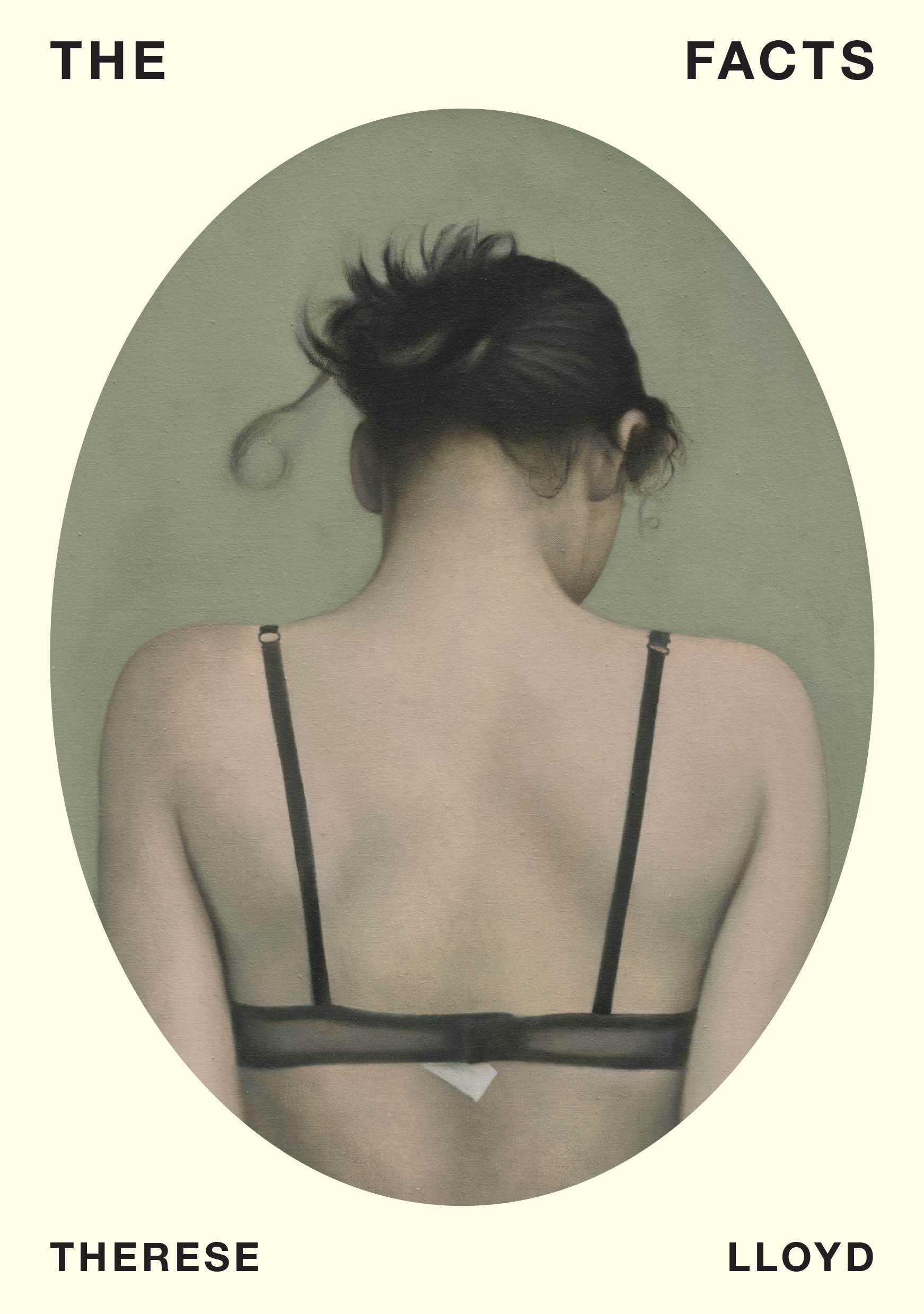
Below is an excerpt from the poetry collection The Facts by Therese Lloyd, which is shortlisted for this year’s Mary and Peter Biggs Award for Poetry at the Ockham New Zealand Book Awards. 

                                         *                     *                    *

About the poet:

Therese Lloyd’s poems have appeared in publications including Sport, Landfall, Hue & Cry, Jacket2, Metro, Turbine, and the AUP series New Zealand Poets in Performance. In 2007, having received a Schaeffer Fellowship, she spent a year attending the acclaimed Iowa Writer’s Workshop. In 2017, she completed a PhD at the International Institute of Modern Letters, in which she examined the role of ekphrasis in Canadian poet Anne Carson’s work. In 2018 Therese was Writer in Residence at the University of Waikato.


About the book:

This superb second book by the author of the acclaimed 2013 collection Other Animals traces the course of a failing marriage, while illuminating the ways in which art and poetry are essential to life. Deeply felt and lyrically arresting, The Facts offers poems that move with honesty and formal intelligence through matters of creativity and love.

The Facts is a searing meditation on loss and art, lodged in the mid-point between beginning and end. Time is stretched, distorted and folded: what was there and then what was not. It is a marriage, an affair, a hesitation, pohutakawa flowers, and a surface “eclipsed by shadow days of nosleep”. It leaves a burn mark….Lloyd writes her own poems with the same intensity as late-afternoon sun. The Facts is raw and “Fierce in its interrogation of the living” that explores the intersection between art and life.’

(From a review for Metro magazine by Toyah Webb, June 2018)


(Victoria University Press)


A Day, January


Yesterday.

That’s when it was, so let’s look at that.

In the muted sun on the sharp-shelled beach

all the broken pieces

yet nothing pierced the skin of my feet

the sharpness cancelled out

to a homogeneous rubble.

I walked home from the karakia

I walked a long way, the furthest I’ve been able to

since my spine decided to twist itself in the wrong direction.

Backs take the strain of the invisible things

the harder they are to see, the heavier they are to carry.


I walked towards the dot of my house

carrying that image

of eleven young men

trying to lift a tree trunk

out of the wet sand

of a beach that couldn’t care less.

That severed trunk wasn’t defiant, or obtuse.

It had no intention to kill when it stranded itself

unclenched from the ground by a storm. And the thing

that made it impossible for those men to move it,

the water, lapping, pulsing up around them as they heaved breathless

had already begun, a slow disposal, a gradual return.


© Therese Lloyd, 2018, published in The Facts, Victoria University Press.

'The thirty-five of us were in the country of dream-merchants, and strange things were bound to happen.' - Anne Kennedy

Read more

Below is an excerpt from the novel The Cage by Lloyd Jones, which is shortlisted for this year’s Acorn Foundation Fiction Prize at the Ockham New Zealand Book Awards. 

           *                    *                    *

About the writer:

Lloyd Jones is one of New Zealand’s most internationally successful contemporary writers. He has published essays and children’s books but his best known work is the phenomenally successful novel Mister Pip, which was shortlisted for the Man Booker Prize in 2007, won the Commonwealth Writers’ Prize and Montana Medal for Fiction in 2007 and the Kiriyama Writers’ Prize in 2008, and was later adapted as a motion picture. Among his other most decorated works are The Book of Fame, winner of numerous literary awards, Biografi, a New York Times Notable Book, Here at the End of the World We Learn to DancePaint Your Wife and Hand Me Down World.

About the book:

‘In The Cage, two half-starved, filthy men wearing scraps of salvaged clothing are cast adrift in a place they don’t know, without any identification. At first, they are known as The Strangers, then later as the Doctor and Mole, but we assume they’re migrants or refugees. They are taken into a small country hotel, where the sign reads “All welcome”, and given a room and food. They can’t or won’t say what has made them into strangers. Instead, they build a contraption, “a conundrum”, out of wire by way of explanation. This is then replicated, on a much larger scale, by the hotel owner and his mate. This becomes the cage of the book’s title and the strangers walk into it …

‘The tone is cool, detached and clinically observational. He wrote it in a rage, in indignation, and he wanted it to read “almost in the language of a report, because that would make it much more believable, and you can sort of suspend judgment … It’s the sort of language Kafka was expert at. You think about The Metamorphosis and the very first sentence: ‘As Gregor Samsa awoke one morning from uneasy dreams, he found himself transformed in his bed into a gigantic insect.’ You want to say, ‘Bullshit’, don’t you? But because it’s written in language that’s just like a report, you believe it.”’

(From an interview with Lloyd Jones – Michele Hewitson, New Zealand Listener, 22 March 2018)


 (Penguin Random House)


Chapter 12

The Indian summer continues, thank goodness. A last hooray when the sun gives its all before fading into memory.
……..The upstairs windows have been left open. The strangers gaze up at their source of shade. The cage offers no protection, and they enter each dusk with new bands of sunburn.
……..Lately I’ve noticed them rubbing dirt on their skin. This is Doctor’s initiative. I’ve heard him say that they must forget it is dirt. In any event, they are only rubbing onto their skins what they themselves will eventually become. Their immune systems, Doctor believes, are all the stronger for their life outdoors, and after all, dirt has been man’s companion far longer than has soap.
……..Humidity is the worst. Their reeking clothes turn into cardboard.They sit on the log, listless in the heavy air. The trick, it would appear, is not to move.
……..Visitors have come to see the strangers. Why are they just sitting there?
……..The strangers close their eyes and lower their heads. It is the only way they know to remove themselves.
……..A few fat raindrops splatter on the dirt. The breeze is from the west. Two or three drops fall onto my windowsill.
……..It is hard to pick up the strangers’ conversation when rain is falling. Their words are dragged under, especially those of Mole who is softly spoken.
……..Whenever it rains the strangers pace. They do it, I imagine, to alleviate feelings of helplessness. Rain is falling and they can do nothing to prevent it. But they are not human gutters. Nor do they wish to be cooperative like grass or submissive like mud, and so they pace.
……..They pace until one or the other can no longer be bothered, or is exhausted, Doctor it usually is, long after the rain has matted his hair.
……..Uncle Warwick cheerfully reminds us that the strangers are used to inclement weather. In addition, they have shown themselves to be remarkably adaptable. Doctor, whose table manners no one could possibly question, has shown himself also quite capable of shitting in public.
……..They have their coping strategies. That’s the main point I wish to make to the Trustees. We would turn into sodden paper out there. But some sort of defiant attitude keeps the weather from overwhelming them.
..
I remember my parents planting a banana tree at one end of what we called ‘the farmhouse’, a grey cross-eyed timber dwelling saddled with all the gloom of those who had suffered its leaking roof and draughty windows. Planting a banana tree seemed such a wild thing to do. As though we were in theBahamas instead of these bare hills broken by erosion and sheep shit. We didn’t know this country. We were plot gardeners, suburban in outlook and experience. Still, we thought the soil would bend to our will, and so Dad put the banana tree at the north end of the house. Its leaves were glossy and hopeful. We laughed at Dad’s enthusiasm. He didn’t care what anyone thought. He was planting a banana tree. He seemed to think conviction alone would make it work.
……..I think of that banana tree whenever I listen to the Trustees speak brightly of the day when there will be no cage, or need for one. The catastrophe will be known. Thanks to the strangers coming to their senses and making an effort to cooperate.
……..But, for now, the strangers resist our questions.
……..If they were still homeless and wandering we might know what to make of them. We would feel we knew that story. But the strangers look a bit like us—this makes their silence all the more disturbing. Some of the Trustees are beginning to wonder if they actually mean us harm. Why else would they remain silent? For what other reason are they so unyielding?
……..In their first days of captivity they rushed back and forth across the cage in a panic. Bashing themselves against the mesh. The younger one scraped his nose. When he wiped it, the blood spread across his face, and we all thought, briefly and inescapably, thank God he’s inside the cage. The blood and the wild eyes and that crazy mane of hair.
……..In his charge across the cage, Doctor went more slowly, like an old-fashioned cab, holding up his hands to appeal their circumstances. It became irritating to hear the same thing yelled up at our windows.
……..Then night removed them from view and we didn’t have to think about them until the next day.
..
There has been more rain. Doctor could just as easily step around the puddles. Instead he splashes through them. Back and forth he goes—water flying up around his ankles—and, with more and more disregard like the same point of an argument returned to over and over again.
..
Rain. A light drizzle. The birds clutching their roosts fall silent.
.
.
.
.
.
.
.
© Lloyd Jones, 2018, published in The Cage, Penguin Random House.

'The thirty-five of us were in the country of dream-merchants, and strange things were bound to happen.' - Anne Kennedy

Read more

This year marks the fiftieth anniversary of Book Awards in New Zealand. Our national prize has had different sponsors and incarnations over the years: it’s now the Ockham NZ Book Awards, held each May on the Tuesday of the Auckland Writers Festival.

Over the years many of our brightest and best writers, and classic books, have been recognised in the awards. Many of these authors are part of the Academy of New Zealand Literature. We’re celebrating their work this year by publishing excerpts from one of their award-winning books, along with notes from the authors on writing those books. Here’s to fifty more years of great books and our constellation of writers.


Potiki by Patricia Grace (Penguin)

New Zealand Book Award 1987

.

Patricia Grace writes:

The novel Potiki started out as a short story. At the time of writing my husband and son were both being tutored in carving and I became interested in the process. On the completion of the story of the carver, which eventually became the prologue, I began to think about the people to whom the new house belonged. The characters came out one by one, beginning with Roimata. I had no storyline in mind and just allowed the story to develop character by character, chapter by chapter. Gradually the ancient story of Maui Tikitiki a Taranga became a guiding influence, though this may not be obvious to many readers.

.


Excerpt from Potiki (Penguin, 1986) 


PROLOGUE


From the centre,
From the nothing,
Of not seen,
Of not heard,

There comes
A shifting,
A stirring,
And a creeping forward,

There comes
A standing,
A springing,
To an outer circle,

There comes
An intake
Of breath –
Tihe Mauriora.

There was once a carver who spent a lifetime with wood, seeking out and exposing the figures that were hidden there. These eccentric or brave, dour, whimsical, crafty, beguiling, tormenting, tormented or loving figures developed first in the forests, in the tree wombs, but depended on the master with his karakia and his tools, his mind and his heart, his breath and his strangeness to bring them to other birth.
……..The tree, after a lifetime of fruiting, has, after its first death, a further fruiting at the hands of a master.
……..This does not mean that the man is master of the tree. Nor is he master of what eventually comes from his hands. He is master only of the skills that bring forward what was already waiting in the womb that is a tree – a tree that may have spent further time as a house or classroom, or a bridge or pier. Or further time could have been spent floating on the sea or river, or sucked into a swamp, or stopping a bank, or sprawled on a beach bleaching among the sand, stones and sun.
……..It is as though a child brings about the birth of a parent because that which comes from under the master’s hand is older than he is, is already ancient.
……..When the carver dies he leaves behind him a house for the people. He leaves also, part of himself – shavings of heart and being, hunger and anger, love, mischief, hope, desire, elation or despair. He has given the people himself, and he has given the people his ancestors and their own.
……..And these ancestors come to the people with large heads that may be round or square, pointed or egg-shaped. They have gaping mouths with protruding tongues; but sometimes the tongue is a hand or tail coming through from behind the head, or it is formed into a funnel or divided in two, the two parts pointing in different directions. There will be a reason for the type of head or tongue the figures have been given. The carved ancestors will be broad-shouldered but short in the trunk and legs, and firm-standing on their three-toed feet. Or their bodies may be long and twisting and scaly, swimmers, shaped for the river or sea.
……..After the shaping out of the heads, bodies and limbs, the carver begins to smooth the figures and then to enhance them with fine decoration. The final touch is the giving of eyes.
……..The previous life, the life within the tree womb, was a time of eyelessness, of waiting, swelling, hardening. It was a time of existing, already browed, tongued, shouldered, fingered, sexed, footed, toed, and of waiting to be shown as such. But eyeless. The spinning, dancing eyes are the final gift from the carver, but the eyes are also a gift from the sea.
……..When all is finished the people have their ancestors. They sleep at their feet, listen to their stories, call them by name, put them in songs and dances, joke with them, become their children, their slaves, their enemies, their friends.
……..In this way the ancestors are known and remembered. But the carver may not be known or remembered, except by a few. These few, those who grew up with him, or who sat at his elbow, will now and again remember him and will say, ‘Yes, yes, I remember him. He worked night and day for the people. He was a master.’ They may also add that he was a bit porangi too, or that he was a drunk, a clapmouth, a womaniser, a gambler or a bullshit artist.
……..Except that he may have been a little porangi, and that he certainly became a master, none of these words would apply to the carver of this chapter of our story. He was a humble and gentle man.
……..He was the youngest child of middle-aged parents who, because he was sickly as a baby, decided that he should not go to school.
……..Before the parents died, and when the boy was ten years old, they wrapped him in scarves and put him at the elbow of a master carver who was just at that time beginning the carvings for a new house. This man had no woman. He had no children of his own.
……..The boy sat and watched and listened and, until he was fourteen, he barely moved except to sweep shavings and smooth and polish wood.
……..Then one day the master shaped out a new mallet from a piece of rimu and carved a beaky head at the tip of the handle, and gave the head two eyes. He handed the mallet to the boy and said, ‘Unwrap yourself from the scarves, son, and begin work. Remember two things,’ he said. ‘Do not carve anyone in living memory and don’t blow on the shavings or the wood will get up and crack you.’
……..The boy let the scarves fall at his feet, and took the mallet in his hand. At the same time he felt a kicking in his groin.
……..He never went back into the scarves. He dropped them in the place where he had sat at the elbow of his tutor and never went back for them. Later in life he, in turn, became master of his craft. There was no one to match him in his skill, and many would have said also that there were none who could match him as a great storyteller and a teller of histories.
…….Near the end of his life the man was working on what he knew would be the last house he would ever carve. It was a small and quiet house and he was pleased about that. It had in it the finest work he had ever done.
……..There were no other carvers to help him with his work but the people came every day to cook and care for him, and to paint patterns and weave panels and to help in every possible way. They came especially to listen to his stories which were of living wood, his stories of the ancestors. He told also the histories of patterns and the meanings of patterns to life. He told of the effects of weather and water on wood, and told all the things he had spent a lifetime learning.
……..At the time when he was about to begin the last poupou for the new house he became ill. With the other poupou, the ones already completed, much discussion, quarrelling and planning had taken place. The people were anxious to have all aspects of their lives and ancestry represented in their new house. They wished to include all the famous ancestors which linked all people to  the earth and the heavens from ancient to future times, and which told people of their relationships to light and growth, and to each other.
……..But the last poupou had not been discussed, and the people, to give honour to the man, said, ‘This one’s yours, we’ll say nothing. It’s for you to decide.’
……..The man knew that this would be the last piece of work that he would do. He knew that it would take all of his remaining strength and that in fact he would not complete the work at all.
……..‘If I don’t finish this one,’ he said, ‘it is because it cannot yet be finished, and also because I do not have the strength. You must put it in your house finished or not. There is one that I long to do but it cannot yet be completed. There is no one yet who can carry it forward for me because there is a part that is not yet known. There is no one yet who can complete it, that must be done at some future time. When it is known it will be done. And there is something else I must tell you. The part that I do, the figure that I bring out of wood, is from my own living memory. It is forbidden, but it is one that I long to do.’ The people did not speak. They could not forbid him. They went away quietly as he turned towards the workshop.
……..He decided that he would leave himself hollow for this last work, that he would not bring out this final figure with his eyes or his mind, but only with his hands and his heart. And when he spoke to the wood he only said, ‘It is the hands and the heart, these hands and this heart before they go to earth.’
……..In his old age his eyes were already weak, but he covered the workshop window to darken the room, and his hands and his heart began their work.
……..The boy at his elbow asked no questions and no one else came near.
……..After several weeks the carver pulled the cloth from the workshop window. He called the people in and told them that the top figure was done. ‘I’ll tell you the story,’ he said, ‘but the lower figure must be left to a future time, for when it is known.
……..‘This is the story of a red-eyed man, who spent his life bent in two, who had no woman and no children of his own. He procreated in wood and gave knowledge out through his elbow. At this elbow of knowledge there is a space which can be left unfilled, always, except for this pattern of scarves. It is like a gap in the memory, a blind piece in the eye, but the pattern of scarves is there.
……..‘His head is wide so that it may contain the histories and sciences of the people, and the chants and patterns, and knowledge concerning the plants and the trees. His forehead is embellished with an intricate pattern to show the status of his knowledge. His eyes are small because of the nearness of his work and because, before my time, he worked in a dim hut with a lantern at night, and worked many hours after dark.
……..‘His tongue is long and fine and swirling, the tongue of a storyteller, and his neck is short so that there is no great distance from his head to his arms. His head and his hands work as one.
……..‘The rounded back and the curve of the chest tell of his stoopiness and his devotion. The arms are short because of the closeness to his work. He has come to us with six fingers on each hand as a sign of the giftedness of his hands.
……..‘The mallet in his right hand rests on his chest, and the mallet is another beating heart.
……..‘His left hand grasps the chisel, and he holds the chisel against his pelvis. The long blade of the chisel becomes his penis thickening to the shape of a man. And this chisel-penis-man resembles himself, like a child generated in wood by the chisel, or by the penis in flesh.
……..‘The eyes of the man and the eyes of the penis-child contain all the colours of the sky and earth and sea, but the child eyes are small, as though not yet fully opened.
……..‘There is no boldening of the legs, and they are not greatly adorned, but they are strong and stand him strongly to his work. And between and below his three-toed feet there is an open place. It is the space for the lower figure, but there is none yet to fill that place. That is for a future time.
……..‘All about the man you can see the representations of his life and work, but with a place at the elbow which will remain always empty except for the pattern of scarves.
……..‘A man may become master of skills in his lifetime but when he dies he may be forgotten, especially if he does not have children of his own. I give him to you so that he will not be forgotten. Let him live in our house.
……..‘“A life for a life” could mean that you give your life to someone who has already given his to you. I was told not to give breath to wood but . . . “A life for a life” could mean that you give your life to someone who has already given you his own.’
……..When the people had gone and he had sent the boy away the carver closed the workshop door. He put his face close to the nostrils of the wood face, and blew.
……..The next morning the people lifted the poupou from off him and dressed him in fine clothes.


© Patricia Grace, 1986, published in Potiki, Penguin.

'Many of our best stories profit from a meeting of New Zealand and overseas influences' - Owen Marshall

Read more

This year marks the fiftieth anniversary of Book Awards in New Zealand. Our national prize has had different sponsors and incarnations over the years: it’s now the Ockham NZ Book Awards, held each May on the Tuesday of the Auckland Writers Festival.

Over the years many of our brightest and best writers, and classic books, have been recognised in the awards. Many of these authors are part of the Academy of New Zealand Literature. We’re celebrating their work this year by publishing excerpts from one of their award-winning books, along with notes from the authors on writing those books. Here’s to fifty more years of great books and our constellation of writers.


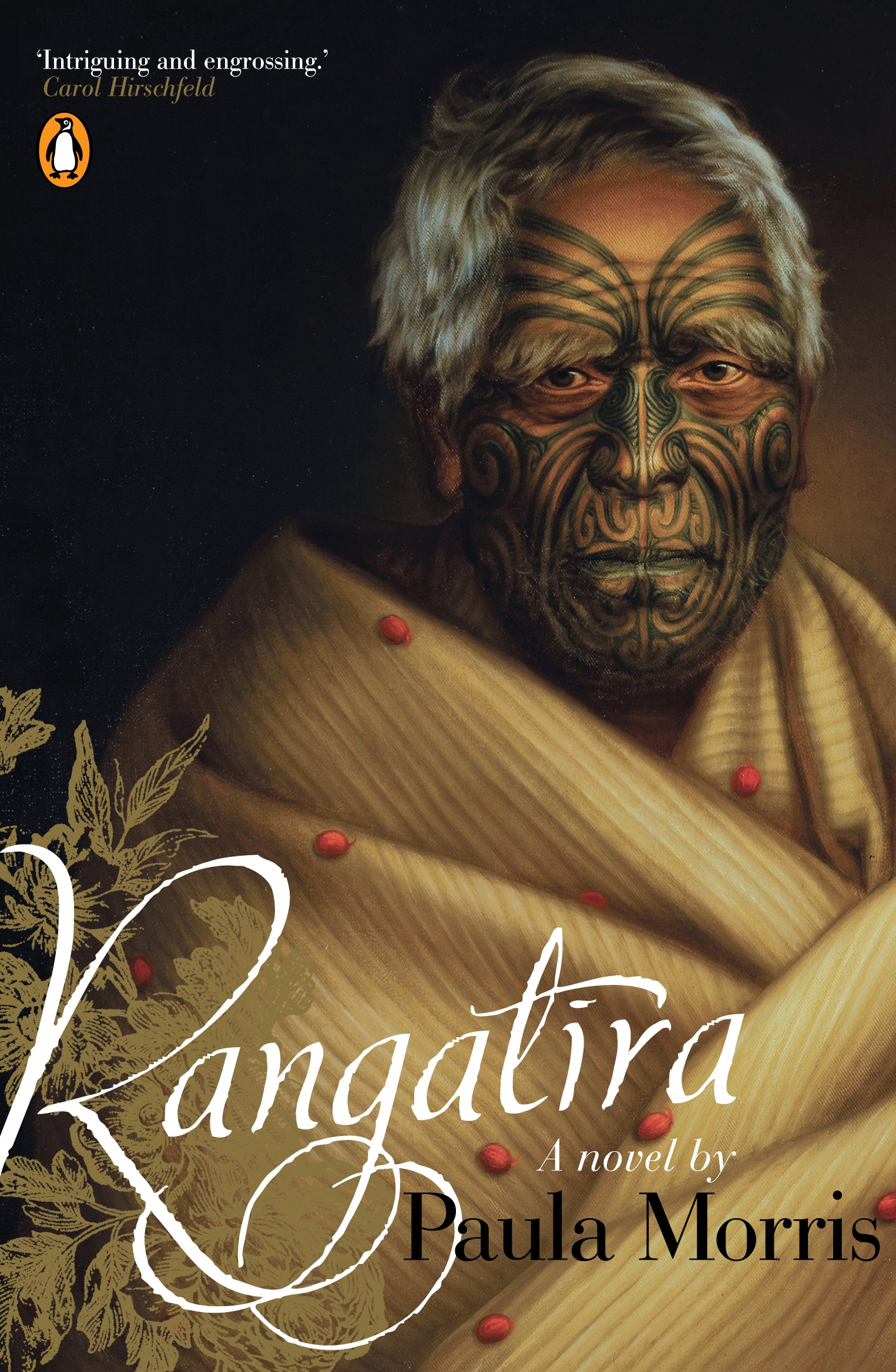
Rangatira by Paula Morris (Penguin)

NZ Post Book Award 2012


Paula Morris writes:

I spent years researching Rangatira, in the UK and New Zealand – climbing the old pa site at Ngunguru, seeing the room where the Māori party met Queen Victoria at Osborne House, reading old newspapers and Native Land Court transcripts. But most of the novel was written over a few frigid months in Glasgow, when I lived in an unheated flat on the third floor of a Victorian tenement. I sat wrapped in a blanket, typing. In the street below foxes wandered the grassy median: when they were too noisy, I banged on the window. It was a miserable time – working in a bad job, living in a cold and dark place – but useful for writing about Paratene Te Manu, trapped in wintry Birmingham in 1863, longing to sail home.


Excerpt from Rangatira (Penguin, 2011)


Auckland, New Zealand

June 1886


At the Native Hostel down on the waterfront, people are always talking. At times I think they don’t have anything else to do. Many of them are in Auckland to appear at the Native Land Court, to say their piece or argue about claims to this and that. Some of them are here to sell something in the market, or buy something in the shops. Some of them spend too much time in the grog shops along Shortland Street. I don’t bother with that anymore. Drink is a waste of money, and it steals days, turning them into dreams. I don’t have that many days left to waste on dreaming.
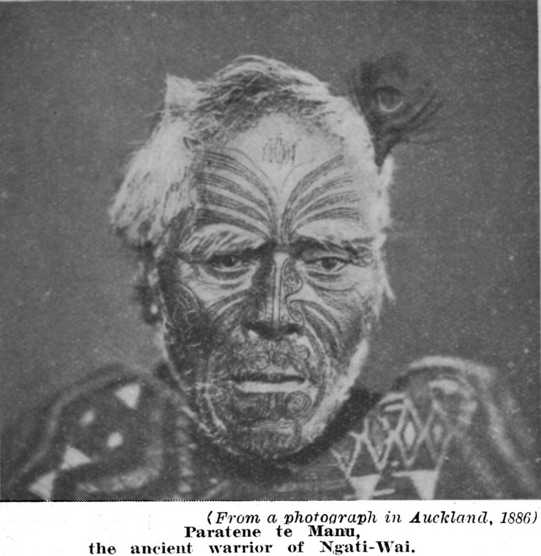
……..Last time I was in Auckland, when the trees were still bristling with leaves, I was asked to pose for a photograph. I was happy to do this, even though it was quite a to-do. Someone has made pictures of me before, in a proper studio, in a proper city, so I knew what to expect. But this photographer just had a room behind a chemist’s shop, and a blanket hanging on the wall. His hair was slick with oil. He insisted that I wear a peacock feather tucked behind one ear. He stuck it there himself, and his fingers were as greasy as his hair.
……..This feather was quite ridiculous. Then he covered my jacket with a great cloak, a kaitaka, but he draped it upside-down over my shoulders. He wanted the woven border of tāniko work to show in the picture, he said. I was an ancient warrior, he told me, as though this would explain why I was wearing a peacock feather and an upside-down cloak.
……..When I say he told me, I mean to say this – he told my old friend Wharepapa to explain things to me in Māori. I could understand his English, but I didn’t let the photographer know that. I don’t even let Wharepapa know that. People speak more when they don’t think you understand.
……..One of my eyes doesn’t see too good these days. I stood looking away from the camera.
……..‘Does the old man think the photograph will insult him in some way?’ he asked Wharepapa. ‘Does he think it will steal his spirit?’
……..‘Yes,’ said Wharepapa, without a smile, although I’m sure he thought this was a great joke.
……..‘Paratene Te Manu, the last of the ancient warriors,’ the photographer said, almost to himself, and then Wharepapa grew restless. He fancies himself quite handsome and vigorous still, and likes to tell people of the old days when he too was a great warrior. He doesn’t often say this when I’m there, because we both know that I was fighting with my second taua when he was still a gurgling baby, strapped to his mother’s back. Almost everything he says about battles are stories he heard from his uncles.
……..The picture was taken, and there was an end to it, I thought. But this week, at the Native Hostel, one old fool tells me he’s seen my face, pinned to the wall somewhere along Queen Street. I don’t take any notice until Wharepapa comes thudding down the hill from his house in Parnell, seeking me out on the beach where I’m smoking my pipe. The Bohemian painter is back in Auckland, he tells me. He has taken over a small room in Mr Partridge’s building, and is working from the photographs taken in town earlier this year.
……..‘You should talk to him,’ Wharepapa advises. ‘Otherwise he’ll paint your picture with that peacock feather. People will say you’re an Indian princess.’
……..Wharepapa thinks this is so funny, he repeats it to everyone in Mechanics Bay. I wish I was back up north on Hauturu, tending my garden, away from the chatter and intrigues of this place.
……..I need not have come down, you see, after all. I sailed here with a Mr McGregor, who is here in Auckland to make deals about timber and gum. Tenetahi, my nephew, used to bring me here in his cutter, Rangatira, whenever I had to speak before the land court. But the Rangatira was smashed to pieces in a storm a few years ago, on the rocks off Aotea. This is the island that people now call the Great Barrier. Tenetahi and his wife, Rahui, live on Hauturu, or the Little Barrier. Everything has two names these days – a Māori name, and a name that Captain Cook thought of and the Pākehā can remember. These Aucklanders here, I’m certain they were happy to hear that the Rangatira lay in pieces, because Tenetahi was always winning too many races in the Auckland regatta.
……..He and Rahui almost drowned that day, off the shores of Aotea. After the Rangatira was stuck on the rocks, and they saw that nothing could be saved, they found a whaling boat and began to row home. Another storm turned the waters of the gulf grey and angry, and tipped the whaling boat upside down. Rahui had to swim out to fetch a lost oar. Every time they righted the boat, it filled with water again. A man travelling with them was washed away. A boy they’d taken to Aotea to teach him how to strip blubber from a whale, he died later from the cold. They took more than half a day to row back to Hauturu. People staying at the hostel said it was mākutu, some sort of spell, because of all the bad will in the land court.
……..The argument is over who owns Hauturu. Whoever owns Hauturu has the right to sell it, and someone or other has been trying to claim the island, and sell the island, for the past forty years – Ngā Puhi, Te Kawerau, Ngāti Whātua. And us, Ngāti Wai, the ones who have kept our fires burning there for as long as I can remember. And who in Auckland can remember longer than I can? The court tries to make it complicated when it isn’t.
……..In 1881 the judge agreed that we Ngāti Wai were the owners, naming five people. Each of us represented one hapū of Ngāti Wai. But not long after the sinking of the Rangatira, the judgment at the land court was given to Kawerau. That’s when people started saying things were turning against us.
……..For us Ngāti Wai, all of our mana comes from the water. Now Tangaroa was angered and Tenetahi’s boat, with its boastful name, was so many pieces of driftwood. His mother was Ngāti Kahungunu ki Wairoa, from the East Coast, and his father was a Pākehā, people said, perhaps a Portuguese sailor. He was only the adopted grandson of Te Heru and had no rights to Hauturu on the basis of descent. They said that Rahui’s rights were through her father, Te Kiri, and their Te Kawerau lineage, or their Ngāti Whātua lineage, nothing to do with Ngāti Wai. They would say that, wouldn’t they?
……..I’m tired of all this. I just want to live there in peace. Some years ago, I said that we should sell the island to the Queen, to end this matter once and for all. We’ll live there without constant summons to court by this or that person. I wrote many letters to the court saying so, because every time we stand before a judge, he chooses a different group, and then years go by with more bad will and more arguments. More appeals, my nephew says, because he knows all the language of the court.
……..So this is why I travelled down to Auckland this week, for yet another appeal. If the judge restores our claim, we have decided to ask for £4000 to be shared among us all, and for Tenetahi and Rahui to keep a small piece of the island. Just a hundred acres, where we live most of the time, so we can continue growing crops and grazing, and cutting timber to ship down to Auckland. We’re all agreed on this.
……..But now my nephew says that this is not a good week to stand before the court. If we wait until later this year, the rules are about to change. We can have a Pākehā lawyer to help us present our argument and no one can wring their hands about it, as they did last time when Mr Tole helped us. Perhaps things will be better by the end of the year, he says, because now the government is saying that times are hard. The gold rush is over. The stock market has collapsed. They don’t have any money these days. We should come back to Auckland in the spring, in October.
……..He may be right. Matariki has risen, but the first new moon of our new year brought a tohu, a very bad sign. This is what people at the hostel are talking about today. Down on Lake Rotomahana there have been sightings of a spirit waka, its ghostly warriors paddling through the mist. Many more people talk of a strange wave surging across the lake, and of the Pink Terrace, which people travel across oceans to see, spitting mud.
……..We’re not supposed to believe in things like omens anymore. We’ve put aside the old ways, the old beliefs, the old fears. We have our new Christian names, the Māori words for John, and William, and my name, Paratene, which is our word for Broughton. But we still have our old names. How can we forget the knowledge of our ancestors? For a long time I tried to tell myself that they were wrong and that only the ways of the missionaries were right. But as I grow older, in my mind I can’t unpick the two. I do know that a lot of what we were told by the missionaries wasn’t true.
……..I’d like to go home now, to be far away from all this talk of restless lake spirits, and bad omens. But Mr McGregor is down here for another five days. I might find this Bohemian painter and see what he’s going to do with the picture of me pinned to his wall. At another time in my life I was expected to wear a costume, to be on display, and this made me very unhappy.
……..If he’s going to make a painting, the Bohemian has to take away the peacock feather. I’ll tell him this in English, so there can be no mistaking what I’m trying to say.
……..So I set off down Queen Street, walking towards Mr Partridge’s shop. The street is crunchy with mud and stones, and rain starts falling again. The first time I saw this city, when my son was a small boy, none of these buildings were here. It was a settlement, not even daring to call itself a city. None of these docks or wide roads – just tracks cut into a deep bed of fern, the sea lapping up. This wide road, and the hill where horses haul the big trams up to the ridge, that was all water. Some parts of it were a stream, clogged with clumps of flax, and some parts of it were just a swamp. All you could see was the thatch of ferns and clusters of mānuka trees, with their spindly arms and legs, whispering in the wind.
……..In later years, when it started calling itself a city, things weren’t much better in Auckland. There was a church and a fort up on the point, but the whare were only replaced with shops and houses that a gust could blow down. Whenever it rained, the track along the stream turned into a bog, and to climb it was to walk in treacle. We used to laugh at them, those Pākehā, trying to press their town into the soggy hill and moving dirt and rocks to fill in the sea. We always camped down by the bay, where the Native Hostel and market stand now. Easier to get in and out.
……..They also tried to build a fort around the stream, to make it a canal. I say canal, but really it was a dirty gully where people emptied their piss-pots, and it looked and smelled like the prickled mud around mangroves at low tide. You had to cross it by walking on planks. At night, when people were drunk and nobody could see anything, they’d fall in. This was the best show going in Auckland for years, Wharepapa always said – that, and people tumbling off the rickety wharf they built, the one that collapsed a few years ago. Not to mention visiting the stocks and the gallows, of course, though they don’t have those anywhere near Queen Street anymore.
……..I don’t usually buy my tobacco from Mr Partridge, but I know his shop. On a day like today, when it’s raining, the place is crowded, and smells like a wet dog. A whey-faced boy in a stained apron points the way to the Bohemian’s room, up the stairs and at the back of the building. I knock on the door with my stick, and there’s a long pause before someone inside coughs and tells me to come in.
……..Because of the rain pelting the window, the room is quite dark. The only light is from a kerosene lamp, and a small, ashy fire in the grate. I know I’m in the right place, because it smells of paint in here, and many Māori faces are pinned to the wall. The Bohemian, sitting in a chair in the corner, is drinking from a teacup. He’s peering at me through small round glasses, and with his sharp face and his hooded eyes, he looks like a bird at night, huddling in the darkness.
……..He places the cup on the floor and stands up to shake my hand. He knows my name, which surprises me at first, but of course he must recognise me from the photograph that was taken. I can’t see the picture myself. There are so many up on the wall.
……..‘I thought you will come,’ he says. His English sounds worse than mine. ‘Your friend tells me.’
……..Wharepapa. He has the biggest mouth in Auckland.
……..The Bohemian pulls papers off a low chair so I can sit down as well, and finds the photograph to show me. I look angry in the picture. My white whiskers stick through the ridges of my moko, so my face is like a frayed mat . I’m staring off to the side, my left eye milky, fuming about the peacock feather. I should never have agreed to it.
……..‘You paint my face, not this one,’ I tell him, jabbing at the photograph. It’s strange to hear myself speaking English out loud. ‘No feather.’
……..I smack my left ear so he understands about the feather, and the Bohemian smiles. If a ruru could smile, it would look like him. Even the Bohemian’s little beard is as pointed as a beak. Just his cap, which seems to be made of carpet, is round.
……..‘Next week I will go away,’ he says. He’s looking hard at my face, and then, without saying anything, he leans forward to take the photograph from my hands. His own hands are thin and veined with blue.
……..The Bohemian looks at the photograph for a long time. The only noise is the patter of rain against the glass, and a tired hiss from the fireplace. Then he gets up and pokes at the fire with the irons.
……..‘I go away too,’ I say. ‘Until October.’
……..If I’m alive then, of course. I think this argument at the Native Land Court may outlive me.
……..‘I am no more in Auckland this year,’ the Bohemian says. ‘In five days, my wife and I, we go. On Wednesday we sail for England. Mr Buller took some of my paintings to an exhibition in London. You know Mr Buller?’
……..I nod. This Mr Buller was once a judge at the land court, but not in Auckland or in Helensville. I’ve heard of him, but he’s not one of the judges I know, like Mr Monro and Mr O’Brien, who are sensible chaps, or Mr Macdonald, who is a stupid fellow, and utterly wrong in his judgements.
……..‘But perhaps …’ The Bohemian doesn’t finish his sentence. He looks at me and taps his chin – one, two, three. He doesn’t have any of the quickness of a bird about him. The last time a painter looked at me, it was very different from this. That painter had a bush of hair, wild eyes, and thick hands that crushed the pencil he was holding. He came to our lodgings and drew me, and then another person, and then another person, wriggling in his seat all the while. Months passed before any of us saw the painting. It was very big, and no one could recognise himself in it. In the picture we were all standing in a room at John Wesley’s house, a place we’d only visited – once or twice, I can’t remember.
……..This all took place in London. I must tell the Bohemian that I, Paratene Te Manu, have been to London, and have been painted before, and that the painting was very large indeed. I won’t tell him that in this painting I was on the edge of things and looked like a child trying to hide from view, rather than a rangatira, and the oldest person in the room. The only one among them to have fought alongside the great Hongi! The English don’t understand these things. Perhaps Bohemians don’t either.
……..I hope that the Bohemian is only planning a small painting, so it need not take months and months.
……..‘Can you come tomorrow?’ he asks me. ‘We meet tomorrow, and again on Monday and Tuesday, maybe?’
……..I agree to this. There’s little else for me to do in Auckland these days, except spend money and hear people talk about bad omens, and neither of these things is good for me at all.
……..‘You will talk to me about London, yes?’ The Bohemian is smiling again. He pins my photograph back on the wall. ‘I know you spent much time there, some years ago. With your friend, Mr Wharepapa.’
……..Wharepapa should write stories for the Auckland Weekly News. He likes to shout his business up and down the town. I’m sure he’s told the Bohemian that without him, without the personal invitation of the great Kamiera Te Hautakiri Wharepapa, I would have never stepped onto that ship and sailed to England.
……..This annoys me so much that I start muttering bad words and banging my stick on the floor. The painter, who I think does not understand Māori, glances at the window as though he’s eager for the day to be over. The rain has stopped and, finally, so do I.
……..‘Tomorrow,’ he says, bowing to me, and I let him help me up from my chair. This weather makes my bones creak.
……..When I leave the Bohemian’s little studio, I walk down Queen Street towards the water, making my way back towards the Native Hostel. The canal of shit is covered over now, but the city still smells, especially when the wind blows the smoke from the big sawmills at Te To. I could cut down Fort Street, but I don’t want to. Old men like me remember when this was Fore Street, when its shacks and stables used to gaze out to sea. Now it’s a foul and bedraggled place, fed by the muddy alleys where harpies lurk, waiting for night to fall and the sailors to stagger along into their arms.
……..Here on Queen Street, a lot of the old shops have burned down or been replaced. These grand banks with their pillars and railings, these shops with the big letters outside, the trams that have to be pushed and dragged up the hill, even these flat footpaths supposed to keep your shoes dry – they’re all new. If you stood in the middle of Queen Street, looking at all the false fronts, and the gas lamps, and the men hurrying about their business, you might think that this is a real city now. But it’s not. I’ve seen a real city, the biggest city in the world. And whatever that chattering kākā Wharepapa has to say, it was nothing to do with him.
……..Here are the reasons I went to England. The only reasons.
……..I went to England because I happened to be down in Auckland in January of 1863. I was there to speak up for old Tirarau in his dispute with Te Aranui, to make sure we in the North were not going to start fighting each other again with guns. I arrived just after the big fire, the one that raged up and down Queen Street and turned the Thistle Hotel to a mound of ash.
……..I was near the ruins of the Greyhound, I think, watching it smoulder, when Charley Davis walked up. He had been a friend to us Māori for many years, so I listened when he asked me if I would like to join a party of rangatira people the following month. This party would be making a journey to the other side of the world to see England and some of its great factories, palaces, churches, and schools.
……..Our passage there and back would be paid, as would all our lodgings and expenses. He said we would see the riches and wonders of this place, and learn their language. People would assemble in churches and schools, eager to hear us talk of our customs and old ways.
……..This sounded very interesting, of course, but perhaps a little vanity played its part as well. When I should have been suspicious, or cautious, I was thinking how important I must be, to have Charley Davis seek me out and make such an offer. I would be among rangatira, not riff-raff, as I am all too often at the hostel.
……..But this is not the only reason. I went to England because while I was in Auckland for too long, busy with the affairs of Tirarau, my younger brother drowned off the Tutukaka coast, and he had died and been buried before I could get home to learn of it. And then my dear son, the only one of my children to survive to manhood, had the coughing sickness, and died just two days after I returned to Tutukaka. With my brother gone, and my son gone, I couldn’t bear to stay there. This was January of 1863. My wife had been dead for six years. Everyone I loved most in the world had left me.
……..None of my people wanted me to go, and there was a lot of wailing and begging from my sister and my youngest brother. They tried to stop me from boarding a boat for Auckland. They said I needed to stay at home to receive mourners, as was customary. But I didn’t care anything about custom anymore. I wanted to sail as far away as possible, where there was nothing to remind me of all I’d lost.
……..So then, these are the reasons most people know – that I was invited and lured with many promises, that my brother had died, that my son had died, that I wanted to travel far away. But one thing no one knows, because, unlike Wharepapa, I don’t announce all my business to the world.
……..I went to England because when I was a young man, still eager for fighting, I heard Hongi tell stories of his own trip there. This was the visit when he met King George, and when he helped the missionary and the professor write their book of Māori words. He returned with chainmail and a helmet presented to him at the King’s armoury, and a vast number of muskets, collected in Port Jackson on his way home. I carried one of these guns on my first taua against Ngāti Paoa at Tamaki, just two months after Hongi arrived back.
……..That was 1821. I’d been learning to fight, waiting to fight, my whole life. The night at camp, not long after the first battle, when I heard Hongi speak of going to England, I decided that I too would go one day. I wanted to see the riches that Hongi had seen, the castles of powerful men, the book-houses holding the maps of Napoleon’s battles. I never thought I’d have to wait so long, or that by then I would no longer have any appetite for muskets, or armour, or battles of any kind.
……..And of all the stories that Hongi told, or other people told of Hongi, there was one I should have believed, more than any of the others. He said that after that voyage to England he realised a Māori could never trust a missionary. All the missionaries did was put themselves in the way of things, speaking for the Māori, trying to stop us from conducting our business in the proper and established way.
……..That day on the street in Auckland, when Charley Davis told me about the trip to England, I should have remembered Hongi’s words. There was a good Pākehā in charge of our party, Charley Davis told me, and this man, this Jenkins, would see to everything. Jenkins wore a white neckcloth. He was a Wesleyan, and at first I thought he was a minister. He didn’t say he was, but that’s what I assumed.
……..Jenkins had worked as a native interpreter, Charley Davis said, so he knew our language and our ways. He was a devout man too, building Wesleyan chapels down in the South Island, when he first arrived in New Zealand.
……..I signed the piece of paper he put in front of me, and agreed to join the group travelling to England. I didn’t read this paper at all, although it was written in Māori, and at my age I should know better about signing pieces of paper without looking at every word. Charley Davis said we could trust Jenkins, a fellow Christian, to take care of us, and I believed him because I wanted to believe him. But Charley Davis was wrong. We couldn’t trust Jenkins, and we couldn’t trust ourselves.
……..There’s too much to this story – too much to remember, too much to explain. I will write it down, and I will write it down in English. There must be a record. So much depends, as I have discovered, on things that are written down on paper.


© Paula Morris, 2011, published in Rangatira, Penguin.

'The thirty-five of us were in the country of dream-merchants, and strange things were bound to happen.' - Anne Kennedy

Read more

This year marks the fiftieth anniversary of Book Awards in New Zealand. Our national prize has had different sponsors and incarnations over the years: it’s now the Ockham NZ Book Awards, held each May on the Tuesday of the Auckland Writers Festival.

Over the years many of our brightest and best writers, and classic books, have been recognised in the awards. Many of these authors are part of the Academy of New Zealand Literature. We’re celebrating their work this year by publishing excerpts from one of their award-winning books, along with notes from the authors on writing those books. Here’s to fifty more years of great books and our constellation of writers.


.

Harlequin Rex by Owen Marshall (Penguin)

Montana Book Awards 2000


Owen Marshall writes:

Harlequin Rex was written in the later 1990’s and had its origins in the publicity given to new and threatening pandemics such as Ebola and Zika.  I wondered how New Zealand would cope with an event of that nature, and more importantly how it would affect the individuals suffering from such a disease, and those about them.  As I wrote the novel however and the characters developed substance, the more subtle issue of guilt became the dominant theme.

The protagonist, David, is a young man with many natural advantages, but largely through his own lack of principle and resolution he causes harm to himself and others, and finds himself unconsciously seeking redemption in an isolated institution in the Marlborough Sounds set up to treat those afflicted with a sinister and baffling disease, Harlequin Rex.

As with most of my prose work, the novel is essentially a character study rather than a plot orientated  piece, and the issues moral rather than political or economic.

I had begun the novel when in 1996 I was awarded the Katherine Mansfield Fellowship in Menton, France, and continued with it while there.  At times I was aware of a sense of incongruity and disassociation as I sat at a desk in the Cote d’ Azur with the Mediterranean before me and wrote of New Zealanders in far off Mahikipawa and Havelock.

I was pleased of course, and surprised, to have the novel awarded the Deutz Medal for Fiction at the 2000 Montana Book Awards, and grateful to the judges who saw some merit in it.  Some years later while in France with ten other New Zealand writers as part of the Les Belles Etrangeres tour organised by the French Ministry of Culture, I had the satisfaction of seeing the novel in the Paris bookshops under its French title of Les hommes fanes.

My love of the short story is abiding, but the critical reception of Harlequin Rex encouraged me to write further novels, and also to publish poetry, as well as short fiction.  Every genre has its particular artistic rewards and demands, and I have found the decision to challenge myself as a writer both salutary and stimulating.


Excerpt from Harlequin Rex (Penguin, 1999)


ONE


From each place known well we take something when we go, and we leave something too. Both acquisition and sacrifice are utterly beyond our control.
……..The bus came over a small rise fringed with red hot poker plants, and there was Havelock, the dipping main street, little changed at first glance from the place David had often visited as a boy. As well as those recollections, he couldn’t deflect the odd association that always arose: Havelock Dark pipe tobacco, which his grandfather had smoked in a silver-collared Peterson, deeply curved. Towards the end of his grandfather’s working life, the pipe had bene an excuse for a breather, so that old George could straighten his back in the yards, or the shearing shed, or turn off the tractor and allow the sound beats to fade like wings into the distance.
……..Havelock – with its one short stretch of clumsy, honest buildings, the steep, bush-clad hill behind it tipping towards the much longer stretch of the mudflats at the head of Mahau Sound. The police station, the post office, the town hall, were bravely painted. The hall had four thin pillars at its entrance as a pioneer nod to the classical culture of social superiors.
……..As the bus slowed further, he noticed the little town had put on a pretence of finery to attract the tourists. A gem-cutter’s, an antique shop, a fishing and marine travel centre, the Pelorus Jack Café, the backpackers’ hostel. A large wooden building had its frontage covered with a mural of what looked like a tuatara, and the length of a tin fence provided undulation for a dolphin and the words, ‘Sea Kayaking’, as if the speed at which most people passed through the place meant that only the largest scale and simplest advertising message would register.
……..But he left the bus, the only passenger not going on to Nelson, bought a Coke at the Four Square, sat on the worn steps of the wooden Methodist church, which had been deserted by the living, and become a place to celebrate the dead – a museum with photographs of whiskers and waistcoats, and the hulking tools of the logging days. And as he sat there quietly, the original Havelock, the real substance of the place, peaceful among the haunches of the hills, was clear again. The old-fashioned boats and derelict cars in people’s sections, the weatherboard sheds askew with age, lawns, vegetable gardens, an armchair in a porch – all within a hand’s reach of the road. And the camellia bushes which, in their season, spread red and pink flowers upon the footpath of the main street.
……..He bought egg and chive sandwiches, walked down from the short slope of a side street to the sea and turned away from the camping ground and new, rather incongruous marina, towards the working part of the shoreline. Small builders, one-man businesses, fishing boats propped by timber on dry land so that their deep hulls were revealed, a rusting pontoon, a loosely tethered barge that brought sheep in from the island farms, and yards close to the sea for those sheep, which added their warm, dungy smell to the air. The tide was going out, yet most of the mudflats were still covered, and the sea had corralled in the corner between shore and breakwater a jostle of driftwood, plastic bottles, nylon twine, cellophane bags, broken angles of blue and white polystyrene, beer cans, a light bulb, sodden stalks of rushes and grass, and the body of a small, short-haired dog with its swollen stomach tight as a drum. And further out on the shallowly covered mudflat were cast whole trees with black shags on the bleached branches. Along the shoreline away from the town were rushes; grey and russet streaked, and also in stiff, slightly raised patches on the mud.
……..David ate his sandwiches by the side of a boat-building firm, Nottage & Son, whose business premises were the size of a double garage. The double wooden doors were open, and showed a clinker-built dinghy, bottom up on hurdles. Nobody was working there; nobody came. He sat in the sun with his back supported by the warm outside timbers of the shed, and wondered how the Harlequin epidemic and the Slaven Centre related to what was around him: how the local people took to something which, as far as they were concerned, may as well have come from another planet.
……..The road to Mahakipawa was a diagonal cut on the hill further down the sound. A rural delivery went through each day, he’d been told; from Havelock past the scattered houses in the small bays and on to Picton.
……..Everything to do with people was at the low altitude: the unbuttoned straggle of buildings, the few roads, the launches and yachts, some of the small ones lopsided on the mud, three young people after flounders in the channels, a farm-house or two in the middle distance on the flat at the head of the sound. The bare, flashing arm of water was very blue. On both sides the hills rose in ridges and gullies and flanks of rough grass, piggern, broom and gorse. There was bush on the high slopes behind the town. The skylines were unfettered strokes where the hills met the sky.
……..David threw the crusts to the gulls, and walked back up the short road to the township. He had the feeling that always came to him in such quiet, settled places. A feeling that time itself was eddying there, and more, that some immense, quiet suction was at work, so that things might well drift from the surface of the landscape, from the warm roads, from the mudflats, the clustered, quiet town, from the lazy paddocks, into the endless, pale sky.
……..The wooden post office had a low door and facings freshly painted in green and red. David thought maybe he could catch the rural delivery man there. ‘Give him a ring yourself, to be on the safe side,’ the post office woman said, ‘but he gets away from here about one thirty most times. Use our phone behind the counter.’ The woman had tracksuit pants with two yellow stripes down the outside of the legs, and a white T-shirt proclaiming MAINLAND KIWI. She had a bright pink scar, or birthmark, at the corner of one eye, as if she had shed a single scalding tear. ‘Come far?’ she said to show good intent, rather than curiosity.
……..‘Through from Blenheim today, but I’ve been further south.’
……..‘Bryce doesn’t mind taking someone over usually, if he’s got room. There’s a bus comes through from the PIcton side later today, but you’ve missed the only one this way.’
……..David told her that he was heading for the Slaven Centre. ‘Yeah,’ she said. ‘He calls in there all right. It’s getting to be a big place. Look,’ she said, when he explained he had work there, ‘why don’t I ring him for you? I’m Bev. With you working over there, I’ll get used to your name in no time. I do all the sorting for the centre’s mail right here. I know all the staff names, though never met most of them. You’re not a doctor, though?’
……..‘No.’
……..‘You just sit down in the sun by the door, and I’ll ring Bryce for you.’
……..He did just that; sat by the door, hardly noticed the odd car passing, looked instead to the hills beyond the sound and the place, Havelock, which he’d visited with his father years before. ‘It’s all jacked up,’ said Bev cheerfully. ‘No sweat.’ His father had crushed a little finger in the mechanised wool press shortly before one of their fishing trips, and David remembered the tight bandage, white at first, but becoming grubby over the three days spent mainly in the boat.
……..Bryce drove a blue Toyota ute, and had pale, worn trousers pouched at the knees, and slender arms that were almost hairless. David helped him put the larger packages in the back, then waited in the cab while Bryce checked over final things with Bev. It was obvious that for her the rural delivery departure was a high point in a less than hectic day. A swelling MAINLAND was half in the doorway of David’s side of the Toyota, as she saw them off. ‘Oh yeah,’ she said, ‘it’ll be a really beaut day on the track. Just watch out for any visitors coming back from the centre. Some of those city people, Jesus, they’ve no idea of driving a secondary road.’
……..‘Some of them should be patients there,’ said Bryce drily.
……..‘Don’t get me started on that place.’ She was going to, though, the MAINLAND KIWI expanded as she took breath for it, but then she remembered David, and that he was off there to work, so she let out her breath harmlessly, waved her hand before her face and theirs to indicate the myriad accounts she could give of the Slaven Centre. Her farewell to David, a stranger of no consequence to her, was as full and genuine as that for Bryce, whom she saw most days of her life. It was the helpful, outgoing nature that he remembered; the striped pants, the careless hair, the track of a scalding tear, seemed incidental enough.
……..‘Good on you,’ said Bryce. He smiled as he drove along the short, flat road at the head of the sound before the Mahakipawa Hill. The mud left gleaming by the receding tide had slight green and purple visceral tints like fresh goose shit, and the few buildings of Havelock settled down, dwindling, in the sun. ‘Yeah, good on you,’ said Bryce again, though David had said nothing. The view of Bryce’s smile was a side view; the teeth so heavily filled that the enamel showed a shadow from within.
……..‘She seems a good sort.’
……..‘Old Bev? You betcha,’ said Bryce. ‘She used to be a real one for the leg-over, but three kids podded in six years simmered her down a bit. She’s all right. A trooper, is Bev.’
……..The ute growled during the pull up the Mahakipawa hill. Gorse, broom, bracken and taller pittosporum. There was flax close to the shore; some pongas and native trees in damper gullies. Whole slopes were in a flowering of gorse and broom, but no New Zealand confuses the two: the bumble bee yellow of the gorse and the butterfly yellow of broom.
……..Bryce had the easy manner of someone in familiar country. ‘This is your first time out to the Slaven Centre?’
……..‘Yes.’
……..‘Some family in there?’
……..‘No,’ David said. ‘No, I’m not visiting anyone. I hope there’s a job waiting for me. Nurse aiding, supervision, therapy – stuff like that.’
……..‘Good one. I hear they pay not too badly. Most qualified people aren’t too keen, because they’re not sure about – you know.’ Bryce was going to say about it being dicey because no one knew for sure how the thing spread, but he sidestepped that. ‘The isolation’s a bit of a bummer I’d say.’
……..‘Sure, for city guys maybe,’ said David. ‘I suppose the centre is left pretty much alone? Doesn’t have a lot of contacts outside?’
……..‘Pretty much. Well, there’s people come to visit patients, of course, but they’re usually in and out, or if they need to stay a while then the centre has motel-style blocks of its own.’
……..The road wound up the hill. Poor country most of it: the cuttings exposed the soft, flaky rock and yellow soils. Bryce stopped at occasional farm gates to do his thing – letters, deliveries, a new tyre at E.P. Rossiter’s. One or two of the gate boxes were as big as dog kennels.
……..‘Most of them are harmless, I suppose,’ David said.
……..‘Harmless?’
……..‘The patients.’
……..‘Never given us much problem that I know of. They do things to each other, I hear, and half a dozen have drowned themselves for a fact. There seems to be something about the water when they’re desperate, the poor buggers. But you’ll get to know all about that.’
……..The sea to the left glittered enticingly in the unobstructed sun.
……..‘So the cops aren’t there much?’
……..‘Nah. There’s no need for any of that.’ Bryce crossed the median line and pulled up on the wrong side of the road, but next to the wooden box with just ‘Meek’ on it. There was a little rise and then a dip in the road ahead of them as they sat there. David tensed for the few second that it would have taken a vehicle to rise from the hollow, sweep over the crest and hit the ute head on. Yet he knew that Bryce must have been watching the road carefully long before they stopped, and didn’t give him the satisfaction of a query, or complaint.
……..Soon after, they came down from the hill and on to a small valley flat with a stream to the sea. Just a few willows and a fresh breeze. The little, open valley rose into the hills, partly cleared slopes with some green, irregular pasture, then gorse and broom, then the native bush holding out on the tops. A raw road led up to the Slaven Centre, boldly new and incongruous on the hillside.
……..Bryce nodded towards the buildings. ‘That’s her,’ he said. ‘Stuck there like bulls’ bollocks.’
……..At the turn-off, a timber slab mounted on two stone cairns bore the name of the centre carved deeply and painted white. SLAVEN CENTRE – nothing about Harlequin, nothing about the threat from Africa and the lure of the sea.
……..Bryce turned in and rattled up the unsealed drive to make his deliveries. ‘I come back past usually about three thirty.’ He burrowed in the ledge beneath the dash when then van was stopped and David had paid his five dollars, then wrote something on the back of a courier ticket. ‘My cellphone number,’ he said. ‘When you want to get away for a day or so, give me a call and I’ll be able to tell you how I’m going for time.’
……..‘Okay. You want a hand in with things?’
……..‘Nah. You get yourself sorted. I hope things work hunky-dory for you here.’ He was gone, with a plastic bag of letters and a string bag of bigger stuff.
……..David took his pack and put it on the grass by the car park. He looked over the tilt of the land to the sound, and across that to the steep country on the other side. He had a strong inclination to put the pack on and walk away into the landscape, but he’d tried that option several times before and it had never worked out.
……..The Slaven Centre had been built hurriedly and with economies of scale. There were bright, prefabricated panels, covered walkways, aluminium and glass annexes like greenhouses, a car park bulldozed into the pale clay of the hillside. Most of the buildings were close to the ground, yet lacking integration: a bright scatter in the natural colours of the hillside. They reminded David of school buildings, a fresh, brazen campus rather than a hospital. Maybe that was the impression intended: something to distract the mind from the real function of the centre, which was to treat a sickness not much older than the buildings themselves.
……..He wasn’t in a mood for pity, however, not for anybody else, no matter what their misfortune, and not for himself because he knew that the course which had brought him to Mahakipawa was the quite consistent consequence of his own mistakes.


© Owen Marshall, 1999, published in Harlequin Rex, Penguin.


'Character to some extent is much a construction of the reader as it is of the writer.' - Lloyd Jones

Read more