This year marks the fiftieth anniversary of Book Awards in New Zealand. Our national prize has had different sponsors and incarnations over the years: it’s now the Ockham NZ Book Awards, held each May on the Tuesday of the Auckland Writers Festival.

Over the years many of our brightest and best writers, and classic books, have been recognised in the awards. Many of these authors are part of the Academy of New Zealand Literature. We’re celebrating their work this year by publishing excerpts from one of their award-winning books, along with notes from the authors on writing those books. Here’s to fifty more years of great books and our constellation of writers.



The Skinny Louie Book by Fiona Farrell (Penguin)

New Zealand Book Award 1993 

.

Fiona Farrell writes:


It began as a short story ‘A Story about Skinny Louie’. I’d begun writing poems and plays and short stories in the 80s. It was something to do while I fretted and fumed after being made redundant from a lecturing job and plunged into midlife crisis. The poems got published, the plays were performed, one of my stories won a competition in the Evening Standard. I rediscovered a childhood pleasure in making things up.

Skinny Louie began with the Queen’s visit to Oamaru in 1954, a major event in my childhood. We were given gold medals to pin to our jerseys and Union Jacks to wave, while my father muttered darkly about the Famine and the Black and Tans. The story won another competition, funded by American Express. At the award dinner – they were lavish affairs in those days – the judge, Melvyn Bragg, said ‘Why are you wasting your time on short stories? You should be concentrating on novels.’ He was very certain, in that British, tv personality fashion. I liked short stories – I still do – but he seemed to know what he was talking about so I decided to follow his advice.

I had finished another story, also set partly in Oamaru, but in the future not the past. New Zealand has withered after some unspecified environmental calamity to a sunbaked desert where a few survivors huddle about fiercely defended water sources. I had made up a woman: an ancient crone, reverted to primate state and covered in fur, who survives in a miraculously lush little island Eden off the West Coast. I put the two stories together – one at the start, one at the conclusion – and set out to write my way from one to the other, working in a weird associative state, escaping from marriage collapse, a new and stressful job, rampant agoraphobia and an excrutiatingly painful back for which I had to take painkillers, for the first and last time in my life. It became a book about two sisters – which I have noticed is quite a common framing in women’s fiction, especially in first novels. In my book, one sister is extrovert, the other mute and introvert, though she possesses a strange power to make those about her blurt out the truth, with unpredictable results.

Writing that book I felt out of conscious control, but when it was finished and the sisters were reunited at last in the ruins of the Oamaru Post Office, something in my own psyche had resolved. I felt whole, as if I had grown up and was able to begin living my real adult life.

The Skinny Louie Book won the New Zealand Book Award and on that year’s IRD return I gave my occupation as ‘Writer’. It felt perilous. I was now separated, living alone for the first time ever, in a new city, a few hours’ work in the university library for income, but writing made me feel so happy. On the page I didn’t have to engage with anyone else. I could simply follow an idea, see where it might take me, make things up unobserved, in a calm and solitary fashion.

I was 45 and with Skinny Louie, I became myself.


 Extract from The Skinny Louie Book (Penguin, 1992)


THE SETTING


Imagine a small town.
……..Along its edges, chaos.
……..To the east, clinking shelves of shingle and a tearing sea, surging in from South America across thousands of gull-studded white-capped heaving miles.
……..To the south, the worn hump of a volcano crewcut with pines dark and silent, but dimpled still on the crest where melted rock and fire have spilled to the sea to hiss and set as solid bubbles, black threaded with red.
……..To the west, a border of hilly terraces, built up from layer upon layer of shells which rose once, dripping, from the sea and could as easily shudder like the fish it is in legend, and dive.
……..To the north, flat paddocks, pockmarked with stone and the river which made them shifting restlessly from channel to channel in its broad braided bed.
……..Nothing is sure.
……..The town pretends of course, settled rump-down on the coastal plain with its back to the sea, which creeps up yearly a nibble here a bite there, until a whole football field has gone at the boys’ high school and the cliff walkway crumbles and the sea demands propitiation, truckloads of rubble and concrete blocks. And the town inches away in neat rectangular steps up the flanks of the volcano which the council named after an early mayor, a lardy mutton-chop of a man, hoping to tame it as the Greeks though they’d fool the Furies by calling them the Kindly Ones; inches away across shingle bar and flax swamp to the shell terraces and over where order frays at last into unpaved roads, creeks flowing like black oil beneath willows tangled in convolvulus, and old villa houses, gaptoothed, teetering on saggy piles, with an infestation of hens in the yard and a yellow-toothed dog chained to the water tank.
……..At the centre, things seem under control. The post office is a white wedding cake, scalloped and frilled, and across the road are the banks putting on a responsible Greek front (though ramshackle corrugated iron behind). At each end of the main street the town mourns its glorious dead with a grieving soldier in puttees to the north and a defiant lion to the south, and in between a cohort of memorial elms was drawn up respectfully until 1952 when it was discovered that down in the dark the trees had broken ranks were rootling around under the road tearing crevices in the tarmac, and the council was forced to be stern: tore out the lot and replaced them with plots of more compliant African marigolds. There are shops and petrol stations and churches and flowering cherries for beautification and a little harbour with a tea kiosk in the lee of the volcano. It’s as sweet as a nut, as neat as a pie, as a pin.
……..Imagine it.
……..Imagine it at night, a print composed of shapes and shadows. Early morning, 24 January 1954. The frilly hands on the post office clock show 3.30 so it’s 3.25 a.m., as everyone knows. (Time is no more thoroughly dependable here than the earth beneath one’s feet.) It’s unseasonably cold. A breeze noses in over the breakwater in the harbour and in amongst the pottles and wrappers by the tea kiosk, tickling the horses on the merry-go-round in the playground so they tittup tittup and squeak, fingering the bristles on the Cape pines and sighing down their branches into a dark pit of silence. Flower boxes have been hung along the main street and as the wind passes they swing and spill petals, fuchsias and carnations. There are coloured lights and bunting which, if it were only daylight, could be seen to be red white and blue because tomorrow, the Queen is coming. At 3.05 p.m. the Royal Express, a Ja class locomotive (No. 1276) drawing half a dozen refurbished carriages, will arrive at the railway crossing on the main street. Here, Her Majesty Queen Elizabeth II and His Royal Highness Prince Philip will step into a limousine which will carry them up the main street past the post office, the banks and the shops which have all had their fronts painted for the occasion (their backs remain as ever, patchy and rusted). By the grieving solider the royal couple will turn left towards the park where they will be formally welcomed at 3.20 p.m. by the mayor and mayoress and shake hands with forty-five prominent citizens. They will be presented with some token of the town’s affection. At 3.25 p.m. they will commence south. The moves are all set out in the Royal Tour Handbook, the stage is set, the lines rehearsed, and the citizens, prominent and otherwise, are tucked under blanket and eiderdown, secure in the knowledge that everything has been properly organised. If they stir a little it is because the wind tugs at curtains, or because through the fog of dreaming they hear some foreign noise outside the windows where their cats and dogs have sloughed off their daytime selves and stalk, predatory, the jungles of rhubarb and blackcurrant. The sea breathes, Whooshaaah. Whooshaaah.


© Fiona Farrell, 1992, published in The Skinny Louie Book, Penguin.


'...poetry makes intimate everything that it touches.' - Michael Harlow

Read more

This year marks the fiftieth anniversary of Book Awards in New Zealand. Our national prize has had different sponsors and incarnations over the years: it’s now the Ockham NZ Book Awards, held each May on the Tuesday of the Auckland Writers Festival.

Over the years many of our brightest and best writers, and classic books, have been recognised in the awards. Many of these authors are part of the Academy of New Zealand Literature. We’re celebrating their work this year by publishing excerpts from one of their award-winning books, along with notes from the authors on writing those books. Here’s to fifty more years of great books and our constellation of writers.


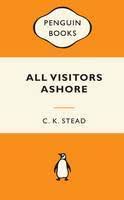
All Visitors Ashore by C.K. Stead (Penguin)

New Zealand Book Award 1985


C.K Stead writes:

All Visitors Ashore was written partly under the influence of the prose of Gunter Grass, particularly his novel Hundejahre (Dog Years) with its bizarre verbal play and on-running sentences.  It was a rejection of what I used to call ‘conventional fiction’, and there’s one chapter in particular, Chapter Five, the ‘Pass me the  butter, Cecil’ chapter, in which the ordinary mannerisms of fiction writing are mocked, and a difference from them is marked out.

The novel was seen here in New Zealand as being a portrait of the young C.K. Stead (as Curl Skidmore) in his relationships with Frank Sargeson and Janet Frame.  There is no escaping the fact that there is a connection between Melior Farbro and Sargeson, and between Cecelia Skyways and Frame, but they are not simply portraits, and there is as much invention in those two as in any fictional characters.  The novel was probably more accurately read in the UK where the connection with local literary figures could not be made.  The Guardian reviewer said ‘It seems ironical that for sheer immediacy, for the annihilation of distance between reader and writer, for that intimacy and precision which most novelists seek and seldom find, we should have to turn to a novel located on the Auckland waterfront.’  On the other hand the reviewer’s comment I enjoyed probably more than any other came from Susan Graham in the NZ Herald: ‘Auckland as never before in poetry or prose.’


Extract from All Visitors Ashore (Penguin, 1984)


She looks from left to right and moves forward in little darting runs, furtive through two further streets and down an alley between two fences of corrugated iron and through a gate into the back garden of a little house where in the dark Curl makes out what looks like a vegetable patch with a few old cabbage heads running to seed. They go inside and the woman who is leading them switches on a light and suggests they sit down. She is probably the same age as the other woman but so glaringly brightly made up she looks like a stage clown or a scarecrow, with wispy dyed hair on top through which the light shows broad gaps like tracks through a forest. She sits down on a hideous mottled couch away from which three China ducks are attempting to escape up the wall, and she hands them cigarettes and lights one herself and is immediately convulsed with a coughing spasm that lasts the best part of a minute. That over she doesn’t tell them she knows what it is to be pregnant when you don’t want to be. She tells them ‘he’ will be here soon, that it isn’t her house, they merely have the use of it, and is there anything they want to ask before they hand over the fifty – and she hopes they brought it in singles as instructed. Pat and Curl both speak at once, they have each been worrying, Pat wanting to know how she can be sure whatever they will do will work, Curl wanting to know is it likely to leave her sterile. Both these questions set the painted lady laughing which in turn stirs up her cough but the answer to both when it comes is the same. It works all right, and it doesn’t stop you getting pregnant again. Half the shop-girls in Karangahape Road have been through her hands (it’s the expression she uses) and most of them are back for a second go before they start to learn some sense. Pat has shown no sign of nervousness but she asks now will it hurt and the painted crone is glad of this question, she smiles receiving it and is happy to deliver her prepared answer, that when you pick a ripe apple it comes away easily but if you pick it green you have to pull. This is so horrifying to Curl Skidmore he feels the blood drain from his face and he has to bend over in his chair pretending to tie a shoelace for fear of fainting. But now ‘he’ can be heard in the next room, and at a knock on the wall the painted crone, who has been passing the time counting the fifty used single pound notes they have handed her gets up and ties a blindfold around Pat’s eyes. ‘Just a little precaution,’, she says; and signalling to Curl to stay right where he is, she leads Pat into the next room, closing the door behind her. No father-to-be, let it be said, paces the floor more anxiously than a father-not-to-be, and Curl Skidmore has no great space in which to stretch his long legs, but the ever-escaping China ducks see him passing to and fro the length of the couch and a little to spare at either end forty times, fifty, one for each year of the century and on into the eighties perhaps before there is any sound or signal from the next room. The ducks are beginning to get used to him, but still bent on flying away from that couch which looks like a huge padded mouth wide open and ready to shut on anything that sits in it, when the crone with the forest-walks through her dyed hair returns to say ‘he’ is packing up and the young lady will be ready in a moment. And when Pat appears, removing the blindfold, she looks a little pale and shaky but none the worse for it. The crone says she’s sorry she can’t make them a cup of tea but there will be a taxi waiting for them on the corner in five minutes. She leads them out by the back way again, turning off the lights as she goes, out into the back garden, through the gate in the iron fence and along the alley, down the road and down another road, possibly needlessly around a block to confuse them, and there on the corner she leaves them telling them to wait and the taxi will come soon. ‘Have some towels ready, it should start to work in a couple of hours,’ she says, and it’s only then Curl Skidmore understands that whatever has to come out is still in there and that it’s not all over yet. And now they look in pockets and purse and find they haven’t the fare for a taxi and they have to hurry away before it comes. They go in the direction they think will take them to where the trams run. Pat is feeling wobbly but they hurry nevertheless. When they stop to rest Pat supports herself against a fence but it is Curl who is sick in the gutter.

Tram, ferry, bus – all the shaky way home they are worrying because Pat says she felt very little, no dilation (‘At your cervix Madame, you’ll be dilated,’ had been Melior’s joke), no knitting needle, no puncture, only something in there, an instrument, a certain amount of pressure but no pain, and then an injection of some fluid and a smell of chlorine. Has anything happened, or have they been tricked out of fifty pounds? But as they get ready for bed Pat reports that the bleeding has started. She settles down beside him padded with towels.

‘And all are false that taste not just like mine.’ So much the poet Donne claims for his tears of true love, and so much we claim for the scene which follows. Accept no imitations (there are some). This is the real story. As you will see we have gone to the only available source for the truth. So here is Takapuna beach empty at perhaps 2 a.m. and here is Curl Skidmore carrying a soaked towel and a bowl of blood. Could we just check on that Curl.

It was a bowl of blood?

It was an old po lent me for the occasion by Nathan Stockman. He used it for friars balsam. For inhalations. He suffered from catarrh. It was horribly brown stained with balsam . . .

So we see Curl Skidmore in his pyjamas and dressing gown carrying a large ornate brown-stained chipped china bowl full . . . Was it full?

I don’t remember. Half full perhaps. There was a lot of blood.

Down to the sea. Why would that be when across the yard in the outhouse there was a lavatory?

There was no light in the lavatory and we shared it with Nathan and Felice. I was afraid of splashing it about.

So Curl Skidmore carries the bowl across the lawn, down the steps under the tamarisk feathers, over the sand and down to the shallows. It is one of those nights with high-flying spaced-out clouds and a big moon and when he looks up the moon appears to be racing through static fleeces which it lights up as it goes. He is full of some unresolved and swelling emotion, part fear, part horror, part guilt.

Look here, aren’t you laying it on?

Is that not what you felt?

I was prone to melodrama.

So you didn’t, as reported, feel a sense of sin?

How do we know what we feel? We find words for what we think we feel and that puts a limit on it. Perhaps falsifies . . .

Thank you for that reminder. But you see we haven’t yet got the blood into the water. We have you in pyjamas and dressing gown and we have the blood in the stained china jerry and we have the moon travelling light up there and we have you feeling – something. What was it?

All you’ve said and more. Love, Guilt, Ecstasy, Fear – anything you like. It was a big moment in my life. I was a father-to-be for the first time and now I was a father-not-to-be, and in the bowl was the child-not-to-be of Curl and Pat. I tipped the blood into the sea and I thought of the German momma and the Anglo-Saxon Kiwi father and the Tuhoe forebears and the de Thierry forebears and even the godamn dark Celts – it was a powerful mix I was throwing away. And up there was the moon and out there was Rangitoto. I was afraid.

Afraid of what?

That the gods might punish I suppose.

And did Pat feel . . .

Pat was a practical girl. She said, ‘My Tuhoe forebears practised infanticide. So did yours probably.’

So now you have rolled your pyjamas up to the knees and you are barefoot in the shallows. You are tipping the bowl of blood into the sea. You think of Macbeth and the multitudinous seas incarnadine. In one of those flash floods of moonlight when the clouds are travelling fast you see the dark stain in the water, you see it spreading, you watch it fade. There is no other witness . . .

There was one.

Someone else was there?

Hiroshima, mon ami.

Ah, the little dog. Rosh.

He sometimes slipped his chain at night and went roaming. He wanted me to throw a stick. I wasn’t in the mood for it. He jumped up and pulled at the tassel on my dressing gown. I whacked him on the nose and he ran off whimpering. It was the only time I ever hit him. I called him but he wouldn’t come back . . .

So the bowl is empty. There’s still the towel. It’s soaked through with blood. You try to rinse it and wring it out in the shallows but it’s hopelessly sodden and in the end you simply swing it and throw it as far as you can. The tide is on its way out and will take it out to sea. Back in the bedroom Pat reports she thinks the flow is easing. She pads herself some more and you settle down on towels to sleep.

But the flow wasn’t easing. In the morning the towels were soaked through, the mattress was sodden, Pat was pale, whether with fright or loss of blood. Curl was paler without loss of any blood at all but in the matter of pallor he had a head start. He was quick on his feet however, and he panted up the steep drive and through the early morning streets to the phone box and had an ambulance there in – well, however long it took. Pat was driven to Devonport in time to cross on an early vehicular crossing and she was already anaesthetized and being spooned out on a table in a theatre of National Women’s Hospital before the tide which had carried away the dream that was to be called Siegfried or Sieglinde had returned uncarnadined.

She was none the worse for it. She was fit as a flea – a box of birds. The doctor’s reassurances made Curl feel he could breathe freely and he silently put up with what followed about not getting girls pregnant if you didn’t intend to marry them and not taking advantage of a girl’s racial origins and what a beautiful girl she was anyway, there weren’t many pakeha girls who could hold a candle to her . . .


© C.K. Stead, 1984

'The thirty-five of us were in the country of dream-merchants, and strange things were bound to happen.' - Anne Kennedy

Read more

This year marks the fiftieth anniversary of Book Awards in New Zealand. Our national prize has had different sponsors and incarnations over the years: it’s now the Ockham NZ Book Awards, held each May on the Tuesday of the Auckland Writers Festival.

Over the years many of our brightest and best writers, and classic books, have been recognised in the awards. Many of these authors are part of the Academy of New Zealand Literature. We’re celebrating their work this year by publishing excerpts from one of their award-winning books, along with notes from the authors on writing those books. Here’s to fifty more years of great books and our constellation of writers.


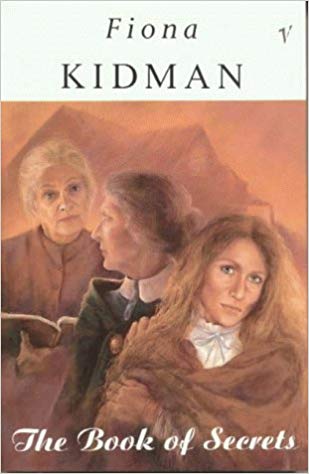
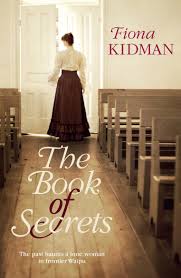
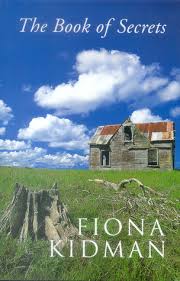
The Book of Secrets by Fiona Kidman (Penguin)

New Zealand Book Award 1988

.
.

Fiona Kidman writes:

The Book of Secrets, based on the story of the Nova Scotian migration to Waipu in the north, arose out of a long personal journey, an odyssey if you like because really it has never ended. I went to high school in Waipu and was caught up by its history and the old people’s stories, particularly those about ‘the Man’,  the Reverend Norman McLeod who had led the migration. Years later, when I was in my thirties and working as a radio dramatist for the then New Zealand Broadcasting Corporation, I was asked to write a six part drama about a real historical event. I chose Waipu, and returned to the town after a long absence to do research. The result was a drama called Fire of the North.

            I knew I hadn’t finished with the story then. Another twelve years later I set off for Scotland, my first visit to the UK. I drove through the Highlands in a near blizzard and found the place where McLeod was born. I found too the cemetery where many of the ancestors lay. It was there that I first conceived the idea that the story of the women who had followed McLeod to New Zealand would be the focus of my book. From there I journeyed to Nova Scotia, staying for some time with a coalmining family near Cape Breton, site of the first destination of the migrants on their way to New Zealand. They stayed there for nearly forty years.

The book that I wrote drew freely on local Waipu characters, their lives imagined in the light of their history. I caused some offence and for a long time my presence in Waipu was questioned, a matter that caused me considerable anguish. But the people I had loved as a girl found a way to reconcile our differences and my place in Waipu grows stronger as the years pass. The local Museum stocks my book, and it is largely thanks to that, that the book has never been out of print since it was published in 1987, winning the New Zealand Book Awards the following year.


Extract from The Book of Secrets (Penguin, 1987)


Chapter Two


I have lived alone in this house for a long time. I have not kept records. I do not have marks on the wall, or diaries, though I am the keeper of certain books which do not belong to me but have fallen into my hands. I have a suspicion that these things never happen entirely by chance, for among them is what I call the book of secrets. This was my grandmother’s way of telling it, the secrets of her life. They are secrets to which I am linked through being her kin, and we are bound by the common thread of my mother’s life. Once I would have dismissed this as being of no importance but now I can no longer ignore it, the binding together which it made. We all had a voice, a way of telling it.
……………I will come back to the secrets, for they haunt me always, but now it is time for me to tell it, for myself. I tell it aloud as I go, here in this house, though no one can hear me while my hands move across the page.

.

I am Maria McClure. I was born at Waipu, a coastal village in the northern part of New Zealand, in 1878, twelve years after the Man died. The birth took place in this same old house that I live in now, a board house of two storeys, near the river arm that comes in from the sea.
……………The house stands alone in a paddock. At the back are macrocarpa trees, and alongside of it a single stark, skeletal giant that has been stripped of its leaves by lightning. The great tree just died. It is not entirely safe, so close to the house, but no one would think to remove it. It stands there bleached white now as the years pass and sometimes in high winds I imagine that it will fall over but it never does.
……………I think it is about fifty-five years that I have been on my own. I live away from the society of people in the world.
……………I say in the world, though it is difficult to say much about what the world is like, or what it means to the people who have joined it. I doubt if there are many still alive of those whom I knew when I was forced to abandon their company.
……………There is only one, whom I dream of seeing, and she came later.
……………Is she alive out there in the world?


© Fiona Kidman, 1987, published in The Book of Secrets, Penguin.

‘Inspiration is the name for a privileged kind of listening’ - David Howard

Read more

This year marks the fiftieth anniversary of Book Awards in New Zealand. Our national prize has had different sponsors and incarnations over the years: it’s now the Ockham NZ Book Awards, held each May on the Tuesday of the Auckland Writers Festival.

Over the years many of our brightest and best writers, and classic books, have been recognised in the awards. Many of these authors are part of the Academy of New Zealand Literature. We’re celebrating their work this year by publishing excerpts from one of their award-winning books, along with notes from the authors on writing those books. Here’s to fifty more years of great books and our constellation of writers.


Disorderly Conduct by Marilyn Duckworth (Hachette) 

New Zealand Book Award 1985


Marilyn Duckworth writes:

I wrote most of the book in Fish Bay, in Marlborough Sounds, where I’d been offered a place to write, by my friend Joy Cowley. It was the year of the Springbok Tour, 1981. Being a mother had taken up so much of me for so many years – why not use that and write about it? I thought up dialogue and spoke it aloud as I strode around the bay. It felt liberating and practically wrote itself in a matter of weeks. It would be the novel that broke my drought after my fourth Over the Fence is Out had been published in London, fourteen years earlier.

It was my first wholly Wellington novel and the first I’d written which looked further outward, onto society and political events, rather than focussing only on interior worlds usually in domestic settings.  I took myself less seriously than when I was younger. My children provided plenty of material, obviously. I used their sparky language, a useful source, for dialogue. Apart from that I can’t attribute one character in the book to any one person I’ve known, including my children. It’s very funny for me to read now, for that reason. I had given birth to four daughters and inherited a step daughter and two step sons. I must have written something of these into this novel about a solo mother, as it was called then, but I think I also drew on my friends’ children – I knew plenty of people with broken homes and mixed, extended families. It was increasingly a symptom of the times.

The subject that absorbs me always is the need for individuals to love an ‘other’. There’s a constant tension between the need to be loved and the need to be independent. Love – Sophie’s love for her children and also her need for love – and sex incidentally – these are the bullies in her life. There are no villainous men. She might be seen as a victim, but of her own weakness, not of some awful man. Sophie feels that life, not she, has done all the choosing. She wonders if she’s at fault for not doing more choosing.

Disorderly Conduct is about a broken family – Sophie’s – a family her next-door neighbours wouldn’t have called a family at all. And yet that’s exactly what it is; a unit melded together by love and need and expectations. While I wrote I determined to demonstrate the value of humour in family relationships and how it can keep a family alive and together through all kinds of disaster.  It was a lesson I’d learned in my own life and one I tried to pass on to my children.


Extract from Disorderly Conduct (Hachette, 1984)


Chapter Five

Sophie leans from an upstairs window and sees a huge tidal wave advancing to engulf the children playing on the beach below the house. Somehow she must reach them and persuade them up the hill before the wall of water hits. She waves a frantic warning and they wave back cheerfully. She wakes, drenched with perspiration. How unfair. Children all day and now they are invading her sleep too. She should be allowed erotic escapist dreams to fill up the gaps in her existence.

……Lately her subconscious has caught up with the notion that her body is aging. She can no longer cast herself, even unintentionally, in the role of love object, desirable, pursued by attractive male. If this happens her conscious mind comes screaming into her dream, hooting with derision, writing lines on her face – until the attractive man backs off. Or himself grow obscene with age. Not that ugliness is a turn-off automatically. Her younger self has had fine erotic dreams about the most unlikely characters, in the past. But now ugliness seems a reflection of her own shortcomings. Even in waking moments she has become critical of physical defects in a way she never was. Tom’s thinning hair revealing a scalp like a dented egg – it invites another tap from the spoon and all will be revealed. Tom’s recently developed paunch, bulging with such smooth grossness that she is tempted to knead and stroke it inquisitively, like Mindy’s play dough.

……Breakfast smells are warring with sleep smells. The kitchen, having spent the night shrouded in unaccustomed silence, like a bird under a blanketed cage, now objects to being woken. The tap squeals. The breadknife grates on the formica bench top. The ‘fridge makes sudden gargling coughs and rumbles. Brian completes the violation of silence when he brings his transistor radio to the table.

……‘I’ll be late home today, Mum. There’s a school demonstration against the Springboks. We’re going to Parliament,’ Vanessa says through a mouthful of toast.

……‘Oh, good,’ Sophie says.

……‘Good that I’m going to be late?’ Vanessa asks, suspicious.

……‘No. Good that you take it seriously.’ Sophie has, of course, brought her children up to the view that apartheid is abhorrent. Brian however has discovered that his mother can be teased mercilessly on this issue of racism, and assumes the opposing view.

‘Stupid blacks,’ he says. ‘Dirty Maoris.’

…….Sophie takes the dishes to the sink. She knows what he is doing and has decided to ignore his needling. Nevertheless her throat clogs with rage and her vision blurs. How can she live in the house with someone who says such things, even in fun? And this is a child she has pushed from her own womb. She considers his father’s genes unkindly.

…….‘You should come with us,’ Vanessa says to her brother. ‘You can’t really believe black people are dirty?’

‘Huh!’ says Brian. What do you know about it?’

…….‘Oh stop it!’ Sophie spits. From the corner of her eye she catches a triumphant gleam in Brian’s. ‘What’s Mindy doing anyway? She’s been in the bathroom for hours. Mindy?’ She goes to the door and calls loudly.

…….No answer. Now she is beginning to be concerned. She approaches the bathroom door and turns the handle. Locked. She puts her eye to the crack in the panel. ‘Mindy. Are you all right? Come along. It’s quarter past eight.’

‘I’ve taken all my clothes off!’ Mindy pipes, a defiant note in her voice.

‘Are you having a bath?’

‘No.’

‘What are you doing then?’

‘I told you I didn’t like that frock. I won’t wear it.’

…….‘Oh Min – it’s a perfectly nice frock.’ Her words sound feeble even to herself. Hasn’t her mother mouthed similar words to her at some time or another? ‘What’s wrong with it?’

…….‘It sticks to me. Anyway it’s all crushed now. I’m sitting on it. I’ve taken my clothes off and I’m going to get pneumonia. Unless you let me wear my blue frock.’

‘It’s in the wash.’

‘Then I’ll stay home.’

‘You won’t.’

‘You can’t make me go to school. I’m not going to open the door, so there.’

…….Sophie sighs. ‘That’s all right. I don’t have an appointment like Daddy did. You can stay there all day if you like.’

‘How will you go to the loo?’ Mindy shrills, triumphant.

…….Sophie doesn’t answer. She hopes frantically that Vanessa and Brian have completed all their bathroom procedures. It is too much to hope for. Vanessa has already arrived in the passageway and is hopping about impatiently. Sophie whispers to her, pulling her back into the kitchen.

‘You’ll have to go and do it in the garden,’ she hisses. ‘We can’t let Mindy get her own way.’

‘Wipe your bum with your left hand!’ Brian yells after her. ‘Like dirty nagis!’

Sophie restrains herself with difficulty from cuffing him.

…….In the garden Vanessa has piddled on her sock and a hurried search in the washing basket is necessary to replace it.

…….‘If you did your folding –’ Sophie begins, turning over the huge pile of laundry clumsily. ‘I want this all put away in drawers by dinnertime tonight.’

‘I bet you’ve done it by then,’ Vanessa guesses. ‘Anyway I’ll be on the march. You want me to go, don’t you?’

…….Mindy appears in the doorway, dressed apart from her shoes. Her frock is – as she said – badly crushed. Sophie pretends to see nothing strange in her appearance.

…….‘Come here and I’ll do you laces,’ she offers, and Mindy bounds to her with sudden relieved vigour, holding out her striped sneakers. She cuddles into her mother’s lap while the bows are tied in a double knot.

‘Will you take me in the car?’ she asks Sophie, wheedling.

…….‘The car’s out of petrol. I’ll have to coast it downhill to the garage tomorrow. Anyway you don’t need me to take you. You’re a big girl now.’

‘I’m not! I’m a small girl. You can walk with me then.’

…….Sophie is still in her dressing gown and slippers. She plans to return to bed as soon as the children have left. Jo – lucky Jo – has taken the day off work and is sleeping soundly in the back bedroom.

‘Vanessa – how about you walking up with her? You can catch the bus from the other stop.’

‘Oh Mum – you’ll make me late!’

…….Brian leaps to his feet and grabs his schoolbag before any demands can be made of him. ‘I’m off. Meeting Glen at the corner. See ya, Mum.’ He bangs out.

Sophie and Vanessa watch him go, sharing for a moment a feeling of hatred for the male sex.

…….‘All right,’ Vanessa consents. ‘I’ll take her some of the way – if she’s ready. Are you ready, beast?’

‘I won’t go with you if you don’t like me!’ Mindy begins to weep.

…….‘Of course I like you, stupid. You’re my sister. Oh come on – give us a hug.’ Vanessa cuddles the child, who, reassured, goes to Sophie for more cuddles.

…….Silence. Blissful weight of silence, like the fullness of a stomach after a period of starvation. Sophie breathes and sighs, stretching her limbs as if it is these which have been restricted. A niggle of suspicion – born of incredulity at her freedom – sends her to the front window. She needs to be quite sure before she abandons herself to instant coffee, like the middle class Mum in the television ad. The television Mum wastes her freedom by playing tennis with another Mum. Sophie wouldn’t do that. She stands at the window. Without even lifting the light curtain she can see Mindy sneaking back down the line of the fence. Moving quietly, relentless, like a virus creeping up into the bloodstream. In a moment she will be level with the house. Sophie wants to scream. At her own child? Her adored Mindy?

…….She turns away pretending not to have seen. If she doesn’t acknowledge this scene perhaps it will go away. In the same manner she would ignore approaching migraines as a child – until the moment she spewed inconveniently on someone’s floor. Mindy has no more intention of vanishing than a migraine. The waiting period goes on for too long – the tension is unbearable. Sophie tightens the sash of her torn dressing gown and launches herself down the steps.

‘All right, you little horror!’ she calls – then stops.

…….Mindy is talking to a nice lady in a camel hair coat – one of Sophie’s more respectable neighbours. The woman is bent over the child solicitously, a hand on her little shoulder. Mindy’s face, quivering with waif-like misery looks pitifully up at her rescuer. Startled by Sophie’s outburst they turn in her direction. Mindy’s face hardens imperceptibly. The woman stares at her neighbour’s tattered state of undress. Sniffs. Pats the child sympathetically and walks on past.

…….‘Come inside!’ Sophie calls. Not what she had in mind to suggest at all. Too late. Mindy is up the steps and in the door like a cat. ‘Why aren’t you at school? Didn’t Vanessa take you there?’

‘She took me to the gate.’

‘Well, you can go in the gate by yourself. You’re in Primer Three now.’

‘The bell might have gone.’

‘It wouldn’t have. But is has by now. You silly.’

‘You’ll have to take me now, won’t you?’ Mindy says anxiously.

‘I don’t have to. But I will. This once. But you must go sensibly tomorrow – do you understand?’

‘Lovely Mummy! I knew you would.’

…….Mindy dances up the road, holding onto her mother’s hand. The sun is by now quite high. Sophie has had to dress herself and her ill temper and fatigue has made this more of a hurdle than is usual. Her clean tights are all in ladders. One of her sandals is in hiding.

…….Mindy chatters and dances. Sophie’s brain jolts after her, banging against her skull. At the school gate Mindy’s gaiety dissolves into tears.

‘Come on, darling,’ Sophie coaxes. ‘You like your teacher don’t you?’

‘But you’ll be lonely by yourself,’ Mindy declares.

…….‘No I won’t. I like to be by myself,’ Sophie says, a little too vehemently. Mindy weeps. ‘Anyway I haven’t gone yet. I’m taking you to the classroom to tell the teacher why you’re late.’

Mindy recovers.

…….Inside the classroom she weeps again and clings to her mother, rucking up her skirt and exposing the runs in her tights. Sophie, who could never cry, at whatever age, in front of her schoolfriends, finds this behaviour incomprehensible. It must be real grief. The teacher smiles falsely. Then – ‘Go!’ she commands to Sophie above the child’s head. Released by this forcefulness she ejects herself from the classroom, like a pulled tooth. Walking downhill is easier. She almost tumbles after her own feet. Tears starting to her eyes find the same downward track. She sniffs childishly, moaning under her breath. Too much. It’s too much.

…….In the sanctuary of her own home she kicks off her sandals, boils the jug and goes to the ‘fridge for milk. A quick cup of coffee before Jo wakes.

…….Bugger. The biscuit tin sits there, beaming at her pinkly. She had promised Mindy peanut brownies for playtime and she has forgotten to include them in her lunch. Damn. This isn’t in the television ad. How does that horrid woman find the time to play tennis? It’s not good, there is no escape. She will have to wrap up biscuits, put on her sandals and trundle back up the hill. For I have promises to keep, and miles to go before I sleep.


© Marilyn Duckworth, 1984, published in Disorderly Conduct, Hachette.

'Many of our best stories profit from a meeting of New Zealand and overseas influences' - Owen Marshall

Read more

This year marks the fiftieth anniversary of Book Awards in New Zealand. Our national prize has had different sponsors and incarnations over the years: it’s now the Ockham NZ Book Awards, held each May on the Tuesday of the Auckland Writers Festival.

Over the years many of our brightest and best writers, and classic books, have been recognised in the awards. Many of these authors are part of the Academy of New Zealand Literature. We’re celebrating their work this year by publishing excerpts from one of their award-winning books, along with notes from the authors on writing those books. Here’s to fifty more years of great books and our constellation of writers.


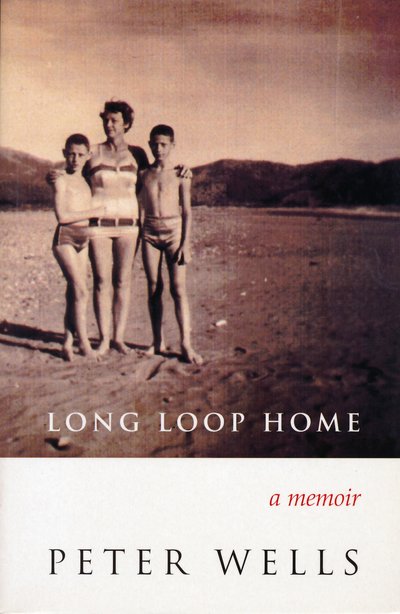
Long Loop Home: A Memoir by Peter Wells (Penguin)

Montana Book Award 2002

Peter Wells writes:

Every book has its own kaupapa, its own way of being realised. Long Loop Home became my first piece of extended nonfiction or creative nonfiction and to a degree I found myself at home in this new terrain. To win a prize for such a new endeavour was deeply gratifying. I knew I was working in an area new to NZ writing, and its content, for its time, was challenging. Yet the curious thing is the thread has been picked up in my most recent book, Dear Oliver and is extended even further in my forthcoming book, Hello Darkness. So what was new then has become my way of talking.


Extract from Long Loop Home: A Memoir (Penguin, 2001 )


A Backward Look, Towards a Primitive Terror[1]

On one level New Zealand is this free-and-easy, open society where people are all pleasant to one another, we’re egalitarian, we lend each other a helping hand. Everyone has that special quality of openness to experience, history and the future. On the other hand, where a phobically secretive society: uptight, tacitly racist. We’re the incestuous little village in which everyone knows something nasty has happened but nobody’s going to speak up about it first.
……….Of course we’re somewhere between the two, slipping from the margins of either. Think of the elation after New Zealand retained the America’s Cup, and think of the depression when New Zealand lost the Rugby World Cup. By turns, ebullient and tortured, overconfident and neurotically insecure, New Zealand – and I think Australia – tends to swing between the two poles with all the gymnastic élan of a manic depressive.
……….This makes New Zealand, it seems to me, a peculiarly different terrain in which to speak out. The secretive little village is in our genes. We are, after all, a very small society, numerically, and when you write in New Zealand you know perfectly well someone is going to know your aunt, or someone who lived over the back fence – or worse still, someone who knew you before you were a formed human being.
……….You write, in this sense, with a set of glowering faces around you. Most often they are saying: don’t do it, stop right there, don’t you have any sense? So how do you engineer a path between these two extremes? How do you manage to ensure that people you know and love are not damaged by the process of speaking out when the communal ownership of truths – and falsehoods – is so powerful in the fetid small town that is New Zealand? Or is this simply not an issue when set beside the grave, great mask of truth?
……….‘The need to face up to prospective oblivion’ is what Walter Benjamin says is at the heart of all writing. Certainly I feel this when I come to look at an event in my life that was both central and somehow tangential, traumatic even though it happened at a remove. The strange thing is that for me even to mention it is to break a primal confidence. So much energy has been invested in forgetting, in covering over, in rendering it down into the smallest particles of dust – the white chalk of oblivion – that for me to place it into the hard black form of word on page, print on paper, is to risk placing myself in a dangerous position. It is to risk placing in danger people I love and honour. Worse still, it is to risk animating the trauma itself.

Scandal is a strange beast whose power lies in its volatility. It grows from something small, some single action, which, for whatever reason, makes contact with the anxieties of a wider society, and before you know it, almost with an audible roar of a fire taking hold, intermingled with the yells of the gathering crowd, a dreadful event – a scandal – is born. The people involved are stripped naked. They are forced to re-live, again and again, for the entertainment of the people gathered, the action at the core of the scandal. Onlookers, enjoying themselves, take sides. Those people with the most vociferous opinion are usually those with the least interest in finding out the truth. Moral stands are taken, and people feel elevated by the degree of the disgust they express.
……….All scandals have at their heart a form of emotional cheapness. The Germans have a word for it: schadenfreude. Scandal is really a kind of entertainment, but hypocrisy prevents people from acknowledging this. This is partly because real savagery is involved, almost a form of cannibalism. The individuals at the core of the scandal are ritualistically devoured, stripped to the very bone, then their marrow is drained: and as quickly as the scandal began, so the scandal, finding nothing left to feed it, dies down with an astonishing speed. The crowd dissipates, feeling a kind of human shame at what they have been part of. In the sudden darkness that falls, those who have been left behind – those who were attached by blood or affection to the sacrificed beings – drag themselves off into the quietest corner. They have one profound wish: that this scandal may never be re-animated. In the long night of silence, they pray for the event to move out into the calmed sea, so it slips away, a small barque of misery and despair, grief and shame, out into a darkness beyond recall.

I’ve talked of scandal here in an abstract sense because the strange thing is once scandals collapse, they seem, retrospectively, ludicrous. It is hard to work out quite why people were so animated. Yet at the time of the explosion – or implosion, since scandal has a way of collapsing in on itself – it isn’t unusual for entire front pages to be given over to the event. ‘Real’ political events are overtaken by that strangely volatile, animated cloud of unknowing, which is scandal. Personally I think scandal is a political event in another guise. Andrea Kennedy, in Eve Was Framed, Women and British Justice, posits the idea that when women kill, the scandal that attaches itself almost inevitably to the case is a reflection of social anxieties of the time – about women, the role of women, the potential (for good or ill) of women freed to act in whatever way they want.
……….I know I myself buried the scandal I’m about to speak of so successfully that I forgot all about it. Or rather, I tried to forget the central effect it had on my growing up.

The flat landscape of paddocks and country roads near a military base echoed with the sounds of people dancing, talking and drinking. It was an August night and I was sixteen. A new intake of nurses had arrived at the base that afternoon for a tour of duty. As the day dimmed down into dusk, the young nurses had changed, put on fresh makeup and gone over to the officers’ mess for a few drinks.
……….But if the base had the slightly odd sense of being a holiday camp, the larger fact was the Vietnam War was raging, and New Zealand was a participant. Before long news came through of a potential crisis and the nursing staff were put on standby. In the meantime, they had to sit around and wait.
……….The timing was not good for a twenty-nine-year-old nurse, Anne Padgett. She was visiting from a neighbouring base a few miles away. As the subsequent trial was later to reveal, she had been undergoing a period of severe mental stress. A colleague later said in evidence: ‘Sometimes (Anne) would be just sitting in her office with the door shut … I would find her with her head in her hands and she would just be looking down at the desk.’ A week earlier, she had been stood down with two days’ sick leave.

Even at the depositions, staff members acknowledged the rumours that were the source of the stress. They had to do with the relationship between Anne Padgett and thirty-nine-year-old matron Lorraine (Laurie) Cooper. They had met seven months before and had struck up a friendship that quickly became intense. A fellow nurse would later allege in court that on one occasion she had found Anne lying asleep in the nurses’ sitting room, awaiting Laurie’s coming off duty. However when Laurie came in, she asked the nurse to tell Anne that she should return to her own base. The nurse could recall Anne banging on Laurie’s locked bedroom door, begging to be let in.
……….The nurse who occupied the bedroom next door to Laurie told the court later how she had overheard the two women during the night. ‘I felt rather disgusted,’ she said at the depositions hearing. She had overheard ‘a disgusting conversation’. Anne ‘came over practically every night … and my reaction was that I was deeply concerned and as a result I saw my senior officer and asked his permission to ring Matron East’. It was Matron East’s job to oversee problems to do with nursing personnel. She lived in a different city and the case was judged sufficiently important for Matron East to visit the base and make enquiries.
……….The officer in charge of Laurie’s base appeared to wish to let the matter lie. Anne and Laurie were highly efficient and popular nursing sisters. There is a definite sense in the evidence given at the depositions and Supreme Court that Laurie’s superiors knew what Laurie was, and they chose to disregard this, judging her a worthwhile member of the armed forces. (As the officer in charge said later in court on another matter, ‘One’s whole instinct is to protect one’s sisters.’) Perhaps because of this they sought what in their mind was the least damaging process, and one calculated, possibly, to minimise any potential for scandal. The two women would be separated.
……….‘The whole situation was considered carefully,’ Matron East later said in court, ‘and it so happened there was a service posting coming up.’ Sister Anne Padgett would be sent back to the South Island, while Matron Laurie Cooper would be temporarily posted overseas.
……….On Anne Padgett’s own evidence to the Supreme Court the following year, the two women by this stage had become involved in an intense lesbian relationship. Just before the above incident, Anne had gone overseas, trying to cool the affair.
……….On her return, Laurie had handed Anne a forty-three page hand-written confessional letter in which she outlined her journey towards finding a woman she could love. This included details of an earlier love affair, which had ended unhappily. Laurie had attempted to commit suicide. (All this was revealed in the Supreme Court where the forty-three page letter was used as a prime piece of evidence.) For Laurie, an older woman who had had a difficult earlier life, trying to find lasting relationships in an intensely homophobic period (with its concomitant internalised self-hatred), the letter suggested she felt she had at long last found her ideal lover. ‘You are so different to anyone I have ever met. To me there will never be another you,’ part of her letter read.
……….The two women exchanged love letters and photos, both of which would be used as evidence in the trial. Inside Anne’s wallet was a photo of Laurie on which Laurie had written: ‘To Anne, my dearest dark haired little monster, yours with my very sincerest love, forever.’ Another photo of Laurie had these words written on the bottom: ‘Found at last and mine to keep forever, M.(y) D.(ark) H.(aired) L.(ittle) M.(onster).’ A letter from Anne to Laurie quoted later in court read: ‘Please don’t ever deceive, darling, in any way at all.’
……….Anne Padgett had a gamine kind of charm. Five-foot three-inches tall, with dark hair and an olive complexion, the court records note that she herself had ‘a scar inside her right wrist’. Her hair was cropped short, and photos from the period appear to show a woman adopting the look of a relatively stylish, if boyish, young woman of the 1960s. But if Anne looked like the less mature of the two, court documents reveal that she was the one resisting most intensely their enforced separation. She approached the head of her base and tried to argue him out of it. When this didn’t work, she made it known that she would, if the worst came to the worst, leave the force and get a job at a hospital in Laurie’s home town.
……….Up till that point, Anne had been happy in the force, and she was going to sign on for another term of duty. But the fact was, as her lawyer revealed in court, she had had an unhappy period before arriving at the base. Earlier she had been in a different branch of the armed services and had become pregnant to a married man. She had had the baby at the beginning of the year and come up to Auckland to settle into a new life. This became a key piece of evidence used by the defence to attest to Anne’s heterosexuality.
……….During the year Anne often came out to visit Laurie’s sister in Point Chevalier. Laurie was Aunty Nola’s adopted sister and sometimes as a threesome, Laurie, her niece Frankie and Anne would go off and do things together. They had a lot in common, after all Frankie was also training to be a nurse. Anne had also stayed with Laurie’s mother, and in fact, in court later, Anne would say, rather improbably given the dates, that it was in Laurie’s mother’s house that she and Laurie first had sex.

It isn’t difficult to think how troubling that August night must have been for Anne Padgett and Laurie Cooper. The following day Laurie would be going to Singapore, and then, with her safely out of the way, Anne would be flown back to her home town – where the father of her illegitimate child still lived. Together they must have talked over and over what they could do to get out of what seemed a looming a nightmarish situation. But it is significant in view of subsequent events that Laurie seems to have done nothing to resolve the situation. There is no evidence that she tried to get the separation plan changed. She didn’t talk to her superiors at all about it, although, as court documents reveal, her superiors did talk to Laurie about Anne’s stress levels and the baffling fall-off in the quality of her work.
……….Anne was clearly the more disturbed about the coming break. Just that morning, in what seems a frantic search for a solution, Anne had asked her medical superior how she could institute final leave from the force. She had been told it would take time. There were proceedings that needed to be gone through, and there was no way that the separation – now only hours away – would not take place. ‘Her demeanour,’ he said in court later, ‘was very excited and distressed.’
……….Trapped within an otiose institutional setting that had exercised its power in order to separate the two women – in a small and isolated village atmosphere buzzing with the gossip of the hour – Anne was forced to accept, on that August night, that there was no way out.

Into this tense situation, and perhaps fortunately largely oblivious to it, came a new flock of nurses. They arrived during the day at odd hours, and settled into the old-fashioned nursing quarters. These had been left over from World War II. They were meant to be temporary but, like a lot of such buildings, they stayed in existence simply because they fulfilled a purpose. Basically they were a series of single rooms off long corridors. Only recently they had been upgraded to afford minimal privacy, with things like lining that went up to the ceiling and locking doors. Some rather gay curtaining had been added but nothing much could hide the fact they were brutally utilitarian military quarters. The nurses’ wing had a communal sitting-room-cum-kitchen with a telephone.
……….Anne had arrived earlier in the evening in response to a phone call from Laurie asking her over. She was dressed in brown slacks, a pink cardigan, with moccasins she had bought in Canada and white socks. She had driven over in Laurie’s car, her own having been recently caught in a minor accident. She brought in a flagon of beer, and Laurie, Anne and some of the nurses sat round chatting in a desultory manner. At one point a male officer came in and asked one of the pretty young nurses over to the bar for a drink.
……….It wasn’t until after 9pm that the emergency was averted and Laurie was stood down for the evening.

What happened over the next few hours is a matter of conjecture. At approximately 11.30pm the young nurse returned to her room, accompanied by the officer. She had had two bacardis, he had had several beers. AS they came down the corridor, the young nurse noted Laurie’s door was shut, the window above her door illuminated. They went into the nurse’s room. The time they spent in this room would remain a point of important disparity. The male officer said, in his evidence, they were in there momentarily, for ‘about two minutes or so’. The young nurse maintained they were in there for five minutes. The reason the officer had come into her bedroom was to accompany her while she ‘dropped her handbag off’, he later said in evidence. Regardless of his reason, he was breaking military ordinances by being inside her room.
……….This in effect offered the defence a golden opportunity to pick their testimonies apart, since the officer, a married man, was at pains to minimise the amount of time he had spent in the young nurse’s room. After about five minutes, according to the nurse, she walked towards her door, noting the light was out in Laurie’s room. It was then that she heard scuffling, and what sounded like a bare foot pounding the floor. A woman’s voice – Laurie’s – cried out, ‘Help me! Help me!’ and ‘Open the door and come in and help me!’. The young nurse and the officer tried the door of Laurie’s room, and, finding it locked, ran outside to Laurie’s window.
……….Sitting out in their car, another nurse with a male companion respectively noted the young nurse and officer alternatively run or walk (another useful disparity of evidence for the defence) round the back of the building, to the window.
……….Once they got there, the young nurse noted that the latch window was open a few inches and she put her hand into the darkened room, desperately scrabbling to find the light cord. Unfortunately, and in one of those little tricks of history that alter for ever the way things turn out, the cord was on the opposite side of the window to the cord in her own room.
……….Meanwhile, the sounds in the room were falling away, ‘subsiding rather than stopping’. At this point, according to the young nurse’s evidence, Anne Padgett’s face appeared behind the glass. She was a mere ten inches away from the young nurse’s face and appeared to be in a leaning position, with her shoulders forward. By this time the room was silent. The young nurse said in evidence that Anne’s voice was ‘cool and calm’. Anne allegedly said, ‘Everything is all right, it’s all under control.’ (The officer recalled her saying, ‘It’s all right, she be all right soon,’ another useful disparity.)

‘It’s all under control’ or ‘She’ll be all right soon.’
……….Faced with this unusual situation, the young nurse and officer went back inside. For whatever reason, they sat around for another two hours, talking. Since Laurie and Anne ‘were the best of friends’, they reasoned that Laurie may have over-indulged, leading to a momentary disturbance between the two women. The officer thought Laurie might have been having a nightmare.
……….Later, still in the car, the other couple broke off their own marathon conversation and saw Anne emerge from the side of the building, run towards her car and drive off.
……….The security man at her base would later see Anne drive by. He raised his hand in recognition. She parked her car and went up into her room. She locked herself in.

The following morning, the phone rang at about 8.30am at the nurses’ quarters at Laurie’s base. Amid the torpid air of an off-duty Saturday morning, with people a little hungover, nobody initially went to answer it. Finally a sister answered the phone and an orderly asked if either Laurie or Anne were there. After more phone calls, the young nurse from the room opposite revealed her concerns about the night before. She and a colleague knocked on Laurie’s door. Receiving no answer and finding it locked, one of them got a chair, stood on it and looked in the fanlight. Laurie appeared to be in a deep sleep, her face ‘bloodless’. At this point the nurses used a ploy they often employed when they had locked themselves out of their rooms. They got the tail-end of a comb and pushed the key out of the lock, having first taken the precaution of placing a newspaper on the floor under the door.
……….The door was opened.
……….Either two or three nurses now entered the room. The first thing the charge sister noticed was the smell: it was blood. ‘I went to the right side of the bed and then I looked at Sister Cooper and I noticed a faint blood line just around her ear, the counterpane was stained … there was … blood on the floor.’ It was clear Laurie was dead. The duty doctor was called immediately.
……….On pulling back the covers, he saw Laurie had been laid out quite carefully, her hands almost clasped. Around her neck was a blood-drenched towel placed there to staunch the blood flow. When he took it all away he saw a huge gaping wound. Her neck had been cut wide open with what looked like a medical scalpel.

From here there are confused reports, either the normal sort of confusion of any scene of violent death, or, alternatively, as is alleged in the memoirs of the defence lawyer: ‘These government employees sprang into action and arranged an operation for which they had the least training but the greatest aptitude – a cover up.’ For the force, one could say the worst of all possible resolutions to separating the two women had come to pass. The distant rumble of an oncoming scandal, ominous as a storm, could be heard.

A detective inspector from the CIB arrived at the scene two hours after the discovery of the body. He sent a local policeman and the duty doctor to look for Anne at her base. Finding Anne’s door locked, the policeman broke in the window. They found Anne Padgett lying in bed, dressed in a night-gown. She was slumped down. In her right hand lay a blood-stained scalpel. What would turn out to be Laurie’s blood was plashed on her clothes – her right-hand moccasin, and around the sleeves of her pink cardigan. Around her neck, in the same neat fashion as the towel placed around Laurie’s slashed neck, was a towel, presumably to mop up a possible flow of blood. There was a small nick on Anne’s neck. A bottle of Tiurnal lay in the wastepaper basket, alongside an empty bottle of DB lager.
……….Anne was technically dead of an overdose. At one point, the scalpel fell out of Anne’s fingers and automatically, the doctor picked it up, without thinking, and placed it on the table. While the policeman investigated the room, Anne made a sound that intimated she was still alive. She was rushed to hospital and revived. Technically she had been dead for up to five minutes.

Initially it could well have appeared to the detectives who had looked at the crime scene a clear and straightforward case of murder – a particularly horrendous murder – followed by a bungled suicide attempt. The pathologist who looked at Laurie’s body presented a compelling picture: the inside of Laurie’s mouth showed bruises that were consistent with someone holding her head to one side (possibly with a pillow over her face). This had forced a brace on her teeth onto the side of her mouth. A pillow was found on Laurie’s knees: the implication, advanced by the prosecution, was that Anne was in this leaning position while allegedly saying to the young nurse, ‘Everything is under control,’ (or ‘She’s all right now,’).
……….Whatever the situation, a scalpel had gone into Laurie’s neck, beginning at the left side of the mid line at the back of her neck, continuing round the left side of the neck, to finish just right of the centre, at the front of the neck. The slash was three-quarters of an inch wide, and one-and-a-half to two inches deep in places. ‘I consider it impossible for the deceased to have inflicted the wound herself,’ said the only qualified pathologist to actually inspect the body in situ. (This was contested by other pathologists brought in by the defence.)
……….A subsequent search for scalpels among hospital supplies revealed that two were missing from the base where Anne worked. A ballpoint pen had been substituted for a missing scalpel in one case. Inside Sister Anne Padgett’s kit was a broken test tube, such as the blade of a scalpel could be carried in. (The defence offered an alternative explanation for this: a thermometer could also be carried in a test tube.)
……….Anne Padgett was released to a psychiatric ward. Once it was ascertained that she was capable of holding ‘a rational conversation’, she was visited by the police. At 4.50pm, 12 September ‘the accused was arrested and charged with the murder of Lorraine Paula Cooper’.

At the initial depositions held at the lower court, there seemed to be uncertainty on the part of the defence about Anne’s alleged involvement in a lesbian relationship. Efforts were made to curtail the evidence on the grounds it was immaterial. But three months later, by the time of the Supreme Court trial, the relationship became the core of the trial. Here the defence deployed for the first time the image of a house. The point was that, to understand a house you had to go inside.
……….By this, the defence meant: you had to enter into the psychology of Laurie and Anne’s relationship. And the way to do this was to read the dead woman’s letters, talk to ‘experts’ on homosexuality, and to put Anne in the dock as chief witness.
……….The Laurie that emerged was unrecognisable to people who had known her. Anne portrayed herself as an unwilling sexual accomplice slowly worn away into a state of rapt subjugation by a strangely mannish seducer. Laurie’s intimate and confessional letters, meant for Anne’s eyes only and marked ‘private’, were presented as evidence of a neurotic person. Rather than a lover involved in a consensual affair, Laurie became ‘a hunter lesbian’ deploying drugs to subjugate her heterosexual victim – a young woman disturbed by the recent birth of her illegitimate baby. The word ‘maniac’ was used by the defence to describe the dead woman. And Anne Padgett described herself as desperate – not to stay with Laurie at all costs, even unto death – but to escape a lesbian menace.

One has to, perhaps, put oneself into the mind-space of this woman charged with murdering another woman alleged to have been her lover. Anne had tried to kill herself, been brought round from something closely approximating death, and woken up to find herself in the dock, accused of the most serious crime in the land.
……….There was little public knowledge at the time about lesbianism. Male homosexuality was illegal in New Zealand – and would remain so for another twenty years. Understanding of homosexuality and lesbianism was still predicated on it being a medically classified disease and a highly stigmatised form of behaviour. Most people in New Zealand probably got their ideas of lesbian behaviour from, significantly enough, newspaper reports of an earlier sensational murder case: the Parker Hulme trial where murder had been precipitated by the threatened separation of two allegedly lesbian girls. It was in this context of ignorance and prejudice the trial took place.

When I took up researching the case, in my fiftieth year (seeking to comprehend a case that had been of such sombre importance most of my life, baleful, a darkling force), I was astonished at the small amount of press it initially got in the newspapers. The tabloid paper of the time provided most coverage, and, interestingly enough, included some of the text of Laurie’s love letter. Possibly because the alleged murder involved the armed forces, and hence the security of the nation at a time when New Zealand was technically at war, the newspapers may have attempted to play the case down.
……….Another way of looking at it is the disquiet felt about the little explained nature of lesbianism itself. One newspaper, for example, provided coverage of the case but placed it in the sports pages, suggesting only male readers would be able to cope with information that would be ‘too disturbing’ – too contagious? – for women. But day by day, as the Supreme Court trial continued, the coverage grew, and the case, like an eerie image floating ever closer and clearer in the public consciousness, began to work its way towards the front pages until the final jury decision burst out, in headlines (‘NIGHTMARE ORDEAL OVER’ screamed the tabloid) on front pages across the nation.


[1] In this account, names, dates and places have been changed to protect the privacy of people involved.


© Peter Wells, 2001, published in Long Loop Home: A Memoir, Penguin.

'Character to some extent is much a construction of the reader as it is of the writer.' - Lloyd Jones

Read more

This year marks the fiftieth anniversary of Book Awards in New Zealand. Our national prize has had different sponsors and incarnations over the years: it’s now the Ockham NZ Book Awards, held each May on the Tuesday of the Auckland Writers Festival.

Over the years many of our brightest and best writers, and classic books, have been recognised in the awards. Many of these authors are part of the Academy of New Zealand Literature. We’re celebrating their work this year by publishing excerpts from one of their award-winning books, along with notes from the authors on writing those books. Here’s to fifty more years of great books and our constellation of writers.


As the Earth Turns Silver
by Alison Wong (Penguin Books) | New Zealand Post Book Award 2010


Alison Wong writes:

In January 1996 I returned to Napier to celebrate the centenary of my paternal great grandfather’s arrival in Aotearoa/New Zealand. We were sitting together in the dining room, where throughout my childhood we ate our evening meals, when my father looked at me, paused, then said, ‘You know he was murdered, don’t you?’

All my life my parents had been so busy working, whether in the family fruit and vegetable shops then supermarkets or for many community groups, that there’d been little time for family stories. And my father was a quiet man rarely given to words, apart from when giving formal speeches or discussing business. My mother once told me that my father didn’t say much, but when he did I should listen carefully.

I listened. And asked questions.

The case was never solved. Perhaps the police didn’t try very hard, at least that was how the family felt. After all in those days there was a lot of racism. And it was during the First World War. In all likelihood the murderer went off to war.

What did the family know about great granddad? Very little. He had not returned home to China before his death but had saved enough to educate and bring his son, my father’s father, to join him in Wellington. There were no photographs. We knew nothing about his appearance except that he was tall.

A few days later my cousin told me his father had been walking past a Chinese shop during the next World War when he realised the people inside were talking about him. His grandfather had had an affair with a white woman, they were saying.

When I asked my uncle, he looked at me wide-eyed. He didn’t know what I was talking about. I asked my father. He didn’t know anything about it, but he understood that it would have been a very lonely life. Because of the poll tax and other discriminatory legislation directed exclusively towards Chinese, very few Chinese women and children came to New Zealand. It would be understandable if some Chinese men developed other relationships.

Whether my great grandfather had a relationship with a Pakeha woman or not, whether he was murdered because of this or not, I recognised this as fertile ground for a novel. But it was hard enough trying to write a first novel, let alone a historical transcultural one. I knew nothing about the time period or the social customs and histories, Chinese or Pakeha. And I was already writing a contemporary novel, even if I’d only written a few thousand words.

A couple of months later I was due to take up a two-month Reader’s Digest New Zealand Society of Authors residency at the Stout Research Centre. Just beforehand I realised I did not want to continue writing the contemporary novel. I needed to come up with another novel quickly.

And so with trepidation, I started on As the Earth Turns Silver.

I used my own ancestral villages in Zengcheng/Jungseng county, Guangdong, so that I could at the same time research my own family history, but I did not try to write the true story of my great grandfather. In fact, I deliberately changed many known facts. But the true story anchored the novel in a particular setting and time period. I set the novel in the fruit and vegetable shop near the Basin Reserve where my great grandfather lived, worked and died. It no longer exists but many of the buildings close by still do and I found the plans for the shop, 100 Adelaide Road, in the Wellington City Council archives. I haunted the streets of Wellington examining the old buildings and reimagining those that were gone.

I found my great grandfather’s police file at Archives New Zealand. I changed the date when he was murdered by a couple of years from September 1914 to mid-1916 so that I could explore various aspects of Chinese and New Zealand history. And I changed the way in which he was murdered. The actual murder was shockingly brutal and deliberate: he was looking down when he was bludgeoned seven times over the head with a heavy metal object. His skull was crushed. I didn’t want such brutality or intention.

Literature and journalism in English of the late nineteenth and early twentieth centuries generally depicted Chinese in a racist, derogatory, patronising or exoticised way. Chinese were not portrayed as people like you and me with our individual personalities and circumstances. And so I chose to tell the story through multiple voices, Chinese and Pakeha, male and female. I wanted to depict differing perspectives and I wanted to give voice to the voiceless, to people like my grandparents and great grandparents.

The main characters of the novel are fictional though aspects of many real lives have been reconfigured into the characters of the novel and their stories. The work raising money in New Zealand for Dr Sun Yat-sen’s revolution, for instance, is based on the work of my mother’s mother’s father, Huang Guomin/Wong Kwok-min, and aspects of the life of Yung’s wife in China are based on details recounted to me by elderly interviewees.

Many historical figures and events are depicted and integrated into the fictional story, eg, Dr Truby King, Dr Agnes Bennett, Lionel Terry, Joe Kum-yung, Dr Sun Yat-sen, Yuan Shih-k’ai and Consul Kwei. Lionel Terry would be an unbelievable caricature were he not real, his words and deeds based published accounts, the only fiction being his interactions with the fictional main characters.

Sometime after As the Earth Turns Silver was published, I received a phone call from an elderly woman. The story of Yung and Katherine was, in many ways, the story of her grandfather and grandmother. A kind Chinese man who rescued a poverty-stricken Pakeha widow. Except that they married and moved away from Wellington to small town New Zealand. Where their relationship was better accepted and they happily raised their children.

Is it easier to accept the other, the stranger when they are few, when they are just your neighbour, when you realise they are human like you and me?


Selected Extracts from As the Earth Turns Silver (Penguin Books)


Wong Chung-shun, 1896

Prologue

It is a lonely place where the Jesus-ghosts preach. They preach about love, about a god who died of love, yet in the street the people sneer and call out and spit, then on Sundays sing in the Jesus-house.

Their god is a white ghost. You see the pictures. He has pale skin and a big nose and a glow of moonlight round his long brown hair. He has many names, just as we Tongyan have many names. We have a milk name, an adult name, perhaps a scholar or chosen name. The Jesus-ghosts call their god Holy Ghost. Even they know he is a ghost. People are like their gods, just as they are like their animals. They even call him Father. We do not need to name them, these gweilo. Even they know they are ghosts.

Yung says, We do not need to recognise their words; we do not need to interpret the raised syllable. It is there in a flicker of the eyes, the slight curl of a lip, in the muscles of the face, the way they set against us. He says, The body has its own language, as fluid as poetry, as coarse as polemic.

Yung has a way with words. He says the language of the body can be used as a weapon.

Now that Yung is here, I do not have to pay a clansman. One of us can go to the market while the other keeps shop; one can sort bananas while the other trims vegetables. Now that he is here, I can save to bring out a wife. I can save the fare and the poll tax. It will take a good many years.

When Yung first arrived we did not recognise each other. We had not seen each other for over ten years. He is eighteen now, and books have affected his brain. He dreams big, impossible dreams. He does not understand life, and he does not understand this land. He is full of too many feelings like wild animals caught and caged in a zoo. He likes to talk, and his words are quick, quicker than his understanding. He is very young – fifteen years younger. My brother is like a son, an only, foolish son.


Part II

Kwangtung, China to Wellington
1907–1915

from Lantern

Yung rose early. He could not keep still. He felt as if he had boundless energy. He walked to the markets composing short poems in his head, reciting them to himself, whistling old love ballads. His body no longer belonged to himself; it seemed so light, he felt like he could run up walls, perform miraculous feats of endurance.

Bidding hadn’t started yet. He walked through the cavernous buildings, past the auctioneers with their clipboards; through the throng of other buyers; past the huge concrete pillars and the timber painted signs nailed to the walls or hanging from the ceiling – Sandy Pope, George Thomas, Leary, Thompson Bros, Townsend & Paul, D. Bowie, Market Gardeners; past the lines of produce, here a line of cauliflowers, there a line of cabbages, here lettuces, there apples or pears; past the stacks of wooden cases and jute super-sacks with the name of the grower written on paper tags. He hummed as he walked, only after some time realising what he was humming – a bawdy folksong about a bridegroom waiting with his friends for the bride. He laughed and kept humming, hunting out the produce from the best growers, calling out to his fellow clansmen, ‘Have you eaten yet?’ then smiling, ‘Yes, yes, I have eaten,’ even though he had eaten nothing since the night before; his shoes sounding out on the damp wooden floorboards, somewhere just above the hum of excited conversation, the yelling, the banging of wooden boxes, the clip-clop of horses on the road outside. Jonquils. He stood in Market Gardeners, smelling jonquils. He laughed. Today he would buy flowers.


Better Than a Dog

‘How long have you been working for me, Katherine? I’ve never seen you looking so good.

‘Do you remember what you were like? A lost puppy. You were! And now look at you. Mr Newman was saying to me the other day, “That Katherine McKechnie, she’s lost ten years off that pretty face of hers.” He says I’ve done you a world of good.’

Mrs Newman laughed. She put her pen down and clasped her hands in front of her. ‘So who is he, Katherine?

‘Come on, Katherine, I know that look – you’re like a blushing bride. I swear if I didn’t know better, you’d break into song as you typed my letters. You’re in love, Katherine. Who is he?

‘No, I haven’t heard any rumours. You’ve obviously been careful, but you used to be so punctual. No, I’m not concerned if now and then you’re five or ten minutes late. Though love can be injurious to one’s health if one doesn’t get enough sleep . . .

‘I’m not going to tell anyone, Katherine, not even Mr Newman. I understand the life of a widow with children is hardly conducive to romantic entanglements. What man wants a used chalice, as they say, let alone another man’s children?

‘Is he married? No?

‘Oh.

‘Well, you certainly are full of surprises.’

Mrs Newman picked up her pen, wrote a few words. Crossed them out.

‘You should be careful . . .

‘Katherine. I have nothing against the Chinese. They’re a hardworking race, they keep pretty much to themselves, and they don’t deserve the vilification granted them in the newspapers. But—

‘Katherine, listen. What does your fellow Briton see, the one who struggles to put bread and dripping on the table? The Chinamen undercut us with prices that would put a decent working man in the poorhouse. They take work away from impoverished laundrywomen. They suck the country dry and then return to the Flowery Land with everything that is rightfully ours. That’s what people say, and you know it.

‘Katherine, don’t look at me like that, I’m only trying to open your eyes. At least you should be careful of your reputation.

‘Yes, I realise you’re being careful. Otherwise I’m sure I would have heard about this a long time ago . . .

‘But Katherine, make sure you’re doubly careful. You may be a widow, but your husband was a respected member of the community . . .’

Mrs Newman burst into donkey-like laughter. She convulsed, ending in a loud snort. ‘Oh, Katherine you are a party! Of course I know women aren’t just appendages of their husbands! But, seriously Katherine, you must realise that it’s only the lowest class of women who consort with Chinamen. Those who have nothing to lose.

‘All right, so there might be a few respectable women who marry Chinamen. Ladies who play the piano at church and fall in love while working for the Lord among the heathen. These are the kind of women who answer the call of God to the darkest heart of Africa or China and die in childbirth or of some unspeakable tropical disease.

‘Katherine, listen to me. Did you know that if you marry an alien, you lose your British citizenship? No, I didn’t think so. A woman gets married and she might as well be an infant or a lunatic or an idiot. I wish I was joking. You marry a Chinaman and you lose the right to vote, you won’t get the old-age pension, Katherine, you lose everything. And if you’re thinking of living in sin, God forbid, you must have heard of the cases that have gone through the court? Doesn’t Truth love to report such cases? Low-class women living with Chinamen. I’ve heard it said that they’re better treated by the John than their drunken husbands, but Katherine, the police have picked up women from Haining Street and charged them with vagrancy and being without means of support. They’ve taken British children away from their mothers – despite the mothers protesting that the children are well cared for – because the house was frequented by Chinamen!

‘He doesn’t live in Haining Street? Katherine, it’s a matter of appearances. He’s a Chinaman. That makes him worse than a Jew and maybe a little better than a dog. Maybe. Do you think they’d pick up a woman who was living with a white man, even a drunkard, and charge her with vagrancy? Do you think they’d take away her children?

‘Katherine, I’m telling you this for your own good. Everything you do or don’t do has its consequences. Just make sure you are prepared for them.’


As the Earth Turns Silver

What was it? He wanted to know why she held back. Why she did not respond to his kisses.

She did not know what to say. She could hear Mrs Newman’s words but could not tell him. ‘The children know I come out at night,’ she said.

For a moment there was silence. Then he drew her to him, kissed her hair. ‘Come,’ he said, taking her by the hand, leading her out from the cover of trees, back through the College grounds, down to the city.

It was a clear night. A full moon. She was afraid with such bright moonlight even at ghost hour, as he called it, when the living slept and only the dead walked the streets. What if someone saw them?

But he was wearing a hat, he said. If someone came, he would look down or away. She could do the talking. No one would see he was Chinese.

She asked where they were going. She was anxious about leaving the children for too long. And what about the police? Didn’t they patrol the streets at night? What if a constable stopped them? Buthe put his finger to her lips and led her down the promenade – the path through gardens and trees – between Cambridge and Kent Terraces. They walked through stillness, through shadow and moonlit brightness, the statue of Queen Victoria looming ever closer before them. Katherine stopped and placed her hand on the granite pedestal, looked up at the great bronze figure. She looked old, hard, and yet she’d loved her Albert.

‘Come,’ he said again, and they walked past the Zealandia Hotel, past the City Destructor chimneys, to the silent boats, the empty baths, the sweep of the harbour along Oriental Parade.

He laughed at the name; told her this was his street, not Adelaide Road, not Haining Street, not Frederick or Taranaki or Tory. He told her to look at the moon and street lights reflected in black water. Had she ever seen it like this at night? The most beautiful street in Wellington. This Chinese street where no Chinese lived.

He came from behind and held her in his arms, told her to look again at earth and sky and water. Could she see how the world turned silver? People died, he told her, because they were afraid. They did not go out at night on dangerous water. They did not see the earth as it turned overnight to silver.

She gazed at the ripples of light on blackness. But people died in dangerous water. She turned to face him, told him it didn’t even have to be dangerous. Her husband fell drunk into the harbour one night. They pulled him out in the morning.

He was silent for a while. Then he told her there were two ways to die. One was . . . he looked at her, uncertain how to express it in English.

‘Inevitable?’ she said. ‘It comes to everyone?’

‘Yes,’ he said. ‘Yes’. The corners of his mouth lifted. But then he looked at her intently. The other way, he said, this inside death, was not . . . inevitable. People took it in their hands, they held it and would not let go. Some people did this and did not know. Some people knew what they were doing.

He kissed her eyelid. Told her they were born for dangerous water. She looked up at him. Shivered.

‘You’re cold,’ he said. He put his coat over her shoulders, and they turned and walked back along the harbour, past the bereft boats, back towards the city and home.


© Alison Wong, 2009, published in As the Earth Turns Silver, Penguin.

'There’s a kind of heaven that comes from hearing another writer interpret the mysteries of process' - Tracey Slaughter

Read more

This year marks the fiftieth anniversary of Book Awards in New Zealand. Our national prize has had different sponsors and incarnations over the years: it’s now the Ockham NZ Book Awards, held each May on the Tuesday of the Auckland Writers Festival.

Over the years many of our brightest and best writers, and classic books, have been recognised in the awards. Many of these authors are part of the Academy of New Zealand Literature. We’re celebrating their work this year by publishing excerpts from one of their award-winning books, along with notes from the authors on writing those books. Here’s to fifty more years of great books and our constellation of writers.


.

The Matriarch by Witi Ihimaera (Penguin) | Goodman Fielder Wattie Book Awards 1986


Witi Ihimaera writes:

When I was writing The Matriarch (1986, Penguin) I was thinking at a different level of consciousness. After all, ten years had passed since I had written my last book, The New Net Goes Fishing, published in 1977. A lot had happened in New Zealand politics as well as my own, including the 1981 Springbok Tour which saw the country at war.

During that decade I had endorsed postcolonialism and postmodernism, in particular metafiction as a literary form. But although the Orestaia was the classical analogue for the novel, The Matriarch’s mainframe was Maori sovereignty. It was my wero, my challenge, my dart placed in the ground. The book openly challenged any sanction of the Treaty process. It repudiated the assimilationist policies of Government and the continued alienation of Maori land. And in writing it, I was able to affirm the role of women as a force in changing the world.

The Matriarch won first place in the Wattie Book of the Year Award in 1986 and placed as runner-up for the inaugural Commonwealth Writers Prize in 1987. Canadian novelist Margaret Atwood was also up for the Commonwealth Prize for her novel The Handmaid’s Tale (1985) as well as Ben Okri for Incidents at the Shrine (1986). The winner was Olive Senior, Jamaica, for Summer Lightning and Other Stories (1986).

I rewrote The Matriarch as a redux edition, adding some 150 pages or so, published in 2009. The Dream Swimmer (1997) is a sequel.


 Extract from The Matriarch (Penguin)


She Is Artemis


1.


Wellington, 1949

La luce langue, il faro spegnesi

Ch’eterno corre per gli ampi ceili!

Notte desiata, provvida veli

La man colpevole che ferira.


Light weakens, and the beacon

That eternally courses the far-flung heavens is spent.

O desired night, you providentially veil

The guilty hand which is going to strike the blow.


“So be it,” Riripeti said.

She pulled her dark veil down and over her face.

On the forecourt of Parliament, the Prime Minister, chiefs of Maoridom and all who were gathered there looked up into the sky, crying out in alarm. The clouds were joining across what had once been a brief space of sunlit sky, like viscous liquid poured, spreading and streaming into the blue gap of air. It was as if Ranginui, the Sky Father, so long separated from Papatuanuku, had finally wrenched free of his heavenly imprisonment and wished to embrace the Earth Mother again. With relentless power he descended, blotting out the sun in his inevitable embrace of earth.

“Grandmother,” the child cried out.

Like everyone else he was afraid. He felt the warmth withdrawing, and the light being sucked away, as the moon slowly began to bite into the edge of the sun. He looked up and saw the black cutting edge across the sun’s glowing face, and tears sprang to his eyes because the light was still blinding in its intensity. He averted his gaze a moment. He heard people screaming, even members of the ope, the group which had come with Riripeti. Through his blurring vision he looked at the group.

They were all staring into the sky. Only Tiana’s face was averted from the sun and, for a brief moment, the child saw his mother looking across at him. Her face was expressionless, immobile, yet it had intensity in the gaze. Then the child saw his mother’s eyes shift, almost imperceptibly, to the matriarch. Her responding glance was autocratic and triumphant.

The light lessening, lessening. The black disc of the moon closed like a gate on the sun. The pearls in Riripeti’s hair began to change colour. The lustrous pale of the pearls became drenched with blood.

The child looked up into the sky again. The sun was almost out now, but around the black hole where it’s light had been was a bright circlet of light and, from it, there erupted bursts of flame, spectacular, wondrous, curling into the black universe.

The clouds were completely joined, and the upstaring faces and the marae itself were bathed in a wan light. The sun seemed to stand in blackness for eternity. There it shone, a beacon smothered by the clouds, still, forbidding, angry, with its corona of fire. It was like looking through a piece of smoked glass. The effect was powerful and brooding.

Riripeti looked across at the elders where they sat on the paepae. She nodded at them. She inclined her head to the Prime Minister.

“So it is done,” she said. The crowd on the marae was still in a state of alarm. Some were crying out to her.

Then the child saw that the pearls in her hair were changing again, assuming their usual sheen. Whatever was happening would soon be over. Alert, he listened as Riripeti called to the ope and pulled them together with her presence.

“It will soon be time for us to reply to the speeches of welcome,” she said. “When the sun comes, I want us to be ready. As soon as the fullness of the light returns, I will give the sign, and our first speaker will begin.”

The sun, black and awesome. Then, gradually, the moon moved away from the sun’s face and the intensity of the light increased, ever increased, and, as it did so, Riripeti lifted the black veil from her face. The clouds opened. The sun hurled its light like a hammer to the earth. Ranginui, the Sky Father, returned to the heavens. Riripeti seemed to blaze on the marae.

(“Well,” the journalist said, “the sun going out like that was a brilliant coup de theatre, and Artemis’s sense of timing was absolutely impeccable. What a flamboyant trickster she was, such a charlatan, such a sorceress! I’m sorry if you object to my using those terms but, after all, you can’t believe that it was she who made the sun go out. It was a total eclipse, of course, and it lasted about seven and a half minutes, maybe less. I’d read that it was going to occur but I had forgotten the timing of the event. So had most other people. Your grandmother, clever woman as she was, must have known about it all the time. There is no other explanation. She certainly used it to her advantage, my oath she did.

“Oh, the pandemonium when it happened. I’ve not been one to believe in witchcraft and all that, but when that sun started to go out I was struck with fear. Of course it didn’t take me long to realise what was happening. Artemis knew all along. Later, after the welcomes were over, Timoti and some other elders in the paepae refused to have anything to do with her. They were apoplectic with rage. But one of them, I think his name was Whai, roared with laughter and complimented her. “Legends will be woven of this day when the Matua made the sun go out.”

She had beaten them all, you see. But more was to follow -)

With the return of the sun, the mood on the forecourt do Parliament turned to elation. Smiling, Riripeti turned to Grandfather Ihaka, “Come, let us start out replies to the speeches of welcome which have been given to us. Let us be the best that anyone has seen or heard.”

She motioned him forward. “Kia hiwa ra! Kia hiwa ra!’ Grandfather Ihaka began. “Be careful. Be wakeful. Ka moe ararara ki te Matthias tuna…You have to stay awake to catch eels. You have to stay awake to catch a war party -”

His speech was taunting. It brought images of sentries patrolling the stepped terraces of an ancient hill forts in the red light of dawn.

“- Ka tiritiria, ka reareaia a tama tu ki tona hiwa ra. Scatter, rise up, stand in your places. Kia hiwa ra. Be watchful. Be wakeful. Be alert on this terrace. Be alert on that terrace, or someone will wound you and make you bleed -”

He patterns the ground like a sentry, springing back and forth, swaying, probing, seeking out the enemy on the horizon.

“-Papaki tu ana te tai ki Te Reinga. The tide is beating to Te Re Reinga. Eke pa Nuku. Eke Tangaroa. Hui e…taiki e.”

On the last words, the ope and the people gathered on Parliament Grounds joined in a huge shout of acclamation. “Taiki e!”

(“Your speakers were superb,” the journalist said. “I understand that your grandfather was the first speaker. The second was Tamatea Kota, the priest who was known as Artemis’s Left Hand of God. The third was your father, Te Ariki. From all accounts, they were so proficient that everyone kept on roaring with the pleasure of their imagery and wit. As you know, I can’t fully understand your language, but I can gauge when a good show is put on. Your speakers had the crowd with them all the way. Oh, they were so glorious to listen to, and to watch. They made references to genealogy and land and everything they said was appropriate and correct. The old man near me, well, his eyes were gleaming with the pleasure of it all. “I haven’t seen or heard such a fine display of oratory for years,” he said. One after another, your speakers followed upon each other, representatives from Te Whanau A Kai, Rongowhakaata and Te Aitanga A Mahaki. It was just brilliant. Then it appeared as if the last speaker had spoken.”)

The excitement on Parliament Grounds had reached fever pitch.

“You have all done well,” Riripeti said. “Our mana has been sustained. Kei te pai. Ka nui te honours kua homai ki au. It is a great honour to serve you.”

But the iwi knew that the Matua was still angry at the slight done to her.

“Now it is my turn,” she said.

Instantly, there was a murmur in the ope.

“No, don’t do it,” Grandfather Ihaka said. “The Prime Minister, chiefs of Maoridom and the tangata whenua await us.”

“Haere mai koutou ki te ruru,” came the call.

(Well, you know,” the journalist said, “we thought it was all over. Everything seemed to be calm enough. People started to chatter among themselves again and to talk over the events of the welcome. You know, to relax.”)

“Don’t do it, no, don’t,” Grandfather Ihaka said again.

(The elders in the paepae called Artemis and your people over to meet in the hongi. But your grandmother didn’t move. And Timoti began to get angry again. “No, she wouldn’t do it, she’s a woman, she wouldn’t dare.” Everywhere, conversation began to fade, and silence fell. It was quite uncanny.”)

Riripeti turned swiftly to the child. “Listen, mokopuna, listen to me. This is a very dangerous and difficult course that I am embarked upon, but it must be done. Do you think the chiefs of Maoridom will let me say what our iwi has come here to say when this is the last day of the hui? No, I have to speak now, while our people still hold the ground.”

(You know your customs better than I do,” the journalist said. “Oh yes, the role of women must be difficult in your society. I must say that I felt an immense respect for Artemis.”)

“Mokopuna, you must pray for me. For while I have done what I am going to do in my own land, I have not done it outside the home ground. There may well be a price to pay.”

“Haere mai, haere mai,” the call from the tangata whenua echoed across the iwi again. One second, then another went past.

The child heard his grandmother’s bracelets tinkling like oriental wind chimes as she gripped her walking stick.

“No, don’t,” Grandfather Ihaka said for the third time.

Her knuckles went white as she pressed on the walking stick. Her long black gown rustled and swept into the wind. The pearls in her hair were shivering like drops of water on a web.

“Te Whanau A Kai hei panapana maro,” she said. “Our people never retreat, whether they be men or women.”

There was a roar of anger, like a whirlwind, as Riripeti levered herself to stand on the marae, her body climbing higher and higher against the backdrop of the sky.


© Witi Ihimaera, 1986, published in The Matriarch, Penguin.
'Many of our best stories profit from a meeting of New Zealand and overseas influences' - Owen Marshall

Read more

This year marks the fiftieth anniversary of Book Awards in New Zealand. Our national prize has had different sponsors and incarnations over the years: it’s now the Ockham NZ Book Awards, held each May on the Tuesday of the Auckland Writers Festival.

Over the years many of our brightest and best writers, and classic books, have been recognised in the awards. Many of these authors are part of the Academy of New Zealand Literature. We’re celebrating their work this year by publishing excerpts from one of their award-winning books, along with notes from the authors on writing those books. Here’s to fifty more years of great books and our constellation of writers.


.

Leaves of the Banyan Tree by Albert Wendt (Penguin) | Goodman Fielder Wattie Book Awards 1979


Albert Wendt writes:

I started writing Leaves of the Banyan Tree while I was still a student at Victoria University. At the time I loved William Faulkner’s writing, especially his novels. I took the large manuscript to Samoa when I finished my university studies and started teaching at Samoa College.

I was also working on three other manuscripts. Because Leaves was very ambitious, I finished the other manuscripts first, and then continued working on Leaves. Because it took me such a long time of much agonising and revising it taught me a lot about writing novels and creating fictional communities. I was over the moon when the novel won the Award.


Extract from Leaves of the Banyan Tree (Penguin) 


Book Three: Funerals and Heirs

Funeral Fit for a King


Tauilopepe returned from the hospital and went into the sitting room of his Apia house. Two chromium-topped tables glittered in the centre of the room; on one of them stood a vase filled with plastic flowers; gaudy-coloured armchairs lined the far wall which was covered with framed photographs of his aiga; the floor was a shimmering expanse of red and yellow linoleum; a door led off to the dining room on the left; near the door stood a large glass cabinet filled with expensive glassware and bottles of whisky; on the right, two large French windows opened on to a wide veranda; louvre windows lined the other two walls.

Tauilopepe sighed heavily and sat down in an armchair under the louvre windows. The breeze from the windows cooled his neck and back. Across the room near the liquor cabinet was a long three-shelved bookcase nearly filled with leather-bound encyclopaedias which he hadn’t read because of his very limited English. (Whenever he had the time he browsed through the volumes, reading aloud the words he recognised.)

He heard someone in the kitchen. ‘Get me a drink,’ he called. Teuila, his wife, entered with a jug of ice. ‘He refused to see me,’ Tauilopepe said. Teuila opened the liquor cabinet, took out a half-empty bottle of whisky and a glass, put some ice in the glass, half-filled it with whisky and then poured water into it. ‘Didn’t you hear me?’ Tauilopepe said. She nodded and handed him his drink. ‘Well?’ She sat down and faced him from across the room. He drained his whisky. She got him another. This time she put the bottle and jug of ice on the table in front of him. He sipped his second whisky and stared at the bookcase.

‘Are the aiga in Sapepe well?’ she asked. (He had spent the week in Sapepe.) He didn’t answer. They remained silent, with her gazing softly at him for a long time.

Teuila’s marriage to Tauilopepe had been arranged by Taulua, her mother, and Masina a year after she graduated from Vaiuta College, a residential school owned by the LMS, where girls where trained to be suitable wives for pastors. Filipo, her father, who was ready to retire from his position as pastor of Sapepe, had happily agreed to Taulua’s plans.

The first night Tauilopepe came to court Teuila they didn’t speak to each other. Her parents and Tauilopepe talked while she just sat, as was expected of her, and studied him from the corner of her eye. She couldn’t believe it—Tauilopepe had always been for her a man to be admired as one would admire a great hero in the Bible, a man you never dreamt you would really know, let alone marry. However, as she watched him, and felt him watching her, her feeling of wondering disbelief diminished. But they did not speak to each other until the day they were married in the Sapepe church. That day Teuila immediately felt an inexplicable yet compellingly attractive fear. Before their marriage she had never been allowed to get close to any man; she had been chaperoned almost everywhere. Even when she had learnt from some of her friends that their relationships with men were not confined to innocent wooing she had never once felt an urge to do likewise. To her, no moral issues were involved in preserving her purity until her marriage night, and if fulfilment had come outside marriage she would have accepted it without feelings of guilt.

Teuila’s first night with Tauilopepe was not terrifying as her mother had predicted. She accepted and enjoyed the pain, thus transforming the experience into the beginnings of love for the man who that night ceased to be legend and became, for her, human flesh with all its sorrows and joys and hopes. As time passed she accepted Tauilopepe as he was; and thus he could not destroy her by being who and what he was. She came to realise that what he called love was not a giving of himself but a taking and shaping in his own image of everything within his reach. This was the main reason, she came to believe, why an honest and admirable son like Pepe had devoted his whole short life to rebelling against Tauilopepe and what he represented.

Now, as she watched Tauilopepe, the father of the man who was dying in the hospital, she realised that the two men were so alike yet so very far apart.

She would tell Tauilopepe now. … ‘Pepe said to me yesterday that he is going to… to be dead by tomorrow night.’

‘Only God possesses the power to end human life,’ Tauilopepe said. ‘It is just another one of Pepe’s jokes.’ He held out his empty glass. She refilled it. ‘He is bad, isn’t he?’ She said nothing. ‘There was… is… no love in him.’ He looked at her. ‘You have taken his side like all the others, haven’t you? His mother and his sisters and Toasa—they all took his side.’

‘You want him to ask for your forgiveness. But you know he won’t do that. Like you, he is too proud,’ she said. He shook his head. ‘Have you ever told him you loved him?’

‘It’s too late. He was evil. That’s it—he was evil!’

‘You always speak of evil and goodness as if you alone are the judge of such things!’ she said. It was the first time she had ever criticised him openly. Before he could refute her, Pepe’s son, Lalolagi, ran into the room and hurled himself into his arms.

‘I’ve come, Papa!’ the boy said, burying his face in Tauilopepe’s chest.

‘Perhaps he has come back,’ Teuila said, as she got up and went to the dining room.

‘Yes,’ Tauilopepe whispered into the boy’s hair. ‘Yes, my son’s come back.’ Lalolagi couldn’t understand why his grandfather was crying.

Tauilopepe returned to Sapepe in the afternoon. That night passed without sleep, and the next day dragged by in an emptiness of neat account books. The second night passed in prayer for a miracle to stop Pepe’s fearful prediction of his own death from coming true.

No miracle.

Taifau brought Tauilopepe the news. He locked himself in his study and wept, cursing Pepe for having turned against him. Drank himself to sleep finally. He woke early in the morning, summoned his whole aiga, and instructed them not to spare any expense for Pepe’s funeral.


Tauilopepe hurried into the hospital corridor. The red-haired papalagi doctor and three Samoan doctors greeted him respectfully. He only nodded.

‘I am very sorry. …’ the papalagi doctor started to say.

‘Where are he?’ Tauilopepe asked in English.

The papalagi doctor pointed to the door at the end of the corridor.

Tauilopepe walked slowly towards it. The doctors followed him, and one of them pushed the door open. Tauilopepe stepped into the room, startling a youngnurse who was sitting next to a black coffin lying on a bed in the middle of the room. On the other bed lay Susana, asleep. She stirred, jumped to her feet when she saw Tauilopepe, and started to weep. Tauilopepe told one of the doctors to take her out of the room.

‘We took the liberty of providing your son with this,’ one of the Samoan doctors said in Samoan, placing a hand on the coffin.

‘Where my son’s things?’ Tauilopepe asked in English. The Samoan doctors looked at their papalagi colleague who in turn looked at the frightened nurse.

‘He come with nothing,’ the nurse said in English.

‘It seems, sir, your son came here with very little,’ one of the Samoan doctors said in English.

‘Where are the clothes he came in with?’ Tauilopepe asked in Samoan. The Samoan doctors looked at their papalagi colleague who in turn looked puzzled for he didn’t understand Samoan.

‘We burn them,’ the nurse replied in English.

‘Thanking to you,’ Tauilopepe said in English.

‘Do you want to take him home now?’ one of the Samoan doctors asked in Samoan.

‘No, leave us,’ Tauilopepe replied in Samoan.

The doctors and nurse started to leave the room. ‘Tell my son’s wife to go home. I don’t want to see her when I come out!’ Tauilopepe called to the nurse in Samoan.

Alone in the room which smelt faintly of decaying frangipani and disinfectant, Tauilopepe couldn’t take his eyes off the coffin, as if his own body was locked within that black box, the focus of all superstitions surrounding death. Maggots squirming, burrowing into his flesh. He dug his finger-nails into his arm. He had never been able fully to accept the truth that everyone had to die.

He had to do it. He shut his eyes tightly and shuffled up to the coffin. His sweat tasted bitter in his mouth as his hand touched the black velvet covering. Nothing happened. God was his invincible armour. Opened his eyes but refused to look down. Something glittered on the low cupboard across the room. He went to it. It was a rosary. His fingers caressed the crucifix which hung from it, then he dropped it into his pocket. He opened the cupboard. It was completely bare. He slammed it shut. Pepe was dead. Now he would never know what his son had really been like.

He turned to the coffin. Advanced. Stopped. Looked down through the small glass window at Pepe’s face. Jumped back. Stifled a scream. He would never know anything about Pepe. Nothing. The black face with the mocking smile, preserved especially for him, told him so. Another death-mask clogged his head—Toasa, the same mocking grin. He took out the rosary and flung it at the coffin. It broke, the beads scattering across the floor. He fled from the room.

No, they weren’t going to win.

They were dead.


He sat in his car which was parked in the shade of a tamaligi tree in front of the hospital dispensary, smoking cigarette after cigarette. His clothes were drenched with sweat. A group of people were weeping in front of the surgery only a short distance away. An old man, legs thick with filariasis, watched them from the office veranda. A white dog ambled up and sniffed at the old man’s legs. The old man whacked it across the back. Yelping loudly the dog disappeared under the office building while the old man scratched his balloon-like legs. Nothing that Tauilopepe knew about Pepe seemed real now; only the death-mask, the mockery, were left to haunt him.

The truck, with Faitoaga and other men of his aiga, arrived from Sapepe. From the car Tauilopepe ordered them to go into the hospital and bring out the coffin. A few minutes later the men emerged carrying it on their shoulders. The group in front of the surgery made way for them. The old man on the veranda stood up and watched. As the men were lifting the coffin on to the truck which was decorated with black cloth and flowers, the old man shuffled down from the veranda and stood behind them. Tauilopepe saw that Faitoaga was weeping freely. He could not understand why Faitoaga and most other Sapepe people had had so much affection for Pepe even after he rejected everything they believed in. He, Tauilopepe, had given Sapepe wealth, a better way of life, yet they were afraid of him and loved this worthless son.

As he drove behind the truck towards the hospital gates he glanced back. The old man was still standing there, his swollen legs anchoring him to the ground, gazing after them, hands shielding his eyes from the sun’s glare. The dog lay near his feet. Just as he turned into the main road he saw the old man kick the dog viciously.


© Albert Wendt, 1978, published in Leaves of the Banyan Tree, Penguin.
'I started to feel very guilty, as though I’d perpetrated a crime, a rort' - Stephanie Johnson

Read more

This year marks the fiftieth anniversary of Book Awards in New Zealand. Our national prize has had different sponsors and incarnations over the years: it’s now the Ockham NZ Book Awards, held each May on the Tuesday of the Auckland Writers Festival.

Over the years many of our brightest and best writers, and classic books, have been recognised in the awards. Many of these authors are part of the Academy of New Zealand Literature. We’re celebrating their work this year by publishing excerpts from one of their award-winning books, along with notes from the authors on writing those books. Here’s to fifty more years of great books and our constellation of writers.


The Book of Fame by Lloyd Jones (Penguin) | Montana Book Award 2001


Lloyd Jones writes:

I was asked to present a paper at a conference called ‘Literature and Sport’ hosted by Vincent O’Sullivan and Lydia Wevers at the National Library. This was in the late 1990s, at a time when sport was seen to be under-represented on our bookshelves. A vital thread in our society had failed to engage the imaginations of our novelists and poets. Its absence on our shelves was puzzling and hard to explain. At the conference, it was my task to do so. I ended my talk by saying, ‘And, how about this for a story?’ A bunch of Nobodies had set off by ship on a rainy day in July 1905 and nine months later return as heroes welcomed into Auckland harbour by a flotilla, the premier and twenty thousand exultant people lining Queen Street – its Homeric echoes in full blast – and I asked, ‘Why hasn’t someone written that story?’ I never realised at the time that I would be the one to do so. But I didn’t begin a word until I came across this line in Michael Ondaatje’s book of poems Handwriting: ‘We began with myth and later included actual events.’

Well, we had the ‘facts’, but had forgotten to stamp the myth. I didn’t have a genre in mind when I began. The book just seemed to fall out of me, and in the way it did – fragments, some lines with poetic ambition, and other lines drifting out of steam…as though the literature of the undertaking was itself speculative. I suppose it was also an advantage to be writing about a game I knew extremely well as a former player and follower. In addition to this, the shape of the narrative was provided by a departure and homecoming. So the bones of the project were in place before I wrote the first line.

I spent time in the British Newspaper Library – these days accessible through our own National Library. But, back then, it meant a crappy journey on the Northern Line to some shithole outlying neighbourhood of the metropolis. I don’t remember the name of the station I got off at each morning, but what has stuck is the memory of rain-soaked streets and everywhere a smell of neglect.

Much of the book was written on the hoof, on trains, and in situ. I visited some of the grounds, choosing those at the start and end of the tour. In Llanelli, Wales, one grey day in a miserable café I pulled the plug, and thought either I carry on up the line to Swansea or head to Paris where the team went to after the UK, and before sailing on to New York. A spontaneous decision made for personal gratification but which, as it turned out, served the book better than soldiering on through Wales. I also spent quite a bit of time in the Rugby Museum in Palmerston North where the photos used in the book were sourced. Penguin NZ under Geoff Walker’s stewardship did a wonderful publishing job including a terrific cover of the regulation team photo with a splash of gold to anoint their faces.  The legendary Chong at Text rivalled it with an enormous prow of a ship bursting from the cover.

The Book of Fame has generated more letters and feedback than any other of my books aside from perhaps The History of Silence. I have been amazed, and continue to be, by that book showing up in unexpected places, and as recently as two years ago a friend took a photo of The Book of Fame in the window of a New York bookshop. Who would have thought?


Extract from The Book of Fame (Penguin)


Mangamahu. In frigid Scotland a word didn’t come any more exotic than Jimmy Hunter’s patch.

For some of us Scotland meant going ‘home’. Billy Stead pictures himself knocking on and old wood-splintered door in Girvan. For now though he sits in the carriage practising reef knots with his boot laces, pulling one end then the other, seeing how well his Māori and Ayrshire strands knit together. Part of him is going home. Part of McDonald and Glasgow. Part of Jimmy Duncan. A lesser part of Freddy Roberts. A smidgeon of Seeling and Tyler.

*

At Edinburgh we stepped from the carriages to the cheers of 300 New Zealand and Australian medical students. We waved and shouted back at one another across the divide of tracks and steam. A lone brisk Scots official found Mister Dixon and pointed the way to where the transport from the station awaited us. Through the shifting vapour and steam we looked around for the dignitaries. Well, what do you know. Edinburgh was the first town where the Mayor failed to meet us.

Scotland was the only union in the United Kingdom to refuse us a guaranteed sum ahead of the match. The Scots had lost money on the Canadian tour the year before and didn’t want to invite the same again. So, at Inverleith, we would split the gate. The Scots had not foreseen the fame that rolled out ahead of us, and all week the English newspapers had poked fun at them for offering us the gate; now the Scots looked to retaliate in a variety of petty ways.

We heard that they planned to play a mystery formation against us. We heard they would not be awarding their players ‘caps’ as they did not regard the match as a ‘true international’.

Thursday night we put our boots outside our door to be cleaned and found them in the morning stuffed with stale bread crusts. We shook our heads. It would never happen at home.

We spent the day looking over the city, visiting castles, fountains, busts, and stamping warmth into our feet.

Saturday we woke to a freeze and news that the Scots had failed to protect the ground with hay.

That would never have happened at home!

Then the Scottish captain, Bedell-Sivright, in the company of an official, turned up at the hotel to suggest we call the game off as the ground was rock hard and possibly dangerous. So Billy Stead, Mister Dixon, Jimmy Hunter and Billy Wallace went off with the Scots to see for themselves.

They found the ground was already packed with cold spectators. The crowd seemed to sniff out thoughts of abandonment in the Scottish pair, and seeing Bedell-Sivright prod the turf they began to chant — ‘Play! Play! Play!’ We had no thoughts of denying them and after we said as much, Bedell-Sivright gave a stiff nod and marched away with the official. We shook our heads and pretended to be amused.

But we knew, didn’t we, it would never happen at home.

*

The noise of the turnstiles clicking over did give us pleasure.

*

The Scots niggle hadn’t yet finished. They wanted 35-minute halves; we wanted 45-minute spells. Then the Scots insisted we provide the match ball, but of course we had not even thought to bring one to the ground. The Scots officials shrugged and sighed and looked lost. Jesus H! We shook our heads with disbelief.

It would never happen at home.

In the end, a shapeless ball was squirrelled up from a dusty corner under the stand.

The game was late starting when one of the horses bringing the Scots’ wagon to the ground skidded on ice and fell over; there was a delay until another horse arrived, and because of this, there was no time for the traditional team picture to be taken.

As the Scots were led out by a pipe band we noticed their boots had been fitted with ‘bars’ like those that ice skaters wear. We wore our customary studs — by the end of the game our feet were a mess of blood blisters.

The Scots won the toss and kicked off. For the first ten minutes we were all over them like a mad dog’s rash. Fred worked the blind and Billy Wallace dashed over in the corner — but he was called back. The referee ruled the pass was forward. Fred stuck his hands on his hips and glowered. He’d never thrown a straighter pass. Moments later George Smith was clear, the line ahead, when the whistle went for another alleged ‘forward pass’.

The referee strolled around like a farmer with his crook making his way through a herd, without hurry or urgency, and was seldom placed to appreciate the shape of our game.

The Scots made little effort to attack. They either hugged the touchline or stood in the pockets of our backs. The penalties awarded us were of no use. We couldn’t dig a hole in the ground in which to place the ball for a shot at goal. Billy Glenn, who was linesman, produced a pocket knife for Billy Wallace to dig a hole, but the Scots objected to the practice, so Dave Gallagher had to spread himself over the frozen ground to hold the ball upright for Billy to swing his boot through.

The Scots played three halfbacks against us; that was the mystery formation. The bigger surprise came when they started the scoring — Simpson potting a field goal; the unshapely ball wobbled through the air and scraped over the crossbar. The Scots were up 4-nil and for the first time in nearly three months we were behind on the scoreboard.

Minutes later, Billy Wallace lays on a lovely raking kick cross-field to find the Scots corner flag. Billy is admiring his work when he’s hit by a late charge — his legs fly up and the frozen ground receives his head. Shadows and shapes of all kinds drift in and out of Billy’s brain. As he comes to, the first words he hears are, ‘You all right, Bill?’ ‘Jesus no, I’m not,’ he says. Helped into a sitting position he rubs his eyes and sees O’Sullivan and Gallagher in a heated exchange with one of the Scottish forwards.

Our reply came with Seeling taking a long throw to the lineout and charging upfield. In the tackle he places the ball for Glasgow to kick past Scoullar, the Scottish fullback; Scoullar has to turn and run back and Frank wins the race to fall on the ball over the line.

We were keen to build on that score, but the icy ground took away our feet. We couldn’t feel the turf. We couldn’t prop without our feet sliding out from under.

Instead, we did it by numbers. From a scrum near halfway Fred threw a cut-out pass to Jimmy Hunter. Thereafter it was just a matter of procedure — drawing and passing, Jimmy to Bob Deans with Smithy’s finish in the corner.

Our 6-4 lead ended following a stupid mistake. A ball from a lineout on our line went loose. Two of our players diving for it contrived to knock each other clear and a Scottish forward fell on the ball.

The Scots went to the break up 7-6 and this was another new experience for us. Behind at half time!

*

The Scots sniffed possibility. The crowd too. They forgot it was freezing. You saw them smiling past their red, dripping noses. The crowd was roped off but the Scots officials marched up and down the sideline shouting encouragement to their boys.

The loose cannon who flattened Billy banged up our forwards as they leapt for lineout ball, but if we retaliated the crowd hooted. Nothing was going our way. The Scots defence got in the way of our back play. We could hear our boys in the stand yelling out to us — ‘Ten minutes! Ten minutes to go! Open it up!’

Four minutes to go we put down a scrum on halfway, fifteen in from the sideline. McDonald and Glasgow won us a clean heel. The Scottish halves, as they had done all game, rushed Fred and Billy Stead. This time Fred threw a lovely dummy and went alone. On an angling run he finds Bob Deans who draws and passes to George Smith, and with soaring hearts and grinfuls of pride we watched George cut infield and swerve out again leaving the last Scotsman on one knee, his hands spread over the cut-up turf. Downfield George carefully placed the ball between the uprights. My God! It was a beautiful sight.

In the stand the medical students were on their feet and yelling. Between the shouts we heard the creeping silence of the Scots.

We carried little George back to halfway on our shoulders.

On the stroke of full-time we picked up bonus points after Cunningham fell on a loose ball over the Scots line, and that was more or less it. Heartbreak at one end of the field. Joy at the other.

*

In the changing shed Frank Glasgow let the air out of the ball; he’d folded up the leather and packed it away with his kit when a Scots official arrived to demand the ball back. It was our custom for the man who last touched the ball to keep it. We explained this to the official. Gallaher waded into the debate. ‘Hold on,’ he said. ‘There seems to be some confusion here.’ To the Scots official he said, ‘We are the guests here. At least, I think I’m right in saying that.’ And he looked around for support. ‘Boys? Am I right?’ ‘We are the visitors,’ someone said. ‘But in Scotland it doesn’t necessarily mean you are also guests.’ The Scots official closed his eyes. Two heavy lines appeared where his eyes and mouth had been. In the end, Frank said, ‘To hell with it,’ and threw him the piece of leather. We told him, ‘This would never happen at home. I can tell you, mate!’

We dined alone that night.


© Lloyd Jones, 2000, published in The Book of Fame, Penguin.
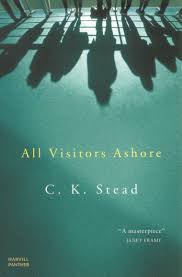
'One of writing’s greatest magics is to allow us – to use Kiri Piahana-Wong’s phrase – to slide outside the trap of time.' - David Taylor

Read more

This year marks the fiftieth anniversary of Book Awards in New Zealand. Our national prize has had different sponsors and incarnations over the years: it’s now the Ockham NZ Book Awards, held each May on the Tuesday of the Auckland Writers Festival.

Over the years many of our brightest and best writers, and classic books, have been recognised in the awards. Many of these authors are part of the Academy of New Zealand Literature. We’re celebrating their work this year by publishing excerpts from one of their award-winning books, along with notes from the authors on writing those books. Here’s to fifty more years of great books and our constellation of writers.


Plumb by Maurice Gee (Penguin Books NZ) | Winner of the 1979 Goodman Fielder Wattie Book Awards

 .

Maurice Gee writes:

It’s more than forty years since I wrote Plumb and I’m not sure now where some of the things in the book come from. But I am sure about the chapters reproduced here. They describe George Plumb’s trial for seditious utterance during The First World War and they follow closely the trial of my grandfather James Chapple in 1918 on the same charge. Like Plumb James Chapple was a clergyman and, like Plumb, a fierce controversialist in politics and religion. His trial was reported in detail in newspapers at the time, but he received a sentence of eleven months imprisonment not Plumb’s fourteen. (I gave Plumb a bonus.) About 60% of the three chapters is my work and 40% taken from newspapers and my grandfather’s writings. He published books of essays and lectures and two of the lectures had titles used in the novel: ‘Julius Caesar or Jesus Christ’ and The Glorious Bolsheviks of Russia’. I don’t look on this as stealing, or if it is then I’d have to say that lifting things from here and there is legitimate for fiction writers. But we mustn’t pinch from each other, just be ‘influenced’, with perhaps a word or phrase ‘borrowed’ if nothing else will fit.

Plumb’s trial is one of the key events in the novel. Others have their source in James Chapple’s religious, political and family life, all dramatised within the life of the book. The chapters presented here show Plumb at his opinionated and irascrible best – or worst if you choose – but they underline his courage and his fierce desire for what he would have called human betterment. Put simply, he, and my grandfather too, wanted to do good.


Extract from Plumb by Maurice Gee (Penguin Books NZ)


59

It took the police two weeks to prepare their charges. I had time for lectures in Nelson and Blenheim. But when I came back I was summonsed. There were two charges, both of seditious utterance. I appeared in the Christchurch Magistrates Court at the beginning of March.

On the morning of my trial I dressed in my warmest clothes and stoutest shoes. Edie put half a dozen handkerchiefs and a pair of woollen gloves in my pockets and I chose a small volume of Emerson’s essays. I said goodbye to the children and told them they must work hard at school. Then I set out. Felicity came with me. Edie was not well enough.

I had wished to defend myself, but when I showed my friends the statement I meant to read they were horrified. John Jepson and Andrew had hurried up from Thorpe. Even Andrew was horrified. They might have airy notions about love, but about the justice of courts they were realistic. What I needed was a smart lawyer. They made me retain John Willis. And John would not even let me on the stand.

That was a wrong decision. I see it now. My statement had been carefully thought out. I speak very well. In speaking I’m a professional. I would not have moved the magistrate—a little Oliver—but there was an audience in court that day and it went to waste. I might have planted a seed. And a seed can grow into a forest tree. I look at the statement today: Appendix 2 in The Growing Point of Truth. It begins with a short history of sedition, from Jesus to Mazzini and Kossuth. Today’s seditionmonger, I said, is tomorrow’s political hero. And I showed how the lawbreaker may be more important to society than the lawmaker. Then I went on to the charges, and spoke of “the patriotic poison” in our schools and the need to teach loyalty towards the whole human family. I explained why I wished for no victor in the war and why praying for victory is a blasphemy. I tabulated New Zealand’s war profits and showed who is the real victor. I explained my attitude towards war loans. And I described the sort of revolution I wished to see in my country. Then I made a more personal statement (or would have made it). I explained my decision to come back to New Zealand. New Zealand had a destiny, this destiny drew me back, for it was bound inextricably to my own. I made my “utterances” at the command of God and my conscience. My conscience would not let me hate seventy million Germans at the State command. Nor would it let me be silent. I spoke for myself but I did not stand alone. For “God standeth in the shadow keeping watch above his own,” (Lowell). And although my lectures had cost me this agony—public trial—I regretted nothing. I had simply obeyed a call to duty, duty to my country and to mankind. “The truth,” I said, “is my burden and not sedition.”

But all this sat in my pocket, unused. John Willis conducted my defence on technicalities.

The case was brought under the War Regulations, section 4, which defined what was seditious or had a seditious tendency. The first charge stated that on February 14, in a lecture entitled “Julius Caesar or Jesus Christ”, I said:

“You are under the heels of the War Lords. We have not enough population in our country, yet we are lusting after the annexation of Samoa. The patriotic poison is in our schools. The children are taught to salute the flag and sing the National Anthem. I am hoping with a fervent hope that in this war there will be no victor. To pray about a war is blasphemy. A woman goes down the valley of death to bring a child into the world; she nurses it, sends it to school, sees it through the sixth standard; then comes a call to arms, and it goes away to war. What for? To die for its country? No! To die for the profiteer.”

The second charge stated that on February 15, in a lecture entitled “The Glorious Bolsheviks of Russia”, I said:

“Russia wanted war, England wanted war, the upper class in New Zealand wanted war. Never has there been such a wonderful five days as the five days of the Russian Revolution. The old Russia has gone and the new Russia has come in. I hope before I die to see a similar movement in New Zealand. I hope the day will come in New Zealand when these war loans will be repudiated. I hope not a penny of the war loan will be repaid. You do not authorize them.”

These were my seditious utterances. I pleaded not guilty.


60

The prosecutor was a man called Malcolm. He was a matter-of-fact, a dry-as-dust sort of man, but I heard a detestation in his voice once or twice in the morning. We anti-war folk were looked on as worse than murderers.

The clerk read the first charge. Then Malcolm set the scene: hall, chairman, sponsoring body (the Labour Representation Council), the audience of one hundred and fifty persons. Dry stuff. But then he showed some passion. “There can be no question that these words uttered by the accused are seditious. The only question can be, were they used? They were. That we shall prove. And we shall claim they were uttered not under momentary excitement, not in the heat of argument, but coolly and deliberately by an educated man brought to the town of Thorpe and speaking in a public lecture designed as part of an organized propaganda.”

He called a Senior-Sergeant of Police, Sampson by name: one of the men who had taken notes at the meeting. He was a burly man, slow-speaking, slow-moving, and even I could see an excellent witness. If in those rites of Justice we can look on the magistrate as the Godhead, then Sampson and Malcolm had the role of serving priests. And Sampson was the senior. Malcolm handed neutral objects to him and Sampson sanctified them. Thus:

“How long did the accused speak?”

“I timed the speech. He spoke for an hour and twenty-two minutes.”

“Was there any response from the audience?”

“There was frequent applause. There were shouts of ‘Bravo’ and ‘Hear, hear’.”

“Did you take notes of the words of the accused?”

“I did.”

“Now Sergeant, are you a shorthand writer?”

“No, sir. I take a fast longhand note.”

“Are the words charged in the information the only notes you took?”

“No, sir. Prior to those words I took the following.” (He opened his notebook.) “If Jesus Christ was now on earth he would be tried for sedition. The churches are the recruiting agent for the world’s greatest tragedies. Some of the clergy are now known as the black militia. We are weeding out the best of our manhood and leaving the weeds. Where is this going to land us?”

I leaned across to John Willis and told him the sergeant was not being strictly truthful. These words were not consecutive. They came from different parts of my talk, like the words in the charges. John nodded. He had seen it. And when he rose to question Sampson he began on that line. I saw very soon it made up the substance of our defence. I was unhappy at that. I persisted in thinking this trial was part of an argument and my job was to persuade. There was the box. I should be in it, delivering my message. John kept stolidly on, though he must have felt my disapproval pressing on his spine. In court he dropped his uncertainties, hid the dark side of his nature, and came out the honest legal tradesman. It was a good piece of acting. But I was too angry to admire him for it.

“Do you agree, Sergeant,” he asked, “that Mr Plumb is a fairly rapid speaker?”

“Yes, sir. Fairly rapid.”

“And you are not a shorthand writer?”

“No, sir.”

“But you managed to take a lengthy note?”

“Yes, sir.”

“Did you copy down all his words or just some?”

“Some, sir. There was no time to take them all.”

“No time? Then there are gaps in your record?”

“The notes are not consecutive, sir.”

“How long are they spread over?”

“The whole lecture. An hour and twenty-two minutes.”

“You will admit then that there are many words left out from the body of your note that might moderate or qualify its meaning?”

“No sir, I will not admit that. There are words left out. But those words do not change the meaning. The note gives the general trend of the lecture. Each sentence is a complete consecutive rendering.”

“Sergeant, when Mr Plumb said that he taught his children not to sing the National Anthem, did he add nothing to that?”

“Not that I remember, sir.”

“Did he not go on to say that he taught them to sing ‘God save the people’?”

At once a shout of “Bravo!” came from behind me (Scotch, of course) and a short burst of clapping, like a pattering of rain. The magistrate nodded sharply, and the orderly was on his feet, threatening to put the offenders out. John was cross. He looked sternly at Andrew. Then he put his question again. The Sergeant remembered my words, but the magistrate, still frowning down the court, seemed to make no note of them. John glared at Andrew. But it all struck me as a piece of comedy; and Andrew’s cry as a good honest response. Sooner that than the legal splitting of hairs.

John went on for a while; he produced qualifying remarks; had Sampson remember some; and sat down at last well pleased with himself.

Malcolm called the second policeman, Wood. He was not a shorthand writer either. He had less control of himself than Sampson and spent his time on the stand glaring at me in a cold and weighty manner I found upsetting. He was, I should guess, a good hater. Wood gave nothing to John. He admitted taking down only the words he thought seditious, but declared roundly that my other words had not altered their meaning. He had no memory of “God save the people”.

John made one good point. He asked Wood if he did not think it strange that he and Sampson had noted the same words.

“No sir, not strange at all.”

“But the words you took down and the words the Sergeant took down are identical. Down to the last full stop.”

“I didn’t see what the Sergeant took down. We were on opposite sides of the hall.”

“You didn’t copy from him later on?”

“No, I did not.”

“It’s odd then that you should have what he has.”

“No sir, not odd at all. We took down the words we thought seditious.”

“From a talk that lasted an hour and twenty minutes—some eighteen thousand words—you both took down the same fifty. And you say it’s not odd?”

“I do.”

“Coincidental, then?”

Wood made no reply, and John left it at that. Then, as Malcolm closed his case, he stood up again to defend me. He called no witnesses, but addressed the court. He did so in a stodgy manner. Eloquence would not have been acceptable to the robed individual on the bench; a man loose-lipped, dewlapped like a bulldog, and suffering a red collapse of his lower eyelids. His voice was like the creaking of a door. Appropriate, I thought, to the kind of justice that locked free speech away.

John began by admitting that the words in the information would be seditious if used consecutively. But, he said, they were not so used. The policeman had admitted it. And he submitted to the court that he had shown beyond any doubt—beyond the shadow of a doubt, he said—that they had taken their notes haphazardly and ignored the qualifying phrases I had used.

“This case,” he said, “is very different from a case of indecent language. The words in a sedition case should not be taken out of their context. What the accused said should have been rendered in full. I could of course put him on the witness stand and ask him to render it in full. But that would take up too much of the court’s time. I have shown already how all the remarks in the information were qualified. And I suggest to the court—and to my learned friend” (a lawyerly nod at Malcolm) “that the summons should have been drawn up to show where the intervals occurred between the sentences.”

The magistrate interrupted. “There should have been a row of points between the sentences. That is the proper manner.”

John was encouraged by this. He droned on like a great black bee, but it was plain to me he was trapped in the bottle of his legalistic mind. How I longed to jump to my feet and tell him and Malcolm and the magistrate what this case was all about. Words, words. A point here, a point there. “It is manifestly impossible for anyone to take down in longhand any sentence such as the one submitted by Mr Sampson. That contains fifty words and would have been uttered in less than twenty-five seconds.” The magistrate scratched with his pen. Sampson folded his hands. Somebody coughed in the body of the court. I looked round and Felicity smiled at me. Dan Peabody sat beside her. I had not known he was coming up.

The magistrate—Bradley was his name—kept his nose down. He scratched on with his noisy pen, sucking in his newborn baby’s lip. Malcolm yawned and studied his thumb-nails. Wood kept his deadly eye on me as though I were his prey. John whispered encouragement—all of it nonsense. To cut him off I took out my Emerson and started to read. “No, no,” John said, “that’ll make a bad impression on the court.”

Finally Bradley laid down his pen and folded his liver-marked hands. I had thought we would be in for some legal knitting but he had surprised me by coming straight to the point. “I have no doubt these words were used or that they are seditious. Naturally they are only part of what was said, but I accept the evidence of the police that there were no other remarks that modify to any serious extent what is reported here. The only modifying clause is the reference to ‘God save the people’, and that, it seems to me, could very well be sung as well as the National Anthem. The two are not contradictory. However, we are not concerned with that here. We are concerned with the reported utterance. And it is plainly seditious to say that children should not sing ‘God save the King’. We shall confine ourselves to that, and to the whole tendency of the words in the information. That tendency is to excite disaffection against His Majesty’s Government. I find the charge of seditious utterance proven and I direct the court to record a conviction against the defendant. However, I shall defer sentence until the hearing of the second charge.”

He nodded at the clerk. And so we went through the solemn farce again. John enlivened it a little by reading a sentence from the charge to Sampson and having him write it down. Sampson did it perfectly.

“Yes,” John said, “well you probably know it by heart.” And he read two short paragraphs from a newspaper. Sampson got down only the opening words.

“Well, sir,” he explained, “what Mr Plumb said impressed itself more forcibly on my mind.” I was pleased to hear it.

In his final speech John said it was beyond human probability that two witnesses should have noted the same few words in speeches lasting an hour and twenty minutes and an hour and three-quarters. This was the only point he had to make but he looked at it back, front, sideways, and from underneath. The magistrate played with his lip and wiped his damp fingertips on his robe. When it was his turn to speak he wasted no time. I saw he wanted to purge his court of me. He could not understand any suggestion that new Zealand should repudiate its war loans. He could hardly imagine that New Zealand should have a revolution such as was still going on in Russia. Anyone who wished such a thing must be mad. To see his infantile, his stupid eye fix itself on me, and hear his grating voice declare me mad, was more than I could bear. He spoke for greed, stupidity, cruelty, death. I tried to get my statement from my pocket, tried to climb to my feet, but John held me down by my arm and hissed at me. He was saying, I believe, that if I sat still I might get away with a fine. “Nonsense,” I said, “this man wants me locked up.”

“George, be still, be still.” And on my other side the court orderly restrained me too. So I let Bradley get on with it.

“I find the defendant guilty on both charges. And because in these troubled times a man holding beliefs such as his is too dangerous to be at large, I sentence the defendant to fourteen months’ imprisonment on each charge. The sentences will run concurrently.”


61

Felicity cried, “You cannot do this. Shame!” Her clear light voice was the first sound in the room as the door closed behind waddling Bradley. There was pain as well as anger in her cry. This was the point at which games stopped for her. Like Dan in Lyttleton jail, she looked into the dark. We had been until then, she and I, engaged in crusading. White chargers, gleaming swords, cannot have been far from her mind. Now she knew the truth. I leaned over the rail and held her hand. She kissed me and burst into tears. I asked Dan to take her home to Edie. He put his arms about her and led her away.

Because I was not a desperate criminal I was given time to say goodbye to my friends. They filed past and shook me by the hand. John Jepson. Andrew. Bluey Considine, who had come over from the Coast. Then men and women I did not know began to walk over. I felt the touch of many hands. Last came old Matthew Willis. “You should have got yourself a good lawyer, boy.” He told me not to worry about Edie and the children. “I’ll see they come to no harm.”

Then I was taken out and put in a van, and delivered to Lyttleton jail.


© Maurice Gee 1979, published in Plumb, Penguin Books.

'...we were there as faith-based writers, as believers in the mana of Oceania...' - David Eggleton

Read more