


The ‘final, magnificent novel’ of Kelly Ana Morey
A sixth and final novel will be published on 1 September by Moa Press.
By Paula Morris.
Ordinary People Like Us, a novel by the late Kelly Ana Morey will be published on the first anniversary of Morey’s death. The story follows five generations of Māori women, moving from rural Northland to inner-city Auckland to London, encompassing the real, the mythic and the supernatural. Kate Stephenson, Head of Publishing at Moa Press praises ‘its expansiveness, humour and emotional depth’. Morey herself – known to many of us as KAM – described the novel as ‘a celebration of the strength of family and how the people who love us keep us whole’.
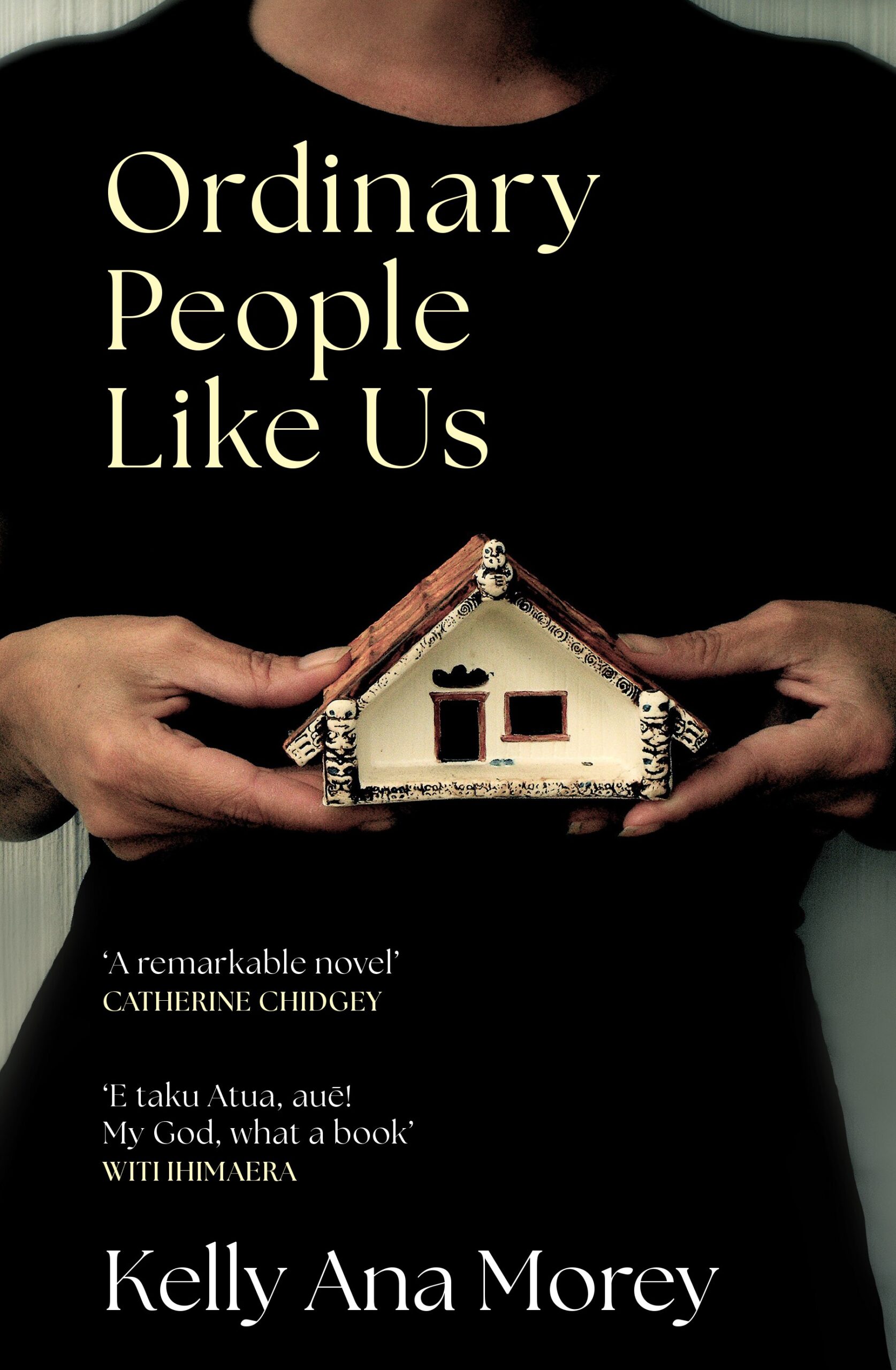
The completion and publication of this novel relied on the strength of family – including cousin Emily Lane, the ahi kā determined to keep the flame glowing – and longtime friends in the literary world. The book’s final manuscript was shaped and edited by the award-winning novelist Catherine Chidgey, and legendary publisher and editor Harriet Allan. ‘Knowing it was too long, Kelly was in the process of cutting back her manuscript when she became ill,’ says Chidgey. ‘She had discussed her vision for the novel with me in detail over many years, so I felt I knew the kinds of edits she’d be open to.’
The vision was clear to Chidgey, she says, because ‘KAM never minced words, and she was very clear in our conversations that she did not want to write what she called “trauma porn” – narratives that reduce Māori lives to violence, deprivation or despair. The title Ordinary People Like Us speaks directly to that intention: she wanted to write about the ordinary, extraordinary lives of five generations of Māori women without resorting to what she saw as tired or limiting tropes. “And just to really spice things up,” KAM said, “I threw in a trio of kēhua, who are as judgmental as the meanest aunty at a hui, and a mysterious taniwha who has the ghosts of poor dead babies floating above her head like balloons, tethered to her with lavender ribbons.” That combination of humour, irreverence and the supernatural is very much hers.’
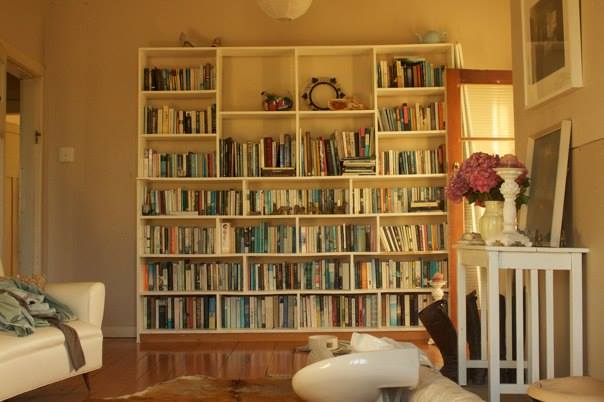
A bookshelf in KAM’s home. Photo credit: Kelly Ana Morey.
Morey was an avid reader and a stringent reviewer. She had little ego about edits to her own work. After she submitted the manuscript for her debut novel, Bloom (2003) to Penguin’s slush pile, Publishing Director Geoff Walker asked her to cut it down by 100 pages: she did the edit in a week. In 2022, when I was editing the Māori short story anthology Hiwa, she sent me something new to read – the opening chapter of a possible YA novel about the Tūhoe prophet Rua Kēnana. It could work as a stand-alone story, I told her, if she could edit it down. She replied: ‘I’d love some feedback – stuff to ditch, stuff to lean into a bit more, that sort of thing’. She said that she ‘really appreciated a good edit’. Where another writer might resent or reject editorial suggestions, or feel defeated by the amount of time, attention and imaginative energy revisions might take, Morey embraced them. ‘For some people – and I’m one – becoming a good writer takes some time,’ she wrote in How to Read (Awa Press, 2005).
Morey ‘was indeed always very open, never precious, intelligently engaging with any suggestions,’ says Harriet Allan. ‘In the past, [the late] Stephen Stratford edited a number of her novels, and she said she’d give him large amounts of text that she expected him to hack back savagely – she liked working that way. When she finished this novel, it was huge, but alas Stephen was no longer with us to cut it. She was trying to do this herself when she became ill and sadly died.’
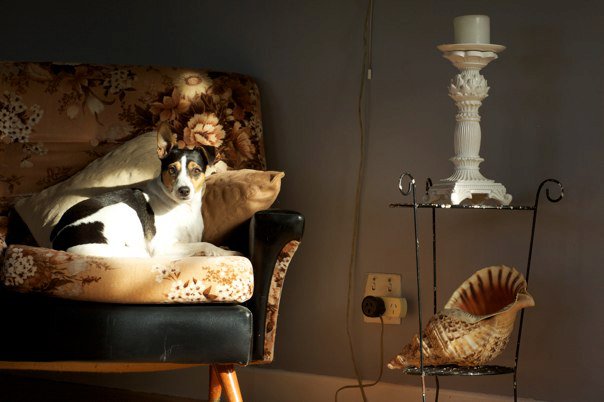
One of Kelly’s beloved dogs and a few of KAM’s treasures. Photo credit: Kelly Ana Morey.
Harriet Allan had worked with Morey on her stories for various anthologies – including ‘Tide’ in The Best New Zealand Fiction Volume 1 (2004, edited by Fiona Kidman); ‘Raylene, Jordan, Hinemoa and Me’ for Lost in Translation: New Zealand Stories (2010, edited by Marco Sonzogni); and ‘Poor Man’s Orange’ for Black Marks on the White Page (2017, edited by Witi Ihimaera and Tina Makereti). Almost 20 years after ‘Tide’ was published, Allan selected it for The Penguin New Zealand Anthology: 50 Stories for 50 Years in Aotearoa (2023).
Most significantly, to Allan, they worked together on the story ‘Blind’ for the anthology Pūrākau: Māori Myths Retold by Māori Writers (2019, edited by Witi Ihimaera and Whiti Hereaka). ‘Blind’ places the mythical ogress Rūruhi-Kerepō in Kingseat mental asylum, where she is both feared and underestimated; the story’s narrator is a Māori-Dalmatian nurse. Morey’s ‘brilliant contribution’ to that anthology, Allan says, ‘became an important thread’ in the novel that will be published this September.
Ordinary People Like Us will explore much of what was important to Morey in her own life and heritage, including her love of history and her deep empathy for the landscapes and communities of the Far North. She celebrates her characters’ mixed heritage, says Allan, as well as ‘the strength of women, the bonds that link us and, true to her own interests, the significance of art, architecture and objects. But what makes this novel so different is KAM’s inspired imagination, which takes us up to the rafters, where kēhua watch, bitch and comment on their descendants below.’
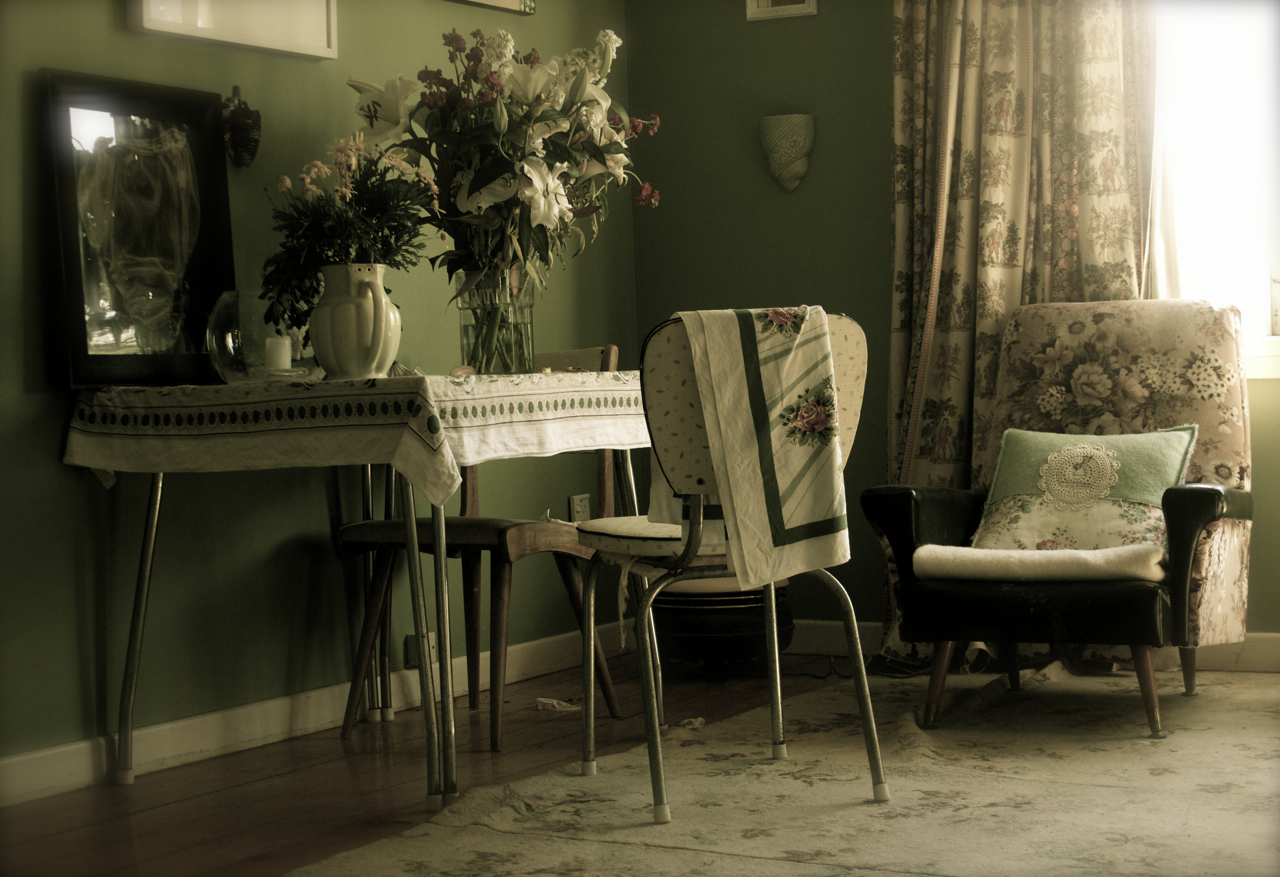
Some of KAM’s art, architecture and objects, including two chairs from her cherished collection. Photo credit: Kelly Ana Morey.
Morey told Chidgey she felt this novel had ‘the same sort of energy as Bloom’, her award-winning first book. Chidgey agrees. ‘There’s the same warmth, the same generous attention to character, and those uncanny elements that feel both playful and deeply rooted in her own beliefs. The Far North setting is also central, and the women in the novel, like Kelly herself, whakapapa to Ngāti Kuri, Te Aupōuri and Te Rarawa. I remember her sending me a photo of a young Māori woman standing in a swamp, digging for kauri gum – an image I already knew well, coincidentally, from a time when I’d been researching a gumfields novel – and telling me she believed the woman might be a tipuna. The image features in the book, and that sense of personal and ancestral connection runs right through it. She often spoke to me about what she called her “spooky old Māori lady predictions”, and you can feel that sensibility infusing the novel.
‘At the same time, she was intent on writing lives shaped not by inevitability or fate but by choice. As she said: “I’ve really consciously made the lives of these women incredibly positive within reason… Sure they make mistakes, but they also have tremendous agency in their lives.” She wanted to bring to the page “those random conversations that really don’t mean very much at all” and yet make up the fabric of our ordinary lives.’
These exchanges about the novel, Chidgey says ‘were exactly the kinds of conversations we had, over many years. I miss them, and I miss her more than I can say. But I’m so grateful that readers will now be able to enter into their own conversation with her through this, her final, magnificent novel.’
In the U.K., the novel will be published by Dialogue Books, part of the storied John Murray Press. (Like Moa Press, this is part of the multinational Hachette). It is bittersweet that Morey won’t get to experience this long-deserved international publication and recognition. Dialogue describes itself as ‘home to a variety of phenomenal stories from illuminating voices often excluded from the mainstream’. Morey – ever the defiant outsider – would approve. ‘I can’t be the “Māori” writer people want me to be,’ she once wrote. All ‘I can be is myself’.
The novel’s Auckland launch in September will incorporate an exhibition of Morey’s photography. (The ANZL is proud to have bought several portfolios of her photographs for use on this site, starting with our very first features ten years ago.) Perhaps another book should follow the publication of Ordinary People Like Us, celebrating Morey’s talent as a visual artist, a remarkable chronicler of the landscapes she loved and the life she created.

Photo credit: Jane Ussher (NZ Listener,2004)
'Novels stand outside time, with their narrative structure of beginning, middle and end. They outlast politics, which are by nature ephemeral, swift and changeable and can quickly become invisible, detectable only to the skilled eye. ' - Fiona Farrell