The Interview – Fleur Adcock

Born in New Zealand in 1934, Fleur Adcock lived in England as young child during World War Two, then repatriated to New Zealand with her family when she was thirteen. As a young woman she emigrated to England, and has lived there since 1963. Returning to New Zealand regularly to see extended family, Adcock has also revisited the question of the relationship between personal identity, place and memory from many angles in her extensive body of poetry.

She has published many collections, including Poems 1960—2000 (2000), Dragon Talk (2010), Glass Wings (2013) and most recently, Hoard (2017).  She has received multiple awards for her work; ranging from the Jessie Mackay Prize in 1968 to the Queen’s Gold Medal in Poetry in 2006.

Her extensive subject arc stretches from romantic celebrations of landscape, to familial love and sexual desire; from both witty — and unsettling — examinations of heterosexual relationships, to ecological concerns, the fine arts and politics. It travels from, say, the speculative sequence, ‘Gas’, that looks at a society where sexual reproduction is no longer necessary; to studies of women from history — such as her sequence ‘Mrs Fraser’s Frenzy’, which explores issues of nineteenth-century white settler identity and paradigms destabilised by cultural division. Her interest in significant women from history recurs in the sequence ‘You, Ellen’ (from Hoard) a poetic biography of British Labour politician Ellen Wilkinson (1891–1947), and in her recent collaboration with Dame Gillian Whitehead on Iris Dreaming (2016) a libretto based on the life of Robin Hyde.


Emma Neale writes:

The first time I interviewed Fleur Adcock was in the mid-1990s, in person, over a rehabilitating coffee in her East Finchley home. I was a young PhD candidate at University College, London; my research was focused on the treatment of expatriation and back-migration in the fiction and poetry of Katherine Mansfield, Robin Hyde, Janet Frame, and Fleur Adcock herself.

After weeks of compiling interview questions, before even appearing on her doorstep, I was already a mixture of excitement and hot-running fear: fear of disgracing myself with lack of scholarly sinew, uncouth manners, and naivety: the whole neurotic caboodle of an eager ingénue.

We had organised the meeting by letter. Back then, fax was the main buzzy technological communication wonder — shiny scrolls arriving like squeaky magician’s scarves pulled from the telephone’s hat — but not every household had a fax machine; so the postie was our messenger. (To get emails, still a recent development, I’d need to travel by tube to the university; then wait for a computer in the crowded student computing-consortium: tedious.)

On the interview day itself, I scrambled my way to Fleur’s house by bus, tube and foot with the London A-Z clutched like a primitive, talismanic version of Dr Who’s sonic screwdriver, as jangled as if I might encounter hostile foes in alien territory. Not only because I was navigating my way there for the first time; and not because Fleur’s poetry frequently deals in physical and internal displacement. The disorientation and nerves were intensified because only two nights beforehand, I’d escaped a serious house fire and hadn’t slept since. I’d been sheltered overnight at a friend’s place, as our five-flat building was still unsafe, and we had no electricity.  The building stunk nauseatingly of almost every burnt or melted material you can imagine; there was a gaping hole in our ground-floor flat’s ceiling, a portal through to the flat above where the fire had been started in the dead of night by a bereft alcoholic.

A minicab driver saved us; he saw a small twister of black smoke spilling from a second-storey window. Police on a regular beat noticed him pulled up at the curb and thought he must be cruising for prostitutes who worked our street. The police tried to batter down the front door before my husband managed to work the deadlock; and they got all the occupants out, even the neighbour and good friend blissfully comatose on weekend booze. We spent hours huddled on the freezing, mid-winter, midnight footpath.

Although I’d managed to stay with my friends the night after the crisis, I had to get back into the building to retrieve my laptop, my interview questions, my notated collections of Fleur Adcock’s poetry, and my tape recorder. Alongside the relief that we’d survived the fire was the almost unbelievable consolation that the papers and back-up discs of two years of PhD notes had escaped both immolation — and a drenching from the fire hoses by half a desk length.

I’d wanted to arrive for the interview cool and unflappable; in professional command of my field, but I turned up on Fleur’s doorstep with the smell of smoke in my hair again, deeply shaken, and on the brink of tears. Bizarre scenes from the night of standing shivering on the footpath still strobed in my head. (They included a prostitute soliciting one of the firemen while he was still mid-duty. I guess you couldn’t get much further away from my deskbound little life.)

My memory of that first interview is that I dominated the first minutes — as I have here —with the night’s crisis; ashamed that I wasn’t in firmer control of my emotions; yet not able to fake my way through the afternoon as if nothing had happened.

It hadn’t occurred to me that I could have phoned, and asked if we could reschedule when I’d found my wits again. Perhaps because of the wry restraint, coolness, and even occasional mordancy in Fleur’s poems; their sense of remove; the gimlet eye of irony, I thought she’d refuse another meeting, deciding I was a time-waster.

I also recalled Fleur from a visit she had made to my high school, Wellington Girls’ College (her former school), when I was 17. Poised, elegant, thoughtful, she read poems and answered questions with a combination of physical grace, verbal composure and a somehow sceptical air that, to a halting adolescent, were naturally daunting. It seemed the house fire had burnt away any nacre of sophistication I might have built up since then.  Social masks, brave faces, form as ‘the straitjacket around the wailing, hysterical self’,[1] as Adcock herself describes the technical elements of poems — initially, that day, I couldn’t wear any of them.


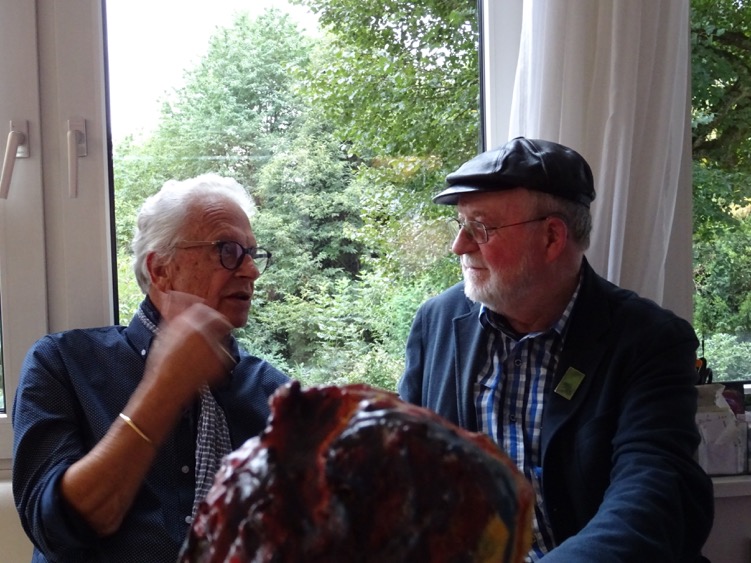
Photo credit: Jemimah Kuhfeld


Fleur made strong coffee; she sat me down; she let me babble my way through an explanation of why I was babbling. She asked if I was sure I felt up to it, was I sure I didn’t want to do this on another day? And she also accepted when I said, actually, having a focus might help to ground me. She was calmingly, warmly generous with her time and attention. Suddenly, the social ritual of the interview form itself wasn’t daunting, but reassuring: I knew how to do this. I didn’t know how to behave when confronted with the addiction, acute mental illness and unnerving mixture of detachment and yet underlying distress in the upstairs resident that had started the fire itself.

Poetry and art, after all, often spring from just these sorts of psychological breaks and revelations: perhaps discussing the management of style, tone, and a professional writing career would, in its own way, help to alleviate the events of two nights before.

It seems somehow apt, looking back almost 20 years later, that I’d experienced this shock that struck at the makeshift home my husband and I were learning to construct together, just before speaking to Fleur. Much of what drew me to her work was its treatment of issues of home and belonging, versus a feeling of temporary, ill-fitting residence; and the honesty, skilfully honed, about sometimes-fraught personal territory.

I was initially attracted to those of Adcock’s poems that articulated a sense of being ill-at-ease in her birthplace. It was an experience that spoke directly to me as a child who had been taken from Christchurch to California, where my family lived for three and a half formative years, and then brought back, in 1981, to what seemed to be not only a ‘meteorologically’, but also an emotionally colder, more repressed and withdrawn New Zealand; one — as the Springbok tour divisions showed — in many ways still dishonest about its colonial past and embedded racism.

The experience of being an outsider in California barely lasted a few weeks; it was a place used to immigrants and expatriates. My first friend there was an Iranian girl whose family were also new to San Diego; my parents made good friends with various other expatriate families. Moving on to Wellington, New Zealand, things didn’t go so smoothly.

Inchoate, turbulent, self-contradictory, dangerous-to-articulate emotions triggered by the expatriation then repatriation, coloured some difficult pre-teen years, and permanently transformed my sense of natal place and interior world.

As a teenager, when I discovered Adcock’s poetry, it seemed tantalisingly audacious in its confrontation of alienation. My own sense of displacement had its origins in many things: most relevant in the context of my response to her poetry are the facts that I arrived at age 11 and a half to a school where the kids had known each other since they were five; and where I was most definitely treated as a weirdo outsider. (My raincoat was slashed with scissors by one girl, for example; I was called bitch and slut for talking to a boy; there was more, but that gives you the flavour.) I also never quite felt I caught up on certain aspects of the syllabus: I had gaps in everything from maths to Māoritanga, te reo, and national history in general.

Memories of that time meant that in my twenties, when I started investigating Adcock’s poetry for my research, I was intrigued by the lines in an essay where she explained that the question of national identity had ‘influenced, infected, and to some extent distorted the course of my adult life’, and I wanted to look at the way her poetry mined this potent triad of psychological effects. [2]

Throughout her career she has drawn on the experiences of social dislocation as an outsider both in New Zealand and England; and also as a woman experiencing the marginalising effects of gender inequality. Her often sly, perceptive, layered tone of irony — sometimes self-corrective, often slippery — is a powerful articulation in itself of this sense of exile or division. It is also, as I’ve written elsewhere ‘a metaphor, even, for speaking in one place, but of another’.[3] As academic Janet Wilson says: Adcock’s work exhibits ‘a radically displaced feminized consciousness [which] can be identified as metonymic of national and cultural differences.’ [4]

Yet division and displacement aren’t particularly inviting themes to launch us into an interview; and the national question is also one that, as readers will see below, tends to weary Fleur now. They also don’t entirely fit the tenor of her most recent work, Hoard, which, after the elegiac and diligently researched The Land Ballot, has a happily disarming lightness of touch. So, in August 2017 — with no distracting personal crisis immediately beforehand — in fact, almost ludicrously comfortable, compared to the context 20 years ago — (Dunedin sky outside jig-sawed blue and white; spring song so vigorous it’s as if the birds believe in the future of the planet) I sent Fleur a batch of questions, starting with what seems a significant career milestone: Poems 1960—2000.


Emma Neale:

The project of compiling your Poems 1960—2000 must have been a huge undertaking, a process of filtering, discarding and arranging. How did it make you reflect on your literary career up to that point? How has it affected your subsequent writing? (Was it a kind of taking stock, clearing a fresh space, or did it bring back ghosts? Did it make you need a period of silence, or did it seed a new direction in your practice? How do you look back at your past collections now?) 

Fleur Adcock:

No, the process of filtering and arranging the contents of each individual collection had taken place over the years, but the collected volume involved no editorial process on my part: it was simply the result of OUP evicting all its living poets and my consequent flight to Bloodaxe.

Neil Astley, the editor and founder of Bloodaxe Books, had already published my translations from Medieval Latin and three of my pamphlets (Below Loughrigg, Hotspur and Meeting the Comet), and was keen to get me on his list. However, I had an agreement with OUP to offer them first refusal of all my new collections of poems (they were not interested in pamphlets or parallel-text translations). Neil had been waiting for years for OUP to do something so appalling that I finally had to break ties with them. Although I was always on the best of terms with my successive OUP editors, people in the production and distribution departments were given to infuriating mistakes, and in my later years with them I was always threatening to leave. As it turned out, in the end none of us left of our own accord: we were all pushed out when someone in the financial sector of the company decided that although their poetry list was not actually losing money it was not making enough for their greedy needs. This released us from our commitment to them, and we all trooped off to other publishers.

Once I had reclaimed the copyrights of my earlier volumes from OUP and handed them over to Bloodaxe, all Neil had to do was scan the contents of my existing collections, add a short file of new work, and do a bit of copy-editing. He was naturally anxious that Bloodaxe should be in possession of all my work up to that date, but neither he nor I saw the need for a great reorganisation of it. I was content to leave it in its chronological sequence.

I saw Poems 1960—2000 as less a milestone than a tombstone. As far as I was concerned, my career as a poet had already drawn to a natural close, coinciding neatly with the end of the millennium. I had gradually fallen out of love with poetry and almost entirely stopped writing it; the last words in the collection are “What wanted to be said is said.”  Instead my head was filled with family history, a far more compelling addiction.

Perhaps I should explain. My disenchantment began some years after I had dropped out of my respectable, pensionable civil service job as a librarian in the Foreign & Commonwealth Office and taken up the risky life of a freelance writer — which, for a poet, doesn’t mean writing poems all day but piecing together a living out of readings, festivals, reviewing, broadcasting and even a certain amount of teaching, although I avoided the latter as much as I could. I had developed a distaste for the ‘poetry industry’, including the whole commercial business of creative writing departments. When I began seriously writing, in Dunedin in my twenties, there was no such thing; my friends and I snorted with superior laughter when we heard of this new American concept, introduced to us by Ian Cross, the Burns fellow at the University of Otago in 1959. For us the way you learned to write was by reading; if there were shortcuts, and everyone could learn to do it, why would we want to?

Once poetry had become the day job, instead of something I wrote romantically on riverbanks or furtively under the desk at work, it began to lose its allure. The more I talked about it, reviewed it, discussed it with students, anthologised it and judged it in competitions, the less of it I wanted to read or write. I wrote only three poems per year in 1996 and ’97, and one in 1998. The trend was clear. In 1999 I wrote one satirical squib about the demise of OUP, but then applied for a “poetry placement” in Kensington Gardens as a pleasant way of making some money and was consequently required to write poems again. They were extremely short, but enough to make up a final sequence for Poems 1960–2000. In 2000 itself I managed to grind out two poems for commissions, and one spontaneous one called ‘The Ex-poet’, published in The Guardian but never collected. In 2001–2, four poems, only one of them worth keeping. They were getting shorter and feebler, and my heart wasn’t in them. I felt I was repeating myself, and my boredom with the genre must have been obvious.

Two other things had happened during these years: I developed RSI (repetitive strain injury) from typing large quantities of prose (transferring many years of family history from typescript to computer), and in 2000 I gave up smoking. Smoking had been an essential aid to poetic composition, but now that it was no longer needed for that purpose I could begin adapting myself to life in a society that persecuted smokers. (Family history, which is its own inspiration, didn’t need cigarettes.) As a non-smoker I was even less capable of concentrating for long enough to write a poem, but as an ex-poet that didn’t bother me. I installed voice recognition software to deal with the typing problem, and happily plugged on with the family history.

Then, after this natural break, something unexpected happened: in May 2003 I found myself timidly and tentatively embarking on some short lines in verse about trees. Evidently the nicotine had finally left my bloodstream, and my concentration was returning. That November, when I was reading my father’s letters home to his parents from England in the 1940s, it occurred to me that my wartime childhood might furnish material more suited to poetry than prose. By the end of December I’d written half of what became a volume called Dragon Talk.


EN: Dragon Talk frequently uses the quirky, downbeat tone of a child’s observations and the slightly nonsensical or ‘telescoping’ swerves that children make in conversation, and does so to warm, comic effect.  The new collection, Hoard, often shares that sense of levity; of seeing the absurd in many of our facile assumptions and social distinctions. It includes a humorous — and lyrical — discussion of what marks out citizenship from visitor-only status, in ‘Blue Stars’. There is fun and good-natured teasing here — both of yourself and New Zealand companions; whereas in the 1960s there was still a sense of deep pain and division in many of the poems that discussed national identity. Does your early investigation of the relationship between place, milieu and personal identity still have a compulsion for you? Does the question of belonging still haunt you at all? What sense of national readerships or audiences do you have, given your long exploration of your relationship to both England and New Zealand?

FA: I don’t think there’s a lot more I want to say about this subject, after all the years of agonising over it. The minute I arrived back in England in 1963, after 16 years of absence, it was clear to me that this was where I still belong; separation and conflict of allegiance are now a fact of life that I have to accept — I can never be in two places at once, and there’s no solution, so the best thing to do is joke about it. Over the last few years I have rather unexpectedly developed an affection for New Zealand, now that no one is putting pressure on me to live there.

As for my readership, most of that has always been here in Britain, where I live, work, and have always been published and where for a long time I earned much of my living over the years from public readings, although these have fallen off recently with the general cutbacks in funding. My readers turn up at these and I meet them as human beings, not sales statistics on a royalty statement. There has been a bit of a change, however, since I had the good luck to acquire a New Zealand publisher, Victoria University Press; I now have more of a sense of another audience. It is at these people that the poems about New Zealand in the last section of Hoard are essentially directed; UK readers wouldn’t always get the point of my references.


EN: Several women writers I know here in New Zealand cite your work as an important influence for them; for your discussions of motherhood, women’s roles historically; for your foray into speculative or science fiction in poetry, and your scepticism of the motives and intentions in intimate relationships. So it seems only fitting that you have a clearer sense of your local readership now, through the link to VUP.

You have written many poems about your ancestors, and have undertaken what seems to be extensive and energetic archival research. What initially propelled this? Were you ever tempted to write a family history in prose, rather than poetry? What was it about poetry that made it the best conduit for these family stories?

FA: I’ve always been interested in my family history, ever since my mother told us tales about her childhood, and over the years I’ve picked out a few episodes or incidents that I thought would work in poetry. With The Land Ballot I went slightly further, and devoted an entire book to the experiences of my grandparents and teenage father trying to be dairy farmers in Te Rauamoa, and to evoking the atmosphere and what I saw as the social intricacies of that community. However, I wouldn’t call it a family history; it’s more a series of snapshots in verse. Expository prose is a completely different kettle of fish and uses a different area of the brain. It’s factual, rather than verbal. A poem is, or aims to be, a work of art, using rhythm and other musical devices and relying to some extent on the subconscious for its material. (What a pretentious statement! I’m not going to define poetry; you know what it is when you see it.)

On the other hand, I have written more than 250,000 words of detailed narrative, complete with footnotes and references, about the many branches of my family, researched it for 20 years (mostly before computers), and travelled to county record offices all over England, as well as numerous repositories and archives in London, Belfast, Dublin, and New Zealand. I’ve transcribed dozens upon dozens of wills, some of them from obscure antique handwriting or Latin, spent hundreds of pounds on birth, death and marriage certificates, and worn out my eyesight on microfilm and fiche readers. I regarded it as my life’s work, thought about it all the time, and very few other things have given me more pleasure. Ask any family historian: we’re all like that.

But finding out is the fun part. No one much wants to read the results. I was writing for my own satisfaction, not for public attention. Certain members of my family are interested in the more recent lives or the more spectacular stories, and one or two are interested in a good deal of it, but mostly the pleasure (that of solving a series of detective-story puzzles) is mine only. The brilliant biographer Ann Thwaite, who was born in England and still lives here but had eight early settler great-grandparents in New Zealand, wrote a wonderful book (Passageways) about her family history, but it was scarcely noticed or reviewed. Her life of AA Milne, by contrast, is being filmed.


EN: The fascination for family anecdotes and history led you to write in your father’s voice for much of The Land Ballot.  What tonal or other aesthetic challenges did this bring for you? What emotional challenges did it bring? (Was it like a kind of possession, or did you have to work quite hard to excavate and shape his voice?)

FA: My father’s voice was in my head in a very real sense, because I have a recording of a long interview with him made when my son Andrew and I sat him down and asked him about his childhood and early years (these are the ‘Opa tapes’ referred to in ‘The Archive’ — ‘Opa’ — the Dutch word for grandpa — was what his grandchildren called him). Later I transcribed much of it, sometimes in an abbreviated way, and thus his own words form the direct basis for the ten poems in The Land Ballot headed ‘(Cyril speaks)’ and contribute a good deal of content to others. Naturally I’ve made alterations and additions to his words, often incorporating titbits of knowledge acquired from elsewhere (memories, other people’s reminiscences, printed sources) and verbal contributions of my own, but trying to preserve the spirit of his voice. For example, in the short poem called ‘The Germans’ the first two quatrains are almost exactly in my father’s words, but the second two are based on an interview I did with his elderly second cousin Edith in England. I hope the result looks seamless.

I also tried to include as many other characters as possible in the book, most of them mentioned by him (the Dassler family, the Daysh family, the teacher Rudolf Honoré and his brother) but filled out with a lot of research on my part from the wonderful Papers Past newspaper archive in the National Library and all the other sources I’ve mentioned in the notes and elsewhere. And of course I have my own memories of him and his parents and his extended family. I had to preserve a certain detachment from all these people, but there were occasional moments when I felt a little guilty about treating them with disrespect.


EN: That’s a fascinating last comment. It raises perennial questions about the ethics of biography; it reminds me of Michael King’s phrase, ‘compassionate truth’ which I’ve just re-read in Pip Desmond’s forthcoming memoir of her mother, Song for Rosaleen. It also reminds me of your poem ‘The Archive’, which closes with the two lines ‘There were receipts and firearms licences;/ and there was a line called Trespass, not to be crossed.’ This reminds us that no matter how apparently exposing or ‘confessional’ any poem appears to be, the author has shaped, edited, concealed; exercised judgement — artistic and moral — all as part of the filtering and sculpting process. I love the darkness and reserve in those last lines; the way so much unspoken resonates behind them.

Hoard, the work that follows on from The Land Ballot, is a collection of so many different tones, topics and moods that each poem could prompt its own Matryoshka set of questions.  The element of surprise returns in this collection; there’s a vigour and linguistic freedom that, to my ear, wasn’t quite as overt in The Land Ballot, which had to adhere to the voice of character and historic record more assiduously.  In this new book, Adcock gives the ‘poetic fingers’ to 1960s convention and sexual conformity; now and then, verbal cusses suddenly give a wake-up bif to polite and deliberately crafted, restrained syntax. What we’d now call the ‘toxic masculinity’ of 60s and 70s popular culture, embodied in the figure of ex-husband Barry Crump, is revealed in all its frightening, ugly disregard for the safety and dignity of women, children, or indeed other men, if they were seen to be rivals. The collection keeps the reader alert, on their mental toes, as it darts from moments of personal courage — the carefully shaped confessional poem — to the gleeful, subversive notes of humour, where the poems borrow the structure of set-up and pay-off or punch-line from jokes or situation comedy.  ‘Tinakori Road’ for example, quips on the anxiety of literary influence, and how hard Mansfield’s precedent is to escape — not just for women writers, but perhaps for any young local woman with aspirations; while ‘The Old Government Buildings’ takes a lunge at pompousness with a punch line of deliberately grubby bathos; bringing the moment to earth with a bump, even when Adcock’s thumbing her nose at herself. There is also sometimes a macabre, even anarchic wit, as in ‘Maulden Church Meadow’, where Adcock tackles the subject of her own death not with sobriety but with the puckishness of a seven-year-old’s, cartoon-grotesque perspective:


As this is one of the destinations
for my ashes after I’m cremated
perhaps I could start with a trial run:
frizzle up one of my little fingers
while I’m walking here, and scatter it fresh
among the cowslips by the tadpole pond,
or lop one off among the lady’s-smocks
on the bridle path as a snack for foxes.


There’s such joy and mischief in some of these poems. Yet it suddenly strikes me, noticing the buoyancy of all the moments of comedy — dark or otherwise —that this might all have been a necessary foil for the tragic life story of the material you needed to call on for the libretto of Iris Dreaming (2016). What was the timeline for these two projects? Were you working on the libretto and the poems side by side, or quite separately? How did the writing processes for these two projects differ, or help each other?

FA: Once again, as in the clash between family history and poetry, it’s impossible for me to work on two creative projects side-by-side, or indeed to have two different obsessions in my head at the same time. I finished the first draft of the libretto for Iris Dreaming in January 2015, and Gillian had already begun work on some musical ideas for it before I went to New Zealand in November that year. I was able to show it to Derek Challis, Iris/Robin Hyde’s son, when I was in Auckland that December. It underwent a great deal of revision afterwards, particularly when Joanne Roughton-Arnold, who commissioned, produced and sang it, began thinking about it and discussing it with her director Sara Brodie and with the musicians, and every now and then they or Gillian would ask me for a little rewrite, but that was fine with me: it had become a collaborative project.

I wrote very few poems during the rest of 2015, and none at all during my two months in New Zealand — I can never write while I’m there — but I made a few notes, and began writing poems again once I was back in England, from February 2016 onwards. All the New Zealand poems in the final section of Hoard together with a few others on other subjects, including the two sequences about Ellen Wilkinson, were written during 2016. Most of the other poems in the collection — i.e., about half of them — date from earlier years, some going back as far as 2009. They were on assorted subjects, not compatible with the contents of my other collections, and had to hang around until I could find a place for them. As you’ll have gathered, when I’m under the spell of a powerful obsession anything else gets squeezed out.  The Land Ballot preoccupied me entirely for 22 months from March 2012 to the last day of December 2013. It was like living with characters in a novel; I felt quite wistful when I had to relinquish it to the publisher. During this time I went to New Zealand for six weeks in April and May 2013, not only visiting family but doing research in the Turnbull Library and elsewhere, and going with my son Andrew to what remained of Te Rauamoa, where my father and grandparents had lived during his teenage years. I wrote no poems there, of course, but had nourishment for the ones that later arose from these experiences.


EN: Two poems from Hoard prompt this next nested set of questions. They both have an enjoyably light approach to potentially heavy subjects. ‘Hortus’ shows how technological advances are altering our subconscious life and shaping our most ingrained reactions. ‘My Erstwhile Fans’ — initially lifting the reader with a sense of poetry’s vitality in speaking the truth to power — also shows it losing some of its revolutionary and emotional force in the face of the seductions of TV and film. The poem uses a self-deprecating, gently comic tone; and yet it’s been a long, ongoing pressure for poets, trying to be heard, understood and valued — and these two pieces make me want to ask how the digital revolution has affected your approach to your craft, or your sense of what poetry can be and achieve? And what keeps you turning to poetry as your artistic medium?

FA: This is a mammoth question, and my reply may veer slightly away from what you have asked. ‘My Erstwhile Fans’ is basically a political poem, following on from others I’ve written about Romania in the past, about the effects on a populationof having its government censorship removed — the result being that the level of popular taste declined; people who used to enjoy highbrow foreign imports (plays by Shakespeare, translations from English fiction and poetry), were permitted to enjoy less obscure entertainments. I found it mildly amusing to have been briefly ‘all the rage’, but didn’t delude myself for a moment that this was a literary judgement of my work; for that I turn to native speakers of English with a wide background of reading contemporary poetry in our language. The volume of three English poets which those factory workers enjoyed was simply a literal translation of our work, with no attempt to reproduce the rhythms or other elements that made up our poetry in English. And this, of course, leads us to the whole traddutore/traditore can of worms, which I shan’t open.

As for ‘Hortus’, the technological reference in it is the trigger for the joke, but really this is just a nostalgic yearning for a lost paradise, like the paradise of childhood, or my yearning for beautiful places I’ve lived in or visited in the past. You can’t go back. The mouse is simply another method of stopping time, freezing the frame, keeping the scene here for ever. I have occasionally made references to other forms of technology, such as Skype, but actually I have no affection at all for the technological revolution, useful though it can be. It depresses me to see young people, particularly children, living their lives at second hand, on screens.

And ‘what keeps me turning to poetry as my artistic medium?’ Come on! You don’t really expect me to answer that, do you?


EN: Ah, it wasn’t meant to be impertinent!! Or dim … I thought the original question might open up discussion of other genres, if you had tried these; or a discussion of how the digital revolution might have led you to the realm of ‘e-poetry’, or film poems, or changed your sense of what a poem is, or can do, and what other media it can use as a kind of vector. … But onwards to the next question. You’ve collaborated many times with Dame Gillian Whitehead. What are some of the biggest challenges — and sweetest rewards — of working alongside another artist whose first medium isn’t poetry? How has the collaborative process affected your more solitary writing projects?

FA: I love working with Gillian, but I think she must be unusually easy to write for. The basic process is that she makes a proposition, we discuss it, and then I write some text and submit it to her. She then gets on with composing the music, coming back to me with suggestions or criticisms if there’s something in the text that she has a problem with. Our first collaboration was Hotspur: a Ballad for Music in 1979/80, when we were both in Newcastle. I found it amazingly exciting to be contributing towards this thing that wasn’t exactly poetry, although it involved some poetic techniques, including rhyme, more suited to the ballad form than to my usual poems. (Words for music have to be clear and accessible, without the nuances and subtleties that might occur in poetry for the page; it is the composer who will introduce these; the libretto is merely a framework for her creativity.)

At one point Gillian suggested we needed another section in the middle of the work, so that in between the descriptions of battles and campaigns the persona, Hotspur’s wife Elizabeth Percy, could sing about her own private thoughts and feelings. This was a brilliant suggestion, and created a shift to a more thoughtful, meditative mood in the midst of all the action. I decided that we could imagine her to be pregnant at this time (it’s known that as well as her historically attested son she had a daughter, whose date of birth, as a mere female, isn’t recorded), and give her some reflections on the coming birth as well as the possible death of her husband in battle. This tied in with the moon imagery — the full moon at the battle of Otterburn, and the crescent moon, which was the heraldic cap-badge of the Percy family. Gretchen Albrecht, who designed banners for the London production of the piece at NZ House, used stylized forms of these images.


The Battle of Otterburn. Photo credit: Tom Moody.


But enjoyable collaborations like this seem to have no effect on my own solitary writing projects. I’m quite happy to keep my various activities in separate compartments; it’s refreshing to move from one to another, but they have their own separate lives.

Perhaps this is the place to mention another of those parallel activities, translation. I’m not referring to what some poets mean by this term, free versions made from a crib without any knowledge of the original language (what Robert Lowell called ‘Imitations’), but actual translation done from scratch. During my fellowship in Newcastle I spent some of the first year dwelling mentally in the 14th century, with Hotspur, and the second in the 12th century, discovering medieval Latin poets and translating their work into verse that adhered as closely as possible to the rhyme schemes of the originals. I had access to both university libraries, Newcastle itself and Durham, where there were scholarly editions of some of the works I needed. The challenges were largely technical, but I found them fascinating. The result was The Virgin and the Nightingale. Some years later, in the 1980s, as a result of three separate visits to Romania, I began teaching myself Romanian and translating Romanian poets who had become friends of mine — rather a different activity because I could discuss their poetry with them.  I think I detect traces of their influence on a few of my own poems of around that time, although their tradition is so very different from ours.


EN: Have the impulses that trigger and drive you to write a poem changed over your career?

FA: I like to think so, but it would take too long to go through all my past poems and analyse how they came about. The prevailing impulse, though, is nearly always verbal: a phrase echoing in my head or picked up from somewhere around me — something overheard, perhaps, or a quotation. For example, my short poem ‘Alumnae Notes’ was triggered by reading in the Old Girls’ bulletin of Wellington Girls’ College that someone I remembered from my first term there had died; her name was Ataneta Swainson, but because she had been beautiful (I had a crush on her at 13) the phrase that popped into my head was “Beautiful Ataneta Swainson is dead” — I was remembering the first line of a poem by Browning, ‘Beautiful Evelyn Hope is dead’. And then I was off.


EN: When you are writing a new poem, what are the aesthetic or technical problems that are most likely to make you abandon it?

FA: Quite often I can tell when a new poem isn’t working because I become bored with it, and if I’m bored the reader will certainly be. But usually I’ll put abandoned drafts away in my overstuffed filing cabinet just in case they contain something I might want to use later.


EN: Does the act of writing itself help to shift your perspective on the topics you are addressing?

FA: There are so many different kinds of poem, and not all can be said to be ‘about’ a topic. They are made of words, not ideas (as some well-known writer said long ago — yes, Mallarmé; I’ve just looked it up. It’s the kind of remark I would have written down in my little notebook when I was in my mid-20s, working in the University of Otago Library and reading everything. It was a wonderfully well-stocked library, I was living alone with a small child and no resident baby-sitter, and television had not yet arrived in NZ). To carry on from your earlier question about technical problems, once I’ve begun working on a poem, or got stuck halfway through one, what I prefer to do is go out and walk, and let the thing develop its own direction in my head, stopping when necessary to make notes. Later at home there will be a lot of revision, and then perhaps more walks as I do some more mental revision. I don’t sit down with a plan or intention; anything may happen. My function is partly editorial — to see what deserves to be kept and how it fits in with the rest.


EN: What directs your reading these days? How do you make new discoveries, or are you an avid re-reader of old favourites — or both?

FA: A very short answer: chance.


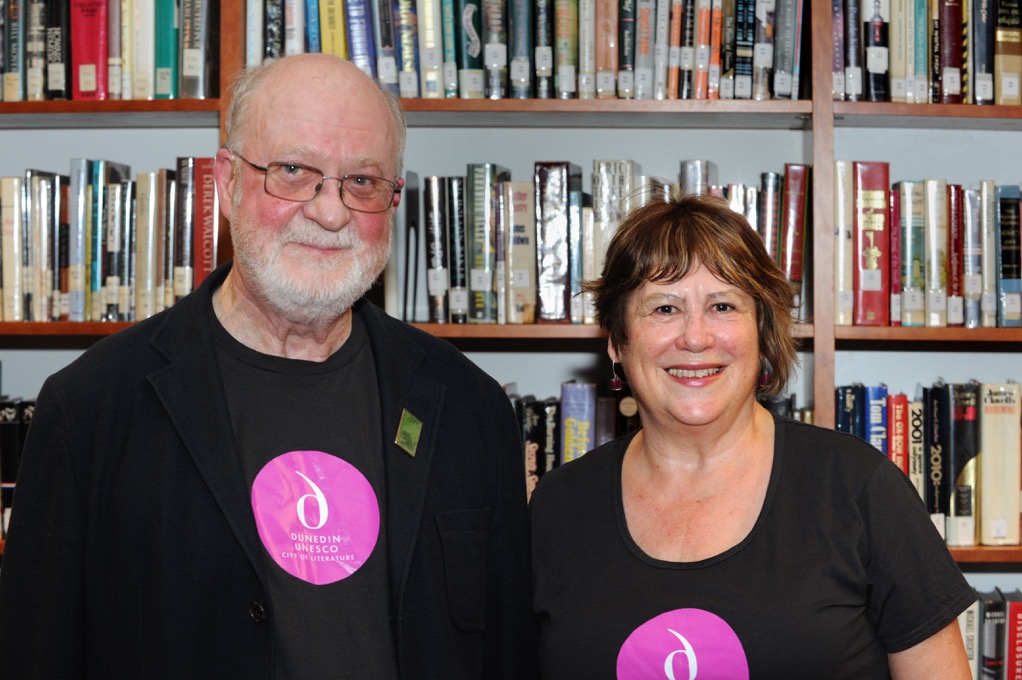
Photo credit: Matt Bialostocki


Emma Neale is the author of five poetry collections and five novels, including Billy Bird, a fiction finalist at the 2017 Ockham New Zealand Book Awards. She was recently appointed the new editor of Landfall, New Zealand’s oldest arts journal.


[1] Clive Wilmer, Poets Talking (Manchester: Carcanet Press, 1994, p. 30)

[2] .Andrews (ed.) Contemporary Authors: Autobiography Series Vol. 23, page 1, entry dated August 1995

[3] Emma Neale, ‘Why Can’t She Stay Home? Expatriation and Back-migration in the work of Katherine Mansfield, Robin Hyde, Janet Frame and Fleur Adcock, doctoral thesis, University College London, 1999, p. 324)

[4] Janet Wilson, Fleur Adcock, Writers and their Work series (Devon: Northcote House Publishers, 2007, back cover blurb.

'...we were there as faith-based writers, as believers in the mana of Oceania...' - David Eggleton

Read more

Photo credit: Kevin Rabbalais

Writers’ Picks: Best NZ Books for Christmas

This year the ANZL is challenging readers in New Zealand to make – at least – one of their gifts a book by a New Zealand writer, published by a New Zealand publisher, and bought from a New Zealand book shop. This way we can all support our local writers, shops and publishing industry, plus give excellent books as presents. (Promote the cause on Twitter at #NZChristmasBookChallenge).

We asked some ANZL Fellows and Members what new local books they plan to buy this Christmas for friends, family – or themselves, to read over the summer holidays.


Patricia Grace:

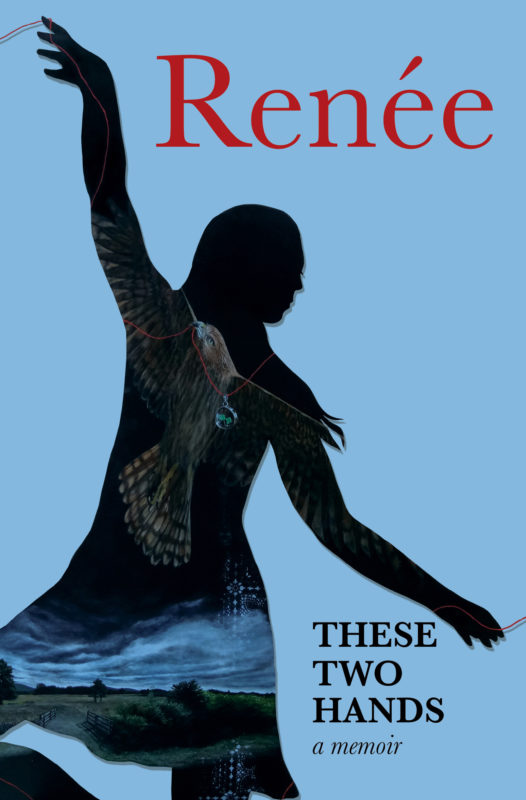
I am going to buy, for myself to read over Christmas, Renée’s memoir, These Two Hands: A Memoir (Mākaro Press). I expect it to be down-to-earth, sharp, honest, sad, funny, well-written and a bit wacky.


Alison Wong:

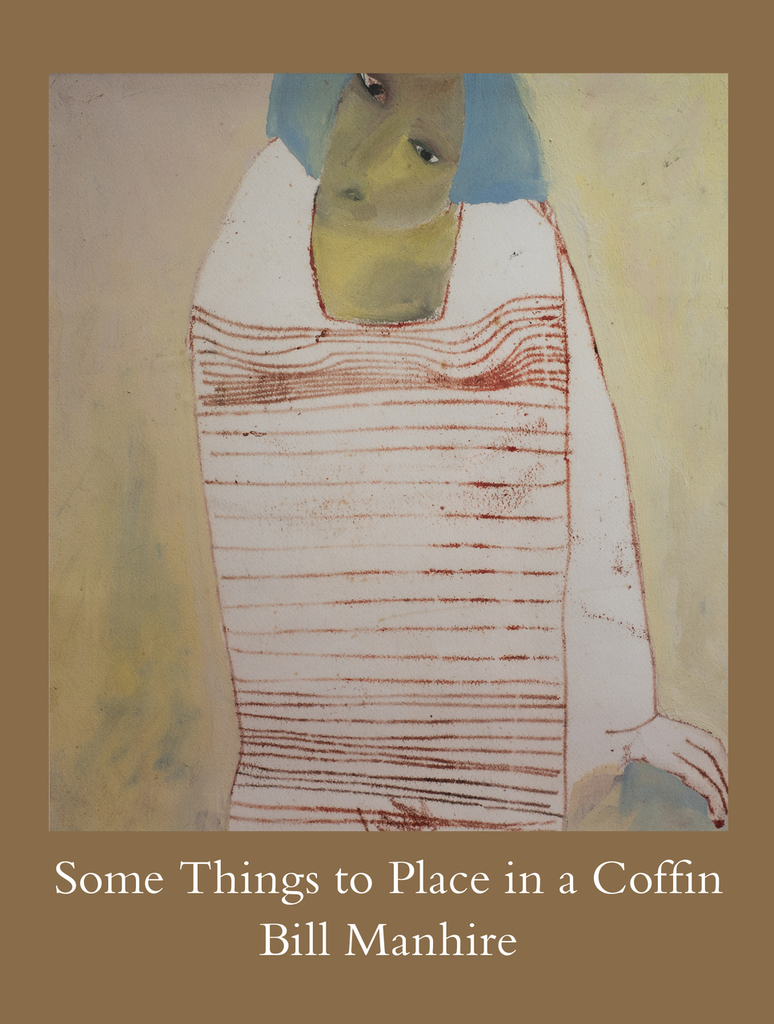
One of my friends has long been drawn to the elusive, wry voice of Bill Manhire’s crafted poems, turns of phrase that slip in beside you and catch you unawares, so I would give her his new collection, Some Things to Place in a Coffin (VUP). I’d also give her Vanishing Points (AUP), Michele Leggott’s dense, lyrical poems exploring art, history and family history.

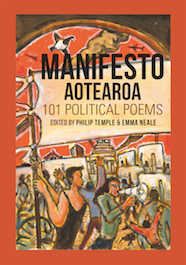
To my son’s father, politically engaged and sometime writer of political poems, I’d give Manifesto Aotearoa: 101 Political Poems, edited by Philip Temple and Emma Neale (OUP), a diverse anthology of new and old poems by New Zealand writers covering the broad categories of political, rights, environment and conflict both at home and overseas.

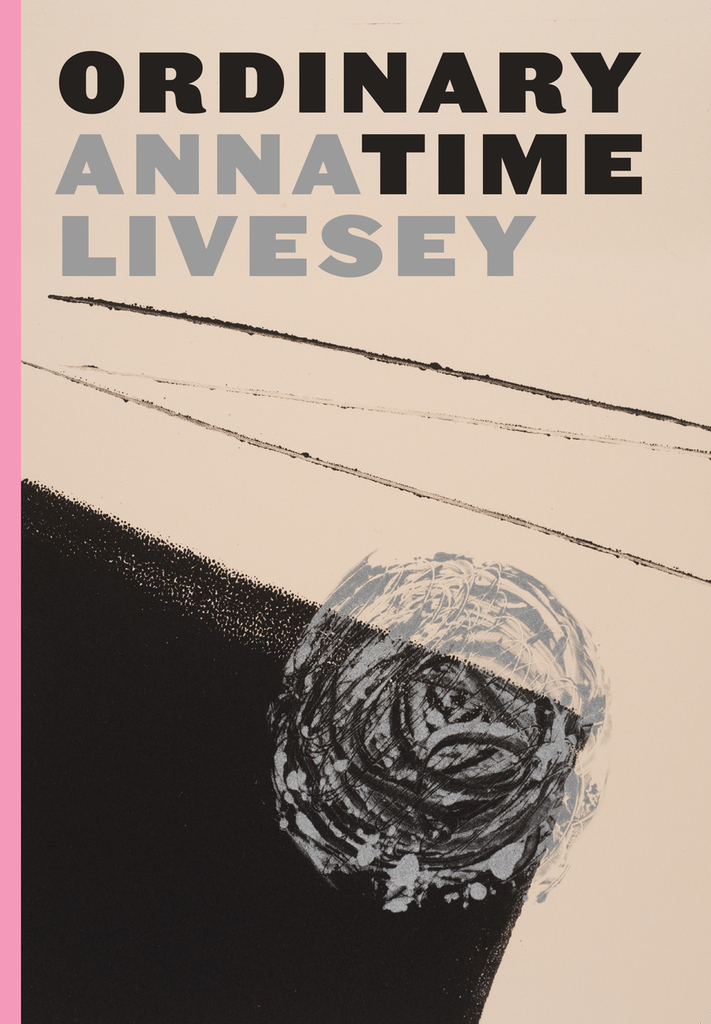
To a vital and curious young woman, I would give Nina Powles’ debut full poetry collection, Luminescent (Seraph). And to a new, loving mother, I would give Ordinary Time (VUP), Anna Livesey’s intimate poems about mothering her newborn and toddler, reflections on struggling to be a particular kind of independent achieving woman, poems about quiet grief and slow, uncertain maturing.


Pip Adam:

This year I’m buying several copies of the Annual (Annual Ink/Potton and Burton), edited by Kate De Goldi and Susan Paris, for overseas friends with children. I’m also buying a couple of copies of Write to the Centre: Navigating Life with Gluestick and Words by Helen Lehndorf (Haunui Press). This is a book that just keeps giving, and I often give it with a nice journal and pens. I’m also giving Nina Powles’ magnificent Luminescent (Seraph), because it’s a beautiful object and also includes great poems.


Chris Else:

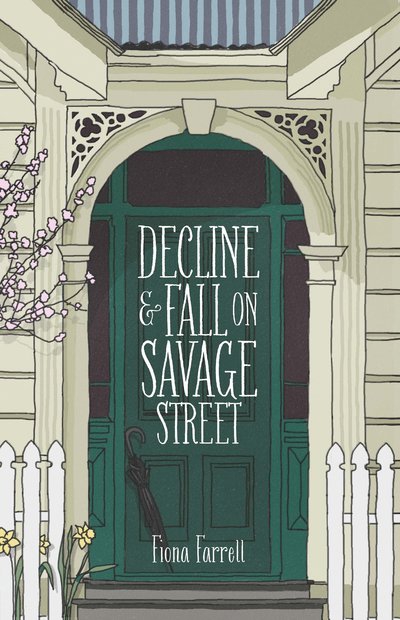
I’m buying three New Zealand novels as presents this Christmas. Decline and Fall on Savage Street by Fiona Farrell (Penguin) is a fictional exploration of the history of Christchurch through the lens of a single house and a hundred years of its in habitants. Beautifully observed, keenly intelligent and an object lesson in how to use historical research to present character.
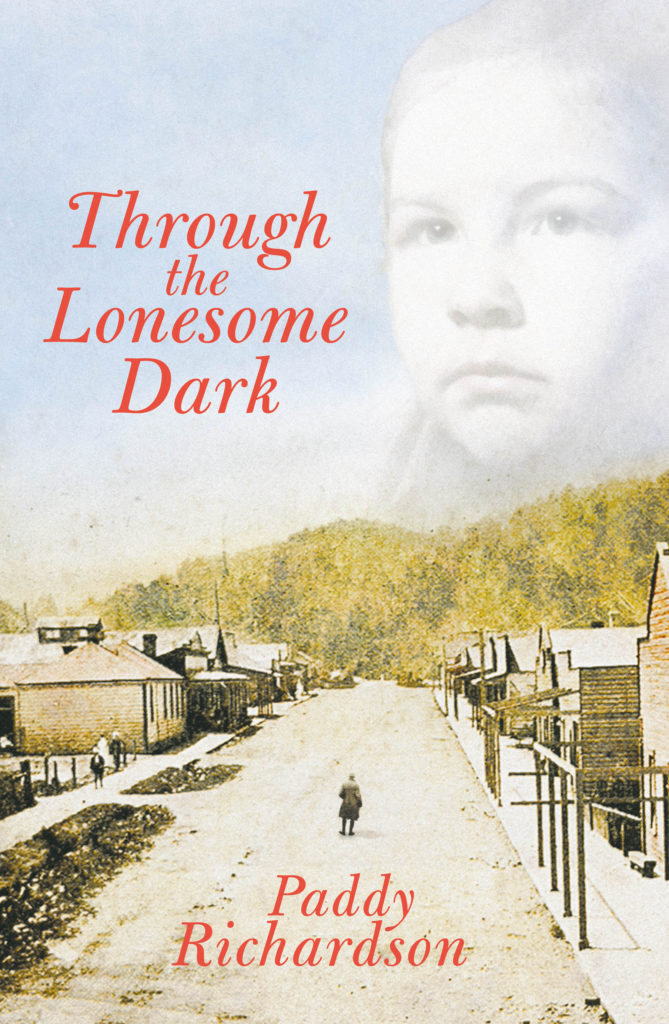
Through the Lonesome Dark by Paddy Richardson (Upstart) is one for fans of more popular fiction. What it’s like to be buried alive and survive – figuratively for a young woman in Blackball and literally for a soldier from the New Zealand Tunnelling Company on the Western Front. Good characterisation, an evocative style and, again, parsimonious use of historical research to support a good story.

Billy Bird by Emma Neale (Vintage) offers subtle insight into a family in crisis. Neale tackles the problem of grief and the psychological drama of a ‘difficult’ child with a poet’s sensibility and compassionate intelligence. Poignant, lyrical and, often, down-right funny.


Fiona Kidman: 

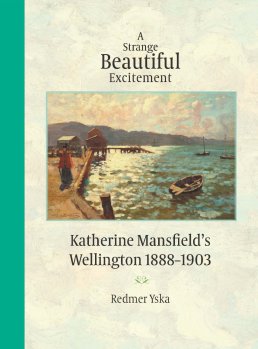
I’d choose A Strange Beautiful Excitement: Katherine Mansfield’s Wellington by Redmer Yska (OUP). This wonderful book is the writer’s exploration of the Karori suburb of Wellington, where Mansfield spent much of her childhood – and so did he. Part dreamlike memoir, it is also relentless in its search for answers about the real Wellington of Mansfield’s time, shattering our previous perceptions of her early life. It’s an exquisite production.


Diana Bridge:

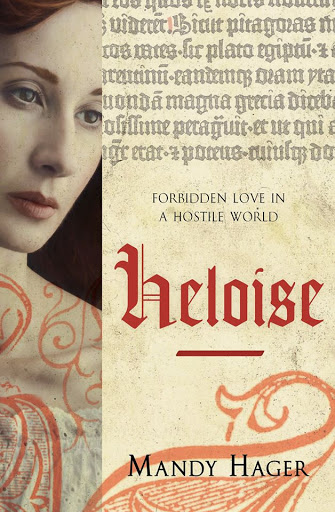
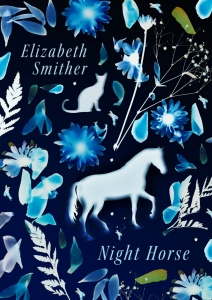
I’ve just started Mandy Hager’s Heloise (Penguin) and so far it’s just what I ask of an historical novel. I’ve already bought it as a present for a family member. I bought Elizabeth Smither’s collection Night Horse (AUP) in August and gave it to the Australian poet Judith Beveridge.


Linda Olsson:

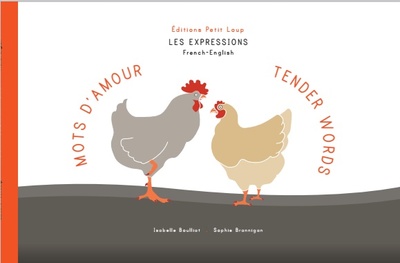
I’d suggest Mots D’Amour / Tender Words by Isabelle Boulliat with illustrations by Sophie Brannigan (Editions Petit Loup). It’s a clever and pretty little book produced by two bilingual mothers. I found it at Dorothy Butler Children’s Bookshop in Auckland and bought it for myself.


Diane Brown:

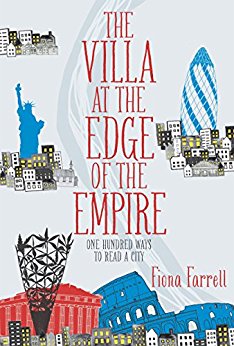
Decline and Fall on Savage Street by Fiona Farrell (Vintage) is a novel centred around a villa on the edge of a river in Christchurch, a companion to the non-fiction The Villa at the Edge of the Empire: 100 Ways to Read a City (Penguin 2015). The novel begins in 1906 with the development of the site and ends in 2012 after the earthquakes and explores the varied lives of the many people who live there, from up-and-coming public servants, soldiers and hippies to the latest residents, a middle-class family. An eel living in the river acts as a chorus. There’s not a misplaced or excessive word. I loved the fluidity of the point of view but always knew whose head I was in. As well as being emotionally rich in characterisation, it’s an important novel, revealing the fragility of all our lives.

Manifesto Aotearoa: 101 Political Poemsedited by Philip Temple and Emma Neale (OUP), is this year’s outstanding poetry anthology, beautifully presented in hardcover and illustrated by Nigel Brown. Thoughtful, provocative and a perfect present.

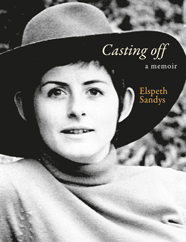
Casting Off: A Memoir by Elspeth Sandys (OUP) takes up from her first volume of memoirs, What Lies Beneath. It’s an entertaining account of Sandys setting off for England with her first husband, and is immersed in theatre, politics and writing.


Emma Neale:

The Ski Flier by Maria McMillan (VUP) is full of thoughtful, surprising, reflective poems. In particular I’d want to gift this book for one potently eerie, deeply felt, nail-bitingly tense narrative poem, ‘Only the things that can survive’, which I think is worth the price of the whole collection on its own. This poem is like a distilled novel, so it has the intensity of a quick shot of whisky: strong, lingering, transformative.


Philip Temple:

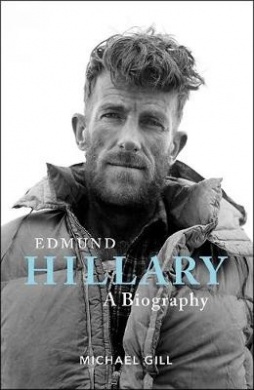
I see that Creative NZ has given Gareth Farr a grant to compose an Ed Hillary Symphony to be performed on the occasion of what would have been Hillary’s 100th birthday in July 2019. It seems appropriate, therefore, to recommend that all mountaineers, outdoorsies, Helen Clark and those interested in 20th century (male) social history should be given Michael Gill’s Edmund Hillary: A Biography (Potton and Burton). It has its imbalances and lacunae but presents, for the first time, Ed Hillary as a rounded human being and not just the hero on the five-dollar note or as lead in the legend he nurtured with the aid of Tom Scott.

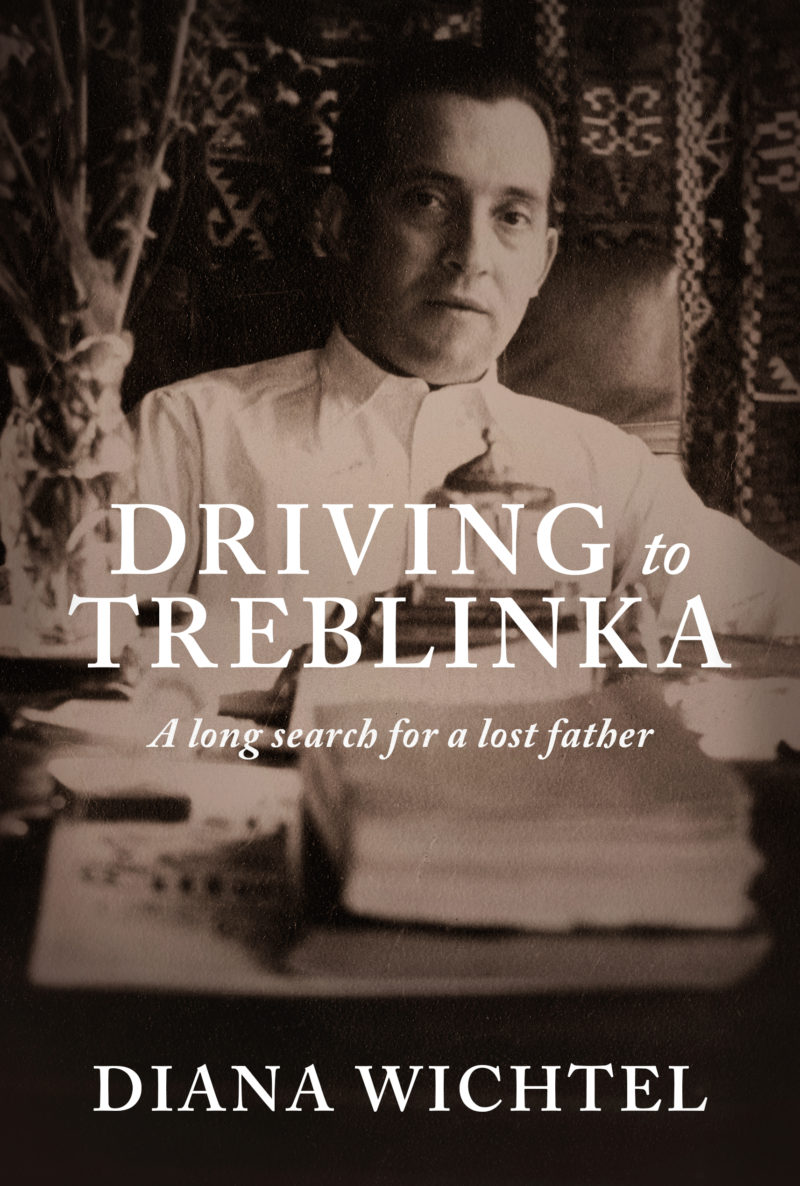
The fiction part of my brain has been submerged by Shadboltiana as I plough on with my big biography but am looking forward to being presented with Fiona Farrell’s Decline & Fall on Savage Street (shamefully omitted from the Ockham New Zealand Book Awards longlist) and, in the memoir field, Elspeth Sandys’s Casting Off and Diana Wichtel’s memoir Driving to Treblinka (Awa Press).


Carl Shuker:

I’m excited to get the novel Baby by Annaleese Jochems (VUP). The Keely O’Shannessy cover is pretty and arch and Pip Adam’s launch speech suggests it’s right up my alley: it ‘fools you into thinking this is a conventional page-turner by operating on your pleasure centres at the same time as your pain.’


Paddy Richardson:

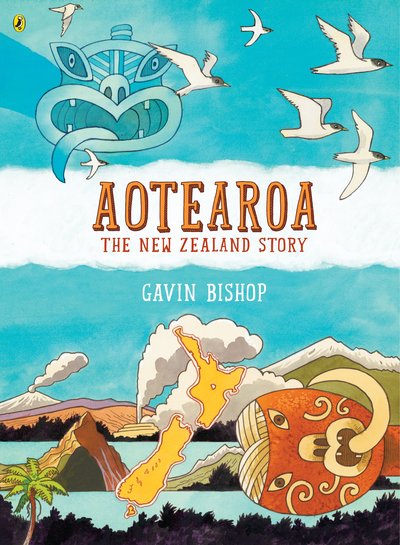
I’m aiming to get Aotearoa by Gavin Bishop (Penguin) into all the homes of my grandchildren and anyone else I can think of. It’s beautifully illustrated and a wonderful survey of New Zealand history for children (and adults). Not only is it informative, kids love it ( it’s in the library of the school where I teach creative writing and they are full of praise).

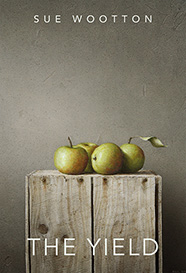
Other books I’m buying as presents include Fiona Farrell’s Decline and Fall on Savage Street, a beautifully written and memorable book about Christchurch before and after the earthquake. The Yield by Sue Wootton (OUP) is a collection of poems that are intelligent, perceptive, sensitive, sometimes funny and sometimes grippingly sad and confronting.

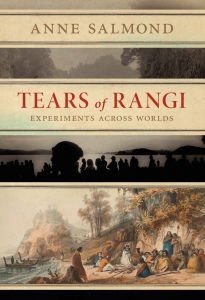
Ann Salmond’s Tears of Rangi: Experiments Across Worlds (AUP) is very readable, very informative and another book I think every New Zealand household should have.

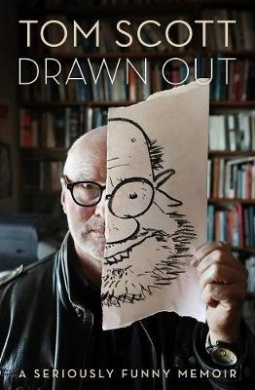
I love Tom Scott’s dry, wonderful humour. I want Drawn Out: A Seriously Funny Memoir (Allen & Unwin) for myself but I’ll give it to my husband so I can read it as well and savour it together over the summer.


Catherine Chidgey:

I’ll be buying Aotearoa by Gavin Bishop for my two-year-old daughter (and secretly for me) this Christmas. I’m looking forward to reading about our history with Alice, and I love the movement and energy of Gavin’s illustrations – the unashamed busyness of them, the way it’s possible to find something new every time you open the cover.


Jeffrey Paparoa Holman:

The Ones Who Kept Quiet by David Howard (OUP). As I’m on my way out right now to buy this Ockham-longlisted book of poetry, it’s a good time to recommend David Howard’s work.  He’s a national treasure in the poetry world: intelligent, deeply well-read and a man of strong and considered opinions. You won’t find any easy confessionalism his work, but there will be people, characters real and imagined from our history and that of other realms. In his time as Canterbury as Writer-in-Residence in 2016, I grew to admire even more his work ethic and his critical acumen. You can’t go wrong here.


C.K. Stead:

I suggest Night Horse by Elizabeth Smither (AUP). Smither’s poems are quirky, flavoursome, full of sly humour, deft and clever.  They are full of people she knows and their animals, observed with a sharp and not invariably compassionate eye, but in ways that makes them glow with weird life.

Maggie Rainey-Smith:

I recommend These Two Hands: A Memoir by Renée, a multi-talented novelist and playwright, recent winner of the Downstage award for making a significant artistic contribution to theatre in New Zealand.   This is an important memoir of a most interesting woman, born just before the Napier earthquake. A working class girl, a marching girl, a girl who left school at the age of 12. I’m a child of the 50’s and I so related to this memoir. Renée writes with great candour about what it is to love and leave, and then to love and be left.  I love the social history that interweaves the patches, as she calls them. This is an important, female, feminist, lesbian, Māori story. Buy this book, for your Mum, your Aunt, your sister, or your daughter and all the old 70’s feminists in your life.

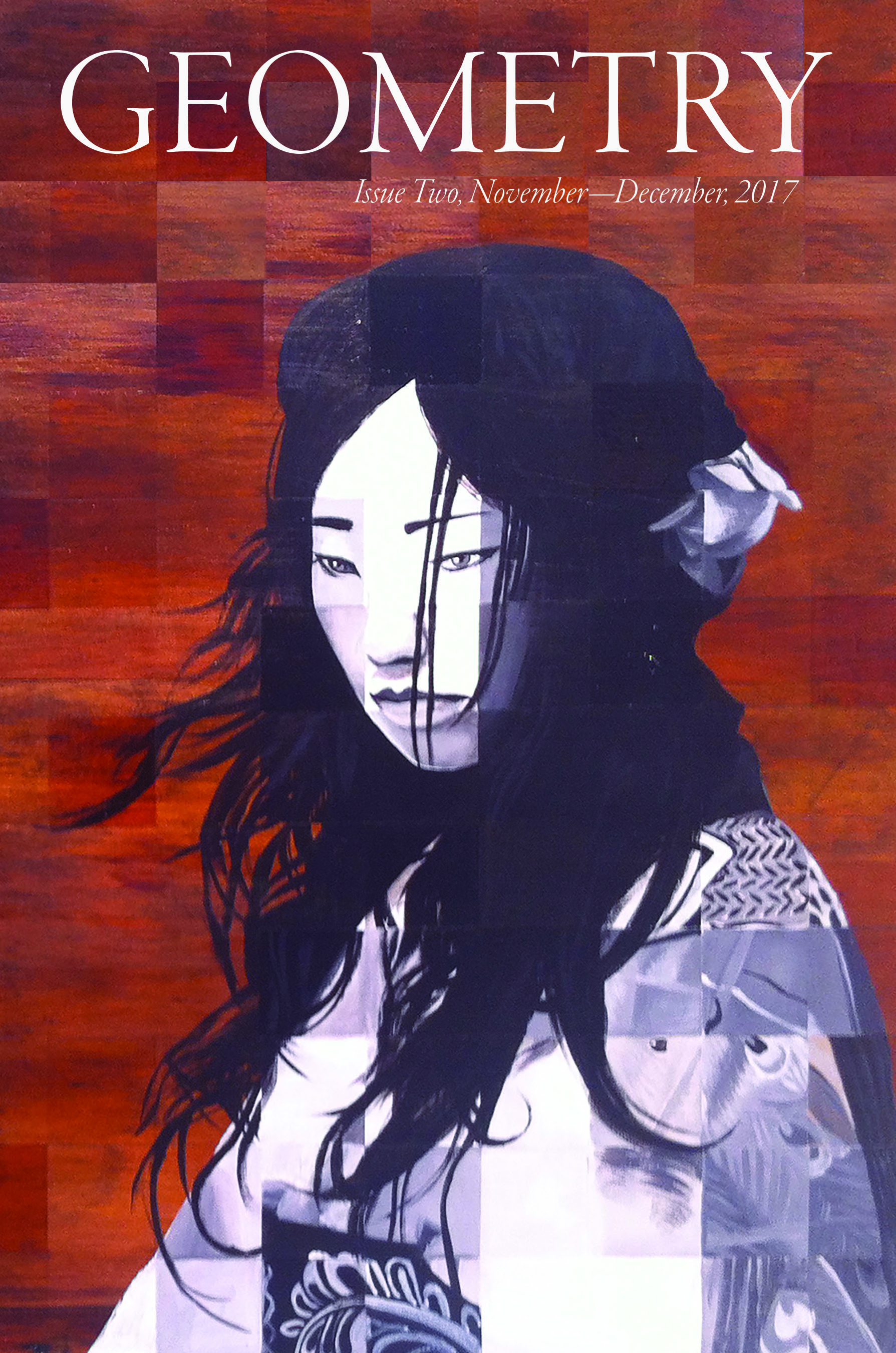
If you need stocking fillers this Christmas, what better than the new international literary magazine Geometry published in New Zealand? A sumptuous read, showcasing both local and international poetry, prose and art. Perfect summer reading.


Barbara Else:

Decline and Fall on Savage Street by Fiona Farrell is the story of one house over more than a century, from 1906 to 2012. I assumed the house itself would be the main character but it’s a narrative vehicle for the series of people who live in it. In each of the reader’s brief encounters, new characters are instantly made familiar by their individual preoccupations, sometimes mundane, sometimes social and political, local and global. My very picky reading-self was captured to the last page. Excellence. None better this publishing year.

Paula Morris:

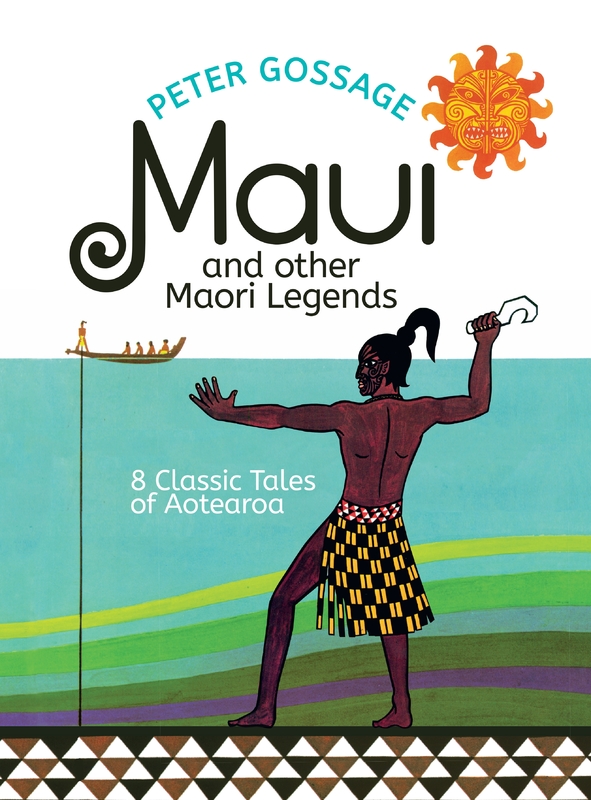
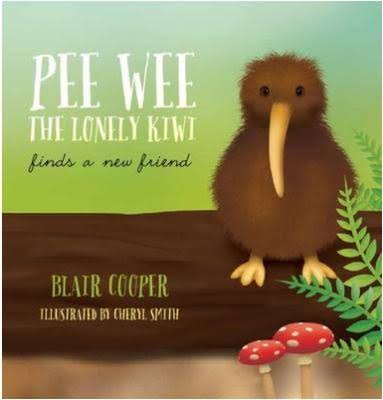
I’ve written about some of my #NZChristmasBookChallenge choices for the NZ Herald, but forgot to mention Maui and Other Māori Legends: Eight Classic Tales of Aotearoa, written and illustrated by the late Peter Gossage (Penguin). This is a handsome hardback collection of many of the classic stories – bold and graphic in Peter’s talented hands – that he brought to life for generations of New Zealanders. I bought this for my little cousins in the UK. And I got a Pee Wee the Lonely Kiwi title (Flying Books) for a small person in the US, because he didn’t know the kiwi is a bird.


'NZ literature is such a vast and varied thing' - Pip Adam

Read more

Photo on Foter.com

Letter from Romania

Michael Harlow crosses frontiers and shines light at the World Poetry Festival in Romania.


It is the nature of poetry and poetry-as-song that it wants to travel further afield than just around the corner. It has never been content to stay at home talking to itself. And it is the nature of the poem itself that it wants to arrive somewhere. ‘Poetry is not a bird looking for a cage,’ as a poet said recently at the fifth World Poetry Festival in Craiova, Romania, my second visit and invitation as a New Zealand poet.

This desire for poets and poetry to cross frontiers, political and cultural, and to raise its voice to ‘shine a light in the world’s ear’ is at heart the raison d’etre of this Romanian Festival. A celebration of poetry and prose-poetry; and what poetry can make happen when a cantata of multi-cultural voices makes up the choir.

‘Can you imagine waking up to a world in which there is no poetry?’ I asked at a reading we gave to the cadets at the Craiova National Military Academy. A small silence and some discreet foot shuffling—until the ever-alert presiding Colonel, suitably festooned with braid, signed the signal, and the cadets in a body rose to attention and snapped off a perfectly drilled salute. A surprising ‘lyric salute’, I thought.  Followed by two of the cadets, a gender balance, reading back to us their own poems. A fanfare of enthusiasm, it was agreed by all an heroic occasion. And a couple of us snapped off (discreetly) one or two salutes of our own, just for practice, you never know.  And then we had tea and photos.


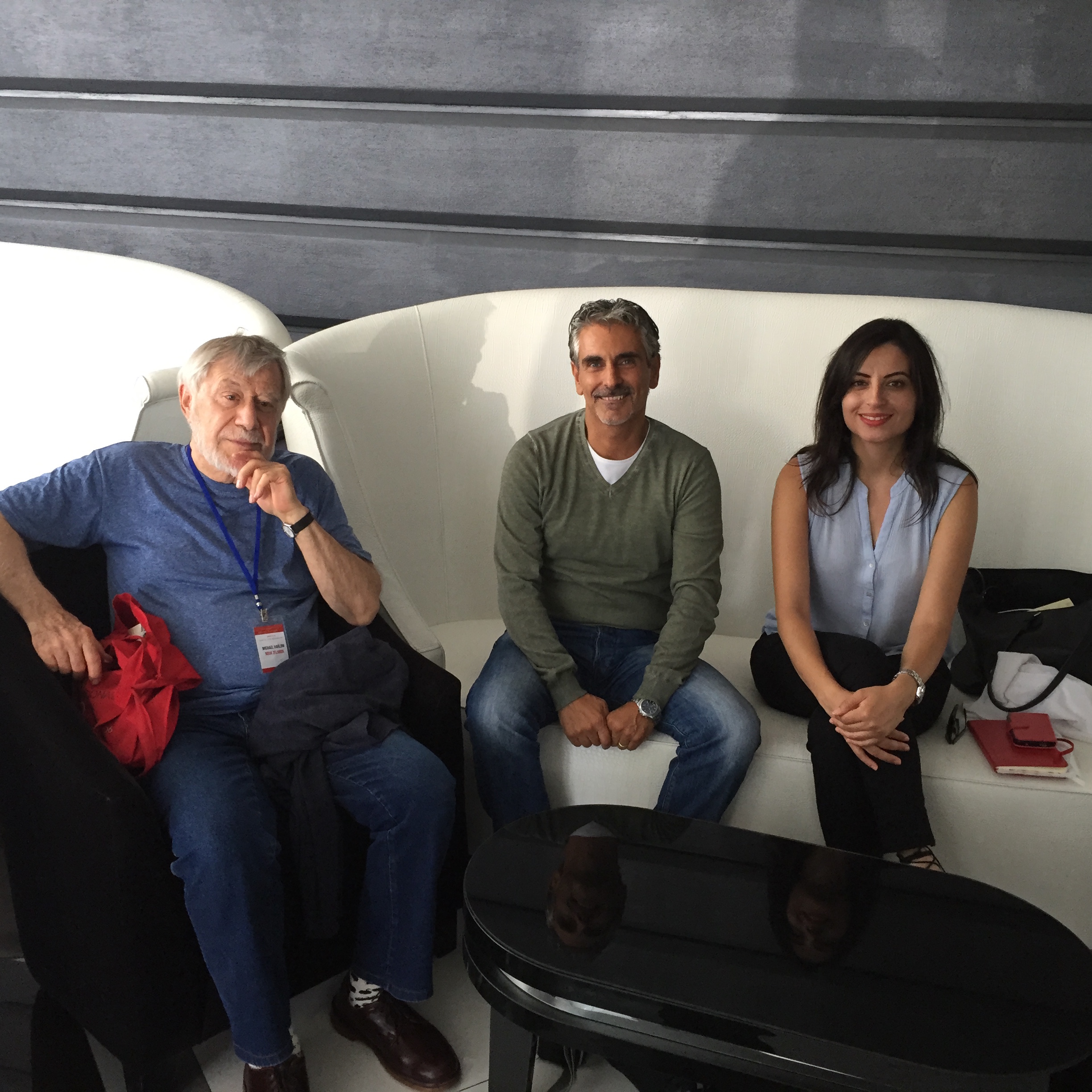
Michael Harlow (left) with poets from Italy and Turkey at the World Poetry Festival, Craiova.


I’ve read in a prison in Nicaragua where at first it was not easy to distinguish the prisoners from the guards (this is a ‘democracy prison’, the Boss warden assured us); in a remote and small market town in Colombia accompanied by the local trombonist and his sousaphone friend who commanded the makeshift platform, double decibels with applause to match, and an encore … for the musicians; and an even more remote town on the border between Venezuela and Colombia, where three of us an Israeli, myself, and a poet from the Dominican Republic landed in a tom-thumb airplane, some 50 kms from where we were supposed to be (an ordinary navigational error it seems)—and where we were offered flak jackets, just in case, for a visit to the border for a tourist gawk if we wished, after our performance outside the local library that came to the rescue. And now, a Military Academy to add to the list—not quite a border crossing.

Thirty poets from thirty countries gathered in Craiova, a city clearly dedicated to ‘going for green’, rightfully proud of having the second largest urban park in all of Europe. We began by reading to the public from the stage of the ‘Romanescu Summer Theatre’, joined by one of Romania’s celebrated actresses, who with diva-like brio unstoppably rattled off English and Romanian translations of the work of our presenting poets – the air charged with fair-flying emoticons, the best ‘Performance’ of the day some enthusiasts (not all) declared.

Taking poetry to the public, we read in various venues around the city: at schools, a nearby girls’ College and a shared reading with students; at the Museum Art Gallery keeping company with the renowned Romanian sculptor Brancusi, his The Kiss the most seductive ‘poem’ of the day; at the County Library where a selection of books by participating poets were launched and celebrated; and even a reading at the locally celebrated Minerva Bakery, with more prizes and more poems by three of our distinguished visiting poets; and a nice gesture by the current owner (a secret poet I think), treating us to a recitation of one of his poems. This prompted a delightful comment by one of our tribe: ‘You know, I swear there are more ‘secret poets’ in the world than there are people, don’t you think?’


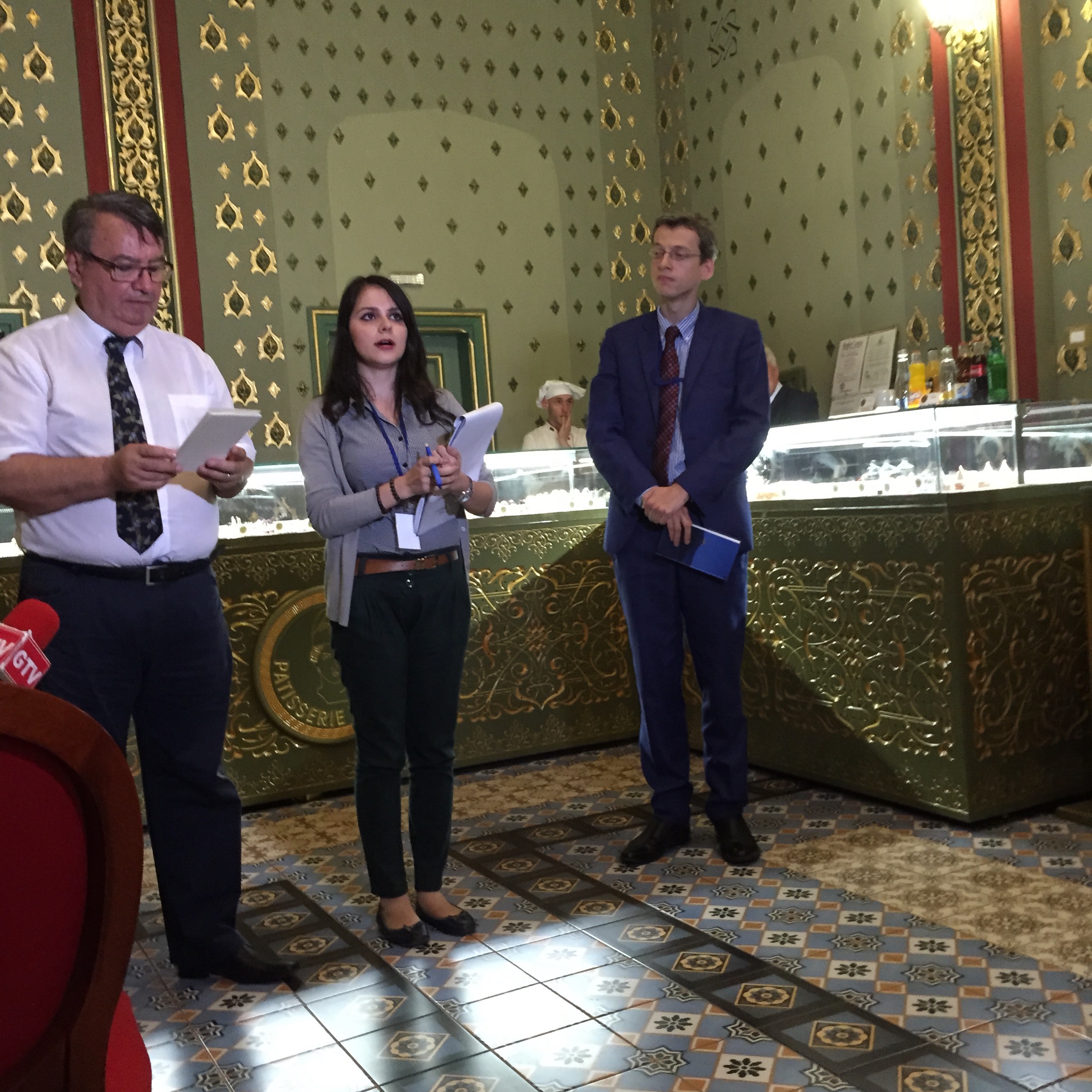
Poets reading at the Minerva Bakery, Craiova.


Not to be outdone by the Minerva, the Marin Sorescu National Theatre pitched in with their special cultural contribution, Sad Poems and the Pontics, a solo dramatic performance of poems by Ovid in exile (accompanying English translation on a wide screen); a very polished and professional performance, this Poetry of Theatre, and very much in the spirit of this Craiovan Festival.

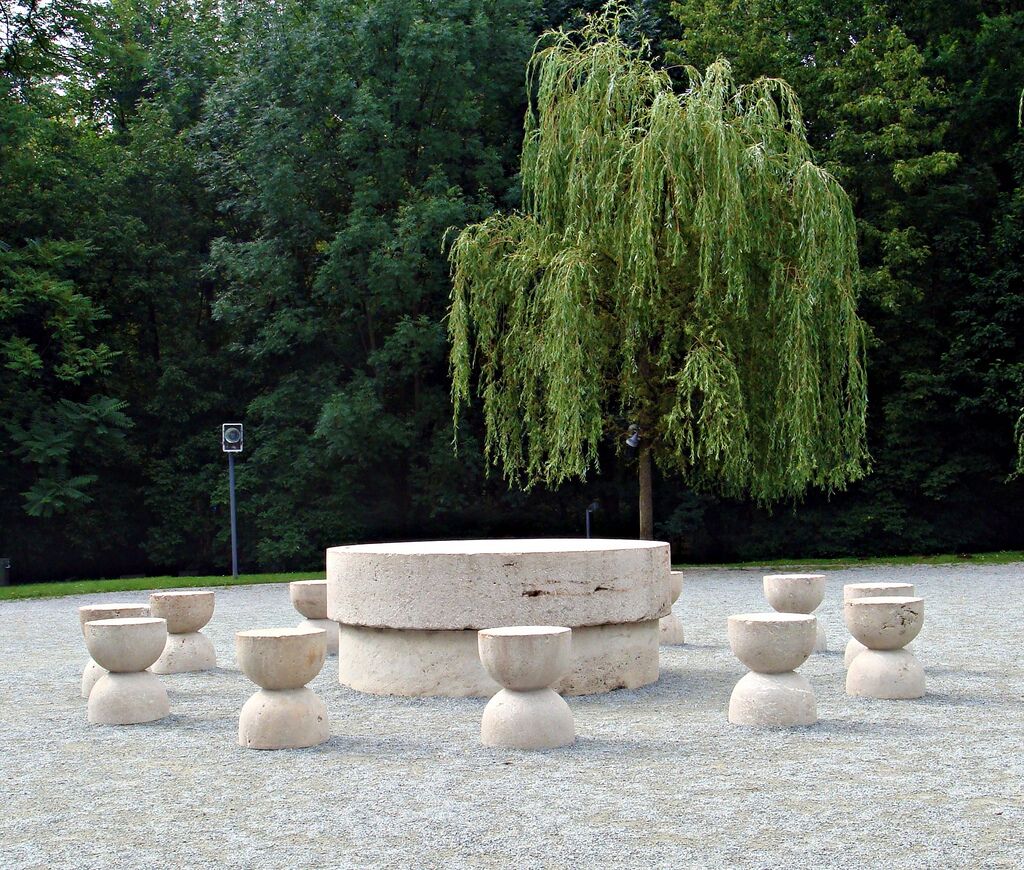
And this being very much Brancusi country, the Poetry of Sculpture on offer, there was a visit to the rural city of Targu-Jiu, a place that celebrates and memorialises the life and work of this patriarch of Modernism. To our surprise, at the local Museum-Art Library, there was a pictorial exhibition of all participating poets and translators: a series of character-caricature drawings displayed along the walls of the Gallery—drawn by a 10-year-old local budding artist.  Concluding with a presentation of a book of these ‘portraits’ gifted to us individually as visiting poets to their city.


Table of Silence at Targu-Jiu. Photo by CameliaTWU on Foter.com/CC BY-NC-ND.


And always the idea in play, that poetry is at the heart of its saying, a public voice: articulating local and national aspirations of a people, as well as personal and collective myths—when myth is in the original and traditional sense, stories that shape our lives and tell us something about our desires and fears, confusions and truths, the light and dark of life and death …

As one might expect, the political imagination and the political poem was very much on offer—in poems as a thoughtful undercurrent or direct declaration.  Some pretty exciting and engaging poetry being spoken, almost always in the lyric mode, and (amen) almost always eschewing the bloated, misguided, and dismal ‘propaganda poem’. And lots of wit about too, and at times as much laughter as we could bear.

And not only the political imagination being flexed, but the additional pleasure of the romantic imagination in flight.  ‘To make a bird become an angel’ as the poet Memmed Ismayil from Azerbijan said on receiving one of the many awards presented during the Festival. Any number of poems by various poets affirming, in various ways, that poetry wants to take the imagination into the heart; and that poetry makes intimate everything that it touches. You could say one of the truths of the romantic imagination was very much on poetic display throughout the festival.

Beginnings and endings and a wind-down – or I should say ‘wind-up’ – festival dinner of poetry and music, of song and dance at a fairly flash country resort hotel. Not quite Dionysian but a move or two in that direction.  Spontaneous riffs of poetry (between courses); a fairly full complement of poetry-as-song, most notably our Madeconian folk ensemble, a trio of poets treating us to poems in Macedonian and English, and folk-songs, and the occasional flash of regional folk-dance. Also, most memorably when one of the chefs appeared; he said later he couldn’t help himself, caught up in the spirit of the evening, ‘Please, these potatoes I made with both my hands!’ One of our poets in reply, ‘A poem, a poem, bravo!’

And a treat, the appearance of a celebrated Romanian folk-singer. Definitely in the tradition of the troubador, who throughout the evening strolling up and down ‘made song’– a rather extraordinary vibrato performance. And as you might expect, to the musical accompaniment of the local DJ, an eruption of a miscellany of dance moves; and at one point a solo performance in the ‘whirling dervish’ tradition (mind you without the howling). A fine finale to a dedicated festival of poetry and the arts.


Craiova, where the World Poetry Festival took place. Photo credit StefanJurcaRomania-on-Foter.com/CC BY


Michael Harlow lives and works as a writer, editor, and Jungian therapist in Central Otago, Alexandra, New Zealand.  His many accolades include the prestigious Lauris Edmond Memorial Award for Distinguished Contribution to New Zealand Poetry (2014).


'NZ literature is such a vast and varied thing' - Pip Adam

Read more

Why Aren’t You Reading Brown?

Not enough diversity in your reading diet? Here are 21 reasons to buy/borrow/read books by Maori and Pasifika writers right away.


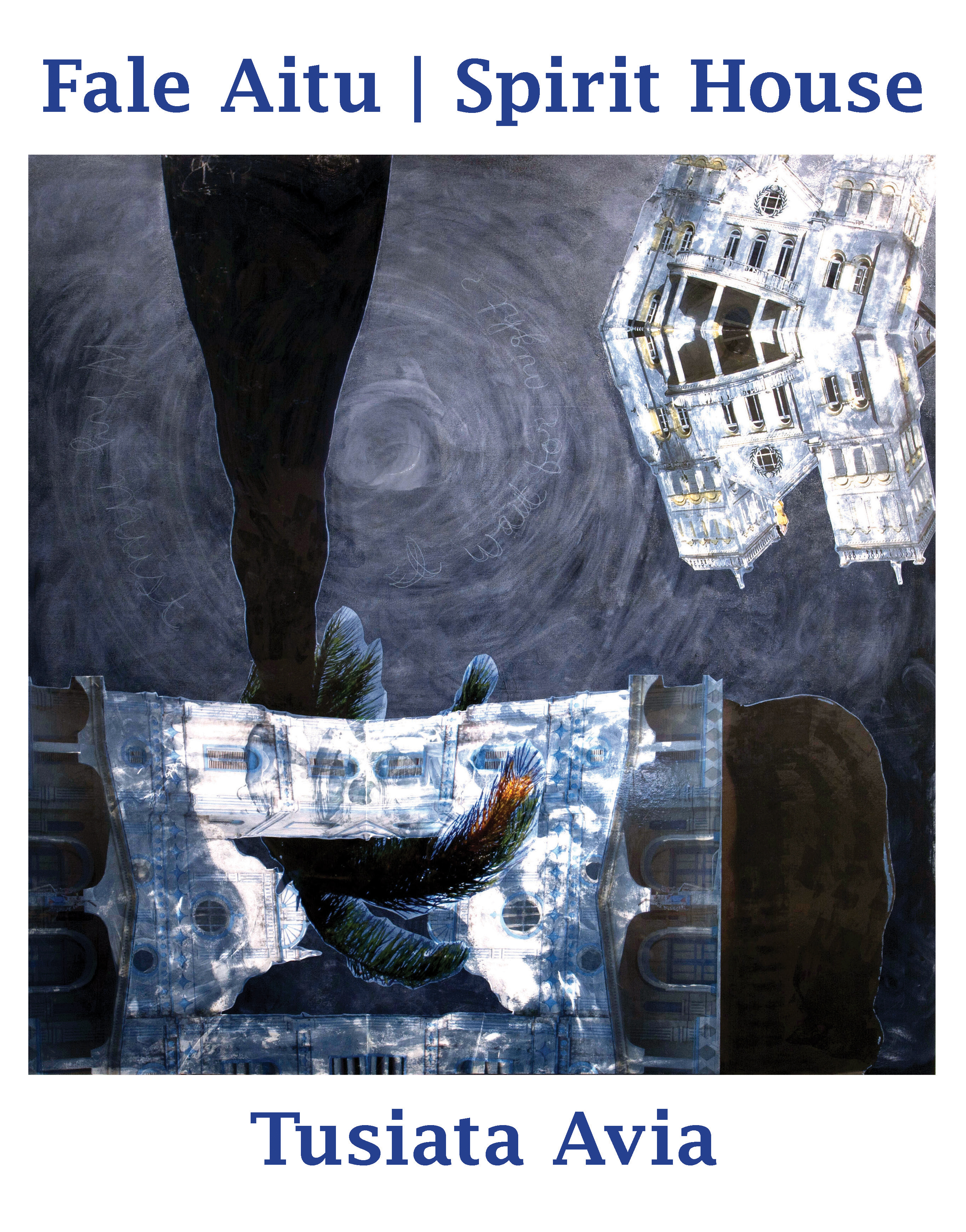
1. Tusiata Avia: Fale Aitu | Spirit House (2016, VUP)

Enter at your own risk! This fale is not for the faint-hearted as Avia takes you oh-so-gently by the hand to the place where spirits from the past and future – mythological and domestic, will haunt you. Here is poetry as an unforgettable supernatural force. Shortlisted for the Ockham NZ Book Awards 2017.

.

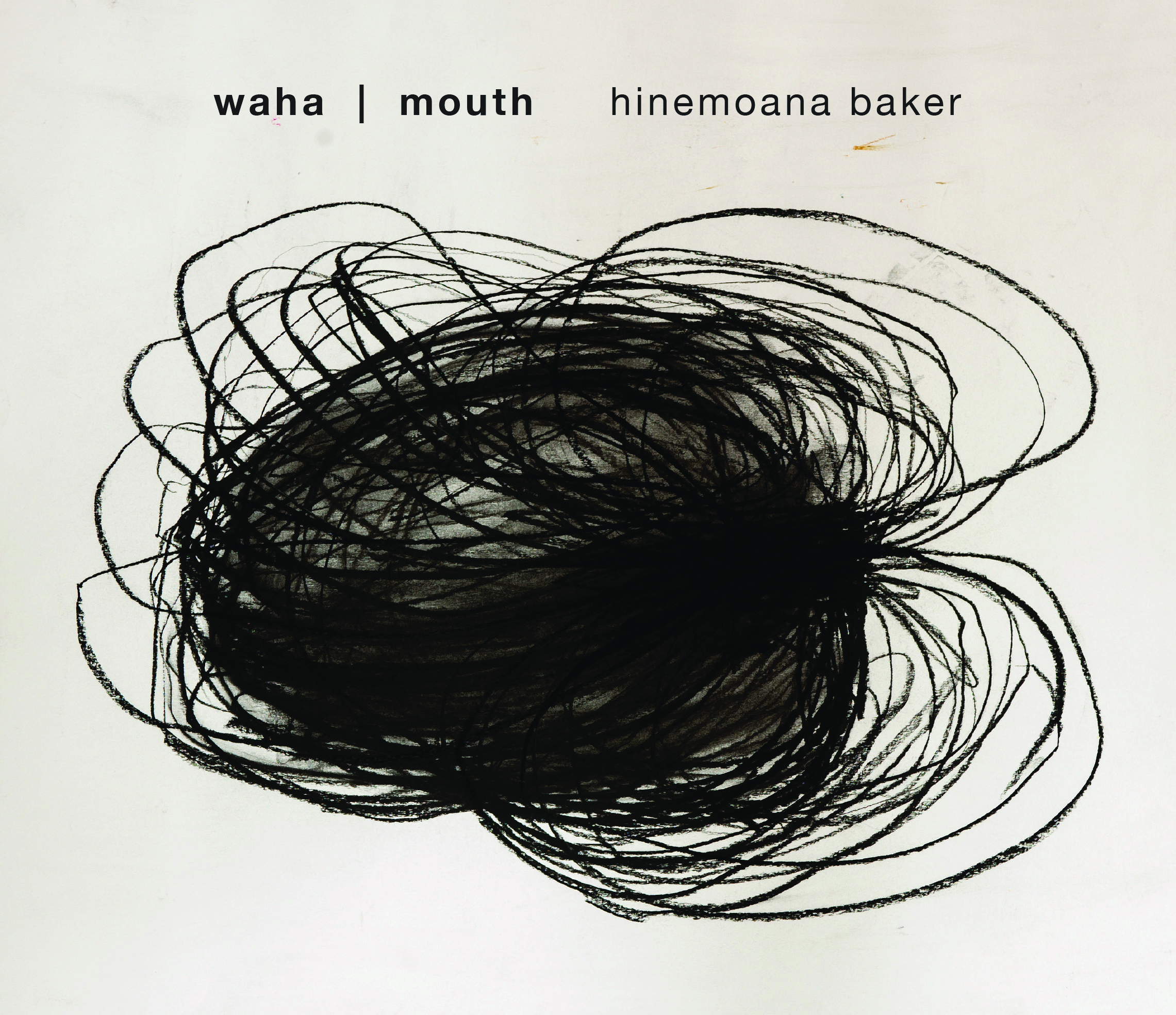
2. Hinemoana Baker: Waha | Mouth (2014, VUP)

Baker is a writer with an eye for the comedic and – as a singer/songwriter – and ear for the musical. But she’s also prepared in this, her third collection of poetry, to delve deep into dark times of grief and loss. Her work is spare but rich, managing to be both smart and playful with language.

.

.

3. Gina Cole: Black Ice Matter (2016, Huia)

Glaciers in the Pacific? Cole’s-award winning stories transport you to unlikely places, from Suva to Auckland, up Fox Glacier to inside a toxic sweatshop. Exploring lesbian dating dynamics to coup politics, this year’s winner of Ockham NZ Book Awards best first work of fiction will enthral.

.

.

4. David Eggleton: The Conch Trumpet (2015, OUP)

One of New Zealand original spoken word poets, this Dunedin-based Rotuman-descended racontour mixes style and panache with social consciousness and pastiche. A chanter, a raver, a piler of words, images, and sounds at dizzying speeds makes this award-winning collection an experience to marvel at. Read it out loud and see. Winner of Ockham NZ Book Awards poetry prize 2016.

.

.

5. James George: Ocean Roads (2006, Huia)

This big multi-generational saga explores the repercussions of the atomic bomb at Nagasaki and the jungle hell of the Vietnam war, with vivid locations ranging from New Zealand to New Mexico to Antarctica. George has another big novel coming soon: remind yourself of the scope and heart of his work.

.

.

6. Patricia Grace: Tu (2004, Penguin)

In this searing, visceral and poignant novel about love and trauma, one of our master storytellers takes us to wartime Wellington and the battlefields of Europe, following the fortunes of the 28th Maori Battalion to a bloody showdown at Cassino. An important, vital book.

.

.

7. Witi Ihimaera: Maori Boy (2015, Vintage)

The 2016 winner of Ockham NZ Book Awards nonfiction prize is an engrossing memoir of Ihimaera’s childhood in Gisborne in the 40s and 50s. A striking portrait of time and place, the memoir doesn’t shy from the darkness within the author’s family history and experience. Typically it’s both laugh-out-loud funny and profoundly moving.

.

.

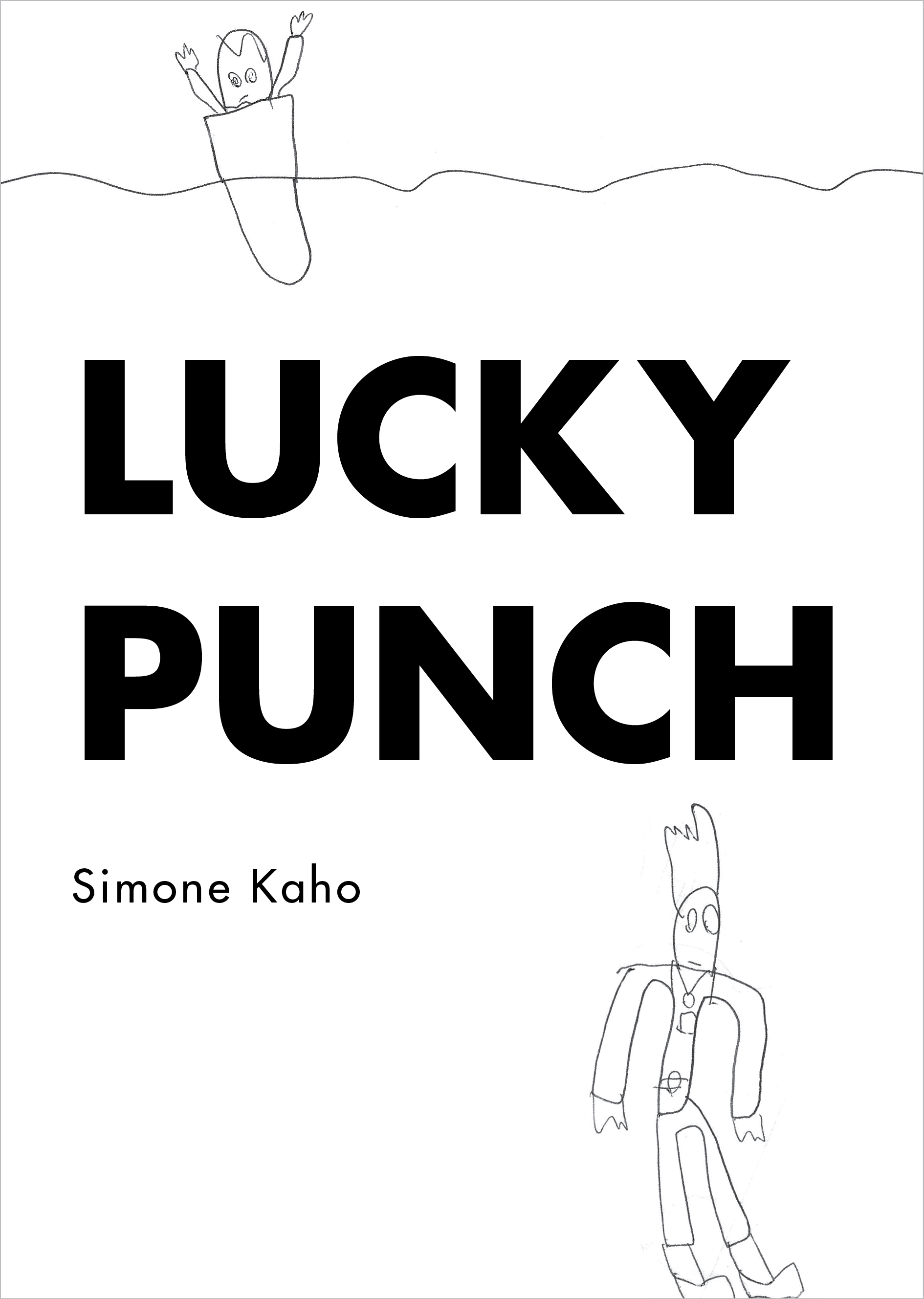
8. Simone Kaho: Lucky Punch (2016, Anahera Press)

Get ready to block. Kaho’s debut collection of tightly composed prose-poems are perfectly timed to aim at your gut. They sit squarely on the page allowing breath and space to infuse the love story between the ‘half’ Tongan narrator and Henry over the years. A fresh (and tantalising freshy) voice that’s got to be read. Read her prose poem ‘Prey’ in National Poetry Day’s 20/20 Collection.

.


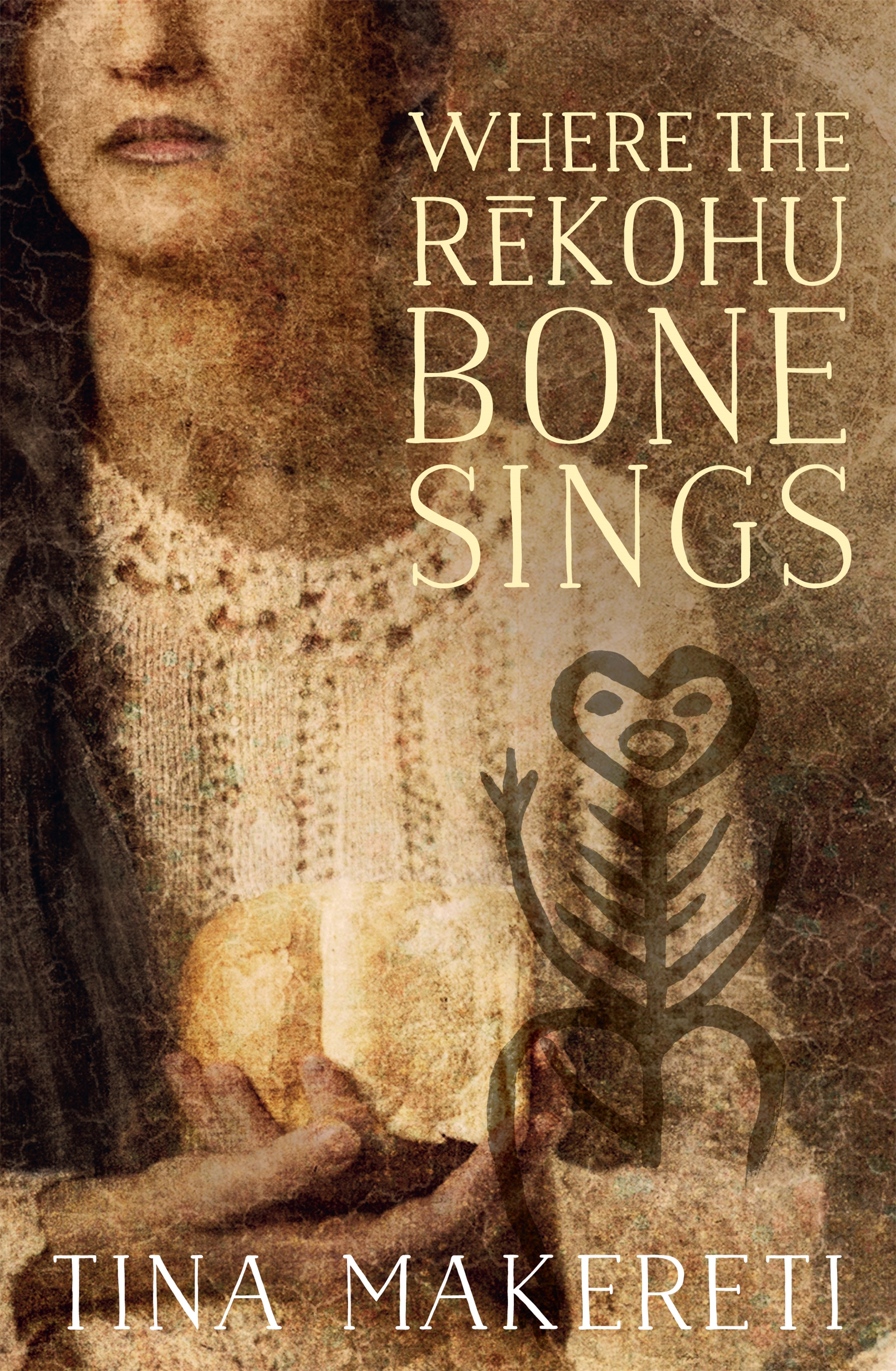
9. Tina Makereti: Where the Rekohu Bone Sings (2014, Vintage)

Rekohu is the Chatham Islands, the starting point – during the brutal invasion – for Makereti’s novel about cultural dislocation and reinvention among Maori, Moriori and Pakeha. With three rich narrative strands (1835, present day, and a roughshod 1880s Wellington) and Makereti’s assure prose style, the novel itself sings. Winner of the 2014 Nga Kupu Ora Maori Book Awards fiction prize.

.

.

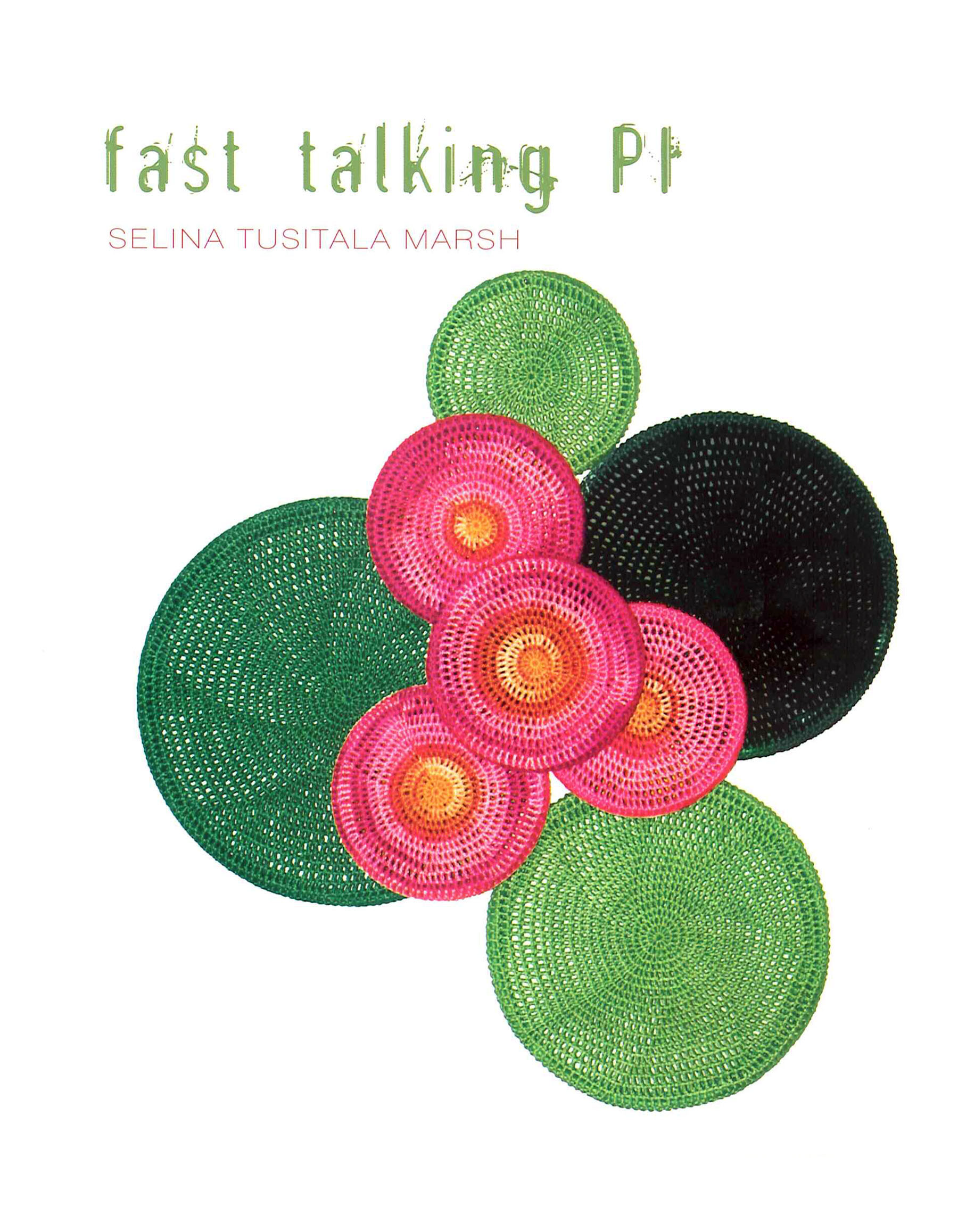
10. Selina Tusitala Marsh: Fast Talking PI (2010, AUP)

Its cult status among secondary schools has meant quadruple reprints for this NZ Post Book Awards first poetry collection winner. Its loud, proud, declarative and accumulative Pasifika identity poetics and politics invite you in to keeping add to its lines. Essential reading from the 2016 Commonwealth Poet.

.

.

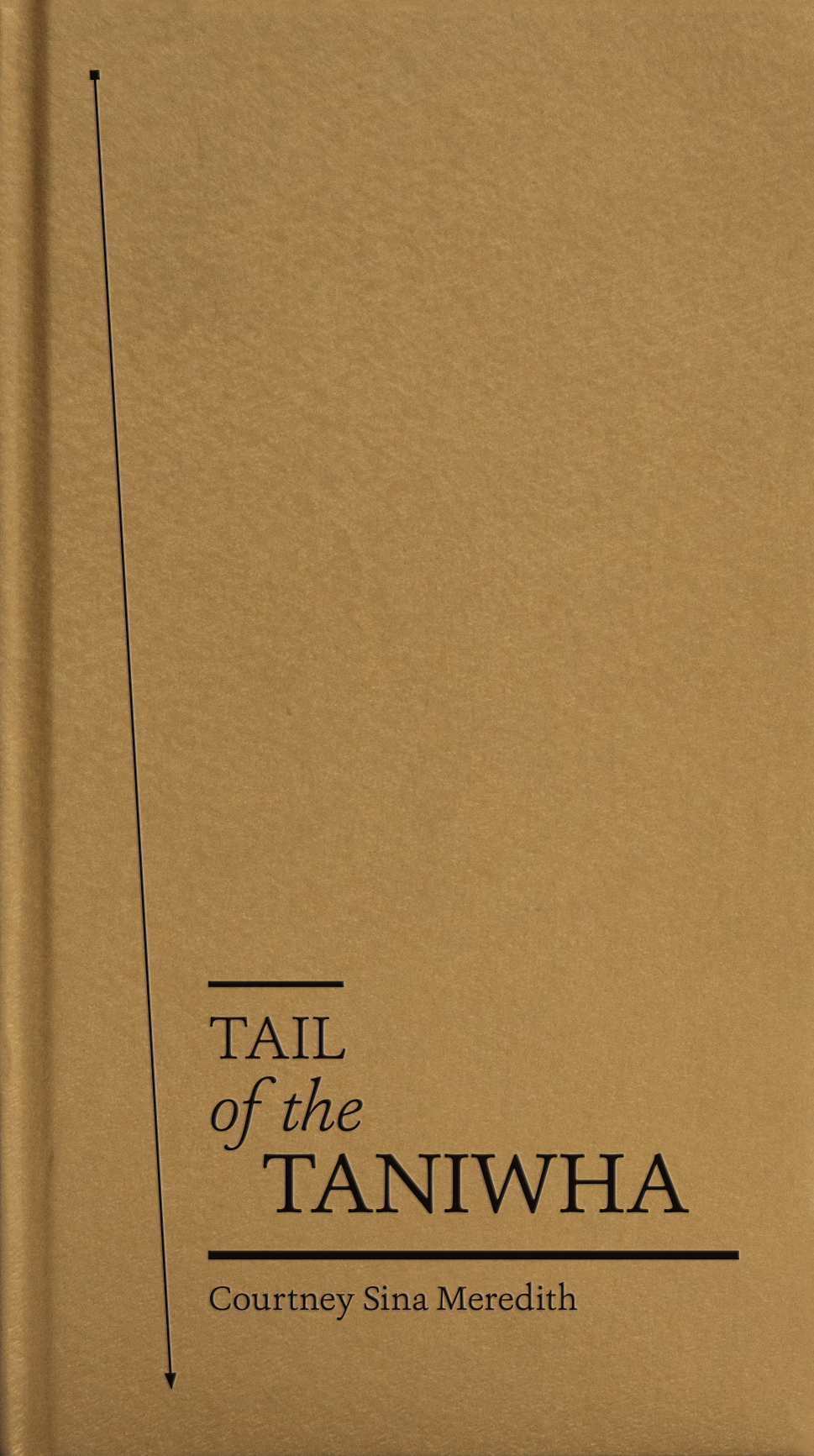
11. Courtney Sina Meredith: Tail of the Taniwha (2016, Beatnik)

After a bold book of poems – Brown Girls in Bright Red Lipstick – that went viral among young readers and anyone wowed by seeing her perform her work live, Meredith follows up with a genre-bending story collection that’s imaginative, inventive, unafraid and totally her own.

.

.

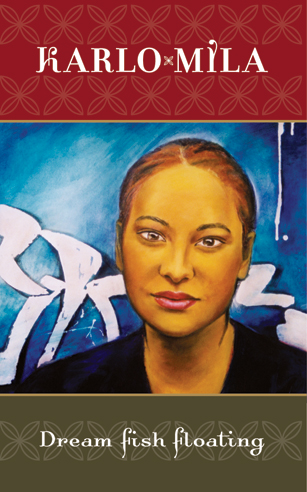
12. Karlo Mila: Dream Fish Floating (2005, Huia)

Another best first book winner (Montana New Zealand Book Awards, 2006), this collection opened the floodgates for other second-gen Pasifika voices. Poignantly Pasifika using a practical poetics (she’s quoted as saying ‘I write poetry for people who don’t like poetry very much’), this collection is a classic, leaving the reader such timeless images such as ‘Eating Dark Chocolate While Watching Paul Holmes’ Apology’ and Helen Clark dancing a tau’olunga.

.

.

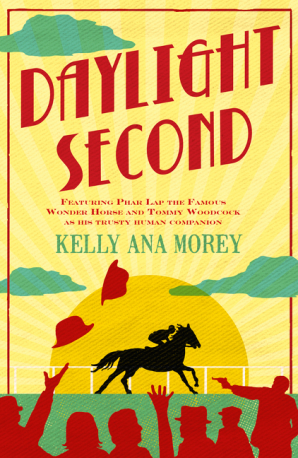
13. Kelly Ana Morey: Daylight Second (2016, Harper Collins)

Hard to choose just one by this versatile big talent, but last year’s Daylight Second is a crowd-pleaser: a novel based on the true story of the beloved race horse Phar Lap, it has pace (!), intrigue, insider knowledge, dark secrets and vivid (sometimes gory) details. A cracking read by an accomplished writer who knows her stuff.

.

.

14. Paula Morris: Rangatira (2011, Penguin)

Ngati Wai rangatira Paratene Te Manu, sitting for a painting by Lindauer, recalls his 1863 journey to England – a trip where the Maori party met the Queen, were celebrated in the press, had babies (legitimate and otherwise), fell sick, ran off to join the Music Hall, and found themselves stranded and exposed. This meditation on what it means to be a rangatira in a world that’s changed forever is based on a true story. Winner of the 2012 NZ Post Book Awards for fiction and Nga Kupu Ora Maori Book Awards.

.

.

15. Mauri Ola: Contemporary Polynesian Poems in English (2010, AUP)

Its title equates to ‘spirit life’ and these lines give breath to a Polynesian poetics. Established and emerging poets mix it up and write it out with celebratory, confrontational, decolonising, beautifying, astounding poems. A must-have selection of our poetic best from Hawaii to Fiji to Tonga to Samoa to other select islands in Oceania and an excellent reading companion and teaching text.

.

.

16. Puna Wai Korero: Maori Poetry in English (2014, AUP)

Arise Maori poets! This rich and rambling anthology adheres to tuakana protocol and places established poets next to emerging poets for the enrichment of both, and of course, the reader. From Treaty breaches to the Maori Battalion to Maui to explorations of land loved, lost, and found, these are not just lines from tangata whenua, people of the land: they are laments, chants, songs, prayers and protests from people of the page.

.

.

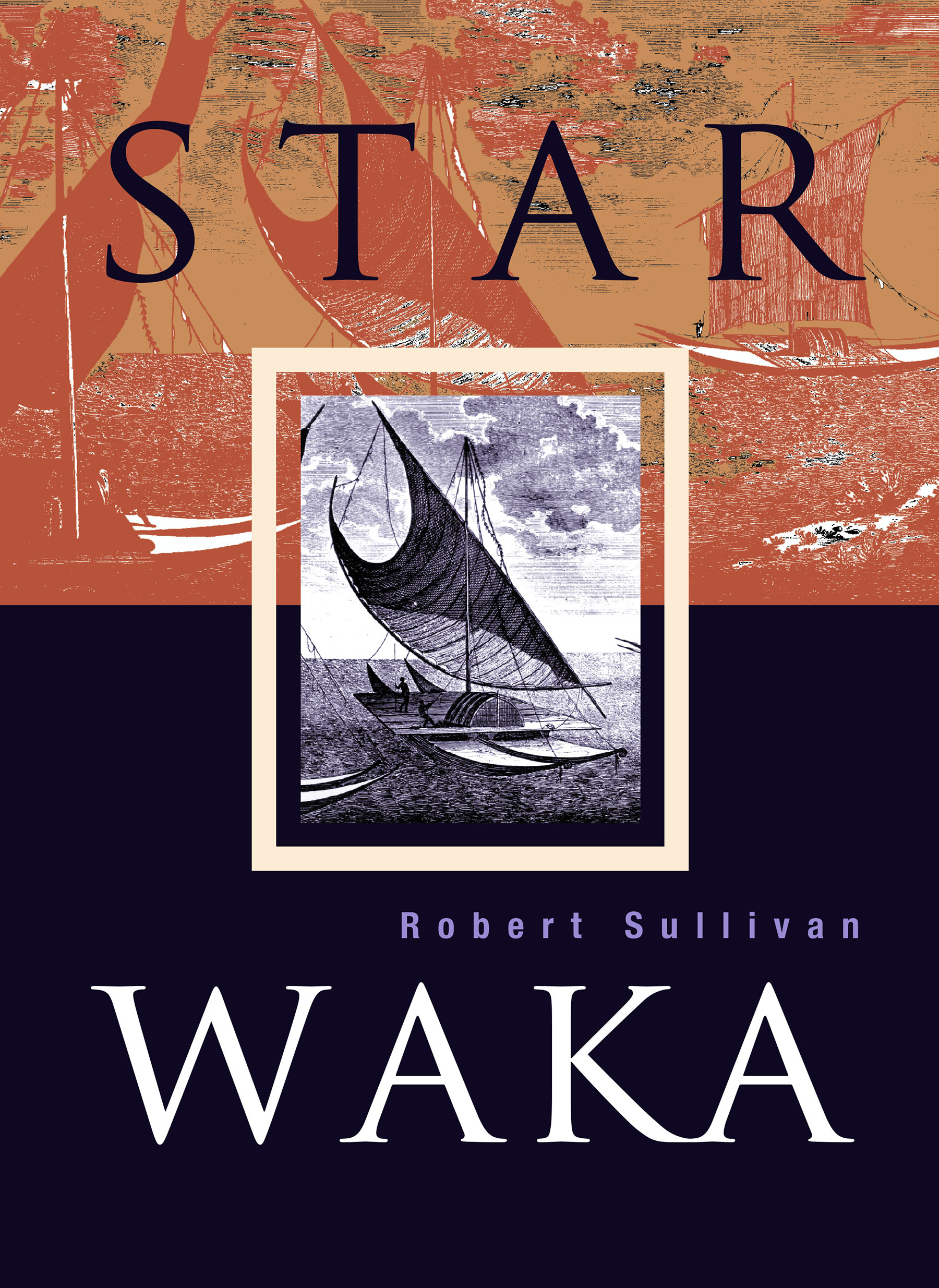
17. Robert Sullivan: Star Waka (1999, AUP)

A classic collection from an acclaimed and influential poet, Star Waka navigates us through cultural identity politics of the personal and political kind using the star, waka, or ocean to direct his poetic lines. Read 100 poems in 2001 lines published on the eve of a new millennium where Sullivan asks us to position ourselves in the waka  of bicultural postcolonial Aotearoa New Zealand.

.

.

18. Alice Tawhai: Luminous (2007, Huia)

Tawhai is one of our most accomplished writers of dark and provocative stories, a sharp-eyed and often lyrical chronicler of contemporary urban spaces and identities. There are drugs and violence in these stories, but also a profound engagement with humanity and a visual, visceral delight in the words on the page.

.


19. Apirana Taylor: The Breathing Tree (2014, Canterbury UP)

Storyteller and performance poet Taylor brings a light touch and true heart to his most recent collection, a book that explores his engagement with nature and Maori mythology and plays with both words and ideas. Read his poem ‘Haka’ in National Poetry Day’s 20/20 Collection, and check out his brand-new novel, Five Strings, as well.
.

.

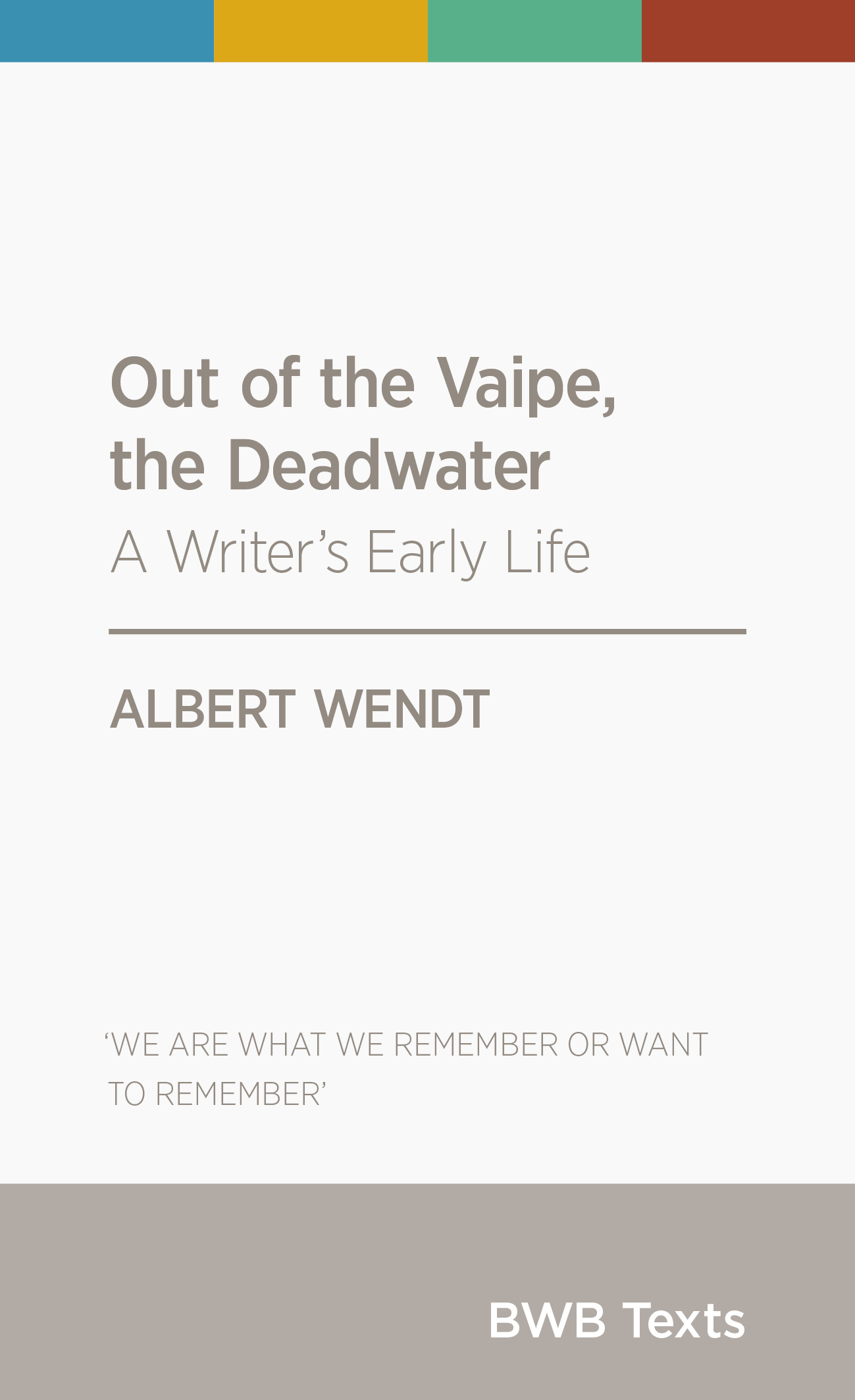
20. Albert Wendt: Out of the Vaipe, the Deadwater (2015, BWB)

A compelling and intimate insight into the psyche of the renown forefather of Pacific Literature. Both informative on a writerly level and moving on an emotional level, the Vaipe is Albert Wendt at his searingly honest best. I know this man, and teach his critical-creative work and yet, I was surprised and brought to tears.

.

.

21. Black Marks on the White Page (2017, Penguin)

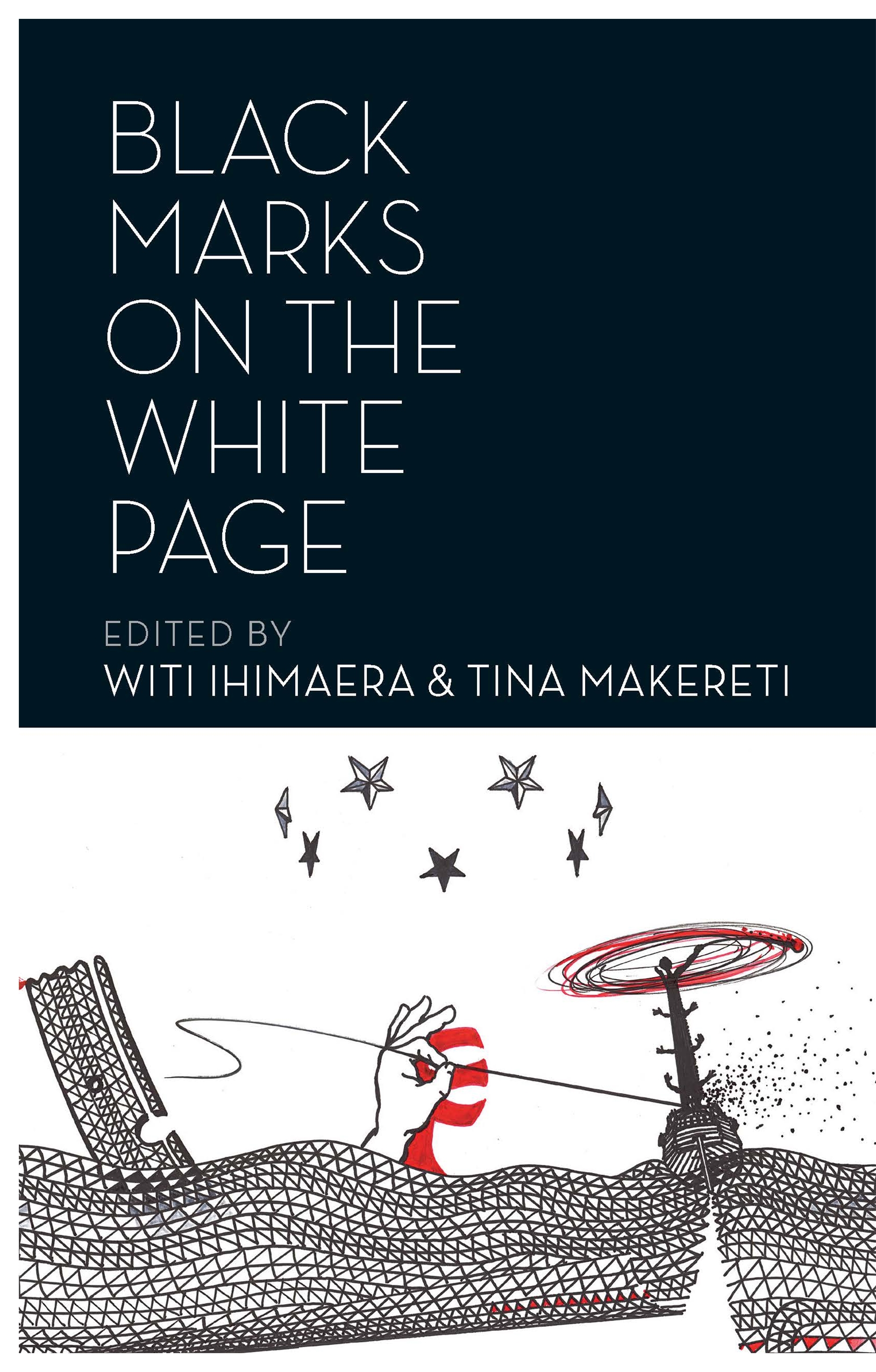
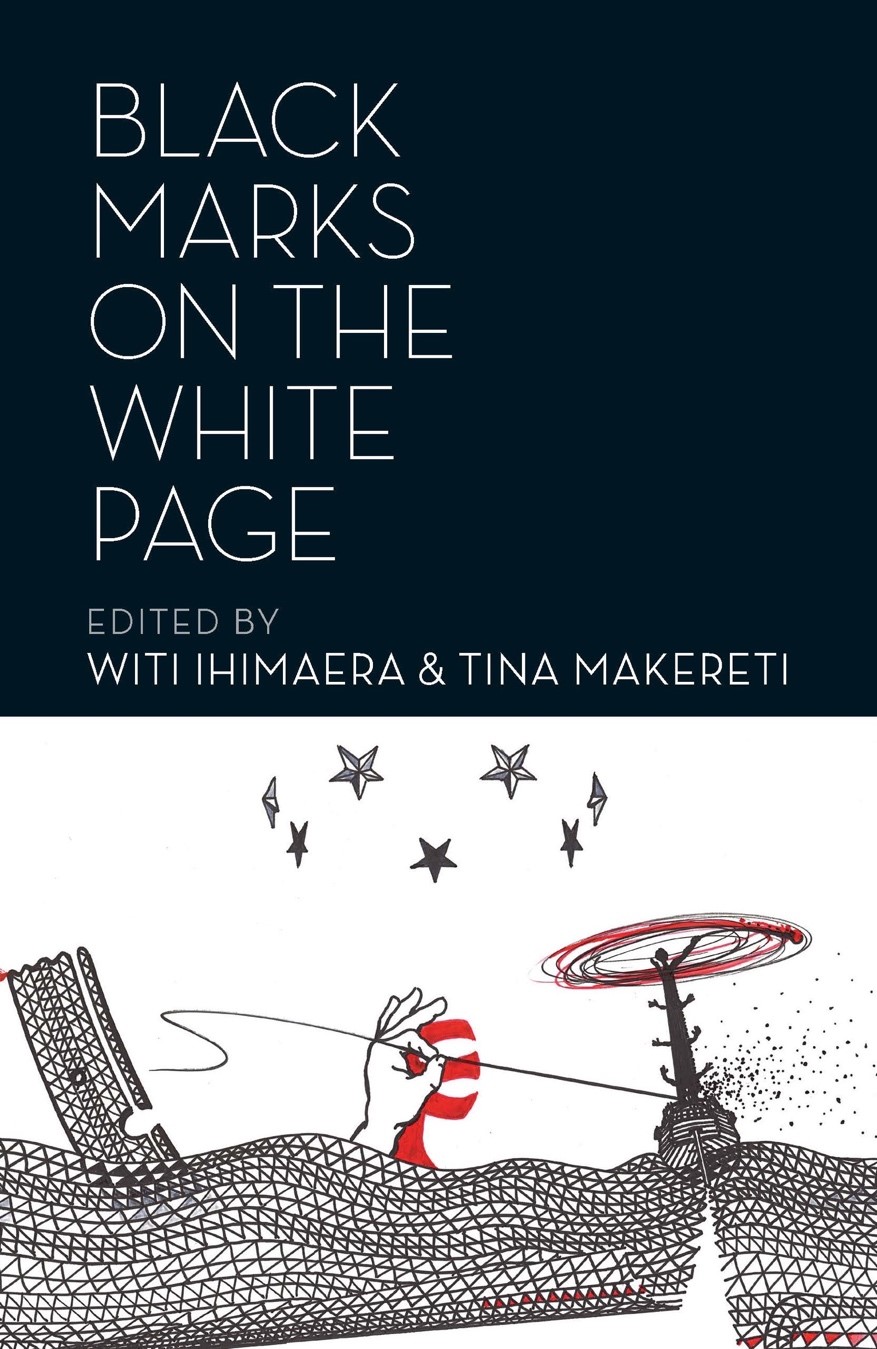
This is a sneaky add-on to the original 20, because this anthology isn’t available until July. Editors Witi Ihimaera and Tina Makereti describe it as a talanoa – conversation – where the stories and novel extracts do the talking. A rich and provocative collection of contemporary ‘Indigenous Oceanic’ writing from Maori and Pasifika authors crossing genre and geographic boundaries.

.

'I want you to think about what you would like to see at the heart of your national literature ' - Tina Makereti

Read more

Photo credit: Kelly Ana Morey

Poutokomanawa – The Heartpost

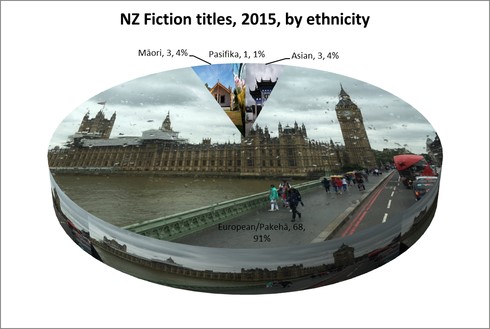
Maori and Pasifika writers cross borders with a vibrant aesthetic that exists nowhere else on the planet. Yet they are under-represented in literature—research suggests that Maori and Pasifika poetry and fiction accounts for only 3% of all locally published literature. Other ethnic groups fare worse. Tina Makereti assesses the state of affairs and presents her vision of a vibrant Maori/Pasifika/Indigenous/NZ literature: What kind of house does our literature inhabit? Where are radical renovations needed?


E rau rangatira mā, tēnā koutou katoa

Talofa lava, Kia ōrana, Malo e lelei, Ni sa bula, Fakaalofa atu, Ia Orana, Talofa ni.

E ngā hau e wha, tēnā koutou, tēnā koutou, tēnā tātou katoa

I want to begin by acknowledging Tāmakimakaurau, who I have a history with. I lived in Auckland for five years while I was a teenager. When I lived here, I think I was like many Aucklanders. I didn’t know who I was or where I came from. I knew nothing of my whakapapa. I knew nothing of half my family. Nothing at all. And though I didn’t know what I didn’t know, I felt haunted by that loss. I was as awkward and lost and damaged as a person can be in that situation. But I could write, even though I soon forgot it for a while, and I did write, and creativity kept me alive.

I tell you this now because I want you to know I do not come from privilege, even of the cultural kind. I come from not knowing, and that is how I know how important this kaupapa is. Stories can save your life.

If I could do anything in the world it would be to sit in the corner and read and write books. I would happily lose myself in stories for the rest of my life. I never planned to find myself a podium and talk on it. But here I am because when I started writing seriously I looked around me and I was startled by what I saw, and I knew we were missing something vital, and I wondered how it was we had gotten ourselves into this position.

And I’m not very good at ignoring problems. But I don’t want to start there, with the problems.

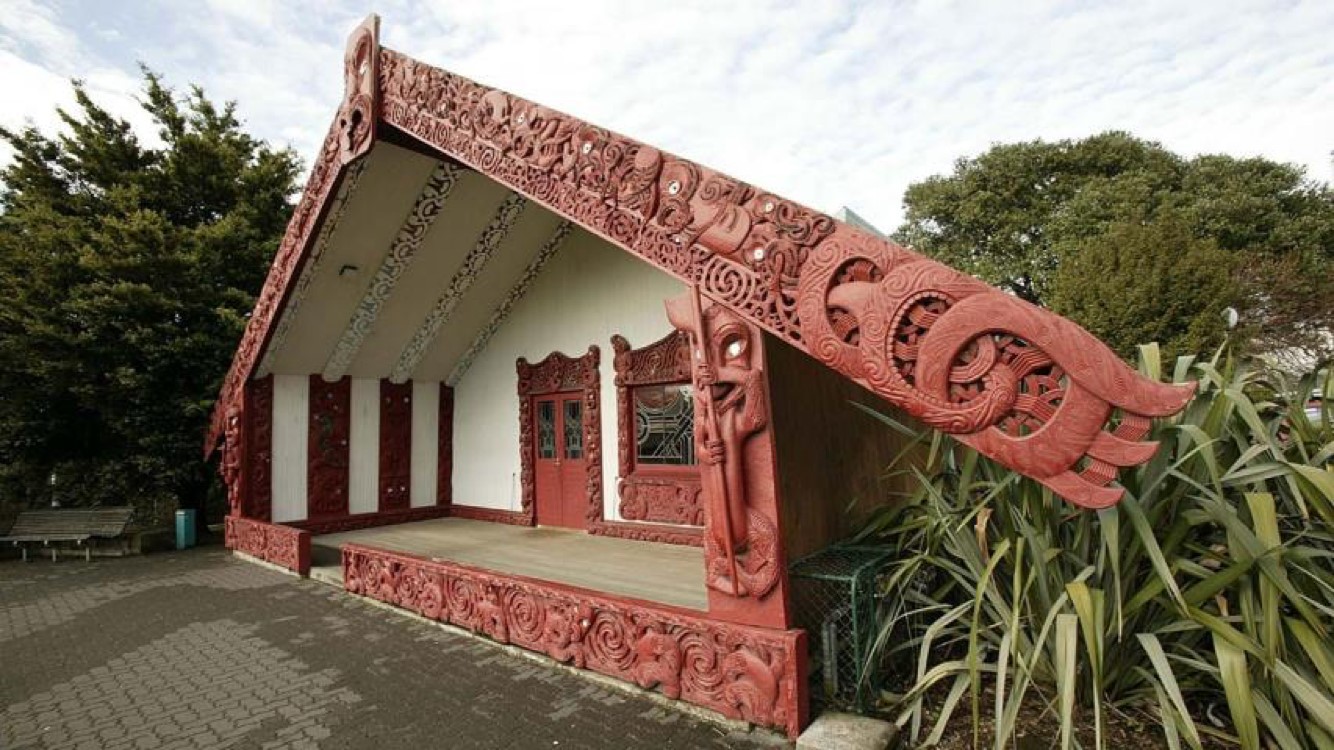
I want to share with you a vision: I want you to imagine a whare tipuna or wharenui, perhaps like this one at Auckland University’s Waipapa Marae, Tane-nui-a-Rangi.  Because this is the University of Auckland Public Lecture, I thought it appropriate to have Tane-nui-a-Rangi as the inspiration for this imagining.


A wharenui, as we know, is a house that represents the body of an ancestor, and contains within it the whole whakapapa of its people, reaching back through generations and migrations and eons until it touches the cosmology and origins of all things. The whakairo, or carvings, along the walls of the wharenui, and on the front of the wharenui, represent ancestors and ancestral stories. The tukutuku and kowhaiwhai often represent our connections to the natural world and each other, all through the same mechanism of whakapapa. When we go into a wharenui, we go into the belly of the ancestor, and when we engage in Pōwhiri and hui and tangi, we re-enact those connections that are depicted all around us in wood and fibre and paint.

That’s a generalised description. Wharenui are as diverse as their makers and their people, and there are many variations on which elements appear and in which order. It’s safe to say, however, that all wharenui embody principles of connection and narrative – they tell our stories and by doing so they show us who we are and what is important to us. Patricia Grace writes about wharenui often in her novels and stories – Pōtiki is of course the most famous example of this. In her writing, Patricia often manages to encapsulate principles that are central to a Māori world view:

We could not afford books so we made our own. In this way we were able to find ourselves in books. It is rare for us to find ourselves in books, but in our own books we were able to find and define our lives.

But our main book was the wharenui, which is itself a story, a history, a gallery, a study, a design structure and a taonga. And we are part of that book along with the family past and the family yet to come.

Take those words in – think on them a bit. They are central to everything I want to say today.

I began by asking you to imagine a wharenui, and by showing you a picture of Tane-nui-a-Rangi to aid that imagining. Now, imagine that the wharenui you are thinking of is the house of The Literature of Aotearoa. As I mentioned, every house is the body of an ancestor, but Tane-nui-a-Rangi embodies an atua—god is the closest word we have for them in English—and he was chosen so that Auckland University’s Waipapa marae could welcome and absorb and connect all the different tribes and peoples and history of Aotearoa. Our whare is kind of like that. It’s a kaupapa whare, its a whare that must welcome and absorb and connect all the literatures and writers and readers of Aotearoa. It is a whare for all of us.


Imagine it. The swirling, spiralling, notched lines of poetry; the strong limbs and bright eyes of fiction; various non-fictions in repeating patterns overhead. Imagine the sumptuous kōrero that takes place in this whare late into the night, the breaking away for Aotearoa’s most delicious kai, shipped in from all regions, the coming together for waiata of the most melodious varieties, the drums of the Pacific like heartbeats behind our songs.

Imagine the laughter.

Imagine the tears.

And oh, metaphors to make your knees weak. We’d bring the forests in through the doors, and make the wars and warriors stay out on the marae ātea until they were ready to calm down. Are you ready to talk about it? We’d ask, and when they were they’d duck under the doorway, beneath Hine nui te Pō’s widespread thighs, and find themselves born into the belly of peace. The politicians would shuffle in too, and bear our teasing in a puzzled, proud, but generally good natured fashion, until someone decides to speak their mind a little too loudly. Mostly it’s a house for the people, for anyone and everyone to bring their stories and their songs and their children. We already know that in times of crisis – earthquake or flood or poverty – the wharenui is the place we go for solace, to warm our bellies and our souls.

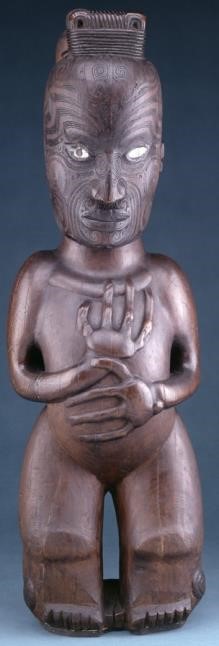
Our house needs carvings.

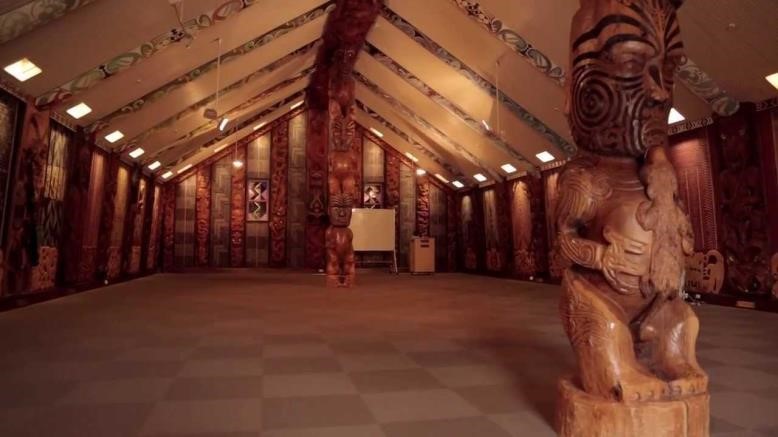
The above image of the interior of Tane-nui-a-Rangi shows the poupou along the sides and back walls, the heke or rafters depicting kowhaiwhai spreading down from the tahuhu or ridgepole, the poutokomanawa centre front.

It takes decades of planning to get to this point, and for our house all the greatest minds of literature have come together with our artists and designers to ensure all of the ancestors of The Literature of Aotearoa are represented. The method is whakapapa, so ancestors who connect and represent different literatures are chosen carefully. Each poupou along the walls represents a different literary forbear. I must point out that whare usually only depict those who have passed on, hence I would not name any of the living illustrious NZ writers. Please add your own names to this list. After all, such a venture is not an individual endeavour. Who might we see? Apirana Ngata, JC Sturm (Te Kare Papuni), Kāterina Te Heikōkō Mataira, Hone Tūwhare, Arapera Blank, Rowley Habib might be a good start.

Perhaps they would face Katherine Mansfield, Frank Sargeson, Janet Frame, James K. Baxter, Margaret Mahy, Michael King, Ngaio Marsh, Robin Hyde.

And here we meet the limits of my own ignorance – for the list of storytellers from the wider Pacific must be vast, and we would invite them all into our whare, that their people might know them. Let’s simply start with Epeli Hau’ofa, Alistair Campbell, and the beautiful, indominatable Teresia Teaiwa …

We’d have our other migrant storytellers too – including the Chinese ancestors who came to Aotearoa as early as many of our Pākehā forbears. And this is a harder story to tell, because if you can name an NZ Asian ancestor writer then I would love to hear of it. Some very kind people in our Chinese writing community answered my queries about this. I heard about a rich tradition of literacy and poetry that didn’t survive those early crossings across the vast Pacific, at least not in visible or material ways. I heard about the need and desire to work hard, and fit in, and make a life for the next generations. But they were there in their silence, the poets and the storytellers.

I would give you two names: Chiu Kwok Chun, who used the pseudonym Ping Ming, from the Chinese proverb ‘Bu ping ze ming’ (meaning ‘on witnessing injustice one should cry out’). He founded and edited a New Zealand Kuomintang newspaper, the Man Sing Times. And he also wrote, edited and helped to publish its Wellington branch’s newsletter, which appeared throughout the war. Also Alison Wong’s paternal grandfather, who carried the extraordinary name True Light (also known as James Wong), and wrote Chinese poetry to exchange with others in NZ. Apparently, back in the day the Chinese Consulate in Wellington held Chinese literary classes. None of True Light’s poetry survived.

There are so many stories to unearth.


Interior of Te Whai-a-te-Motu meeting house, Mataatua, ca 1910
ATL Reference Number: PA1-o-042-15-2
Showing dressed poutokomanawa at centre.


The committee would have thought long and hard about how to represent all our literatures.

There would be tohunga whakairo, who have always told our stories through the medium of wood

Tohunga raranga, who keep our stories through fibre patterns

Tohunga moko & tufuga ta tatau, who carve our stories into skin.

The makers of tivaevae and tapa

The keepers of the dance, whether haka or siva

The kaiwaiata or songwriters

The keepers of whakapapa, and of oratory, the kaikaranga whose voices are the first heard in any marae in the country

The contemporary visual artists

Let’s not forget the atua of our stories: Hinenuitepō, Tane and his baskets of knowledge, Maui and Tawhaki, Nafanua & Tagaloa


It would be a very full whare.

I can’t tell you all the names of the tipuna who would be depicted in this particular house – that’s more than one person can imagine; it would take all the keepers of cultural knowledges and practices to come together and decide. We’d make space for all our peoples in our whare, because we want it to be vibrant, and diverse, and represent all that we are, all of the stories of Aotearoa.

And once we’d decided all that, we’d go to the heartpost, the poutokomanawa, which sits at the centre of the whare, like this one, and must be someone who connects all these people and all these literatures. Maybe our poutokomanawa will have many figures, , and through this we will show the origins of all our stories.  Again, Patricia Grace gives us ways of understanding the significance of the heartpost. This, from Small Holes in the Silence:

 A poutokomanawa, besides being a piece of art, has an important and serious function. It connects earth and sky – or in other words it holds up the roof in an ancestral meeting house, and as well as that, it sits plonk in the middle of the house. It’s the heart of the house, and that’s serious. It’s also deep and serious in meaning because it depicts fame and ancestry – all round serious.

Some poutokomanawa are adorned with many ancestral figures climbing from floor to apex, but not this one. This one depicts a single figure at the bottom of the pole. She is carved in a much more lifelike style than what carvers often use, and in this she differs from the other carvings lining up along the walls of the house.

The heart of our house is central to our kaupapa, central to showing who we are and welcoming people in to our whare. I invite you to think about who might be the appropriate person or persons for that position. Or at least what the origins of that person should be, for we all have multiple origins.

What I want all of us to take away from this imagining, most of all, is how magnificent our house is. Even in it’s potential state. It’s a different house than other wharenui, so maybe it has a bit of this in it:


University of Auckland’s Fale Pasifika

Or maybe, like Kōpinga Marae on Rēkohu, it has a different shape and a different look altogether. We might ask our tohunga toi to help us with that. Imagine it. Our Wharenui Pūrakau is something to behold. People come from all over the world to see it, and to go inside to hear our stories.

But when I first thought about this, I realised, actually, what our house of New Zealand Literature probably looks like now is this:


Or maybe this:


And then I thought no, what I imagine it really looks like is this:


And when you walk the halls you might get a glimpse of some really iconic Māori or Pasifika art, like this:


Dawn/Water Poem I
Ralph Hotere


Or this:


Robyn Kahukiwa
War 2013
private collection


Or this:


Povi Christkeke 1999
Michel Tuffery


It’s a beautiful house, with a beautiful collection on its walls. Oh the dinner parties! Oh the wine and cheese evenings!Don’t let my tone be misleading. I love some good wine and cheese. It’s a beautiful house.

But few people can afford to live in it. Only the select few gain access to its exclusive parties.

Remember that wharenui? People go there in flood and famine and fire. It is home to all comers.

What I propose to you are some radical renovations. Or perhaps we need to begin again. At least, let’s build our wharenui on the same ground as our current house of literature. But let’s go back to the drawing board.

Why do we even need to do that? First, I want to show you where we are actually at. And I want to talk about why these radical renovations are necessary. Finally, I want to talk about what we’re doing, what can be done, what you might do.

But first, let us ask: why are we considering creative texts primarily?

Think about what creative texts do that the other texts don’t do.

They ask us to imagine. They ask us to dream. They ask us to think about human interaction and motivation and desire in an unfettered way. They ask us to consider the paradoxical nature of human beings, cultures and societies. They ask questions that can only be answered through novels or stories or poems. They embody te kore, the place of pure potentiality, what Albert Wendt called the Void in his iconic essay ‘Towards a New Oceania’. As he says:

So vast, so fabulously varied a scatter of islands, nations, cultures, mythologies and myths, so dazzling a creature, Oceania deserves more than an attempt at mundane fact; only the imagination in free flight can hope—if not to contain her—to grasp some of her shape, plumage, and pain.

Without our journeys into the void, how can we know what our potential is? How can we know ourselves, and consider the issues that face us in all their terrible detail, and creatively engage with the possibilities that present themselves?

We can’t. But we keep going to economic and political solutions as if they will solve the problems that flung us into the void in the first place. We need creativity. To remember who we are. To imagine who we might be. To create our worlds afresh. To save us.

When I began to contextualise my PhD research, I was shocked by the lack of scholarship in our Indigenous literature, so I started to do some counting. Until this point I had not really understood that there was any real problem in our literature, and this is how I know that most people, even in the wider field, probably aren’t that aware of it.

Using the Journal of NZ literature yearly census of New Zealand literature, I calculated that in the three years beginning 2007, Māori fiction in English made up 6%, 1.6% and 4% of New Zealand fiction respectively. This, given the Māori population of NZ is at least 15%. It was immediately apparent that in some years Pacific, Asian and other cultures of NZ barely feature in our literature.

A few years ago Janis Freegard, a writer whose most recent book is the acclaimed The Year of Falling, began looking at these same statistics for more recent years. Janis started by looking at gender, particularly in poetry, and in doing so noticed that ‘only… one … was written by a Māori poet, two written by Pasifika poets and none by Asian poets’. She has been collecting the stats each year since, with revealing results. I’m grateful to Janis for doing this work, and for agreeing to let me discuss it here. Please do go to Janis’s blog, because it’s a bloody good read, and her comments on these stats are priceless.

Janis’s pie charts speak for themselves, for the most part:


As Janis says: ‘Well, this is embarrassing… Here is a sad little pie chart.’


I’m going to give the last word on these charts to Janis, who is a Pakeha New Zealander, born overseas: ‘Fairness matters. Having a national literature that represents our national population matters. Being able to read a diverse range of voices matters.’

I once discussed these questions with someone who then asked me if there wasn’t enough Māori and Pasifika publishing because there wasn’t enough talent. You know that’s still something people will ask. I have to say in my experience the opposite is true. In an essay being published by VUP in the forthcoming The Fuse Box: Essays on Writing from the International Institute of Modern Letters, I put it this way:

in a class of young middle class+ Pākehā students (e.g. the majority university classes) there are many clever, witty, talented, politically astute and very pleasant people. Some of them are beautiful writers. Educationally, they have always been surrounded by writers, theorists and educationalists with the same socio-cultural capital as them. Few of them have stories to tell. Yet.

In a class of Māori / Pasifika / immigrant students (not so many middle class, not so many young) there are many clever, witty, talented, politically astute and very pleasant people. Some of them are beautiful writers. Few of them have ever had the opportunity to read writing from their own communities. Few of them have ever had the opportunity to write from or about their own communities. Yet, I struggle to remember a single one that didn’t have a compelling story to tell.

We know we don’t have a strong record in publications, yet we do have the talent to produce those publications. And look what happens when that talent finds publication. Gina Cole’s Best First Book Prize for Black Ice Matter (Huia) is just one recent example.

I don’t know a great deal about resources for primary and secondary education, but I have heard that there is always a dearth of resources, and that publishing continues to be non-representative of populations of NZ school children. The Spinoff discussed the issue last month in a post by Thalia Kehoe Rowden, titled ‘Why do so few of the best New Zealand picture books for kids have characters who are girls, Māori, or Pasifika?’ She concludes:

And what is a Māori or Pasifika girl to make of this line-up? There are no protagonists here that look like her.

This is a problem! One of the reasons we celebrate New Zealand publications is so our kids can see lives like theirs in the pages of the books they read…

Publishing in te reo also needs bolstering, but Huia Publishers would be the best people to speak on this. From conversations I’ve had, I understand that need outstrips availability at all times. This lecture concentrates primarily on literature in English for a couple reasons, including that most of our people still speak English as their primary language and because it is my area of expertise, but it is clear that literatures in our own original languages—Māori, Pacific, Chinese or other—should be considered in tandem with literatures in English. Our wharenui would certainly include practitioners in every tongue.

What I do know about in more detail is tertiary education, and what I can tell you is this:

  1. Last time I looked, you could not take a single paper on Māori literature in English in Aotearoa New Zealand. This has been the case for many years. Consider that at the best of times we like to think of ourselves as a bicultural nation. Consider what was the first literature of this land. Consider how invisible that literature is to the majority of students, and frankly, staff at NZ universities.
  2. If you somehow find your way to studying Māori literature in your own time or by making it the focus of assignments, you will still have a very difficult time finding someone to supervise Māori literary research at postgraduate level.
  3. If you are lucky enough to be in the right place and the right time to find that supervisor, you may find it difficult to access examiners with Māori backgrounds to examine that research.
  4. When you are doing your research, you will notice that other research in your field is primarily conducted overseas. Those researchers are generally very nice and well-meaning and enthusiastic about your topic, but they cannot consider their topic as an insider, and I haven’t seen any invoke a kaupapa Māori methodology.

I have met potential Māori literature students who did not pursue research they were passionate about because there was no one to work with. If they do manage to pursue their interests, they sometimes do so with supervisors who do not have the right background to extend Māori-centred understandings.

Imagine what it is like for students of the other cultural literatures of Aotearoa.

I acknowledge my friends in this area, particularly Selina Tusitala Marsh who teaches Pacific Literature at Auckland University, and Alice Te Punga Somerville who, when she left New Zealand a few years ago, took over half of the courses in the wider subject area with her (that’s three). Thank goodness she has returned to our shores. Also Paula Morris who has shown dedication to this kaupapa since her return to New Zealand, and Robert Sullivan and James George, who all teach creative writing here in Auckland. I know I am not alone in asking these questions, and that we are not the first generation to ask them – tēnā kōrua Albert & Witi. But I also recognise that our jobs do not often have a special demarcated space for us to dedicate time to finding answers.

This year I began a permanent full-time lecturing position at Massey University Palmerston North, which still feels very nice, if very intense. I am still naively hopeful that I can make some sort of difference to the problems I’m talking about by being there, but of course the university environment in the 2000 and somethings has become tighter and tighter, especially for the arts. That’s at every university in Aotearoa and the world, of course. So let this kōrero join the others making a case for humanities education. We need a country with vision. We need universities with vision. Commercial imperatives are not enough to make us as great as we could be. The creative is critical, as Alice said to me once. Our dear friend Teresia knew this, which is why her innovative Pacific Studies course included plenty of creative work.

Up against the many pressures of that environment, I don’t know how much difference I can make, but I do know that I make a difference just by existing in that space, and it pains me that this is where we still are, as a country. In some areas we haven’t moved far from when I was an undergraduate in the 90s. In my brief time teaching at the International Institute of Modern Letters at Victoria, I became accutely aware of how this affects the student intake. My undergraduates would tell me, year after year, that they came because the course was designed for them and there was a Māori teacher. Perhaps they felt there was a greater chance that their stories would be safe in that room, that someone would understand where they were coming from without them having to explain. The majority cannot know the fatigue of having to explain your world view over and over, even before you get to do anything productive. Then the fatigue from knowing that your explanations can never quite breach the gap where experience sits. And behind all of that the deep, intergenerational trauma. Some of us wear it lightly and some of us protect ourselves from the world because of it, even at the cost of our own progression.

Imagine going into a room where no explanations are needed. Where everyone is grappling with the same questions as you. Where finally you can open the door to that quiet knocking that’s been going on in the background of your life for years. That is what a space for Māori and Pacific creative writing or literature does.

One final word about education and literary representation. You know, we signed a Treaty, and that Treaty is complex, but I’m going to boil it down to a simple interpretation. The Treaty said, you may come and share this land with us, but please keep your people in line and protect that which is precious to us. We’ll keep being who we are, and you keep being who you are and we’ll share this whenua, okay? But that didn’t happen, of course. The protection or the respect or even the sharing. That bit about being who we are is called tino rangatiratanga in the Treaty itself, but how do we get tino rangatiratanga when our stories barely feature in the national literature of our nation. How do we know ourselves? How do we show others who we are? I’m talking about representation today, but if we wanted to honour the Treaty in any way, we’d be talking about going way past representation to ensure we get things back in balance. We’d be talking about 50% Māori literature, rather than 15%.

In a bicultural nation, at the very least, you would expect to see Māori literature considered as a distinct field beside New Zealand Pākehā literature.  We walk hand in hand toward whatever future awaits us, and I can tell you, and you already know, that we are failing one half of that equation.

One thing people fundamentally misunderstand about biculturalism is whether it includes other cultural groups. Of course it does, but you have to get that first relationship right in order that the other cultures have a place to stand too. Everyone who ever went to a pōwhiri should understand that the process makes the visitor family. It’s all about establishing welcome and connection. In a truly bicultural nation, all other migrant cultures would be welcomed into the whānau. Opening our nation to a truly bicultural process would allow that to happen, because at the heart of everything Māori do is whakapapa, which is just another way to say relationship and whanau, which brings us back to our whare.


So, finally, let me suggest some renovations:

  1. Literary people, look around you at your literary event, workplace or book store. If you do not see brown people, or at least, as Hinemoana Baker likes to say, beige ones, ask yourself why. If you do not see different faces coming through, ask yourself why. Think about the culture of where you work. Think about where and how they recruit. Think about whether space has been made at the table. I’m sorry, I wish it weren’t true, but you might still need an active policy to hire Māori and Pasifika staff. Space still needs to be opened. I thought we were past that too, actually, but we’re not.
  2. For goodness sake, don’t let the only Māori or Pasifika person in your workplace leave, taking all of their knowledge with them, and the potential to engage other young people like them too. Find out what they need to feel comfortable and recognised in their position. If they are the only Māori or Pasifika person in your department, chances are they are dealing with alienation on a day to day basis.
  3. Make some books. Make them brown. Here’s one Witi and I made, which will be out in July. With 25 writers involved, it shows how much diversity there is within Māori and Pasifika writing. It engages in the discourse Māori and Pacific people are having about our literature and our voices. It’s an exciting conversation and one that can only take place in Aotearoa.
  4. Universities have commitments to the Treaty of Waitangi. No New Zealand literature student should graduate without real knowledge of Māori literature. I do not mean a module within a New Zealand literature course that suggests that Māori only figured out how to write in the 1970s. That’s not the full picture of Māori writing. Invest in Māori literature as a field now. Understand that Māori are a Pacific people.
  5. That means research organisations need to prioritise funding in this area. Please put it on your agenda. Our survival depends on it.
  6. We need to officially collect the stats on our literary output by ethnicity. One of our national, funded literary organisations (NZSA, NZ Book Council, PANZ or CNZ) needs to do this methodically and yearly so that we get a clear picture of what is happening. What are we producing? How is it selling? Please offer Janis a nice consultant fee to help you set that up.
  7. I offer one last suggestion. One of our issues is pure socioeconomics. Māori and Pasifika families are generally larger and more communal and frankly, poorer. Writing can be an individualistic, selfish thing. It doesn’t have to be but I think it generally is. I have encountered many students for whom the clash between family commitments and the desire to write, or even just study, was insurmountable. I don’t think most Pākehā writers will have ever encountered the kinds of pressures I’m talking about. I think we need a fund that takes a writer through from promising early stages to completed single author publication, and I think that’s a process that takes three to five years. If we are serious about changing those stats, we need to get people up that last step, where you need serious time, but you also have to pay the bills. A 3–5 year fellowship for Māori & Pasifika writers.


If my renovations sound too hard, I would ask you to consider what might be possible. Maybe we can’t yet build an entirely new house, but let us start by carving a poutokomanawa that will sit at the centre of our imagined wharenui. The poutokomanawa above is one of our orphaned taonga at the British Museum. He is likely from Ngāti Kahungunu, Central Hawkes Bay, early 19th century. In addition to this, the notes at the museum say only that he is a ‘Carved Male Figure’ made by ‘Māori’. This poutokomanawa, to me, represents so much that is lost to us. The heartpost to our house, alienated from us by the Empire. Let us reclaim our poutokomanawa, set it strong and tall in the centre of our house to connect earth and sky, to hold up the tahuhu and rafters, with all our genealogies and ancestors and living people gathered within. Let us honour it and keep it warm so that it might sustain us as we strive to create ourselves anew.

I want you to think about what you would like to see at the heart of your national literature. I know that my literary poutokomanawa begins deep in the lands and seas of Aotearoa, where the stories of this country began, eons ago, and that even then our whakapapa connected us to the entire Pacific. I know that eventually our stories became inextricably linked with another culture from far away, and then more. I know that what makes us strong is this story, not of an inherited English literature, but of the extraordinary mix of language and narrative and metaphor that could only take root in this one place on Earth. So I ask you: what might happen if we place this understanding at the heart of everything we do? That is the wero – the challenge – before us.

No reira, kia ora tātou katoa.


This is the transcript of the University of Auckland Public Lecture given at Auckland Writers Festival on May 17, 2017.  It began with a mihi to the tangata whenua of Tāmakimakaurau and Maualaivao Albert Wendt, who introduced the author.

'I started to feel very guilty, as though I’d perpetrated a crime, a rort' - Stephanie Johnson

Read more

Photo credit: Matt Bialostocki.

The Interview – Lloyd Jones

Lloyd Jones is one of New Zealand’s most high-profile and accomplished fiction writers. A former journalist who has travelled the world and lived for extended periods in other countries, he spent 2015–16 in Berlin as a recipient of a DAAD residency. His home is now the Wairarapa region, just outside Wellington. His 1993 book Biografi, which has been described as part travel narrative and part fable, explores a journey through Albania after the fall of Enver Hoxha’s Stalinist regime.

He is the award-winning author of short stories, novellas, novels, essays and, most recently, a memoir, A History of Silence, inspired by the Christchurch earthquakes. His novels include The Book of Fame (2000), a multi-perspective account of the 1905 All Blacks Tour of Europe and North America; Mister Pip (2006), winner of the Commonwealth Prize and shortlisted for the Man Booker Prize; and Hand Me Down World (2010), shortlisted for the Berlin International Prize for Literature. The 2013 film version of Mister Pip was directed by Andrew Adamson and shot partly on location in Bougainville, Papua New Guinea.

Along with numerous international residencies, Lloyd received a Prime Minister’s Award for Literary Achievement in 2008, as well as an Arts Foundation Laureate Award and an Antarctica New Zealand Arts Fellowship.

Lloyd was interviewed over several weeks in late 2016 by Bernadette Hall, the author of ten poetry collections, including Maukatere: Floating Mountain, published by Seraph Press in May 2016, with original drawings by Wellington artist Rachel O’Neill. In May 2017 Bernadette will be invested as a Member of the New Zealand Order of Merit for services to Literature. 


Linfield Farm walk, Hurunui. Photo credit: Bernadette Hall.


BJ: Hello there, Lloyd. In a way, we both find ourselves in a similar position now, I’m thinking. We’ve both ended up in a rural setting, you in the Wairarapa and me in the beautiful Hurunui, 50 km north of Christchurch. Five years on from the devastating earthquake, Christchurch is beginning to stitch itself together again. Otakaro, the river Avon, will at last assert itself as a pathway through the middle of the reconstructed city. You have quite recently located an essential piece of your family’s history, in Hawarden, a pretty, almost abandoned farming settlement just beyond the Waipara Valley vineyards. Thus almost on my doorstep.  And here we are breaking our respective silences.

You write prose, I write poetry.  I was amazed and intrigued to receive your invitation for a chat.

LJ:  I am very pleased you accepted the invitation. I don’t know why you should feel ‘amazed’ or ‘intrigued’. When Paula asked me to suggest a writer to perform the task of chiselling out comment for a Paris Review-type exercise, I wanted to have a chat with a poet rather than a prose writer. I write narratives but in fact, as you once astutely observed at one of those sessions with Victoria University MA students, my writer’s engine is more poetically driven. I was flattered by your observation. I don’t always bring my A game to those sessions. The fault lies entirely with me. I cannot always find the inner performing seal … if you know what I mean.  Anyway, I thought I would like a poet to spar with, but one that would be generous with his or her time, and possibly even well disposed towards my work. And finally your name flew to mind, partly because I had just bought your latest book, Maukatere, floating mountain, the lovely collaboration with Rachel O’Neill.

I have come to know North Canterbury reasonably well in recent years after locating a grandfather I never knew (mum’s dad), a sheep farmer in the foothills towards the alps. He is long dead. But a few years ago I sat in his armchair and watched him on film walk towards me. Some years before  I happened to buy some land off a sheep farmer in the Wairarapa. It was a great shock to me to discover that the grandfather’s farm at Taruna and the land I live on now at Ruakokopatuna is remarkably similar. Perhaps some kind of genetic hoof print was left on me.

BH: As you note somewhere, perhaps in an interview, other people find their story within yours in ‘The History of Silence’ to some degree or other. As do I, quite a lot actually. My grandfather, my mother’s father, was a ghost. He died when I was five so I might have met him, should have met him  but he had vanished. There were never any stories about him. A few became clear as I and a couple of cousins started to dig away. Several months ago I located his grave in the Ashburton cemetery. His headstone is the middle of three, all unmarked, little dithers of weeds and dust as a coverlet. My mother, in old age, lived with us for twenty years. I adored her as much as I resented her not trusting herself to me. An aunt, mum’s younger sister, said, ‘Your mother has shut all the doors on the past’.

LJ: That is a beautiful phrase, ‘little dithers of weeds and dust as the coverlet’. When I stood before my grandfather’s grave in Hawarden for the first time, my eye was primed and ready to find such detail but was rebuffed by the cold and grim Presbyterianism of the concrete burial place.  At such a moment you look for the life, the missing life, the life that was? Can it be said to be expunged when it occupies a place in one’s thoughts, even as a ghost? I suppose a ghost is a figurative stand-in for the mystery of the life and the unanswered and unanswerable questions it produces. But to come back to your lovely phrase and, in particular, the word ‘coverlet’. A word like that is quite beyond me. It is not in the world I live or imaginatively thrash around in. It is precise, and a detail from a system of thought that is outside my experience. We were not good at naming things, we weren’t encouraged to as children. My interaction with the world was outside of language and largely sensory. Sport, physical movement, salt drying on the skin, the highs of exertion, the blood rush of a physical dare, sheer terror at times, wrestling and fighting like pups. My contact with the world was entirely tactile. Since words name the world much of it was out of bounds to me, intellectually, but not emotionally, perhaps it is no surprise that I would reach for metaphor and prefer the reach and magic of a speculative leap that poetry encourages over the prosaic workings of prose.

The Christchurch earthquake with its language of sediment, abrupt shake-up, fissures, shock after shock, liquefaction … provided me with words that offered direction into my past and ideas to hang on to and explore. It also seemed to validate an inquiry into family history that I had put off until my late fifties. That may seem surprising. But in my family the past was not a place to prospect. Something had to happen to make me glance in that direction. I found it in the misfortune of Christchurch. But back to language and naming things. I have a sense that once we name something, we cease to know it in a felt or experienced way. We are simply ticking off something as ‘known’ the way a young person will glide through the Louvre holding an I-phone up to the Impressionists.


The Cathedral Stones in the hills on the site of an old quarry, on a walking track below Maukatere (Mt Grey). The quarry provided stones for the first Anglican cathedral in Christchurch. Photo credit: Bernadette Hall.


BH: You picked up the word ‘coverlet’ as being something new and outside your thinking. It isn’t a word I use either. But I do have a hugely rich word bag and things spill out, words spring together. My childhood was full of mysterious language and lots and lots of talk. What else would you expect of an Irish inheritance? There was the Latin of the Catholic liturgy. We children learnt Gregorian chant, we sang at more funerals than were good for us. There was a poetry choir.  All of this in Presbyterian Dunedin.  My dad was born in Northern Ireland into a family of Orangemen. They loved us but their language and their beliefs were out of bounds for us. I’m wondering if it is complexities like this, experienced dramatically in childhood, that turn us into writers.  Is ‘unsettlement’ important to you as a writer? You have travelled the world since your late teens. You like to look around, taste the air, measure the hills, ride on the trains. Imagine your way into the lives of the people.

LJ: You have to leave in order hold two places within you. The ‘forgotten’ place is a regret, then a wishful banishment. Then perhaps the memory is severed. Now there is more milk fat on us, more contentment. The sun dial has altered. A few generations on and we look more confidently back than we did in this direction. Yet, against all expectations, something of the shed place lingers, don’t you think?

From Maukatere: ‘There’s the love energy of sweet cicely, a white corsage / and the hectic ferns that riot and roar upwards’.  You’ve made a quiet observation there but the blood running through it is pure Irish. And again the world shifts and finds new shapes and accommodations, as in … ‘the wind that got the little boat of gravy going. I mean grieving. The little boat of grieving. That’s what got going. That’s what I really mean’.

Or you don’t. And the poet smiles down at her clever slip. Discovery.  I guess that is what we do. Making the world bigger and smaller at the same moment. We start ‘here’. But how we get ‘there’ is often magical, yes?

BH: Ah yes, the little boat of gravy. I’d call that a feint. The hesitation and correction are sort of funny, I guess, but I’d say the move is a feint, an avoidance of the big emotion that’s cloaked for the moment.  My dad was felled by a heart attack in front of me when I was 16….. I didn’t speak to my sisters for a year, they told me this only recently …  I knew I’d been silent but I didn’t think it had been obvious nor that it had been for so long. So, for a whole year I was silent, inside a huge anger. Not that I knew it was anger.  And what could I have said?  When your mother was dying, you read to her from Bruce Chatwin’s book about Patagonia. Was Patagonia a feint? Is that why the word burns for me on the page? Or is it your next project?

LJ: Until recently I wouldn’t have known how or why my work has taken the shape it has … but the memoir changed that for me. I suddenly realised, that for years, decades of writing, I had been sailing along without being especially aware that my keel would be fixed to various quests around identity. It seems so obvious now. And that awareness so lately come by is not especially helpful to the production of fiction. In regard to Chatwin’s Patagonia I read it to my mother because in comes in small digestible bits. I don’t think she really took in any of it. Perhaps the sound of my voice was enough, a comfort perhaps.

BH: In its architecture, The Book of Fame looks like poetry. There’s all that space on the page, the words can breathe. The Originals run out, name by name onto the page just as they did onto the field. The moves are recounted, step by step, pass by pass. It’s all the drama I remember back when I was a child, sitting with dad, listening to an All Black game on the transistor radio, he rolling tobacco between little sheets of tissue paper, licking along the edges, left to right and right to left to make them stick. The novel reads like poetry, there’s music there – the English game was ‘plonk plonk plonk, plonk’ – The Originals’ game was ‘dum de dah dum de dah bang whoosh bang!’  And there’s the multiplicity of figurative language, especially metaphor – ‘The English saw a tunnel / we saw a circular understanding’ and ‘The English were preoccupied with mazes / we preferred the lofty ambition of Invercargill’s streets’ – hilarious! Carl Nixon says the book was very easy to set up for the stage.


From ‘The Book of Fame’. Photo credit: Wen-Juenn Lee.


I was thinking that at one point in the memoir, you are said to be ‘reckless’. When I checked I found that the word was actually ‘rash’. Is there a difference? Anyway, would you say there’s something reckless (rash) in taking a rugby story, even a legendary one, and turning it into poetry? In telling the story of a child made pregnant in her mother’s house by her mother’s lover, the mother unaware? In taking up the voice of young PI girl, this one caught up in the civil war in Bougainville [in Mister Pip]?

LJ: I wonder if ‘fearless’ is a better word. Writers ought to be, need to be, don’t you think? We shouldn’t shackle our imagination. It goes where it goes and we hang on in the hope it will lead somewhere interesting. I don’t believe we should try to fence it (it’s been tried elsewhere, in repressive societies). Nor do I accept that gender politics has any role in literature. Anything worthwhile that is written creates its own rules. The human psyche is the quarry.

Matilda’s voice in Mister Pip came to me in a moment of playfulness (in the language sense). The narrative voice released a part of me which was able to deliver the story that would become Mister Pip. It began with an inward gaze … a tumble of voice and event, and ideas, all that stuff that interests the writer. I created the headspace of someone who just happened to be female and black. Some would then ask how do I know if I got it right. Well, only the reader can provide the answer. The page is where the ‘character’ lives or dies in the reader’s imagination.

There is no-one out there called Matilda. She is not a representative type. This is anathema to anthropologists whose extraordinary conceit assumes that they alone can surface after six months immersion and pretend to know all there is to know about a people and their customs and ways. Now that takes nerve. An academic at St Andrews University (from the anthropology department) challenged the villagers’ response to Matilda following the death of her mother. She claimed she would not have been left alone because of a set of cultural values in place. It’s like a casual observer saying of a woman bringing up three children by herself that it couldn’t possibly happen because of a cultural value in western society that embraces the idea of a nuclear family. The value of literature is it resists type. It celebrates people as individuals.


Matilda played by Xzannjah Matsi in the film adaptation of ‘Mr Pip’.


BH: I have a confession to make, Lloyd. I am unable to make a connection with your Matilda. I may be the only person in the world who has failed to do this. And I’m thinking that my problem is Literature.

It’s as if I experience in Mister Pip your desire that Literature be transformative. And this at Matilda’s expense. So what ensues feels to me more like a morality play than the creation of a living breathing person.  Whereas in Hand me down world, where you use a multi-faceted structure that reminds me in some ways of the architecture of The Book of Fame, Ines is someone I believe in entirely.  And she has so little to say!

LJ: It is perfectly okay not to warm to Matilda. You wouldn’t be the first. When I wrote that book I was listening hard … I wasn’t out to prove anything … ‘the transformative powers of literature’ is someone else’s phrase, it wasn’t in my headlights. Who on earth sets out to prove something? We need to dig deeper … to that place you cannot see. That is where the listening comes in. That is where Matilda’s voice came from. A great surprise to me as I heard it and at once recognised its place in the world as belonging on an island where I had once reported on a war.

But, surprise, surprise, it is a book about identity. Mr Watts’ identity. The identity of Dickens’ great work, Great Expectations (which version/reading is more potent, the one read or the one remembered?), Dickens himself whom Mr Watts is confused with, and of course the identity of Pip. Oh, and Literature with a capital L. I think it is pretty easy to recognise in the flesh.

BH: I’m about to set off for Dunedin. To the Robert Lord cottage where I am a gap-filler for a couple of weeks. Another of Christchurch’s gap-fillers! Being something of a catastrophist, I thought I should just add this as regards identity … to fill the gap before we get to where we’re going, you and me.  I am a 1st and a 2nd child. I am catholic and an Orangeman. My soul is wrenched by music, Arvo Pärt, Thomas Tallis, Tord Gustavsen, k.d. lang, Michael Houston, the New Zealand Youth Choir, among others. And by poetry. Poetry holds me together as does having SPACE around me. And yet I too am a connector and all those years of working as a high-school teacher have made me optimistic about what can happen when open connections are made … the aim being, I guess, in line with a rather lovely old Catholic invocation ….purity of intention …which in my mind has all to do with stance.

LJ: I love that line ‘purity of intention’. That is bang-on. I ought to keep that phrase near my writing elbow. ‘Purity of intention’. Whenever the question of ‘morality in the novel’ comes up as it invariably does at writers’ festivals, we scramble around to provide an adequate response. But ‘purity of intention’ gets to the nub of it, using the right words to describe what must be described. ‘Poetry holds me together as does having space around me’. Very, very nice. Maybe you have to breathe one to appreciate the other. As a child (this child) space came first. Otherwise it doesn’t matter. For some weird reason I just glimpsed you inside a hula hoop!

BH: I used to be able to whirl a hoop up from my waist to my chest when I was a child. But now tell me about Choo Woo. I remember the shock of it, the power, the awful understanding of what human beings are capable of. The kind of terrible truth that you are forced to recognise, for example in Greek tragedy. Medea, driven mad by her husband’s infidelity and in revenge, murdering her own children. Imagination can take us into horrific places as we keep on asking the old question, what is it to be human.

LJ: That novel does raise an important question, one that I happen to be dealing with now in the current project. Once you know something, you cannot un-know it. Once you know the plight of Syrian refugees, you cannot un-know it. You can ignore it and that raises another moral issue to do with resisting or ignoring what we know. As many in Nazi Germany did; as you and I do today since we know what is happening in Aleppo and we know what is happening in Australia’s offshore detention centres but do nothing to show our displeasure, outrage, or move a finger to help those whose sorry plight we are aware of.

This is the father’s problem in Choo Woo. He knows a little and the imagination does the rest. It goes where he wishes it wouldn’t, but goes there in spite of himself and then he is stuck with what his imagination has salvaged. Which is the sexual violation of his daughter. The ghost of fact haunts the novel. This really did happen to a girl in Manawatu. The question that interested me was this. How would the mother’s boyfriend carry out such a thing? It comes back to identity and his ability to slip inside the skin of someone other than himself. The ‘other’ could do what he himself could not. I tried to approach the story from different perspectives. Ultimately that father’s perspective was the only one I felt comfortable with, probably because I am a father.

BH: When my youngest sister’s only daughter was killed in the London bombings in 2005, it was the Polish poet, Czesław Miłosz, who made most sense to me. And it was Antarctica that gave me the vehicle, the metaphor for that big grief. Then again, there can arise a surprising energy when metaphor is challenged. Here’s Jenny Bornholdt in her poem ‘Confessional’, written while she was in Menton. She’s watching  a crane driver who’s about to finish his day’s work on a building site – ‘then he reached for the red T-shirt slung over his shoulders / and it fell, down through the circle of the ladder like …  //  like what? Like a red T-shirt falling down the inside / of a crane.’ It works like a close-up shot on the real, wouldn’t you say. It makes reality more real. Such is the slippery multi-sidedness of poetry. And its capacity to bring off a good joke.

LJ: Agreed. Jenny is catching herself thinking … as writers we often do. … how can I turn it into something else. Then she supresses that thought and returns us to the thing itself which is exactly what the eye caught.

BH: You have some great jokes in your stories, Lloyd, the kind of dangerous jokes that shake things up and smash convention. I’ve just been to see Simon O’Connor in Beckett’s Krapp’s Last Tape  at the Fortune Theatre. A brilliant performance. There are moments in your writing which seem taken directly from the theatre of the absurd. That opening scene in Mister Pip where Watts comes in wearing a clown’s nose, dragging his wife behind him on a sled. It’s ridiculous and somehow terrifying. Is he mad? Is he representing a philosophical position? The scene might have come from Waiting for Godot. Is Beckett a writer who has influenced you?


Mr Watts (played by Hugh Laurie) and wife Grace (played by Florence Korokoro) in the film adaptation of ‘Mr Pip’.


LJ: With Beckett, so much is spun out of so little.

There is a scene in (I think) The Unnamable where he describes someone walking … until he describes the mechanical act involved in walking, you don’t realise how bizarre it is. And that’s the thing about Beckett. He returns us to ourselves in surprising and often hilarious ways …which according to your inner constitution as a reader, can be either distressing or very funny or even a relief, as if a cow had looked up and, briefly, had the capacity to describe a man walking backwards.

Krapp in his anguish and bitterness and massive sense of things lost, has the flesh of the banana to remind him of the world’s nourishment and the skin slowly unpeeled is like the layers coming off his self.

BH: His memory of lying with the beautiful dark-haired woman in a boat on a river, the movement of the water up and down, side to side, gives rise to the sweetest phrases, repeated. It comes as quite a shock amidst the strangled sounds and the taped voice of 30 years earlier. Memory, identity, connection, all that we’ve been talking about.

LJ: Yes, the shedding, the revealing. What appeals to me about Krapp’s Last Tape is the menace of time. It is stored on tapes and regarded covetously but also a little nervously. The scene when he stomps on the tape … the reminiscence about the boat and the woman … he is trouncing his younger self. Now that appeals. Instead of tapes I have a truckload of four AM moments when I sit up and wonder, ‘Did I really say that?’

BH: A man walks out on his wife’s dinner party and ends up in a park at night making love to a Polish woman ( the exotic stranger?) who has artificial legs and happily removes them so that intercourse can be more easily and apparently delightfully achieved. And all the while the little dogs (they each have a dog) explore each other in the way that dogs do. That’s certainly returning us to ourselves in  surprising and hilarious ways.  It’s laugh-out-loud material, laugh till the tears run down your face. But it also says something about the human need for connection. It’s like that classical notion of eros, the wild passion that connects gods with humans, gods in the form of beasts and birds or even a shower of golden rain.

There’s a powerful metaphor about connection in your wonderful  story ‘The Man in the Shed’. There’s the silent solidity of the husband whose wife is carrying the child of a stranger, the man who lives in the shed. She’s strangely placid, she glows in her fertility. She’s shifted into the world of the unborn child where she remains silent.  All of this is watched in silence by the boy, their son. Both the parents, ‘of one flesh’ in the old version of the marriage ceremony, suffer flesh wounds by the end of the story. Both are fish-hooked, he by himself, she by him. And then she’s reeled back in. And there’s another baby death. So many babies die in your stories. What is that boy going to remember? And now I’m thinking of these often silent children that crop up in your work, the way they watch and pick up signals from the collapses and invasions of adult life around them.

LJ: You are aware of the silence of the household in which I grew up. The lack of conversation. The lack of curiosity. Life was found outside the house, in the street. Lineage was discovered through sport, identity too. My father was ‘a Petone man’ and in time I would become one as well. Even now, half a century later, I make a point of turning to the back pages to find out how Petone went at the weekend. There were books. That was the anomaly on the home front. How does anyone become a writer? Or ‘why’ is the more interesting question.

In my case, I wonder if it was an act of self-will. In other words, here I am. This is what I have seen. This is what I have made. My mother was a knitter, dad was a welder. It was a household that made things. Made a garden. And against all odds, produced a family that to varying degrees turned out to be successful human beings. Dad’s garage contained a vice, saws, chisels, endless jars of nails and bolts and screws and nuts. I had inherited an old Meccano set, possibly from my older brother. But it held little interest. Mum’s knitting needles and balls of wool lived on the couch. My sisters, when they came home from Europe, made things that no-one in that house had ever tasted before. Risotto. Spaghetti. Possibly ‘Italian spaghetti!’

Language would come later. The great discovery for any writer is to find out that language (as opposed to just words) lives within. I like what Seamus Heaney has to say about the poet Pat Kavanagh. ‘When he writes about places now, they are luminous within his mind. They have been  evacuated from their status as background, as documentary geography, and exist as transfigured images, sites where the mind projects its own force.’

I think it took me a while to understand and fully grasp the idea. Journalism got in the way with all its emphasis on the visible and verifiable. Too much emphasis on the eye. I began to learn by shutting my eyes and listening for the voice(s) within. They have to be coaxed out. One must learn to listen and be prepared to go wherever it takes you … even when it resists sense. I am a natural connector or mapmaker or whatever you want to call it. Those kind of writers tend to be magpies and I am definitely one. The magic occurs in the connecting but voice is what makes us believe.

BH:  You love being at home in the Wairarapa yet you are so often on the move. Does your writing life demand a certain breaking with settlement?

LJ: I am constitutionally suited to pitching my tent in strange lands. Instinctively I warm to those ancient Chinese and Japanese poets who set so much store in wandering. Something is set loose whenever I leave home with all its certainties and comforts … a loosening up where different elements find one another and spark. Yet the opposite was true with one book, This House has Three Walls. The Heine piece was hoovered up from a walk, undertaken once, twice a day for months in monastic fashion during a particularly difficult patch in my life when a walk was a way of both fleeing and staying on the track. It was a bush walk up a hill. The dead bush of New Zealand made space for a writer in another century and in another city, hamstrung by illness, restricted to his bed with just a nearby window to interact with the world. And my rendering of his conditions offered itself as another window for me to flee to which I did as a matter of course, once or twice a day.

There are other books or sections of books that I have written or dreamt up more or less on the hoof. A good part of The Book of Fame. Sections from Here at the end of the world we learn to dance owe their creation to the discovery of bits of landscape.

Kate De Goldi showed me a cave on the South Island’s West Coast where WWI conscientious objectors lived. You are shown a cavernous space with cathedral proportions and you hear something like that and something is bound to spark. Happenstance, in my experience, usually only comes about from leaving home. Of course you can stumble over something like it in the pages of other people’s work but it is not quite the same as discovering the landscape of your budding story.

BH: Was Berlin such a place for you? Was it a place of great creativity? Did a story or stories bud for you there?  Nigel Cox wrote a fine novel from the years he spent in Berlin. In Responsibility, as in your Hand Me Down World, we are led through street after street, not so much on train after train, in a patient establishing of geography, interior and exterior.


Outside the Altes Museum, Berlin.


LJ : I don’t know if I believe in Berlin being ‘a place of great creativity’. It is not as if the air is more encouraging or the questionable food and appalling service will make you write any better. Yes, the artistic institutions are incredible. And it is a fun and stimulating place to be. I know my way around it, more so than any other city but I wouldn’t say I ‘know’ Berlin. Whoever does? You get to know your bit of it and that bit can change very quickly. Part of the joy of getting away from New Zealand is the immediate and total anonymity on offer.

You’re on a different planet from dear friends, neighbours, family. What’s more it’s a planet of your own making. I discovered at any early age, around 17, that this was a space that suited me. From a writing point of view, you are cocooned that much more with the project of the day. There is just you and ‘it’. The final benefit (for me) is the sense of entering a larger world where serendipity is scaled up accordingly. Hand Me Down World would not have been written had I not been in Berlin 2007/8. The world of that book was the world I lived in. The streets, the Roma, the strange constituency around Warschauer in those days. One reviewer said I must have met someone like the Frenchman Bernard in order to come up with his character, but, no – he is an invention but one that would that would not have occurred to me had I remained in Wellington or the hills of the Wairarapa. I am just one of those writers (apparently there’s a whole tribe of us) who have to leave home.

BH: I really enjoyed Hand Me Down World. You achieved something there that was so striking in The Book of Fame. Catching character in all its depth and contradictions and possibilities in a succinct form, a line or two on the one hand, a short chapter on the other. The architecture of both books is acutely pleasing. As important, I find, as the architecture of a poem where space can provide a reader with room to breathe, to think, to feel, to respond.

I found myself thinking of Coetzee’s The Master of Petersburg as I read Hand Me Down World. Both novels spring from the passion of a parent searching for a lost child in a dangerous, unstable situation. Coetzee was writing from inside the skin of another writer, Dostoyevsky. You have recently spent a year at the Coetzee Centre in Adelaide. Is he important to you?

LJ: Well, he is clearly a great writer.  Waiting for the Barbarians is on my current all-time list of essential novels. Its great achievement is to locate fear without actually directly addressing it on the page. Waiting for the Barbarians picks up the European thread of the story where Achebe’s Things Fall Apart ends. Coetzee considers himself to be part of a European diaspora that left home 500 years ago  … and delivered the Coetzees to Africa.  It is not a process that suddenly grinds to a halt but is on-going … re-defining and re-negotiating its place in the world. Then, relatively late, he and his wife, Dorothy, leave home and shift to Adelaide, become Australian citizens. Another jolt and not an inconsiderable one. Where might the creative wellsprings sink down to? The old soil? Or the new? Or the place itself? We often think of place foregrounding novels but the more potent ones offer at their core a particular condition. An atmosphere of provisionality seems to sit behind The Childhood of Jesus. In his novel, place, character, identity – all of it is provisional.

BH: What about Diary of a Bad Year? Two narratives that unravel horizontally and a series of short essays as prologues on each page. I’ve read it several times and get quite caught up with it.

LJ: As much as I admire Coetzee’s risk-taking, I found Diary of a Bad Year impossible to read. I persevered because I assumed the failing was my own. I wasn’t ‘reading fit’ for a novel that works in the cross-hatched way that it does. I did not enjoy it as much as his other work but I greatly admired the ambition. The year I spent at the Coetzee Centre in Adelaide was extremely beneficial. The project was to work out my relationship to a seminal event in twentieth century history, one that occurred before I was born. And to work out, if I can/could because it is still on-going, a rewarding and honest approach. It has been incredibly difficult and trying but one which for a number of reasons I feel morally bound to see through.

BH: You have a strong interest in essays. You’ve written many fine ones yourself and published a major series of essays by a wide range of New Zealand authors.  What did you hope to achieve by doing this?

LJ: The Four Winds Press with the help of Montana published a total (I think) of 21 essays. Some of them, many of them, were very good. The task as I saw it then was simply to breathe some life into the form of the essay, a form which for whatever reason New Zealand writers have not shown a great interest or enthusiasm for compared to elsewhere. Australia and the US for example. We might have considered it too earnest.

In recent decades, some of the most interesting writing in the world has happened around the essay. Eliot Weinberger and Anne Carson, to mention two obvious examples. Across the ditch, Martin Edmond is doing his bit. And how refreshing to see a younger gen writer in Ashleigh Young embracing the essay not as a side-line but as something more central to her writing work. Two words we should embrace – ‘the novel’ invites innovation, refuses to limit or restrict itself by saying what a novel is; and ‘essay’ meaning of course ‘to attempt’. It seems to me that that is the place which all writing should begin at; it encourages us to step onto the tight rope.

Now we have Awa Press and Bridget Williams Books extending the essay into a longer form. Landfall runs its annual essay competition. Exciting things are underway. All we need now is a Reith-styled lecture – a series of public lectures staged around the country, that are recorded, published and written about in the media with anticipation and savour. Oh, I forgot, we don’t have a media. Radio New Zealand is brilliant. The rest is shameful. But if we had an intelligent and responsible and culturally alert print media, I think this would be a great thing.

BH:  Absolutely.  By the way, what are you reading at the moment?

LJ: Maybe I should mention what has stuck. Gerald Murnane’s  A Lifetime on Clouds. The title was brought back to life in Text’s Australian classics series … hard to believe it has taken me this long to discover it. I’ve been reading everything by Frederick Seidel and Donald Hall, a more prosy kind of poet. I sank into Svetlana Alexievich’s Voices from Chernobyl and Secondhand Time: The Last of the Soviets, both monumental works, two books I feel sure will be read a century on from now. I am a great admirer of her work … of her commitment, unheralded until the Nobel, and her method i.e. gathering testimony and putting some bones of her own into it. And I just finished Stephen Daisley’s wonderful Coming Rain  … powerful, brutal, true. I was in Unity the other day and bought Paula Morris’ essay On Coming Home which I am enjoying and a book of poems by Hera Lindsay Bird. The latter is a breath of fresh air.

BH: She comes up with some pretty good jokes. I taught her in an MA class at the IIML in 2011. She’s one of those Wellington girls who look serene and demure, thick stockings, a mini skirt, a Marilyn Monroe mouth but every now and then there was a sign of a ‘wicked’ girl inside and always a big and unique intelligence. She invited me to speak at her book launch. Here’s what she wrote:  ‘I think this book – even though it’s quite different from what came out of the MA year – is a result in many ways of the permission you gave me to be bold and dirty and silly and do all kinds of things I didn’t think poetry was.’  I believe I’d suggested she write some ‘silly songs for an all-girl band’ – to loosen up her style.

LJ:  It was good advice. Though I have to say I hate similes. I really hate them. Why not say simply what something is. Of course I imagine she is using ‘like’ … like ‘like’ as an ironic device and in part heeding your advice. Much of her work to date  is fun, but it does not leave behind a cast of experience in the way that this from Ted Hughes does (it popped up in a book of essays by Michael Hofmann I have on the go): ‘Farmers resembling the gear, the animals / Resembling the strewn walls, the shabby slopes // Shivery Pakistanis / Wind pressing the whole towards ice // Thin black men wrapped in bits of Bradford / Waiting for a goat to come up.’

BH: How marvellously solid and real. An ambition that shunts away from the Romantics. Did you know that Scott and Wilson and Bowers dragged the heavy volume of Tennyson’s In Memoriam with them on their final trek?

LJ: Did they? The silly buggers. They would have been better off with a can opener or a compass.

BH: Their culture and their ‘identity’, I guess. Their Englishness. And probably their belief. The book was found open on Wilson’s chest when the bodies were discovered. Cherry-Garrard describes the occasion.

The search for identity, even when subconscious, has been an important driver of your imagination. Has writing your A History of Silence memoir sopped up some of that drive? In being, if you like, a resolution? The voice, your voice in it, is open and vulnerable and self-challenging. Finally compassionate and grateful. It is a wonderful example of ‘purity of intention’ and a big step in a new direction for you. It’s a book that I love very much. So, what can follow?

LJ: Well, thank you, that is a kind reading. After a memoir where the ‘I’ is clearly my own voice and centre-stage, it is not easy or even appealing to summon up a fictitious ‘I’ for drafts of various things I have been playing around with. There has been a kind of regathering, a kind of internal re-setting. The work begun at the Coetzee Centre developed an interesting form over the past year I was in Berlin. I am reasonably confident it will see the light of day. On the other side of my desk, I have a draft of a novel/fable sitting on my desk that does depend on an I/eye.

BH: So now you and Carrie [Tiffany] sit at your individual desks in your individual writing huts, not quite two writers under one roof but close. And often writing is an assertion of a writer’s own particular space / need for space. Or is that a false assumption?

LJ:  Neither of us is new to this game. We know how a book demands its own space – physical and mental. And that blank look mid-afternoon is not a sign of boredom but of being trapped between the day outside and the book inside.

BH: She loves your work. You say she’s brilliant … will the dance require some fancy footwork?

LJ: Not at all. If we were thirty and both setting out there might be something else at play. But I will be 62 next March. Some of my stories and books have been praised beyond anything I might have reasonably expected.  I have an awful lot to be thankful for.


A handful of Lloyd Jones’s titles. Photo credit Wen-Juenn Lee.


‘Inspiration is the name for a privileged kind of listening’ - David Howard

Read more

Giraffes at Sanctuary Farm, near Lake Naivasha. Photo credit: Catherine Robertson.

Letter from Lake Naivasha

Catherine Robertson travels to Kenya to shed light on the shadows in her family history.


I manage to get into a fight both coming into and going out of Jomo Kenyatta International airport. The arrival spat is with a sweaty Dutchman who’s behind me in the customs queue. To be fair on him, the level of organisation in here does not encourage calm. Many hundred people funnelled into random lines. Multiple forms to fill out; I finish the first page of the longest while waiting in line, turn over and find the back has already been completed by a citizen of France.

My husband holds my place while I grab another from the form-dispensing woman, who has to look hard to find a completely blank sheet in the pile on her desk. Visas (which we didn’t know we needed) can only be paid for in cash: euros, US dollars or pounds (which we don’t have). I’m allowed to leave the customs area and visit the bank in the concourse, which seems contrary to modern airport security practices. Now, finally, I’m at the head of the queue, but an airline official is suddenly beside me, pushing a woman in a wheelchair. It’s my turn, but I hesitate – she should go first, right?

‘Why don’t you move?’ shouts the Dutchman. I point out the wheelchair woman, but he continues to shout at me. I tell him to shut up. He tells me I’m a disgrace to my husband, who turns around and gives him the kind of look that only someone of Glaswegian parentage who grew up in Wainuiomata can deliver. The Dutchman shuts up.

‘Four fingers on the pad, Mama,’ says the customs woman. ‘Welcome to Nairobi.’

We landed at two and it’s now four, but our driver, Paul, is still waiting with his van. He takes us on the new bypass, and we climb steadily uphill. We pass a corrugated ghetto, a bus in a ditch, the ‘Artificial Curious Wildlife Centre’. We are passed in turn by approximately one million matatus, taxi vans owned by private co-operatives, each hand-decorated with jaunty slogans. ‘Life changes: never say no u don’t now tomorrow!’;  ‘addicted to Jesus’ in the shape of a purple Adidas logo.

The roadside stalls, dukas, also sport hand-painted signs. Some obvious: ‘Pub’. ‘Internet’. Some less so: ‘Apple God Kiosk’. ‘Tomato Butchery’. We arrive at the top of the Escarpment and there is the Rift Valley, stretching all the way to Israel. We descend the road that’s all narrow tight bends and see a car overturned down the bank. Two weeks later, a tanker carrying chemical gas skids out of control on this road and crashes. The fireball kills thirty people.

After two hours, we take a road that’s more pothole than asphalt and slalom down it, dodging sheep, people, motorcycles and more matutus, hang a right, bump along a cholla cactus-lined gravel drive, stop outside the high security gate. The guard, Geoffrey (pronounced Gee-offrey; Kenyans apparently like to sound out all their vowels), smiles and lets us through. Another half-kilometre, past a weaver, potter and farm shop, an old Rover P5 in a shed, and a hut with a garden filled with small children who, we soon learn, have been using up all the tank water, and Paul halts on grass, the edge of farmland. Tall acacias* framing a slice of Lake Naivasha are beyond, and before us is our host Elli D’Olier, née Van de Water, and her anxious yellow dog.


Rift Valley sign. Photo credit: Catherine Robertson.


I last saw Elli in 1982. I was 16, visiting with my family. She’d moved from America four years before, and married John D’Olier, whose Irish grandfather was given a plot of land in Kenya after WWI. I remember John as a fit and brown cheerful man, who drove me home from the Naivasha Country Club New Year’s celebrations, even though he was so drunk he could barely form words. In 2010, family and friends were on the Masai Mara, celebrating John’s 60th birthday. Bandits set upon them. John was shot and killed. Elli stayed because her grown children had returned to live in Nairobi. And because this has been her home for almost forty years.

I’m here to ask Elli about my mother, and the time they both spent in a fundamental Christian organisation, Moral Rearmament (MRA), from the mid-50’s to mid-60’s. I have a freshly minted research grant courtesy of Creative New Zealand, and Elli is the first of three women I’ll be interviewing, each in a different country.

Moral Rearmament – where to start? It was founded in England by an American, Frank Buchman, called originally The Oxford Group, and renamed just before WWII. Buchman concluded that the ills of the world could be solved if people submitted themselves to be guided by God. Literally: followers had a time each day to sit quietly with a notebook and jot down whatever God told them to do. MRA recruited all over the world, including New Zealand.

My grandparents joined in 1950, moved from Christchurch to Auckland in 1952, left (‘abandoned’ in her words) my 15-year-old mother with an MRA family and went overseas to spread the word. My mother spent the next 12 years in MRA, most of that time in America, in their training centre in Mackinac Island, in the middle of Lake Huron. Men and women were effectively segregated – sex was discouraged even amongst married couples. You were told what to wear. You were chastised publically for any failing to live by MRA’s four foundation principles: Absolute Honesty, Absolute Purity, Absolute Unselfishness, Absolute Love. You worked for them but you earned no income. You were rarely alone, inside or outside the centre.

In 1964, now a spinster-risk at 27, my mother accepted a proposal of marriage by letter from another New Zealand MRA-ite whom she’d met only a handful of times. My grandparents and my parents-to-be returned to New Zealand in early 1965, and in October that year, for reasons only partly clear to me, my grandfather resigned them all from MRA.

I was born in 1966. My parents and grandparents shared a house until my parents finally divorced in 1989. For most of my childhood, MRA was not spoken about, only hinted at in passing comments, usually my mother’s. All four are now dead. I left it too late to ask the important questions: Why did they join? Where did they go, who did they meet? What was day-to-day life like in such an organisation? Why did they resign? Do they have any regrets?

I know my mother’s answer to the last one. MRA cast a shadow over her whole life. It made her feel afraid, ashamed and, much later on, perhaps too late – angry. It made her retreat from the world, and hide her artistic talents. It led her into an unhappy marriage and crippled her emotional growth. It made her, especially in my teenage years, hard to live with.

Elli was brought up in MRA – her parents joined when she was a baby, and she chose to join it herself when she was 16, working in the office on Mackinac while completing her high school diploma. On that family trip in 1982, she was the first person I’d ever heard speak openly about MRA. In my memory, her opinion of it was entirely negative, and I expect to corroborate that when I interview her.

We sit on her covered verandah in chunky wooden chairs made by a friend (her husband built the house). Hanging from an outer corner is a feed tray that attracts primary-coloured weaver birds, turquoise and copper superb starlings, and a noisy hornbill who lives in the lakeside acacias below a pair of fish eagles, whose howling monkey-like call Elli has as her ringtone. Yonder is the lake, and you can hear the chatter of men in boats fishing for the carp that’s taken over. Barely a kilometre to the left is Sanctuary Farm, home to giraffe, hippo, wildebeest, zebra.


Noisy hornbill in the acacias. Photo credit: Catherine Robertson.


The verandah is a distracting place to sit, and I don’t notice that the battery on my recording device has died. I suspect it’s been affected by my reluctant psyche – I’ve put this interview off for three days, and we’re only here for six. The first two we spent on safari at a nature conservancy where we saw the big five: elephant, lion, water buffalo, rhinoceros and leopard. Paul the driver was our safari guide. His van may be no match for the matatus but its roof pops up, and he’s been driving around this conservancy for ten years. Other guides radioed him to find out where the animals were.

I noticed a constant urge to compare the landscape with New Zealand. That flat tundra-like plain with the mountain in the distance looks a lot like the Desert Road. If you ignore the elephants ambling across it. And those lions over in the corner, the impala, warthogs and jackals…

It’s probably some kind of mental defence – the need to find the familiar in the strange. And to make the strange familiar. To get quickly to the point where you can greet people with ‘Jambo’ without blushing and mumbling.

Perhaps that’s why I’ve put off this interview with Elli. The familiar to me is the story I’ve cobbled together from my mother’s usually oblique comments, a few documents and a smidgeon of unreliable Internet research. My mother was more forthcoming in her later years, but I still left it too late to properly question her. She died of cancer in 2013, and in the months leading up, I didn’t want to send her back to any dark places. I believe the story I have is the truth of her experience – that it was all bad – and I’m not sure I want anyone to contradict that. It feels as if it would dishonour her memory.

Of course, Elli tells me a different story. Yes, MRA was restrictive, and epically conservative even for the 1950s. Yes, she was constantly hauled up for misdemeanours, mainly talking to men – ‘I talked to everyone all the time, that was the problem!’ – and she was disgusted by the public tearing-down of others. Yes, MRA people were unhealthily conflicted about sex – ‘Oh, my God, they’d have these women’s meetings and force you to say whether you masturbated. I volunteered for kitchen duty so I’d never have to go.’ Yes, it could definitely be considered a cult.

But she’s glad she joined. MRA gave her opportunities rarely available to young, single women at that time. Elli was posted to Detroit, New York, Los Angeles, London and Holland. She acted in MRA’s propaganda plays, and loved performing on stage. She lived in grand houses and met influential people from all over the world. She formed friendships that have lasted to this day; an MRA friend’s wedding was the reason she first came to Kenya. When she wanted to resign, MRA did not object.

I see why Elli’s story and my mother’s might differ. Elli joined of her own free will, and my mother did not. Elli’s parents supported MRA but stayed outside the organisation. And then there’s Elli herself – forthright, funny, full of energy at nearly 75 (her children are planning a big bash for the following weekend), and in love with her adopted country despite the fact it’s dangerous. Her husband was killed, her daughter’s school bus was hijacked, hippos and poachers come off the lake, and on our first evening, she picks a caterpillar off my chair because if it’s tiny glass-like spines got in my eyes, the spines would have to be surgically removed.


Sign at Sanctuary Farm, which borders Lake Naivasha. Photo credit: Catherine Robertson.


My mother shut out the world. Elli invites it in, even if it drinks too much and becomes aggressive, like the neighbour we had dinner with (who was on her best behaviour that evening: five whiskeys but no abuse).

Do our experiences shape our personalities, or are some personalities so resilient and forceful that they simply cannot be dented? Perhaps that’s another question I need an answer to.

Leaving Kenya, a traffic jam makes us an hour late to Jomo Kenyatta International, the taxi drops us at the wrong terminal which we don’t find out for another 45 minutes, the Emirates desk has a staff of two and a queue of hundreds, and I get into a fight with a woman for cutting in front of her. She was on the phone, yakking, and the gap was getting wider. Why didn’t she move?


*In Kenya, the answer to the question ‘What is that tree?’ is always ‘Acacia’. Except the ones that look like cactus candelabra. Those are Euphorbia.


Rhino on Santuary Farm. Photo credit: Catherine Robertson.


Catherine Robertson is the author of four novels. She is a well-known reviewer and contributor, and is currently Chair of theWellington Branch of the New Zealand Society of Authors.


'...poetry makes intimate everything that it touches.' - Michael Harlow

Read more

Photo credit: Jean-Luc Laloux

Selling New Zealand in Frankfurt


On the face of it, New Zealand’s turn as guest of honour at the Frankfurt Book Fair four years ago was a great success. But what have our writers and publishers got to show for it? Mark Broatch investigates.


The Frankfurt Book Fair is the biggest – and one of the oldest – trade fairs in international publishing, proud of its flashy statistics: more than 7000 exhibitors from more than 100 countries, more than 4000 events, with 275,000 visitors and 10,000 accredited members of the media. Each year since 1976 the Book Fair has selected a ‘Guest of Honour’ country, a programme designed – its web site states – to showcase that country’s ‘book market, literature and culture’.

In 2011 the slogan of the Guest of Honour (GOH) at the Frankfurt Book Fair was the Nordically unhumble Fabulous Iceland. In 2013 it was Brazil – A land full of voices. In 2014, the GOH opted for glacially groovy: Finland. Cool. Last year Indonesia’s slogan was 17,000 Islands of Imagination. Flanders & the Netherlands were the guest of honour this year (the occasion opened by the King and Queen of Belgium, no less), with the slogan Dit is wat we delen (This is what we share). New Zealand’s slogan in 2012 for the greatest opportunity in world publishing? While you were sleeping.

What were they thinking?

The purpose of the slogan, according to the event’s branding document, ‘was to show the potential New Zealand has. An environment that fosters talent, feeds creative minds and encourages entrepreneurial spirit, opening worlds of possibilities and opportunities, a place where dreams are brought into daylight and realised.’

The slogan (which some writers travelling to Frankfurt were contractually bound to promote) suggested busy beavers in the lower hemisphere, eager to knock out a range of goods and services for wealthy Europeans while they’re getting some shut-eye – that is, primarily a business and tourism pitch.

Oddly enough, either of the German or Maori alternative translations seem more immediately engaging. Bevor es bei euch Hell wird is the German, or Before light is with you. The te reo was He moemoeā he ohorere, or A vision of a surprise.

The business and tourism slant is one complaint that some in the literary community have made – and continue to make – about New Zealand’s guest role in Frankfurt: that it seemed about selling the country as much as showcasing our writers and writing. There were other grumbles – about the design, content and experience of the high-concept but noisy and watery Forum pavilion; that those who organised it were naïve about the fiercely mercantile nature of the Frankfurt Book Fair; that there were too many performers and not enough writers (100 to 67); and that the three criteria by which writers were invited were too limited or inconsistently applied. These criteria: either the writer should be published recently in German; have an invitation from a German literary festival, cultural institute or publisher; or be included for wider cultural or ‘other’ purposes.

But probably the most damning charge was that the GOH programme didn’t pay off in terms of the stated literary raison d’etre: increasing the number of publishing contracts, translation deals and ongoing invitations to writer festivals.

What’s the truth?


Messestand des Ehrengastes Neuseeland von Uniplan auf der Buchmesse Frankfurt 2012

Photo credit: Jean-Luc Laloux


OUR FAR PAVILION

The centrepiece for each GOH is a 2500 sq m pavilion in the Forum. Here’s what you would have seen inside New Zealand’s.

The space was darkened, as though visitors were stepping into the night. A number of illuminated (and scented) ‘sub-pavilions’ created a central meeting place that appeared to float in a shallow black ocean – carefully installed over a new and expensive parquet floor – under a southern sky of stars and moon. Each sub-pavilion contained a library of books suspended as chandeliers. Three-and-a-half-metre-high screens projected lines from works and images while a shirtless performer braved the water to speak the words. Projected were the Maori origin story, extracts from the works of Alan Duff, Maurice Gee, Katherine Mansfield and Hone Tuwhare, as well as scenes from graphic novels, the film of An Angel at my Table, and the song ‘Poi E’.


pfp077_arc73951-modifier

Photo credit: Jean-Luc Laloux


The tender document for the Pavilion was issued by the Ministry for Culture and Heritage – Manatū Taonga (MCH) on November 18, 2011 and the deadline for proposals followed soon after, on December 2.

A green, recyclable build was preferred, and the budget was $1.8m. (The total budget, including cash from private companies, approached $6m.) MCH asked for a ‘coherent, unified, high-impact design concept that presents our literature and creative arts in the context of our unique history, our culture and our place in the world.’

The presentation at Frankfurt would be one ‘that welcomes people, surprises them and engages them intellectually and emotionally.’ And beyond the Book Fair’s suggested focus on our ‘book market, literature and culture’, MCH wanted a ‘presentation that motivates the audience to want to visit New Zealand, read our books, experience our arts and culture, buy our food and wine and pursue what other things we have to offer, for example, science and innovation and education.’

Such a broad brief meant that MCH was working with a number of other agencies, including the Ministry of Foreign Affairs & Trade, New Zealand Trade and Enterprise, Tourism New Zealand, Education New Zealand, Creative New Zealand (CNZ), Te Puni Kōkiri, the Ministry of Science and Innovation and the Publishers Association of New Zealand (PANZ).

It also meant that the target audience wasn’t just the international publishing industry and media: it was businesses interested in New Zealand content, products and services, and – on the Fair’s two public days a German public interested in New Zealand culture, tourism and products, not just its literature.

Garlanded architects Patterson Associates (the Len Lye Centre) and Inside Out Productions, run by multimedia star Mike Mizrahi (Rugby World Cup opening ceremony 2011), won the contract, and the pavilion attracted much praise for its high-concept design. (‘The books “talked” to each other across the central space via an audio-visual show,’ says Patterson’s publicity material, ‘referencing how literature speaks to us all.’) It lured a record 90,000 visitors over the five days of the fair. The praise was codified in the form of accolades, the pavilion design taking out the supreme award of the New Zealand Interiors Awards in 2013, and an NZIA international architecture award in 2014. The While You Were Sleeping film by Inside Out won the spatial communication category at the 2014 Stuttgart Festival of Animated Film.


pfp075_arc73927-modifier

Photo credit: Jean-Luc Laloux


But the pavilion didn’t speak to everybody. ‘The pavilion became the object of much ridicule,’ says fiction writer Linda Olsson. ‘A room in darkness with a black pool that people kept tripping into. On the opening night I brought my very senior German and Norwegian publishers to the formal opening. When the official speeches were over we were all invited to wander over to the New Zealand pavilion for the celebration. But by the time we arrived, the doors were already closed, leaving about half of the VIP guests locked out. Because of the strange idea to fill half of the floor space with water – and having a dance troupe in the room – there was only space for half of the guests.’

Her publishers spent the function in the lobby ‘eating dry canapés and drinking mediocre NZ wine and wondering what they were doing there’. If they had later inspected the pavilion, they would have found precious little of interest, says Olsson, who believes that for people unfamiliar with the books, the film clips were ‘meaningless’.

‘Worse, because of the position of the authors’ stage in the room, the films became a backdrop to all stage events. There was also the constant sound of water running into the pool.’ No information, no books. ‘Nothing other than that black water.’

Dunedin author Philip Temple, a frequent visitor to Germany, was more impressed but suggested Germans may not have been coming solely to investigate our literature. ‘The pavilion was striking but the emphasis was on Maori culture, which did play to the German fascination with the tropical exotic and the “primitive.”’

Author Paula Morris found the dark pavilion and its multimedia presentation visually arresting but felt its showcasing of our contemporary writers was oblique: ‘I didn’t think there was much “there” there, really.’ Her German publisher compared it unfavourably with Iceland’s pavilion, which had included a multimedia display and a ‘sitting room’ in which visitors could browse through some of the 900 featured Icelandic books. But the main issue with the pavilion, Morris thought, was ‘the bursts of noise during the panels and readings on the other side of the pavilion, which were quite startling and disruptive.’


pfp078_arc73956-modifier

Photo credit: Jean-Luc Laloux


The MCH brief had stipulated that the pavilion design needs to avoid ‘acoustic interference (for example simultaneous reading and concert in a place nearby)’ and the management of likely visitor flows and different types of audiences. Both Patterson and Mizrahi later acknowledged some issues with the functionality of the pavilion, including the noise spill with writer panels. Patterson suggests that acoustic walls rather than fabric would have solved the noise problems, but these were outside of the budget.

He believes the main challenge was the queuing. ‘The pavilion attracted a record number of guests; more than any of us were expecting. As a result the pedestrian flow needed to be constant, continuous and unimpeded. However, the audio-visual wasn’t looped, rather it played similarly to a short film and visitors were held at the door at the beginning and end of each screening.’ The queues, he says, were exacerbated by people wanting to sit down and see the whole show from start to finish.

The need to include and celebrate most types of literature, including fiction, non-fiction, poetry, children’s literature, graphic novels and books adapted for film, made for ‘a very broad brief’, says Mizrahi. He acknowledges sound issues but says that Inside Out was happy with the end result. ‘We have flooded many spaces before and love how water was to reflect the screen images and maximise the sense of space. When you have such huge numbers through, there is bound to be the odd incident. It was very shallow, just enough to create the effect we were after. No catastrophes.’

At least three people stepped into the water on the first day, Patterson says, but after the lighting was fine-tuned there were fewer accidents. ‘We had one older lady unfortunately sit down, but she was very good about it’. There was, he says, ‘a good team with towels.’


dsc_0074

Photo credit: Jean-Luc Laloux


THE VALUE PROPOSITION

Pavilion aside, how useful was Frankfurt 2012 to writers and publishers? Certainly, at the time, New Zealand writers and artists took centre-stage for a while in a city that takes culture very seriously. Guy Somerset, blogging for The Listener, asked: ‘Where less than a hundred metres from the Stadel Museum you can find an Alistair Te Ariki Campbell poem carved into the pavement; where when you’re waiting for an S-Bahn train there are posters for Bill Manhire, Norman Meehan and Hannah Griffin’s Making Baby Float concerts; where you open your morning newspaper and find a profile of Carl Nixon. You could get used to this; you probably shouldn’t. But it’s nice while it lasts.’

There were ramifications beyond the city, too, as the GOH country is also profiled at the 25 other international book fairs each year at which Frankfurt has a stand. In August 2012 New Zealand was guest of honour at Frankfurt’s Museumsuferfest – a festival that draws crowds of around three million people. And MCH points out that in 2012 82 New Zealand writers featured in more than 260 literary events in 51 cities all over Europe.

Morris, promoting the German-language version of her novel Rangatira, found the experience ‘brilliant overall.’ ‘I got to do lots of events, readings and interviews, in Frankfurt and Köln and in smaller places,’ she says, ‘and took part in festivals in Berlin and in Zofingen in Switzerland. I made special trips earlier to press meetings in Frankfurt and Hamburg to help promote New Zealand lit in advance of the Fair. Rangatira got lots of publicity and reviews. I was invited back to Berlin several years later when there was a Lindauer exhibition at the Nationalgalerie so I could give workshops and a reading, and the ambassador in Berlin invited me back in 2013 to do an event about New Zealand writing at the English Theatre there.’ It helped that she lived in the UK at the time, and she suspects hers was ‘not a typical experience’. But, she says, the GOH programme meant ‘many more New Zealand writers ended up with German translations of a book.’


dsc_0206


Carl Nixon agrees. His first novel, Rocking Horse Road, had been picked up by independent Bonn-based publisher Weidle Verlag, a decision made only because the publisher ‘felt that the accompanying publicity and rise in profile of the guest country made publishing a New Zealand novel a no brainer.’ Rocking Horse Road was picked as one of the top crime novels of the year by several German newspapers, resulting in a print run of 10,000, and Weidle Verlag decided to publish Nixon’s next two novels. The novelist’s profile in the German-language market led to the translation and publication of some of Nixon’s short stories, and the optioning of one of those stories, ‘The Raft’, by a Swiss film producer. None of this, he believes, would have happened without the 2012 GOH programme.

Writer Courtney Sina Meredith, who was able to attend because she was performing at the opening ceremony with Samoan group Tatau, found the experience professionally rewarding. She met the German translator she still works with, and a publisher who’s just contacted her about her latest book; she reconnected with media contacts she’d met during a Berlin residency the year before. The Book Fair ‘helped to cement my existing ties with Germany,’ she says. ‘I’m still a very passionate advocate for the worldwide public readings facilitated by the International Literature Festival Berlin and have held three such readings annually in Auckland since 2013 – each reading taking aim at different social causes around the world, usually in support of a single individual, for example Nobel peace prize winner Liu Xiaobo.’

Poet Bill Manhire contends that ‘anything that can build international readership for our writers is a good thing – as will anything that can massage away our all-round cultural cringe’. He accepts that to increase readership you have to go offshore, ‘and that means, I guess, Australia, North America, and the UK – plus big subsidies for translation (like the ones Ireland offers) if you want to get your books into European and Asian markets. In that context, Frankfurt was a decent nudge in the right direction. But you need lots of steady nudging.’

For Manhire, Frankfurt in 2012 meant that he was able to meet with the German poet and publisher Michael Krüger, who offered to publish a ‘Selected Poems’ in German. ‘Now all that’s needed is the right translator.’

Fiction writer Catherine Robertson, whose second novel had only just come out in New Zealand, found the camaraderie and names-to-faces helpful. In Frankfurt she met – for the first time – thriller writer Paul Cleave, already a star in Germany; they shared a German publisher, Heyne, part of Penguin Random House Germany. ‘It was a buzz seeing my German editions on the Heyne stand, plus my agent had just sold my first book to Italy, so I met them too. And my agent was there, so I trekked off to see her regularly.’ But Frankfurt didn’t lead to more German business, and Heyne rejected her third book. The Italians didn’t take any more books either, she says.


dsc_0086


THE MISSING

In July 2012 Kyle Mewburn, a writer for young people who didn’t go to Frankfurt, complained on Radio New Zealand about the lack of children’s writers invited to attend. The country had a very large and dynamic community of children’s writers, he said, and few were among the 67 invitees. He noted that Richard Taylor from Weta Workshop had been included as an author. The criteria for being chosen to go, he said, ‘has a wonderful Wellington logic to it’. (A list of attendees can be found here.)

Kevin Chapman, head of the Publishers Association at the time, responded a week later on Radio New Zealand to defend the three-fold criteria – created, he said, with the help of ‘a wide group of people, amongst whom were author representatives including the Society of Authors’. (In 2013 Mewburn was elected president of the NZSA, replacing Tony Simpson.)


dsc_0090


The goal was to get more New Zealand writers published in the German language in the long term. Chapman told RNZ: ‘We could have chosen to have taken a group of writers that the Germans had never heard of and we couldn’t sell any of and couldn’t get any invitations. We wanted to engage with the German public and the German cultural institutions and publishers so that they would then say “These Kiwis rock – we need to buy more New Zealand writers”.’

Interviewed for this feature, Chapman says that the criteria New Zealand developed are now recommended to all GOH countries. Frankfurt is wider than books, he insists: one year a producer of the Harry Potter films was a keynote speaker, so having Sir Richard Taylor of Weta Workshops there wasn’t an unusual decision – especially given that Weta is an e-book, paper, app and film producer, reflecting the bigger picture of contemporary publishing. As to whether it would have been better to take 100 authors rather than so many performers, Chapman points out that the books programme took up the biggest part of the budget.

Several Wellington writers travelled to Frankfurt without meeting any of the criteria directly, something that irked some of the invited writers who felt squeezed out of reading or speaking events, and continues to irk some of the non-invited. VUP publisher Fergus Barrowman, who otherwise declined to comment about the virtues of Frankfurt 2012 for this feature, saying he had recently posted on social media ‘that we need to stop beating ourselves up’, notes that these writers were paid for by Victoria University, ‘a major sponsor … [that] made a late decision to send extra writers’. Barrowman remembers these ‘extra writers’ as three VUP authors and two of Victoria’s academic staff.

In 2013, poet David Howard told Otago literary journal Deep South that the GOH programme meant ‘Wellington declared itself a suburb of Frankurt and transported its literati. How many writers went from the South Island? Based on figures from the official website it was that magic number 4 (out of 66). Did Brand New Zealand include former poet laureates Brian Turner and Cilla McQueen? No, even though the latter has worked in Germany and published Berlin Diary (John McIndoe, 1990). Apparently the southernmost tip of New Zealand is Mount Kelburn.’

The ‘extra’ writers from Victoria didn’t meet the criteria of having new books placed with German publishers. But was being published in German really essential? Olsson questions why money was spent on getting works translated ‘when every publisher in the world can read English language manuscripts? Frankfurt is not about German literature, and even if it were, making translations is a complete waste. Offensive, even. In the event of buying German-language rights to a New Zealand title, a German publisher would make their own translation.’

In his Radio New Zealand interview, Mewburn said GOH felt like a missed opportunity, particularly example, for writers of romance, sci fi and crime – Germany has an ‘insatiable crime and thriller readership’, he contended. ‘In the end it’s almost like they’ve chosen the path of leaving out the debate about who should go by basically saying we’ll send people who have a book to sell. And so these are writers who have already been discovered by Germany.’


dsc_0069

Photo credit: Jean-Luc Laloux


Mewburn was sympathetic to tight budgets and small-country pragmatism, but felt that the tourism agencies had hijacked the appearance, and thought having 100 performers and 60-odd writers had got the balance wrong. He claimed a few writers who were in the area had been ‘diverted for budgetary reasons’ – possibly referring to Morris and Chad Taylor, both then resident in the UK, although both had books published in German to promote in Frankfurt.

Chapman remains adamant about the wider cultural remit. The Guest of Honour programme was not simply an opportunity to put a group of writers into a book fair for five days, he says, but rather a cultural showcase from March to October, including a film festival, cultural functions, artistic performers, and events at museums and art galleries. In September 2012 Morris appeared at a Maori ‘story’ event at the Berlin International Literature Festival in a line-up that included Witi Ihimaera, Alan Duff, James Belich and Joe Harawira. Fiction writers Tina Makereti and Hamish Clayton had residencies at Frankfurt’s Weltkulturen Museum. ‘There were several of us,’ says Makereti. ‘Two writers, a zine artist, a curator and various associates in two apartments at the top of one of the Museum’s villas. It was an immense experience, in terms of our professional development – I’ve published several pieces that were begun in Frankfurt – and our collegial connections.’

The Frankfurt contract requires both a writers’ programme and a cultural programme, so the decision was made ‘to try and showcase New Zealand creativity in as many forms as possible.’ This included writers for children and YA, like Joy Cowley – one of the speakers at the Fair’s opening ceremony – as well as Kate De Goldi and Bernard Beckett. The kapa haka performers might have been one reason the New Zealand pavilion attracted twice the visitors of the previous best pavilion.

‘We did take more performers than authors,’ Chapman concedes, ‘but that was because one kapa haka group was one event, whereas one author was one event. There were many, many more author events than cultural events.’ Tourism New Zealand had nothing to do with GOH, he adds, as it had decided Frankfurt had no particular value for them. ‘Any tourism effect was incidental as a result of the overall programme,’ says Chapman, though he points out that ‘a year later the percentage of Germans who saw New Zealand as a cultural tourism destination’ rather than just a scenic one was much higher.


Messestand des Ehrengastes Neuseeland von Uniplan auf der Buchmesse Frankfurt 2012

Photo credit: Jean-Luc Laloux


HARD-HEADED FAIR

Were the organisers naïve? Olsson describes Frankfurt as ‘a hardnosed trade fair, where publishers and agents trade in 15-minute slots and run from one meeting to the next.’ Many of our local publishers represent New Zealand titles and authors there, year after year, and must know that Frankfurt is a tough business environment. But Olsson remains scathing of our 2012 efforts.

‘My German publisher, BtB – an imprint of Penguin Random House Germany – questioned what New Zealand was doing in Frankfurt,’ she says, ‘as nobody had bothered to contact them before or during the fair. They compared it very unfavourably to the previous guest of honour, Iceland, whose contingent was headed by a former senior Icelandic publisher who used his personal connections to introduce the Icelandic publishers and agents to the German and other international publishers who were present at the fair. New Zealand spent money on bringing some 60 authors. But Frankfurt is not about authors, it’s a trade fair where literary language rights are traded.’

Instead of spending so much money on flying in authors and subsidising translations, Olsson argues that money needed to be spent on bringing more people involved in New Zealand publishing and giving them a larger-than-usual presence in the Exhibition Halls. Melanie Laville-Moore, current PANZ president, points out that 36 publishers – more than 50 people – were on the New Zealand stand in 2012, when 20 is more typical.

But Olsson maintains that introductions to the main publishers at the fair is key. ‘Booking meetings is the very first priority at Frankfurt. And this is done a year out. Having accepted to be guest of honour the New Zealand team should immediately have set about to arrange key meetings with important agents and publishers. Because without that, there would have been no reason to go there at all.’

Tanea Heke, New Zealand’s Project Director for Frankfurt, seemed to be under no illusions. A former actress who’d worked as Exhibitions Manager for Te Papa and artistic director at Taki Rua Productions, Heke had managed the promotion of New Zealand art and artists at international events like WOMEX and the Venice Biennale before the Frankfurt GOH appointment. In March 2012 she spoke to Radio New Zealand Concert’s Upbeat programme from the earlier, smaller books festival in Leipzig, generally regarded as more ‘literary’ in focus. She was there accompanying ten New Zealand authors and several publishers.


dsc_0094


‘At Frankfurt it is madness, complete madness,’ she said. ‘It’s all about the trade, it’s all about the publishers, it’s all about trading rights, it’s all about what’s happening in books and content, comics, cosplay, you name it. Three hundred thousand people go through it in five days.’ She cited a New Zealand publisher on the toughness of Frankfurt for writers, saying it can destroy their confidence as ‘it’s not about them at all, it’s about the business of selling rights’.

Frankfurt, she believed, was a chance to showcase everything that New Zealand does, ‘whether that be trade and innovation and tourism’. She also spoke of ‘wonderful cultural work that we’ll bring over’ and listed museum events alongside kapa haka; contemporary musicians; stalls of beef, lamb, venison, and wine; the Icebreaker clothes company, Kea vans, and tourism operators.

‘So we’re going to make a trade fair out of a museum weekend?’ asked the interviewer.

‘Look, I’ll tell you what, there we are, that nice little balance.’

‘That’s cheeky,’ the interviewer responded.

Cheeky – or lacking focus? Is the Frankfurt Book Fair really about ‘trade and innovation and tourism’? Was enough emphasis being placed on books and writers?

Mewburn, whose wife is German and is a regular visitor to Germany, didn’t think so. ‘All of the media coverage I’ve seen is saying, where are the books?’ In June 2012 Barrowman tweeted: ‘The Frankfurter Allgemeine Zeitung is puzzled about the low profile of books in NZ’s Frankfurt plans’.

With Germany as New Zealand’s second-biggest export destination in Europe, it’s not surprising that the opportunity to see more than books was too tempting to resist. A ‘New Zealand is Cooking’ week was added to the Culinary Festival Frankfurt running at the same time as the Book Fair. And Hobbits – at the press conferences, on massive billboards, and in a costume contest judged by Richard Taylor – were unavoidable.

Perhaps the writers who got the most out of the GOH programme were the ones who were least naïve themselves. Courtney Sina Meredith said her approach was to ‘be professional, have a great attitude, present work I’m happy with, network plenty, get the job done.’

Tina Makereti, too, saw the big picture during her Frankfurt residency during the Fair. ‘I don’t know whether we give enough acknowledgement to the necessity to make those connections both within New Zealand’s wider creative community and the international one. I know it broadened my networks and my creative practice, and that relationships I formed in those three weeks continue to have relevance to my professional life.’


dsc_0109


WAS IT WORTH IT?

Four years on, are our writers and publishers better off since New Zealand was Guest of Honour in 2012?

The Publishers Association (PANZ) sent its official report to MCH in February 2013, but because some parts of that report are ‘commercially sensitive’, it’s not accessible to the public. Laville-Moore has provided what she describes as the key points. More than 13,500 news clippings about New Zealand as the GOH were generated throughout 2012, the vast majority carrying a books/content focus. More than 300 New Zealand events were held in Germany leading up to and during the Book Fair, and an estimated 33,260 people saw live New Zealand author events in Germany throughout the year.

Most vital: published translations in the German market were 800% higher than prior to Frankfurt 2012. New Zealand would normally sell the rights to about ten books into Germany each year, but in 2013 there were 35 confirmed rights sales and more than 150 active negotiations reported.

For its part, MCH placed the number of rights sales resulting from Frankfurt 2012 into other territories at 85 by the end of 2013. In total ‘this means at least 200 rights sales since early 2012, more than double PANZ’s target’. Creative NZ’s 2015 Literature Review noted that ‘the international rights to at least 243 New Zealand works have been sold as a direct result of New Zealand being Country of Honour at the 2012 Frankfurt Book Fair.’

Anecdotally, says Laville-Moore, New Zealand’s prominence at Frankfurt has led to many other opportunities that haven’t been formally measured. ‘A very good example is the 2015 Guest of Honour status enjoyed by NZ at the Taipei International Book Exhibition. China and the wider Asian markets are of tremendous interest to many of our New Zealand publishers and the lift in rights sales for many of PANZ members has been significant.’

At the time, Chapman told Guy Somerset of The Listener that: ‘One of the main reasons for putting so much effort into this thing was to increase our profile and have publishers from other countries take us more seriously. Because world publishing’s like a waterfall, and at the top of the waterfall are the US and the UK, and if you’re small and foreign language and non-English then you’re at the bottom of the waterfall, and if you’re small and English then you’re pretty close to the bottom. So you’re always trying to swim upstream.’

The GOH programme, Chapman believed, was about ‘credibility and profile’, and about helping writers long-term. ‘We have put an awful lot of our writers into this market and made them better known. And in the process we have given them relationships with German literary festivals, who know them now and they have a chance to be invited back; we’ve enhanced their relationship with German publishers, so some of them are going off and doing author tours with their publishers. Those literary festivals and those publishers know that New Zealanders can command an audience, so as a result they take other New Zealand books more seriously.’


Messestand des Ehrengastes Neuseeland von Uniplan auf der Buchmesse Frankfurt 2012

Photo credit: Jean-Luc Laloux


Novelists Fiona Kidman and Paul Cleave were both back at the Frankfurt Book Fair in 2016: Cleave because he is a star in the lucrative German crime-writing market, with multiple best-selling titles, and Kidman because her novel The Infinite Air had just been published by Weidle Verlag under the title Jean Batten: Pilotin. German media named Kidman as one of the top ten writers at the Fair (after which a Protection Squad member was detailed to look after her).

Along with panels, interviews and book-shop appearances, in both Frankfurt and Berlin, Kidman had the chance to appear in conversation with the renowned Indonesian writer Goenawan Mohamad, moderated by Atika Schubert from CNN – one of those rare and important connections for a New Zealand that only a juggernaut like the Frankfurt Book Fair offers. The New Zealand publishing stand had a party during the Fair, and Kidman was amazed by the big crowd. ‘It’s clear,’ she says, ‘that New Zealand is still very central to Fair-goers’ awareness since the 2012 Guest of Honour … It was good to meet up with so many old friends there, and to meet new people who had come along as admirers of the New Zealand presence.’

Others remain unconvinced. Olsson says it was of little personal use because she was already published internationally, including in Germany. Worse, she says it didn’t raise the profile of our literature. ‘Everywhere in the world where I make presentations I always ask the audience if they have read any New Zealand books. I always receive blank faces, with one or two perhaps having heard of Janet Frame. This has not changed. There is nothing wrong with New Zealand literature. But there is a lot wrong with the people who are supposed to be selling it to the world.’

Temple said as far as he was concerned, Frankfurt led to little. ‘Someone in Heidelberg said it did raise awareness of New Zealand. But bear in mind, he said, that Heidelberg is only an hour from Frankfurt. The deficiency of writers for young people, more people in the kapa haka group and food and wine writers’ group than actual ‘literary’ writers hardly helps Germans to take New Zealand literature seriously. ‘The reverse in fact because, from having visited and stayed in Germany many times over the past 30 years, they take their culture seriously and obviously we don’t, in the official sense.’

How did NZ’s GOH success compare with other countries? The Fair’s website freely mixes translations with acquisitions and new releases, so it’s hard to assess. According to the Frankfurt Book Fair, New Zealand’s 2012 effort saw 104 German publishers include more than 200 new releases. But this isn’t quite the result achieved by Iceland in 2011 (111 German-language publishers with 230 new Iceland titles) or Brazil in 2013 (130 German publishers with more than 335 new releases, including 117 fiction titles).

The ongoing impact of Frankfurt 2012 on sales is difficult to monitor in New Zealand because the funding for research beyond the GOH period ended. ‘We rely,’ said Chapman, ‘on publishers voluntarily providing PANZ with their rights sales information, which does not cover sales made by overseas publishers or agents. Anecdotally publishers I talk to say they have better contacts in Germany as a result. I certainly do. I am proud of what we did. And no amount of sniping from the sidelines will take away from the fact that many more authors have been published in Germany than would have been without it.’


Messestand des Ehrengastes Neuseeland von Uniplan auf der Buchmesse Frankfurt 2012

Photo credit: Jean-Luc Laloux


TIME AND MONEY

New Zealand had less time than most to plan and execute this than some other countries. In June this year it was announced that Canada will be GOH in 2020, more than four years away, but New Zealand’s feature role in 2012 was only agreed in early 2011 and confirmed in public by Minister Chris Finlayson that June.

Chapman disputes any suggestion that New Zealand had a late invitation to Frankfurt and that this might have hampered our efforts, as discussions about a joint GOH with Australia in either 2015 or 2016 had begun as early as 2009. Still, the late official announcement gave publishers a smaller window in which to buy and sell rights – when perhaps, given the challenges of being a writer or publisher in New Zealand, our physical distance from and cultural differences with the European market, and how little known most of our books and writers are in Europe, a longer lead-time could have made a difference.

For example, in 2014 and 2015 a special visitors programme saw 50 German publishers visit Flanders (Dutch-speaking Belgium) and the Netherlands, in preparation for the 2016 GOH programme, which showcased 454 new Dutch titles and 99 authors in Frankfurt. Some 30 translators contracted by German publishers stayed in translators’ houses in Amsterdam and Antwerp in 2015 and 2016.

By contrast, a handful of German publishers and festival directors visited New Zealand in May 2012, funded by Creative New Zealand, just five months before the Book Fair itself. The Dutch publishers’ longer preparation time meant more complementary events could be planned – for example, this May and June the International Kinder- und Jugendbuchwochen (Children’s and Young Adult Book Weeks) in Köln were devoted entirely to Dutch-language literature.

Physical proximity is also a clear advantage when it comes to placing writers in events. More than 170 Dutch and Flemish authors were on stage throughout Germany in the period leading up to the fair. In the lead-up to 2016, twelve German authors were awarded writers’ residences in the Netherlands and Flanders, and eleven Dutch-language authors had writers’ residences in Germany. This is a much more expensive proposition with New Zealand as a cultural partner, though a German writer-in residence programme was established in Wellington in 2014 as a mirror to the CNZ Berlin fellowship and to strengthen cultural exchange, and two new exchanges, with the Baltic states and Austria, are currently in talks with writers’ residencies in Auckland.

CNZ says the number of applications for translation support has increased since the 2012 Frankfurt Book Fair, the number of translation grants reaching a high of 24 in 2013-14. The number of applications to the International Travel Fund has also increased since 2012, though this doesn’t mean that funding for those applicants has increased. Some in the literary community wonder aloud if Frankfurt was a ‘big bang’ after which funding could be reduced again – and again and again. As a CNZ spokeswoman notes, there ‘is no designated percentage of funding for any art form, including literature.’

A focus group that met in 2014 as part of CNZ’s 2015 Literature Review expressed concern that in the previous year literature had only attracted 8% of overall arts funding – ‘too low to sustain and develop a thriving literature sector’. Their concern will not have diminished: it’s been around 6% in the two most recent years. Music, dance and theatre, by comparison, get far more. Compare this with Australia – where, in the 2015/16 year, literature got 12.3% of the Australia Council for the Arts grants, more than theatre and dance, and approaching that of music.

Chris Finlayson, arts minister at the time of NZ’s Frankfurt appearance, said that culture was ‘one of our best kept secrets’. For some in the literary community, it still is.


dsc_0028


Mark Broatch has been books and culture editor of the New Zealand Listener and the Sunday Star-Times. He is a former Sargeson fellow and the author of three books.


'I felt energised by the freedom of 'making things up’' - Maxine Alterio

Read more

Letter from Heidelberg

Philip Temple and Diane Brown, from Dunedin UNESCO City of Literature, were guests of Heidelberg UNESCO City of Literature at their second autumn literary festival in September.


From Philip:

Listening to two hours of readings from German medieval ‘pre-Dada’ texts, twelve hours after arriving almost nonstop from New Zealand, provided the ultimate intellectual challenge to a jet-lagged brain.The fact that very little of it made sense was entirely appropriate to the event which had stouter German hearts quailing and departing early. But, as front-row guests, to have followed suit would have been rude to our hosts. I woke or half woke from time to time as one of the three readers stood up and mimed to the words. He was especially effective at the end when a ‘text’ was projected on a screen comprising varied combinations of dashes (arms out wide), exclamation (a standing jump) and question (body wriggle) marks. As soon as we decently could, we jumped up ourselves, dashed off and wriggled into bed.


From Diane:

First Night Blues


Jet-lagged but honoured

guests in the front row,

the sound of our names

ring out from the speech

of the unfamiliar. I rouse

myself to smile and wave,

as if some ex-beauty queen,

voice and looks lost.

Three presenters, cosy

in exclusive understanding

of Dadaist poems, laugh

at their own jokes; my head

involuntary drops then jerks up.

I clutch the glass of wine, fearing

it might clatter to the floor,

disgrace my home city.

The man in the centre

looks at me conspiratorially.

I’m too dumb to understand

but I recognize the rise and fall

of poetry and when the clown

of the trio steps out, mimes dashes

and exclamation marks to a slide

on screen I get the picture.


From Philip:

The organisers of Heidelberg’s Literatur Herbst festival had thoughtfully allowed us another 24 hours before our presentation in the superb English language library of the Haus der Kultur, part of the Deutsch-Amerikanisches Institut (DAI). The American high command in 1945 had, also thoughtfully, decided not to bomb or shell Heidelberg because they had earmarked it for US Army headquarters in Germany and could enjoy their occupation in surroundings of undamaged medieval and baroque charm. The DAI was established to provide English language media, propaganda, a library, and cultural events to strengthen links between occupiers and the occupied. As time passed, an enlightened director expanded its brief to embrace a more international character. Although the last of the US armed forces administration finally withdrew from Heidelberg between 2013 and 2015, a full-sized map of the US of A continues to dominate the stairwell below the library.

We were competing with other festival events, so were glad to have an appreciative audience of twelve seated around a long table, wine and water within easy reach. Jutta Wagner, director of the literary programme for the DAI, proved an astute moderator who had done her long-distance homework, questioning us in depth about our latest books, MiSTORY   and Taking My Mother to the Opera, after we had read extracts. We then spoke about working together as a literary couple in Dunedin and gave an illustrated talk about the cultural assets and heritage that underpinned  Dunedin’s status as a city of literature.The planned 75-minute session turned into two hours when our audience actively engaged with both the books and the city.


in-the-dai-library-with-moderator-jutta-wagner-friederike-hentschel

In the DAI Library, with moderator Jutta Wagner. Photo credit: Friederike Hentschel


Dunedin and Heidelberg both achieved UNESCO City of Literature status in 2014, are of a similar size, and are home to their country’s oldest universities. But the fact that the University of Otago is 150 years old and the University of Heidelberg more than 600 underlines the differences. Heidelberg Man, a precursor to Homo sapiens from 300,000 years ago, was found nearby in 1907, and the city’s main shopping street, Hauptstrasse, advertises its Roman origins in running long and straight for three kilometres. All long before New Zealand, or even Aotearoa, existed in human knowledge or imagination. Situated strategically where the Neckar River runs out on to the Rhenish plains, it has the usual central European history of fortification and war and destruction and more fortification and war and destruction. Even the gods got in on the act.The grand castle on the heights above the city was said to have been twice destroyed by lightning bolts.

When some people think of Heidelberg they think of the Prussian period, and duelling students who only graduated after they departed with the diploma of a sabre scar on the cheek. But the university was also home to philosophers and Romantic poets such as Clemens Brentano and Achim von Arnim. Notebooks in hand, they walked and talked along Philosophenweg, through the vineyards high above the river, wrestling with the meaning of life. When we went up there, teenagers walked and talked, smart phones in hand, hunting for Pokemon Go characters.


From Diane:

Tourists Now 

In the Apotheke museum

at the castle, sick in the humid

atmosphere, I want to leave

but face to face with a man

anxious to see every bone

and jar and diagram, I realise

travel is all about compromise

or a walk back alone.


Resting on the Philosophers Way

we watch a procession of young teenage

boys, clean cut in jeans and t-shirts,

clutching smart phones, staring not over

the ancient roofs, river and castle

but downwards at the glowing screen.

This then, the new philosophy,

the holy grail, a small figure, virtual

spread like a virus across the world.

If they lift their eyes towards

the sky for a second

it will vanish in a puff.


philip-temple-and-diane-brown-in-pieter-sohls-kohlerhof-sculpture-garden-marion-tauschwitz

Philip Temple and Diane Brown in Pieter Sohl’s Kohlerhof sculpture garden. Photo credit: Marion Tauschwitz


From Philip:

At the weekend, biographer Marion Tauschwitz took us to Kohlerhof, 400 metres up among the heavily forested hills, where she launched her biography of local painter Pieter Sohl at his home and studio. About 30 people came to listen to her readings and his stories and to wander about a garden dominated by a giant linden tree and decorated with sculptures and painted panels.There were stories to share, even between people who had spent most of their lives at opposite sides of the world. Pieter told the story of how, as an eleven-year-old in 1944, his home in nearby Mannheim had been destroyed in a bombing raid and he had moved to live with his grand-parents. At the end of that year, he went to the forest to cut a Christmas tree and discovered a Canadian bomber pilot strung up in the branches by his parachute after his plane had been shot down in the latest raid. Pieter helped him down and took him home where he was hidden in the cellar until it was safe to hand him over to the authorities. Then I told him how, at exactly the same time, Christmas 1944, my stepfather was shot down in the same Mannheim area and was also sheltered by local people before being made a prisoner of war. Everywhere here, there are hands reaching through time.

Heidelberg seems to host a continuous series of literary festivals and one-off events as part of a rich cultural calendar. The difference between Heidelberg and Dunedin, and indeed New Zealand, lies in language and foundation culture. This may seem obvious. But, years ago, when first talking with writers in Berlin, they expressed envy that I was a writer in English, with the entire English-speaking world as my potential audience and market. I said that, to the contrary, they were the lucky ones. As a New Zealand writer, I was competing with the avalanche of books from the USA and UK. They had a captive German-language audience of 100 million.

Although English language books in translation are a presence, Germans pay attention to their own. This was clearly reflected in Heidelberg’s literary programmes where German writers predominate and are not often competing against authors from other countries travelling on big publisher promo budgets.The recent discussion about why only 3% of fiction bought in New Zealand is by home-grown authors should take into account that, too often, at writers and readers festivals, local writers are the supporting acts to overseas touring names. Germans are self confident in their own literary culture. New Zealand is still a literary cultural colony.


pieter-sohl-left-and-philip-temple-hands-reaching-through-time-marion-tauschwitz

Pieter Sohl (left) and Philip Temple – hands reaching through time. Photo credit: Marion Tauschwitz


From Diane:

Our party piece

A small group in the library

pays us serious attention. Philip

talks of climate change and surveillance.

Strictly personal I wonder if

I should mention my dad and the war.

I’m not known for holding back

but to soften the hosts I also read

about Dad’s first car, a Vee Dub.

Jutta asks, how do I remember

the past so accurately?

I do not say my images

and scenes are embroidered

with sharper lines than seen

at the time and fixed so tightly

I can’t see clear enough now

to unpick the tiny stitches.

Over dinner Jutta pushes aside

the leeks that do not agree with her

and tells us about witnessing a refugee

beating his wife in the street.

‘He said, she was his property. I told him

it was different here, but he took no notice.’

Her face lifts when she describes her niece,

eight now, who can really write stories.

Apart from a love of books

we haven’t much in common

but a fear for the future

for nieces and grandchildren.


spreading-the-word-friederike-hentschel

Spreading the word. Photo credit: Friederike Hentschel

'One of writing’s greatest magics is to allow us – to use Kiri Piahana-Wong’s phrase – to slide outside the trap of time.' - David Taylor

Read more

In Memory of Sir James McNeish


Bernard Brown – distinguished poet, law professor and New Zealand Society of Authors luminary – corresponded frequently with Sir James McNeish over thirty years. Bernard is currently writing the epilogue to Breaking the Ranks, Sir James’ final book, that will be published next April. Following is Bernard’s eulogy for Sir James. It was recorded by Miranda James in Auckland and played at Sir James’ memorial at Old St Paul’s in Wellington on 24 November 2016.


The last time I talked with James it was about courage – a commodity with which he was amply endowed. He was speaking of Brigadier General Reg Miles, one of his triumvirate in Breaking Ranks.

James asked, ‘what is it like being under fire? How does one cope?’

It had happened to Miles scores of times, to me only once in a Malayan jungle. Reg plainly was very brave morally and physically.

‘Well,’ I answered, ‘I was a coward. If I had been wearing a white shirt and not a khaki one I would have waved it to the enemy. Trouble was, I wasn’t sure who was the enemy. Or even where they were.’

A pause. Then James: ‘That’s not cowardice, dear Bernard. That’s puzzlement.’

Good old James – he could always make one feel a bit better about oneself.

We swiftly agreed that Reg Miles had courage in piles. It even rhymes.

James and I corresponded more than monthly from the mid-1980s. I was a sounding board, and honoured to be so. For a proud man and a proud author, Sir James had a touching humility. Usually he asked about things he professed to have no knowledge of: modern poetry, law. Actually he had a better feel for law than I have. It comes through in The Glass Zoo, the Bain book, The Crime of Huey Dunstan, and the Peter Mahon section of Breaking Ranks.

He let me write some of the verse in Mr Halliday – who may actually have been John Saxby – and we had a laugh over a couple of lines of John’s that I commandeered. Bitingly funny lines.

Of course, the Muldoon figure in Halliday wasn’t a laughing matter. Nor was the mask of sanity, nor the rocking cave. Most of James’ characters, his figures in biography and fiction, are men. Often with intriguing foibles. And eight of those men appear in what I rate his two greatest books – Dance of the Peacocks, and Breaking Ranks (which is out next April). Two multi-biographies. One thinks also of Paddy Costello, Lovelock of course, Huey, et alios. And his most splendid act of rescue and renewal, Werner Seelenbinder, the athlete who defied Hitler and lost his life for it. Who but James would have rescued him.

From Parnell I look up high into the skies and I sense that about a fortnight ago, all these heroes formed an arc of welcome for their own hero and recorder, Sir James – literary knight and gentleman. Always his own man. James did not belong to any particular cabal or clique – too independent minded and far too busy. But not too busy to pass up the presidency of honour of the New Zealand Society of Authors, where his annual lecture showed his mastery of tone as well as characterisation – female as well as male. And not so busy that he couldn’t pause and set up with Helen the Winston Churchill McNeish Travel Fellowship for young writers.

Good old Jim – you never forgot your youthful pioneering journo days. In Auckland we always met up with Chris Cole Catley or Gordon McLauchlan or Adrian Blackburn of the Herald and Kevin Ireland of the Times. You brought great honour to the Fourth estate, and even more to books – which I regard as the first. Your literary integrity, your vast range and vision, your inimitable turn of phrase, will long out-glow us all. Your books, even those not about New Zealanders, teach us a lot about ourselves (and I wish I could have said that in a good New Zealand accent).

Dear Helen, and the family – your loss, like the nation’s, is immense. Our love and our thoughts are with you.


james-mcneish-portait-bruce-foster-new_30-copy

Sir James McNeish 23 Oct 1931 – 11 Nov 2016

'NZ literature is such a vast and varied thing' - Pip Adam

Read more