.

.

.

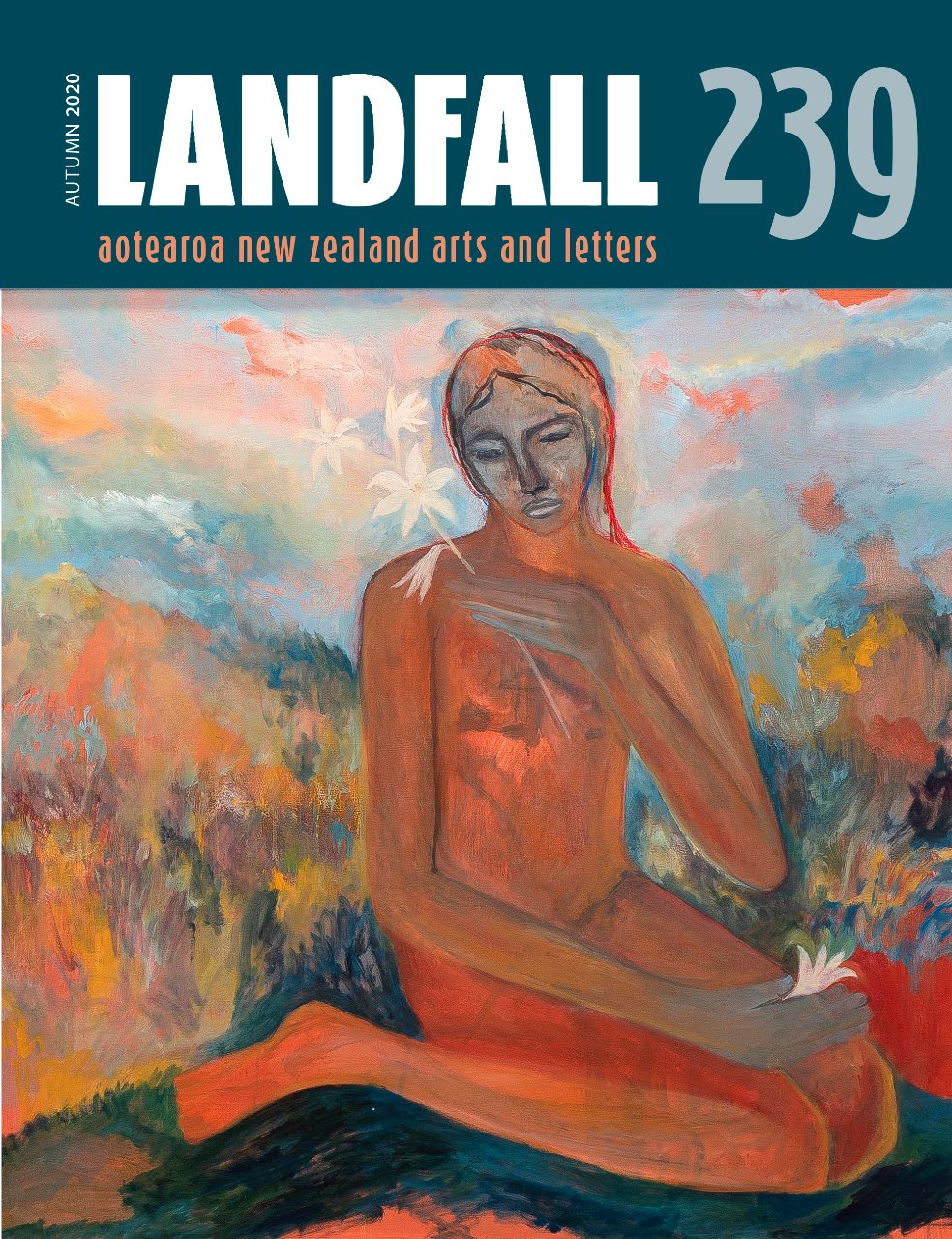
Landfall 239
Edited by Emma Neale

Otago University Press

.

$30.00

.

ISBN 978-1-98-859243-5
Publisher: Otago University Press
Publication date: June 2020
Pages: 207
Format: Paperback


Reviewed by Sally Blundell


In her report on the 2020 Charles Brasch Young Writers’ Essay Competition, Landfall editor Emma Neale describes the predicament of choosing a winner from an unspecified number of entries. How to compare a formal academic essay, she asks, with a ‘lyrical, sensuous, song-like study of the place of the pomegranate in myth and art’? How to separate ‘one potent impression from another in a diverse field’? As judge, Neale puts her stake in the ground. The most gripping essays, she says, have motion. They develop or travel somewhere. They chart a change of some kind. With this in mind she gives first prize to ‘Body/Love’, a short synopsis of the experience of anorexia by Auckland literature student Grace Lee. Included here, it is a deserving recipient. Lee sheers in close to the forlorn metaphor of ‘swallowing whole’ the myth of a perfect, spare body before swerving back out to the ‘rail-thin’ beauty of David Bowie and the rough skeleticism of Giacometti’s sculpted figures. Lee’s touch is razor-sharp but also conjectural, hopeful, as she veers between bruising subjectivity and succinct observation. It is tempting to draw a connection with the fey femininity of the cover painting by Star Gossage, a young woman, kneeling, naked, demure (I have sung my way through this world, 2018) but Landfall will not be confined to theme or place. Like the entries in the essay competition, the 13 short stories, two essays, 40 poems, six reviews and three art portfolios that make up the latest issue of Landfall occupy an open – although almost completely ahistorical – field with no clear boundary lines, no stated goalposts.

If there is a defining feature of this issue, it is Lee’s sense of glancing in and around her subject, plunging in close then arching away into a place more detached, more ironic. Perhaps it is because of the virus, its heels dragging through a sodden winter, that the most compelling of these contributions hover close to death. Wellington scriptwriter Sarah Harpur’s excellent ‘Dead Dads Club’, which began life as a comedy show, succinctly muddies Elisabeth Kubler-Ross’s neat catalogue of grief. In poetry, Johanna Emeney’s ‘Myxomatosis’ takes us close to the ‘leprous eyelids’ of a rabbit dying from the introduced virus; in Jo-Ella Sarich’s ‘The Jasmine (We need to talk about suicide)’ grief is inexpertly buried in a ‘pop-out storybook world’ of nesting birds, studious domesticity, a jasmine wrenched out by its roots. In Sarah Shirley’s ‘The Stag’ a hunter is felled by a heart attack as he sets his crosshairs on a stag: ‘I imagined your coughing bellow, your bugling laugh / as they fed coiled metal up my arm to open in my heart’; in ‘Legacy’ Nicola Thorstensen’s  list of items left to her son slips tenderly, inexorably, from a recipe for kedgeree to ‘The cry of a lone albatross / the swell of an aria’; in ‘Demilune’ Tim Saunders elegantly marshals the spare facts of an unnamed uncle who flew sorties over Germany ‘under a scything moon’, who came home only half a man, who went missing beside the Ōroua.

Some of the stories and poems work like efficient windscreen wipers, clearing the rain to bring the view into sharper – cleverer, truer – focus. The best however, lead us on a circuitous trip that deviates from the road ahead, that ambushes and waylays. ‘Green Dress’ by Patricia Grace is an outstanding story of the slow unravelling of family through the threads and threats that obscure psychological abuse. It is a spare, succinct and perfectly structured story of derailment and confrontation. This mixture of complexity and clarity is evident too in the gentle affinity between a grandmother and her grandson in Vincent O’Sullivan’s ‘Splinters’, and in Pip Robertson’s ‘Disaster Day’, in which a child’s night-time terrors form an inchoate soundtrack to daily deliberations on planetary extinction, suicide cults and school emergency drills for fire, earthquake, tsunami, terrorism.

In this issue, Landfall’s stated commitment to ‘cultural commentary’ is syphoned almost wholly through fiction and poetry, but it comes with a certain levity. In Stephanie Johnson’s The Pear Tree, Jena – overlooked by her husband, unseen by her boss, distanced from her children (at 35A John Key Close, the children reside in the far reaches of the house) – undergoes a height-altering, shape-shifting Alice-in-Wonderland transformation not unlike Yeong-hye’s hankering for plant-like transmutation in Han Kang’s The Vegetarian. In Jenna Heller’s story, Fanta Boy careers towards medical apocalypse on a daily diet of sugar hits, Snapchat and screen action; in ‘Barbara Eden’s Screams’, Gillian Roach casts a contemporary lens on the ‘weirdly erotic’ confines of the genie bottle in American ‘70s sitcom I Dream of Jeannie.

There is also a simple elegance in the best of these writings – in the ‘three-dimensional calligraphy’ of eels in ‘To Flute Music’ by Tony Beyer, in the haunting gaze of the hospital patient in Wes Lee’s ‘Suddenly the moon’, in Cilla McQueen’s ‘Adaptation’, her words dancing down a brief eight lines to arrive at a tiny oyster growing inside the remains of a washed-up Janola bottle; in Sarah Scott’s memorable opening to ‘Chrysanthemums’: ‘She lies dusking in the catkin dust / He looks up from his sketchbook’. In keeping with this evocative conciseness, artist Vita Cochran’s stitched panels steer the tradition of decorative embroidery into a Klee-like exploration of geometric abstraction. The resulting combination of brevity and digression, an apt analogy for this wintry edition of Landfall, is an invitation to see more.


Sally Blundell
is a journalist, writer and reviewer based in Ōtautahi Christchurch.

'I want you to think about what you would like to see at the heart of your national literature ' - Tina Makereti
Read more

.

.

.

.

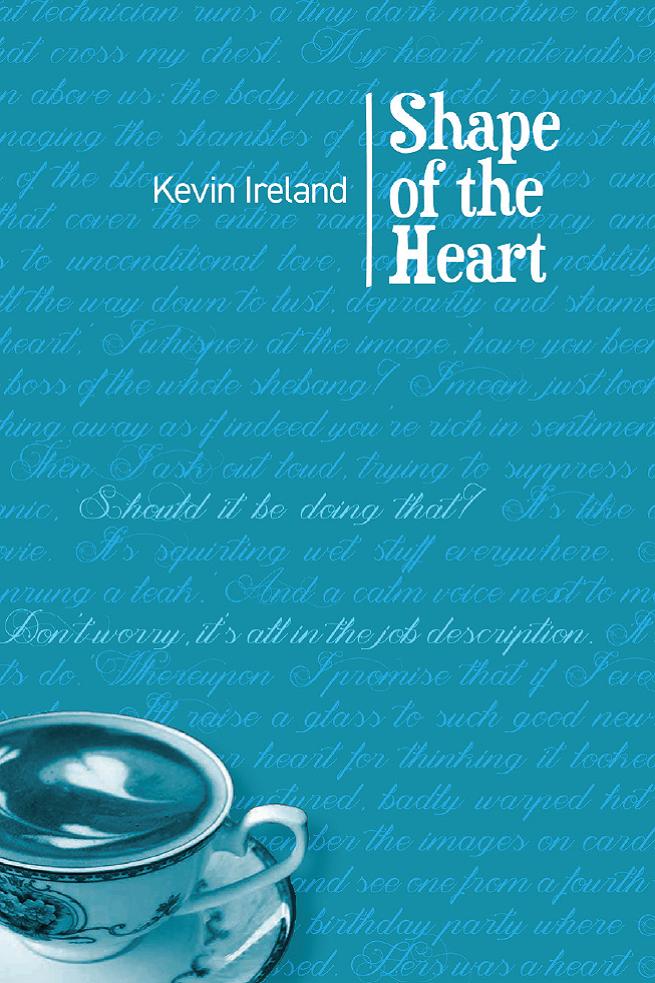
Shape of the Heart
by Kevin Ireland
.

Quentin Wilson Publishing
.

$24.99

.
ISBN-978-0-9951329-6-2
Publisher: Quentin Wilson
Pages: 64
Format: Paperback


Reviewed by David Eggleton


No one could ever accuse Kevin Ireland of being responsible for the ‘acrid smell of burnt poetry’, in the immortal words of P.G. Wodehouse. Rather, Ireland’s poems are always done to a turn: knocked out just so in batches, like Anzac biscuits – tender, sweet, with a slightly nutty tang. Since 2001, Kevin Ireland has released a new collection every other year, and sometimes more frequently. Shape of the Heart is his thirteenth collection of the new millennium and contains 56 poems, most no more than a page in length. Ireland casts and recasts his lines until they take on a smooth inevitability, a rightness of sound and purpose. As he writes here in the poem ‘The dangers of sleep’, it…

Takes deep concentration

not to let words escape

while you fit them together

and you work on the shape.
.

His slim volumes, en masse, have been fairly consistent in their concerns. In the first poem in Shape of the Heart, ‘Tidying up last items’, he sets out what these concerns are: ‘stray thoughts, / obsessions and diversions / not to mention idle observations, / considerations, entertainments’. Amusedly finding ‘the news’ of his poems in daily routine, Ireland makes all of his poetry obliquely confessional, but his is breast-baring rather than chest-thumping autobiography: gentle, comic ruminations on the passing parade of human endeavour. And poems follow their own internal logic: ‘a connected confusion of glowing dreams / that can’t be traced through street directories.’ (‘Being Back in Balfour’).

The ‘shape of the heart’ in the title poem is the image which materialises on a hospital monitoring machine’s video screen during a medical check-up. This becomes, in the course of the poem and the book, a symbol of the organic cycles of life and death, where ripeness is all and the getting of wisdom entails a humble contentment, or wry gratitude at least, for one’s lot.

Ireland’s territory here is mostly that of the domestic and the droll, tinged with an element of the fantastic and the grotesque, in service of some deeper truth. He writes in the poem ‘Odd man out’: ‘I secretly extract true pleasure / from every swift absurdity.’ His easy-going, conversational style is deceptive as he extols indolence and drifting with the current, but also determines as a writer to make every day count. He practises the art of making something out of next to nothing with the expertise of the artisan, or perhaps with the insouciance of the dandy, the boulevardier. Navel-gazing, he makes his navel the centre of the universe and his very navel-fluff an object of interest, as in the poem ‘ An endmost blowout’: ‘ I was up to my bellybutton in remarks, utterances / phrases, terms and expressions’. This poem’s a figurative weaving of bellybutton-lint into a litany that goes on to signal a scrupulous attentiveness to unregarded trifles, the detritus of consciousness, whole etiquettes of communication.

And while it’s not quite a matter of opening another bottle of wine before launching on the writing of a new poem, certainly wine is praised as the nectar of the muse, and poetry itself positioned as a kind of table talk, best shared over an opened bottle of wine to better measure out the passage of time. When the days remaining are provisional and fair weather subject to sudden revision, the poet might as well set up as a kind of miracle worker, converting the tap water of everyday Kiwi discourse into a sparkling carafe of the convivial.

The final poem of the collection, ‘Two minutes to midnight’ finds him ‘raising a last glass’ to auld acquaintance, to longevity, and indeed, in a Wordsworthian sense, to earth’s diurnal course.

In cultural terms, Kevin Ireland belongs to the now semi-mythical generation of New Zealand writers born in the long aftermath of World War I, who felt themselves charged with a manifest destiny: to invent a local literature. The Dedication paragraph at the beginning of Shape of the Heart namechecks some of these purposeful fellow-travellers, including Maurice Gee, Vincent O’Sullivan and Karl Stead, and Ireland touches on this era a tad self-deprecatingly in the poem ‘The Literary Coast’, with its evocation of the coast of Bohemia and also of the ‘bohemians’ or outsiders who lived on and around Auckland’s North Shore in the 1950s, and their castaway lives.

This is a subject on which Ireland has written at length in his award-winning memoir Under the Bridge and Over the Moon (1998).  As he tells us in that book, the author himself engaged in an act of self-invention as a writer by changing his surname from Jowsey to the pen name Ireland. There are two poems about members of the Jowsey family in Shape of the Heart, both slightly cryptic if you don’t know the background, and both add resonance to this collection’s title. Shape of the Heart, as it goes on, implies not just a simple reference to the way the poet’s heart on a monitor screen looks like like ‘a badly warped hot-water-bottle’, but also an acknowledgement of the heart as a site of emotional connection. In ‘Family types’, his commemorative poem for his younger brother, Ireland writes:
.

Childhood was an experience

to be endured then never talked about …
.

As the memoir revealed, both brothers were traumatised by their upbringing within what would now be called a dysfunctional working-class family, and yet those family dynamics were a commonplace of the Depression-era years and after in this country: the oppressive regimentation, the pompous hypocrisy, the moronic timorousness; the notion that Queen Victoria, and all she stood for, knew best, and that her colonial subjects, especially in far-flung New Zealand, had to learn their place.

Liberated by literature, burrowing into books, Kevin Ireland as an adolescent was engaged in a grim passive resistance against the collective conformism of what was supposedly an enlightened land of milk and honey. By the mid-1950s he had become a kind of outsider, a beatnik, one who hung out in coffee bars and went out on the tide of the six o’clock swill, when pubs shut and partygoers with their half-flagons fetched up at someone’s wooden bungalow to carry on drinking. Poets, of course, were not held in good odour. In Under the Bridge and Over the Moon, Ireland reports someone saying to him: ‘You’re a bloody poet aren’t you? That means you can always be relied on to act the maggot.’

It was to escape such naysaying that Ireland sailed for Britain and Europe in 1959. He remained away for 25 years, returning when David Lange was Prime Minister. Overseas travel — time spent in Communist Bulgaria — sharpened and refined his vision of what mattered, his subtle sense of the absurd. In the poem ‘A game of soldiers’, he telescopes a world view and makes an epiphany out of it. Watching a film in a London cinema, ‘… the projectionist must have got drunk … the reels were mixed. A gent in front / stood up, shook his fist at the screen / and bawled in fury: “Bugger this for a game of soldiers” … He’s frozen / in a moment of absurdity / but never sees the joke.’

Ireland has regularly returned to Britain. However, in the poem ‘At the museum with Fleur (Ashmolean Museum, Oxford, 6 April 2019)’, it’s not the exhausting traipsing round the museum’s galleries he ends up celebrating, but the quality of the food back in Auckland.

Ireland observes the increasing decrepitude of his own body with mixed feelings of dismay and amusement, and inevitably, stoic resignation, as exemplified by the poems ‘The one great attribute’ (‘Took a tumble in the streets the other day …’), and ‘Reports of my death’, and ‘A sonnet at 86’. What counts is good manners, good company, merry anecdotes. He is one who has heard the chimes at midnight, like Shakespeare’s Falstaff, and cannot repress a shudder and a start of surprise at what he has become. The self-mocking poem ‘The true facts of age’ finds him breathless, gulping pills and clutching a stair rail:
.

We wonder how we once had time to go to work.

It’s a frantic effort merely to exist …
.

He is ever a poet of pithy remarks and sharp observances. A shop window, an upstairs window in a house, an aircraft porthole, help frame and clarify matters of existence and transience, and one’s insignificance in the greater scheme of things. In a shop window:
.

A whole street is reflected

but you’ve vanished from sight.
.

Snapshots reveal us shadowy and insubstantial, while surveillance cameras catch us furtive and blurry. Truth for this poet is best found in unmediated contact. In ‘Expressions in translation’ he writes: ‘I have sometimes seen far more intention / in a silent glance than I have gathered / from most written phrases.’

Sifting the daily record, Ireland makes it the starting point for revelatory reverie, and sometimes even for genuine flights of fancy. In the poem ‘Flying to Wellington  and back’: ‘… the wind … completely off its head … / the woman sitting next to me … / gripped her armrests / and at the moment of our utmost need / alone she strained and powered our plane / back into the sky above the storm.’

The capricious weather spirits are omnipresent deities in these poems, helping coax and cajole Ireland’s daily attempt at a poem into being, which then takes on a life of its own. Poems begin: ‘a greyish morning’, or ‘a hard morning’, or ‘ a grey old day’, or ‘A wasted day, almost’, and so on, in serial succession.

The weather, given to whimsical pranks, is anthropomorphic in mood, by turns lachrymose, benign, angry, bewildering, and powerful – like a parent figure. In the end, though, the poet’s North Shore habitat, subject to maritime calm, turns transcendent under the poet’s searching gaze, as he writes in the poem ‘Perfection’: ‘… staring / from an upstairs window and across / my neighbours’ roofs towards the sea’. For a moment, all is idyllic, gorgeous, a sort of all-New Zealand dessert, pavlova-like in its lyrical sweetness, laced with a certain tartness of observation, and then:  ‘A storm rolled in … the house / went crazy. Drama everywhere …’ Thus, divine meteorological turbulence: weather fabular, as much as fabulous.


David Eggleton is a Dunedin-based poet, writer and critic. He is the Aotearoa New Zealand Poet Laureate 2019 – 2021.   

'Many of our best stories profit from a meeting of New Zealand and overseas influences' - Owen Marshall

Read more

.

.

.

The Night of All Souls
by Philippa Swan

Penguin Random House
.

$36.00
.

ISBN: 9780143774303
Imprint: RHNZ Vintage
Published: 31 March 2020
Format: Paperback
Pages: 352
.

Reviewed by Paula Morris


‘It is impossible to libel the dead; legal protection of reputation stops at the grave,’ wrote Judith Martin – aka Miss Manners – in The New York Times in 2012. ‘But is it possible to embarrass the dead?’

This is the central question of The Night of All Souls, the first novel by Wellington writer Philippa Swan. Swan is better known as a journalist and nonfiction writer, the author of Life (and DeathIn A Small City Garden (2001). She shares a passion for gardening and landscape with the protagonist of her novel, Edith Wharton, one of the major American novelists of the early twentieth century, and the first woman to win a Pulitzer Prize for fiction. Wharton’s first book, published in 1897 when she was 35 years old, was The Decoration of Houses, and Italian Villas and their Gardens, published in 1904, was highly influential – and still in print.

Wharton was best known as a prolific fiction writer, publishing over 40 novels, novellas and story collections to both literary acclaim and commercial success. She spent much of her adult life in Europe, a cultural exile she embraced. Her career as a fiction writer is resolutely twentieth century, stretching between the presidencies of her friend Teddy Roosevelt and FDR, though her fame as a chronicler of ‘old’ New York means some might mistake her for an earlier writer. (Her Pulitzer-winning novel, The Age of Innocence, was set in the ‘Gilded Age’ of the 1870s but was published in 1920, the same year as F. Scott Fitzgerald’s This Side of Paradise, and Women in Love by D.H. Lawrence.)

The Night of All Souls opens with Wharton coming to in a book-lined room with bad lighting and comfortable chairs: this is the afterlife, and she is joined by some familiar, if uninvited, companions. Three preceded Wharton in death: Walter Berry, lawyer and diplomat, and her closest friend; blustering Teddy Wharton, her ex-husband; and Linky, her last dog. Her waspish niece (and famous landscape architect) Trix Farrand is there, to report on events up to her own death in 1959. Wharton friend Henry James doesn’t show. In his place we get a British couple from the Jamesian set, critic Percy Lubbock and his ‘black widow’ wife Sybil: Lubbock was Wharton’s one-time protégé but has betrayed her in book form, as she will discover.

The final guest Wharton finds hard to place: memory is misty in the afterlife. It’s another woman writer of the early twentieth century, a sometime fan and rival, who’s there to spoil the fun. The ghost who’s not in the room, but increasingly the topic of conversation, is Edwardian cad Morton Fullerton, a journalist on the make, and promiscuous lover – of a family member, landlady, British lords, and Wharton herself, in passionate middle age.

All of the above have been dead for many decades; for Teddy Wharton, it’s almost a century. Another of the lit-dead, publisher Charles Scribner, has provided a manuscript for Wharton to read aloud to the assembly. It’s a novella – catchily titled Following in the Footsteps of Edith Wharton – that his modern-day company are planning to publish, and he’s pilfered it for Wharton to bless or burn.

Here we have a high-concept novel that asks us to suspend disbelief in order to play along. Our protagonist feels that at the time of her death ‘the world had already consigned her to history’ and that this ‘modern novella would “sex-up” the iron-clad image of Edith Wharton’. Unlike some in her party of ghosts, she’s not unhappy about this new development, and is implicated – perhaps – in certain clues left behind that have made such a book possible.

However, much of Wharton’s dirty laundry has been swaying in the breeze since R.W.B. Lewis’s biography was published in 1975; Hermione Lee’s superb biography (an ‘800-page monster,’ as Lee called it), was published in 2007. This novel’s central conceit is that it’s only now, in the age of Twitter and TripAdvisor, that a long-dead Wharton – and her inner circle – must confront unwelcome revelations about the Fullerton affair and the duplicities of everyone’s sexual lives. Biography has already done the work assigned, in this novel, to the ‘novella’ Wharton reads aloud to her bickering coterie. So the crisis that summons Wharton’s fellow ghosts to the room never loses its feeling of plot device. That a novella would be issued by a major US publishing house these days is another imaginative stretch – especially a novella that is structured around banal blog posts.

Another straw man here is the assertion that Wharton is now obscure, which is why she is so eager to read this novella; it promises her, in egotistical ghosthood, the chance of rediscovery by a new generation of readers. But Wharton is not obscure at all: The Age of Innocence and The House of Mirth are read by book clubs as well as university classes, and Ethan Frome is a standard school text in the US. (Liam Neeson starred in the 1993 film version.) Many of Wharton’s books have been made into films multiple times: Scorsese’s 1993 all-star The Age of Innocence was the third adaptation of that book; Terence Davies’ The House of Mirth (2000), starring Gillian Anderson, was also that novel’s third film adaptation. Wharton’s unfinished novel, The Buccaneers, was a lush Masterpiece Theatre miniseries on PBS. Currently Sofia Coppola is adapting The Custom of the Country for Apple TV: this is the novel that Julian Fellowes cites as his inspiration for Downton Abbey. If fellow ghost Charles Scribner has managed to alert her to this overheated novella, wouldn’t he also know that his old imprint and its multinational overlord are still raking in money from Wharton’s own books?

Judith Martin’s New York Times piece, quoted above, was a review of the novel The Age of Desire by Jennie Fields, another take on Wharton’s unhappy affair with Fullerton, drawing on Wharton’s diaries and letters, and also featuring Walter Berry, Teddy Wharton and Henry James. Martin notes how James feared ‘posthumous invasions of his privacy’ and consigned much of his correspondence to the bonfire. He, like Wharton, was victim to Morton Fullerton’s letter-hoarding, and letter-selling. His sexual life has been investigated and re-imagined in Colm Tóibín’s 2004 novel The Master (in which James sees Oliver Wendell Holmes naked) and David Lodge’s novel Author, Author published the same year (in which James sees his cousin Gus Barker naked).

Wharton, Judith Martin contends, has had little to hide since 1980, when her desperate and sometimes pathetic love letters to Fullerton were discovered at an antiquarian bookseller’s; many were published in a 1988 edition of her letters, edited by R.W.B. Lewis, and interrogated in Hermione Lee’s biography. So The Age of Desire, Martin suggested, could be seen as ‘already rehashed gossip about a literary celebrity’ unless it illuminates Wharton’s ‘character in terms of the daily ways she reacted to the restraints of the time’.

The Night of All Souls isn’t an historical novel in the same way as The Age of Desire: in Fields’ novel, Wharton is in the moment of her relationship with Fullerton, while in Swan’s book it’s more than a century after the affair. Wharton is long dead and trying to make sense, reading the novella in which she figures, of blogs and cell phones. ‘Human passions may be eternal,’ writes Martin, ‘but social context keeps changing, and so, therefore, does the interaction between them’. This is what The Night of All Souls addresses: can privacy and fame and legacy coexist in our contemporary world where everything can be Googled and readers have TikTok-length attention spans? Is exposure worth the humiliation?

Whether Wharton accepts or rejects the novella – the logistics of which are fuzzy: this is hardly Amy March burning Jo’s only copy in the fire – is not the point. Wharton’s legacy doesn’t depend on a fictional rescue any more than Virginia Woolf’s legacy relied on The Hours, though there’s no doubt that a Sofia Coppola miniseries will boost book sales. All aspects of the conceit here, from the assembly of ghosts to the judgment of the novella to Wharton’s fears of obscurity to the revelation, to her and various dead cronies, of terrible things people did during their lives and afterwards, ultimately feel like so much scaffolding.

Swan is an informed and enthusiastic tour guide, as her endnotes attest, drawing on Wharton’s fiction as well as her diaries and letters. But the tour starts to feel prurient – secret bisexuality, adultery, a love-pact suicide, explicit letters and poems – and the research begins to intrude. Tóibín wisely chose a five-year slot of Henry James’ life for The Master. Here Swan has 75 years of Wharton’s life to wrangle and then a selection of things that have happened since Wharton died in 1937.

Unsurprisingly, there’s a lot of breathless summary to cram in events, an issue that also beset David Lodge’s A Man in Parts, his 2011 novel about H. G. Wells. This can read as glib and informational: ‘Thinking she had reached the bottom, she managed to find grace and dignity within herself’ or ‘They stayed in touch, and Edith recovered her inner self and humour’. At times this makes The Night of All Souls feel like notes towards a novel, a book that tells us too much when none of its revelations are new, or a high-speed novelisation of a biography. Wharton had complex friendships and her circle had complicated love/sex lives; everyone told lies, and some people made money out of other people’s fame, and other people’s personal lives. There’s material here, of course, but perhaps it’s already been overworked.


Paula Morris
is a fiction writer and essayist, and an associate professor at the University of Auckland. A creative nonfiction project on Robin Hyde, a collaboration with photographer Haru Sameshima, will be published in 2020 by Massey University Press. She is also a co-editor of the forthcoming anthology Ko Aotearoa Tātou (Otago University Press).

'I felt energised by the freedom of 'making things up’' - Maxine Alterio

Read more

.

.

.

You Have a Lot to Lose: A Memoir 1956-86
by C.K. Stead

Auckland University Press

$49.99

ISBN: 9781869409128
Publisher: Auckland University Press
Published: 18 June
Pages: 440
Format: Hardback
.
Reviewed by Mark Broatch


‘This is a literary biography,’ writes Karl Stead in a prefacing note to You Have A Lot to Lose, ‘a story of books and how they come about, of teaching and learning, of writers and how they interact with one another. It is a truthful account of my experience of those thirty years; nothing is deliberately misrepresented. But I have left things out, most often in the interests of economy, but sometimes for reasons of discretion, or privacy. There are significant people in my life who don’t figure in these pages. I claim to be a truthful recorder, not a comprehensive one.’

Let’s come back to things left out.

YHALTL covers the Stead years 1956-1986, from the end of the first volume when he first left NZ aged 23, to a teaching job in Australia and on to Bristol to research his bestselling critical work The New Poetic, up to the year he left teaching English at the University of Auckland to write full-time. (A third volume, which he originally planned to leave perhaps to later biographers, covering the last 34 years, will land sometime next year.) Literary biographies must by necessity shine a light on the writing. Does YHALTL do that? In spades. Stead freely acknowledges how he’s employed people from his life as characters in his fiction and poetry. A version of the entertainer Barry Humphries appears as Julian Harp in the story ‘A Fitting Tribute’, members of a Titirangi/west coast ‘party set’ find fictional form in The End of the Century at the End of the World, fishing trips with Keith Sinclair inform Smith’s Dream, a house since lost to the Grafton Gully motorways appears in a story, the background of a Sydney writer friend goes into a character in The Secret History of Modernism. And the literary and academic worlds around Stead are easily and vividly revealed, his fierce determination to make a mark, his aspirations and hurdles, his friends and rivals. We hear about the craft, the fickle muse (‘the cupboard was bare’) and the fear of not being able to reproduce the act of writing a successful novel, the ceaseless labour to improve it to make something lasting. A familiar refrain in Stead’s critical writing is an eschewing of theory and the search for clarity, plausibility, readability – all genuinely fascinating material for students of writing and NZ literature.

Through the pages slip the giants of those three decades, most of whom can be recognised with a surname: Curnow, Sargeson, Shadbolt, Duggan, Frame, Tuwhare, Baxter, Adcock, Kidman, Glover. And stars from elsewhere: AS Byatt, Claire Tomalin, Karl Miller. And artists of the time too. ‘When I look around our house now I see so much evidence of that period, not only the books our friends were writing but their paintings – McCahon, Hanly, Hotere, Binney, Henderson, Woollaston …’

How many New Zealand writers, though, require three decent-sized volumes for their memoirs? Writers usually live boring lives – they sit on their backsides and dream. But few have spent no entire southern hemisphere winter at home for 30 years, first cruising then jetting off to lecture here and there on Yeats or Eliot, have lived to nearly 90 with a prodigious memory and diligently kept a diary and most of their letters to a roster of illustrious friends. From this distance, Stead acknowledges late in this book (speaking about literary prizes), he must have appeared like a hyperactive child, ‘writing poetry, fiction, non-fiction, a professor and not-a-professor, opinionated and clamouring – in your face and a pain in the arse’.


About that ‘truthful recorder’. Thanks to what he accepts is his ‘combative’ nature, Stead has over the years got backs up all over the place. His refusal to toe the line, his public squabbles, his insistence on England as a key component of our ‘education, reading, history’ and some perhaps insensitive cultural comments at times have found him branded ‘anti-Māori’. Some novels found him accused of ‘fictional revenge’. Even his – quite understandable – keenness to tout glowing reviews from overseas over sometimes lukewarm reviews here. Much of this is in YHALTL.

What is clear is that Stead appears constitutionally incapable of soft-soaping. As he says about one writer’s stories, some were ‘remarkable, extreme, and of their kind quite unmatched in New Zealand fiction; and that so much of his other work, by comparison, was conventional and static. I felt I could not make one point without the other.’ [My italics]

Although he does accept now that he might sometimes have been too fierce in his pursuit of such unvarnished honesty, and perhaps should have opted for what another character calls ‘heavily scented brickbats’: ‘I took literary criticism very seriously. Indeed, the somewhat ruthlessly analytical reviews I had been sending home to Charles Brasch for Landfall were taking it, or myself, perhaps too seriously. It was not that my breakdown, for example, of the elements in Alistair Campbell’s poems was wrong, or even unfair; but it was unkind – and it would have been better if I could have somehow also built into it an acknowledgement that, before cool analysis set in, I had been charmed and moved by the poems I was now taking apart.’

The late sixties saw Stead embrace the view that serious writing and politics were inseparable, speaking publicly against the Vietnam War, being arrested after running on to the field to stop the 1981 Springboks game in Hamilton, condemning the Rainbow Warrior bombing. ‘These were the years when I discovered that I was radical politically and conservative academically, a division which felt quite comfortable and reasonable, but which at times made me the object of wrath from one side or the other, and often from both.’

Perhaps he’s too sensitive to criticism himself. When Janet Frame (‘entirely sane, but that it was as if she lacked one layer of protective skin – like an extremely sensitive and timid teenager’) wrote a story that cast Karl and his wife Kay in a poor light, he took severe umbrage. ‘Alan is a first-class honours student, swimmer, tennis and chess player. Sylvia is a librarian. There is an unwanted pregnancy and a termination. Gradually (the story is twenty-six dreary pages long) Alan’s poetry is subverted by academia and the marriage. He loses his hair and becomes an arid academic critic, while Sylvia resorts to growing dahlias. There are no children. Their life is barren, and all that is left between them in the final paragraph is a nameless fear.’ Perhaps worst of all, it is not a good story.

A driving force for Stead was always the health and growth of NZ Lit. He helped the university work towards getting New Zealand writing recognised and gradually established in Auckland’s English Literature courses. ‘[W]riting in New Zealand was never far from my thoughts. I told Sargeson that working on Yeats had given me “the conviction that a great literature could grow up in NZ if only our literary world would grow more self-conscious, more critical, and more confident”.’


There is infidelity. Stead writes about an affair of some length with a student, Jenny North, she 20, he 38. There was no coercion or harassment, he is quick to say. ‘We were two adults equally smitten, for a long time hesitating silent and embarrassed on the brink of saying so. She had been our baby-sitter since 1970 and at sometime early in 1971 the words were spoken and the sexual rapport which had been simmering took us the next small step for a man and the giant step for mankind of a moon-landing.’

Still some awkwardness perhaps, as this is a rare slice of cheese in the book. How about this from 1980?

‘When the conference ended I had no idea whether I would ever see Ulla again. She was my incandescent Dane, my excitable Viking and the representative charge to which I would always have to plead guilty. When she appeared as Uta Haverstrom in my third novel, The Death of the Body, she was the sexual puritan who keeps the unnamed narrator at a proper distance. In this the fictional Uta differed from real Ulla.’

Stead’s wife, a constant background presence, comes across as intelligent, passionate and formidable and part of an unbreakable duo. ‘When Kay detected clear signs [of Jenny] and asked questions there were no denials. Foolishly perhaps, I felt the whole thing was so important we had to share it, as we shared everything — as we had shared the fact of my brief but significant infidelity with a colleague in Armidale [his first academic posting]. But this was more serious, and the result was tears and anguish, and resolutions accepted also by Jenny, that our affair must stop … In my novel The Singing Whakapapa there is precisely this situation. The affair is discovered, acknowledged, and resolutions made.’ They were not kept.

Jenny, who has since died, made appearances in some form or another in three of Stead’s novels and one novella, including the second wife of Harry Butler in The Death of the Body.


What does YHALTL reveal of Karl Stead the person? A man of integrity and humour, a loyal and generous friend, a doting father. He was not a seeker of power, he says, in fact was somewhat shy and doubting. ‘I had never been one of those for whom the expectation of success was imprinted. Success always came as a surprise, failure as a disappointment but not really an embarrassment.’

He writes: ‘Katherine Mansfield tells herself somewhere “Risk! Risk all!” I was not a risk-taker. I was scuttling home to safety – I thought; but also to something I’d thought I wanted most for myself, a lectureship in the institution that had seemed to open new worlds for me; and perhaps in due course a significant place in the making of a New Zealand literature.’

Yet he did risk a lot, not least his family, with his driving ambition, that radical honesty, the infidelities, the regular departures overseas – including at least one xmas and wedding anniversary.

Thanks to the letters and emails, Stead’s is far from the only voice here. Yet as I came to the end of this book, a handsome hardback with excellent historical photos and helpful chapter postscripts, effortlessly readable — that prime virtue in the Stead rule book — I couldn’t help but imagine an annotated version with the notes of its many characters in the margins. Why did you do that? Did you really think that of me? Did that really happen like that?


 Mark Broatch is a writer, critic and the author of four books. He is a former books and arts editor at the NZ Listener and Sunday Star-Times, and was a fiction judge at the 2020 Ockham New Zealand Book Awards.

‘Inspiration is the name for a privileged kind of listening’ - David Howard

Read more

.

.

.

Nothing to See
by Pip Adam

Victoria University Press

.

$30.00


ISBN:9781776563159
Publisher: Victoria University Press
Publication date: 11 June
Pages: 384
Format: Paperback

.

Reviewed by Philip Mathews


No one who read Pip Adam’s Acorn Foundation Fiction Prize-winning novel The New Animals can forget the moment when an almost banal description of quotidian Auckland reality — this happens, that happens, she said this, he stood there — gave way to the uncanny or the fantastic. Few readers were prepared for the genuine shock as the story slipped from the real to the impossible or gave up worrying too much about categories like the real and the impossible. A similar kind of shock hits several times over in Adam’s third novel Nothing to See — and it’s not just strange or invigorating this time, it’s genuinely chilling and eerie. It’s more like a description of a haunting.

Adam writes in her generous afterword that winning the Acorn prize for The New Animals gave her the confidence to write this more ambitious, more original and, possibly, more divisive novel. We should be pleased about that. It’s a reminder that prizes are not just recognition and (for a day or two, if you’re lucky) publicity, but are also validation. An admission: I was one of the four judges who picked The New Animals for the prize that year. I don’t remember it being a hard decision.

We heard a lot about haircuts and T-shirt design in The New Animals, about fashion world hierarchies based on work, age and class. Nothing to See pays greater attention to overlooked and unglamorous work, the work that is in danger of being automated, rendered post-human — sorting clothes in warehouses, working in call centres, even moderating comments on websites. There is a political edge to this attention which might not be quite as explicit as Adam thinks it is (the publisher calls this a novel about surveillance capitalism, which explains the title). The slightly satirical political edge and a leaning towards the fantastic and the playful, combined with an absence of the usual emotional cues or interiority some readers expect or even demand from fiction, can be reminiscent of what José Saramago was doing in novels like The Double and Death at Intervals.

Careful symmetry is key to Nothing to See. There are three sections, set at 12-year intervals, in what appear to be New Zealand’s three main cities. When the story begins, in 1994, Peggy and Greta are in their early twenties and living together in one room, while a pair named Dell and Heidi are living in another. There is an uneasiness from the start: are Peggy and Greta friends or lovers or sisters or even twins? We do know that both are alcoholics in rehab, living in a very accurately described poverty — scraping together enough coins to buy one meal for two, and sharing seven socks between them (“None matched”). Figuring out how to cook a quiche or even go to the supermarket is a major breakthrough. There is a terrible boredom in the sober life but of course it’s better than the alternative. “They still had nightmares. Woke up gasping.”

It’s impossible to describe much more without spoiling the surprises — or shocks. But we can say that Adam has advanced even further as a writer. There is an evenness to her writing that is hypnotic rather than monotonous, steady rather than flat, and the sustained melancholy recalls the sadder end of science-fiction — films like Her and Never Let Me Go. At its heart, this is a novel about shame, loneliness, about wanting to do good and hoping for second chances — or third or fourth chances. It’s about finding new ways of being. That it can cover all this, and be deeply affecting as it does so, while also pushing at the traditional limits of fiction, is a real achievement.


Philip Mathews is a Christchurch journalist. He co-wrote Funny As: The Story of New Zealand Comedy (Auckland University Press, 2019), which was longlisted in the 2020 Ockham New Zealand Book Awards.

'...we were there as faith-based writers, as believers in the mana of Oceania...' - David Eggleton

Read more

.

.

.

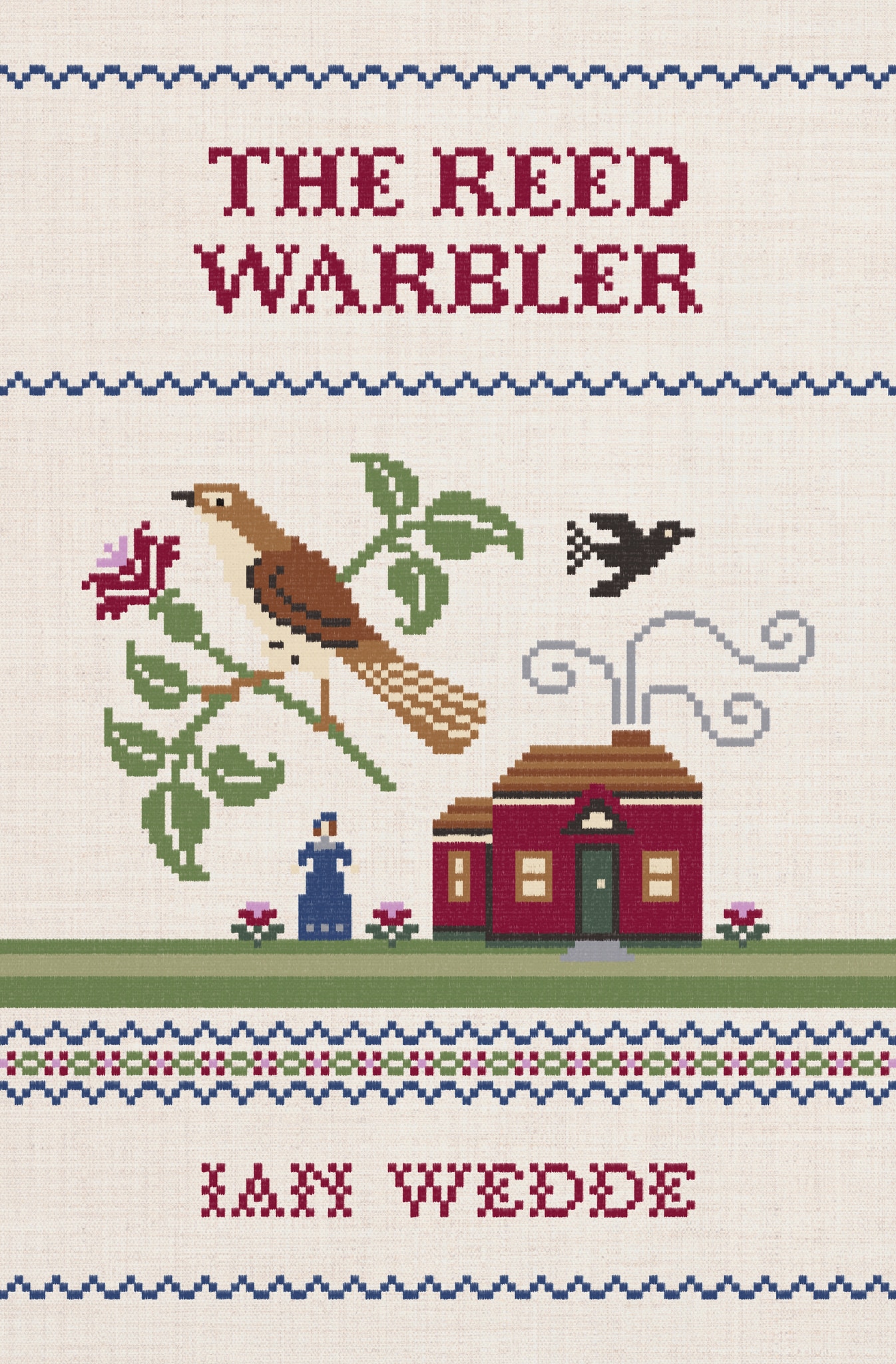
The Reed Warbler
by Ian Wedde

Victoria University Press

$35.00

ISBN: 9781776563005
Publisher: Victoria University Press
Publication date:
Pages: 624
Bind: Paperback
.

Reviewed by Stephanie Johnson


In the last year we have seen writers scorned and pilloried for daring to write about what they are not. Jeanine Cummins was forced to apologise for having a Mexican woman refugee as her central character in the bestseller American Dirt. Jeanine Cummins is neither Mexican nor a refugee. Kate Elizabeth Russell, another American writer, was forced to disclose her own childhood abuse after publishing her controversial and brilliant novel My Dark Vanessa. Current mores seem to dictate that writers may no longer strive to achieve the age-old alchemy that was once the province of writers, that is, to enter fully into the hearts and minds of characters different from themselves, and to speak for them.

There is one subgenre that seems to be safe from this lunacy — the historical novel. There, perhaps, we are still allowed to indulge our imaginations. Ian Wedde was not born a woman in Kiel, in the north of Germany, in the nineteenth century. As far as I know he has never fallen pregnant from a rape. I doubt he’s handy with the embroidery needle, but maybe he is, just like Josephina, his compelling central character in the exquisitely researched The Reed Warbler.

The novel does not begin with Josephina, but with her descendants Frank and Beth. The elderly second cousins make a long-delayed journey to the Kaitĭeke valley where a closer ancestor, also descended from Josephina, had a farm and raised his children. Exposition intrudes a little into their dialogue, with an unnatural ‘My grandmother née Hansen’, but this is an understandable flaw in the Herculean effort to explain a complicated family structure going back six generations. Mercifully, at the front of the book, there is a family tree.

Frank and Beth are fresh from a family reunion, where various family taonga were on display, including ‘that sewing-sampler thingie … Nobody really knew about these things, and they could mostly only go ooh-ahh because they were so old, imagine that, what was life like back then?’

The sampler is what Josephina, throughout her life, called the Oma, because her grandmother had given it to her. ‘The Oma was half the size of a bed and couldn’t ever be washed because the different threads and dyes would get mixed up … Her grandmother would close her eyes and breathe in deeply whenever she unrolled the sampler, and would always tell the story or sing the song of the stitch she was using that day.’ Josephine was her devoted granddaughter and pupil and so, over a century ago, the Oma made the voyage to New Zealand and is cherished in turn by her descendants.

Frank is a good bloke. He likes a drink and has long conversations with his beloved dead wife when he’s alone in his room at night. Ten years older than Beth and long domiciled in Australia, he is a repository of both the New Zealand and Australian vernacular and ‘bad Aussie jokes’. In the first chapter, a little wearied by the mania for genealogy that has gripped his relatives, he remarks ‘What happened to good old you’re born, they rip out your tonsils, most of your teeth, your spleen, your man’s foo-foo valve, and then you die?’

That succinct approach certainly wouldn’t have sufficed for Wedde, who acknowledges that The Reed Warbler is fictionalised family history. In three parts and various close third-person narratives, the story moves from contemporary New Zealand to nineteenth century Germany and back again.

We first meet Josephina as a young woman, living with her family in Kiel. Already a gifted seamstress and embroiderer, she delivers a nightgown to the absent wife of a repellent Pole, Hauptmann von Zarovich, who has snot in his moustache. He rapes her, or as Josephine describes it, he ‘stuck his big thing in me’, which is surprising naivety from a farm girl who would have seen dogs or other animals mating. Her sister Elke twigs that she’s pregnant because she’s not using the ‘blood bucket’, that there’s ‘no little sister with her in the bucket’. Can you hear that outraged howling? How dare a man write about rape and menstruation?

Wedde does it very well. We are not bludgeoned with gruesome details. When the pregnancy is revealed, Josephine’s parents reject her, holding her responsible for it, as was normal for the times. And Josephina herself in the early sections of the novel frets that she is somehow accountable for her own rape: Von Zarovich asked her to model the nightgown and it was while she was doing so that he attacked her.

Many women were broken and despairing from such an experience. Josephina is made of sterner stuff. She stays with a married sister in Sønderborg until after her daughter is born. Then, babe in arms, she goes to Hamburg to work as a seamstress for a kindly businessman, which is where she meets the radical journalist Wolf Bloch. At first, she sees him as a ‘strange little man in the sewing room … with pigeon chest and somewhat insolent stare …’ An incidental character describes him as ‘a Jew and an agitator.’ It is with Bloch and his sister Theodora that Josephina eventually makes her way to New Zealand, and it is Theodora who first lets the reader know of her brother’s new love. ‘They came together as distorted innocents.’

The novel is densely populated. Major characters are richly drawn with flaws and virtues. We hear directly from them in chapters that take the form of letters. The voices of Bloch and Theodora, particularly, are strong and detailed. Bloch’s associates and heroes — Friedrich Engels, Descartes, Flaubert and Hegel — are either addressed or referenced and bring the wider world into the narrative. On board the ship to New Zealand, he writes to his friend Martignetti, giving his first-person experience of the rigours of the voyage and his hopes for a new life in New Zealand. ‘Josephine and I are not husband and wife in the conventional bourgeois sense,’ he writes, ‘we are so as comrades and lovers.’ Josephina is his little bird with Kornblume eyes. After his death Wolf addresses the reader in an italicised chapter, where he debates the existence of ‘an erotics of thought’, having been carnally liberated by Josephina.

Sex, as one would expect in the establishment of six generations, plays a part and is sometimes almost risible. The adult Catharina in Wellington has an affair with a professor: ‘She liked his willy, too, though that was the word she had used when Wolf was little and she had helped him to pee with his tiny worm of a thing, and not appropriate for Hugo’s sturdy shaft with the rosy-coloured collar around its sleek emerging head.’

In either third- or first-person attempts to mimic childish speech can grow tiresome. This is Catharina on the ship:

‘She helped Tante make breakfast in the big kitchen, Tante had to do it
for Gudrun and all the others, it was her turn, Tante said, thank you Catharina
for helping to stir the pot, you’re a good stirrer! Papa Wolf would be getting
dressed while she and Tante made the breakfast, of course he had to cover up
his hairiness because it was funny. There were people waiting to make their
breakfast and some of them began to shout. Then she helped Tante carry the
breakfast to their room where the others were waiting, they had to go carefully
because the ship was rocking and also go carefully down the steps…’

An early twentieth century child is even more irritating: ‘Now I am nine adam is five and henry is two so granny says there will soon be four little wolfs. I hope the new one will be a girl because Henry is a bad wolf who treys to bite me but granny says he is just treying his teeth. Our dog curly dide we are all very sad….’

Cousin Greta writes back in her slightly older voice with information about swimming at the Te Aro Baths, having ice cream at the Pavilion in Days Bay and studying the school curriculum of the time. There is the sense here, as in a few other instances, of historical detail being utilised without any other reason than the writer wanting to include it. This is one of the greatest dangers in writing historical fiction. Later in the novel effort is made to insert material that is contemporaneous with Fred and Beth’s time — mention of our unfortunate export to Queensland, Joh Bjelke-Petersen, and the 1971 Springbok tour.

‘One could say of almost all works of literature that they are too long,’ said the nineteenth-century French writer Jules Renard. The Reed Warbler runs to six hundred and nineteen pages, which would concur with Renard. As with most very long works, though, there are parts of this complex novel that truly sing. Wedde’s evocation of sisterly love, of Sønderborg and life onboard the migrant ship, in particular, are vivid. The Kaitĭeke valley is alive and humming and women characters are fascinating, complex and loveable.

This novel will no doubt be long treasured by the Wedde family, just much as fictional Josephine’s Oma was by hers. It will garner also a wider readership from those interested in our nineteenth century immigrants who came from places other than Old Blighty.


Stephanie Johnson is an award winning writer whose work includes multiple novels, plays for stage and radio, poetry, and scriptwriting. Her most recent novels have been The Writing Class and The Writers’ Festival. She is co-founder of the Auckland Writer’s Festival and was the 2000 Katherine Mansfield Fellow.

'NZ literature is such a vast and varied thing' - Pip Adam

Read more

.

.

.

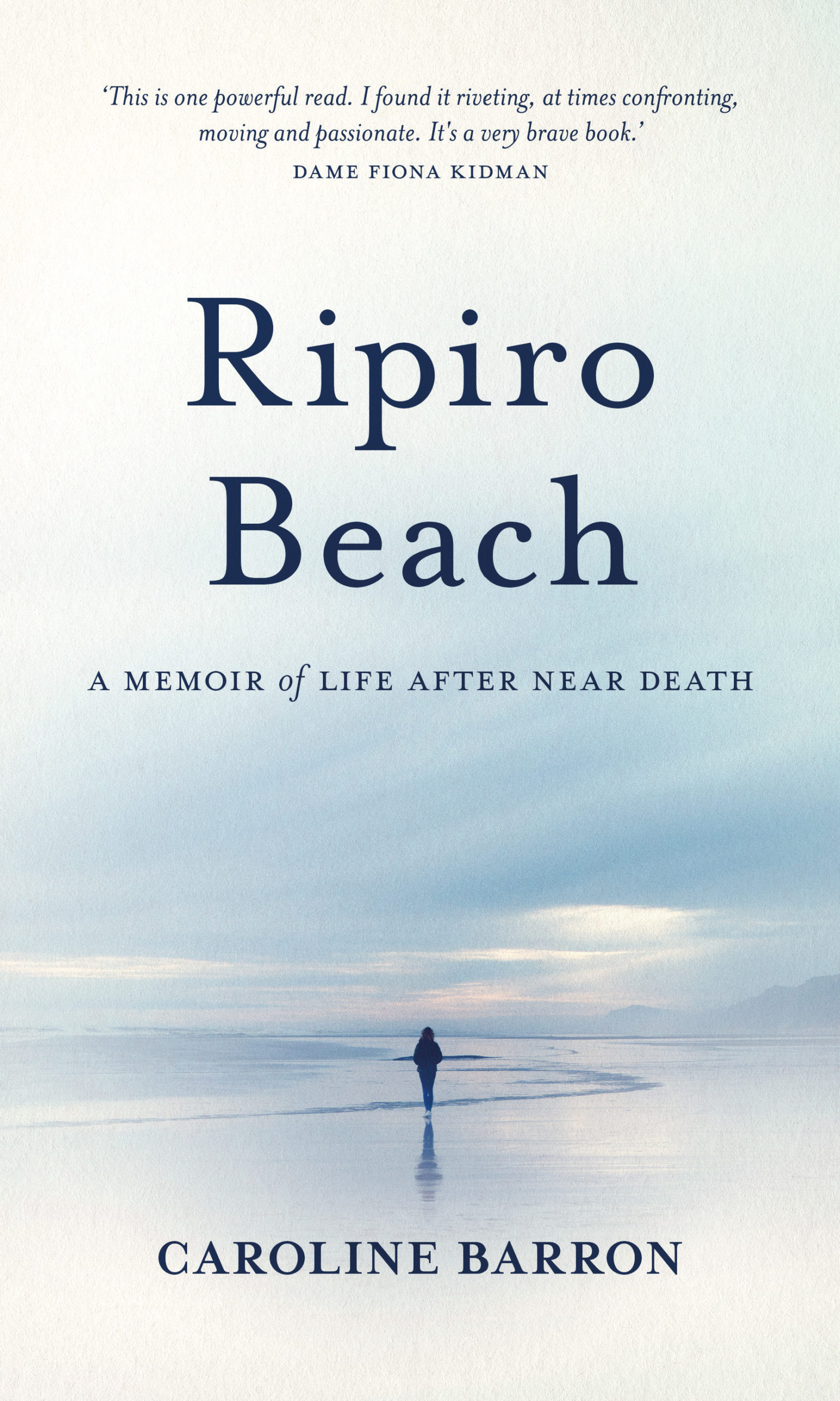
Ripiro Beach
by Caroline Barron

David Bateman

$35.00

 : 9781988538204
 : David Bateman Limited, New Zealand
 : May 2020
 : 280
 : Paperback

.

Reviewed by Kate Duignan
.


Ripiro Beach opens with a birth gone wrong, described in lucid, visceral prose. One paragraph in, when I realised what I was reading, I was hit with a wave of nausea and alarm. I didn’t think I would be able to continue with it. I held the book at arm’s length, read with one eye shut.

After birthing a healthy, full term child, Barron comes perilously close to haemorrhaging to death. She has placenta accreta, where the placenta is ‘attached to the uterine muscle, so it cannot be separated without tearing.’ Barron is rushed into theatre, given an emergency hysterectomy and infused with 15 litres of blood. Inside that moment, she understands that she is dying. She is taken into a vision of her husband and daughters in their home without her. She views them through a glass window, a vision which crystallizes and becomes a source of mental anguish after she physically recovers.

Ripiro Beach is haunted by that tapping on the one-way mirror of death. The memoir is structured around Barron’s squinting sideways at the experience for a long time, holding it at arm’s length.

Diagnosing herself online with PTSD, Barron’s first instinct is to assume she doesn’t qualify: ‘Soldiers, like Montague [Barron’s grandfather], who had seen their mates blown to smithereens on the battlefield got PTSD, I think, not privileged suburban mothers. You’re over-reacting.’ Barron is experiencing numbness, depression, suicide ideation and flashes of rage while parenting her young daughters. She knows something is badly wrong, yet nothing in the culture supports her to take her trauma in the birthing suite seriously. For several years, her energy goes into a genealogical search.

Barron’s father was adopted, and when he died of heart failure on her twentieth birthday, there were few leads towards finding his birth mother. The memoir becomes an archival detective story, with central dramatic moments based on the arrival of new papers:

‘Your request has been considered under the Official Information Act 1982,’
the cover letter says. ‘Enclosed is a copy of a prison file for Montague
Stanaway, obtained from Archives New Zealand.’

Everything Barron discovers about her ancestors bruises her: a suicide, a violent attack with a broken bottle, more heart attacks, a dishonourable war record. Barron is adept at vividly conjuring scenes from these lives in her imagination; we keenly feel how the details she discovers press on her, and distress her. These ancestors have taken hold of her and will not let her go.

One branch of the family tree throws up broader questions: what does it mean, here in Aotearoa, to get to forty and discover you have whakapapa Māori, when you have only ever understood yourself as Pākehā? How does this new knowledge reorganise a person’s understanding of herself? How can you go about becoming what you already are?

Ripiro Beach isn’t a perfect book: I grew bored and confused at times by the multiple ancestors, the dramatic set up of opening historic papers started to grow thin, there were far too many epigraphs, and metaphors tended to be painfully on message (a Christmas mince pie is left with a little gap on the topping ‘just in case, later, history wants to seep out of its tidy case.’). But all in all I found myself largely able to forgive any clumsiness because I was drawn in by Barron’s tenacity, honesty and urgency.

The aftermath of a terrible birth, and the damage of her grandparents’ lives read as parallel investigations into the link between being a person who undergoes trauma, and being a person capable of violent rage. The overriding question of the memoir becomes a matter of survival for Barron: why am I like I am?

After the birth of my own first child, I realised that there is a subterranean world of stories which post-partum women whisper and recount to each other. We are careful, secretive, coy with these stories: they are almost never told in front of younger women, no doubt for fear of terrifying them.

I remember feeding my newborn and contemplating the quantum gap between, on the one hand, all the art I had ever consumed about the fog of war, and on the other hand, all the art (almost precisely none) I had consumed about the fog of giving birth. Every imaginable dimension of sex, love and violence are deeply and marvellously probed in our fictions, yet birth and its aftermath remains largely unspoken.

The fact is, there can be injuries to the body and psyche after birth that in 2020 our society blanks out. At the end of the book, having explored the birth experience with a supportive therapist, Barron still doesn’t seem to feel entitled to full-blown anger about this silence. I felt it on her behalf. Do I need to say misogyny?

My search for wellness took years longer than it should have. I believe, after
filling out medical history questionnaires in clinics all over Auckland over six
years, that someone should have connected the dots sooner.

Finally, it’s the beautiful imagery of the placenta that holds the book together. Barron builds a summer home for her family at Ripiro beach, west of Dargaville. This land, which she guesses could be part of the whenua of her iwi, is transubstantiated through te reo into the placenta inside her body, the organ ‘that nourished my babies but nearly killed me.’ The concept of whenua has an accretive weight by the end of the book: melding land, flesh, birth, death, and whakapapa, not as abstractions, but as living forces inside the frame of one woman’s body.


Kate Duignan is a writer and reviewer. Her most recent novel, The New Ships, was a finalist for the 2019 Acorn Foundation Fiction Prize in the Ockham Book Awards. Kate recently convened the fiction workshop for the MA in Creative Writing at the IIML, and is based in Wellington.

'There’s a kind of heaven that comes from hearing another writer interpret the mysteries of process' - Tracey Slaughter

Read more

.

.

.

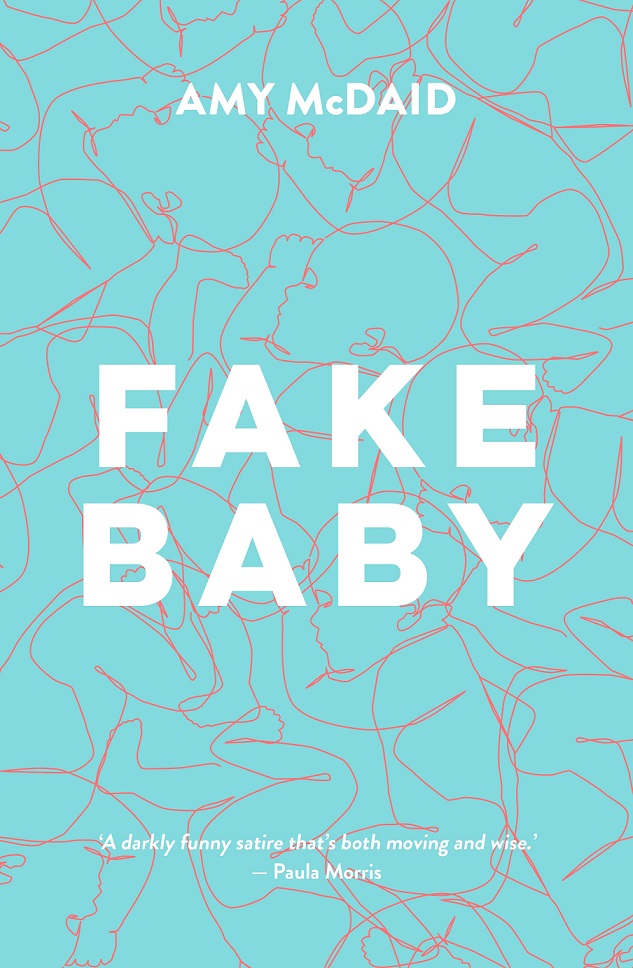
Fake Baby
by Amy McDaid

Penguin Random House

$36.00

ISBN: 9780143774631
Page extent: 304
Format: Trade Paperback


Reviewed by Mark Broatch


The fake baby of this novel’s not-messing-about title is, as is quickly made clear, no ordinary doll. A newspaper report notes when it’s stolen from a lingerie store by Jaanvi Gilfillan:

‘Valued at over $5,000, it was hand-painted by American reborn artist Genevieve Lusk in an extremely lifelike manner to resemble a real infant.

Why would anyone steal a silicone doll, let alone dress it in baby clothes, caress it lovingly, take it for walks?

The bereaved. Jaanvi is in deep mourning for the son she and husband Mark lost after just a few days. Anyone whose baby has died or even – I use the word advisedly – suffered a miscarriage knows the emotional devastation it can wreak. Such a loss leaves a gap that needs to be filled. Still, these dolls – widely known as reborns and which are available for “adoption” – are, to outsiders, seriously creepy. Some are even created from 3D scans of live newborns. Mark, an aloof and irksomely rational accountant (and gym bunny), is seriously spooked by his wife’s actions, though it manifests, as it sometimes does, as anger and rejection.

Jaanvi knows that the doll is made of plastic, at least on some level.

‘Look, Ayla, James’s been helping me – I mean, I know he’s not real, I’m not deluded, but to have him with me and pretend, it’s like being in a play. Remember when we were in that play? I was a tree and you were Little Red Riding Hood.’
‘How old were we?’
‘Maybe ten or eleven.’

Yet moments later she’s imagining Mark with James in the front pack, thanking her for bringing so much joy back into his life. Like everyone, Jaanvi has holidays from reality. Hers are just a little further afield. We are all capable of self-deception and the line between mental anguish and mental illness is sometimes slim, author Amy McDaid reminds us. Who among us hasn’t had intrusive thoughts and considering escaping all the unwanted attention by camping in a farmer’s field, digging a toilet and having only cows and roosters for company?

In fact, the book opens with Stephen, an itinerant with a penchant for mumbling rhymes and free-associative jabber and a far looser grip on reality than Jaanvi. He’s doing unbecoming things in Waikumete Cemetery, after visiting the grave of his murdered father. Then there’s Lucas Trout, the pharmacist with the Vonnegutian moniker and a fretful, down-at-the-mouth disposition, his volatile band of workers, and a mother who’s wildly bipolar.

Yes, troubled minds run through the book. But in amongst the grief and pain is a lot of humour, dry and well-observed, about relationships and society’s tutting expectations.

‘Should I wave them over?’
‘No! No, of course not. My god, Jaanvi. I’m out for a meal, the last thing I want to do is talk to people.’

The scene where Jaanvi — whose name is Indian though she isn’t; her mother is Rarotongan – goes on a regular walk with her sister and irrepressible mother through Auckland’s Victoria Park is a highlight.

It’s a confidently Auckland novel. Trout’s pharmacy is near K Rd, certainly the most interesting street in the country, and Stephen’s wanderings take him through the city’s patchwork of parks, to places and spaces off the beaten track, not least the Green Bay foreshore. It embraces the city’s real diversity, characters’ ethnic backgrounds, for instance, often only becoming apparent after we’ve met them.

With three main characters there is quite a lot of plot, even if not much actually goes on, and it propels us along speedily with just a little dropping back and forth in time over the course of nine days. McDaid is clearly enjoying the creative freedom that madness offers authors, but aware of the accompanying responsibility, the danger of seeming to make fun of it. For a first novel, Fake Baby gets a great deal right. For me, the plates do start to wobble a little as the novel approaches its end. The book’s symbolism feels a smidgeon overdone, and you start to wonder if it really needed so many troubled characters. What’s real and what’s imagined also becomes a question when we are spending so much time inside paranoid heads. Do Stephen’s ramblings offer a clear window into past events, or are they random delusions? Some will appreciate not knowing, but sometimes it’s helpful to be sure.

There’s a ton of insight and authenticity here. McDaid is a neonatal nurse, so moments in NICU and a psychiatric hospital smell kosher, and she knows her carvedilol from her sildefanil. Did I mention it’s funny? That gets a giant tick for me. You can feel the author not quite able to resist her chafings, characters being rude about drivers using mobile phones, The Chaser, Facebook obsessives, grammar. I agreed entirely. The novel is fascinated with word play, and the text bubbles with references to random fascinations like spontaneous combustion and whether women in burkas wear nice lingerie. And there are splendid lines.

‘Little pieces of ice from her chest migrated to her eyes and sat there, doing nothing.’

The plates stay up, and all the strands come together in a way that’s not too neat. Redemption? You’d like to hope so. After all, a fake baby is not only a symbol of grief but also of healing. Even if it’s tempered by the hard reality that life, with all its jostling vicissitudes and imperfections, goes on.


Mark Broatch
is a writer, critic and the author of four books. He is a former books and arts editor at the NZ Listener and Sunday Star-Times, and was a fiction judge at the 2020 Ockham New Zealand Book Awards.

'My readers turn up...and I meet them as human beings, not sales statistics on a royalty statement.' Fleur Adcock

Read more

.

.

Ephemera
by Tina Shaw

Cloud Ink Press

$29.99

ISBN: 978-0-473-50032-0
PUBLISHER: Cloud Press
IMPRINT: Cloud Ink Press
PUBLISHED: April, 2020
PAGE EXTENT: 275
FORMAT: Soft cover


Reviewed by Angelique Kasmara


Seven years after a computer virus triggers a global meltdown, former ‘Ephemera Librarian’ Ruth embarks on a dangerous journey to source tuberculosis medication for her sister Juliana. Most of the well-paced action takes place along the Waikato River, as Ruth and companions (all saddled with their own agendas) travel by steamboat to the Huka Lodge. There are some eerie parallels to the current pandemic, including recollections of panic buying in the supermarket, and lines such as, ‘I suppose he got stuck when they closed the airports and the country went into lockdown’.

Shaw’s lively style works best when her lens is held steady on Ruth, who is vividly and sensitively drawn. Throughout the novel, however, there’s a frustrating patchiness with world building. I learned about lawlessness, empty cheese shops, and the lack of Vogels and Marmite, but the seven-year absence of electricity and broadband is barely touched on. All we get is: ‘Rumour had it various communities had got wind vanes going at a basic level and were generating electricity’. And for a trip that starts in Auckland, there’s a striking lack of Pasifika and Asian people. By the end I would’ve settled for a footnote explaining that they and all the network engineers died in the first wave of not being able to log into Netflix.

Maybe what I’m seeing as gaps in the foundation is evidence that Ephemera is ‘cosy post-apocalypse’ – a sub-genre of the ‘cosy catastrophe’, a term coined in the 70s by author Brian Aldiss in his sci-fi history Billion Year Spree.  The cosy post-apocalyptic novel is unconcerned with anything beyond its own parochial gaze. In Ephemera, a pile-up of coincidental encounters with people whom Ruth either knows from her former life, or who prove particularly significant, definitely feels ‘cosy’. It’s a contrivance that stretched my suspension of belief too far, rather like the elastic waistband that gave up on my pants during lockdown.

The novel is described as ‘partly comedic’. I tried plonking down an imaginary laugh track to see if it improved the lines of one character (it didn’t): ‘I went to Lagos when I was a kid, on one of those school exchange programmes, and was kidnapped, taken hostage by a military group … They adopted me, gave me a new name.’ What definitely isn’t comedic is the characterisation of the prosperous Ngati Raukawa settlement:

The people were a mixed bunch. As we drifted in to shore, I spotted gang patches, grannies, bearded chaps, two pregnant women, a middle-aged woman with tā moko, and kids in a range of different shades and sizes. Off to one side, up a tree, a kotahitanga flag wafted on the breeze …

The people watched silently and solemnly as we pulled up near the boat ramp, and took turns splashing down into the shallow water. No arrows, I thought with relief, more a welcoming committee. It could have been ‘first contact’ all over again. I felt the echo of previous enticements offered — beads, firearms. As we walked up the ramp and onto a cleared grassy area surrounded by bush, waiting for their reaction to our arrival, I felt the urge to gift something.

I wondered if ‘partly comedic’ was a way to excuse any missteps as humour — like the ‘good-looking in a dark, Mediterranean way’ potential paedophile. Or attributing rumours of beheading to ‘echoes of Islamic State’. I get that the novel is crammed with many diabolical people, and the evilest of them all is a white dude (and oddly, apparently a dead ringer for folksy musician Bernie Griffen), but for every white person painted with a broad, villainous brush, a bunch more are granted depths of moral complexity.

‘Shaw’s near-future New Zealand is all too recognisable,’ notes Catherine Chidgey’s blurb, ‘and her story both unsettles and thrills.’ She’s not wrong. Although it’s how I imagine New Zealand would’ve been in the 1960s — no espresso, no Wi-Fi, more swingers’ parties, and POC waiting in the wings for their one-liner.


Angelique Kasmara is a writer, editor, translator and reviewer from Auckland. Her novel Isobar Precinct, winner of the 2016 Sir James Wallace Prize for Creative Writing, and finalist for the 2019 Michael Gifkins Prize, will be published in 2020. Some of her work will be appearing in the upcoming anthology Ko Aotearoa Tātou | We Are New Zealand.

'...poetry makes intimate everything that it touches.' - Michael Harlow

Read more

.


.

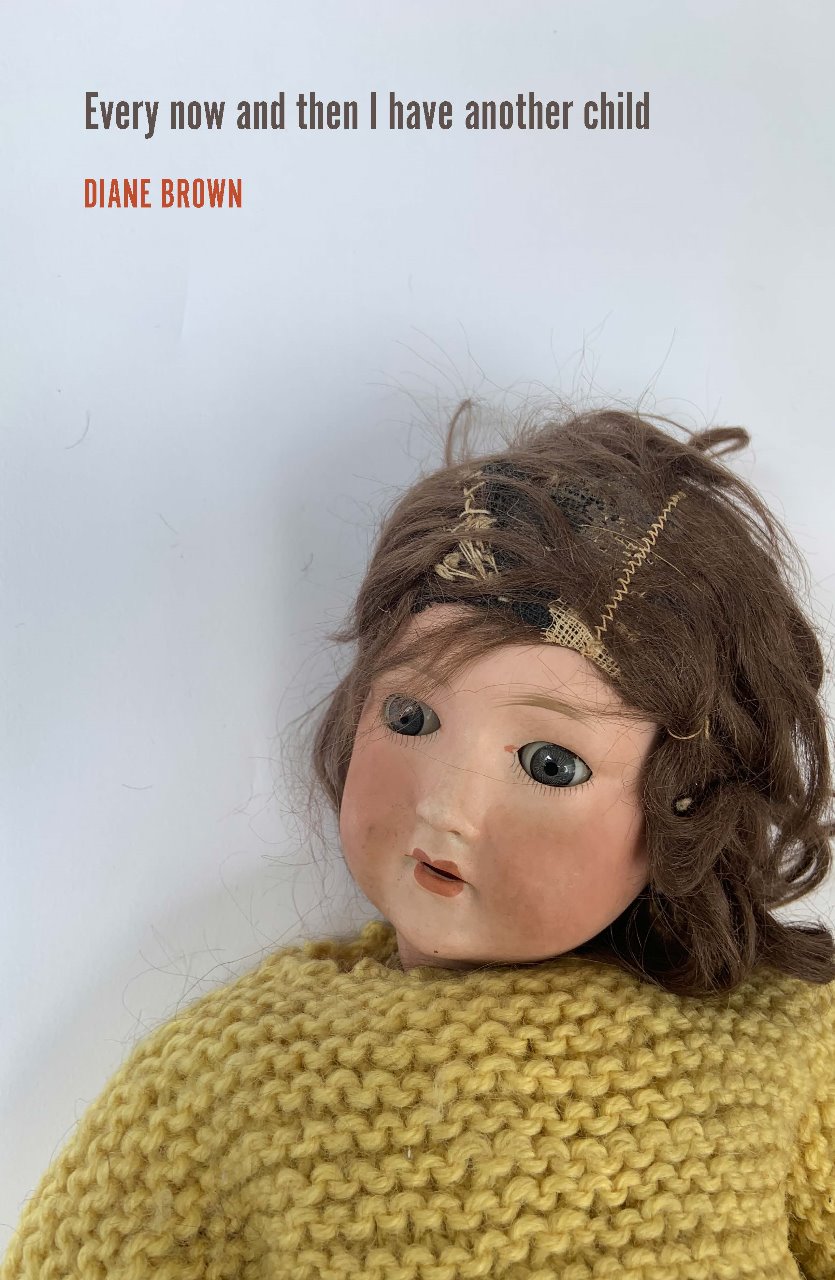
Every Now and Then I Have Another Child
by Diane Brown

Otago University Press

$29.95

ISBN: 9781988592404
PAGE EXTENT: 164
FORMAT: Paperback, 150 x 230mm


Reviewed by Alison Wong

.


What is real and what is imagined or dreamed? It can be difficult to tell in this at-times surreal verse narrative. Can the reader trust protagonist Joanna, a poet, novelist and creative writing teacher? Can Joanna trust herself? Is she sane? Have her imagined worlds, her dreams, her creative practice crossed over to become her reality? Is this a murder mystery or are unexplained deaths a matter of misadventure?

Readers who favour fictional prose over poetry should not be put off. These crafted short poems are as effortlessly consumed as flash, together making up a coherent short novel. Largely set in Dunedin, but also in Alexandra, Auckland, London and Alice Springs, the poems are told from the perspectives of respectable baby boomer Joanna, homeless doppelgänger Anna, a baby, a boy in a mural, and a mother. Other characters include Joanna’s two millennial sons, one a geek ‘on the spectrum’, the other a sensitive surfie; a friendly ex; a creative writing student; a couple of cops; a stepmother and an alcoholic father.

Like many of the educated political left, Joanna contemplates climate change, Australian bushfire smoke, floods, Iran, China, Trump, North Korea and the potential for World War III, riots, refugees, and the tragedies of the Grenfell tower, mosque attacks and children taken from their mothers. She has an ongoing duel with sly, street-smart, mouthy Anna who challenges Joanna’s comfortable hypocrisy.

Joanna is a window into the mind of a writer with her acerbic observations of creative writing students, younger well-published academics with their narrow foci and short histories, and the insecurity of male writers: “‘women writers are emasculating,’ a male writer once said to me. ‘I’d be hung out to dry on a day with no sun.’” She provides insights into the writing process: ‘Outside, fruitlessly waiting for words to drop like walnuts/into my lap’, describing the pattern of memoir, ‘The way your hands…start searching for trouble again,/unearthing that old thing in the back/of the wardrobe just itching for a makeover,/a whole new life.’

As she stalks Joanna at a book launch, Anna is cutting of the literati ‘masking insecurity/with false cheer, small sips of wine and nibbles/of cheese, as if they’re mice/released into a large room inhabited by cats.’ ‘You may be the writer,’ she tells Joanna, ‘but that doesn’t mean you own the plot or even the characters.’

As you’d expect of a poet, Brown has a lovely turn of phrase, from the wry understatement of ‘the cat and I are not friends’ to the confession I can personally identify with: ‘I have never possessed an inbuilt compass./Every trip a matter of faith.’ She provides clear-eyed descriptions of everyday life, shopping malls, for instance, with their ‘shops stuffed full of poorly made, absurdly/cheap and ugly clothes.//Diners are sitting in the food hall, eating unhealthy lunches,/laughing or silent and miserable with each other.’

Brown plays with the reader and her characters. Joanna advises a student that ‘all the characters you invent, or dream, are part of you,/disguised sometimes, as stalkers intent on invasion…’ Are the portrayals of Joanna and Anna an argument between two possible sides of self? Alter egos? If life had taken a different path? Is Anna the creation of Brown the author or Joanna the character? Has Joanna ‘slipped into another life, running/on a parallel track/one layer behind’?

Conflicted Joanna can’t help herself. She plays smart with detective Dave, even as she recognises this only raises suspicion. Anna has her own sad, tough wisdom: ‘keep your mouth shut/until you’re sure no one else will shut it for you.’

For all Joanna and Anna’s sharp edges, central to the story is loss and the missing: mothers, children, daughters, sisters. Joanna recognises: ‘There comes a time they must slip/from your grasp… My sons have moved away, coloured in their own edges’. The title of the book is perhaps explained in Joanna’s ‘ache/for the children I forgot to have’, the gap between parent and grown up children observed by the comment: ‘The verdict would come down hard,/as it always does if your offspring is doing the judging.’ The baby is afraid her mother will abandon her, float ‘her downstream like Moses’. ‘Like all children, I want a parent who takes time to listen/to me breathe.’

Brown’s portrayals of the sons, the ex and Joanna’s relationships with them ring true with the complexities of long troubled histories, tenderness and longing, hurt and incisive realism. Joanna, her children and Anna are haunted by questions that can never be fully answered.

This book asks wider questions. In a world of social media, trolls, conspiracy theories, fake news, fake people, bot phone calls and spam callers, what is the place of dream and the imagination, of fiction, of created characters and narratives? Perhaps it’s a question of art, of authenticity, of integrity.


Alison Wong is a poet, fiction and creative nonfiction writer based in Geelong, Australia. Her novel, As the Earth Turns Silver, won the 2010 NZ Post Book Award for Fiction. She was a poetry judge at the 2018 Ockham NZ Book Awards. Alison is currently co-editing an anthology of creative writing by new Asian NZ voices.

‘Inspiration is the name for a privileged kind of listening’ - David Howard

Read more