.

.

.

Things I Learned At Art School
by Megan Dunn

.

Penguin Random House


$35.00


ISBN: 978-0-14-377485-3
Publisher: Penguin Random House
Published: August 2021
Pages: 351
Format: Paperback


Reviewed by Sally Blundell


‘’Twas not brillig’, Megan Dunn writes of her first year at the Elam School of Fine Arts. ‘Slithy toves’ gyred and gimbled; ‘All mimsy were the part-time art school tutors’.

What did she learn?

Postmodernism, post-postmodernism, the male gaze. Something about Walter Benjamin, something about Susan Sontag, everything about subtext. This was 1994. Young British Artist stars Damien Hirst and Tracey Emin were staging a take-no-prisoners conceptual insurrection; Jeff Koons was stalking the American dream ‘like the BFG of contemporary art’.

What didn’t she learn?

Technique. Construction (if you wanted to know how to make anything, you ask a technician). Picasso? ‘Inflated, a Taschen cover, a postcard on the rack. Art was about the now, and in the nineties the now was postmodern.’

Dunn gravitates to the editing suite, cutting and splicing old movies to make short video montages. Some work, others don’t. Her reconfiguration of the 1984 film Splash with Daryl Hannah as the mermaid (mermaids gyre and gimble throughout this book) does not impress her tutors. Her decision to hire a stripper to jump out of a tiered cake at Live at Elam impresses them even less: ‘The famous male gaze we had learned so much about at art school was absent or at least averted’.

Things I Learned At Art School is a rich, rewarding, funny and poignant memoir written as a series of essays beginning from early childhood and ending in the ICU ward with her mother in 2019. Some have been published previously (explaining the occasional repeated reference). Some leapfrog over years of her life; most cluster around her time at art school and immediately after.

The early years read like a John Irving novel. After her parents’ break-up, she and her mother move to the large brick presbytery in Huntly where her grandparents keep house for the priest. It is quiet; the only sound seems to be the click of coins in the collection box. On State Highway 1 ‘the skins of hedgehogs wear the tracks of worn tyres’. Western Barbie is a faithful and necessary companion.

Then to a flat in Henderson, a print of Picasso’s Mother and Child by the Sea in the living room, an Olivia Newton-John poster above the bed, night coming on ‘like a bruise’. Barbie, Strawberry Shortcake dolls, My Little Ponies are clutched tighter.

Then, at 14, a granny flat above the Kawaha Point Manor, Residence for the Elderly, where her mother works as a night nurse and old people sit in the lounge, ‘scattered around the furniture like cushions’.

The writing shifts and sharpens. The veneer of nonchalance is sliced through with painful memories and haunting imagery. Her mother runs down the driveway after a musician with a HOT2GO licence plate; her uncle kills himself ‘instead of Miss Scarlett, with the spanner, in the library: Patrick MacGill, with the car, in the garage’. At high school, the promise of love drawn from the Sweet Valley High books is undercut by the reality of vicious bullying. The steamy intimations of sex in Jean M. Auel’s Earth’s Children series are deflated when her schoolfriend disappears into the bedroom with an older man: ‘I sat in the lounge, looking at the fruit in the bowl.’

Then university, art school. Vintage clothes, cask wine, a new artist-run space, more cask wine, irony by the bromide bucketful.

‘Rather than freeing me and releasing me into the slipstream of my ideas and giving me the technical skills to ride the current, art school changed what I thought was relevant.’

Relevance is determined by subtext, criticality, a re-levelling of the academic canon signposted here by quotes from Wikipedia, entries on Goodreads and out-takes from old movies. Any remaining Irving overtones morph into a Chris Kraus lesson in social survival.

Naomi Wolf’s The Beauty Myth ‘Never read it, think I’ve got the gist.’ The Sweet Valley High franchise it had as much light to shed on civilisation, she believed, ‘as the secrets of King Tut.’

Like her childhood defence force of Barbie dolls and little ponies, Dunn’s exposure to art is a catalogue of reproduced images: Cezanne, Picasso, Van Gogh’s Sunflowers above the kitchen table ‘full of a crooked vigour’. Three koi carp swish their orange tails in a calligraphic painting at the Belle de Jour massage parlour where she works as a bartender/receptionist after leaving art school (‘I was an artist in search of good material and I thought working at the Belle de Jour would add a certain je ne sais quoi to my autobiography,’ she writes).

On the eighth floor of Auckland Hospital, a Claudia Pond Eyley print and a multi-panel painting of a New Zealand landscape line the walls of the intensive care unit. This is nearly two decades after Dunn left New Zealand for the UK. Her mother is dying. Grief crowds in. Dunn’s descriptions are heartbreakingly gentle, revealing a writer completely in charge of her art form.

By this time her career has taken a different path. The book largely skips over the ten years she spent in London. She reads, she takes a job in a bookshop, she completes a Master’s in Creative Writing at the University of East Anglia. ‘Bite by bite. I was not just a submerging artist. I was a writer.’


Sally Blundell is a journalist, writer and reviewer based in Ōtautahi Christchurch.

'There’s a kind of heaven that comes from hearing another writer interpret the mysteries of process' - Tracey Slaughter

Read more

.

.

.

Times Like These: On grief, hope & remarkable love
by Michelle Langstone


Allen & Unwin


$36.99


ISBN:9781988547527
Publisher:Allen & Unwin
Imprint: Allen & Unwin New Zealand
Pub Date:May 2021
Page Extent: 264
Format:Paperback – C format
.
.

Reviewed by Angelique Kasmara


Michelle Langstone is a well-known actress, known for her roles in series such as McLeod’s Daughters, Westside, and Go Girls. Times Like These: On grief, hope & remarkable love, is her debut collection of essays.

I was surprised to learn that she suffers from extreme anxiety and shyness neither of her highly public careers, first as an actress, and then as a writer of essays where she lays her emotions bare, seem like the kind of activities a shy person would embrace. As a fellow shy and anxious person, I felt I had to trust her word, but through much of the collection, I was left standing on the outside. That is, until she writes about a chance meeting with an old high school bully, in the essay ‘Rabbits’.

She said she felt so badly for the way she had treated me and had thought about it as she followed my career over the years. I couldn’t feel anything except a peculiar buzzing in my ears, and my arms betrayed me and I hugged her. I heard myself tell her that high school was an unkind place and we were all probably unkind to each other, even though I didn’t really believe it. I told her I was glad it was over. And then I said goodbye.

Langstone returns home and cracks open a bottle of wine. As she dwells on what eluded her in the moment, her insights around the encounter are astutely observed.

I sat on my bed and drank glass after glass. It was not an easy relief that spread through me. In my veins I felt validation and trouble. Somewhere I had been complicit in the easing of a guilt, and I wasn’t sure I wanted that. I wanted the validation of my time at school to come without the deliverance of compassion to the person who harmed me, but I had been unable to remain impassive, unable to punish. All the words I had saved up like sharp teeth had nothing to bite into. These useless, decades-old fangs just had to be put away, because in the forgiveness I had given up my fight.

Motivation then, for seeking those spaces which allow her to explore herself through her craft in a way where her self-consciousness disappears. In ‘Hide and Speak’, she says of her acting career, ‘I can’t account for the magic of the vanishing. It is a neat trick that is thrown down: a swift sleight of hand and I’m gone.’

Her grief over the death of her beloved father, Dawson Langstone, is the cornerstone of Times Like These. Precious moments with her dad, such as memories of him navigating their boat, appear in various parts of the book, threading the essays together in a raw and vivid way and the last page, of Dawson welcoming Langstone into the world, is beautifully written.

A chapter with her mum, who talks her through restoring wilting plants, is also fantastic in its carefully crafted observation: ‘She rips out all the dying plants and inspects them like a forensic expert’.

According to her dad, it transpires that Langstone is not like the others. When he’s musing about how different she is from her siblings, ‘She thinks things over very deeply . . . She feels big things’, it somehow seems inevitable that feeling these ‘big things’ leads to the flurry of jostling emotions at certain points in the prose. This works well in some passages, but at certain points it made it hard to glimpse Langstone’s heart for the snowstorm. This snowstorm froze me into place for several paragraphs in ‘Where I Walk’, a lockdown essay which feels almost obligatory these days, and (based on the admittedly small number I’ve read) don’t offer a huge diversity of experiences, skewed as they tend to be towards those who have a certain amount of privilege.

When I go out to walk again I feel anxiety shaking the mainframe of my system like an earthquake underwater, all the feelings drifting upwards, dislodged. In the space of a day, a large number of journalists and writers have lost their jobs, and many magazines have filed their final copy. Overnight, all the best people are out of work, and it feels symbolic of a greater disease spreading. I notice that I walk leaning into the day, my torso tight. I am sharp lines against the blue sky and the high autumn light that is beaming regardless. It is the first time I have been afraid. I am afraid of the things we are losing, the words running away from us, the stories silenced. I am afraid for bank balances running low, and for the democracy generated in copy that will no longer go to print. I am afraid of the pain of those who lose family members. I am worried for everyone.

Its companion essay of sorts, ‘Love Like This’, is a stronger and more perceptive channel for these circling thoughts, delving as she does on how nasty some of the rhetoric around Covid has been in treating the elderly as expendable.

My mother, at seventy-two, is now classed in this bracket, too, and I feel horror when I see the bloodless way lives are discussed as if they are disposable. Arun’s grandparents helped to raise him. They lived in his family home for his entire life, and cared for him, and taught him things that have no monetary value but yield dividends in wisdom and guardianship.

More care could have been taken with tired phrasing in a few sections, which renders the prose opaque: ‘She reaches deep into the wellspring of her own invention’. There are lines that romanticise: ‘I have never wanted to be a parent on my own. I see it work for others, and it is a marvel, and it is beautiful, but I have always known I’m not capable of it.’

Langstone’s essays give the impression of someone with an enormous capacity for gratitude and wonder for the small things. However, she’s thin on the details with the big a mostly happy childhood with wonderful parents, meeting the love of her life, a successful career in a difficult field to break into, IVF ultimately giving her and her husband their longed-for baby. It’s impossible to tell if this is an editorial decision, or one she chose to make. Her command of her craft should be enough to assure that her seat at the table is deserved. She shows her vulnerability within the workings of her grief beautifully, but I would’ve liked her to trust the reader more with the same on other experiences, such as joy, which she must have experienced.


Angelique Kasmara is a writer, editor, translator and reviewer from Auckland. Some of her work appeared in the anthology Ko Aotearoa Tātou | We Are New Zealand. Her novel  Isobar Precinct, winner of the 2017 Sir James Wallace Prize for Creative Writing, and finalist for the 2019 Michael Gifkins Prize, was published in August.

'There’s a kind of heaven that comes from hearing another writer interpret the mysteries of process' - Tracey Slaughter

Read more

.

.

.

Isobar Precinct
by Angelique Kasmara


The Cuba Press


$37.00


ISBN: 978-1-98-859543-6
Publisher: The Cuba Press
Published: 9 August 2021
Pages: 294 pages
Format: soft cover


Reviewed by Tom Moody


Isobar Precinct, Angelique Kasmara’s assured debut novel, opens in Symonds Street Cemetery in central Auckland, one of the book’s many vivid Auckland settings. Lestari Ares, her tattoo parlour partner Frank, and teenage waif tagalong Jasper are preparing to install Frank’s latest art project, a life-size statue of St Michael, amidst the gravestones and gnarled tree roots.

They’re interrupted by what seems to be a sudden, violent skirmish between two men that produces ‘bright curtains of [blood], spraying out in a fan, saturating the thicket.’ When our three compose themselves and look, incredulously, at the scene, they see no blood, no disturbed vegetation, and no sign of the two combatants. The only evidence is some phone footage, but the police can’t act without any physical evidence at the scene.

This unsettling, fantastical incident is just one of the puzzles Lestari is trying to unpick: there’s the recent spate of burglaries at their parlour, the disturbing deaths among the homeless and street workers of the neighbourhood, and rumours about a powerful new street drug with unusual side effects. She must also deal with unsettled aspects of her own life, from the disappearance of her father when she was a teenager to her illicit relationship with a married detective.

The murder in the cemetery launches Lestari on a search to make sense of it all, and suggests the speculative edge to the novel’s visceral realism. An offhand, easily missed mention of MKUltra a covert CIA project that ran from 1954 to 1975, in which unwitting subjects were given experimental drugs to alter their behaviour is a clue to a part of the background of the story, but it gives no hint of the subtle and surprising way that story line unfolds. To borrow a term once used to describe Beethoven’s quartets, there’s a controlled unpredictability to it all that makes Isobar Precinct a compelling joy to read.

Summarising the plot gives no sense of the novel’s many pleasures: the turns of phrase, the sharp characterisations and the uncanny way Kasmara renders some of the more magical moments — including time travel — in a way that renders it plausible and clear.

The headset is soothing in its ordinariness. As soon as it’s clamped over my ears, colour seeps from the room. Ratu appears to have left. At least, I can’t see him anymore when I turn my head.

And my heart hits my ribs. It’s the entire room which has left. I’m panicking now, flailing into this vast volume of nothing. I start screaming as a sudden rush of light hits my eyes, slamming them shut. After a moment, I allow myself a peek. Balls of swirling rainbows against deep dark heavens are suspended before me. What I see now stops my breath.

Trapped within each ball of light is a transparent version of myself, bodies breaking apart, re-forming. Now they’re blinking on and off like faulty light bulbs. And the sound. A buzzing, low and easy to ignore at first, now cranking it up to high-pitched and frantic.

Primarily set in 2015, with flashbacks to key points in Lestari’s life, back to the year of her father’s disappearance, Isobar Precinct is grounded in Karangahape Road Auckland’s most colourful thoroughfare. Kasmara is particularly adept at capturing the essence of a place. This is K Road as Lestari is walking to work:

I’m waiting at the intersection from Grafton Bridge to Karangahape Road, plugged into Johnny Cash to drown yesterday out. There’s a fairy princess in a cloud of pink upchucking into a bin next to me. The pedestrian light flashes green and we cross, pink-cloud billowing past me to catch up with her friends dawdling on the footpath, guzzling bubbles out of plastic tumblers. I’m out of sync with the rest of them Karangahape Road’s just shutting its eyes now. Drag queens, drunks, art students are all stumbling home, only a handful caught by the red-streaked sunrise, which licks us awake again for another burst at immortality.

And here is K Road as Lestari is leaving work:

The street’s switching to night mode, a DJ at Verona bleeding trip hop, artists and opportunists guzzling Pinot Gris on the doorsteps of a gallery, the slow trickle of human flotsam down the steps of St Kevin’s to the Wine Cellar, the hiss and thump of short-order food being served up pizza, pad thai, char kway teow, lamb kebabs, inhaled at flimsy outside tables, petrol fume spritzer on the house.

Kasmara is not only deftly attuned to the sights, sounds and spirit of the urban centre; here, she describes the road where her mum lives in West Auckland:

Dead cars leaking fluids onto kikuyu, scraggly pittosporum hedges pushing up the remains of coke bottles, plastic trikes, Barbie cars, Hell pizza boxes. Suburbia stretching four bus zones, neighbours in jandals and linty track pants buying cigarettes and milk and Lotto tickets from the dairy.

Tough and determined, Lestari is the heart and soul of the novel, as well as its engine. Kasmara has created a narrative voice that is cool, assured and always pitch perfect. Her instincts for pacing are perfect, too. There’s never a data dump of information. Instead, we learn about characters the way we do in real life, slowly, with bits revealed over time, with each new fact rendering that person and the story more complex.

The arc of the story begins in Symonds Street Cemetery, a nearly forgotten place of remembrance, and finishes at a frothy fountain in Albert Park, bubbling with life; ultimately, Isobar Precinct is a story of optimism. As Lestari says, ‘Truth is, we’re programmed to keep following whatever thing it is that brings us a sliver of hope.’

Isobar Precinct reads nothing like a debut novel. It’s true that it arrives with an impressive pedigree: an early draft was awarded the University of Auckland’s Wallace Prize in 2016, and it was one of three finalists for the 2019 Michael Gifkins Award. But those accolades, and all the positive reviews Isobar Precinct will undoubtedly receive, cannot fully prepare readers for the virtues abundantly present in this sparkling, stylish novel.


Tom Moody
is an American writer and editor; he lives in Auckland.

‘Inspiration is the name for a privileged kind of listening’ - David Howard

Read more

.

.

.

Crazy Love
by Rosetta Allan


Penguin Books


$36.00


ISBN: 9780143776284
Publisher: Penguin Books
Published: August 2021
Pages: 336 pages
Format: Paperback


Reviewed by Stephanie Johnson


The alluring, bright cover of Rosetta Allan’s third novel suggests the ‘80s in design and colour. It features a photograph of her husband James Allan as a young man, with yellow, pink and green graphics. It also contains two very necessary words apart from the title and author’s name: A novel. Without them, the book could read as the memoir of a seriously dysfunctional relationship between two people who meet as teenagers in the ‘80s and remain married today.

The challenge with this kind of work is that the reader can’t help wondering, more than they possibly should, what is true, and what isn’t? And also, does that matter, given that we live, supposedly, in a post-truth world?

Allan goes to some lengths to disguise the true identities of the many minor characters by giving them hyphenated and often amusing names: sweet-but-sick-dollybird and rough-as-guts-forestry-man feature early in the novel, and later we meet doctor-take-your-bloody-time. Crazy-eyebrows is a literary agent, and may or may not represent a well-known, late literary agent, who had crazy eyebrows. The children of Vicki and Billy’s tumultuous union are also referred to in this way, surly-girl and eat-and-run-son, which is possibly an attempt to protect any real offspring from fallout.

After a deprived childhood, first-person narrator Vicki lands in an old building in Napier, along with an urban tribe of misfits and desperadoes, either on the dole or barely able to make a living wage. Some of them are petty criminals, or not so petty. The building is decrepit, possibly condemned, but provides a roof and party venue for many. Allan’s scene-setting is consummate, deceptively simple her evocation of Napier of the ‘80s, the building itself and its Dire Straits inhabitants never falters. Ghastly loser-boyfriend is Vicki’s partner at this time of her life, and only because she can’t afford to survive on her own. Allan is apposite on this how young women may find themselves forced into violent relationships just to survive. It’s a social phenomenon as old as time, and unlikely to go away any day soon.

The dynamics of the relationship with loser-boyfriend foreshadow the dynamics of the long relationship to come: Vicki is tough, but also biddable, insightful but also easily led, tender but also capable of cruelty. She is a survivor, blessed with a dry sense of humour and an instinct for optimism.

Once she falls in love with Billy, Billy takes centre stage. He is not as likeable as Vicki: keen on the dine and dash without any thought of hardship endured by small town restauranteurs; a dealer in fake cheques, reluctant to pay tax even though he avails himself of the health system; able to intimidate doctors to get the drugs he wants; and greedy for the trappings of the middle-class, buying luxury cars and houses he cannot afford. But then, as Allan so devastatingly demonstrates, he suffers from serious mental illness. At one point in their midlife, after losing a grander house and generally going down the tubes, Billy takes to living in the garden while Vicki is in the house. He uses legal and illegal stimulants, smokes heaps of dope and cigarillos, glugs back red wine and is generally abusive to his wife.

In long, bad relationships a kind of amnesia may take over, where we forget the fights and arguments. This groundhog state of mind is skilfully duplicated in the reader as Vicki and Billy battle it out, the themes of the arguments blur and lose definition, then slip again into hard focus. Both protagonists repeatedly declare their love for one another, and whether this love is perceived as genuine by the reader will depend on individual ideas of love and of how love plays out in long marriages. Vicki is still keen on romance, haranguing her husband for declarations of commitment even while he is sectioned and under lock and key.

The most affecting, simple love expressed in the novel is that of Vicki for her dog, after it has passed away.

‘I saw the life pass from her eyes as her pupils dilated, and my face was lost to her forever. I have never experienced such enormous heaving pain before, and I still feel it when I think of that last moment…’

When Billy is finally committed to a mental health facility, Vicki comes home and worries about a cat she left behind years ago in Napier, and communes with the spirit of her dead dog, rather than fretting about her sick and dangerous husband or the whereabouts and well-being of their grown children, who barely feature in the narrative.

Misery makes us selfish. Due to their fervid focus on themselves and difficult relationship, neither Vicki nor Billy are political animals. The snap election of 1984 features, but not the peace or anti-nuke movement or Treaty marches or any of the multitude of issues of the era. The earlier dawn raids feature, but only because of the secret hidey-holes found in their more downmarket house, as relics of the ‘70s.

Billy is intent on making money in the corporate world and does well, in bursts, as an advertising executive. Despite her self-castigating refrain ‘Bad wifey. Bad, bad wifey’ Vicki’s faith in him never waivers. Suddenly, after all that’s gone on, on the day he is released from the psychiatric hospital, she believes in him enough to trust his next hare-brained business venture and go with him to buy a Mercedes with money they do not have.

Vicki is a character we don’t meet so often now in literary novels. Women totally and utterly devoted to their men, no matter what, are not part of the zeitgeist. But women like her exist and likely always will. Allan winningly demonstrates the resilience and determination of that mindset, how bad relationships will drive away friends, and the isolation that comes with the dedication. ‘My Billy. There’s no one I can talk to about my Billy.’

At one point Vicki consoles herself: ‘Everyone of us has vices to get through the tough times. We seek solutions and help. Personally, I’ve tried friends, Lotto, tears, blame, prayer, sulking, hiding in closets with my dog, running away, staying in bed, a little alcohol, a lot of alcohol, marijuana, fights and storming out. All of it works. None of it works.’

An aspect of this vividly written and compelling novel that does concur with the zeitgeist is the theme of mental health, which just now is top of the pops. It also succinctly outlines the difficulty New Zealanders have in accessing mental health care, as sufferers bounce from the police to the underfunded health system and back again.

If the novel has a message, it is surely that love can conquer all. It just depends on how consumed by it you want to be, and the price you’re willing to pay.


Stephanie Johnson’s most recent books are the novel  Everything Changes (Penguin Random House, 2021) and the biography/social history West Island: Five Twentieth Century New Zealanders in Australia (Otago University Press, 2019).    

'I want you to think about what you would like to see at the heart of your national literature ' - Tina Makereti

Read more

.

.

.

Loop Tracks
by Sue Orr


Victoria University Press


$35.00


ISBN: 9781776564255
Publisher: Victoria University Press
Published: 10 June 2021
Pages: 334
Format: Paperback


Reviewed by Stephanie Johnson


Orr’s first novel The Party Line (2015) vividly portrays the lives of sharemilkers and their families in the 1970s in the northern Waikato. It is a coming-of-age story, notable for its honesty and humanity, realistic evocation of a passed era, and lovingly created, believable setting and characters. Loop Tracks is her second novel, set in Wellington, and shares many of the same characteristics.

The narrative moves smoothly between two time schemes. In the earlier, we meet sixteen-year-old Charlie, short for Charlotte, who has the misfortune to fall pregnant in 1978, when safe legal abortion was once again briefly unavailable in New Zealand. The Auckland clinic had been closed, not to reopen until 1980. Fictional Charlie (and thousands of real women) were forced to anticipate a lonely and expensive procedure on the other side of the Tasman.

Charlie has had sex only the once, and believes, as many girls did then and possibly still do, that loss of virginity and fertilization are mutually exclusive. Orr puts Charlie on an actual Pan Am flight that really was delayed, and bases this part of her story on the real-life experience of a friend. During the delay Charlie gets off the plane and does not get back on it. Despite the desperate, hard scrabble that her loving but deeply ashamed parents have made to fund the abortion, and despite the fact that she does not remember, or never knew, the surname of her impregnator Dylan, she cannot face the procedure.

She ‘goes away’, as we said then, gives birth to a son, and gives him up for adoption. This part of the action is lightly handled, perhaps because for the bulk of the book, set in 2019 and 2020, it is a long time in the past. When we meet Charlie again, she is in her late fifties, has not had any other children than the boy she gave away, but has had the care of teenage grandson Tommy since the time he was a pre-schooler. Charlie’s son Jim has had a difficult, loveless life; Tommy’s mother is dead; and Jim has dumped his unwanted child on the woman who was not able to keep him. It seems the punishment of the gods continue to rain down Tommy is autistic, or at least, on the spectrum. He struggles with intimacy and change, and has obsessive qualities that are at once brilliant and disturbing.

A bleak scenario but in Sue Orr’s hands the subtleties of familial and blood connections are complex, challenging and inspirational. Mature Charlie is unflappable, careful, clever, as determined as she was at sixteen, but this time to do the best by those she loves. She’s tough too, able to ringfence the troubled grandson from his amoral, unpleasant father, and counsel him through his first sexual relationship. Apart from her friend Adele, who acts mostly as a character foil, she is a fairly solitary character, devoting herself to her grandson and tolerating her son. The blooming of a love affair is a pleasant surprise.

The pandemic of 2020 throws the family into even closer proximity. It is the pandemic as Wellington experienced it, which was marginally less disturbing than that of Auckland. Orr is apposite and blackly amusing on some of the conflicting rules:

‘We may walk but we may not swim. We may run, or cycle, on steep cliffs. We may go to the pharmacy but we must not go inside the pharmacy. At first we thought we might drive to the beach, to swim and to walk on the beach. But the rules have been explained and they are that we may not drive to the beach…We may walk on the beach but only if we walk to the beach. If we walk to the beach we may not pause, or sit. To sit on the beach would be to go to the beach, which is not exercising, which is permitted. We may not walk too far to find a beach. Too far is a distance further than two kilometres… On no account should we let cool salt water lap over our feet.’

Orr’s characters squabble, fight, leave, come together, vote different ways in the 2020 election, and confront the most difficult questions about their origins and the repercussions of immature decisions. Lockdown over, the joys of going out again into the city demonstrate Orr’s love for the capital. Wellington is beautiful and vertiginous, the bucket fountain and Cuba Street are affectionately described, and Charlie’s love for the natural world allows some informed asides on huhu grubs and various species of bird.

As has been noted times without number, we live in sensitive times. It could be that Sue Orr risks castigation in this era of cancel culture, because the meta-narrative of ‘Loop Tracks’ could be casually misinterpreted by those who are adopted, or who have become adoptive parents. These days, adoption is seriously out of fashion. It is not difficult to hear bewildered voices: Is she saying that adoption leads to misery and drug addiction? Is she implying that adoption, as an event at this year’s Auckland Writers’ Festival was headed, is ‘a crime’? Many of us are aware of happy, successful adoptions, where adopted progeny are no more or less healthy and mentally balanced than so called ‘natural’ children. Adoption, it seems, suffers a lot of finger-pointing and a lot of amnesia concerning those adoptions (the majority) that bring stability and fulfillment to all parties.

But a novel is not a novel without dramatic tension. Orr could not have shown us an easy solution to the calamity of being forced to give up a child, or to gloss over the heart-breaking permutations that may come afterwards. In final analysis, Loop Track is an elegant, delicately told, thoughtful story of triumph.


Stephanie Johnson’s most recent books are the history/biography  West Island: Five Twentieth Century New Zealanders in Australia (Otago University Press, 2019) and  Everything Changes (RHNZ Vintage, 2021)


'I want you to think about what you would like to see at the heart of your national literature ' - Tina Makereti

Read more

.

.

.

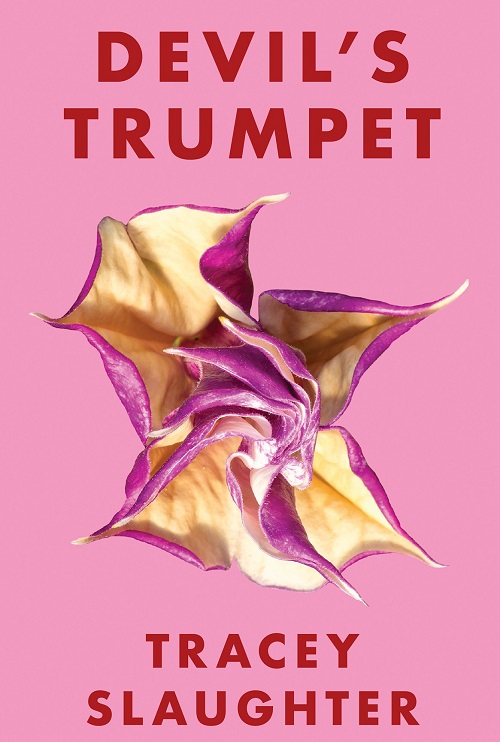
Devil’s Trumpet
by Tracey Slaughter


Victoria University Press


$30.00


ISBN: 9781776564170
Publisher: Victoria University Press
Published: April 2021
Format: Paperback


Reviewed by Rachel O’Connor


This explosive new volume of short stories should carry some sort of warning, an emotional equivalent to the Beware of Death stickers that now envelop cigarette packets. Prepare for Pain, perhaps. Airini Beautrais’ Ockham award-winning short story collection, labelled ‘not for the fainthearted’ by one reviewer, appears about as confrontational as a mocha milkshake when set beside the tales of Devil’s Trumpet.

In a collection of stories so varied in shape and length they constitute a style sheet for the short story form, (the list of accolades in the back providing testament to its efficacy), Slaughter delivers a fearless, shameless exposition of want. Positioned in a dystopian world identical to our own, characters battle their way through the combat zones of their small town or shaken city or stark suburban lives, prey to a myriad of human hungers, needs and deprivations. They emerge alive, most of them, but they are all horribly harmed. No one on these pages has escaped pain, or will. Damage is Slaughter’s eyeglass.

The nature and origin of damage is what sets each character, and story, apart. (In warfare there are a thousand ways to fall, after all.) Among the cardinal weaknesses, lust does a great deal of the critical damage. In particular, the raw, slippery couplings of adultery leave silent, oozing wounds of craving and guilt; infidelity cuts at these characters with a double-edged sword.  Accounts of desperate, doomed affairs frame the collection, and surface at persistent intervals within it, cleverly echoing the intermittent intensity of illicit sex which, along with its preponderance of sternums and spines and seepages and scents, contributes so much to an affair’s persistent excitement and disquiet. Here is obsession in its most irresistible and destructive form. Inevitably, people get hurt. In ‘If There Is No Shelter’, the tragic map of consequences is drawn with particularly creative intricacy. Harnessing the cataclysmic changes rendered by a well-known city’s devastating earthquake, Slaughter explores the complex intersections between fear, grief, exhaustion and denial, guilt and regret, in a wrecked cityscape of rubble and Portaloos where lovers and babies are dead and gone, husbands and families are crippled and needy, and there is no safe place left for body or soul.

In other stories, sexual hunger drives the inept tumblings of teenagers, leaving bruises and tears in the fragile skins of their innocence and reputations. In these still-shaping lives, the boundaries blur between discovery and desire, and between consent and conquest. At the far end of the scale, rape and abuse, as brutal and intimate as bayonets, drive jagged holes in girls that nothing can draw together again. Truly, there is no shelter; even the most luscious and libidinous of sexual interludes in this collection is tainted, since the lens through which we observe is already buckled, cinderous, stained with the residue of prior detonations.

What lust cannot damage, gluttony (from the Latin gluttire, ‘to gulp down or swallow’) does. Drugs and drinks are what keep most of the characters afloat, but there is invariably a damn good reason for the descent into dependency. In the provocative metafiction of ‘Point of View’, the narrator begins by announcing, ‘I am giving my character a drinking habit,’ then proceeds to delineate the decisions that go into the making of a definitive Slaughter protagonist, and the strata of loneliness and desperation destined to weigh upon a life which has ended without actually ending. The piece is a fascinating exploration of the complications of delivering a narrative of hurt, and the challenges of writing on the fine line between an exposition of human anguish and a diary of personal suffering. By taking the ‘I’ out of pain, by creating a third-person character who will bear the burden, or be flattened by it, the narrator (or is it the author? We and they become rather entangled on this point) can perhaps more ably communicate real experience without the risk of coming across as a complainer, without ‘sounding like a teenage girl’. Hence the character of Gabriella, fifty-one, strong, a fighter. But she can drink. She has a damn good reason, remember? In her case, the reason is a husband disabled by motor neuron disease. He is just one of too many broken bodies in these stories, immobilised spouses and sisters and sons whose personal agonies remain unarticulated, off-page. They serve simply as crashed smoking vehicles from which the protagonists, largely women, emerge, roaring like a Greek chorus, calling time on the half-lives that they have been conscripted to.

In his packed session at the Auckland Writers Festival last week, Neil Gaiman addressed the phenomenon of fiction’s resurgence in the Covid world. A search for respite, he proposed, is what has sent us back to books, and the escape fiction offers, with its opportunity to spend time in a different world than our own. It is the job of writers, Gaiman suggested, to provide such opportunities. Slaughter’s world holds out no such promise. It is no holiday destination, or exotic landscape, either. The stories in Devil’s Trumpet take place in locations we have all been, or sense that we have seen, before. For this, the author’s extraordinary observational exactitude is responsible, delivering the minutiae of each situation with such sharp sensory force that the scenes become immediately, intensely familiar to the reader, in all their dirt, danger or despair. ‘Warpaint’ is a story that takes this virtuosity to the extreme. The pub accommodation allocated to the aging rocker of the tale is viewed through her jaded eyes in forensic detail, from her bedroom’s ‘bolt-on sink with a brown mouth stamped Royal Doulton’, down the fire escape to ‘a tower of white plastic buckets, off-kilter with scraps’, and the ‘mops hinged onto outbuilding walls to bake dry, grey-rope, rot-flecked heads’, then through to the bar and the clientele she will entertain, who are ‘flocking in, trimmed with chem-straightened hair and jeans you couldn’t crowbar off.’ She briefly admires the barman, a ‘young hulk kissed by the rugby gods’ but knows he does not see her in return – she has reached ‘the invisible era’. The story teleported me back to the 80s, and to Sumner’s seedy Marine Tavern, where the Friday night live sessions brought whole convoys out from the city. I was with the stiletto crowd then, the silly girls who packed the Ladies’ to apply the ‘bullet hole of lipstick, dark clouds of blush,’ our ‘eyelids powdered by violet prisms.’ We all danced for the eyes of the bass guitarist but we were no match for the blonde singer old enough to be our mother, who looked down on us all. In the breaks, at the bar, she looked right through us. Thirty years later, Slaughter tells me why. And leaves nothing out.

At times, the collection’s vivid, visceral prose is so tightly clipped and pruned that it lifted me out of the narratives, forcing a pause for the unravelling of a rare collocation, or a particularly densely packed image. In combination with the relentless emotional bombardment that the characters endure, it was occasionally exhausting. But when it was all over, I found I was unprepared to leave; I wanted more.

The end of this collection arrives like the end of a war. Everyone left standing is supposed to go home, but nobody is intact, and nobody feels like they won anything. Which is perhaps as it should be. In Slaughter’s book, life is a battlefield. And although Devil’s Trumpet may boast no winners, survivors it has in spades.


Rachel O’Connor is a writer, tutor and researcher, born in Christchurch. She moved to Auckland in 2014 after two decades in Greece. Her first novel, Whispering City, set in Salonika on the eve of World War I, was published in 2020 by Kedros.


'I want you to think about what you would like to see at the heart of your national literature ' - Tina Makereti

Read more

.

.

.

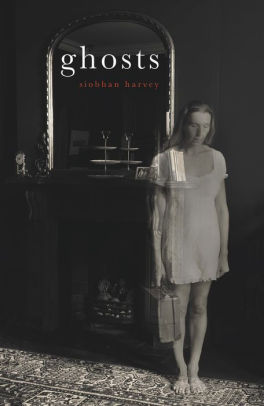
Ghosts
by Siobhan Harvey

.

Otago University Press


$27.50


ISBN: 9781988592985
Publisher: Otago University Press
Published: 8 April 2021
Pages: 112
Format: Paperback


Reviewed by Michael Steven


Siobhan Harvey is one of the tireless midwives of our local poetry scene. For years, she has reviewed and promoted poetry books, compiled anthologies, lectured in creative writing, organised poetry readings. She has taught and mentored poets such as Kirsten Warner, Elizabeth Welsh, Michael Giacan, and Zachary Hikoi Robertson. Every few years she manages to find time to knock out a new book of powerful and humane poems. Her 2014 collection Cloudboy won the coveted Kathleen Grattan prize, and was also published by Otago University Press. In his judge’s report for the 2013 Kathleen Grattan Poetry Award, Jeffrey Paparoa Holman described Harvey’s poetic ability as, ‘. . .demonstration of another world in language that can take the reader inside with the subject, to feel a flawed, common humanity.’

Her latest collection Ghosts, the press release and book’s blurb informs us, deals with, ‘migration, outcasts, the search for home, and the ghosts we live with, including the ones who occupy our memories, ancestries and stories.’ That’s a lofty and heavy mantle to carry, given that since poetry’s first utterance these have been its implicit drivers. Across four sections bookended by an Epilogue, Prologue, and Afterword in the form of an essay, Harvey lyrically interrogates the personal, social and global strata for manes, visitants, poltergeists. Here’s the opening two-and-a-half couplets of the titular poem:


All the buildings that never were.
All the novels unwritten. All the dead

bodies of portraits never realised. The soul-
mate never kissed. Like smoke, this loss –

an invocation of what if, what if . . .


Harvey is a poet who has always written from a place of compassion, of which I find the scope and depth humbling. Ambitiously, she has set out to write a fugue to what is lost and irretrievable. What she has shored is a broken epic of minor and major, personal and collective griefs. We encounter the author’s ancestral ghosts in Britain. Ghosts of families whose Glen Innes statehouse homes were sold off, trucked away, and steamrolled by the Key government. Ghosts on Manus Island. There are ghost trysts with a first love. Ghost words. Ghost writers, ghost poems. Everywhere in this book, ghosts are pointed to. We are told of them. They are talked about, they are described. But rarely do we get close enough to see or meet them. Such is the nature of ghosts, I guess. They are nebulous and fickle in the ways they choose to haunt us. Harvey, like most of us poets, is haunted by many things:


The evicted; the exiled; the gone:
the land remains alive with them,
like shadows, shudders or warmth
of the sun. When light bulbs flicker.
When actors, captive to drama, disappear.
So, an invisible engine, another tremor
rolls through our homes. And we,
the enduring, stand in doorways searching
for signs of the departed and lost
in broken earth and sky faint with starlight.

(from ‘The Ghosts of Aranui’)

.

In a pre-release interview on the Otago University Press website, Harvey says, ‘Ghosts is a literary provocation, asking readers and wider society to realise and korero with the lost souls we all carry within us, those present in our whakapapa, memories, whānau and pasts, and how, in doing so, we are all therefore ghosts also.’ Harvey displays a fine lyric sensibility across this collection. She sets down some astonishingly beautiful and timeless lines. Her gift is for the exalted phrase, where she pushes language into the realm of the ecstatic, even when what the language is binding itself to is often trauma and despair. The strongest poems in this collection are where Harvey bravely directs her focus and lyric power onto herself, her family members particularly when she is writing about the strained relationship she has with her mother in ‘My Mother is a Ghost Living In My Memory’:

.

The other life I might have known
with her is filament burned
into my mind. A movie
never released; a book
unpublished: these I inherit
as she ghosts me. The forgeries
and false antiques of reconciliation,
long-lost phone calls stirring
in the still of night, I learn
to surrender everything in time.

.

All poems (yes, even the happy ones) are arguably elegiac by nature, in that the experience, emotion or thought that is the poem’s impelling force can never again be realised. The poem becomes its own memorial, even as it is being written. Paradoxically, the writing of a poem cannot happen without an invocation. And that’s sort of the gist of what Harvey is up to here. Ghosts is a moving, austerely beautiful series of such invocations and memorials. But, like any book, it is not without its flaws.

At times Ghosts began to feel like a creative writing thesis. That is, a manuscript where one too many poems began to feel like writing exercises, maquettes or studies warm-ups for the main event of the true poem’s occasion. And there are many, many true poems in this book. Harvey is to be commended for her experimentation, for employing such a diverse range of verse and poetic forms. She is able to write to a beat and metric, and shows a gift for appropriating non-literary forms too. Her ‘Serving Notice upon the Prime Minister’ one of the most successful experiments in the collection utilises the form of an eviction notice to be served on the Beehive. However, I did find myself questioning the necessity of the erasure poem made from Key’s 2015 announcement to cull and sell-off 800 state homes. Rarely do erasure poems work in isolation. And it is unlikely this poem will have any meaning to a reader who has no familiarity with the text it is composed from. There are also too many footnotes and quotations cluttering up the white pages of this book, taking focus away from the beautiful architecture of the poems themselves. It’s also somewhat condescending to title an erasure poem, ‘Erasure’ or to subtitle a group of numbered poems ‘a sequence.’ Even the most casual poetry reader can work this stuff out for themselves.

One of the weird little mantras they hammer into you on any writing course is, ‘Show, don’t tell.’ This is something of an oxymoron: you simply cannot show without telling. But, of course,  this pertains to the use of concrete and precise imagery, as opposed to the general and abstract. I mentioned earlier at times feeling as if we do not get close enough to these ghosts. They are often broadly described, leaving the reader with little or no sense of their physical or spectral identities. This is small stuff. By no means does it detract from the beauty and power of this fearless performance.

.


Michael Steven is an Auckland poet.

'Novels stand outside time, with their narrative structure of beginning, middle and end. They outlast politics, which are by nature ephemeral, swift and changeable and can quickly become invisible, detectable only to the skilled eye. ' - Fiona Farrell

Read more

.

.

.

A Clear Dawn: New Asian Voices from Aotearoa New Zealand
edited by Paula Morris and Alison Wong


Auckland University Press


$49.99


ISBN: 9781869409470
Publisher: Auckland University Press
Published: 13 May 2021
Pages: 352
Format: Soft cover


Reviewed by Saradha Koirala


Taking its title from Ya-Wen Ho’s translation of the Li Po/ Li Bai (李白) poem, A Clear Dawn: New Asian Voices from Aotearoa holds all the promise and possibility of its namesake, suggesting a clear way forward for new voices to be heard, and the dawning of greater representation, publication and recognition of a diversity of New Zealand writers.

In their fascinating and thorough introduction, editors Paula Morris and Alison Wong discuss the importance of an anthology at this point, when Asian New Zealand writers continue to be underrepresented in publishing houses and at awards tables, despite so many talented and influential voices emerging. The introduction reads as a potted history of Asian immigration in New Zealand from poll tax to political apologies and brings to light the continued racism faced by even fourth generation families, and the damaging stereotypes that persist in Aotearoa. Morris and Wong highlight not just the significance of Asian immigration to New Zealand culture and literature, but also the depth of connection that many Asian New Zealanders have to this land.

‘Asian’ is a rather limiting term that can be defined culturally, ethnically or geographically, and has itself been used as a dismissive generalisation for immigrants. For the purposes of this collection, Asia is defined as ‘from Indonesia to Japan, from the Philippines to the Indian subcontinent.’ Many of the writers in this collection are multi-ethnic and have lived in Asia, the Pacific, the Americas, Europe and the United Kingdom, and for some being defined as an ‘Asian writer’ or an ‘Asian New Zealander’ is problematic. As writer Rosabel Tan says in her introduction to ‘Paper butterflies’ which won the inaugural NZSA Asian Short Story Competition in 2011, and is included in this anthology, ‘The win felt like a complicated punchline. It was an honour to be recognised, but it felt like I’d lost an argument I hadn’t yet learned to articulate.’

However, Morris and Wong ‘embrace the word “Asian”, however general and imprecise it may seem’ and emphasise how the ‘anthology of New Zealanders living in Aotearoa and scattered around the Earth celebrates our diversity and shared humanity.’ It is about representation and shared experience, while recognising that ‘Explorations of culture and identity… have no ‘authentic’ point of origin and no fixed final destinations. The writers in this anthology roam.’

Naturally the diversity of writers leads to a diversity of content. It is an anthology of creative non-fiction, fiction and poetry, with excerpts from novels, previously unpublished works, and published pieces from the last decade. While some writers explore ideas about being Asian, being migrants, being torn between the traditions of family and discovering their true self, others write about being queer, being alone, being young, being old, revenge, jealousy and mass hysteria. It would be impossible to draw any major themes together, although some pieces do seem to talk to each other or nod knowingly in each other’s direction.

Chris Tse’s poem ‘I was a self-loathing poet’ feels like a humorous nod to all the otherness being felt throughout the collection, as he describes “coming out” as a poet:
.

There’s no such thing as the perfect time or the best way to tell loved ones about
your poetic inclinations. You need to muster up every ounce of courage in your
being and just say it: I’m a poet. You could say ‘I write poetry’, but there’s
something non-committal about that phrasing, like you only dabble now and then
and would prefer not to attach labels to your preferences. Prepare yourself for a full
spectrum of emotional reactions, from ‘You’re still the same person to me’ to ‘I
can’t be friends with a poet’.
.

The pieces in A Clear Dawn are ordered alphabetically by author name, which perhaps supports my feelings that major themes and links cannot or should not be drawn. Sectioning the works out into similar experiences would feel derivative. This chosen structure also allows the reader to flick back and forth without missing something in the careful ordering. Another interesting structural decision is having the author biographies at the start of each piece, rather than listed at the back of the book. In this way they become more than just standard bios, and tend to tie the writer’s identity much more closely to their own work, letting them introduce their piece and give the reader something to consider while reading.

Examples of these are Latika Vasil’s introduction to her story ‘River’ where she describes her childhood memories of India as ‘strangely disjointed images sleeping on the rooftop of my grandmother’s house, looking at the stars through a mosquito net; a yellow and black snake floating in flood waters outside our house in Calcutta and I’m not even sure these are real or imagined. New Zealand has been home for a very long time.’ A haunting description of memory, imagination and a distant, shifting sense of home.

The bio/intro also becomes a space for sharing the tension between politics and identity. Sherry Zhang asks ‘When does criticism of another country’s institutions and system turn into racism? How do you robustly question a system that has its own issues with censorship? How do you stand up for your cultural identity knowing it may not accept you?’ A perfect alphabetical coincidence means the entire anthology ends with Zhang’s poem ‘I cannot write about China’.

Reading this collection, I was struck by the brave, bold and talented younger generation who are often not just writers, but also activists and advocates, making space for other Asian artists, experimenting with language’s reach and purpose. They are also theatre makers, musicians, scientists, tech workers. These certainly are voices that should be heard and amplified by those who currently hold the microphone.

Highlights from the work itself include the experimental pieces by Akeli and Ki Anthony; Russell Boey’s gentle and heartbreaking ‘Pooh sticks’; the precise imagery in the poetry of Joanna Cho
.

Odessa, who flits around like a grey warbler,
landing lightly yet meaningfully on conversations about munken paper,
one hand pushing back a short cut of hair
until it turns into a nest in the spring.
.

and Vanessa Mei Crofskey ‘From my house you can see the windmills of Mākara, jutting out like acupuncture needles.’ And Grace Lee’s award-winning essay on body image, ‘Body/love.’

Drawing on lived experiences, Himali McInnes shows the sinister misogyny of accusations of sanguma, or witchcraft, in Papua New Guinea in her fiction ‘Forest fire’; Cybella Maffitt expresses what it is to feel like a disappointment to older family members in her poem ‘But the onions won’t grow this year’, ending on the line ‘you were not meant to grow here.’ And E Wen Wong draws parallels between 9/11 and the horrors of 15 March 2019 in her poem ‘one world sleeps in an apple’.

In his essay ‘Seven mournings of the Chinese gooseberry’, Tan Tuck Ming describes how the Chinese gooseberry (which we commonly call kiwifruit) became so loved in New Zealand ‘because all fruit is to some degree easy to love: placid, forgivable, amenable. Some people take to its jam-making properties, others to its hardiness, demonstrating its proletarian sensibility. But most fall for its beauty, the shock of lucid green under the muddy, stiff-haired hide, a satisfying cross-section of a creature.’ This brought me back to Morris and Wong’s introduction, and in particular their notes on collaboration: ‘For this anthology, we came together as tangata whenua (Paula) and tauiwi (Alison)’ a reference to K Emma Ng’s 2017 essay Old Asian, New Asian, in which she suggests reframing New Zealand’s understanding of biculturalism from a relationship between Māori and Pākehā to one between tangata whenua and tauiwi.

Reading the diversity of works in A Clear Dawn: New Asian Voices from Aotearoa, it is clear that a change to our understanding of Aotearoa’s cultural and literary landscape is necessary. Representation matters, and the success of this anthology is not just in its one-off representation of such a range of writers, but in bringing to light those, who, I hope, will continue to be represented in anthologies not just limited to Asian voices. In embracing the vague and general term ‘Asian’, Morris and Wong have shown just how complex a word it really is.

.


Saradha Koirala lives, writes and teaches in Melbourne. Her most recent poetry collection is  Photos of the Sky (The Cuba Press, 2018)


'One of writing’s greatest magics is to allow us – to use Kiri Piahana-Wong’s phrase – to slide outside the trap of time.' - David Taylor

Read more

.

.

.

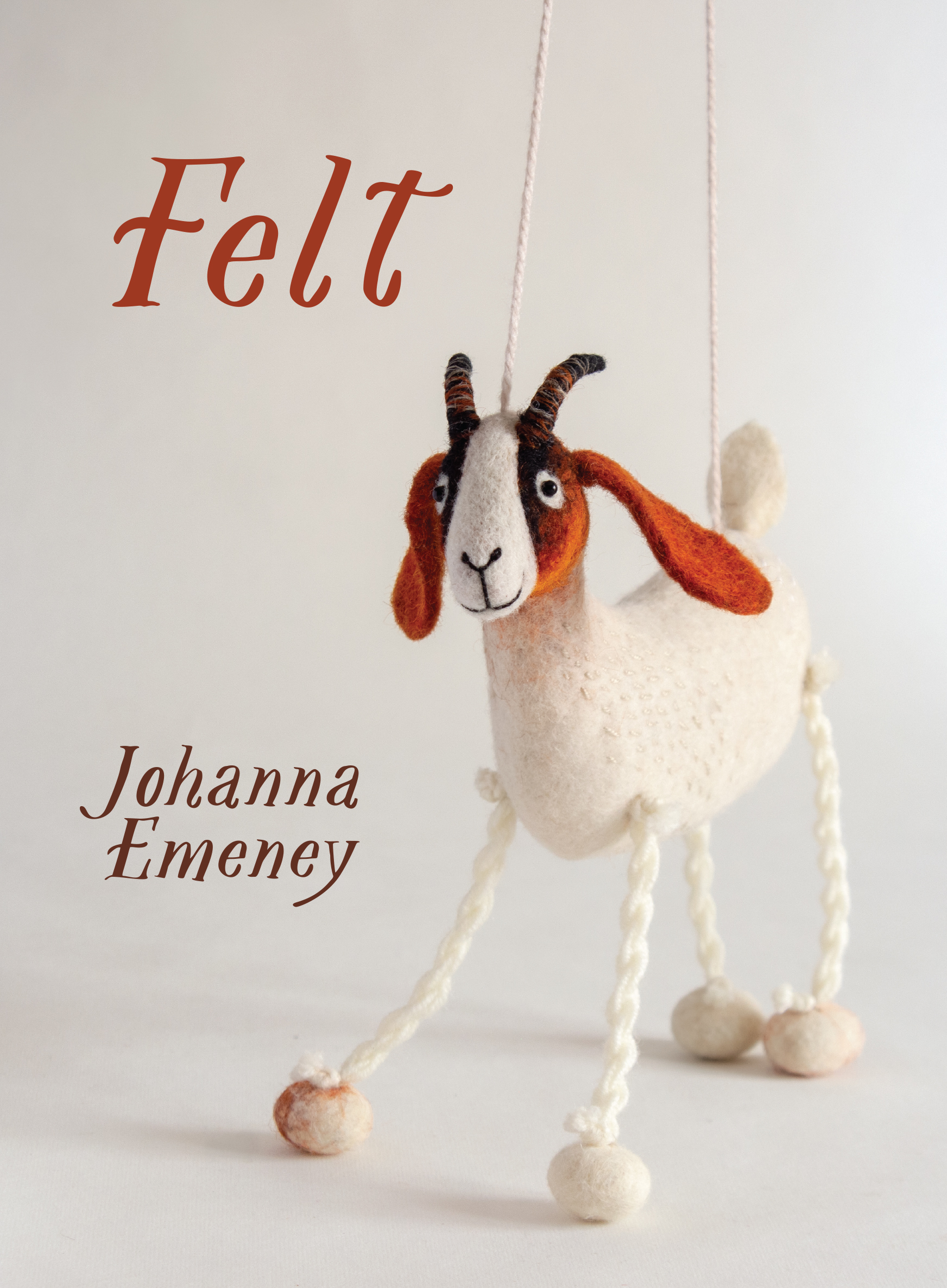
Felt
by Johanna Emeney

.

Massey University Press


$24.99
.

ISBN: 9780995140714
Publisher: Massey University Press
Published: April 2021
Pages: 80
Format: Soft cover


Reviewed by Lynley Edmeades


Poetry collections are hard to name. The skill of finding one single word even better, a single syllabled word that has multiple resonances and registers is testament to the kind of linguistic craft that lies behind Johanna Emeney’s third poetry collection. This one word, felt, can be tilted and viewed in so many ways and really gets to the heart of the book. These poems are, as the publisher suggests, “concerned with the things that make us feel.”

But they’re also more than that. There is the feeling of the lyric subject, the “I” that speaks and feels throughout these poems. But there is also the empathetic and compassionate observer, looking beyond the self to ask why people feel things the way they do. Or, perhaps, more accurately, what kinds of feelings make people behave in certain ways. This is a landscape of feeling, of what is felt, but by diverging from the singular self or framing this self in the second person, as Emeney regularly chooses to do these poems are very rarely self-indulgent. Rather, Emeney traverses affective and emotional worlds of sentient others people, animals, sometimes plants with an attention to form, and with an eye to the linguistic details that enable us to engage with and articulate these realms. The poet is listener and guardian, bystander and spokesperson, feeling her way into the feelings that are felt around her. From “Hospital Guard”:
.

I liked the young guardhis leanness, his untouched acne,
his manner, measured as that of a middle-aged man.
He sat all night and half the morning watching you
indirectly, with neither judgement nor intrusion.
It was simply his duty to defend you against all harms.


The poet observes the guard who, in turn, observes the poem’s subject, the patient whose circumstances for being hospitalized we are not privy to. And while the poet meditates on the young guard’s indirect gaze, the reader is inadvertently left to wonder, what kind of situation is cause for a hospital patient to have a security guard, and who is this patient to the poet’s speaker? There are no answers here. Instead, the poem is concerned with guardianship itself, comparing the young man to his kinsfolk in “large European galleries,” whose job it is to protect the “treasures in their charge” from “greasy pilgrim hands.” It is a distillation, an indirect and undirected reflection on the ways in which people take care of others.

This act of taking care, attending to feelings, is also accounted for in more unequivocal ways throughout the collection. Emeney’s book is populated with animals goats, ducks, frogs, gulls, dogs, horses the kind of animals one takes care of (Emeney is herself an animal lover, who lives on a lifestyle block north of Auckland with many of these said beasts). But the book is also peopled with fringe-dwellers and life-sufferers: a woman called Rose who posts her landline when she finds a stray cat (in “Comments Section”); a couple who have been given homework by their therapist “to stand/holding each other/for five minutes” (from “Couples Therapy”); an ex-student of the poet’s speaker currently in Emergency Housing and who is explain via text message the “difference between smack and crack” (from “Favoured Exception”).

In all of these poems there is a deep empathy with the subjects, be they animal or human. There is a sense of feeling towards the other, of reaching out in order to relate or to understand. And, in doing so, the poet is at a slight distance from the centre of the book. In a poem called “That Face,” the opening line reads “I would love a face that doesn’t give itself away too easily,” where the poet covets “those quick, uninvited changes slip of smile, catch and dart/of eyes, the space between white and colour, silence and quiet.” What I think Ememey is saying here, and elsewhere in the collection, is that she (if the “I” of the poem is in fact Emeney herself) would like to offer the kind of relationality that does not place the self at the centre. That is, that there might be a self that could transcend the scrub and thicket of the ego in order to simply care for a world outside of that self. She observes that in between “white and colour” or “silence and quiet” there might be a space in which one could dwell without the noise of “boastfulness” and hover instead in “kindness and concern.” If we extend this out, it might be taken as a comment on the kinds of social worlds that so often are preoccupied with big, “boastful” colours, the great commotion that is the many individuals jostling for a space to express their unique identities. In Emeney’s work, the personal is not political; rather, the communal where kindness and concern for the other happens is a political gesture. It might help us get out of the kind of individualistic funk that several decades of neoliberalism has caused.

Emeney’s poems are written with a deft hand. She has a great handle of the line and form, and uses both the short and longer lyrics to tell stories, expand moments, and elicit feelings in her reader. Admittedly, there are a few occasions in this collection where I felt the pen wobble a little; there were some instances where the poet could have taken the foot off the accelerator a little, where she might have got the reader to that desired place without quite so much effort. But for the most part, most of what makes up this book will go unnoticed. That is, the craft and structure is tight to the point of being largely invisible. Emeney writes a world in these pages where kindness and concern are the currency, where what is felt is the poet’s first language.


Lynley Edmeades is the author of As the Verb Tenses  (OUP, 2016) and  Listening In  (OUP, 2019), which were both longlisted for the Ockham New Zealand Poetry Prize. In 2018 she was the Ursula Bethell Writer in Residence at the University of Canterbury. She has a PhD in English and lectures at the University of Otago. She is the incoming editor of Landfall.


'...we were there as faith-based writers, as believers in the mana of Oceania...' - David Eggleton

Read more

.

.

.

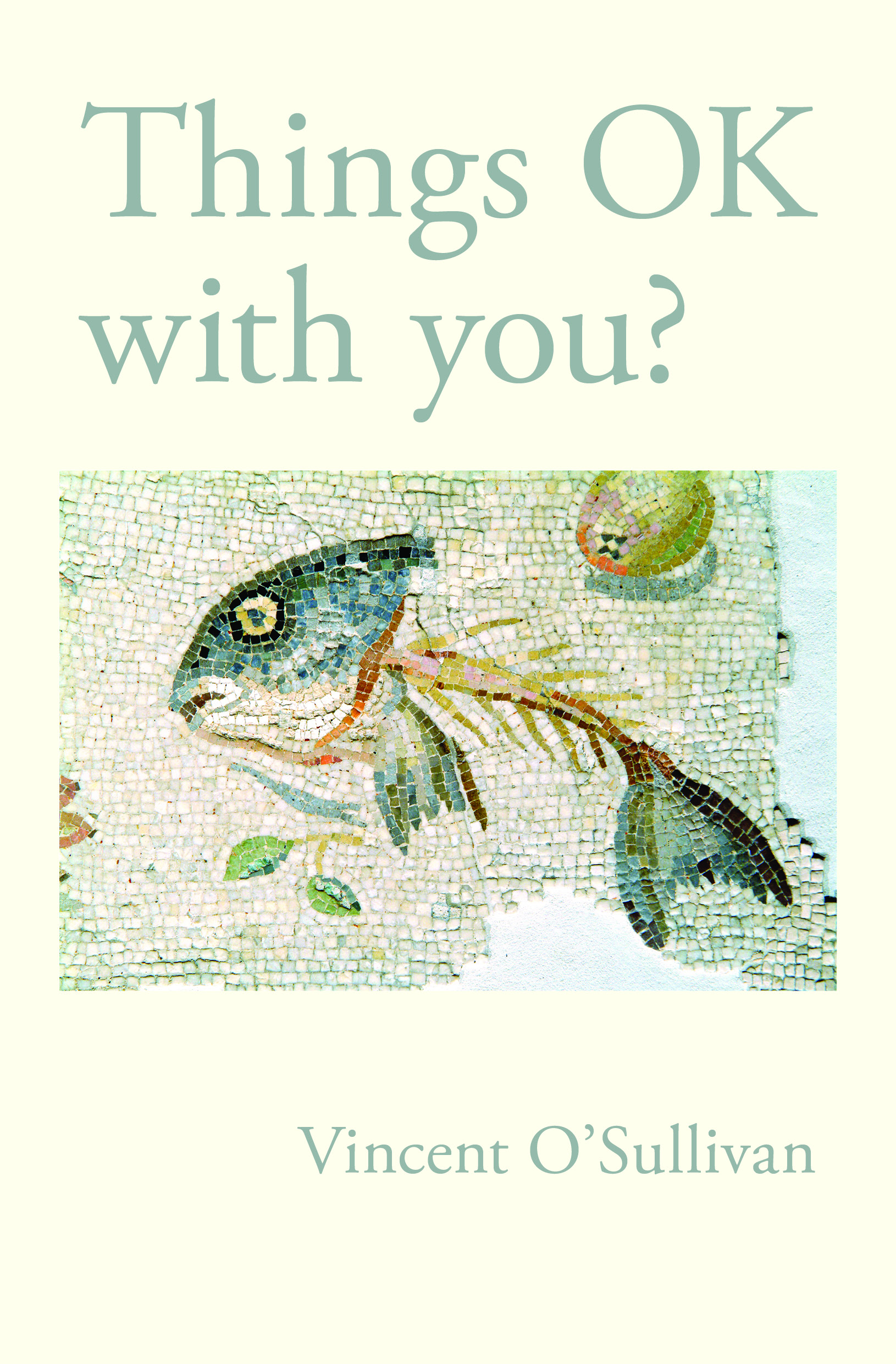
Things OK with you?
by Vincent O’Sullivan


Victoria University Press


$25.00


ISBN: 9781776564132
Publisher: Victoria University Press
Published: March 2021
Pages: 96
Format: Paperback


Reviewed by Sophie van Waardenberg


When someone’s been writing as long as Vincent O’Sullivan has, it’s hard to imagine they’re anything but certain of the value of their craft. O’Sullivan’s first book of poetry, Our Burning Time, was published in 1965, and since then he’s written almost twenty more collections, along with novels and plays and books of nonfiction. I suppose I imagined that, at this point in his career, he’d managed to finally convince himself of the purpose, the nobility, even, of poetry. Fortunately for his readers, he appears neither convinced of nor concerned with those things.

Indeed, many of the poems in O’Sullivan’s latest collection, Things OK with you?, linger a while on the slight nonsense of poetry itself. More accurately, the nonsense is not inherently in poetry, but in the presumption that a poem can govern, or order, or illuminate anything it captures. ‘As if the moon so far as a poem goes gives a damn,’ O’Sullivan writes, and just across the page, in ‘Riverrun’, he reminds us: ‘your presence is beside the point.’ Apparently, making a life as a poet means coming to terms with the arbitrariness of one’s work in the grand scheme of the world or, in the grand scheme of the moon and yet persisting, gently.

This wariness of the overtly performed poetic is woven through the collection. O’Sullivan reminds his reader that the world, particularly the natural world, is bigger than any poem that might come of it. In ‘What to look sets off’, though the scorned ‘metaphorically incontinent’ might compose some grand figurative comment on the fireflies: ‘You are not walking among tiny express trains […]. ‘These are fireflies’, the total statement.’ And in ‘Soon enough, then’, the trees around the speaker are convinced of their simple existence as poetry enough: ‘This is the story, the one you stand in’. O’Sullivan records natural details with care, and does not resist the urge to personify the fireflies or the trees or the moon; yet he conscientiously avoids the urge to bend this kingdom of the organic towards any obvious higher purpose. This, it seems, would be hubristic.

Instead, what’s wrestled into language is the action of remembering. ‘Class outing, even now’, as its title suggests, describes a Fourth Form field trip to see The Merchant of Venice through the distillation of a single line, ‘A wilderness of monkeys’; how this line took over the whole play for the girl of the poem; how this line unveiled ‘language’s greeny net’ for her. Similarly in ‘What river means’, a poem that begins ‘Never mind as old as she is or whenever’, a woman becomes a girl again, remembering the way she used to watch and puzzle over the river: ‘how it’s always wanting, / the river, to be the river miles ahead’. These memories, and more throughout the collection, exist solidly no matter how long ago they were created. The memory of naming a thing, names that thing forever.

At the midpoint of Things OK with you?, O’Sullivan makes his reluctance toward the swooping, extravagant metaphor clearly known with a forthright treatise against autobiography titled ‘The spook at life writing’:
.

I dislike biography one’s own, that is
fairly much as I imagine the beans my wife’s
planted in the garden behind the shed
would be the first to acknowledge the bamboo
pole is what guides them through to Xmas,
but even so, bugger that

.

Yet even these strophes of almost transparent language are complicated by O’Sullivan’s quick self-corrections and syntactical swerving. The self-conscious speaker in many of these poems tends to deflect a reader’s desire to understand exactly any outright statement. Instead, we have to settle for inhabiting, rhythmically and structurally, the speaker’s restless uncertainty.

Each poem has its own slant, even when it’s composed of bouncy rhyming quatrains. These more formally restricted poems are sometimes sharp, wicked, fresh; sometimes less so. ‘Ms Dickinson, Mr Whitman’ mimics the rhythm and often-slanted rhyme of Dickinson’s verse to compare these poets’ differing fixations, and while it’s a neat poem, it seems a little too plodding, too laboured, as soon as the reader reaches the facing page and experiences, in one glance, the perfection of ‘Spot on’:


The rigmarole of to get there,
to things as they are.

The horde of ‘begats’ in the Bible
leading up to ‘Voila!’

The amount of dark required
to say ‘morning star’.


In each good collection of poetry there is, I think, at least one poem that distills the collection in only its brief few lines. ‘Spot on’ is that poem of this collection, and seems also to be one version of O’Sullivan’s ars poetica. His speakers are all, knowingly, saying a lot of different stuff, performing a lot of language, in an effort to reach the one vital thing the ‘voila’, the ‘morning star’, the abstract yet somehow precise ‘things as they are’. And in this poem, each naming of this thing resonates with the others in a perfectly balanced chord.

Things OK with you? offers stubbornness, beauty, shrugging, and deep satisfaction, but I think its soft-spoken tenderness is its most generous gift. You can tell this even from the book’s title, which is also can you spoil poetry? I guess not the last line of its last poem. It’s a book that invites a ‘you’ in. A you, a me, an imagined friend. Yes, there are jokes both on-the-nose and subtle, puns and rhymes, bounciness and irony. But the moments of sincerity are stunning, as in that last poem’s title and first line: ‘Since you kindly enquire, in the elevator, yes / I’ve had a good life’.

O’Sullivan is a poet willing to admit that poetry neither makes one wise, nor especially improves, well, anything. It’s through that admission that each of these poems is free to sing.


Sophie van Waardenberg is studying towards an MFA in poetry at Syracuse University in upstate New York, where she serves as co-editor-in-chief of  Salt Hill Journal. Her first chapbook-length collection of poems was published in AUP New Poets 5.

'...poetry makes intimate everything that it touches.' - Michael Harlow

Read more