.


‘Our original intentions were not to make people vomit’


Twenty-two years ago the Auckland Writers Festival burst into literary life, propelled by the ambitious advocacy of writers  Stephanie Johnson  and the late Peter Wells who wanted to showcase our talent to our people. Johnson takes stock of how the New Zealand literary landscape has changed across the era. Have we grown up, grown out, grown at all? Or are we still trying to find our place? A spirited assessment of the state of play and some provocative suggestions for the future.

The following excerpt is the opening paragraph from the University of Auckland Free Public Lecture, held on the 13th May in the Aotea Centre, Auckland, as part of the 2021 Auckland Writers Festival.


Stephanie Johnson:
.

It’s quite a brief to be given, isn’t it? the last twenty years of literary endeavour in Aotearoa. And like anyone given that brief, this lecture will no doubt be coloured by my own tastes and prejudices and I ask in advance that you forgive me for that. I have a little over 30 minutes. Half an hour to cover twenty-two years! I am reminded of my fiftieth birthday party, where after several glasses of wine I thanked friends for coming but forgot to thank certain important people who were very distressed by the omission. There will be writers, publishers and booksellers I leave out, and if I do, it’s not necessarily because I do not respect or enjoy them and this time I can’t blame the wine.


Read Stephanie Johnson’s entire lecture at the Auckland Writers Festival website.


'...poetry makes intimate everything that it touches.' - Michael Harlow

Read more

A story by Alice Tawhai.


X felt a bit guilty to be arriving this late. Her friend N had been messaging her for the last hour. But the sky was still light blue, and she’d managed to find the right gate to the race track. She was nervous that her ticket might be the wrong one. ‘My friend has a horse truck,’ she said. ‘I have to meet her in the motorhome section.’ ‘You’ve got a general camping ticket,’ said the man suspiciously. ‘I know. So does she.’ ‘Well, I don’t really know,’ he admitted, waving her forward. ‘Go on. If there’s a problem, the next lady will let you know.’ But the next woman in the chain seemed to have no problem and slapped a sticker as blue as the sky onto the bottom of her windscreen. It had a big black M on it to signify that she was indeed to park with the motorhomes. ‘Turn left,’ she said, ‘and follow the people in the yellow hi viz vests.’ ‘I’m near the end, by the toilet block,’ her friend messaged her.
……..Of course she went around the long way. ‘You went the wrong way,’ said N. X wondered how she would ever find her way in this mass of camper vans. ‘Nice to see you,’ she said. How ya been?’ ‘Good. Rapt to be here. I’ve been looking forward to it for ages. It’s gonna be amazing!’ ‘Thought they might cancel it because of that virus,’ said X. N looked scornful. ‘I’ve heard it’s just like a mild cold. Typical media beat up. Anything to sell a story.’
.
.
The section where they crossed the track had powdery black sand that stuck to her big toes as her jandals sank into it, reminding her that she was near a beach. ‘It’s what the horses race on,’ said N. ‘It saves their knees. You don’t want them racing on a real track all the time. This is a practice track.’
……..‘Can we go back for my asthma inhaler please? I’m really sorry, it didn’t even occur to me that I would need it, but I’m a bit breathless suddenly, and better safe than sorry…’ ‘Yeah, all good. We’ll go back.’ ‘Actually, you carry on. I’ll run back.’ ‘Can’t be too bad if you can run.’  ‘It’s not. Just a bit of back drip from my nose, I think.’
.
.
When she finally arrived at the park, X gazed around; lost in sounds, sights and smells. Snatches here and there attached to her memory and became permanent, although not bound in any order of time. It felt amazing to be stoned at such a good party.
……..Spring maidens dressed in white sheets with white flowers in their hair wandered by, taking selfies with urbane boyfriends as they clicked their glasses of wine together. Unicorns sprang out from the crowd and disappeared back into it. People dressed for elaborate picnics in Arcadia had clearly robbed theatre wardrobes or the dress up sections of op shops.
……..A centaur had a forbidden six pack of beer under his arm. She wondered how he had gotten it in past security. Some people wore masquerade masks, and she saw birds and demons and pretty ladies.
……..The musician sat on an oval green lilypond of a stage in the middle of a small lake, her white dress flowing over the edge and into the water as she sat on a chair playing a golden lyre. Not my usual, thought X, but a lot like a song the wind might sing.  If I close my eyes.  When she opened them again, a few glow worms had started to illuminate the oak trees like soft earth bound stars. It had gotten darker faster under there.
……..Huge pink silk flags, shot through with purple and red, ruffled softly in the evening breeze as the crowd settled into the grass basin that ran from high to low; giving everyone a perfect view of the main stage. Blue sky took on a low magic sepia tone, and white clouds like jet trails moved diagonally from the ground upwards. It feels so magical, she thought. Twilight was always her favourite time.
……..‘They’ll have a vaccine soon, anyway,’ someone was saying. ‘They’ve already sequenced the genome.’
.
.
It got dark slowly, until a moon full of cream hung in the sky; just short of being heavy enough to fall.
……..Coloured Chinese lanterns lit the darkness at ground level, stringing out in rows to illuminate the food stalls. One Love vegetarian food. Damsel’s Doughnuts. Hot as Hell curries. Hungarian. Jamaican. Mexican. The lines were longest where you could buy alcohol. Twelve dollars for one glass. Which was actually a cup. You could buy one and reuse it. They were collectable. An extra two dollars, but you got to take it home.
.
.
A man in a black suit held a bunch of golden helium balloons with lights at the centres of them. ‘Ten dollars each!’ he was calling. He reached forward to offer one to X, but she shook her head, so he lost interest and turned his attention to the people coming behind her. She came to rest in front of a band playing some sort of traditional music Japanese while wearing pig masks. Two people close in front of her were dressed in holographic capes as they stood watching the brightly lit stage. Silver rainbows glinted in the darkness as X tilted her head back and forth. She could hear them talking in the break between songs. ‘I hear the US don’t rate it. They’re saying it’s all a conspiracy theory.’ ‘Donald Trump, he’d say anything. His nose grows every time he opens his mouth.’
.
.
She found N and they wandered around together for a while. They decided to look for the toilets, but stopped short when they found them.
……..‘That’s the line? You’re kidding me, right? Let’s come back later.’ ‘Yeah, maybe between acts would be better, but I need to go now. It’s the downside of keeping hydrated. You carry on and I’ll catch up with you.’
……..The line snaked back and forwards along a maze of ropeways. X felt as if she was queuing for rides at Rainbow’s End. There’s a shorter one over there,’ someone was saying to their friend. X looked in that direction and moved to the far queue. It was shorter. Eventually, she got to the front, where a woman was standing, monitoring the paper towels that people were putting in the big bin next to her as they stepped out of the long toilet block trailer. ‘It’s a pity that you don’t get to go and listen to the music,’ she said. ‘Oh, I enjoy this,’ said the woman. ‘Lots of people contact. I love talking to people. And I’ll have a look around after my shift.’
……..A Middle Eastern woman in traditional dress skirted neatly around X, grazing her hip. ‘There’s not much room in here, is there?’ she said, indicating the line for the basins where they were packed like sardines up against line of toilet cubicles.  X smiled, thinking how some cultures managed to have clothing that allowed ample women to look incredibly gorgeous. There wasn’t much room where they were, no matter what size you were.
.
.
‘It’s a pity that they had to cancel the remembrance ceremony for the Muslims killed in the Christchurch mosque shooting last year,’ someone else said. ‘Yeah, I’m surprised they were allowed to go ahead with this.’ ‘All those beautiful people, gone, just like that. Who does that, ay? Kills people just for the hey of it?’ ‘Small, nothing people who want to be big people, and can’t get attention any other way. Unable to feel anything for anybody other than themselves.’ ‘Good summary.’ ‘And he wasn’t even a New Zealander.’
.
.
As she was climbing one of the paths up towards the top stages, X saw the girl in front of her stop and put her hands on her hips. ‘I can’t breathe,’ she said to her mother, her neck hunching slightly over her chest. ‘Does your girlie need an asthma inhaler?’ ‘Um, yeah, she does. The path is really steep, and her asthma’s playing up. But she’ll be okay.’ ‘I have an inhaler. Would she like a puff?’ ‘Do you actually have one? Baby, do you want a puff? This lady’s got an asthma inhaler.’ Her young father came back and watched his daughter. ‘She hasn’t got the corona virus or anything!’ he promised. X laughed and took her inhaler back. ‘I wouldn’t care if she did. She’s a little girl and she can’t breathe. I know what that’s like.’
.
.
She woke up late on the second day and found that N was already gone. That was fine. She could catch up with her later. She would have a shower and get ready by herself. It would be peaceful. It had been a lovely sleep, lying on her back on the two layers of single foam mattress above the cab, but she’d made sure to puff on her inhaler and to take a few antihistamines, because sometimes mattress foam set her off. The good thing was that she hadn’t rolled, because it was quite a fall to the floor, and she would have hit the chilly bin that she’d used for a step up on the way down.
……..The back packers in the red van next door were drinking from steaming mugs. They obviously had hot water. ‘Hi,’ she said. ‘Do you smoke?’ ‘Ahh, smoke, no,’ said the man. ‘Not cigarettes,’ she said. ‘They looked at her suspiciously.’  ‘Um, sorry,’ she said.  ‘I didn’t mean to offend you.’ ‘We smoke sometimes,’ said the woman tentatively. ‘Okay, would you like to swap a few joints for a cup of hot water then?’ The woman looked at her. X waved her bag of weed. ‘Oh, yes, okay then,’ said the woman, and before X knew it, she had a cup of steaming water to dunk her green tea bag into. Italian? French? She wasn’t sure. She had no idea about accents.
.
.
Dew drops brushed onto her feet as she made her way through the wet morning grass. Steam came from the shower blocks. A woman walked past with her hair in a towel; holding a plastic cup and brushing her teeth.  A wet child stood on his towel to dry off, where his mother had left him.
……..She queued at the men’s showers. The line was always so much shorter. And none of the men were complaining. They knew they were on a better wicket than the women. Each cubicle had a full shower curtain, so it mattered little who was in the ones next to you. What really mattered was that you didn’t drop your undies into the pool of water on the floor, or leave your soap behind. ‘The men’s toilets are blocking,’ said another woman, coming out of that door.  ‘And they’re out of handwash.’ ‘Good to see that you men are washing your hands,’ said another woman who was going past. ‘Oi, is this the men’s queue?’ asked a man from behind X. ‘Sure,’ she said. ‘But it’s supposed to be the woman’s line. The W and the O fell off the sign a few hours ago.’ ‘Okay,’ he said, and the man in front of her laughed.
……..‘So what bands are people recommending?’ ‘I really liked the black American trio. Awesome voices. Like birds.’ ‘Oh, when are they playing?’ ‘Well, I saw them last night, but they all play twice, so they’re sure to be on again sometime.’  ‘The blind rappers are good too.’ ‘What are they called?’ ‘I’m not sure how to pronounce it. They’ll be in the programme though.’


*


X walked along the white powdered track as it curved along the railing. Some people were cutting across the field to get there faster, but she saw no need to do that. Walking the path was all part of the experience. A flock of bright rainbow striped umbrellas with peaks like Indian temples came towards her. She wanted one. It was very hot. The people under them chattered like the parakeets they resembled. She was thankful for her bottle of cold water. She wondered if she’d be able to get it through the gate. Her friend had said that she’d probably have to tip it out, as it said on the programme that only empty bottles were allowed to be taken in.
……..She must have been walking slowly, because a big group of people overtook her. ‘The Northern summer will stop it in its tracks. Viruses don’t like the heat. You never hear of flu going round in the summer,’ said one of them. ‘I heard it’s going off in Egypt and Iran. If the heat was going to have an effect on it, they wouldn’t be getting it there.’ ‘It’ll be fine. We’re all outside. Viruses blow away in the air. It’s only inside in the stagnant air that they thrive. I always open my windows in the winter, and I never catch anything.’ ‘Apparently the skies have cleared over China. Because they’ve had to shut down their factories. Good for the planet, if nothing else.’
……..She consulted her programme. Whoever wrote the programme notes had a beautiful touch with words.  ‘Indie sludge-pop’ read the descriptor for one band. ‘Metal heads, intellectual punks and fairy anarchists rolled into one,’ read another. Nice. She was going to find it hard to choose what to see.
.
.
One of the paths between stages ran above the children playing on the steep earth bank under the shade of the old oak trees. Climbing on the low, flexible branches and rocking up and down on them. Poking at the dirt with sticks, trying to chip it away, as if they could make any difference to anything. Scrambling and crawling, happy being children, and free for the day while their parents were busy with wine and music. A paradise for them now, a happy childhood memory one day.
.
.
She settled to listen to a band. The trees seemed happy for the chattering conversation, as if they hadn’t taken part in such a thing for a long time, and were enjoying the same vibe as the humans. She put her face up to the sun. The leaves were preparing to fall, but not yet, and the sunshine shone directly into her eyes, mitigated by the dappling of the spaces between.
……..And still everyone was talking about the corona virus. ‘I don’t think we’ll get it over here, but better safe than sorry,’ said someone.
.
.
People manoeuvered around each other at the wash basins, taking more care than usual with the soap from the dispenser. ‘I guess we won’t be catching much of anything this year, with all this handwashing. Perhaps we should have a pandemic every year.  That’d keep us all healthy!’
.
.
‘Oh my gosh!’  X looked up from a stall selling carved soap stone animals, horned coral and fossilized rocks, and felt the recognition that dawns when you see an old friend out of place.  The other person’s features resolved themselves into a familiar pattern. ‘Can’t believe that you’re here!’ said G. ‘Good to be here, really. Perhaps it will be the last party on Earth. Who knows, the way things are going…’ ‘Yeah, it’s all a bit strange, isn’t it?’ ‘Definitely.’ ‘All these signs about washing your hands everywhere.’ ‘I’m surprised it was allowed to go ahead. Everything else is getting cancelled.’ ‘Ya. We’re lucky. I would have been pissed off to get all the way here only to find that it wasn’t on.’
……..They arranged to meet up later, to dance to the African percussion group.
.
.
X and N found each other again and sat near the front of the generous grass rows, where people lounged on pod chairs, wearing sunny day hats. A young girl with big dark eyes coughed into her hand about four rows in front of her. X gazed at her as she hacked. Should she be worried? Coughing was bad. Was the girl near enough for it to be a problem? No one else was even looking. It was four rows in front of her. No need to be anxious. And apart from herself, it was the only person she’d heard coughing since she’d gotten here. The girl wiped her hand on her sleeve.  She was one of two girls, most likely sisters. X tried to place their ethnicity, but it was difficult to tell. There were so many people from so many lands here. That was one of the things that made it interesting.
.
.
There were two paths in to the water station where empty water bottles could be filled. For some reason, the path on the left had a long queue, but the one on the right only had one person standing in line. X lined up behind them. The person in front of her went to the newly free pump in front of them. ‘Excuse me!’ said the woman at the middle station. ‘It’s a line. You come in one side and go out the other.’ ‘Is that right?’ said X frowning. ‘You could come in either side earlier.’ ‘It’s a line,’ said the woman firmly. ‘You can come in either side,’ said the person who had gone in ahead of X.’ ‘That’s right,’ said someone leaning on the water pump.’ ‘It’s a line!’ repeated the woman. ‘I’ve just queued for twenty minutes.’ ‘Oh, okay,’ said X, unwilling to be the source of conflict. If it was that important, she wanted to be fair. But as she went to the back of the longer line and moved forward, she saw people going in through the small gate she’d originally been waiting at. She shrugged and surrendered to the universe. It was little bikkies. And she had all the time in the world anyway.
.
.
That afternoon she wandered along behind N, who was on her way to queue for alcohol, until she realized that a band was firing up on the stage she was crossing directly in front of. She ducked down to the footpath below her to take a closer look. No one was there other than a few people sprinkled on the grass behind her, and a few others on the path next to her; transiting from one place to another. She stood straight in front of the stage. Only muddy water was between herself and the band. Orange carp swam near the surface like cloudy ghosts. What were they playing, some sort of Balkan-metal belly dance? The black beanie wearing man who was playing his maracas in the ear of the bassist looked African, while the man to the left of him dressed in a white skivvy and expensive dark glasses looked like a rich Arab. My gosh; beat!! she thought. And the woman on the end with the guitar sounds like Nina Hagen.  The band were at a slight remove across the water, but the energy they gave off on the huge sight screen above their heads was intense. I’ll stay here, she thought; messaging up ahead to her friend. ‘Don’t wait for me. I’m going to groove to this.’ A crowd built quickly up behind her.
.
.
Later on, some people were starting to get fractious. ‘Do I look like I’ve got your glasses?’ said a full figured, angry woman to the man who was trying to catch hold of her. He had a dazed look in his eyes. She had coloured Xmas lights in her tutu. ‘Do I LOOK like I’ve got your fucking glasses?’ X thought it was a pity that here was a place full of joy, and some people had lost their connection with that. There was only one life.
.
.
She found G and her family near the front. ‘You remember my daughter M, don’t you?’ ‘Of course I do. How are you M?’ she said, kissing her. They chatted for a while, as M was friends with X’s daughter and wanted to hear about what she was up to.
……..‘So, corona virus, corona virus,’ said G. ‘Yes, totally. What do you think?’ ‘I’m worried about J. He has a heart condition.’ ‘Yeah, I know, ay? I get asthma. I’d be at risk too. That’s the thing. No one’s safe. We just don’t know whose number might be on the tickets.’ And suddenly, as those words came out of her own mouth, she felt scared.  She shook her head in the darkness, banishing the thought like a candle flame. ‘It’ll be fine.’
……..The sky was black, without stars, like the roof of a cavern. A drone hovered above their heads, its red lights observing them like malignant eyes as they moved together in one dark mass, each alone and yet surrounded by people. Once upon a time, a flying robot filming them from above would have been unthinkable, but now, nobody even seemed to notice. She nudged her friend. ‘And one day, we’ll say, that’s actual footage of how the corona virus spread so widely in our country.’ Her friend laughed. A safe laugh in the dark. And the night itself was almost a song, it was so warm and intimate.
……..X could feel the throbbing of the music. It sounded like the hum of a thousand bees, all lined up and ready for battle; vibrating their wings in unison. And when the electronica broke loose, she felt like a mechanical bee too; dipping and swooping with the straight lines of her arms pushed backwards from her body. She WAS one of thousands, all pulsating to the same beat.
.
.
Later, she went to find N, but strayed into what appeared to be the teenage area instead. Young people milled around her and determinedly packed the tables, sitting on each other’s knees. The girls looked cold, but perhaps you weren’t when you were young. X had a blanket around her shoulders, while they were in their boob tubes; their newly formed breasts making little impression against the cling. Teenage couples sat twined together; asserting ownership, but with nothing much to say to each other as they stared into the crowd. She made her way out, and bought a vegetarian curry and some deep fried chips made from chickpea flour, before putting her rubbish into the bins at one of the recycling stations.
.
.
She went back to the campsite while the last bands for the night were still playing, feeling unusually tired. Normally, she would have insisted on partying till the party stopped. Perhaps it was the long drive that she’d done to get there the day before. The chalk path glistened white in the moonlight as she walked back past the race track grandstand, as if it WAS the actual surface of the moon. Everyone else was either in their beds, or already over in the park with the music. X had the long path to herself. Perfect for smoking. A joint should last her from here till the truck.
.
.
It turned out that not everyone was in their beds. ‘Fuck off!  I’ve got sleeping children, and our awning is no way impinging on your space,’ a woman was shouting in the next row as X tried to figure out which path she should take to get back to the truck. A lower voice mumbled. ‘As this lady here said…’ she could hear. ‘Don’t push my husband,’ shouted the first woman. ‘Don’t touch him again, or I’ll call the police!’ X wondered if she should do something. She was only on her way back to N’s horse float. What could she do? How would they call the police? And how would the police find their way through the maze of tents and camper vans? Music thumped across the valley just across the way. These were flash people with motor homes. Surely they could manage themselves. Sometimes there wasn’t much you could do about things.
……..‘They oversold the camping tickets,’ said N when she got back, and X told her about it. ‘They always do. There’s still people circling, looking for spots.’ ‘I didn’t know whether to stop,’ said X. ‘Don’t worry about it. Security would have come. They’re everywhere. There’s always someone to sort things out.’
.
.
The next morning the sky was still as blue as it had been all weekend, but bright and early so, as if the real business hadn’t started yet.
……..‘The main topics of conversation here are music and the Corona Virus,’ she messaged her partner in Texas, using the little fuzzy green emoji that came up after the word virus. It’s so good to be here, and enjoying being in the moment, because who knows when they’ll let us have a big public gathering like this again? They even have monitors supervising us to wash our hands. Not in the camping ground part though.’
.
.
‘I think those notes that Finnish singer hit just broke the sound barrier!’ she said to N when they were over in the music zone again. ‘She was amazing wasn’t she? But I need to get out of the sun.’ ‘Yeah, now we know why everyone was clustered around the shady areas. I’m feeling sort of dizzy. Let’s sit down for a while.’
.
.
They talked to random strangers. ‘The way to get your alcohol in is to pour Vodka into the bottom of your chilly bin and freeze it solid, before putting a bit of loose ice in on top, alongside some food. Get there, settle in, take your chilled containers of food out and wait for the ice to melt. You’re eating the food first anyway, so you don’t need the ice to keep that cold anymore. Then you can scoop the liquid out with those reusable glasses. Nice and slushy and cold. Everybody can share!’ ‘Can you actually get away with it?’ ‘Only if it’s vodka, because it has no scent.’ ‘Good to know for next time,’ said N.
.
.
‘It’s keep left!’ someone snapped at X later on as they bumped into her while going the opposite direction on the top pathway. Um, she thought. Actually, you all just surrounded me as you left the stage where your music just finished. And I’m in the centre. But it just wasn’t worth responding to such small aggravations.
……..Her feet hurt, so she decided to sit down and massage them. A stall nearby was selling witches’ remedies, so she took a bit of tester cream on a wooden iceblock stick to rub in to them. It smelled sweet with peppermint. Sitting in the shade of the tents, she was glad she had sprayed on her sunblock before she came. Some of the people with fair skin were blushing pink.
……..It felt like a big picnic in the sun. People were dancing down the middle of the daisy covered grass slope, while other people reclined with picnic blankets and sunhats; some in the shade, some edging close to the dancers. Plastic tumblers full of drinks with bubbles. People sprawling everywhere. People moving everywhere.
……..X went down to join them. She could hear the man in front of her talking to the group he was sitting with. ‘Never has it been clearer that we’re all cells in the same petri dish. It doesn’t matter where you’re from, what colour your skin is or what you believe in. The virus doesn’t care.’
.
.
The band on stage had big exaggerated brass instruments; tubas curling over their heads, and trumpets reaching up to call out to Gabriel. Glittering sax. Their oompah rocked. ‘It’s time to party!’ the vocalist screamed into the microphone. The crowd cheered together as one. ‘I want to hear you party!!’ The crowd roared. ‘Because soon we’ll all be dead anyway!!’ And as they swung into their next song, X wondered if what he said was true, because people were dying on the news all around the world, and he probably had to go back to his own country. Where was that? She consulted her programme. Australia. Could the healthy young singer with the tattooed sleeve running up his arm know his own fate, or the fate of any or all of them? Or had it just been a throw-away line? Around her, people were dancing frantically, and she gave herself up to moving with them. ‘If there’s aliens up there, they’re watching us rock!’ she heard someone next to her say between songs.
……..‘Hang on, hang on!!’ the vocalist shouted at the end of the set. And he and the band all squatted together facing the back of the stage, snapping off a selfie with the twenty thousand cheering people who curved up the bank of the natural amphitheatre behind them.
.
.
X had decided not to stay for the spit and sparks of the fireworks that would mark the end, when people would drag themselves wearily back to their tents and campers before making their way leisurely home the next day, knowing that they either had the day off or were going to take a sickie. She wasn’t sorry, because she felt all partied out. A bit achy, a bit tired. It was mid-afternoon. She could drive home before dark if she went now. She went to the toilets for the last time before she left. The hand wash had run out, but someone had left a cake of soap.
.
.
In the car on the way home, X felt a bit hot. Was she sick or not? She wasn’t sure. Perhaps she should wind down the windows and let the sea air in. She popped a panny with her left hand and sighed. Back to work tomorrow. She would have to take a wickie, a working sickie. She had a lot of things that she needed to get done. Back to normality. It was a pity that parties didn’t last. But perhaps that was what made them special.


Alice Tawhai (Tainui, Ngāpuhi) is a short fiction writer whose works pay particular attention to contemporary Māori culture and the experience of ethnic minorities in New Zealand. Her books have been repeatedly recognised by the NZ Listener as a best book during their year of publication and shortlisted for the Montana Book Award for Best First Book. Her work has also been anthologised in Lost in Translation: New Zealand Stories, and Some Other Country: New Zealand’s Best Short Stories 4th edition.

Alice Tawhai is a pen name. Due to personal circumstances Alice wishes to remain anonymous.


'My readers turn up...and I meet them as human beings, not sales statistics on a royalty statement.' Fleur Adcock

Read more

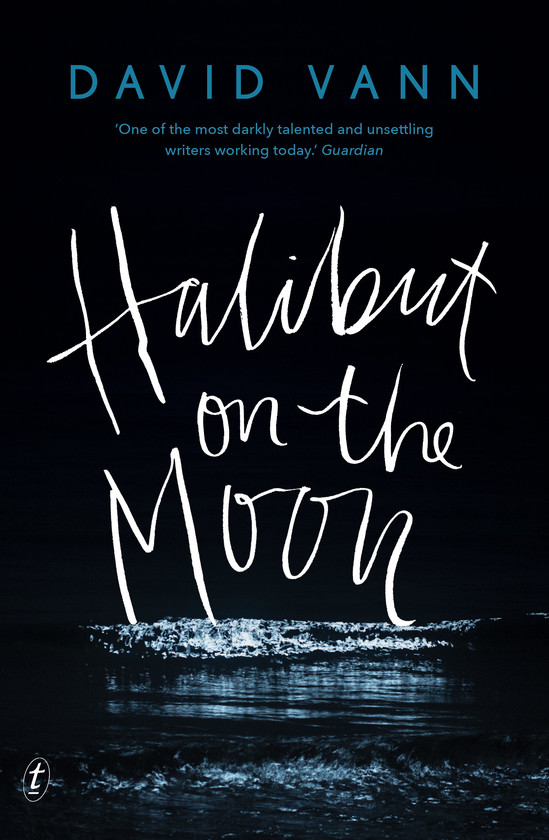
Below is an excerpt from the novel Halibut on the Moon by David Vann, which is shortlisted for this year’s Jann Medlicott Acorn Prize for Fiction at the .Ockham New Zealand Book Awards

*                    *                    *

About the writer:

David Vann’s internationally bestselling books have been published in 23 languages, won 14 prizes and appeared on 83 Best Books of the Year lists in a dozen countries. A former Guggenheim fellow, he is currently a Professor at the University of Warwick in England and Honorary Professor at the University of Franche-Comté in France.

About the book:

In his riveting new novel, internationally bestselling New York Times Notable author and Prix Medicis étranger winner David Vann reimagines his father’s final days.

Middle-aged and deeply depressed, Jim arrives in California from Alaska and surrenders himself to the care of his brother Gary, who intends to watch over him. Swinging unpredictably from manic highs to extreme lows, Jim wanders ghostlike through the remains of his old life, attempting to find meaning in his tattered relationships with family and friends. As sessions with his therapist become increasingly combative and his connections to others seem ever more tenuous, Jim is propelled forwards by his thoughts, which have the potential to lead him, despairingly, to his end.

Halibut on the Moon
is a searing exploration of a man held captive by the dark logic of depression struggling to wrench himself free. In vivid and haunting prose, Vann offers us an aching portrait of a mind in peril, searching desperately for some hope of redemption.

‘An absolutely riveting read, and I take my hat off to Vann for not just imagining his father’s very troubled mind, but for writing such an arresting and beautifully melancholic testament to him…[T]he best thing that I have read so far this year’ (Readings Monthly).


(Text Publishing)


Extract from Halibut on the Moon:


……..“The seas are so huge,” David is saying as they enter, and Jim has a vision of the future, his brother becoming a replacement father for David and Tracy, taking them hunting and fishing and telling them nothing about a life or how it should be lived, same as other fathers.
……..“What are you talking about?” Jim asks, in a rare social moment, feeling some will suddenly to last a bit longer.
……..“The moon,” David says. “We get to use the telescope tonight. You should see it. It’s so cool.”
……..“He’s talking about seas on the moon,” Gary says. “I used to know the names of some of them, names like Sea of Tranquility or something, but I can’t remember now.”
……..“They took a halibut up there once,” Jim says. “NASA wanted to see how it would adapt. A big one, almost three hundred pounds, in its own special Plexiglas tank, and they set it on the ground to let it flop, to see how high it would fly.”
……..“Jim,” Gary says.
……..But David and Tracy are both listening as if Jim is delivering news of the Messiah. “Imagine its white underside against the white dust and ash and sand or whatever it is on the moon, looking identical, like a mirror image, and that dark topside looking like the moon from farther away, patterns like craters. Dark side of the moon, essentially. The halibut has been waiting for this meeting, waiting for millions of years, brought home, finally. Destiny. And then it hits both ends, hard, like wings, and the gravity is so much less. Even on Earth, they can launch a few feet above deck. But on the moon, this halibut flew.”
……..“Wow,” David says.
……..“That’s right. The astronauts were supposed to measure how high, but their pole was only twenty feet. They saw it pass that two or three times, rising into thin air, wobbling like a great celestial jellyfish, white as milk, the underside that is so smooth and impossible, made of dreams.”
……..“How long did it fly?”
……..“They don’t know. None of them looked at their watches, and none of them could remember time or what it’s supposed to be. That flight could have been minutes or hours. They can’t say. And they can’t remember when it first took off, the first few feet of it rising. For some reason, that’s gone. All they remember is watching it fade into the sky above them.”
……..“Whoa,” David says.
……..“Silly goose,” Mary says. “You can’t bring a halibut to the moon.”
……..“They did,” Jim says.
……..“It couldn’t survive up there.”
……..“They didn’t mean for it to survive. It was supposed to have one beautiful flight, is all. That’s all any of us are meant to have. None of us survive. The most we can be is an experiment. Billions of us are for nothing, but then maybe one of us has some use. Just think of all the other halibut who lay flat on the bottom of the ocean all their lives and died there in a place far more frightening than the moon, hundreds of feet down under colossal pressure, the pressure of having a mountain stacked on top of you, and no light, and so cold, but this one halibut is brought up from that world, put carefully in a tank on a boat, brought to Ketchikan or Prince Rupert and trucked all the way to Florida, thousands of miles, or maybe they flew the tank. I don’t know. They probably flew it in a cargo jet. And they take it to the launchpad and lift it up by crane, this tank held by straps being lifted alongside a rocket, hoisted up toward the nose cone. Just imagine that, clear Plexiglas with Alaskan water and this three-hundred pound alien resting on the bottom, both eyes on one side of its head, looking more strange than anything we’ll ever find in space. They lower that tank onto a kind of gangplank that enters the nose cone and wheel it in and strap it in place. And when the rocket engines ignite, the halibut is the only one who can take the pressure, all the g-force. Nothing at all compared to the pressure where it comes from. It’s already flat and can’t be flattened more. It was made for this trip. It doesn’t mind the cold of outer space, and doesn’t need to breathe. All it needs is Alaskan seawater and no heating, no special care. Just a bubble filter to oxygenate the water, and some food pellets. Best astronaut there ever was. And patient. No need for psychological tests or precautions or worries about whether it might go crazy or get listless and suicidal or miss family too much, no need for communication back home. The other halibut don’t even know it’s gone. No parades down there, no stupid ideas of heroes or sacrifice.”
……..“Jim,” Gary says. “Really, just sit down. The manic thing now, and you’re scaring everyone.”
……..“Just focus on the story. Think of that halibut cruising two hundred and thirty-nine thousand miles, and spaceflight is so easy for it. We don’t know what we’re made for. Who would have realized that a halibut is the best astronaut? You might not think at first about how well adapted it is to cold and pressure and darkness and endless time with nothing more than feeding off the bottom. You have to understand the beauty in finding what the halibut was meant for. When they finally arrive, the humans are essentially bonkers and on the edge of death, all fucked up from lack of gravity and normal human contact and sunshine and fresh air and from eating space goo and that orange drink, but the halibut is ready to go. But beyond that, not even worried about being ready or not, no thoughts at all, which is the best possible state of mind. No fear as some mechanical arm shifts its tank out onto the moon and then tips the tank. It sloshes out there, the first water to hit the moon, something that hunk of rock must feel, recognition of thirst or something like it, desire for things never known, just like when sexual desire first hits us, so foreign and strange and impossible, nothing like our previous experience, and even the air feels it, evaporation, a vacuum becoming air because of this water, feeling itself come into being, and to the halibut the place feels warm, easy, so light, a weightlessness it has never imagined, the most exquisite freedom. It flops not out of fear or any instinct it’s known before but this time out of pure joy, as much as a fish can know that. It’s not missing oxygen yet, has just been immersed, healthy and strong and now absolutely free. It hits both ends and knows flight, true flight, for the first time. Not restricted by the thickness of water. No resistance. Something no human has ever felt either, and no bird, to fly in an airless place, and without any suit. No barrier. Only the purest flight ever known, pure also because both its eyes are on the top side of its head. Any other fish would see the astronauts below, the lunar module, the surface of the moon, but not the halibut. It sees only emptiness above, undistracted, or maybe it sees Earth, a blue-and-white orb so far away, and knows the ocean is there, Alaskan waters, reaches for home, flops again against nothing to try to propel itself faster. What does a halibut think in that moment of flight? Until we know that, do we know anything?”
……..Gary is holding him, which is so strange, holding him from behind, hands on his biceps. “Let’s just sit down,” Gary says, and Jim does it. He feels exhausted suddenly, so exhausted. He lies back against the couch and closes his eyes, curls to the side.
……..“What’s wrong, Dad?” David says, but this is so far away Jim can’t respond. He needs to rest.
……..Tracy does her nervous cute laugh, and he’d like to reassure her, be a father, be normal and who he’s supposed to be, but he just can’t. How did he ever do it before?


© David Vann, 2019, published in Halibut on the Moon, Text Publishing.

'I want you to think about what you would like to see at the heart of your national literature ' - Tina Makereti

Read more

Below is an excerpt from the poetry collection How I Get Ready by Ashleigh Young, which is shortlisted for this year’s Mary and Peter Biggs Award for Poetry at the  Ockham New Zealand Book Awards. 

*                     *                    *

About the poet:

Ashleigh Young is the author of the poetry collection Magnificent Moon (VUP, 2012), and the essay collection Can You Tolerate This? (VUP, 2016) which won a Windham-Campbell Prize from Yale University and the Royal Society Te Apārangi Award for General Non-Fiction in 2017. She works as an editor and lives in Wellington.


About the book:

In her new poetry collection How I Get Ready, Ashleigh Young fails to learn to drive, vanishes from the fossil record, and finally finishes writing a book.

‘Every poem catches me! Some books you pick up, scan a few pages and then put down because you just can’t traverse the bridge into the poems. Not this one. It is as exhilarating as riding a bicycle into terrain that is both intensely familiar and breathtaking not. The speaker is both screened and exposed. The writing feels like it comes out of slow gestation and astutely measured craft. I say this because I have read this andante, at a snail’s pace. Glorious!’ – NZ Poetry Shelf, Paula Green


(Victoria University Press)


Action Lines


I’d thought we would go up
like those bright inflatable men
jack-knifing from the waist, then rippling up with the flags.
I’d thought we’d go up easy, action lines coming out of us.
Now I know leaving will take more effort.
We blow up the dancer by mouth
and just as he’s full enough to take up his rightful position,
we black out on the ground. Later, without fanfare
someone presses their ear to our torso
while someone else picks at the ancient knots in our laces

oooOOOooo

Out where the towels I’ve forgotten grow damp again
I see the dirt digging itself up
and becoming an animal. Wind shakes a tree
in greeting and a lone bucket empties itself
of seasonal debris before coming, hollow, to a close.
In the yellow window you are looking
for the source of the water in the fridge
and your hands grow numb as pegs in grass.
When I feel the scratch of towel-caught crickets
on my arms these things become diffuse again
as rain reversing into a driveway

oooOOOooo

I will wait for this to become less strange.
That I live in a small city and yet so often there are
six other Ashleigh Youngs in the database.
That I fall over the same lip of footpath
and my knees, ever opened, assume
an exasperated expression.
That the nights grow up too fast

oooOOOooo

That the joke is old but I still wake up
to find you putting your work boots on my feet.
Perhaps this is the day I will take your place. Yes, this is the day!
I still hope we’ll be huge and hilarious, rippling, up with the flags,
our arms a stream of jelly snakes in the sky.
We will no longer have to come to terms with the fact
that we are probably just ordinary.


© Ashleigh Young, 2019, published in How I Get Ready, Victoria University Press.


'My readers turn up...and I meet them as human beings, not sales statistics on a royalty statement.' Fleur Adcock

Read more

Below is an excerpt from the poetry collection Lay Studies by Steven Toussaint, which is shortlisted for this year’s Mary and Peter.Biggs Award for Poetry at the  Ockham New Zealand Book Awards. 

*                     *                    *

About the poet:

Steven Toussaint was born in Chicago in 1986. In 2011, he immigrated to New Zealand and now lives in Auckland. He has studied poetry at the Iowa Writers’ Workshop and the International Institute of Modern Letters, and philosophical theology at the University of Cambridge. He is the author of a previous collection, The Bellfounder (2015), and a chapbook, Fiddlehead (2014).

About the book:

In Lay Studies, Steven Toussaint conducts an impressive range of lyric inventions, pitching his poems to that precarious interval between love and rage. Beneath their formal dexterity and variety, these études sustain a continuous meditation on the concords and dissonances of worshipful life in an age dominated by spectacle, violence, and environmental devastation. With great skill and compassion, he depicts scenes of domestic life in his adopted home of New Zealand, a transient year of religious and artistic soul-searching in the United Kingdom, and a growing sense of dislocation from his native United States in the Trump era. These are poems of profound contemplative inwardness, conjuring and conversing with a vast tradition of literature, scholarship, and art. Lay Studies is a powerful collection and a welcome music.

These are elegant poems. They have verve, they have wit and no little learning. They reveal a mind like a knife. An ear of the same quality. All of which = what’s needed in a calamitous time that calls itself the Information Age. —John Taggart

Steven Toussaint writes with a formidable blend of intellectual toughness and technical command. These finely worked poems range over a wide territory, local and global, religious, social (a devastatingly intelligent piece, ‘Yes or No’, evoking the world of online pseudo-discourse), and offer many memorable images and phrases (a favourite is ‘The furious pleasure / of a man being listened to’). This is an excellent collection of demanding and rewarding poetry.—Rowan Williams


(Victoria University Press)


MOUNT EDEN


Six pips

when the apparently real


grace relents

and the morning news begins


a mother’s voice

pitchless in the day’s chorale.


Grief so total

it resembles abundance


chastened

by the paradox of surplus


in a very bad year.

Exchanging


one indifferent signal

for another


you adjust

your figment’s threshold


a pinnate leaf’s width

on the dial


to find the season’s violence

sensible again


repeated

in the weather whisperer’s


impartial mysticism.

Such severe


report

like fanfare as you push


the leaves from yard to yard

all because


a little air has left the world.

The warnings turn


to traffic

and you to the sweeping under


blank façades

where later you will shake the olive


and the bay

and you will gather up


their bloodless panes

anything to stretch this needless


peace another hour.

The trees are not deciduous


enough.


© Steven Toussaint, 2019, published in Lay Studies, Victoria University Press.

'Novels stand outside time, with their narrative structure of beginning, middle and end. They outlast politics, which are by nature ephemeral, swift and changeable and can quickly become invisible, detectable only to the skilled eye. ' - Fiona Farrell

Read more

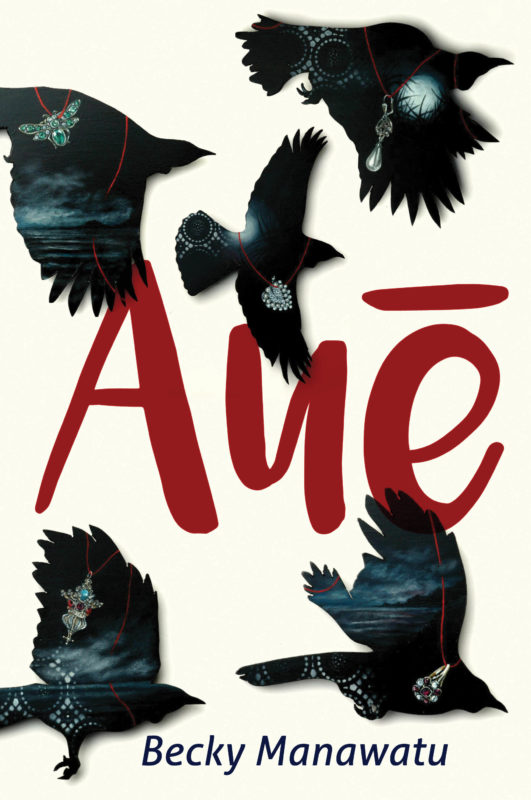
Below is an excerpt from the novel Auē by Becky Manawatu which won both the Best First Book fiction category and this year’s Jann Medlicott Acorn Prize for Fiction at the. Ockham New Zealand Book Awards

*                    *                    *

About the writer:

Becky Manawatu (Ngāi Tahu) was born in Nelson, raised in Waimangaroa and has returned there to live with her family, working as a reporter for The News in Westport. Becky’s short story ‘Abalone’ was long-listed for the 2018 Commonwealth Short Story Prize, her essay ‘Mothers Day’ was selected for the Landfall anthology Strong WordsAuē is her first novel.

About the book:

Taukiri was born into sorrow. Auē can be heard in the sound of the sea he loves and hates, and in the music he draws out of the guitar that was his father’s. It spills out of the gang violence that killed his father and sent his mother into hiding, and the shame he feels about abandoning his eight-year-old brother to a violent home.

But Ārama is braver than he looks, and he has a friend and his friend has a dog, and the three of them together might just be strong enough to turn back the tide of sorrow. As long as there’s aroha to give and stories to tell and a good supply of plasters.

Here is a novel that is both raw and sublime, a compelling new voice in New Zealand fiction.


.

(Mākaro Press)


Extract from Auē 


The next morning Jade discovers a light pink stain in her underpants.
……..The contractions peak at midnight. And the pain comes so good. So deep and deserved. She is in the galley when her waters break on the floor. She gets disinfectant and a mop and cleans up her mess.
……..On the bed, Toko sits at the head so she can hold him. She has his arms in her grip and she claws into them and cries, ‘Oh my god.’
……..Toko tries to get up.
……..‘I’ll get Aroha, now,’ he says but she holds him, almost pins him to the bed.
……..‘No,’ she says.
……..‘But the pain?’
……..‘It’s okay. It’s okay.’ But she’s swept up in the thundering current of another contraction, and she screams and she wants him to just sit and let her hold him, but he can’t. He climbs out from under her.
……..‘We need Aroha,’ he says.
……..‘Fine. Get her. Go get your sister, Toko. She’ll do it for us. She’ll do it better.’
……..‘What’s your problem?’
……..Where’s her cocky Toko? Her man who can do everything, needs no one, maybe not even her. ‘Just go,’ she says.
……..She wishes that their baby is born while he is out getting Aroha, then he’ll be sorry.
……..While he’s gone she must hold herself steady. Hold herself steady against three long, hard, punching contractions. And those con­tractions make her feel sorely abandoned.
……..When she sees Aroha running up the dock to the gangway, a bag in her hand, her hair back tight, wearing a cotton shirt and pale green pants, and Toko following with a gas canister, Jade wants to lock the door and hoist anchor, but she has no energy. Maybe tomorrow, she thinks.
……..‘How’s our mummy?’ Aroha asks, putting the large bag on the bed, then correcting herself, ‘Mummy-to-be.’
……..‘God,’ Jade says, ‘if I wanted a hospital I would have gone to one.’
……..‘We’re not taking any risks. I have every scenario covered in this bag. Now, how’s your pain?’
……..‘Perfect.’
……..‘And what does that mean? On a scale of one to ten.’
……..Toko stands back behind his sister. And Jade wants to scream at him.
……..Instead she sneers, ‘Zero.’
……..And a contraction is upon her, a slow squeezing burn inside, and fuck it hurts. Oh God it hurts and, oh, this is beautiful, she thinks. Aroha is still standing between her and Toko, and she goes to take Jade’s hand but Jade shakes her off.
.…….‘Help your wife, Toko.’ she says. ‘Come on, stop acting useless.’
……..By the time Toko gets to Jade the contraction is already falling away, giving out, giving up, and Jade resolves to leave him tomorrow at first light. And she’ll leave with their baby and Toko will never get to see it again because he is a useless son of a bitch.
……..He needs to know that, so she tells him: ‘Why don’t you just go, Toko? Your sister’s here now. She’ll take care of this now. Off you fuck, boy.’
……..He seems stunned by her words, her language, the look in her eye.
……..Jade hears Aroha console him. ‘Don’t listen to her. She’s in pain.’
……..‘I said zero,’ Jade yells.
……..‘Go to her, Toko,’ Aroha says.
……..‘Listen to your sister,’ Jade growls as another contraction begins building a house in her womb, a big house from hot round stones.
……..He goes to her and he leans close to her and his sweat smells beaut­iful like it always does and the contraction rises up in her belly, and she squeezes his hand. ‘Huh?’ she says, her own sweat rolling down over her lip, down her chin, onto his arm. ‘Why don’t you just piss off.’ And she takes his elbow. ‘You shouldn’t have bothered coming back.’
……..He cries now. ‘I’m sorry.’
……..She screams, from the pain. ‘You should just piss right off forever.’
……..‘The pain now?’ he says, and he kisses her.
……..But she can only howl.
……..Then Aroha tells them it’s time for Jade to push.
……..Jade shuffles, then stands, she pivots and turns and roils like a cat. Is she going to turn inside out, is everything inside her going to fall out, her heart, her lungs, her tīpuna?
……..She squats at the end of the bed. Toko stands behind her and starts rubbing her back.
……..‘No,’ Aroha says. And she nudges him to the bed. ‘Sit,’ she tells him. Then softly, so softly nudges Jade to him. ‘Hold her,’ she instructs. And Jade thinks it’s the best thing she’s done, though it was not in her bag of tricks.
……..Toko takes Jade under her arms, and she holds his waist and rests her head against his belly. She pushes and he sobs. He sobs and sobs.
……..‘Oh baby, you’re so brave,’ he says.
……..But then his sobs grow too loud, too base, and Aroha sounds as if she’s getting bothered by him. She yells, ‘Quiet down, Toko. I can’t think.’
……..But he can’t. He just doesn’t. And Jade adores him for it.
……..Then Jade is angry with Aroha, because Toko is crying for her pain, he is sobbing for it, and he is feeling it. And nothing can ever replace that. No bag, no knowledge, no crisp white shirt.
……..And as Jade heaves their baby into the world, she resolves to never, ever leave her Toko. Not in the morning, not at first light, not with his baby. He’s not a son of a bitch, never could be.
……..Aroha has their baby in her hands now, and they hear his soft cry and Jade licks a tear from Toko’s face then she struggles up, to her feet, on shaky legs, and she rips her T-shirt off and takes her baby and presses that lovely silken baby to her breast, curls up at the foot of the bed.
……..Toko nestles behind her. ‘I’m so sorry,’ he says.
……..‘You should be.’
……..‘I am.’
……..‘Sing your family a waiata then.’
……..Toko sings ‘Akoako o te Rangi’.
……..Aroha goes to Jade’s galley to boil water.


© Becky Manawatu, 2019, published in Auē, Mākaro Press.

'Novels stand outside time, with their narrative structure of beginning, middle and end. They outlast politics, which are by nature ephemeral, swift and changeable and can quickly become invisible, detectable only to the skilled eye. ' - Fiona Farrell

Read more

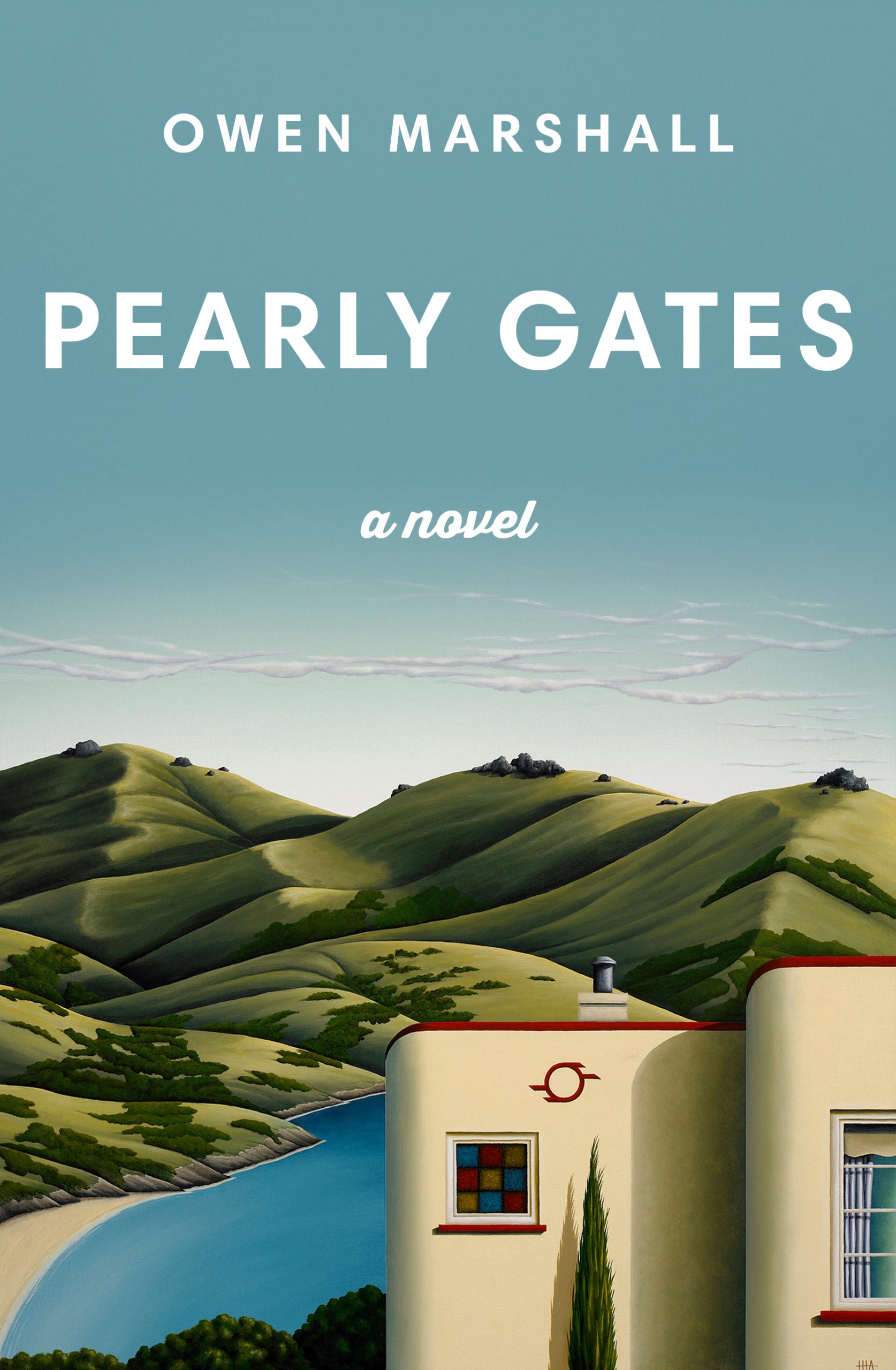
Below is an excerpt from the novel Pearly Gates by Owen Marshall, which is shortlisted for this year’s Jann Medlicott Acorn Prize for Fiction at the Ockham New Zealand Book Awards

*                    *                    *


About the writer:

Owen Marshall described by Vincent O’Sullivan as ‘New Zealand’s best prose writer’, is an award-winning novelist, short story writer, poet and anthologist, who has written or edited 30 books, including the bestselling novel The Larnachs. Numerous awards for his fiction include the New Zealand Literary Fund Scholarship in Letters, fellowships at Otago and Canterbury universities, and the Katherine Mansfield Memorial Fellowship in Menton, France. In 2000 he became an Officer of the New Zealand Order of Merit (ONZM) for services to literature; in 2012 was made a Companion of the New Zealand Order of Merit (CNZM) and in 2013 received the Prime Minister’s Award for Literary Achievement in Fiction. In 2000 his novel Harlequin Rex won the Montana New Zealand Book Awards Deutz Medal for Fiction. Many of his other books have been shortlisted for major awards, and his work has been extensively anthologised.


About the book:

Comeuppance comes from unexpected directions.

This entertaining and insightful novel both skewers and celebrates small-town New Zealand.

Pat `Pearly’ Gates has achieved a lot in his life and evinces considerable satisfaction in his achievements. He has a reputation as a former Otago rugby player and believes he would have been an All Black but for sporting injuries. He runs a successful real-estate agency in a provincial South Island town, of which he is the second-term mayor. Popular, happily married, well established, he cuts an impressive figure, especially in his own eyes.

But will his pride and complacency come before a fall?


(Penguin Random House)


Extract from Pearly Gates


‘You have to let him be different,’ said Helen.

He didn’t see Snoz any more. Snoz hadn’t done well at varsity at anything except rugby and the formation of friendships. He’d afterwards had various clerical and sales jobs, none of which led to significant advancement. In his fifties he’d decided he wanted to be a real estate agent like Pearly, and they corresponded regularly for a few months while Snoz, with Pearly’s assistance, attempted to pass the necessary online course to gain registration. That plan fizzled out for reasons Snoz never made clear, and he ended up running a five-unit motel in Dargaville. Pearly and Helen visited him there once, but she and Snoz’s wife didn’t click, and so the couples never made the considerable effort needed to meet again. Maintaining friendships becomes more complicated when you’re married. And Pearly had felt oddly alienated by Northland rather than intrigued by the contrast with his own country. Mangrove swamps, for God’s sake, wet heat and the sense of the bush massing to take over the cleared land once again. Even the rivers were different, with brooding, muddy beds rather than dry, grey shingle spreads. Pearly felt oppressed and contained in Northland. He missed the openness, the sparseness, the mountains and plains contrast of the South Island.
……..But Snoz and Pearly went back a long way, and Pearly had hoped to see him at the high-school celebrations, was disappointed and saddened to learn he wasn’t well and so unable to come. Snoz sent a donation of $100 and requested a photograph of his decade group.
……..‘Poor old Snoz,’ said Pearly as he took the lawnmower from the garage, and then, ‘What a bugger,’ in endorsement of his own comment as he checked the petrol while still thinking of his friend. He admired the rotary mower as he topped it up. It was a premier model with mulching facility and a 175cc Briggs & Stratton engine. He would ring, he decided as he wiped a little spill from the glossy red finish. He would demonstrate to Snoz that he’d been missed, that he’d been conjured in the conversation of his classmates, although not present in the flesh, that in the stories they exaggerated on revisitation he’d always have his role. Pearly stood for a moment on the lawn before starting the mower, the sun warm on the back of his shirt as he looked over his property. He was still, with a slight smile that wasn’t anything to do with what surrounded him, but a tribute to escapades with Snoz a long time ago. Yes, he’d ring. As soon as he’d finished the lawn he would go in and make the call.
……..Snoz’s wife answered when later he did so, but Pearly had asked Helen for her name in anticipation of that and so was unflustered. ‘Hello, Gay, it’s Pat Gates here. Pearly,’ he said.
……..‘Who?’
……..‘Pat Gates.’
……..‘Who?’ The inflection rose to the level almost of exasperation.
……..‘Pearly Gates. I’m ringing to see how Snoz is and have a chat about the school reunion. We missed him and were sorry to hear he’s been crook.’
……..‘He’s lying down. That’s mostly what he does now.’
……..‘That’s okay, then. Just tell him that—’
……..‘I’ll take the phone through,’ she interrupted in a tone that held no active dislike, just indifference. Pearly could hear her breathing as she walked and imagined the house through which she moved. A home much the same as the five units to which it was joined, just an extra bedroom and a garage to make it the big brother. Sliding aluminium doors, particle board, seascape prints, grey carpet, seepage stains along the shower base. And it would be as hot as Gay’s heavy exhalation suggested: the nearby estuarine creek dark and turgid, crab holes gaping in the mud. ‘It’s your South Island mate,’ he heard her say, and following the indistinct reply, ‘You know, the Pearly chap who came years ago. You played sport together.’
……..‘Pearly?’ The voice was subdued and uncertain. ‘That you, Pearly?’
……..‘Sure is. I just thought I’d ring to see how you are and let you know how the 125th went.’
……..‘Yeah, I wanted to go. I was looking forward to it, but I’m just not up to any travel at the moment. It’s a real bummer. I really wanted to go.’
……..Pearly went quickly through the highlights, and the low concerning Gumbo’s accident, and Snoz professed interest, amusement and commiseration at appropriate times, but there was an underlying weariness and detachment in his voice. All he had to offer from his own life was that he was trying to sell the motel and wasn’t having much luck. ‘You should come and do it for me,’ he said. ‘You’ve got the knack. We’re sick of being tied to the place. Sick of cleaning up after other people.’
……..As Pearly was giving him a description of the formal dinner, Snoz broke in suddenly. ‘I don’t suppose you know who’s on our old place now?’
……..‘I do, as it happens,’ said Pearly. ‘Folk called McIndoe. I think they came from Marlborough. Richie says they’re okay people.’
……..‘Uh-huh.’
……..‘They’ve built a new house on it.’
……..‘Uh-huh,’ said Snoz. He wasn’t interested in the new people, just in the farm as he’d known it, and Pearly couldn’t transport him there. He was stranded in the present and in Northland, separated from health and the elusive past.
……..‘Gumbo and I were remembering when we all sneaked into the girls’ hostel, and you came a hell of a cropper as we were running off.’
……..‘Nearly killed myself,’ grumbled Snoz proudly. ‘We were all mad bastards then.’
……..‘We were. Mad bastards, weren’t we.’
   .  ..Pearly visited other mythologised exploits from their friendship, but the conversation didn’t offer the full pleasure he’d expected. It wasn’t really Snoz he talked to. Not his Snoz of youthful companionship. Snoz was gone: even as he lay breathing heavily on a mid-afternoon bed in the Northland heat, he was gone — the whip-cool, laughing and audacious Snoz of time past — and Pearly grieved for him.


© Owen Marshall, 2019, published in Pearly Gates, Penguin Random House.

'I started to feel very guilty, as though I’d perpetrated a crime, a rort' - Stephanie Johnson

Read more

Below is an excerpt from the poetry collection Moth Hour by Anne Kennedy, which is shortlisted for this year’s Mary and Peter.Biggs Award for Poetry at the  Ockham New Zealand Book Awards. 

*                     *                    *

About the poet:

Anne Kennedy is a writer of fiction, film scripts and poetry. She weaves many influences and images into her writing including music, art, film and her Catholic upbringing, all underpinned by a wry humour and a sparkling imagination. Long known for the poetic qualities of her fiction, she turned to her hand to poetry in 2003 with the sequence Sing-song, which was named Poetry Book of the Year at the 2004 Montana New Zealand Book Awards. Kennedy followed up this success with The Time of the Giants in 2005, which was shortlisted at the 2005 book awards.

About the book:

A complex, moving and ambitious poetic engagement with the death of a brother.

The family didn’t know what to do about grief. The noisy house went silent. I was fourteen. I lay on the red rug in the sitting room and listened to Beethoven’s Thirty-Three Variations on a Waltz by Anton Diabelli, op. 120 – over and over because it was there.

In 1973, Anne Kennedy’s brother Philip was partying on a hillside when he accidentally fell to his death. Among books and records, Philip left a poem typed in Courier on thick, cream, letter-sized paper.

Come catch me little child
And put me in a jar . . .

In Moth Hour, Anne Kennedy returns to the death of her brother and the world he inhabited, writing ‘Thirty-Three Transformations on a Theme of Philip’ and concluding with a longer poem, ‘The Thé’.

Kennedy’s extraordinary poems grapple with the rebellious world of her brother and his friends in the 1970s; with grief and loss; with the arch of time. The poems reach into the threads of the past to build patterns, grasped for a moment and then unravelling in one’s hands.

Moth Hour is a complex, ambitious piece of writing and a moving poetic engagement with tragedy.


(Auckland University Press)

.

.

Transformation 30


I am watching the materialists who have no materials
the loved Gen X, Y, Z,
schooled in the alphabet of desire, they finger seamlessly the black window,
anti-moths at a dark pane.
They are silent – or their moth screams are inaudible to the human ear,
their headphones high quality.
They live on the side of the screen that has no materials, yet they are materialists,
so the situation is very sad.
There is probably nothing on the other side either, but who cares? We are here,
and they have no materials.
If they were nonmaterialists and had no materials that would work?
But unfortunately, they are materialists.
Forgive me if this sounds ironic. I’m not trying to be funny, although I realise
that’s almost impossible these days.
I want to be the Winston Smith of seriousness, to recall the last shreds of seriousness
before they also become funny.
Sometimes, if you walk along Great North Road at sunset blinded by the glare
through your hair, and by traffic
and keep looking into the blinding world, an old serious thought comes up.
The materialists have no materials
except for their bodies which they couldn’t get by without. Their bodies are mashable
and tender and those very qualities
are both sad and heartwarming. The tenderness of the body is actually the whole point.
The materialists have no materials.
Oh, they do have a bedroom. Their room is dark, still and moist like a mushroom farm
or farm for thoughts
which are like moths. Like, there are no moths, then suddenly they are everywhere.
(Some materialists of course
have no bedroom and must live under a bridge or in a doorway or in a car
and those people
already know the perils of materialism with no materials, those people arguably
are not even materialists
anymore. Those people do not need to bother reading this poem.)
I am watching the materialists.
They follow avidly shadows moving on the screen, and they kill this guy and this guy
using their opposable thumbs.
The thumbs are how all this started. And they kill another guy and another,
they shoot them dead and they shoot
more and more until at the end of the afternoon, although it’s hard to tell day from night,
bodies like slugs litter the screen
which might sound like gratuitous violence, but in fact it is all in a good cause:
a story, and a good one.
For materialists with no materials, a good story is everything because it is portable,
lightweight, and relatively inexpensive,
like the air we breathe. Although sometimes the materialists watch a documentary
on the screen in the middle of the night
about how in the future air may not be so cheap and so accessible,
it might be hard to come by
especially if the methane in the oceans heats to a certain point and explodes.
Then air will be like tulips
in Holland in the eighteenth century or like Ikea in New Zealand, or worse,
and they worry like hell about that.
They watch disaster movies so disastrous they have to watch them
with their bodies twisted into a ball
(and remember their bodies are tender), so this is not good, it is stressful
watching a world being destroyed
on the other side of the screen in the middle of the night, and the materialists
get very worried
because worlds are material, and materials are the materialists’ stock-in-trade
even though they don’t have any,
or many. But the movies must be watched because an unwatched movie
is even scarier. How would
the materialists know all the catastrophes that could befall the earth otherwise?
How could they be prepared
for an ice age or the sea exploding? Actually, there isn’t much they can do
apart from lobby government
to reduce emissions, and especially lobby the biggest government in the world,
but that is for the daytime,
and they don’t even live in the biggest country, they live in a small country
and it is the middle of the night,
which it often is, and the movie is only a story. Stories are their stock-in-trade,
the materialists without any materials.
Without stories they would die; I tell you they would die. I tell you solemnly,
without stories they would die.
You might think the materialists with no materials sit around all day and night
playing games and watching movies
with their tender bodies twisted into a ball, but no, they go to school.
Well, air-school. They study
Philosophy, which is interesting but it makes them worry even more.
They worry that in the future
there will be nothing to apply Philosophy to, on either side of the screen.
They worry there will be no food,
no water, no air. No materials whatsoever, and for materialists that is frightening.
So they do vocational training,
something too complicated to explain but you have to follow it like a game
except it is not fun.
They are like border terriers bred to catch rats except they will probably
live in the city where there are
not many rats, and someone will have to take them for walks for exercise
so they don’t get depressed
and they worry about who will take them for walks. Who will take them?
They learned the violin
but have no strings. They learned biology but they have no healthcare, botany
but they cannot grow food.
They learned nutrition, but one corporation owns almost all the supermarkets.
They hate that, they hate it,
but there’s nothing you can do but lobby government especially the biggest
government in the world,
but they don’t live in the biggest country, and it is the middle of the night.
I am watching the materialists
who have no materials. The materials they had they spent on the piece of paper
that says they can metaphorically
hunt rats, but there are no rats. The materialists float in Purgatorio with the ghosts
of indentured labourers
the plantation workers who could never save enough to go home, the students
who can never pay off their debt
and go home. They watch the screen. The screen is sometimes beautiful,
a lake in a dark forest,
obsidian shining in the flank of a rock. They will love this, you will love this.
But they cannot have it.
They will find true love, but they cannot meet anyone, outlandish sex
but they find they don’t find
the person attractive in person. They can vote, but fuck everything,
everything is fucked.
The screen is a fringe of hair through which the materialists view the sunset.
You might think the materialists
with no materials are thoughtless – you might think that precisely because
they have no materials,
they have no expensive bullshit machine. Remember they are the materialists
who are not racist, they are
the materialists who are okay with LGBTQIAPK, they are the materialists
who are okay with everybody
except they don’t get the chance to show it because they are materialists
with no materials.
You might think they are self-centred, and you might think that precisely
because they have no power,
they have no real estate apart from their egos, they have no platform
apart from their bedroom
(if they have a bedroom), there is nothing out there for them because they are
materialists without materials.
And this is where it gets particularly sad and unfair: for their whole lives
they have been peddled materials
while at the same time the means to buy materials has been taken away,
and taken away exponentially,
taken away in an escalating manner which matches the escalation of wealth
for a few, so the pattern
of taking away is an anti-pattern, a pattern that disappears into the earth.
And the extremely sad and unfair thing
is that the taking away is being executed by the generation who invented
the counterculture, the former swingers
who believed in community, authenticity, and peace, who believed in
youth culture for fuck’s sake,
but who came swinging back on a pendulum like a wrecking ball
and knocked the next generation
out of the very arena where they perform their egregious and foul
acts of capitalism,
and they continue as if they are the last generation on earth. The generations
keep coming,
moving through the alphabet like hurricanes: X, Y, Z. But instead of protecting
the next generation,
the people who once believed in community, authenticity, peace and youth,
they lock them in their rooms
with the things they have sold them, their screens and the hopes and dreams
that come pouring forth
from the screens like false gods. The materialists with no materials
have been fed the rice of desire,
they worship at the feet of illusion. They are eaters of beauty
but there is no beauty.
The materialists with no materials will be kept safe by their materials,
and of course there is no safety,
they look through their black screens at a brilliant future,
but there is no future.
The materialists with no materials have been trained like bears to dance
in their unbearable bedrooms,
they have been educated in the decisions of want, the deeds of desire.
I am watching
the materialists who have no materials. I am watching intently
like a capitalist, and I hope
that they will hurl themselves again and again at the screen,
burst through the screen
and collect their imaginary mind.


© Anne Kennedy, 2019, published in Moth Hour, Auckland University Press.

'I felt energised by the freedom of 'making things up’' - Maxine Alterio

Read more

Below is an excerpt from the poetry collection How to Live by Helen Rickerby, which won this year’s Mary and Peter Biggs Award for Poetry at the  Ockham New Zealand Book Awards.  NEW bonus read:  Helen’s Ockham ceremony acceptance speech.

*                     *                    *

About the poet:

Helen Rickerby is a writer, editor and publisher. She has published three previous poetry collections, most recently Cinema (Mākaro Press, 2014), and her work has appeared in numerous journals and anthologies, including Essential New Zealand Poems: Facing the Empty Page (Godwit, 2012). Rickerby was co-managing editor of literary journal JAAM from 2005–2015 and single-handedly runs Seraph Press, a boutique but increasingly significant publisher of New Zealand poetry.

Helen’s Ockham acceptance speech:

‘Kia ora koutou. Wow, thank you so much – to the awards trust and the sponsors – especially Mary and Peter Biggs, who sponsor this award – thank you for caring about poetry. I also want to acknowledge my fellow finalists – Anne, Ashleigh and Steve – all lovely people as well as fine poets, and I’m very sad we can’t hang out tonight.

Thank you also to the people who have supported me and this book – especially my first readers Anna, Angelina and Sean, everyone at Auckland University Press for publishing it and making it so pretty. And also the people and publishers who have supported me earlier in my poetry career – or rather vocation.

I thought a lot about how to live while writing this book, but I haven’t stopped, and I know it’s a topic many of us have been thinking a lot about over this very strange last couple of months. I hope it’s something we never stop thinking about – how we can do it better, as individuals and also as a collective. I think this crazy time has made us realise what matters to us – how much lives matter – and has also made us really creative and inventive in how we can do things differently – things like working, housing homeless people, communicating and running book awards. I am hopeful we won’t go back to everything about normal life as it was, but will instead try to live a bit better.’ (12 May, 2020)


About the book:

Where are the female philosophers? Why are women silenced? Who can tell us how to live? In her fourth collection of poetry, Helen Rickerby takes readers on a journey into women’s writing, a quest for philosophical answers, and an investigation of poetic form.

The poems in How to Live engage in a conversation with ‘the unsilent women’ – Hipparchia and George Eliot, Ban Zhao and Mary Shelley. They do so in order to explore philosophical and practical questions: how one could or should live a good life, how to be happy, how to not die, how to live. Rickerby thinks through the ways that poetry can build up and deconstruct a life, how the subtext and layers inherent in poetry can add to the telling of a life story, and how different perspectives can be incorporated into one work – the place where poetry meets essay, where fiction meets non-fiction, where biography meets autobiography, where plain-speaking meets lyricism, where form pushes against digression.

The work is witty (‘Perhaps I should ban “perhaps”.’) and self-reflexive (‘Am I afraid that if I let the words leak out, they’ll mix with oxygen and become prose?’) as Rickerby draws on the intensity, symbolism and layering of poetic form, using poetry as a space of exploration of ideas, of thinking, of essaying.


(Auckland University Press)


From ‘George Eliot: a life – a deconstructed biography’

12.… ….On screaming

12.1.…..In March 1840, during her puritan phase, Mary Ann went to a party given by an old family friend. Presumably disapproving of all the dancing, laughing, flirting and general fun-having of the other guests, or perhaps attracted by them, she first retreated to the edges and complained of a headache; but then she started screaming hysterically. One biographer suggests it was because of an internal war between piousness and music, which was making her want to get outside of herself and dance. But perhaps she just didn’t like loud music and crowds.

12.2. ..   Another occasion on which she is reported as screaming hysterically was on a trip across the Alps on a donkey – she was terrified of falling off the mountain to her death. Her travelling companions found her outbursts upsetting. What the donkey thought is not recorded.

12.3. ..   A search of the Complete Works of George Eliot on Google Books reveals that the word.‘scream’ occurs fifteen times and ‘screaming’ sixteen times. There are also twelve occurrences of ‘screamed’ and seven of ‘screams’. This seems quite reasonable over seven novels, five shorter stories, quite a lot of poetry (which no one now reads), a.couple of translations and some non-fiction.

12.3.1...Most of the screamers are women and girls, but men also scream, as do geese, guinea fowl, water fowl and violins.

12.3.2. The humans’ reasons for screaming range from seeing their child covered in mud, finding their gold stolen, a runaway monkey, revealed secrets, discovering a dead body, thinking their husband has died, and with rage while dancing.

12.4.….When George Lewes died, Marian broke down, screaming.

12.4.1...I hope that, in similar circumstances, I too would be courageous enough to let go.


© Helen Rickerby, 2019, published in How to Live, Auckland University Press.

'There’s a kind of heaven that comes from hearing another writer interpret the mysteries of process' - Tracey Slaughter

Read more

Below is an excerpt from the novel A Mistake by Carl Shuker, which is shortlisted for this year’s Jann Medlicott Acorn Prize for Fiction at the Ockham New Zealand Book Awards

*                    *                    *

About the writer:

Carl Shuker is the author of four other novels – The Method Actors (Shoemaker & Hoard, 2005), winner of the Prize in Modern Letters in 2006; The Lazy Boys (Counterpoint, 2006); Three Novellas for a Novel (2008; Mansfield Road Press, 2011) and Anti Lebanon (Counterpoint, 2013).

A graduate of the University of Canterbury, with a Masters in Creative Writing from Victoria University of Wellington, Carl lived in Tokyo on and off for many years, then London, where he was an editor for the British medical Journal for seven years.  He has participated in festivals in New Zealand and Australia and was Writer-in-Residence at Victoria University in 2013.

He lives in Wellington with his wife and two children.

About the book:

Elizabeth Taylor is a surgeon at a city hospital, a gifted, driven and rare woman excelling in a male-dominated culture.

One day, while operating on a young woman in a critical condition, something goes gravely wrong.

Carl’s latest novel is a medical thriller about human fallibility and the dangerous hunger for black and white answers in a world of exponential complications and nuance. Pantograph Punch describes how in A Mistake Carl ‘turns his attention to the theme of human error and how actions can echo and distort in memory and consequence … absorbing and difficult to put down.’ On Carl’s work overall the NZ Listener wrote ‘It’s difficult to convey here the thrill of Shuker’s writing, with its up-to-the-minute feel, its endless audacity … with its defiant difficulty, sly ambition and writing more than sharp enough to live up to its own hype’.

“You’d think Carl Shuker couldn’t get any better, but A Mistake is the novel at its visceral and emotional best. This is the most compelling book I’ve read in years. It pulls you along at breakneck speed through questions of failure, exposure and manners. Shuker reinvents the form with every novel and A Mistake is a masterpiece which feels more like a body than a book – the life pumps and glugs and flexes inside its pages.” – Pip Adam


(Victoria University Press)


The flaw


She woke at six, alone.

She lay there in the half dark. Then she got up and changed into gym gear, her thigh-long tights and a sports bra, and went into the living room. Atticus lay on the huge leather pouf Jessica had delivered with him. He watched her pass. Just his eyes. Wary, sad crescents of white below the dark brown irises.

Outside. Clean smell of the bush, and damp. A frighted blackbird rose from the barbecue, flared its wings and disappeared over the fence into the neighbour’s backyard. She’d forgotten socks and she went back in and put on her work ones and took an apple as she came back through the kitchen.

Atticus lay and watched her.

Down the side of the house she stood in her sock feet on the dry concrete under the flax and ate the apple down and pitched the core up the back. She turned and crouched and unlocked the padlock and crawled in under the house and came back out in gumboots and overalls with the hammer and jimmy bar in one hand, and in the other a plastic Four Square bag with the Makita electric drill and drill bits along with five old unused borer bombs she’d found in the tool cabinet and then she went back inside the house.

In the living room she dragged the couch out from the north-facing wall. She unplugged the TV and router and the modem and dragged the chest on which the TV and electronics sat away from the wall too.

The flaw was at eye level. The previous owners had re-gibbed this wall and this wall only for some reason and the plasterboard was a decent job so she’d left it. But at eye level was the nub of a 5-millimetre bolt, sticking out just enough. The wall got no direct sun so the bolt cast no direct shadow. It was ignorable.

She laid down an old sheet as a drop cloth and laid the tools on it and put on her glasses and looked at the nub. It was sheared off at a slight angle and there was putty and paint around to smooth it off. She reached to it and she caressed it. Feeling the angle of the shear, where there might be purchase for the drill bit.

Then she picked up the hammer and she hit it as hard as she could.

The whole wall vibrated and the sash window rattled in the frame. Atticus laboured up from the leather pouf and walked out of the room with his head down and his tail between his legs.

She leaned in to examine the bolt. The paint had come off the end but it hadn’t moved.

She guessed the size of the drill bit by eye and compared it to the nub. The chuck was tied with string to the trigger guard of the drill the way her father taught her, and she used it to screw the bit in tight and looked around for her ear muffs but she’d left them downstairs. She held the drill up high and straight and seated the tip against the nub of bolt and slowly squeezed the trigger. The drill hummed. She squeezed it tighter and the bit turned on the steel. She stopped and looked at the nub. It had made no impression. She squared her stance, raised her elbow, seated the bit and squeezed the trigger and leaned into it. The drill hummed, and the bit turned slowly then faster and then it slid off the bolt and punched through the gib. A neat hole. She tried again, adjusted her grip on the drill, leaning in. The drill hummed and the bit turned and then it jumped off the bolt again and through the plasterboard beside the first hole.

‘Fucker,’ she said aloud. She put the drill down and picked up the hammer and beat holes through the gib in a circle a rough metre around the bolt and then tore off the piece of gib hanging from the bolt nub and threw it behind her and stepped back.

It was a coach screw, 5-millimetre diameter galv steel sawed off as close to the wall as they could get their hacksaw, then filed down. It was impossible to know how deep in the tōtara stud. Not enough sticking out to get at it with the vice grips. She took up the hammer and bashed it a few more times and the windows rattled and clouds of borer dust rose in the room. It went no deeper. ‘Why don’t I use you as a fucking coathook,’ she said. Then she rolled up the Afghan rug and pulled the TV and couch up against the south wall and smashed out the gib on the rest of the wall with the hammer and tore it down bare-handed and threw the pieces on the floor behind her as the room filled with dust. She went round with the jimmy bar snapping the heads off the thin gib screws and then she banged the sheared-off stubs into the timber with the hammer and more and more borer dust rose and then she went back to the bolt and looked at it.

She replaced the drill bit with a smaller diameter bit and tightened it up with the chuck. She drilled 20 neat holes in the stud in a circle around the nub. The drill kicked and screamed when it hit the galv steel and she swore. Then she took up the hammer and bashed and bashed the bolt side to side and it barely moved so deep in the wood was it buried. She swung and hit and missed and dented the timber into shiny pits but the bolt was seated so deep she’d have to cut the stud through to the weatherboard to get it out and it was a load-bearing wall so she hit it and hit it and hit it and then she gave up.


© Carl Shuker, 2019, published in A Mistake, Victoria University Press.

'There’s a kind of heaven that comes from hearing another writer interpret the mysteries of process' - Tracey Slaughter

Read more