.

.

.

Missing Persons

by Steve Braunias


HarperCollins Publishers


$35.00


ISBN: 9781775540847
Publisher: HarperCollins
Published: March 2021
Pages:264
Format:  Paperback


Reviewed by Angelique Kasmara


This compilation of 12 cases, most of which first appeared in the New Zealand Herald, is a follow-up of sorts to the author’s 2015 The Scene of the Crime. The book developed during a time when Braunias considered himself ‘missing.’

‘The usual failings;’ he writes, ‘plus old age, which for so long had felt like a rumour, was busy furnishing my life with intimations of mortality.’ He ‘was a lost soul’ who ‘took a special interest in reporting’ the stories of Socksay Chansy, Nigel Peterson, and Murray Mason. Braunias says ‘I almost felt envious. They had managed to disappear.’

He does understand that it’s not all about him. On meeting Nigel Peterson’s parents, ‘I had to fight very, very hard not to intrude on their grief and burst into tears. They didn’t need that. They lived with their loss and bewilderment. I was in town for the morning.’

Snippets from their recollections are devastating in the detail. ‘“He’d watch animal programmes for hours,” said Chris. “The funny thing is I’ve still got and I can’t delete them all the dinosaur documentaries I recorded for him on SKY.”’

The chapter on Socksay Chansy gently stitches together the pieces of the person who grew up in Mt Wellington, whose life once held much promise he had a video-editing business in Berlin; he had many people who loved him but had a troubled side. Tiny moment on top of tiny moment slowly pulls you in and leaves you bereft. ‘When we’d first walked inside the emplacement, and we were looking around that small, damp tomb, Neil pointed to a coin on the floor. “I think that was Socksay’s,” he said. We stared at it. It was a 20-cent piece.’

Then there’s Murray Mason, a hard drinking ex-Herald journalist who died after a lonely fall down a stream in the Auckland Domain. His friends remember him as a ‘fantastic joker.’ But when Braunias contacts Mason’s daughter, Rachel Wise, she reveals another side, ‘an unrelenting story of trauma and unhappiness and grief.’ Mason was nasty in the worst of ways, his reign of terror only ending when he left the family. It’s a superbly crafted piece on the unravelling of a life.

Missing Persons might well be peak Braunias, although I’m still rather taken by his 2007 memoir, How to Watch a Bird. And the magpie ways in which he collects stories echo the bird watcher within. He makes no secret of the fact that he’s drawn to boring houses in boring suburbs (‘The murder capital of New Zealand is the suburbs’), and thus can often be found in one, excavating the grimmest of details over a cuppa and a slice. After once remarking that bookshelves were ‘an uncommon sight’ in Te Atatū (Braunias lives in Te Atatū) he was lobbed with photos of bookshelves sent by annoyed locals. (I grew up there myself; our bookshelf boasted the complete World Encyclopaedia set and Reader’s Digest’s top mysteries). It’s also the suburb where Anna Browne murdered Carly Stewart. Where Ron Van der Plaat sexually abused his daughter Tanjas for many years. And where 69-year-old Cunxiu Tian was sexually violated and murdered by Jaden Stroobant in a horrific attack.

Men feature heavily in the compilation. In several of these cases, it’s because the women we could have been listening to are dead, at the hands of a man. Simonne Butler is one exception. She says she can ‘play the attack like a movie’, and proceeds to do just that; an unflinching account of the day her ex-boyfriend Antonie Dixon nearly murdered her. The legacy of the attack is something she has to deal with every morning: ‘those hands, that claw up in winter, and she has to soak them in a basin of hot water when she gets out of bed in the morning. After that, they’re good to go.’

The inclusion of entrepreneur Kim Dotcom comes as hilarious light relief (as does Colin Craig, whose chapter is called ‘Half the man he used to be’). Dotcom is a prepper, ‘preparing for end days’ with a somewhat frugal outlook. When asked about a steady water supply, he replies: “These technologies are quite advanced. They basically turn your own pooh and your own pee back into drinking water.” Braunias describes him as “a man with two visions. One, the fear of rotting in jail, a creature in captivity; two, the idea of hiding in an underground bunker.”

The book begins and ends with coverage of the trial of Grace Millane’s killer. It’s harrowing on a few levels, delving as it does into bleak detail of what the courtroom demands of its witnesses, and of Grace herself, in order to conduct a fair trial. And of course, reading about Jesse Kempson’s actions, ‘rightly described as depraved’ from Justice Simon Moore’s summary. For some part of the narrative, there’s no moving past Kempson until, finally, we’re done.

Braunias particularly excels at the exit, closing each chapter with sharp, spare and devastating prose. The final lines of Missing Persons are a beautifully wrought example, when all that’s left is an emptying courtroom, with its “old familiar silence” and a framed photograph of Grace Millane.


Angelique Kasmara is a writer, editor, translator and reviewer from Auckland. Her novel  Isobar Precinct will be published in August.

'...poetry makes intimate everything that it touches.' - Michael Harlow
Read more

.

.

.


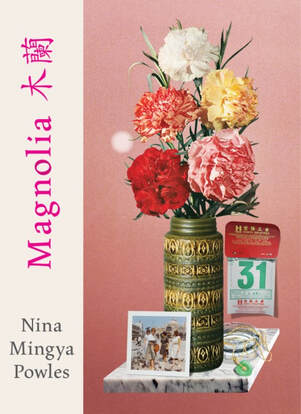
Magnolia 木蘭

by Nina Mingya Powles 


Seraph Press


$30.00


ISBN: 978-0-9951082-5-7
Publisher: Seraph Press
Published:  November 2020
Pages: 84
Format: Paperback


Reviewed by Saradha Koirala


In ‘April kōwhai’ from Nina Mingya Powles’ Ockham shortlisted Magnolia 木蘭 ‘Home is not a place but a string of colours threaded together and knotted at one end.’ The collection bursts and drips with these colours as Powles explores what it means to be homesick; to be finding layers of meaning in the unfamiliarity of your family’s language, to be mixed-race.

The ‘string of colours’ is at times subtle, and other times overt, a way to describe the bright flashes visual and emotional that make up memory. The poem ‘Colour fragments’ begins:


On our way home from the botanic gardens, we dreamt of building
a museum of all the colours in the world, all the pigments and
what they’re made of, colours in their purest forms; a museum of
memories stripped down.


Colours, then, are the purest form of memory, and the poet desires to deconstruct these colours further, to make sense of feeling. This is clearest in ‘Two portraits of home’, where Powles takes inspiration from Werner’s Nomenclature of colours to list images such as the birds and trees of Aotearoa: ‘kōwhai-petal yellow’, ‘feijoa-tree green’, ‘tūī-feather iridescent green’, ‘fantail-feather cream’ and scenes of Shanghai: ‘electric-billboard blue’, ‘Shanghai-taxi blue’, ‘heart-of-jasmine pink’, ‘magnolia-leaf green-black’. The poem is in two parts, subtitled [IMG_098] and [IMG_227], but of course it’s not as straightforward as a separation into an image of each place. As with all ideas of home in this collection, there is overlap and connection, a sense that one flash of colour can spark a feeling from another time and place. The repetition of ‘the blue of the sounds’ in [IMG_098] and ‘hot violet’ in [IMG_227] give the reader pause to invest in those same stripped-down feelings.

Powles now lives in London, but wrote much of this collection while studying Mandarin in Shanghai, having previously lived there as a child and grown up in Aotearoa. Her idea of home is further ‘threaded together’ through recurring references, links to other women writers and warriors who have walked the streets Powles walked during her time in Shanghai, and the artists whose work she draws ekphrases from. Powles’ early work has also explored fictional and historical women. Here, she reflects on the New Zealand poet Robin Hyde’s experience in the poem ‘Letters from Shanghai, 1938’ and the life of writer Eileen Chang in the long poem ‘Falling city’, 32 numbered stanzas that read at times like journalled notes: ‘I imagine Robin Hyde and Eileen Chang crossing paths unknowingly sometime in 1938’ and at other times like the poetic realisations of someone exploring newness, ‘In each city, large or small, each person has their own secret map.’

Powles threads these real women’s lives into her collection along with links to contemporary artworks and movies. The opening poem, ‘Girl Warrior, or: Watching Mulan (1998) in Chinese with English subtitles’ sets the tone for a collection about finding those threads, relating to a place, a culture and female experience. Framed by the image of cutting one’s own hair, the poem describes watching the film and becoming the character, first through ‘makeshift costume’:


Halloween, 1999 / she unearthed a pink shawl from inside her wardrobe

cut a strip of purple silk to tie around my waist / bought a plastic sword /
gave me Hershey’s kisses


And later as a girl warrior in the world, ‘I no longer have a sword / but sometimes at night I hold my keys between my fingers’ a universal symbol of women’s need for self-protection.

There are other hints at surviving alone in the world, including the loneliness of language. Magnolia 木蘭 is divided into three sections, the second the eight-part poem ‘Field Notes on a downpour’ is where this true exploration of language begins. Here Powles takes words apart and looks at how each character in Mandarin represents an image and each word created by these images can have multiple meanings. ‘Some things make perfect sense, like the fact that 波 (wave) is made of skin (皮) and water (氵), but most things do not.’

This is a poetic language of imagery and creation from which a sense of identity emerges:


The lady at the fruit shop asks me how I can be half Chinese and still look like this. (She
points to my hair). We come up against a word I don’t know. She draws the character in
the air with one finger and it hangs there between us.


“ juan”:
.
curl
.
to have tender feeling for
.
to abandon
.
a net for catching birds


At times like this, the theme of being ‘half-Chinese’, mixed-race, is lightly borne, leaving space for the reader to shift into the sense of not quite fitting. At other times, this feels less subtle, such as ‘Mixed girl’s Hakka phrasebook’, a poem divided into ‘Phrases I know in Hakka’ and ‘Phrases I don’t know in Hakka’, the first being simple numbers and responses, the second a longer list of more complicated questions and ideas, showing perhaps how hard it is to make meaningful conversation without fluent language. Later, too, ‘Alternate words for mixed-race’ gives a footnoted list including criticism of someone learning to write their own name.

But perhaps readers need these more self-conscious poems to highlight the subtlety of the others, just as those of us with mixed-race backgrounds are always explaining our origins and the correct pronunciation of our names, as if everything we do hinges on this understanding. The most effective poem on this theme is ‘Mother tongue / 母语’ a poem in two voices, considering the present time where:
.

I peel jackfruit with my fingers

while they talk over and around me

in a language so familiar but so far away


and the imagined alternate life:


if I had grown up here

I would have different-coloured hair

and different-coloured eyes

I would speak to Popo all the time

we would chop vegetables together

and peel the shells off quail eggs

on blue evenings we would sit

looking out for distant lightning

above the hills where plastic flowers

fall against coloured graves

see how it lights up her face

as the rain cools off the surface

of my skin

of this dream

where I am not trapped

in any language


At the heart of this displacement is the sense that learning the names of things, making the food and experiencing the seasons are key to finding oneself. The stickiness of this immersion comes back again and again: the tastes, smells, heat, rain and steam of somewhere growing more familiar to both poet and reader. The ‘heavy, humid air’ and ‘scent of tea and rice and wet leaves’ in ‘Love letter in lotus leaves’ reveal the texture of elsewhere. The poem takes us through the careful creation of zòngzi sticky rice dumplings wrapped in leaves and steamed ‘Fold them in tight parcels / as if wrapping small gifts. Tie neatly with string.’ This is an act of love and of claiming or reclaiming one’s heritage. The poem ends with:


white unwrapped cakes
of steamed rice

bear the imprint
of ridged leaves
azaleas bear the memory of rain


Each tiny parcel, each step towards understanding how things are wrapped in this new place, brings the poet closer to feeling at home there.

Powles’ voice is the thick steam on kitchen windows and the bright hues of a rain-soaked city. She is a poet who clearly works hard at her craft and Magnolia 木蘭 is a confident and cohesive collection, firmly threaded and knotted with obsessions that are both deeply personal and entirely relatable to anyone who has felt separate from their home or their heritage.

.


Saradha Koirala is a writer currently living in Melbourne. Her most recent collection of poetry is  Photos of the Sky (The Cuba Press, 2018).

'I felt energised by the freedom of 'making things up’' - Maxine Alterio

Read more

.

.

.

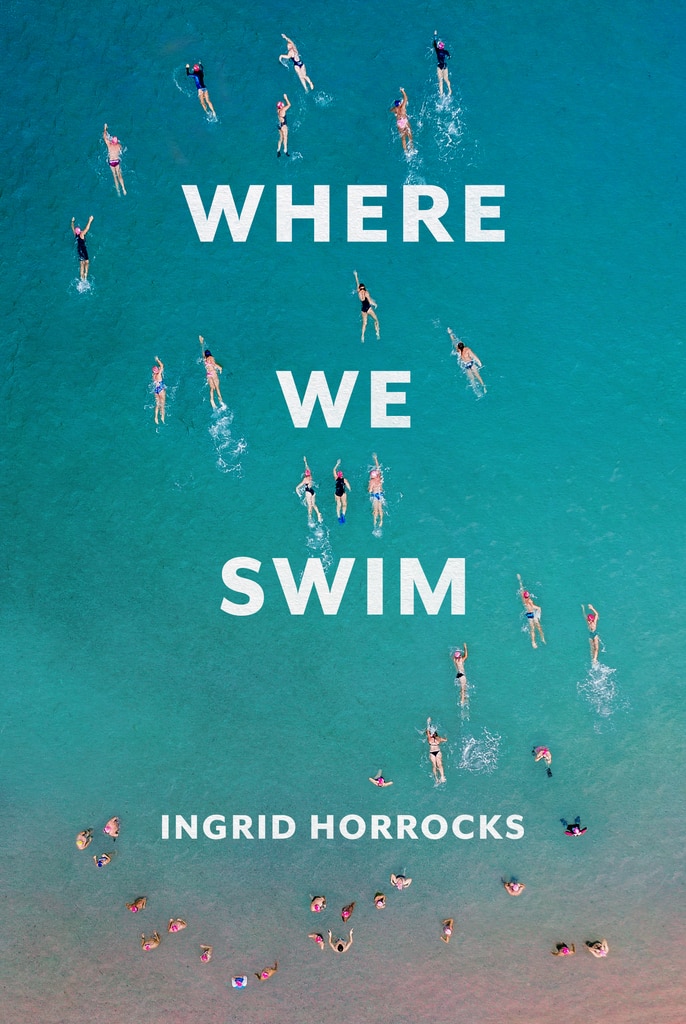
Where We Swim
By Ingrid Horrocks


Victoria University Press


$35.00


ISBN: 9781776563135
Publisher: Victoria University Press
Published: March 2021
Pages: 222
Format: Paperback


Reviewed by Sally Blundell


Curious.

Despite the title and the fan of ocean swimmers spreading up the cover photograph there is not a lot of swimming going on in this book. By the time we have reached the halfway point there has been an inadvisable crossing of a polluted river mouth in Taranaki as part of an abandoned plan to swim between Wellington and Auckland. There’s been a splash around in an apartment complex pool in Medellin, Colombia; a nervous slide into a cordoned offshoot of the Amazon River; a hotel pool in Phoenix and another, embedded in the basalt cliff face, in the experimental metropolis Arcosanti in the Arizona desert.

And curiouser.

The author, we are told, doubts she could even meet the common definition of being able to swim (200 metres of freestyle in a pool): ‘I was that kid at the back of the race who was more drowning than swimming.’ So, no overarm tips, no diving techniques, no ready-set-go sense of leaving point A to splash and kick to point B. Unlike Swim: a year of swimming outdoors in New Zealand by Kiwi conservationist Annette Lees (2018), Horrocks does not talk to other outdoor swimming devotees, nor does she expound on the health benefits of a daily dip.

Rather, as she notes near the end, this is a book of ‘strange swimming explorations’, a series of autobiographical musings pulling together stories of family, childhood, travel, academia and environmental degradation. The suck and surge of the tide, the tumble of waves, the chill of a winter dip, the unvarying blueness of an urban swimming pool these moments of pause and surrender become the launching pad for these speculations, when ‘anxiety and chatter’ momentarily drop away, when the busyness of life as mother, partner, daughter and academic gives way to reflection and speculation.

These moments of calm are necessary. Where We Swim is an anxious book. There is personal anxiety about the health of her father and mother-in-law. There’s cultural anxiety about writing about place, this place, as a Pākehā writer; about slum tourism; and about the Eremocene, the age of loneliness, a term coined by E.O. Wilson to describe the existential isolation that comes from extinguishing other forms of life on Earth. There’s environmental anxiety about ecological degradation and inevitable sea level rise; and there’s physical anxiety about jaw-snapping caimans and the lack of life jackets on the boat charging up the Amazon.

The sea, the swim, the watery edges of these and other islands prove to be rafts of equilibrium. She aligns these experiences with those of the seventeenth and eighteenth century British women travellers, the subject of her 2017 book Women Wanderers and the Writing of Mobility, 1784-1814. She explains their ‘wandering texts’ narratives and verse with no clear paths forward but framed and bound by their experiences on the coast or in the surf. Returning to the shingly coast of Surrey, she describes English novelist Frances Burney negotiating a newfangled bathing machine, Romantic poet Charlotte Smith watching sea battles between Britain and France from the shore, and Mary Wollstonecraft braving Norway’s rocky coastline.

‘If “where we swim” is metaphorical,’ she writes, ‘then Charlotte Smith, Frances Burney, and also Mary Wollstonecraft, who felt perpetually unhoused and wrote so often about water, were some of the company I swum with.’

Like the ‘wandering texts’ of these writers, Where We Swim is digressive, provocative and strangely compelling. Like a beachcomber picking up unusual shells, she pauses to consider the bell-makers of Arcosanti, song fragments passed between humpback whales, the oral histories describing Wadjemup (Rottnest Island) as part of the mainland during the last ice age: ‘In what moment did the stories declare it an island, I wondered, and when did the walk become an impossible swim?’

She holds on to those moments when we are drawn collectively to the ocean and its inhabitants:  Wellington’s decision to change its Matariki celebrations after a whale is spotted in the Harbour, the rescue of the young boys trapped in a cave in Thailand in 2018, the kite surfers on Lyall Bay, ‘sails leaping across the bay like dolphins’, the gentle exhalation of a humpback whale with her calf, the familial tug of childhood summers by the sea and, running through the book like a warm ocean current, her twin daughters, Lena and Natasha, hands busy with sand or stones, slippery and seal-like in the waves.

In the last two chapters we are back on Horrocks’ home turf Wellington’s south coast, a place of rocks and shingle and pounding breakers, the persistent insinuation ‘of a tug from the depths’. The descriptions are bracing, evocative, but still mysterious, answering the where of the title but not the why. Then a solitary night swim in Wellington cool sand, dark water, the ‘almost-breath’ of the waves that tell her she is home, her children are safe.


Sally Blundell is a journalist, writer and reviewer based in Ōtautahi Christchurch.


'...poetry makes intimate everything that it touches.' - Michael Harlow
Read more

.

.

.

Poetry New Zealand Yearbook 2021
edited by Tracey Slaughter


Massey University Press


$40.00


ISBN: 978-0-9951354-2-0
Publisher: Massey University Press
Published: 11 March 2021
Pages: 408
Format: Paperback


Reviewed by Sophie van Waardenberg


Even for a poet, the offering of nearly 400 pages of poetry, essays, and reviews in the Poetry New Zealand Yearbook 2021 seems on first glance to be, possibly, maybe, too much. After all, eight of those pages are just the contents; it seems more an anthology than a literary journal. But really, what’s the difference? It’s also generous; it’s also thrilling the idea that there is so much poetry being written in Aotearoa that editor Tracey Slaughter’s whittled-down selection of two months of submissions, a year’s worth of work, fills what could ostensibly be termed a tome.

Of course, there’s no requirement to ingest it all at once. The order is alphabetical by poet, suggesting a reader dip in and out at their own pace. Picking and choosing is made easier by the huge variety of titles on offer you could read ‘Luna sends me a dream of chickens’ or ‘bra dollars’ or ‘in hindsight denying that it was a phase was a clear indicator that it was a phase’ or ‘Bread’. Something pastoral, something ephemeral, something glutinous truly, something for everyone.

Tracey Slaughter’s editorial is densely lyrical. There’s nothing casual about it; she calls on Rilke, Auden, Robin Hyde, and Anaïs Nin, among others, to plead the case of poetry’s place in our new pandemic-shaped world. Slaughter’s passion for the work she’s brought together is evident, but I wish we could be more matter-of-fact about poetry (though that seems, I know, like an oxymoron). I wish poets could be confident that we’ll be allowed to do our work without needing, once again, to justify its cultural value. We’re not there yet, although journals as generous and wide-ranging as this one may be helping to push us in the right direction.

Each year, the Yearbook showcases a chapbook-length collection of a single featured poet that prefaces the individually selected poems, and this year it’s Aimee-Jane Anderson O’Connor’s collection, Arterial. The best poems in this set are, for me, the prose pieces, made of muscly voice and fluid movement. ‘Dissection’ begins in a high school biology classroom and ends with ‘Hearts sunk in glass conches like great mottled clots’, journeying from clipped, prosaic narrative to hammering assonance and imagery straddling the real and the fantastical. In ‘Life Education’, again the body becomes other, becomes lumps and cords of unfamiliar colours: ‘Her intestines and lungs and heart are made of pink and red and brown and peach. He dims the lights and she glows like lava.’ Its classroom-to-body-horror trajectory is echoed throughout Arterial, an uncanny familiar to all of us who experienced Harold the Giraffe rolling up to the school carpark in his white truck. These prose poems are torqued and transforming, and showcase Anderson-O’Connor’s skill of delicate shock.

The most useful and joyful way to review the 2021 Yearbook is to focus on its gems, and by gems, I mean the poets I’ve newly found and delighted in, the pages and lines that shine to my eye, though there’s nowhere near enough space here to praise them all. Liam Hinton’s two dog poems bumped into me crunchily I felt the way I imagine a pedestrian feels at the moment of collision with a speeding bicyclist, except it was just good poetry. In ‘dog i (the dog reflects itself in other dogs)’, Hinton’s speaker empathises with the family dog at the end of its life:


if you were to put me down
id have questions


…..she must have wondered

…..why we were hurting her


i hope she found that confusing


These poems are aware of their potential for saccharine sentiment, and avoid it with harsh surprise. They’re more-than-dog-poems, and also just dog poems: poems about the creatures we love and the terrible things we do to them.

Similarly gentle and hurtful and stunning is Katie Winny’s ‘Waikaraka Cemetery Song’, in which a speaker wanders through the long grief of losing a parent. Here, the balance is admirable sections of short lines against sections of longer lines, and the familiarity of chat against the slow burn of metaphor. The speaker as daughter is ‘a warm/shining pot from the kiln,/a candled clay debut,/crazing and crazed/by the heat of you’.

Gabi Lardies’s ‘untitled (piss)’ is an irresistible villanelle. Its repeated lines ‘we piss beer in your compost’ and ‘you said I have to wait for sweetness’ form a delectable dichotomy of gentleness and muck, and eventually the waiting becomes the compost, and the compost becomes the sweetness. Miriama Gemmell’s contrapuntal ‘turf’, a sequence of monosyllables (‘scooping lyf magic as ho key po key’), thuds with a fragmented energy echoed in Frances Libeau’s work, cutting and airy and exposed by empty space. And Mere Taito’s ‘Chicken bone’ thrills with rage: ‘one night of misplacing a penis will kill everything’.

It’s tempting to dig through the contents pages to pair poems up like siblings. Nikki-Lee Birdsey’s ‘31/3/20’ with its ‘gently falling evening’ is the older sister of Pippi Jean’s ‘11.11 pm’ and its clouds that ‘wring/the odd star out of the dark’. Aotearoa still bursts with potential for odes to landscape and flora, and this Yearbook delivers, gloriously. Birds are everywhere, the sea is everywhere. But the natural here is almost always a little broken. There’s Iain Britton’s juicy ‘crushingsunberries@daysbay’:


& yes      like soft resin     the sun’s blood

coagulates on a fractured autumn


There’s Elizabeth Morton’s ‘An invitation to the monogenetic field’, melding mundane domestic sinks and clotheslines with the gargantuan natural world in a lacklustre, and strangely compelling, way:


meet me in rusted sinks / and clotheslines that flinch / under the
chokehold of a macrocarpa tree / at the top of the volcano / or at the
bottom of a volcano


And there’s Rebecca Hawkes’s signature, disgusting, biology-doing-what-it-shouldn’t style in ‘When Nicolas Cage said ‘I can eat a peach for hours’ I really felt that’:


the pinkish mould
on my slumlord’s ceiling
which blooms like so many forbidden nipples
climbing out of the pious internet


And all these poems, though there are so many, though they keep going and going, don’t drown each other out, but rub up against each other for warmth.

Still, one of the most obvious groupings of work here is the three poets who confront James K. Baxter in the wake of the 2019 publication of his letters. Erik Kennedy’s ‘Letter to James K. Baxter’ takes on the charade of a direct address, its structure of rhymed or slant-rhymed quatrains building the most sustained, rhetorically charged, prosaic confrontation of the poet. Rachel J. Fenton seems to slip Baxter in as an allusion in ‘Re-piling the Shed’, but slyly twists the poem’s ending into the other side of that story: ‘No one mentions/the poet’s wife’s name.’ And Janet Charman’s ‘The House of the Talking Cat’ titled after Jacquie Sturm’s first book travels the farthest of the three out of Baxter’s shadow to become something of an ode to Sturm. Our ongoing urge to reconsider the place of Baxter in our letters is clear, but I’m also relieved by the glint of light that comes from a change of focus like Charman’s.

The Yearbook ends with a few essays and a handful of reviews, a kind of literary cheese course for the stubbornly hungry reader. Jeffrey Paparoa Holman’s essay, ‘That’s the revolution: Our prisons, ourselves’ stands out in its liveliness. It’s a rejuvenating, humble piece split between Holman’s recounting of a childhood, and of any childhood, with a parent in prison (‘you get to serve the sentence with them, on the outside’); and his time spent now as a prison visitor taking part in a reading group with a handful of inmates. ‘What matters’, Holman writes, ‘is the engagement in the moment that lifts us all but the prisoners most urgently out of themselves, out of their sentence, out of their comfort zone, into a taste of ideas and experiences discussed for their own value, without the need for conflict and confrontation.’ There’s nothing self-righteous or dramatic about this essay — it’s simply an invitation to think of poetry, of books, as a way to spend time with each other.

I hadn’t read anything by Winny or Hinton or Lardies, or by at least half of the other selected poets before finding them in the Yearbook, and now I’d like to be delivered a hand-bound wax-sealed chapbook by each of them, and I think this is proof that the collection does what all good journals should: it serves as a vessel of discovery. It gives a writer her reader; it gives a reader the poet she never knew she needed. I don’t know, after a year of closed-off, anxious living, whether I can be convinced anymore that poetry is, as in Slaughter’s editorial, ‘part of our first line of defence’. But this Yearbook proves that we’ll keep on with it anyway, even if only helps us to fill some newly vacant hours in our changed days. The breadth, the weight, the existence of this journal it’s all an encouragement to us who wonder whether our space on the page is deserved. If a poem holds something tight, like each of these poems do, if it is deliberately written and deeply felt, there is space enough for it.


.


Sophie van Waardenberg is studying towards an MFA in poetry at Syracuse University in upstate New York, where she serves as co-editor-in-chief of  Salt Hill Journal. Her first chapbook-length collection of poems was published in  AUP New Poets 5.

'One of writing’s greatest magics is to allow us – to use Kiri Piahana-Wong’s phrase – to slide outside the trap of time.' - David Taylor

Read more

.

.

.

The Mirror Book: a memoir
By Charlotte Grimshaw


RHNZ Vintage


$38.00


ISBN: 9780143776000
Publisher: RHNZ Vintage
Published: March 2021
Pages: 316
Format: Paperback


Reviewed by Rachael King


A few years ago, at the Marlborough Book Festival, Charlotte Grimshaw and I appeared in a session called ‘Famous Daughters of Famous Fathers’. We were talking about being literary offspring of C.K. Stead and Michael King, respectively. It was a genteel event, at Cloudy Bay, in a small room with glasses of bubbly, glimpses of golden grapevines from the window, those shining Marlborough hills. Steve Braunias was there. My mother, who lives in Blenheim and had come to my session the day before, wasn’t there, and I was glad. She and my father divorced in 1974, and I just wouldn’t have felt comfortable talking about him with her right there. Much easier to discuss people who aren’t in the room, who will never hear you.

We told amusing anecdotes, and laughed over the well-known rivalry between our fathers, which culminated in the dedication in one of dad’s books to Karl: For C.K. Stead, who, like execution, concentrates the mind. (Stead misquotes this in You Have A Lot to Lose, the second volume of his memoirs). But, as we said, despite the public feuds played out in the pages of Metro and the Listener my father had accused Stead of trying to ‘ethnically cleanse’ New Zealand literature they had a cautious fondness for each other. When he was undergoing cancer treatment, Dad received a kind note from Karl: Dad loved it, and brought it out to show people. This was a case of the public, documented relationship not quite showing the whole picture. They could have settled their disputes in private, but opted for the performative public showdown, playing to the gallery, or with one eye on their archives.

Steve Braunias asked me recently if I remembered Charlotte showing hostility towards her parents during that session. I didn’t, particularly: she seemed to have a sort of jocular affection and exasperation for her grumpy, intellectual father. So perhaps she repeated the mantra she had created and interrogates in The Mirror Book — ‘Lovely childhood, a house full of books’ which she admits bringing out whenever asked.

But there was a moment during the event when a shadow crossed that golden light: it would make sense when, later, I read her 2018 novel Mazarine. The interviewer said at one point, ‘enough about your dads, what about your mums?’ I can’t remember what I answered something about how my mum and stepfather raised me, so they probably had more influence on me than Dad. I noticed that Charlotte deflected the question. I don’t remember what she said, but I felt an air of discomfort in the room, a collective weight shifting in seats, and the subject was very quickly changed. Hello, I thought, something’s going on there.

That there was something rotten in the state of Stead became creepingly clear in Mazarine, which Grimshaw herself described as ‘selfie fiction’, where the boundaries between characters and author tend to blur. In the novel, a woman describes the iciness of her mother, the way she freezes her daughter out, the way the rest of the family denies the freezing. The protagonist consults a psychotherapist to get to the bottom of the ‘I and I and I’ of her different selves. As we learn in this memoir, the Stead family mantra is ‘It’s material. Go and make a story out of it’. Karl Stead has done this liberally, so why shouldn’t his daughter in her own fiction?

Then another step, the fictional veil getting thinner, was the 2019 publication of ‘The Black Monk’, a short story in which the protagonist, a writer, is hurt when her author father takes aspects of her life (the tattoos she and her daughter share) and uses them tastelessly. The narrator debates whether or not to publish a thinly disguised short fiction about the incident.

The story caused quite a stir. The day it was published a senior New Zealand writer said something to me to the effect of, ‘Why wouldn’t she wait until he had died before publishing something so incendiary?’ Here was a daughter, so fed up with the father using her family for material, that she decides to do the same.

And now, The Mirror Book. Taken together as one unit, the three pieces of writing novel, short story and now memoir are a fascinating project, an examination of the very notion of autobiography: of fact, of fiction, and of truth. The clues left in Mazarine and ‘The Black Monk’, are here laid bare, interrogated to within an inch of their life. All the scaffolding of fiction, with its comforts of deniability (‘oh no, it’s fiction’) fall away.

The inciting incident in the book is Grimshaw’s husband leaving her for another woman. She realises she is alone, that she has no women friends and that her parents are unsatisfactory confidantes. ‘I was outside myself, stuck at a distance while some other, the wronged wife, went about the business of reacting.’ This leads to an examination of her life, of past trauma, engaging with a (female) psychologist in a deep dive into her past and her family dynamics.

The book takes as its central motifs family mantras, often the ones used to make Grimshaw question her memory, or at worst, her reality. They circle around and around the book, very much in the same way thoughts circle around an insomniac brain in the dead of night (at one point Grimshaw states: ‘Haven’t we all… failed to turn off our mind when it’s spinning on repeat?’).

There’s her own ‘Lovely childhood, a house full of books,’ and there are Karl Stead’s description of their family in You Have a Lot to Lose: ‘There was a minimum of piety among us, tears but not too many, shouting but not too much, some songs, some recitations from memory, and endless jokes.’ Shards of this description resurface again and again, as the interrogation into the family deepens. Grimshaw keeps returning to this quote and pulling it to pieces not too many, not too much and how Karl, and to an extent Kay, have used it as a shield against the reality of the family relationships.

The Mirror Book is a fascinating portrait of not only a family, but the writing process. How we magpie material (go and make a story out of it) and what we build from it and at whose expense? And where the line between fact and fiction is drawn: ‘I’d been inventing and writing stories since I was a child. When I decided to try something different, to write a true account of my life, I ran into a wall of fiction.’

Much like the mother in Mazarine, Grimshaw’s mother does not come out well in the book. Her daughter tries to understand her, but is left with the conclusion that her mother simply doesn’t care for her actively avoids her, even despite the family telling her she is imagining things. In family photos Charlotte sees a literal space between her and Kay, her mother leaning away. She revisits childhood memories, looking for evidence, and finds a neglectful mother, who tries to frame traumatic events as triumphs to be celebrated or forgotten, not dwelt upon.

The writing in this memoir is astounding. In between the endless circling and questioning, there are set pieces of childhood incidents which are vividly rendered. (In at least two of them Charlotte and her siblings are in mortal danger.) I want to say that she would make a terrific writer for children and young adults with her sense of atmosphere and pacing, but then I’d also be guilty of minimising her trauma and turning it into nothing more than an adventure, urging her to treat it as material for fiction.

This is not a black-and-white book. Grimshaw is at once a loyal daughter, and a furious one. Karl Stead comes off as a gaslighting tyrant, who controls the narrative of the family story not only in his books, but also with one eye on his archives, through the emails he sends her, trying to curate the real story for posterity. But she also describes aspects of their relationship with great affection the ‘endless jokes’, perhaps. Still, Grimshaw critiques his books and their endless parade of flawless women, looks coolly at his affairs, and his use of them for ‘material’. She takes exception at Stead ‘fictionalizing us to death… Air brushing, smoothing us over. Rendering us as unreal.’

Another mantra, often repeated, this time from the psychologist: ‘Telling your story is existentially important.’ The Mirror Book is not written for our entertainment and it is not written to shock or edify us, though it does all of these things. Grimshaw creates a portrait of her parents in order to try to understand them, to ‘tell the story of our family, at least to myself, in order to save myself. All my life Kay and Karl had been telling it, and now I didn’t think it was accurate.’ It’s a book that needed to be written, for the writer to reinstate her place in the world, her family, her self.

Grimshaw implies that there can’t be ‘two versions of the truth’, that the notion is positively Trumpian, but this reader disagrees. There are always different versions of events, depending on who is remembering them. It’s just that the version that gets written down is usually the one that becomes the truth. The power lies with who wields the pen. And in this case, there are now two pens.


.


Rachael King is programme co-director of WORD Christchurch. She is the author of two novels for adults, The Sound of Butterflies and Magpie Hall, and one for children, Red Rocks. She is currently working on another novel.

'I want you to think about what you would like to see at the heart of your national literature ' - Tina Makereti

Read more


.

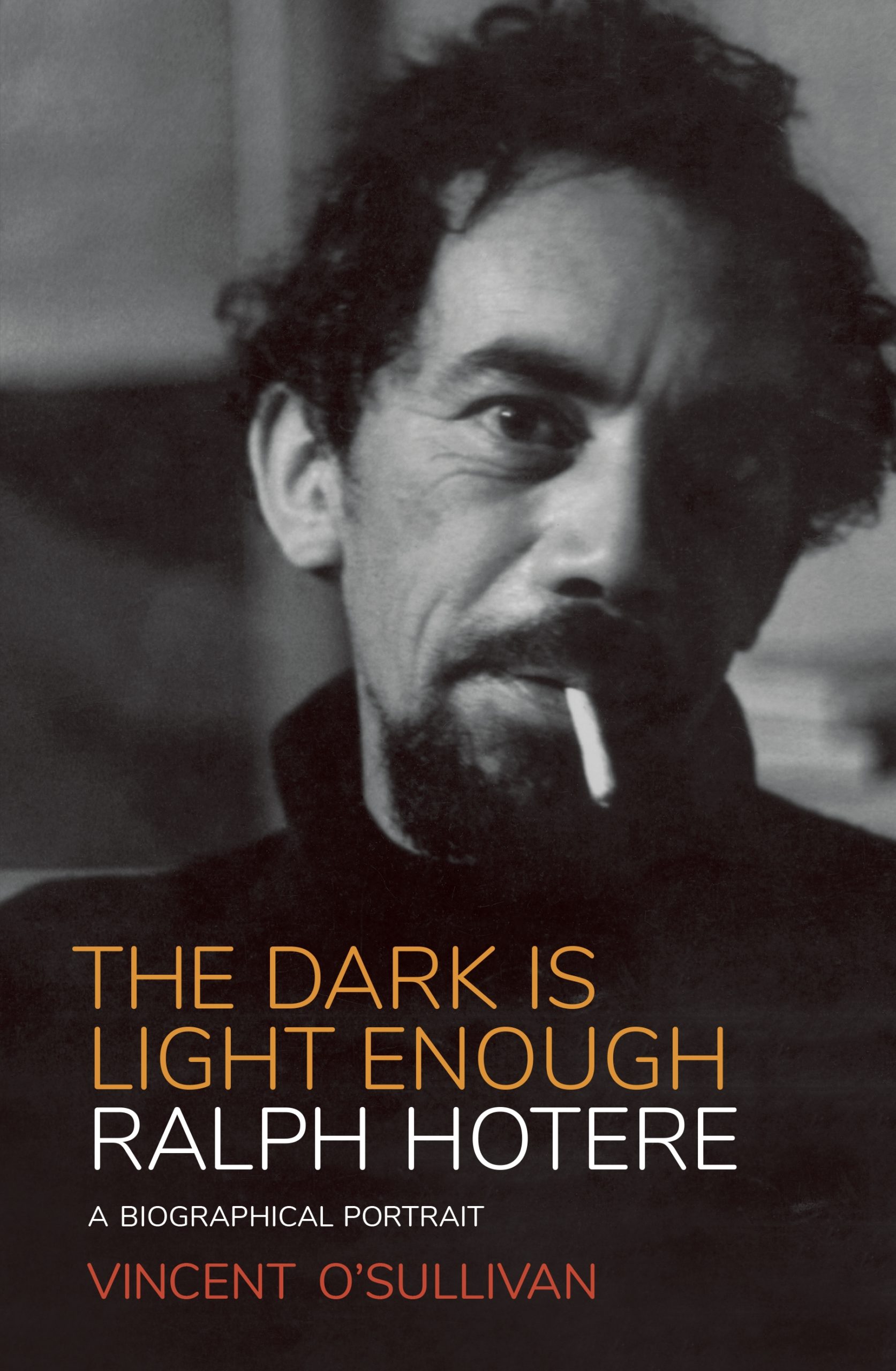
The Dark is Light Enough: Ralph Hotere: A Biographical Portrait

by Vincent O’Sullivan


Penguin Random House


$45.00


ISBN: 9780143775157
Imprint: Penguin
Published: 20 October 2020
Pages: 368
Format: Trade Paperback


Reviewed by Ian Wedde


Vincent O’Sullivan has written a comprehensive and intimate biography not an art history monograph. It’s necessary to state this up front because, although a separation between a ‘life’ of Ralph Hotere and an account of his work as an artist would be absurd, the generous biographical scope, depth and detail of this book both exceed, and provide critical insights into, the conditions from which Hotere made his art. It provides the kind of rich personal detail that a more academic art-historical perspective might have skimped or might not have sought nor gained access to.

In a lengthy, in-depth interview with O’Sullivan by Bruce Munro in the Otago Daily Times (19 October 2020), O’Sullivan says that his and Hotere’s relationship, ‘… was a congenial friendship but we weren’t what you’d call intimate friends.’ In 2004, Hotere asked his friend to write his biography. O’Sullivan makes it clear that Hotere didn’t want ‘anyone with an agenda’, which is possibly a careful way of saying anyone from the art world nor, possibly, anyone co-opting or stereotyping Hotere as a ‘Māori artist’.

The latter was something the artist resisted more by silence than by explicit denial, most obviously to counter the restriction of what he and his art could be, and (the silence suggests) to protect the privacy of those vital aspects of his life and upbringing that were informed by his relationships within Te Aupōuri culture and history. O’Sullivan says, ‘I think my ignorance might have been to my advantage. He realised I wouldn’t be pushing any particular line.’ O’Sullivan’s modesty and Hotere’s self-protective caution constitute a laconic brief for a book that could be written from a distanced and watchful viewpoint (albeit a trusting one) rather than one narrowly defined as Māori, or immersed in the ‘art world’ and over-determined by art history O’Sullivan records that Hotere often preferred to meet at the pub rather than go to his own exhibition openings.

At this point an elephant enters the room not art history as such, but its necessary corollary. There are no reproductions of art works by Hotere in this book. This was clearly not the artist’s wish, as noted by O’Sullivan in his understated Introduction to the book; nor was it O’Sullivan’s own decision in what would have been a bizarre contradiction of his friend’s wishes. The result is a detailed narrative referencing numerous art works that we cannot see while reading about them. The reasons for reproductions of works by Hotere being excluded, as well as the reasons why the book was temporarily halted and, in fact, never continued past the time when O’Sullivan was barred from meeting with the artist, are not discussed by him in his Introduction.

The Introduction ends with a forthright and generous disclaimer: ‘I see what I have written as an incomplete portrait, rather than the more desired account of one of this country’s great artists and compelling personalities. Future scholarship will attend to so much more. But as Ralph himself asked me to write on him, and I assured him I would do so, it now seems a personal debt I owe to him, and to his constantly encouraging whānau.’ The subtitle that O’Sullivan has given his book, A Biographical Portrait, with its elision of text and picture, is surely deliberate, even (if I may guess) a challenge or wero.

The question of why this state of affairs came to exist and had the anomalous consequence of an artist biography without illustrations is best put aside at this point; no doubt discussions about it will continue to find their way into the public domain. To date, such discussions include an in-depth article by Mark White in stuff. But for me, one unintended consequence is the book’s weighting towards a biographical overview with the rich and sympathetic presence of ‘constantly encouraging whānau’, friends and colleagues; not to mention the exceptionally scholarly, detailed and generous Notes, Further Reading and Index that complement the book’s research and manaakitanga. Far from being irretrievably impoverished, the book offers a great many ways in which to find images of works by Hotere as well as a rich resource of secondary sources, catalogues and discussions of his oeuvre in a wide variety of publications.

A quick online check-in at Auckland Art Gallery reveals forty works available for viewing in the collection site as well as collaborative works with Bill Culbert and photographic portraits of the artist by Marti Friedlander and John Miller. A similarly perfunctory search at Te Papa finds in excess of sixty works, including major collaborations with Bill Culbert and the monumental ‘Black Phoenix’ (1984-88); the Alexander Turnbull Library archive has 732 ‘results’ including many publications, catalogues and journals with illustrations; and so on. O’Sullivan’s book with its numerous detailed, carefully chosen but comprehensive references can certainly be read as a guide to the substantial complementary resource of unrestricted public archives.

There’s another respect in which the absence of images feels at times like an unintended bonus. Early in the book’s biographical timeline we read accounts of the Hotere family’s life when Ralph was a child. Their first house on land at Taikarawa, north of the Hokianga harbour near Mitimiti, didn’t have electricity; working days began about 4 a.m. before dawn when older children rounded up the cows for milking. This story, rather than, or as well as, art-historical models of tenebrism in art, is a sympathetic situation from which to look ahead to Hotere’s mature work, in which darkness, sometimes in combination with white streaks or splatters, came to be a signature effect. In one of the book’s most sympathetic accounts of originating or contributing factors to the darkness in Hotere’s work, O’Sullivan notes that the artist grew up:

… in a household where after sunset, darkness was the norm, a home of candles and lamps and open fires, of golden streaks reflected in expanses of glass, of refractions and shadows and pools of light. The darkness was not only those gradations of te pō that variously carried in Maōri thought deepening notions of vacancy and loss, the notions of what preceded life and followed death. It was also home.

While this and other biographical sketches cannot replace images of art works, they are vivid and complex and contribute significantly to the ‘portrait’ components of this biography. Also significant, as O’Sullivan notes with careful understatement, is the origin of the artist’s Te Aupōuri tribal name, in which ‘au’ refers to smoke or a current, and ‘pōuri’ to darkness, the pall under cover of which the tribe escaped an attack. Such contributing narratives need to be read in association with clear evidence of Hotere’s knowledge of and admiration for the American Ad Reinhardt’s minimalist ‘black paintings’ from the 1960s.

Similarly, the frugality and make-do skills of Hotere’s use of recycled materials, such as rusty corrugated iron sheets, lead-head nails and recycled timber reflect the kind of useful stuff you’d hoard frugally in remote, under-resourced places, not to mention where I saw such careful stores while living near and visiting Hotere’s studio at Port Chalmers and home at Carey’s Bay between 1972 and 1975. At the same time, their markings are often reminiscent of Mark Tobey’s white calligraphy or ‘white writing’, with which Hotere was familiar by the early 1960s, having spent time in England and Europe between 1961 and 1965, including time in Vence in the South of France at the Korolyi Foundation; and their materiality recalls the pitura matèrica of the Catalan artist Antoni Tàpies whose work Hotere knew well before spending time in Barcelona in 1988.

O’Sullivan, in his detailed and respectful account of Catholicism in Northland, notes that the Hotere family lived intimately with the legacy of Bishop Pompellier, the French Society of Mary missionary, during the formative years of the artist’s childhood and youth. The environment in which Hotere grew up was trilingual: Māori, English and the Latin of the Catholic church. It was rich in the images and symbols of both Catholicism and Māoritanga. What becomes clear while reading O’Sullivan’s ‘biographical portrait’ is that it implicitly resists and confounds an all-too predictable model of art history programmed to a greater or lesser degree by distinctions or weighted tension between the benighted, ‘primitive’, narrative art of remote or provincial cultures, and the sophisticated, evolved art of metropolitan centres.

Hotere grew up in a visually and symbolically complex, linguistically rich and environmentally distinctive environment; his subsequent political activism in works such as the Aramoana protest panels was seeded by Te Aupōuri history, as well as by experiences of protest and resistance in London and Europe in the 1960s; the symbolic complexity of his early environment met with and in many respects complemented what he encountered during the Karolyi International Fellowship that enabled him to work and exhibit in France and Europe for several years, and view works, including Matisse’s final masterpiece in the nearby Chapel of the Rosary at Vence. O’Sullivan writes that this was one of Hotere’s favourite places to visit, and his careful account of what grew in the space between Matisse’s Stations of the Cross and ‘those fourteen scenes Ralph had looked at for years at Hato Hēmi in Mitimiti, and as a schoolboy at St Peter’s’ pretty much closes the false gap between province and metropole.

This rich section is followed by one that folds Hotere’s family story into a time of vital transformation. Hotere’s brother Jack was killed while fighting with the Māori Battalion at the Sangro River in Eastern Central Italy in 1943, and Hotere and his wife Bet went to visit Jack’s grave at the Sangro River War Cemetery. The biography includes a family photograph of Ralph ‘kneeling, one arm resting along the top of his brother’s grave, holding against the tombstone the rosary his mother had given him to take from home.’

This, writes O’Sullivan, a ‘deeply personal event, a compelling idea, a dominating public or political occasion, a resonant arrangement of words, would propel him to work on a series of paintings that expanded and diversified until their impelling drive was resolved.’ This was the Sangro series, made, with what would be Hotere’s typical recycling economy, ‘on the dismantled sides of small packing cases’, and marked with ‘the kind of stencilling familiar to young men who had worked on farms or in freezing works or wool-stores.’ O’Sullivan notes that, ‘For the first time Hotere used extensive areas of black, mostly in the wide framing borders. It was also, perhaps, the first occasion that he drew on the specific Māori resonances of what was meant by te pō.’ This series, O’Sullivan suggests, ‘that the visit to Jack initiated was the beginning of what te pō both declares and contains, what it takes to itself, what it allows to be revealed.’

O’Sullivan’s account continues for a further two-hundred and thirty-something pages from this moment; but it remains the pivot around which this rich ‘biographical portrait’ turns into something substantially more than a bare or mere text.

I’m delighted but unsurprised to see this important book among the finalists for the Ockham Book NZ Awards, and I wish it and Vincent O’Sullivan (and Ralph Hotere) the best of luck hiahia koe ki te pai rawa atu!


Ian Wedde is a poet, fiction writer, critic, and art curator, and the recipient of well over 30 major awards, including New Zealand Poet Laureate and Officer of the New Zealand Order of Merit. His latest novel, The Reed Warbler, was published by Victoria University Press.

'NZ literature is such a vast and varied thing' - Pip Adam

Read more

.

.

.

Everything Changes

by Stephanie Johnson


Penguin Random House


 $36.00


ISBN: 9780143775539
Published: 2 March 2021
Imprint: RHNZ Vintage
Pages: 288
Format: Paperback


Reviewed by Rachel O’Connor


Stephanie Johnson’s 1988 novel The Whistler was written from the point of view of a dog called Smooch. In one of Smooch’s past lives, he is the kuri belonging to Kupe’s wife’s, making the journey to Aotearoa from Hawaiki. In Everything Changes, Johnson’s twelfth novel, another dog gets his day.

The story begins on a midsummer day in 2018, when Muzza succumbs to the temptation presented by the twitching tail of the neighbour’s blue-eyed Himalayan cat, and murders it. His canine consciousness, the first of many voices we encounter in the novel’s shifting array of narrative viewpoints, is a curious and endearing mixture of truncated syntax and visceral sensory detail, and leaves the reader in no doubt of his guilt.

Muzza knows he is a bad dog. Yet Col(ette), Muzza’s doting adoptive guardian, does not blame him; in her view he is a complex character whose behaviour can certainly be explained by some trauma in his troubled past. It soon becomes apparent that the cat’s bloody demise is just one in a series of violent and troubling events in the novel, and one of a long string of reprehensible acts for which there is little retribution, but little resolution either; every character in this novel drags behind them the dead weight of a life that they have not lived well.

Though Muzza’s crime goes unpunished, it provides the narrative’s initial catalyst for change. Their Auckland neighbourhood doesn’t view the fatal attack with the same leniency as Col, so she persuades husband Davie that they need to change addresses – and alter the course of their unhappy life. With their pregnant daughter Liv in tow, the couple takes up ownership of a dilapidated motel and tearooms perched on the northern highway at the crest of the Brynderwyn Ranges. Col plans to transform this into a lucrative luxury getaway, an off-grid, book-filled haven that she whimsically christens Skyreader’s Retreat.

The family’s own retreat from the big city proves far from idyllic. An oppressive air of neglect and abandonment permeates their new home. The accommodation is cramped and dingy and the stillness of the night is rent by Davie’s convulsive coughing fits and shrieking airbrakes from the steep highway. (A real-life monument marks the site where fifteen people died when a bus crashed off the road there in 1963). Restoration of the rundown building is a gargantuan task which they are ill-equipped to manage. Most crucially, their own relationships are as battered and insecure as the physical structure they inhabit.

Col and Davie have weathered thirty-three years of tumultuous marriage, but the death of their disabled firstborn son, and the years of complicated grief imperfectly cushioned by drink and weed that followed, have critically damaged the family dynamic. Any opportunities for intimacy are disrupted by the presence of Muzza, whose protective custody of Col keeps her husband and daughter at bay, and resentful.

Liv has grown up wild and hard: she scorns her weepy and ineffectual mother and manipulates her blindly adoring father. She’s reluctantly tethered to them because she needs a home and support for her unborn baby. Perhaps the most original and complicated character of the novel, Liv’s modus operandi is self-serving self-protection, and her interactions are marked by calculated obscenity, and by a casual cruelty that is dramatically juxtaposed with her internal narrative of doubt and fear, and with her unexpected capacity for love. The shocking circumstances of her child’s conception are not kept a dark secret, but are also never entirely exposed. Liv deals with her own bad behaviour simply by leaving it behind, and those who choose to love her are expected to do the same.

Liv’s unnerving callousness is set in sharp contrast by the delightfully named character of Choirmaster, a seventeen-year-old boy serving out a two-year sentence of home detention on his uncle’s farm nearby. The security anklet that tracks and confines Choir prevents him from forgetting or escaping his own sad history. His smudged patches of memory and reflection grow in lucidity as his mind resurfaces through the residual haze of substance and social media misuse.

When Choir is employed to assist Davie in rebuilding the retreat, they discover that Muzza is the boy’s own beloved Kaos, left reluctantly behind during Choir’s forced relocation. The shared ownership of the dog forms a flexing chain that connects him more firmly to the pālagi on the hilltop. Despite the complex tragedies of his past, Choir is the most insightful and optimistic of the story’s characters, and the person most nearly in touch with the half-tamed, half-hostile natural landscape that encloses them all. His young voice, authentic and intensely aware, was the one that accompanied me beyond the pages of the novel.

Despite the damaged state of both proprietors and premises, the retreat, against all odds, attracts a few guests – equally damaged characters who are themselves seeking a place to escape their unsatisfactory lives. At this point, the novel relinquishes its tight focus on social realism and zooms out to include a wider and less likely world, and the compelling interiority of the core cast of characters is diluted somewhat by the arrival of Aidan, a wildly famous but currently incognito fantasy series writer, Julia, a skeletal anorexic, and Nicky, her chronically distressed mother.

A cascade of alarming and upsetting events ensues, and the resulting imbroglio brings out the best, and the worst, in characters as they each scramble to get what they want and need. Choir and Julia step up, asserting themselves in brave new ways that bring meaningful, transformational change. The others generally continue behaving badly, or at least in the only way they know how.

Despite its grim catalogue of damage and death, Everything Changes is tragicomic in its tone and delivery, which constitutes both a disappointment and a relief. The narrative is laden with a litany of grave social issues that, stacked up alongside the more mundane sorrows of generational chasms, parental failure and loss, and marital delusion and disenchantment, form a fraught emotional topography in which pain and confusion abound. The occasional absurdities of the novel’s action and populace thus provide welcome respite, and the result is something of a literary macchiato, a blend of bitter darkness pleasurably lightened by a dash of soft steamy froth.

Its momentum aided by the very short chapters and constantly changing points of view, the plot of Everything Changes moves at some pace, reaching its natural climax with the onset of Liv’s labour and childbirth. The tangle of narrative threads is unravelled and tied off, expertly if somewhat rapidly, in the final pages of the novel. But poetic justice makes no appearance, perhaps in itself a masterly stroke of realism. We live, after all, in a chaotic and ever-changing world in which happiness is largely an unintended consequence, and where very few people ever get what they truly deserve.


Rachel O’Connor is a writer, tutor and researcher, born in Christchurch. She moved to Auckland in 2014 after two decades in Greece. Her first novel, Whispering City, set in Salonika on the eve of World War I, was published in 2020 by Kedros.

'I started to feel very guilty, as though I’d perpetrated a crime, a rort' - Stephanie Johnson

Read more

.

.

.


National Anthem
by Mohamed Hassan


Dead Bird Books


$35.00


ISBN: 9780473541439
Publisher: Dead Birds Books
Published: 2020
Pages: 68
Format: Paperback


Reviewed by Alison Wong


Once, on a poets’ tour of Ireland, I opened a novel that happened to be lying on the table. I had been surrounded by Irish voices for perhaps a week and as I read the pages, Anne Enright’s story came alive with a full-blown Irish lilt. Even within my head, it was an immersive auditory experience.

For a somewhat similar reason, although you can read and deeply appreciate Mohamed Hassan’s poetry exclusively from the page, I suggest you find his poetry performances online and, if possible, take the opportunity to see him live. (He won the 2013 Rising Voices Youth Poetry Slam and the 2015 NZ National Poetry Slam; his performances are compelling.) Then when you read this collection, the words will come alive with his actual voice; you will see his face and recognise this fellow New Zealander, who is speaking to you.

And speak, he does.

Hassan is known for his journalism. His 2016 podcast series, Public Enemy, about the rise of Islamophobia in the US, Australia and Aotearoa post-9/11, won Gold at the 2017 New York Festival Radio Awards and his 2020 Radio NZ/Middle East Eye podcast series, The Guest House, explored the aftermath of the Christchurch mosque attacks.

Now National Anthem has been shortlisted for the Mary and Peter Biggs Poetry Award at this year’s Ockham New Zealand Book Awards. The collection explores similar themes to the podcasts: community, migration, refugees and diaspora, transcultural identity, conflict, nationalism, racism and white supremacy, border control, Islam, the Mosque attacks, anger, loss and grief, mental health, and the search for belonging, peace, home.

Yet poetry is set apart from journalism by its particular musicality and rhythms, its ability in so few words, through stark beauty and intimacy, to seduce and ambush with the whole gamut of human emotions and experience.

In ‘When they ask you where you are (really) from’, Hassan writes:


Tell them

you are

….

a whisper

or a window


to what your country

could be


if only

it opened its arms

and took you


whole


This is the first poem of the collection. Where do we hide our faces after that?

National Anthem has four sections and the titles of the first poems in each of the sections either begin with ‘When they ask you…’ or ‘When they tell you…’ They are familiar interactions for anyone with a non-white ‘migrant’ background, whether we arrived last year or decades ago as a child, whether our families have lived in Aotearoa for generations.

Where are you (really) from? with the emphasis on the really, which may or may not have been explicitly spoken. Go back to —– or Go back to where you came from often with expletives. Why do you speak (English) so well? These suggest the precariousness of belonging for those of us who look or sound or have customs different from what is considered normative. But in the final section of the book, the title of the first poem is new and probably only addressed to Muslim New Zealanders: ‘When they tell you they are sorry’. Its end is shocking.

In the poem, ‘Bury me’, Hassan describes loss that ‘lives with you, sleeps in the spare room/by the laundry and occasionally eats your food’. In ‘John Lennon’, he says, ‘I am sweating/guilt a homeland I have/sewn onto my palms/but can’t dream in hold/my Arabic between/my knees’. He says, ‘my mother taught me//Allah blesses every failure’ …. ‘I unbutton English grammar/but daydream of not having/a tumoured tongue/tumbling over the weight/of expectation’ …. ‘it shouldn’t hurt this much/to love a country that does/not love you back//that no longer has a place for you’.

In the poem, ‘It’s been 48 hours since I last saw a white person’, Hassan finds himself in Istanbul where he cannot speak the language, ‘where you can still smell the shrapnel and trauma’ and realises no one has asked him where he is from, ‘and when they did it was warm/and kind and not distant and not waiting//for a chance to snap and not watching me/from the corner of their eye…. and for a second I feel safe/like a home or a book you can see yourself/inside of’.

‘And before that we were stars’ tells the story of refugee lovers trying to find their way to be together: ‘we’ve been stretching words like this/four years making bridges out of paper/folded like passports/like sailboats/floating into the sky/have you ever tried to fold/your heart into an envelope?’

Sometimes Hassan’s poems are a quiet heartbreak; sometimes they are a loaded gun. There are hard-hitting poems such as ‘White supremacy is a song we all know the words to but never sing out loud’, those with the brutal clarity of ‘Aotearoa Inc’. There are poems of warm, defiant gentleness like ‘The guest house,’ which pays homage to the Al Noor and Linwood Mosques.

Yet in the darkness there is also humour. ‘Office Christmas party’ begins:


All my life I’ve wanted to fit in and never have

like a hippopotamus at an office Christmas party

who doesn’t drink for religious reasons


no one knows what to do with me

small talk feels like root canal

I am bored by my own existence


I laughed at the beginning of ‘The mother of the world’:


Only Arabs would care so much about appearances

they’d have a second lounge with plastic wrapping

you’d get a smack if you sat on it without permission

God help you if you spilt food


Plastic-wrapped furniture is number 26 in the old online list 102 Ways That You Know You’re Chinese. I remember visiting another Chinese family and having a cup of tea on a plastic-wrapped sofa. My Pākehā husband tells me his grandfather and many others in 1950s and 1960s New Zealand also had plastic-wrapped sofas, a post-war strategy to preserve the good furniture. In the particulars of this scene – the dynamics between elders and children, even the furniture – we find our common humanity.

In his Radio NZ interview with Kim Hill last year, Hassan said that his identity precedes him wherever he goes. The Christchurch Mosque attacks taught him that if he is going to be visible anyway, he may as well be visible on his own terms. He said belonging is an act of resistance, a verb.

In the last poem of this collection, ‘(un)Learning my name’, which Hassan also performs online, he describes the way his first white teacher kept correcting the pronunciation of his name in front of the class:


until I learnt how to stumble

/ over

……./ my identity

/ the way

…………/ she did
.

It took nineteen years to be able to say his name publicly again the way his mother did when she named him. The poem has struck a chord. In October last year this poem had already hit one million views on Twitter. Like so many poems in this collection, readers/listeners/audiences either recognise something of their own experience or they learn from his specificity. Teachers now reconsider how they interact with their students. As he speaks his own name, the poem ends:


it feels like I have

/stolen

something back.


This collection is part of a challenging conversation. These poems are not the last word. I look forward to the next collection where Hassan takes us further along on his journey. But here, now, he suggests possibilities for a new kind of national anthem. He steals something back for himself and his community. He steals something back for all of us.


Alison Wong writes poetry, fiction and creative nonfiction. She is coeditor of A Clear Dawn: New Asian Voices from Aotearoa New Zealand forthcoming from AUP in May 2021.


'The thirty-five of us were in the country of dream-merchants, and strange things were bound to happen.' - Anne Kennedy

Read more

.

.

.

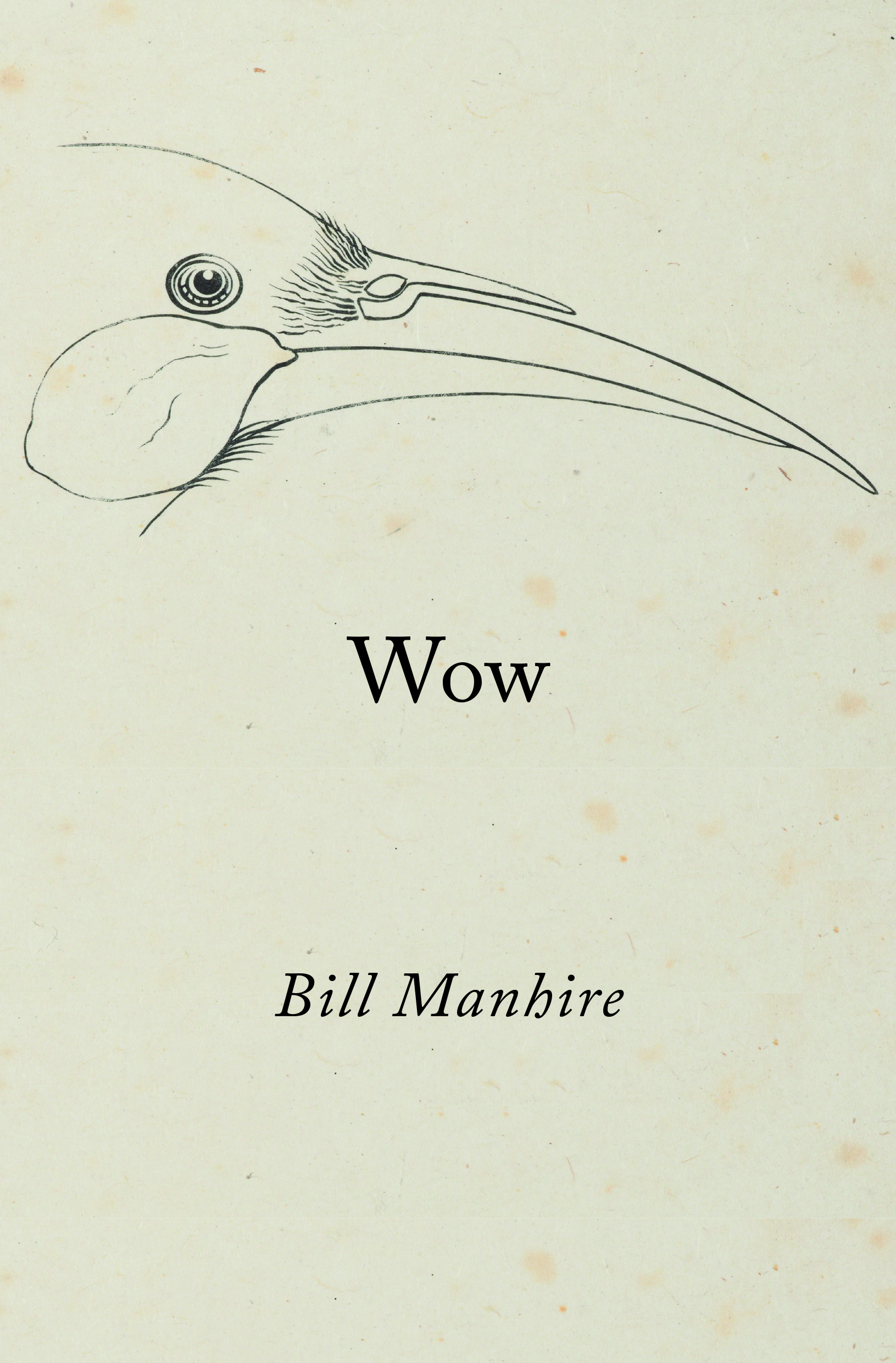
Wow
by Bill Manhire


Victoria University Press


$25.00


ISBN: 9781776563173
Publisher: Victoria University Press
Published: November 2020
Pages: 87
Format: Paperback


Reviewed by Anna Jackson


This is a collection full of birds and full of song. It opens with a ballad telling the story of the huia – ‘I was the first of birds to sing / I sang to signal rain / the one I loved was singing / and singing once again’ – and the last section of the collection ends with a poem almost in prose, ‘After Surgery,’ in which ‘A small bird flies out of the body, out of a blink perhaps, / maybe out of the lungs.’ This poem is followed by the final poem in the collection, ‘Little Prayers (15 March 2019)’, which is both a lament and a hymn, and a kind of a round, in which the closing line is also the opening line. A boy and girl sing, terribly, in another poem in the collection; in another, a robot, who also has a narrative function, makes music from deep within its machinery (and poetry out of typos); omens and similes sing together in another.

Bill Manhire’s poetry is always lyrical whether the lyricism is the lyricism of the ballad or the lyricism he finds in ordinary, unmetred New Zealand conversational speech. Sometimes it seems as if you can hear a poem tuning up, finding its rhythm before it turns itself into song. As it lifts into song, it lifts, too, into meaning.

For example, from ‘Isolation Notes,’ this perfect fragment, which I first encountered on Twitter:


Hospitals and schools, beds and desks

all that courage

all those corridors


The rhythms are unconventional but moving – the two institutions, the two representation objects, hospitals and schools, beds and desks, paired as two phrases that both bookend their unstressed syllables with stresses; the repeated stress at the beginning of the following two lines, all that courage, all those corridors, leading into the silence of no more needing to be said. In contrast, the more conventional ballad rhythms of ‘Huia’ that are so confidently established are not quite sustained: the alternation of four stressed lines with three stressed lines begins to fall away; an expected rhyme gives way to the not-even-half-rhyme of frost and love. Throughout the collection, the poetry shifts from conventional, usually iambic rhythms, to the no less lyrical rhythms of conversational speech, sometimes setting up a kind of syncopation where one is heard against the other, sometimes moving from one to the other as a bird might move from branch to branch, or between branch and sky.

The wonderfully anti-epic ‘Noah’ follows this sort of movement from prose rhythms to poetry and back to prose again.  Here is the whole poem:


Noah


I abandoned the bad band

and joined the good band: I thought

that we would flood the world with music.

The first rains came and soon the trees

were somehow growing out of water –

we travelled through the forests

by canoe.

Eventually we built our boat,

the famous one with windows and the deck

of many roofs. Things that once were mountains

sailed on by, and then the whole of the world

had gone, and everything was sky. And yes

I brought instruments aboard – too late for some,

it’s true. As for the animals, I never really knew.

Someone else did that. In the end we ate a few.


It is a beautifully unexpected piece of revisionism to have Noah not at all interested in saving the animals, but concerned only to bring aboard his instruments. I love the idea, too, of the instruments he was too late for, gone the way of the unicorn. But music has been instrumental in moving the story along right from the moment when Noah abandons the bad band for the good band, and the prose rhythms shift into the iambic rhythms of poetry. How else to explain the early days, before the ark was built, of travelling by canoe? It is hard not to suppose that the canoe preceded the ark simply because it sounded so good. The poem floats along, from rhythmic phrase to rhythmic phrase, until the last lines ground the poem again in the prose rhythms of the typical Manhire speaker. Noah begins to sound, here, very much like the ‘Supposed Person’ Manhire confesses to trying to kill off, the voice he writes so many of his poems in: a ‘loosely composite person,’ male, New Zealander, maybe once a jockey, maybe a retired farmer, ‘determinedly laconic, opinionated, alive in the vernacular.’  (‘Supposed Persons,’ The Carcanet Blog.) Of course they ate the animals. It was the practical thing to do. And it rhymes.

The most substantial poem in the collection is ‘Warm Ocean’, a poem which begins with what looks like a typo: ‘Someone says lonely let’s go for a stroll.’  This voice is joined by another someone and another, all uttering platitudes – ‘someone says it was never about the money’ – more or less out of context, or with the only context being this stroll that everyone, now ‘we,’ go on together. The stroll takes in a landscape made up of cliffs and ocean, a long stretch of wood, a stream-bed; birds, of course, and books; time, in the form of a past ‘before the vows and boasts / before the oars demanding water’ and in terms of the noise of the world, the stones that go ‘clock cluck clock’; and by the end of the poem, which also seems to be the end of the world, we are left with small fires, shipwrecks, and (unsurprising only because this is a Bill Manhire poem) an orchestra ‘breaking up the ballroom.’

It is a landscape that is a recognisably Manhire landscape, made up of snatches of lyricism, repeated phrases, phrases that rhyme, phrases that have a rhythm to them, ‘yes all of that and more / all of that and more,’ and that is made up, too, of elemental things, snow, frost, the ocean, that even when they are brought alive by a detail – ‘sand that shuffles aside when she whispers’ – could have been lifted out of another poem, as if they are echoes, made up of language, as much as they are objects, ‘something sighing / like the troubled echo of a sigh.’  But this sense that this is a world made up of language takes nothing away from its transcendence; rather, it lends to the world we live in this sense of lyric significance. We hear in the words around us – words like ‘wow’ and ‘wherewithal’ – their loveliness and lyricism, their potential for beauty. When a telephone or cigarettes are introduced into the poem, we recognise them, too, as belonging both to our world and the world of poetry. Things have the significance of things in dreams, or cinema.

This has been a year of epic poetry, with Emily Wilson’s brilliant new translation of the Odyssey and Maria Dahvana Headley’s equally celebrated Beowulf. The lyric might seem the opposite of the epic, with its lonely interiority, but when a Manhire poem takes flight, and when loneliness is taken for a stroll, the epic vision that the lyric can also, he shows, give rise to is all the more resonant and all the larger for being distilled into song.


Anna Jackson’s most recent collection of poetry is Pasture and Flock: New and Selected Poems (Auckland University Press, 2018).

'I felt energised by the freedom of 'making things up’' - Maxine Alterio

Read more

.

.

.

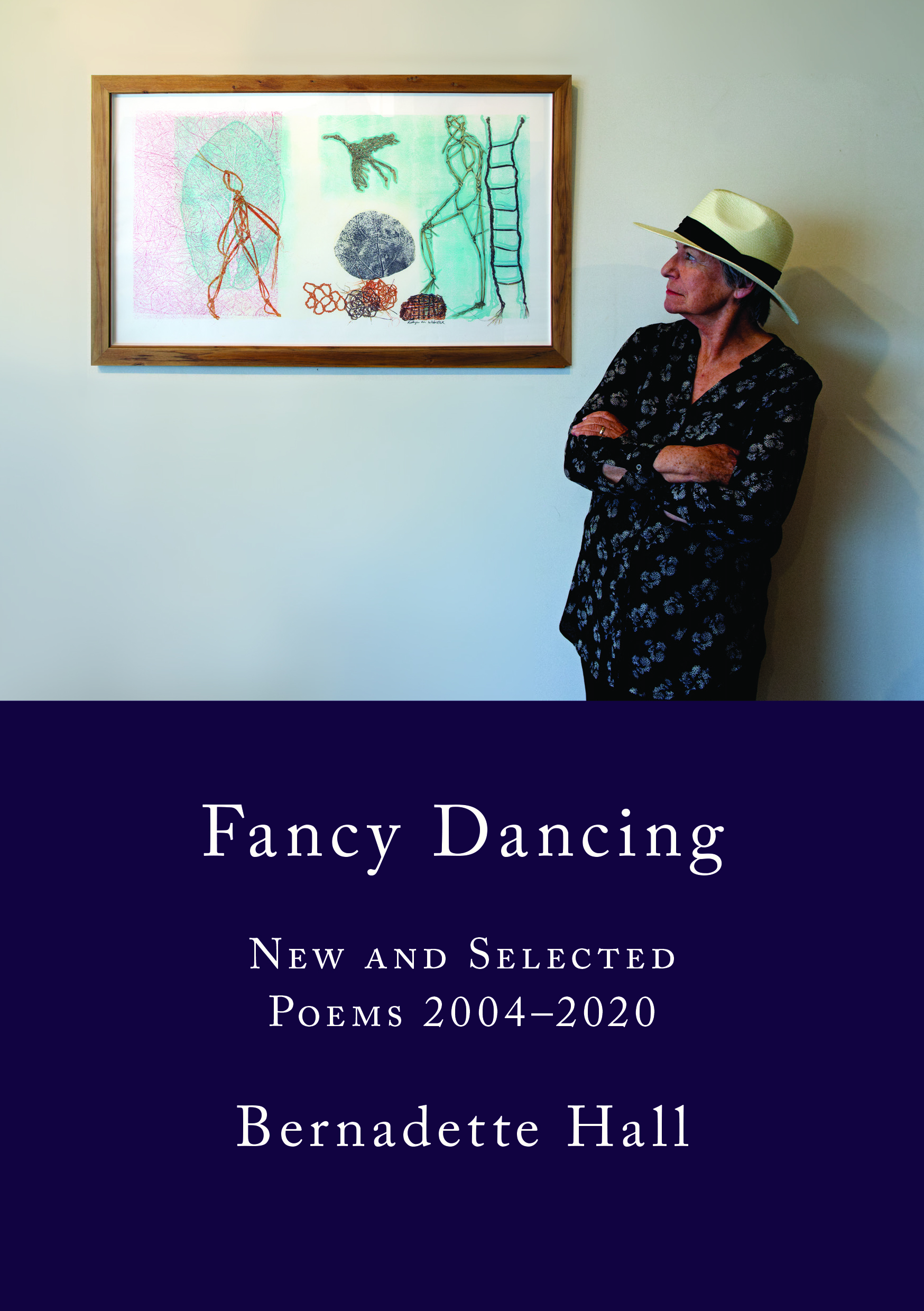
Fancy Dancing: New and Selected Poems 2004–2020
by Bernadette Hall


Victoria University Press


$30.00


ISBN: 9781776563210
Publisher: Victoria University Press
Published: November 2020
Pages: 135
Format: Paperback


____


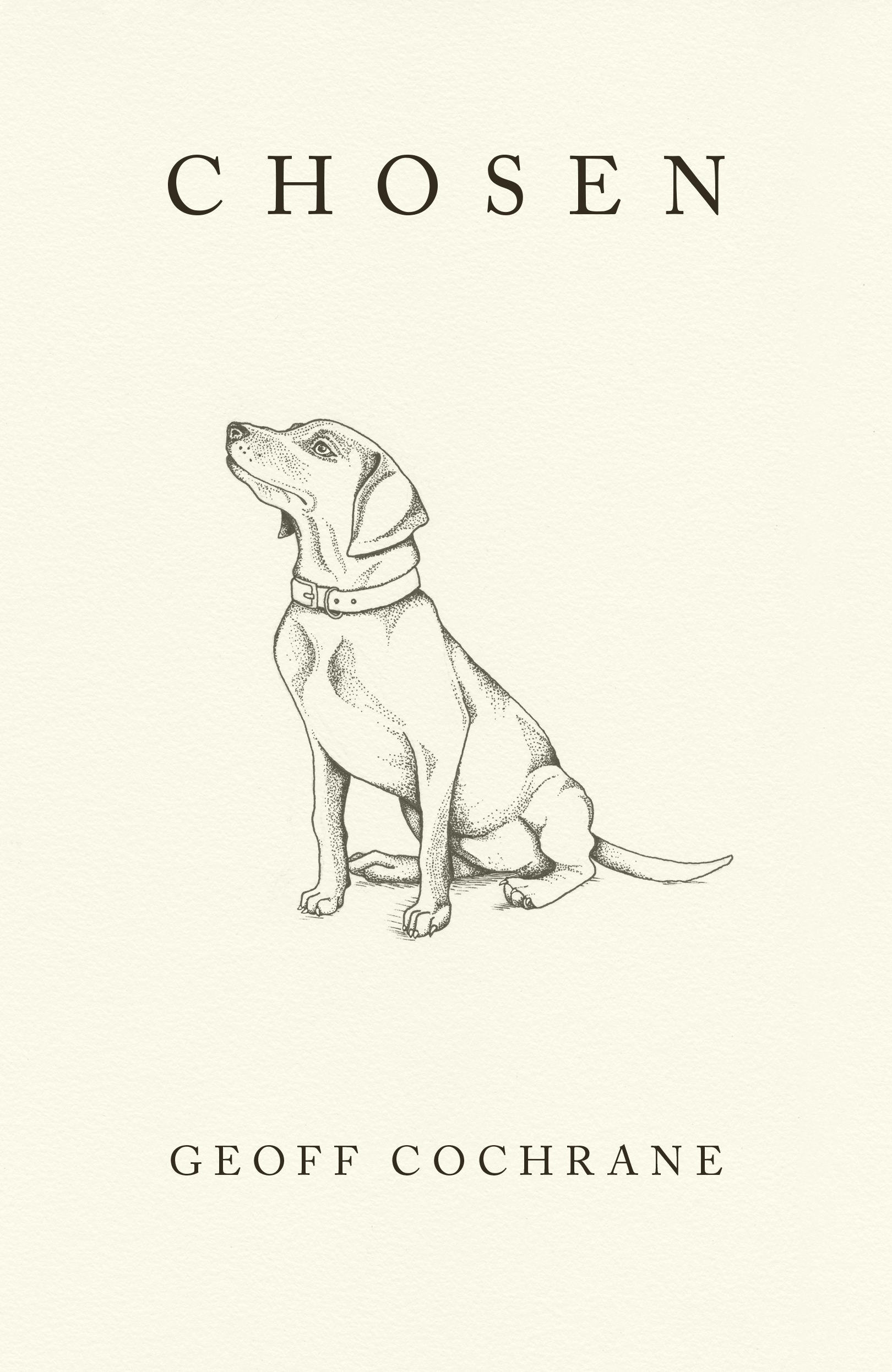
Chosen
by Geoff Cochrane


Victoria University Press


$20.00


ISBN: 9781776564088
Publisher: Victoria University Press
Published: November 2020
Pages: 47
Format: Paperback


Reviewed by Lynley Edmeades


At her recent Dunedin launch for Fancy Dancing, a friend commented in his speech that there is something very Irish about Bernadette Hall’s poems. In reading this New and Selected, I tend to agree, yet it’s hard to pin down precisely the qualities of her work that make this characteristic true. It could be lyric intensity that she brings to much of her work, the strength of which will make even the most complacent reader skip a beat. It could be the humour and humility of her work; Hall is never afraid to show how much she likes to laugh, both with good company and at herself. It could also be the importance of place (Ireland included) to many of these poems – we go from Amberley Beach to Antarctica, from Dunedin where the poet grew up, to Rathcoola in Ireland itself, where Hall held a now-defunct residency back in 2007.

Potential ‘Irishness’ aside, there are dexterities displayed here for the simple reason that these poems – being a ‘new and selected’ – are the crème de la crème of Hall’s oeuvre. One need not go searching for the strong pieces: these poems have been distilled from an already-refined batch. In this discerning curation, readers will start to see patterns, obsessions, tics, if you like. One particular characteristic I noticed as I worked my way through these was the use of that now-tired device, “it’s like…” To my mind, Hall is the great kuia of the New Zealand simile, even when attaching a locale runs the risk of being too parochial. It might be more accurate to say that, as far as the use of the simile in New Zealand literature goes, Hall has prowess to boot, and everything that comes after her is in some part a homage to this. Hers are masterful, arresting, and unsurpassed: ‘the pine forest looms like a collapsing / building’; ‘they stand there / braced like a locked gate’; ‘the rain is like mice scrabbling in the ceiling’; ‘It’s like walking into a room that’s full / of McCahons, you know, the way the air changes…’; ‘the colour seems to hang like smoke’; and, my favourite of them all, ‘Waves bunch up / like Christmas.’ I could go on, but you get the idea.

And this is not to say that she has no other tricks up her sleeve – quite the opposite. Rather, her similes fall in step with her playfulness, her tenderness, and, in the final sonnet sequence (that constitutes a good part of the new in the ‘new and selected’), her excavation of a subconscious or memory-laden mind. In this final ‘chapter,’ if you like, Hall moves into something of a Proustian remembrance; the poet digs around in both her mind and her tool-belt to find new things to say and new ways to say them. She takes small moments as if they are photo negatives and blows them up and examines the contents: ‘Now it’s time to expand the narrative. So come / with me into a dimly lit corridor in the Mayflower / Student Hostel beside the Mississippi River / in Iowa.’ These pieces are populated with various selves and lovers and confidantes, and the use of the second person often pushes the reader into a place of intimacy with the poet herself: ‘I remember you in your scarlet tights’; ‘the way I had that other / question for you as I buttoned up your coat.’

There is a comment from Hall on the back of the book, where she says that Fancy Dancing is ‘as close as I’ll ever get to writing an autobiography. If this is the case, there is certainly a lot of Hall in here to deduce a life story. But the beauty (a word that comes up often in Fancy Dancing) of this collection is that there are lots of lives and lots of stories, and put together they amount to much more than the sum of their parts, to use that tired cliché. Or, to pay homage to the queen herself, reading Fancy Dancing is like being able to choose a single malt whiskey over a blend, and then being offered seconds.

Another release in the Cochrane annals, Chosen, follows quickly behind his last collection, The Black and the White (2019). Cochrane announced at his recent book launch at Unity Books in Wellington that Chosen was his last book of poems; he’s throwing in the towel, he suggests. But then, donning a pair of worn trackpants, he also announced at the same book launch that he promised his sister he would never wear said trackies in public. I suspect he’s about as likely to write at least another book of poems as he is to make sartorial promises to his sister. This collection, like its antecedent, is concerned with aging and death, and it strikes me that as long as Cochrane stays alive (against his best wishes at times, it seems), he will continue to think about these things. After all, poetry is in part, what keeps him alive, even when he appears preoccupied with ‘the end’: ‘the ping of my own existence,/ping of my own existence,/ping of my own continuing existence’ (from ‘Sundries’).

While slim and a little scant, Chosen is the latest in the poet’s urbane wanderings. Cochrane takes us around Wellington – up Marion Street, to Victoria Street Café, out to Island Bay – and through his daily meanderings – a trip to New World, the doctor’s surgery, the breakfast table: ‘Insulin and Weet-Bix for Breakfast. Three Weet-Bix with / a teaspoon of sugar. And I sit here perking like an old / Cona coffee percolator’ (from ‘Shoot’).

Like many of his peripatetic predecessors who wander alone but take comfort from the literary conversation that continues across the generations, the poet is chatting with some of his favourite chums: Donald Barthelme, Nicolson Baker, George Saunders, John Berger and John Updike, to name a few, are all in there. (The only women to get a mention are a nameless dog owner, Wendy Cope and ‘Ashleigh,’ to whom Cochrane asks forgiveness: ‘I open my mouth and dreadful things / totter out of it.’) And yet, the other literary great that seems to haunt these poems (and much of Cochrane’s work perhaps) but doesn’t get a mention here, Frank O’Hara looms large. As the poet himself admits: ‘I like what’s slim./ I like what’s portable./ I look to what I’ve read before with pleasure’ (from ‘Summer’), conjuring up the New York School with his clipped, diaristic lyrics.

Chosen is, like O’Hara’s Lunch Poems or Barthelme’s Paradise, as Cochrane himself says (of the latter), ‘a zestful wee caprice as light as cake.’ It may not satisfy the probing reader, but there’s something very comforting in knowing that we have our very own O’Hara, drinking coffee and smoking a cigarette outside Victoria Street Café, or catching the number 2 bus home to Miramar.

.

 …………………………..           


Lynley Edmeades is the author of As the Verb Tenses (OUP, 2016) and Listening In (OUP, 2019), which were both longlisted for the Ockham New Zealand Poetry Prize. In 2018 she was the Ursula Bethell Writer in Residence at the University of Canterbury. She has a PhD in English and lectures at the University of Otago.


'...we were there as faith-based writers, as believers in the mana of Oceania...' - David Eggleton

Read more