.

.

.

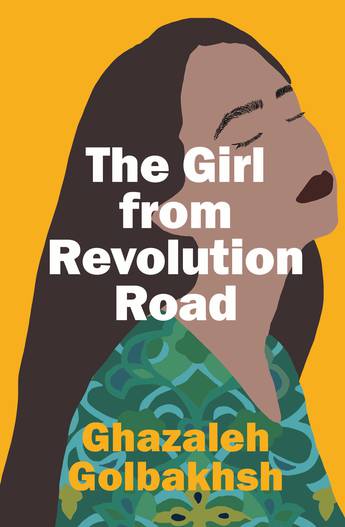
The Girl from Revolution Road
by Ghazaleh Golbakhsh


Allen & Unwin


$36.99


ISBN:9781988547398
Publisher:Allen & Unwin
Imprint: A&U New Zealand
Published: September 2020
Pages:240
Format:Paperback 


Reviewed by Angelique Kasmara


Ghazaleh Golbakhsh is an Iranian-New Zealander best-known as a filmmaker; her most recent documentary series is This is Us, centring on Muslim New Zealanders, currently screening on the RNZ site. Representation is everything, she says. ‘This incessant need to be like everyone else is not just a cultural thing attributed to immigrant kids. It seems universal for nearly all kids because anything that sets them apart can be used as a cause to mock.’

The Girl from Revolution Road is her first book, an absorbing collection of essays that explore her own experiences. These range from her early childhood in Iran, including the catalyst for her family’s move to Aotearoa (a night they all spent in prison: she was six years old at the time) to lively summaries of men she’s met on Tinder, and a résumé of jobs she’s clocked up along her path, from X-ray filer to barista.

It’s a rare thing to come across essays that speak so directly to my own experiences of growing up in Aotearoa. Much resonated with Golbakhsh’s personal recollections: her family fleeing a country awash in bloodshed and turmoil; people assuming that you don’t speak English; being told that your culture is barbaric, and confronted with people behaving in an openly racist way while everybody else looks away. So many painfully familiar moments, so much wincing in solidarity. ‘As every screen around us broadcast the hostage crisis in real time,’ she writes about the 2014 Lindt Café siege in Sydney, Australia, ‘we sat in the breakroom not able to talk about anything else. [A colleague] let loose. “This is terrible! Why the fuck aren’t we bombing them all?”… He kept on with this offensive vitriol so much that I physically could not stand it. Not one for confrontation, I decided to slam my lunchbox shut and storm off.’

Despite the often heavy subject matter, Golbakhsh’s tread is light. The essays are often darkly funny: ‘He received his draft papers shortly after his eighteenth birthday. While his mother wailed with worry, Babak thought how it wasn’t even the worst birthday gift he had received. That accolade went to a pack of playing cards his dad gave him before he left the family when Babak was five.’ Some humour is at her own expense, especially around her dating disasters. One potential romance withers on the vine of a freak accident. ‘I will always have this one regret: the great German lover that was not to be and the stupid bloody tent spike that ruined it all.’

Through this tour bus of politics, history, pop culture, personal relationships and film, Golbakhsh steers us through small, intimate recollections against a backdrop of history in the making. On being incarcerated at the age of six: ‘My mum goes full-on Mother Lion and demands the police give her access to a kettle so she can whip up some formula. Despite holding a weapon, the young policeman looks terrified and agrees, running to get one’.

When her Aunt Shideh finds out that one of her students has been killed in a bomb attack, she ‘goes to her classroom and looks to the empty seat where Tanaz used to sit. A small bouquet of white lilies has been placed on her table. Even forty years later, this image stays with her.’

Each essay ends without overstaying its welcome, though some endings are too abrupt, and promising exploration is abandoned in favour of an obvious conclusion. ‘Brown Girl in the Ring’ is just warming up when Golbakhsh gives a description of an early Whoopi Goldberg skit (E.T from E.T. the Extra-Terrestrial stays on Earth, turns gangster and accidentally kills his family) and then a final paragraph explaining the difference between assimilation and integration. ‘Integration,’ she writes, ‘asks you to include yourself in society as yourself. It does not ask you to murder your past.’ I don’t disagree, but such a definitive statement feels rushed in its placement next to an anecdote about American comedy. In ‘The King and I’, Golbakhsh recounts a single night of working as a waitress in a strip club. Her conclusion: ‘Strip clubs are just another example of the horrors of capitalism, devoid of meaning and overtly sexist, racist and downright unhealthy for everyone involved.’

There are lines which beg to be unpacked further. ‘It’s probably best not to focus on the irony that Iran’s religious police, who violently resist any Western influences in their land, are still using American imported guns,’ she writes in ‘The Legend of Seven Men and Seven Women,’ declaring hypocrisy to be ‘an important trait of oppressive regimes’. It is not obvious to me why it’s ‘best not to focus on the irony’- not because I need convincing that hypocrisy is an important trait of oppressive regimes, but because hypocrisy is, unfortunately, a large part of the human condition. I’m sure that on a good day, I’d be able to muster up five hypocritical acts before lunchtime. Greater attention to processes of observation and analysis, and allowing the details to do the work, would have given some essays more substance.

Many of the essays here tackle the headlines: the Islamic Revolution, the 1980 Cultural Revolution, the Iran-Iraq war, Sept 11, March 15. But Golbakhsh reminds us that people are far more than the dramatic headlines we’ve come to expect. Sensationalism may serve, in part, to shake us out of our parochial stupor and take notice of world events, but at the expense of individuals, balance and nuance. As well as talking politics, she discusses the way Iranians love a good picnic, their dedication to dressing up, the intricacies of wrapping a headscarf, how to use a Hafez book. These details are an excellent reminder that the continual focus on tragedy means concentrating on what differentiates and divides us, not our shared humanity.

Wry observations, sometimes encased in brackets, remind readers here in New Zealand that progressive attitudes aren’t the sole domain of the West – a call-out to those who are only interested in differences, especially the differences which put immigrant New Zealanders at a disadvantage or reinforce ideas of the primitive ‘other’. The Girl from Revolution Road offers a fresh and vital perspective, and Golbakhsh is not a solipsistic or navel-gazing essayist. The collection may offer a peek into rock pools rather than a dive into the depths. (Perhaps the clue is in the packaging: the bold cover design, the large font, each essay given its own title page.) It’s the first word rather than the last, but still: The Girl from Revolution Road is an important book. An excellent gift for every racist relative who won’t shut up. There’s a better way forward and it’s this: listen.


Angelique Kasmara  is a writer, editor, translator and reviewer from Auckland. Her novel Isobar Precinct, winner of the 2017 Sir James Wallace Prize for Creative Writing, and finalist for the 2019 Michael Gifkins Prize, will be published in 2020. Some of her work will be appearing in the upcoming anthology Ko Aotearoa Tātou | We Are New Zealand.

‘Inspiration is the name for a privileged kind of listening’ - David Howard

Read more

.

.

.

Tree of Strangers
by Barbara Sumner

Massey University Press

.

$35.00

.

ISBN: 978-0-9951354
Publisher: Massey University Press
Published: September 2020
Pages: 238
Format: Hardcover and Ebook

.

Reviewed by Linda Burgess

.


This beautifully presented memoir is sad. Defiantly, powerfully, intelligently, cripplingly sad. While there is redemption of a sort, there are no winners. For Barbara Sumner, when a baby is given up for adoption, as she herself was in 1960, there can be no winners. Adopted people, she writes, ‘come from nowhere. You are strange fruit of obscure origin. The lack of a bloodline marks you.’

Like many Pākehā born in that era, I’ve got numerous connections to adoption. One is the wistful girl in my Primer 4 class who said she was special because she was chosen. (The underlying message in that comment deeply unsettled me; I can still remember she had ballet shoes and elocution.) I remember my best friend throwing up on the Cook Strait ferry: we were about to start our post-graduate year at training college. A week later, she was on her way home; five months later, she stayed up north for a while. Then there was a member of our extended family finding out at 20 that she had an older brother. Friends who’ve adopted children. My mother-in-law’s cousin Thelma, Major Smith of the Salvation Army, who, like the callous dragon in charge of Sumner’s mother’s pregnancy, worked at (a different) Bethany, delivering thousands of babies. She is remembered still for her pragmatic kindness, and was foremost among those who fought for what was then known as the solo mothers’ benefit: she’d seen too many babies taken from their mothers.

There is no attempt in Tree of Strangers at an even-handed approach, and that is one of its many strengths. Sumner is a filmmaker: her unforgettable 2009 documentary This Way of Life was shortlisted for an Oscar, and rightly won bucketloads of awards round the world. She brings her tough, yet sensitive eye to this tight, visual book. The story of her life as an adopted child rolls out with huge poignancy, while avoiding the slightest hint of ‘poor me.’

An intelligent, tenacious child, by her early 20s Sumner has three children of her own and is unhappily married. Her three little girls are the first people she has known who share her genes. But she wants to look behind herself, as well as in front. She becomes obsessed with finding the identities of her parents, her real family tree. ‘I’ve altered my name seven times,’ she writes. ‘I used to change everything with regularity. Glasses, hairstyles, furniture, lovers, husbands and friends – everything was movable … It was not so much that I’d lost my identity, but that I’d never had one.’

Sumner takes us through her mission, as she starts to meet people who had known her mother and who can say how much she resembles her. A number of compassionate women help her with her life and with her quest. For her it’s ‘like assembling a jigsaw puzzle that’s lost its box … with no image to consult you may never know what pieces are missing’. Memory, that unreliable, duplicitous thing, is crucial throughout the telling of the story. Her search for her father is confounded by inaccurate memories, and her mother herself is unsure about it, choosing one of two possibilities when she passes on his name to a friend. Sumner’s flashbacks include people she hasn’t met and places she hasn’t been. I’m a cynic by nature, but I’m comfortable with the concept of genetic memory. And Sumner’s sense of imagery, her ability to find the pertinent metaphor, the sheer, low-level rage which colours this book, all make it hard to put down.

‘Where am I from?’ is a common question for Pākehā these days. Reality television explores stories of roots and reconciliation, from Who Do You Think You Are? to New Zealand’s own Reunited. In these programmes there’s usually a search, and then a happy ending. The camera pulls away from a tear-jerking hug. DNA tests are popular, although they may well show you that Dad actually isn’t Dad, as one of the sad twists in Sumner’s memoir reveals.

It’s only recently that adoptions have been ‘open’ (though Sumner describes this as a ‘misnomer’ and ‘in essence, an exercise in rebranding’). For whatever reason – and they were various – it was considered best for all concerned if the baby’s new family became its only family. When Sumner shares information about her mother with Max and Mavis, the parents who adopted her, they’re hurt and angry. ‘Deep in the heart of stranger adoption is an unspoken contract,’ she realises. ‘You cannot be both the cure for infertility and someone else’s child at the same time.’

The search for a lost mother takes an unbelievably tragic turn, and they never meet. Sumner does find and meet half-siblings, and at last feels ‘placed within the sweep of history’, with a past that ‘lights my future’. But by the end of this memoir, which I read with indecent haste, my heart was breaking for so many people. Mavis and Max adopted Barbara with complex but naively decent intentions: they wanted to care for her, and in so doing, fill a hole in their own hearts. But she was never theirs, and this was insurmountable. I also felt defensive, protective of good kind friends of mine who have adopted children, and who have unbreakable bonds with those children. I felt a sudden profound yearning for my own dead mother, for my own lost baby. But like an arrow that finds its mark, this book directs us and our hearts to Barbara, who has told her own visceral story so clearly, so visually, so compellingly. What about the child? – what about this child? – is the question at the heart of this brilliant book.


Linda Burgess lives in Wellington. She is the writer of 8 books – fiction and non-fiction – the most recent being her collection of personal essays, Someone’s Wife. She writes a monthly column for The Spinoff, and regularly reviews television for Radio NZ’s Afternoon programme.


‘Inspiration is the name for a privileged kind of listening’ - David Howard

Read more

.

.

.

The Swimmers
by Chloe Lane

Victoria University Press

.

$30.00

.
ISBN: 9781776563180
Publisher: Victoria University Press
Published: August 2020
Pages: 218
Format: Paperback

.

Reviewed by Paula Morris


This debut novel is a little strange, and strangely compelling. A young woman named Erin, hoping to get a ‘foot in the door with Auckland’s art scene’, leaves her ‘unoriginal thesis’ and drab internship in the city to make a sulky pilgrimage north. She’s in Kaipara to spend Queen’s Birthday Weekend with her extended family, though the family isn’t that extended: there’s her mother, who’s travelled up from Wellington, as spiky a character as Erin; hearty aunt Wynn, a nurse; quiet, Speight’s-drinking Uncle Cliff, the brother who stayed put; and Wynn’s ‘hippy chick’ teenage daughter Bethany.

This is Cold Comfort Farm, more comic than sinister, much of its acreage sold to an encroaching subdivision of ‘kitset houses’ to fund Moore sibling trips to the Gold Coast and a shining fridge that dispenses ice. Uncle Cliff sells his cabbages to a woman who makes expensive kimchi for holidaying Aucklanders. Auntie Wynn collects dolphin figurines. There are La-Z-Boys and electric heaters. ‘Simple farming folk,’ Erin insists, so at once, of course, we suspect complications and secrets.

The central complication, and the heart of the novel, is a topical one: Erin’s mother, tube-fed and speechless because of motor neurone disease, wants to die – right away. She has returned to the farm she couldn’t wait to leave as a teenager, surrendering herself to the care of her sister, and can only communicate through a thumbs up (or middle finger), or iPad messages, ‘woodpecking out each letter’. (The first Erin reads is: ‘SOS I CAN’T SPEND ANOTHER MOMENT WITH THESE FUCKING DOLPHINS’.)

Lane manages this storyline without sentimentality or moral hand-wringing, and for that reason the novel is often intensely moving. There’s a dark comedy to many of the preparations, Wynn handling the medical and legal logistics and a reluctant, distressed Erin commissioned with locating her mother’s idiosyncratic demands for music and flowers. The days pass too quickly. ‘I hadn’t really believed that she wanted me to do those things,’ Erin says, ‘or that I would need to do them’.

The women are the swimmers of the title – Erin’s mother and aunt were surf lifesavers, and competitive swimmers; Erin has won national titles and still swims most days, although she knows ‘the strength I felt in the pool had never really flowed over into other parts of my life.’ Although it’s June and rainy, the two sisters and their daughters have one last swim together in the freezing sea, an experience that’s both disappointing and transcendent, bringing them ‘somewhat together’. This is all that’s possible, the novel suggests, when death is about to fracture time.

The male characters in The Swimmers are sketchy, perhaps too broadly drawn, and too dodgy. Erin’s father ‘never lived with us’ and lurks outside the story, with his preferred wife, children and infinity pool. Erin’s internship and first curating gig – at ‘Mean Space’ – has been compromised by a storage-room affair with gallery director Karl, and nothing about him, the relationship or its ending (wife walks into storage room) feels more than a clichéd Girls subplot. The local man from whom Erin and Wynn must extort the required Nembutal can be threatened because of a past sexual transgression; so can bearded local dickhead Craig, with whom Erin has a squalid encounter. Only Uncle Cliff is a good sort, largely confined to his vegetable patch and sleep-out, seeing Craig off when he wants to ‘kick up a stink’ about something a reckless Erin has stolen from his kitset house.

There’s no cheap emotion in this novel, and Erin is genuine in her flaws – by turns contrary, sour, and distracted – and in the complexity of her grief. There’s a little of Eileen by Otessa Moshfegh in Erin’s anti-heroism and in the way the book’s events are relayed after the fact. But not much is done with this perspective of time: it breathes little air or insight into the spaces between the five days of the narrative. The Swimmers may end in the right place, but still it feels brisk, unfinished, or perhaps truncated, some of its story threads clipped too soon. It would have been stronger if the story was less contained, if more of its characters were permitted to be as interesting and difficult as Erin.


Paula Morris
is a fiction writer and essayist.
Shining Land: Looking for Robin Hyde, a collaboration with photographer Haru Sameshima, will be published in November by Massey University Press. She is also a co-editor of the forthcoming anthology Ko Aotearoa Tātou (Otago University Press).


'One of writing’s greatest magics is to allow us – to use Kiri Piahana-Wong’s phrase – to slide outside the trap of time.' - David Taylor

Read more

.

.

.

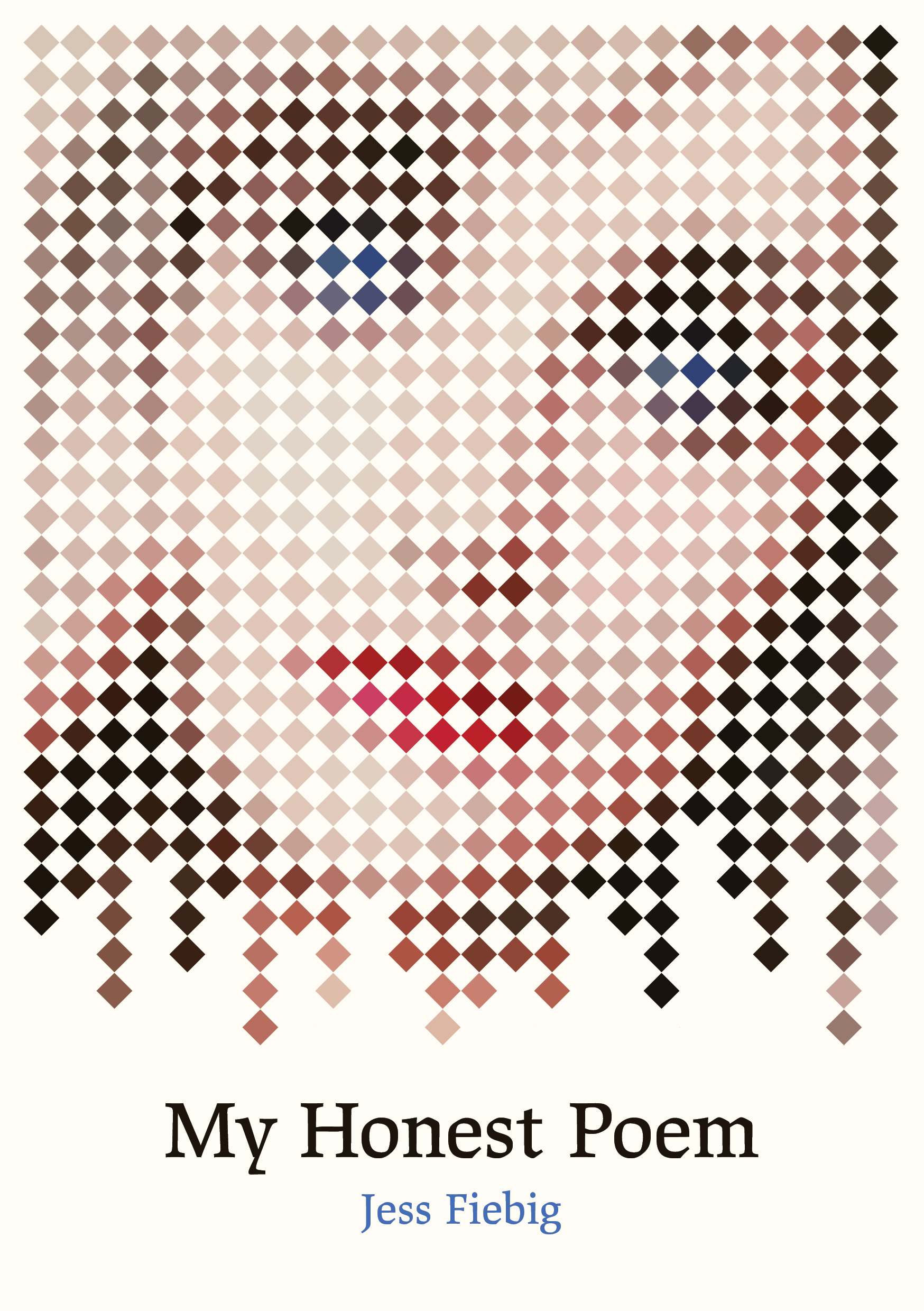
My Honest Poem
by Jess Fiebig

Auckland University Press


$24.99


ISBN: 9781869409241
Publisher: Auckland University Press
Published: August 2020
Pages: 112
Format: Paperback and Ebook


Reviewed by Sophie van Waardenberg


In Jess Fiebig’s debut collection, My Honest Poem, there isn’t much intention to surprise. ‘Duck Hunting’ is about duck hunting, ‘Saturdays at Bailey’s Irish Bar’ describes the speaker’s childhood Saturdays spent with her stepdad at Bailey’s Irish Bar, and ‘Moving In’ does, indeed, describe the process of moving in somewhere. The titles are largely prosaic and plainly descriptive. There is rarely any trick played, any swerve or bait-and-switch. The collection’s overarching structure generally orders the poems based on their apparent chronology, with section titles giving hints as to the trajectory of the poet’s journey through adolescence, relationship making and breaking, family and domestic violence, mental illness, and bodily harm, both accidental and intentional.

There’s obviously a huge tangle here of trauma and self-discovery, and the simplest way to work through it in book form is the road chosen – from start to finish, or close enough. Yet, despite My Honest Poem’s structural straightforwardness, there is no shortage of spontaneous delight in the language of Fiebig’s lines and the playing her poetry can do. In ‘Fawns and Foals’, ‘your crop-top, messy topknot/mixer in hand’ sparks with assonance and sibilance, and the ‘yolk-yellow fennel flowers’ of ‘For Kelly’ is a fluttering tongue twister. Some pieces have rhyme schemes, and some riff on the hypothetical. One particularly moving exercise in the imagined is ‘Mickel’, whose speaker describes a girl who died in their shared youth as having grown up, fallen in love, and had a child. Fiebig’s poetry, at its best, stretches to surround both the known life and the life only hoped for. When they are placed alongside one another, a reader feels both heartbreak and joy – and more of each for the space between.

Fiebig is also preoccupied with the image and the action of the mouth. So many of the poems in this collection are made of breath and tongue and kissing; there’s ‘breath growing thick and sour/in the night’, there’s ‘the honeyed whisky/of your tongue’, and there’s an invitation from the speaker to ‘kiss/the dark sweetness/fermenting inside me’. The mouth is almost the primary mode of action for many of the characters in this collection – the limb of choice. It’s a vessel of the lovely and the acrid; a tool for kissing and for purging.

The pacing of spoken word, a form Fiebig, a performer, is used to working with, finds its way into the collection’s briefest lines. Some are only one or two syllables long and move in the mouth of the reader like tiny hammers: ‘your kisses/so gentle/on my/eyelids’. The spokenness of the collection is also inherent in the way each sentence becomes the next, often unpunctuated, as if the whole page is a melisma. ‘Shinjuku’ is one particularly liquid poem, in which the speaker becomes the moth ‘tapping on the kitchen window’ before returning to human form ‘to cup the bowl/of dark green matcha with both hands’. It’s in poems like this and ‘As We Stand Back on Sumner Beach’ that Fiebig zooms in and out to flit, without bombast, between cliff and kitchen floor.

Perhaps some of these poems should end sooner. Some final lines work too hard saying what may have already been clear two stanzas earlier, or do more to wind down than to build up. But while this habit might mean a poem loses some of its pacing and freshness, it also serves to remind me that Fiebig’s priority is to, as faithfully as possible, honour the feeling that forms each poem’s budding heart. Why else call your collection My Honest Poem? Of course, poems cannot be feelings only – and Fiebig knows this, too. It seems quite dull to describe a book of poetry as having a thesis, but I am going to, and this poet has written it for me:


This is poetry,

to feel emotions like hot iron

pressing on my skin,

burning to describe the most

complex parts of myself

as simply as I can […]


(From ‘This is Poetry’)


So My Honest Poem may be more transparent than opaque, but not by accident. In fact, the most satisfying moments of this collection for me, a self-involved poet, are those in which the poem recognises itself. In ‘Twenty-Seventh Christmas’, the speaker’s chronicle – ‘wrote a list/pretended the list was a poem/wished I had something/more profound to say/than this’ – rounds out a laconic account of a holiday spent sleeping, alone with a dog, thinking about suicide. Similarly, ‘Cry, Babe’ features a metatextual exchange that invites the reader into the poem as it’s being written: ‘I say I’m going to write a poem/about her writing a poem/about the godwits;/she tells me that’s been done’.

Fiebig does not play this self-referential move often enough for it to become a gimmick. Instead, these brief, plain moments allow this collection to join the thousands-year-long conversation from poet to poet, in which we’re all trying to decide how best to say what seems unsayable, and how to write about kissing. My Honest Poem is a lucid, uneasy, and tender telling of a life so far, bravely open, untricksy, ready to be shared.

.


Sophie van Waardenberg is studying towards an MFA in poetry at Syracuse University in upstate New York, where she serves as co-editor-in-chief of Salt Hill Journal. Her first chapbook-length collection of poems was published in AUP New Poets 5.


'...poetry makes intimate everything that it touches.' - Michael Harlow

Read more

.

.

.

AUP New Poets 7 : Rhys Feeney, Ria Masae & Claudia Jardine
Edited and introduced by Anna Jackson


Auckland University Press


$29.99

.
ISBN: 9781869409210
Publisher: Auckland University Press
Published: 13 August 2020
Pages: 114
Format: Paperback, Ebook


Reviewed by Lynley Edmeades


At the outset of this volume, editor Anna Jackson offers a brief introduction to this Auckland University Press series, renewed in 2019. ‘[These] poems,’ she says, ‘take you places including the darkest reaches of emotional geographies lit up in startling new ways.’ It’s hard to disagree with Jackson – the three poets presented here are equal parts startling and transportive. But the real power of this collection, to my mind, lies in bringing these three together. One cannot help but read Feeney, Masae and Jardine as a little family of sorts – they are like three very different siblings borne of the same kin. They are navigating the same contemporary world, alive with confusions and contradictions and incongruities, but each of the three are tackling this madness from their own imaginative gardens, so to speak. The result is an incredibly rewarding collection that delivers on much that it promises.

The importance of community, emphasized by bringing these three voices together, is also a theme that is echoed in various ways by each poet. Rhys Feeney’s poetry is, invariably, about the state of the world and his – often awkward – place in it. There’s a hint of existentialism to these poems, the poet asking some sticky questions about a middle-class, neoliberal existence – ‘how can i reduce my environmental footprint / but increase the impact of my handshake’. A poem that threatens to regurgitate a fairly well-trodden perspective, titled ‘the president of the united states of america is crazy’ takes a refreshing turn by using Trump as a kind of scapegoat to analyse the self. It narrowly avoids being confessional by coming at the self sideways: ‘any deviation from the mean / a mutated gene / in a society that says it believes you / okay / of course we believe you / tell me about your mother / is there a history of mental illness in your family / how long has this been going on.’ Feeney’s poems are about the individual who is, more often than not, subject to difficulty (there is mention of suicide attempts, deliberate self-harm, and ‘single-use coping strategies’). But rather than being self-indulgent, they are poems that interrogate the climate in which anxiety and depression seems to be the only logical outcome: ‘waking up from a dream abt owning a house/for a moment i think i’m in utopia/or maybe australia/but then i see the little patches of mould on the ceiling.’

While some of Feeney’s poems can have, at times, a rather heavy hand in dealing with the ‘big ideas,’ the craftsmanship exhibited here puts the reader at ease. But Feeney doesn’t shy away from experimentation – no two poems in this short collection are the same, and the form and structure of each is something of an exposé of his level of control. There is also a lovely symbiosis between the form and content in many of these poems, a trait all too often ignored in the contemporary lyric. None of the poems have any capital letters – in a bid to decolonize the very structure of the text, perhaps – and in a piece called ‘roy g. biv’ (the spectrum of the rainbow), a large block of prose exemplifies something of the troubled contemporary psyche. It ambles and cascades down the page, promising to ‘explain what happened through colour,’ only to fizzle out in a way that mirrors a feeling of futility that might be best described as millennial: ‘the screaming is always there just sometimes it takes on a different form, / sometimes it wants to dance & sometimes it wants to creep slightly closer to / the edge & sometimes, sometimes, you’ll want to do something, you’ll want / to do something very bad indeed & you’ll think about it always & one day & / one day & one day.’ The poet has certainly had some struggles, it seems, but his attention to craft has not suffered.

Ria Masae’s work carries the theme of the collective in a slightly different direction. In order to cast a light on society at large – the same troubled place that Feeney so aptly curates – her lens narrows in on the individual. As Jackson points out, Masae is concerned with ‘the rhythms and accents of everyday conversation,’ and from the point of view, more often than not, of fringe dwellers. Her characters are colourful and varied, ranging from the ‘Men dressed by their wives in their Sunday best / kneel[ing] on planks of uncross,’ to a homeless man on the streets of Auckland, for whom ‘The setting sun colours the road ahead/a deep shade of sorrow.’

There is much in Masae’s poetry to enjoy, but what really stood out to me was the sonic quality of her work. These are poems that demand to be read aloud, and it’s no surprise to read that in 2018 she was the Going West Poetry Slam champion. There are voices aplenty through the inhabiting of a number of personas, as well as a good dose of Samoan and a playful use of phonetics that invite the reader into particular worlds. There were times, for example, when I felt the need to put down the book and run to Google Translate to try and unlock something, to rely on my English tongue to fix my meaning to these words. But Masae gives just enough that the reader neither needs to depend upon translation nor is encouraged to seek it. Instead, we are enticed into the sonic world of Samoan, where translation is just another form of colonization. From ‘Apia, Upolo, Samoa’:


            Behind me Amelika and rasta jams blast from nightclub speakers

           ie faitaga-wearing policemen stroll up and down

            taking occasional puffs of mea lele / make-you-fly smoke

            from the snaky trail of cheeehooo! drunks.

            A woman hoarses laughter that makes

            the fetu tattoos on her breasts jiggle.

            A man breathes Valima proposals

            to a girl who is not his wife.

            My eyes are bleary from eight-tala jugs […]


Masae is both voyeur and sympathizer. She watches over, as the title to her collection – What She Sees from Atop the Mauga – denotes. But the poet also gazes with great empathy, noticing the delicacies and precariousness of those whose lives may not be as sure-footed as others. She sees the way that the world swallows some people up, like the character in a poem called ‘Black Days,’ who ‘peeks through the window’ to watch a children’s birthday party get underway, and where ‘the birthday balloons tied to the letterbox next door / bob like buoys in a quiet ocean – / waver like breaths in a dark house.’ Or, she observes the sensitivities of those who have become hardened to the world, such as Brian the ‘street bully,’ whose ‘thick fingers / […] had dragged her by the hair / across the school field // nimbly raised a china cup / to the porcelain doll’s / love-heart lips.’ These poems are portals to other worlds, but through a pair of nurturing glasses.

The final of the three poets represented here is one whose community and conversation reaches back to Catallus and Sulpicia (the ‘only woman writer of classical Latin poetry whose work survives,’ the end notes tell us), while eating biscuits and dropping tabs of acid. Claudia Jardine’s The Temple of Your Girl is the quirkiest of the three collections but is no less interrogating and impressive than her bedfellows’. Jardine is, as her bio tells us, currently completing her Masters in Classics, hence the chats with her Roman forefathers. But Jardine is also of Maltese origin, which lends a level of authenticity and alacrity to her opening gambit, three excerpts from ‘A Gift to Their Daughters: A Poetic Essay on Loom Weights in Ancient Greece.’ These excerpts are concerned with connections, relationships, and oikos – which ‘means something like family’ – so Jackson’s well edited theme continues here. The first of these ‘poetic essays’ opens with the beautiful, lyrical lines, ‘‘Textile manufacture’ is the sound my mother makes when she tries to speak / with a needle held between her lips,’ and meanders through a haberdashery and ‘rooms filled with women working,’ arriving in the final lines with the mother teaching the narrator ‘how to cross-stitch’: ‘It takes all five seasons of Breaking / Bad to complete the paternal family crest. A belt and a spur, cave adsum. / I don’t think to ask about hers.’ My only regret in reading these three fragmentary pieces is that there was not more of them included here, but the mention of ‘excerpt’ here is promising.

Like Feeney, Jardine isn’t afraid of playing with form, and there is much exploration into ways of saying. The poem ‘Things That Spooked the Ancient Romans’ is made up of found texts from records of ‘prodigies’ or odd events that occurred in Ancient Rome – ‘a child born with the head of an elephant while it rains milk,’ that slowly evolves into a clever comment on how obsessed with children of ‘indeterminate sex’ the Romans were. The poem ‘For the Rose Garden’ is a very odd but very well controlled free verse poem with a riff on ‘and’ / ‘hand’/ ‘understand,’ and which does a fine job of inhabiting the child’s mind: ‘when we went to a big shed in the country I did not understand / why the man who came to meet us was holding several stumpy feather mops // which were actually six young hens being held upside down by their feet.’ And the final poem is a very witty retelling of the fate of that most famous forlorn nymph, titled ‘Eurydice & the No, or How Eurydice Died of Negligence and a Phonetic Misunderstanding.’ Most of the humour is given away in the title, but it still delivers some laugh out loud moments: ‘Eurydice, frustrated, wonders who invited the satyrs. / Didn’t she say to the planners, ‘No rapists’?’ There is much to enjoy in Jardine’s collection, wittiness aside.

It is great to see this New Poets series resurrected, and this third volume of the new era in print. It is hard not to draw these three poets into a conversation together, and readers will be enriched by the book’s kaleidoscopic outlook. At a time when the collective is something we certainly need more of, this series is a welcome addition to the poetry landscape.


Lynley Edmeades
is the author of As the Verb Tenses (OUP, 2016) and Listening In (OUP, 2019), which were both longlisted for the Ockham New Zealand Poetry Prize. In 2018 she was the Ursula Bethell Writer in Residence at the University of Canterbury. She has a PhD in English and lectures at the University of Otago.

'NZ literature is such a vast and varied thing' - Pip Adam

Read more

.

.

.

This Pākehā Life: An Unsettled Memoir
by Alison Jones

Bridget Williams Books


$39.99


ISBN: 9781988587288
Publisher: Bridget Williams Books
Published: September 2020
Pages: 240
Format: Paperback, e-book
.
.

Reviewed by Stephanie Johnson

.


Towards the end of her memoir, This Pākehā Life: An Unsettled Memoir, Alison Jones writes: ‘The desire for redemption is a powerful urge.  In our simple stories of goodies and baddies in New Zealand history, both Māori and liberal Pākehā tend to locate us Pākehā on the shameful baddie side…our neediness in this regard is humiliating, so we sometimes resent Māori for making us feel this way. A Pākehā need for recognition that we are not “all bad” in our history is not something we can or require from Māori; it is work Pākehā need to do for ourselves. Understanding the details of our history is a good place to start.’

This extract in many ways acts as both a summation of This Pākehā Life and a springing-off point from which to begin to understand Jones’s perspective, which is one all Pākehā would be wise to take on for themselves. Elsewhere, she notes how friends have remarked on her ‘bravery’ for her absorption in what is often called the Māori world. She refutes any notion of courage in that regard. Where she is certainly brave is in the creation of this searingly honest, big-hearted, erudite and compellingly humble memoir.

Alison Jones is a professor at Te Puna Wananga, the School of Māori and Indigenous Education at the University of Auckland. Widely respected as a teacher and historian, she is also the co-author, with her friend and colleague Kuni Kaa Jenkins, of two works He Korero – Words Between Us: Maori-Pakeha Conversations on Paper and Tuai: A Traveller in Two Worlds. In order for the reader to understand exactly how and why her life has taken the shape it has, Jones returns to the arrival of her parents in New Zealand in the early 1950s and her own ensuing childhood as the firstborn of new chums.

Basil and Ruth Jones were English, and like thousands of others after the Second World War, they made their way to New Zealand for a fresh start. Basil was of working-class stock and Ruth middle-class, although her origins were shrouded in mystery. She had grown up in an orphanage, never adopted, and lived there until she was eighteen. It was perhaps because of this loveless childhood that she was not a particularly maternal woman. The family moved several times, from Auckland to Blenheim to Whakatāne to Tauranga, and in each place the young Alison made Māori friends. In one of the most truthful, almost wince-inducing sections of the memoir, she goes in search of one of these childhood mates, a now grown-up woman. This is Maria, who, it turns out, remembers Jones only slightly. Alison realises she has confused her memory of Maria with that of another Māori girl and her family, who were warm and welcoming, unlike her own.

Of late there has been a prevailing perception that Pākehā are all the same whether or not they arrived in the country in the last ten minutes, or if their families arrived in the early nineteenth century. Some of the stark contrasts between the Jones’ family culture and older New Zealand families seem to be related to the former’s more recent arrival. Alison was not permitted to read Enid Blyton or read comics, which I would conjecture was fairly rare among Pākehā families of the time. Her mother insisted on certain standards that perhaps had slipped a little for many other Pākehā New Zealanders. Also, her parents did not have Māori friends or workmates. Jones describes how she ‘dreaded meeting a Māori person in her [mother’s] company in case she was gushy’ and how her mother was prone to ‘…exaggerated enthusiasms’ about Māori achievement. Basil Jones’s racism was overt and stated; Ruth’s was wrongly well-intentioned. She was a victim herself of xenophobia, with openly expressed resentment from New Zealanders about ‘pommies’.

The young Alison Jones was a high achiever. She was a prefect and head girl of Tauranga Girls’ College. During her adolescence in the 1960s she became aware of the black liberation movement, and realised ‘…whether I liked it or not, I was a member of a dominant (white) group that was being unfair and even violent towards black and brown people around the world. The descriptor ‘white’, now firmly linked to bad behaviour, filled me with ambivalence and confusion.’ Many awakening Pākehā of the mid-twentieth century experienced similar despair, culpability and hopelessness.

School was followed by university: a Bachelor of Science from Massey University in Palmerston North. During this period, she notes, her contact with Māori was minimal, although she was to witness Dun Mihaka on his famous university tour confronting a group of white male students on the subjects of colonialism and Māori rights. The spectacle had a powerful, singular effect: it was the first time Jones had witnessed pure Māori anger, and she felt his accusations personally, writing ‘I could not bear to be an object of Māori criticism’ even though she felt that in some way her fervent feminism precluded her from its full force.

In the early seventies Jones came to Auckland, where she has lived ever since, and which city has had the most influence on her passions and interests. This is the setting of her adult life, her scholarship, marriages, motherhood to two sons, flowering friendships – particularly with Kuni Kaa Jenkins and Te Kawehau Hoskins – and profound commitment to Maori education.

Breaking up the more autobiographical sections are short, potted histories of aspects of our past. Among them are the Wairau Affray, the first armed conflict after the signing of the Treaty; the long abasement of Rangiriri Pah as the site of the decisive battle for Waikato during the nineteenth century wars; the origins of the name of Auckland’s famous street Karangahape Road (although she, for some reason, does not mention Hape’s clubfeet) and the pah on Maungakiekie as it was before Sir John Logan Campbell took over the land. For readers of our histories, there will not be much that is new or surprising in these passages, but her ability to succinctly portray complex events and conflict is evidence of her skills as teacher and historian.

More interesting and arresting is her chronology of activism since the ‘70s. Many of us will remember chanting ‘The Treaty is a fraud’ and then, depending on our level of connectedness, being either bewildered or cheered by its rebirth as ‘Honour the Treaty’ in later protest marches. Jones’ courage in telling it as it is does not waver. She writes of the humourlessness of some earnest left-wing Pākehā women activists in comparison to the apparent cheerfulness and solidarity among their Maori counterparts. ‘… I did not mind even if they did find us ridiculous. The fact was that I found us ridiculous: we were so serious all the time, as we looked for the best political phrase and the most incisive analysis.’ She owns up to atheist discomfort at having to accept a spiritual life through her love for her Māori friends and attendance at Māori events. She notes ‘an unpleasant competitiveness among Pākehā about competency in the Māori world, and my going to wananga was regarded with some envy.’ Nowadays, or at least pre-COVID, many wananga are chokka with Pākehā and some Māori have had the experience of being denied entry because of it. The idea of dualism runs through much of the book, that is, the schizoid notion of European New Zealand and the more established reality of Māori possession and culture.

Acknowledgement is made of famous New Zealanders, among them the politician Donna Awatere, her father Colonel Arapete Awatere, writers Bruce Jesson, James K. Baxter, Michael King and his 1985 book Being Pakeha, Peter Wells with one of his more contentious quotes from Dear Oliver, and Sylvia Ashton-Warner, who was an acquaintance of Jones’ mother. Ruth took Alison to meet her in 1974, a visit that gives an insight into the icon as an inventive teacher, but also ‘impulsive, self-centred and glamorous.’

This Pakeha Life is an important book. In the preface she states: ‘Mine is not a redemptive story of good feelings and togetherness; I try to show that Māori-Pākehā relationships are difficult and wonderful all at once, and that such complexities are not only exciting but also make us who we are as quirkily unique New Zealanders.’ There are many insights into how Pākehā must learn to adapt to a way of thinking that is not purely Māori, because it can’t be. As Jones writes in one of the more powerful passages of the book: ‘If “Pākehā thinking” has a reflexive openness to Māori, then it is quite different from European thinking. It is peculiarly located here, with Māori. And once you “get” that, you can no longer “un-get” it.’ Alison Jones has laid down for us a challenge – and also a road map – of how we can achieve this.


Stephanie Johnson’s most recent books are the history/biography West Island: Five Twentieth Century New Zealanders in Australia (Otago University Press, 2019) and Jaurlan by the River under the pseudonym Lily Woodhouse (HarperCollins 360, 2020).


'My readers turn up...and I meet them as human beings, not sales statistics on a royalty statement.' Fleur Adcock

Read more

.

.

.

The Silence of Snow
by Eileen Merriman
.

RHNZ Black Swan


$36.00


ISBN: 9780143773702
Publisher: Penguin Random House NZ
Imprint: Black Swan
Publication date: 1 September 2020
Pages: 352
Format: Paperback


Reviewed by Sally Blundell


‘Compelling medical drama’ – these three words on the back cover of the latest novel by Auckland writer Eileen Merriman will be a flickering flame to readers already bedazzled by the televised versions of the genre. Grey’s Anatomy, ER, The Good Doctor, Call the Midwife, New Amsterdam – personal dramas pivoting on the high-stakes theatre of 12-day shifts, full A&E departments, beeping pagers, urgent phone calls, vital signs monitors, undiagnosed illnesses and last-minute life-saving processes and diagnoses.

The Silence of Snow meets the brief with aplomb.

Within the first few chapters, we are thrown into a world of oxygen probes and IV cannulas, swabs, syringes, spinal needles and stethoscopes; of acronyms – PCR tests, ED, FOOSH (fall onto an outstretched hand), PEs and ICU reviews and NG tubes; of ceftriaxone, fentanyl, propofol, adrenaline, hydrocortisone and antihistamines. Patients are defined by their illnesses – ‘pancreatitis lady’, ‘the perianal abscess waiting for admission downstairs’ – and are generally rude, stupid (including tourists breaking their ankles while tramping in their jandals) or otherwise obstreperous. Medical staff are invariably exhausted, driven, at times flippant. House surgeons bark out arcane instructions as they whisk in and out of ward rooms: ‘hang some syntocinon’ for a stubbornly slow birth, ‘sats at eight-five per cent on fourteen litres of oxygen.’

What? Never mind. Within this microcosm of medical adventure (and misadventure), Merriman’s book traces the story of young Jodi Waterstone, a first-year doctor at Nelson Hospital, the daughter of a respected cardiologist and a GP, and Scottish anaesthetic fellow Rory McBride, recently transferred from Wellington Regional Hospital. Waterstone is waiting out the next six months before she can be transferred to Christchurch Hospital and join her IT specialist fiancé Fraser. McBride, with his Scottish accent, his love of poetry and admirable abs, is waiting for the results of a medical inquiry. It is nearly Christmas. It is hot. It is busy. The shifts are long. McBride helps Waterstone with a case of ‘query meningitis’; Waterstone introduces McBride to the novels of Karl Ove Knausgård; McBride texts cryptic quotes by Robert Frost and T.S. Eliot: ‘Do I dare / Disturb the universe?’

You know where this is going, right?

But there is a problem. The ‘thing’ in Rory’s past. Unspoken, ineffectively buried, currently under investigation. A tonsillectomy that went horribly wrong. It plagues Rory’s waking hours and gnaws at his sleep in an escalating pattern of flashbacks and panic attacks: ‘Until six months ago, Rory had read two books a month, on average, until he’d lost the ability to concentrate. Not completely; he could focus at work, mostly. It was when he let his guard down, let his mind wander, that the thing moved in.’ To blunt the pain and mask the guilt he turns to the medicine cabinet to quicken Frost’s promise of eventual relief: ‘And miles to go before I sleep.’ Painkillers, sleeping pills, lorazepam – ‘Nothing wrong with a little help of the chemical variety,’ he tells himself. Then, injected propofol, the blood flashing back into the white liquid in the syringe: ‘Ten, nine, eight – Boom.’

With all the markings of a standard hospital romance, The Silence of Snow then changes the game plan.  Halfway through the story Jodi and Rory join friends on a five-day tramp on the Heaphy Track. The story slows down as the claustrophobic urgency of the hospital is replaced with gentle bays and waving palms, the lone call of a morepork, perhaps the snuffle of a kiwi – a natural world that until now is barely registered. It is as if we are back in the land of Frost, wondering which road to take, or what plot line the author will follow. After returning to the wards, Merriman takes us down Frost’s road less travelled, as the pressures of hospital life give way to the pressures on Rory’s psychological state. Deeper, darker, more uncertain; it becomes a slow slide towards an altogether different ending, or an ending to an altogether different story.

Alternating between her two main characters, Merriman is an assured guide. As well as being the author of short stories, four young adult novels and now two adult novels, she is a consultant haematologist at North Shore Hospital. The long hours, the sleeplessness, the rapid near-death emergencies, even the deaths – all are portrayed with the close knowledge, and perhaps necessary disengagement, that goes with the job. But the most successful parts of the book recount a closer, more vulnerable relationship: the close camaraderie of the medical staff; the brief, tender and beautifully written relationship between Jodi and young cancer patient Emma Hardy; and the terrible desperation of a young doctor shackled to the experience of a single and perhaps unblameworthy mistake.


Sally Blundell is a journalist, writer and reviewer based in Ōtautahi Christchurch.

'...poetry makes intimate everything that it touches.' - Michael Harlow

Read more

.

.

.

Llew Summers: Body and Soul
by John Newton

Canterbury University Press


$65.00


ISBN 978-1-98-850314-1
Publisher: Canterbury University Press
Pages: 200
Format: Hardback


Reviewed by Philip Matthews


People have been putting flowers at the base of the Llew Summers sculpture, Peace, on Colombo Street in Christchurch. There are dried-out flowers and there are fresher ones too; at the time of writing (August 22), this had been going on for days. For a second, I wondered if these were tributes that anticipated the tenth anniversary of the devastating cycle of Christchurch earthquakes. Or could they be marking the sentencing of the Australian gunman who murdered 51 people at two mosques in the city last March? Peace, after all. Then it clicked. They were probably put there to remember Summers himself, a much-loved local figure who died a little over a year ago and whose life story has been told by poet and cultural historian John Newton in a book also timed for the first anniversary of his death.

Summers was world-famous in Christchurch, but less well known outside it. Even those who didn’t know his name in Christchurch knew the large, generous work – chunky figures dancing together near Linwood College (Joy of Eternal Spring), four doves forming a circle in Sydenham (Peace), the guerilla-like, overnight appearance of works in public places back in the 1970s and, of course, the art controversy that accompanied the commission to create Stations of the Cross for the city’s glorious, since-ruined Catholic cathedral.

You’re not an artist in Christchurch until you’ve had a good old-fashioned art controversy. Frances Hodgkins had one; Michael Parekowhai had one; Andrew Drummond had one and Summers had several. The routine narrative of these controversies usually involved repressed, close-minded officials who couldn’t see the artistic value of whatever was directly in front of them, or were shocked by its sexual or blasphemous content. Sometimes it was all of the above. (The city even rejected a Henry Moore sculpture of sheep because it didn’t look enough like sheep.) Art controversies erupted in the letters pages of the city’s daily papers, especially the then-conservative Press, which spoke for the Christchurch establishment. It wasn’t just Christchurch, either – Newton has unearthed the letters, cartoons and even poems that ran for weeks in the Upper Hutt Leader when Summers’ Maternity was installed in Upper Hutt in 1979. ‘It wouldn’t be so bad if she wasn’t so fat,’ one complainant said about the giant figure of a naked woman cradling two children. Others tut-tutted that there was a mum but no dad.

In Timaru, someone threw red paint over a work called Tranquility. That’s an apt title considering how this book unfolds. If those and other problems bothered Summers as he made his name as an artist in the 1970s and 80s, there was little sense of struggle when Summers eventually told his life story to Newton over two intensive months in 2019. The background is that Newtown came south for a University of Canterbury fellowship. Learning that Newton had nowhere to stay, Summers offered him the use of an artist’s residence he built on his property. Such kindness was said to be typical. When Summers suddenly and unexpectedly became sick, there was a writer on hand to record his biography.

This is a very Christchurch story, and not just because of the artist’s local fame. Political and religious nonconformism has always been important in Christchurch, and it complicates the genteel stereotypes of the ‘more English than England’ garden city. Summers’ parents John and Connie were well known in political and literary circles. John ran a bookshop and championed artists and writers; Connie was arrested five times during the anti-tour protests in 1981 (she was in her sixties). Both were socialists and pacifists. Tony Fomison was a family friend who encouraged the young, self-taught Llew Summers.

The John Newton who wrote about the Baxter commune at Jerusalem in The Double Rainbow, and who is writing a series of studies of 20th century New Zealand literature is more than equipped to tackle a relatively straightforward life story that also intersects with important moments of cultural and social change. Summers’ inheritance of the domestic violence he witnessed as a child illustrates the wider struggle of an entire cohort of New Zealand men of his age. More could have been said about what it meant to be male in this country in the 1970s and 80s. Newton shows how the ‘naked earth mothers’ Summers produced in the 1970s were shaped less by hippie fetishism than the artist’s guilt and anxiety about being a single dad after he had driven his children’s mother away. ‘They spoke of his pain and resentment, but also his longing,’ Newton writes. This is valuable biographical information that shows how art sprang from life. Similarly, Newton tracks the angel imagery that appeared in Summers’ work in the early 2000s to the death of his partner Rose. There is a sense of a very public man with some highly private reasons for making the work he did.

Like his mother, Summers was also arrested in 1981. Two police officers took him to a cold, empty room in the central police station where he was stripped and interrogated, and possibly assaulted. (According to Geoff Chapple’s 1981: The Tour, ‘He was struck in the throat, his foot stamped on, held by the hair against the wall, his beard tugged at.’) More than two decades later, the humiliation found its way into what could be Summers’ greatest work, his Stations of the Cross.

The work was controversial in Christchurch because in one of the 14 scenes, Christ is depicted as naked. But it is not an irreligious or scurrilous work. Like McCahon and Michael Smither, Summers found a local art language that fit the Biblical stories, celebrating the persistent power of life as well as recognising inevitable loss. Like them, he had his own personal relationship with religion that his work explored, in defiance of a largely secular culture. ‘We’re given a soul and we’re given a body,’ Summers used to say, giving Newton the inevitable title for a sensitive, empathetic and liberally illustrated study that finds a good balance between the man and his art, and shows how ‘in sculpting the body his ambition was always to release something more – an energy, a vitalism’. Clear and undogmatic, Newton’s writing renews work that some of us have even come to take for granted.


Philip Matthews is a Christchurch journalist. 


'My readers turn up...and I meet them as human beings, not sales statistics on a royalty statement.' Fleur Adcock

Read more

.

.

.

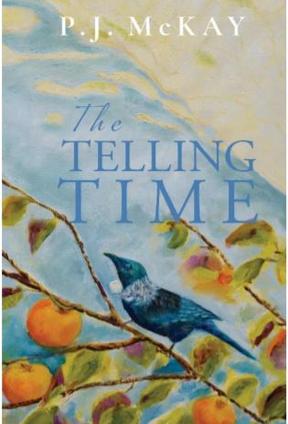
The Telling Time
by P.J. McKay

Polako Press


$35.00


ISBN: 978-0-473-52011-3
Publisher: Polako Press
Published: August 2020
Pages: 328
Format: paperback


Reviewed by Rosetta Allan


P.J. McKay’s debut novel opens in 1958, in a sardine factory in Yugoslavia – a scene so confident and immersive that U.K. author Sebastian Faulks selected The Telling Time as the winner of this year’s international First Pages Prize.

Gabrijela is a young woman on the Adriatic island of Korcula. Much is idyllic there, like summer swimming in crystal water, picnics on the shore and exploring the caves and cliffs. But working for the family’s fishing business – and Tito’s economy – is not an easy environment for a girl who aspires to more than canning sardines and the long service of married life. ‘I peered in the mirror at my washed-out face and greasy hair. Life was so unfair … “What a toss-up – babies or sardines.” It was hard keeping the sarcasm from my voice but there was no point complaining.’

Gabrijela’s life changes forever when she is exiled to New Zealand, a country that looks ‘ironed out, flattened’, compared to her home in Korcula. She is given the ‘glimpse into another world’ she so desired, except this is not the world of her choosing. Gabrijela has been sent far away by her father, her airfare paid by an uncle with ‘Party connections’, so her secret can remain hidden and family pride is protected. This secret is revealed much later in the novel, withheld by Gabrijela’s first-person narrative.

The sudden transition from Korcula to New Zealand is a traumatic and unwanted upheaval (‘I was stuck here’) and Gabrijela struggles with the change in language, culture and landscape. ‘Was it the bright sunlight or had those flowers bloomed overnight?’ she wonders. ‘I had passed by so often and yet never noticed them before. Perhaps there was only so much newness a person could absorb.’

Gabrijela surfaces in an Auckland suburbia where you can set your watch by the postie, secured inside a tight-knit ‘Dally’ community where social life is Sunday mass and the Yugoslav Club Ball. She lives with family friends who immigrated to New Zealand in the 1920s and is sent to work as an underpaid housekeeper for their son, gruff Roko, whose marriage to a Kiwi woman has unravelled – no surprise to his tight-lipped mother Marta, whose own daughters were ‘hardly let out’ as teens.

Her new life offers unknown luxuries – like an electric stove – but familiar expectations. ‘I’d travelled half a world away,’ she realises, ‘and ended up with the same chores’. This is the late 50s, and her ambitions are expected to be confined to housekeeping. Gabrijela’s neighbour Joy has a washing machine instead of a heated copper, to Marta’s old-school disapproval. Gabrijela watches Joy ‘pegging up the last of her washing, tiny beneath her line laden with sheets and towels. The call of the cicadas now seemed like a congratulatory cheer. She must be cutting corners, I thought – her washing couldn’t possibly be as clean as mine.’ When Gabriejela hoists her clothes line, ‘Roko’s washing soared high like my own trophy.’

While Gabrijela warms to her new Auckland life – or perhaps slowly thaws – she’s not immune from hypocrisy and judgement about what’s uncovered of her past. ‘Surely I hadn’t come all this way,’ she thinks, ‘sacrificed so much, to end up with the same small-mindedness?’ Inequalities between the sexes are evident in the New World as well, most obvious when Roko is released from the ‘mistake’ of his first marriage. The Church ‘had wiped Roko’s slate clean, leaving me with no such reprieve,’ Gabrijela realises.

The Telling Time is a coming-of-age story not just for Gabrielja: her Auckland-born daughter, Luisa, is the subject of the novel’s other narrative line. Luisa sets off in 1989 for a backpacking OE, including a trip to the now-splintering Yugoslavia to play ‘mystery cousin’ – a reunion she’s keeping secret from her mother. Frustrated by the silence around her mother’s exile and the relatives she left behind, by the profound estrangement between past and present, Luisa is a ‘Croatian Kiwi’ who scoffed at the Dally Club activities of her youth but now ‘wants to live and breathe and see for herself’.

But Luisa’s travels to the land of her mother’s birth have unexpected and disastrous consequences: too late she realises ‘the rules are different here’. In a country still mourning Tito, and about to explode in sectarian violence, Luisa is a naïve New Zealander informed only by Dally Club conversations. ‘The politics at home seem like child’s play,’ she thinks. She and fellow backpacker Bex are exposed and unprotected in an environment where the women are expected to ‘look like nuns minus the headgear’. Aesthetically, the countryside of Macedonia feels as strange to Luisa as New Zealand did to her mother: ‘Yugoslavia must start somewhere up there but it’s nothing like the pictures she’s been carrying in her head.’

Luisa and Bex quickly realise that they are young women too far off track in an older, harsher world.At a night out with new ‘friends’ Nikola and Kosta at a bar in Bitola, they realise they’re the only women there aside from the bored middle-aged woman serving drinks. The suggestion that Nikola’s sisters might enjoy going there is met with incredulity. ‘For me they are best at home,’ Kosta says. ‘It would make problems.’ Life, he tells Luisa and Bex, ‘is different in your country. You are different.’ These attitudes have brutal and devastating consequences for Luisa. The vulnerabilities of being a woman lie at the core of the secrets both Gabrijela and Luisa end up carrying.

McKay’s debut explores two different eras and communities in unsentimental detail, its research spanning generations and time zones. The races in late 50s Auckland are as vivid as a Communist Party Ball in Dubrovnik, or a rowdy bar in 80s Macedonia. I find it reminiscent of Maxine Hong Kingston’s classic The Women Warrior: daughters set out on a discovery of cultural heritage, intending to understand their mothers, and therefore themselves. The dynamics of our closest blood-ties are often the most complicated, after all.

This is McKay’s debut, begun during the Master of Creative Writing programme at the University of Auckland in 2017, where two other recent debut novelists, Amy McDaid and Rose Carlyle, were her classmates. The Telling Time is vivid and transporting, visually rich, and I can forgive a couple of clumsy metaphors, and a pounding heart too many. Both Gabrijela and Luisa are engaging, complex characters, although I was drawn more to Gabrijela’s story and the restraints imposed on her by patriarchal dominance and traditional Croatian culture.

Polako, polako’ becomes Gabrijela’s mantra: it means one step in front of the other. McKay’s two storylines explore old paths and unravel the secrets of two generations. It’s not until Luisa reaches the island of Korcula that she can realise the extent of her mother’s disconnection in New Zealand, and the reasons for her estrangement with her family. In this ‘lost’ home, Luisa and Gabrijela find a way to reconcile with the past and with each other.


Rosetta Allan is the author of two bestselling historical novels, Purgatory and The Unreliable People. She lives in Auckland.

'Novels stand outside time, with their narrative structure of beginning, middle and end. They outlast politics, which are by nature ephemeral, swift and changeable and can quickly become invisible, detectable only to the skilled eye. ' - Fiona Farrell

Read more
.
.

.

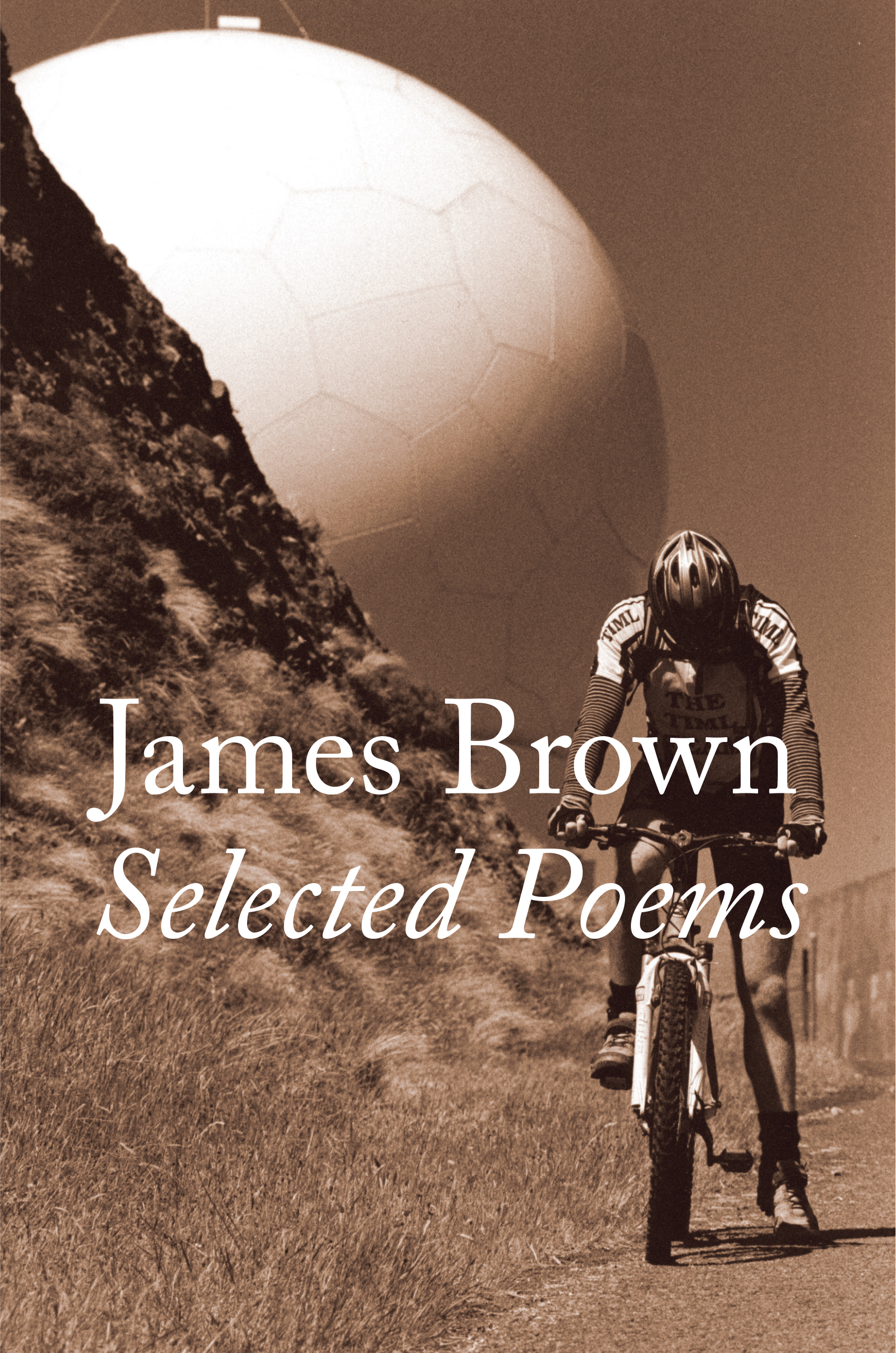
Selected Poems
by James Brown

Victoria University Press
.

$40.00

.
ISBN: 9781776563074
Publisher: Victoria University Press
Published: August 2020
Pages: 240
Format: Hardback
.

Reviewed by Anna Livesey


I got a small shock when the review copy of James Brown’s new book arrived from the publishers. The packet I pulled out of the mailbox was much more substantial than I was expecting. First thought: this is not the slim volume I had imagined from the writer who describes himself as ‘a Sunday poet who fell in with the wrong crowd’. (He sure did – seven slim volumes of the wrong crowd and counting.)

Second thought: James Brown has got to the Selected Poems stage of life? I was a student working part time at Unity Books in Wellington when Lemon (1999) and Favourite Monsters (2002) came out. Somehow, despite the significant passage of time, the James Brown of my mind hadn’t grown up. (Sorry James. Mind you, quite a few of the poems in Selected Poems point to the James Brown of James Brown’s mind, who doesn’t necessarily seem to have grown up either. So perhaps we are OK). I’ve got my copy of Favourite Monsters on the desk next to me. The pages are a bit yellowed, and I suspect that little Anna and Tessa, who feature in the poems and in the author photo on the back, are out of pinafores and pigtails now. Heaven help us, the world being what it is, they may be plotting first books of their own.

Which is to say that James Brown, Sunday poet got caught, sly disrupter of poetic expectations from inside the machine when I was a girl, is now part of the canon. That’s what it means to have a hardcover Selected Poems.

Much of James Brown’s modus operandi is dissing poetry. He has a lot to say, tongue-in-cheek, on how staged the game is (see the ‘useful non-fiction booklet Instructions for Poetry Readings’), how weird and kind of boring poetry is (e.g. the bonus poem, ‘Secretly you like poetry…’ on the back of the Selected) and how poets should just get over ourselves and it (the ‘it’ being poetry). On page 85 we read ‘you haven’t finished a novel/ or a short story, or got anywhere near Java,/ and there are bills to pay, children to feed, etc’ – followed by this definitive statement: ‘So the day I stopped writing poetry/ I felt strangely serene./ 3:44am, Wednesday, November the 3rd, 1999./ That was it-finished.’.

Except it wasn’t. And why not? Because Brown is so damn clever at it. So he keeps on down the poetry mine, pick and shovel in hand, a few wry glances at the audience over his shoulder.

Apart from the reflexive self-deprecation of the schoolboy nerd, two other things struck me as I worked through and around and back through this book. How gifted Brown is at the craft of poetry, the game of word and sounds on the page that are tidy and tight and clever and cool. And also how he lifts aside that cleverness to show us the tender inner self, the moist soft core of James Brown and his world.

First to the cleverness, the show pony in James Brown. There are the famous ones: ‘Cashpoint: A Pantoum’ and ‘Popocatepetl’. Cashpoint is a found poem put into an old and cunning form – the pantoum, a series of quatrains where the second and forth lines of each stanza are repeated as the first and third lines of the next stanza. ‘Popocatepetl’ was, as the note at the back of the book says, originally published as ‘a set of ten cards that could be read in any order, except for the first and last stanzas’. I have heard Brown read ‘Popocatepetl’ and it was a delight.

Those are two particular examples of the gleeful love of craft that suffuses the Brown oeuvre. There are plenty of other moments of skill and slight of hand to discover, like ‘Gloss’ (even the title explaining itself), ‘Dan Chiasson’ (the poet telling himself off) and ‘Willie’s First English Book’, where found poetry acts to bring the past and its oddities and cruelties into the present, where our still current oddities and cruelties reflect painfully off them.

And then to the moist soft core. ‘Feeding the Ducks’ from Favourite Monsters starts: ‘We are all all right. Dirty and bedraggled,/ but all right.’ And ends: ‘I add my jersey with its wet hug-print down the front./ The fire will not light. Anna remembers the ducks/ laughing.’ The intimacy and vulnerability in this poem leave the sly glance over the shoulder entirely behind. This is poetry as heartfelt communication. This also is why Brown can’t put down the pen and shut up. Because here we are in this world, having things happen and seeing things and feeling things, and if you are wired a certain kind of way (which he clearly is) you just can’t help but need to write things and feelings down, in a way that gives them edges and shape and that you can pick up again and read and say – yes. That’s how it was, how I felt.

A poem that touched me with similar intimacy is ‘How I Write My Love Poems’. It begins in poetry land, with word play and talk of grammar, and gets closer to the heart as it goes, passing through ‘chance fattens like an ambulance, until/ breasting a widow’s peak, the heart upholds/ its tall story’, to the compelling ending: ‘sudden delicious Braille, a ribcage’s/ brimming xylophone, the unwritten/ rules of engagement/ making a home.’

This book, all 240 pages of it, show a highly active mind, alternately delighted with and tired of its own capabilities, leading its owner a merry dance through the world of writing poetry. And also the heart of that owner comes through, saying to the mind – it’s not all wordplay. Some things can be said plainly.

Craft and control and depth grow, as one would expect over time, but the core James Brownness of the sentiment and execution – the un-grown-up observer, un-grown-up in the sense of still not habituated, not blasé about the world – remains steady. Perhaps my favourite part of this engaging and important book, the most James Brown-esque moment of them all comes on page 236, just before the index of titles. It is the last note of a couple of pages of notes, this last note referenced to page 236 (itself): ‘Thank you for reading’, it says.


Anna Livesey is a poet, corporate strategist, stand-up comic, policy analyst, literary curator-at-large, podcaster, shouting yogi and early morning raver. She currently lives in Auckland with her husband and two children.

'My readers turn up...and I meet them as human beings, not sales statistics on a royalty statement.' Fleur Adcock

Read more