.

.

.

Letters of Denis Glover
Selected and edited by Sarah Shieff


Otago University Press


$79.95


ISBN: 978-1-98 859254-1
Publisher: Otago University Press
Published: December 2020
Pages: 806
Format: Hardback


Reviewed by Nicholas Reid


Denis Glover’s place in New Zealand literature is assured. Along with R.A.K. Mason, A.R.D. Fairburn and Allen Curnow, he was one of those who revitalised New Zealand poetry in the 1930s. It’s understandable that his ‘Sings Harry’ and ‘Arawata Bill’ cycles continue to appear in anthologies. ‘The Magpies’ still takes the prize as New Zealand’s most-often-reprinted poem. In founding the Caxton Press, Glover turned this country’s publishing industry in a new direction, making it possible for poetry and fiction of high quality to reach a wider readership. Throughout his life, he was an acute critic in matters of printing and typography.

But regrettably there’s the very negative side to the man. As Sarah Shieff makes clear in her introduction to Letters of Denis Glover, ‘drunkenness and a deep vein of self-destructiveness … cost him almost everything: his first wife and only child, the Caxton Press, and a subsequent job at Albion Wright’s Pegasus Press.’ Alcoholism, erratic behaviour and his womanising were accompanied by a decline in his writing. His later verse in no way sustains the quality of his earlier efforts. Shieff notes ruefully ‘to many, Glover has become little more than a tiresome anachronism, a misogynistic old fart, court jester, a drunken laughing stock…’

Following the pattern of her earlier Letters of Frank Sargeson, Shieff’s Letters of Denis Glover is not The Letters of Denis Glover. As she explains, from an archive of 3000 letters which Glover wrote to about 430 people, she has chosen 500 letters to 110 people, whittling away the less significant and more ephemeral. She organises these 500 letters into eight sections, covering key events in Glover’s life ranging from a 1928 letter written when he was a schoolboy to letters written days before his death in 1980. At one time or another, Glover corresponded with most of the important New Zealand literary figures of his time. There are many letters from Glover to Curnow, but Shieff selects the letters to Frank Sargeson as ‘the most engaging, the widest ranging, the liveliest’.  Shieff makes intelligent use of footnotes to explain Glover’s erudite allusions or bawdy puns and to clarify topicalities that are no longer topical. In many cases, she also quotes parts of letters sent to Glover, giving context to Glover’s responses. After what must have been long and painstaking research, this is an exemplary exercise in selection and editing.

Reading a collection of letters like this, we always have to ask how much the letter-writer is really confiding in friends, and how much is intentionally a sort of public performance. And obviously, even when discussing the same matter, Glover will readily adopt a different tone depending on whom he is addressing. In letters written to Ursula Bethell in 1936 and 1939, he is courteous and formal, discussing the publication of her poetry. But later, writing to Charles Brasch (19 April 1940) he says sarcastically of Bethell ‘The dear author would supervise every detail in a way that only Anglican spinsters have; this is not cruel comment: merely exact’.

With his closest friends, Glover readily expresses his prejudices. He never likes Catholics – which feeds into his contempt for James K.Baxter in his Catholic phase – and makes occasional jocular slurs about Jews, repeatedly referring to New Zealand Breweries as “Jew Zealand Breweries”. This is an unexpected prejudice, given that his wartime lover, Dvora Elkind, was a Russian Jew, and given that he much later took Israel’s part in a dispute he had with Curnow, who favoured the Palestinian cause. Then there is that crude, misogynistic strain. Glover usually belittles women writers (Robin Hyde, Eileen Duggan et al.) and appears to be particularly allergic to Katherine Mansfield. Writing to Sargeson (10 February 1948) on a forthcoming book about Mansfield, he declares ‘The Coming Generation ought to have the opportunity of at least dismissing her… there might be some minor interest taken in the girl once again.’ Thirty years later, he’s still banging the same gong. To Ian Gordon (23 April 1978) he writes that ‘professors’ practise ‘necrophily with our much ravished clever schoolgirl KM’.

The humour, such as it is, is jokey-blokey and laddish, often sounding like a schoolboy trying to impress his mates. This is truest when he is writing to A.R.D. Fairburn. On the birth of his son, he begins a letter to Fairburn (15 September 1945) with a laddish boast: ‘Yes, in sooth, I have a sonling. He is lusty, red-headed & hot tempered; and at 7 weeks his private parts are of such stupendous magnitude that I fear greatly for a little girl-child or two lying all unknowing in some cot elsewhere.’

Yet despite this masculinist twaddle, there’s the irony that Glover was loved by many women, from his first wife Mary Granville to his last Lyn Cameron, and in between his long relationship with Khura Skelton, as well as affairs with Olive Johnson, Janet Paul and others. In this collection, there is an extraordinary number of what a much earlier generation would have called ‘mash’ letters – kittenish courtship and verbal seduction of various women. As Sarah Shieff remarks,

Glover was without a doubt a feckless lover and an incorrigible drunk, but his letters also reveal a seductive charm. These intelligent, attractive women were clearly able to look past the grog-blossom complexion, terrible teeth and cauliflower ear.

Sometimes, even when declaring his love, he can’t restrain the jocularity. Writing (1 April 1970) to Janet Paul, who briefly considered marrying him, he says,

Of course the whole plot is ludicrously Victorian. Reformed drunken and penniless poet latches on to mother-mistress figure of soft-hearted widow woman of some means and large family. Practises daily saying meekly ‘Yes, dear’ to his shaving mirror.

But he does show some self-awareness of his failings as a husband and lover. To Dvora Elkind (14 August 1951) he dissects the breakup of his first marriage and confesses ‘Love my wife madly, of course, but we now have legal separation. Both fools. 80% my fault, 20% or less hers.’ Indeed, there’s an extraordinary ambiguity to some of his foolery about women.

The epitome of this is his response (28 February 1956) to a really wrenching letter Frank Sargseon had written about the mental health of Janet Frame. Glover’s reply at first seems callously jocular about Frame, even suggesting she could solve her problems by suicide; but read on and you see he has considered her state carefully and really does ask Sargeson some searching questions about the situation.

On top of this, there’s no denying Glover’s literary brilliance. Between 1942 and 1944 he writes letters about his war experience in the Royal Navy, including his time aboard HMS Onslaught, escorting convoys to Murmansk, and his role in the D-Day landings. This is excellent, vivid, colloquial reportage, which he was later able to turn into publishable narrative. When he wasn’t nursing his prejudices, he was a very perceptive reader. Presented with manuscripts by the then-unknown Janet Frame, he immediately declares ‘I have not seen anything quite so unaffectedly natural and at the same time incisive for a long time,’ and offers to publish (Letter to John Money, 24 January 1947). In the 1970s, in his exchanges with Curnow about the presentation of Curnow’s latest collections, his remarks on typography are always informed and precise.

From the 1960s onwards, however, these letters suggest that Glover was getting more and more out of step with recent literary developments. He becomes more sceptical of the poet’s art. To Charles Brasch (16 December 1962) he writes,

Writing verse for its own sake is a fine and private game: publication is so fatal. Think of all the wonderful things that have never been written! Once when D’Arcy [Cresswell] was moaning that he hadn’t written anything for months, Bob Lowry said ‘Never mind. You are a poet. Why write the damned stuff?’

He welcomes Robin Dudding’s setting up Islands as an alternative to Landfall and offers advice to Dudding (5 August 1973), showing his increasingly conservative poetic when he says he is tired of reading learned articles by young academics : ‘Let the earnest-minded little undergrads get their PhD’s as they may, later, later. Meantime discourage them from writing verse.’ To Anton and Birgitte Vogt (6 June 1975) he says ‘Olding but not balding, I become a sort of Marris, Mulgan, Schroder of this age’ referencing the conservative literary editors whom he ridiculed when he himself was a young man. He goes on to claim that the younger poets (Alan Brunton, Sam Hunt etc.)

… are discovering poetry as a fresh invention, totally oblivious… of the rolling stream of English literature, with all its eddies and whirlpools. Knowing nothing, they just don’t know our tremendous debt to Rome, Greece and Italy… I shrug – but let the mummers have their day, the wind will blow them all away.


To Olive Johnson he says bluntly (5 May 1977) ‘I avoid NZ literature; and its self-puffed poetry is a stew lacking but grease and meat.’

Much of this is Glover in grumpy old man mode, but he may also be desperate old man, aware of his own sinking powers as poet. To Sargeson (26 December 1974) he notes the ‘doggerel’ he is now writing for the press and admits ‘I am depressing my sights. Retirement leaves me little time to tickle the Muse seriously.’

Taking us from schoolboy notes to hearing the chimes at midnight, Letters of Denis Glover gives us, in effect, a biography of Glover almost as comprehensive as Gordon Ogilvie’s Denis Glover: His Life. It certainly gives us more of Glover’s own voice than any other publication has. One little warning, however. It might be advisable to treat Letters of Denis Glover as a reference book or a text to be dipped into. Read one by one, his letters are often witty, erudite, sometimes almost surreal in their tortured and forced puns and their topical in-jokes. But read en masse they curdle – the joking becomes a predictable affectation and facetiousness. Do not do as I have done, making my way through it all in a week. Give these letters space to breathe.

.


Nicholas Reid is an Auckland historian and poet.

'Many of our best stories profit from a meeting of New Zealand and overseas influences' - Owen Marshall

Read more


.

.

.

Monsters in the Garden: An Anthology of Aotearoa New Zealand Science Fiction and Fantasy
edited by David Larsen and Elizabeth Knox


Victoria University Press


$35.00


ISBN: 9781776563104
Publisher: Victoria University Press
Published: November 2020
Pages: 607
Format: Paperback


Reviewed by Alisha Tyson


Victoria University Press’ Monsters in the Garden: An Anthology of Aotearoa New Zealand Science Fiction and Fantasy, edited by David Larsen and Elizabeth Knox, is escapism for times of trauma – a speculative anthology for a weird year.

‘Speculative fiction’ is an umbrella term encompassing many genres and subgenres, including fantasy, science fiction, dystopia, horror, magic realism, surrealism, slipstream, gothic, and new weird. Most of the stories in Monsters in the Garden are pure magic, exploring existentialism and escapism as only speculative writing can.

I wish I had room to unpack the beauty in these stories fully. Many delve into the necessity for escapism amidst trauma. For example, Emma Martin’s ‘In the Forest with Ludmila’ shows a snippet of the lives of two sisters. The pair live with a violently drunk mother and neglectful grandmother. The sisters wait every night, with bated breath, for the clock to strike twelve. That is when their forest appears. Juliet Marillier’s ‘By Bonelight’ is a gentle fairy tale in which a child’s evil stepmother sends her out in a blackout to fetch light. The child is scared, but carries her homemade doll, whose whispering words chase away fears. Early on is the first two chapters of Maurice Gee’s ‘The Halfmen of O’. This is the reading equivalent of slipping into a freshly made bed, such is the comfort of Gee’s prose.

An extract from Margaret Mahy’s unpublished novel Misrule in Diamond is enchanting. When we were children, we needed this novel. How sad that we never got to build a house devoted to Diamond in our imaginations; a place to retreat when growing up got too hard. Mahy’s manuscript is full of clowns, assassins, mad princes, and towers of crumbling stairs. Once Mahy completed the eight-hundred page fantasy, Knox outlines that Mahy was, ‘… discouraged by several readers, wondering what kind of beast it was, whether this was her audience, or the best use of her time.’ This seems like the equivalent of turning down Philip Pullman’s Northern Lights. The world needs these kinds of stories, places for people to pour their dreams. It is gratifying that what was left of Mahy’s unpublished novel finally has a home.

Stories of existential exploration are numerous. To my mind, this is the great strength of speculative fiction. Sometimes the only way to communicate complexities is to place them in a pot of strangeness, where they warp, and produce something that is somehow more honest than reality.

Pip Adam’s short satire ‘A Problem’ made me laugh and cry at the familiarity of its absurdity. All the important men in the world seek to solve the problem of women being raped and killed, settling on the solution of building robots that men can get all their raping and killing out on. You can imagine how well this turns out.

Some stories subtly address the complexities of this moment in history. Kristen McDougall’s ‘A Visitation’ is set in a world where the Internet suddenly disappears, altering society in weird ways, much as COVID-19 has altered ours. The mother in this tale describes her son acting out his grief on the playground: ‘… resourceful children had taken to using chalk on the quad to draw a giant Minecraft landscape until some kids beat each other up over the direction in which a tunnel should go and the teachers had to ban tunnels.’ McDougall includes many original elements on the theme of loss.

Lawrence Patchett’s ‘The Tenth Meet’ is a sad yet necessary piece on confronting family illness. Harky’s father, Mackie, is so close to death that he has regressed to unintelligible shouts and blubbering. In desperation, Harky’s mother performs a ritual for sick babies that feels like old family magic. Harky must play parent to his father for the ritual to work. He can’t carry his dad, so they pile Mackie into a wheelbarrow; he’s swaddled in blankets and given a sippy cup. Harky then pushes his father from farm to farm in search of support. Patchett explores how communities can pull together in times of trouble, and the difficulties that arise when there is bad blood between neighbours.

But for all its greatness, I feel I must reflect on something that has been gnawing at me – some discomfort in how this anthology is framed. Monsters in the Garden opens with introductions from editors Larsen and Knox. In his, Larsen makes the claim that within these six-hundred pages readers will find a ‘comprehensive selection of the most enjoyable and interesting speculative English-language fiction New Zealanders have written’. Both editors wanted to include additional work as well. This, of course, is the peculiar challenge of any anthology: what goes in, and what does not.

My expectations of the book shifted as soon as I read Larsen’s promise. I read and reread the contents listing to see how the editors’ selections fit with such a bold statement. I was thrilled to recognise many names, some of which I’ve mentioned above. Larsen and Knox have also included icons such as Bernard Beckett, Keri Hulme, Witi Ihimaera, Patricia Grace, Janet Frame, and Elizabeth Knox herself. But where is the Man Booker-longlisted Anna Smaill? Where is the Adam Prize-winning Kerry Donovan Brown? Where is the two-time winner of the Sir Julius Vogel Awards A.J. Fitzwater? And more besides.

The inclusion of stories by unpublished authors perplexed me. Not because I didn’t enjoy their work, but because many established speculative fiction writers struggle to find places that will publish anything other than realism in New Zealand. It’s exciting that VUP is giving a platform to emerging speculative fiction writers – I hope to see libraries and bookshelves around the country fill up with copies of Monsters in the Gardens and many more speculative fiction anthologies. My problem lies with how the anthology touts itself as a comprehensive selection of the best New Zealanders have to offer. This doesn’t fit with the exclusion of prize-winning and other established authors. Seemingly disagreeing with Larsen, Knox writes in her introduction, ‘What Monsters in the Garden is not is one of those state-of-the-nation literature anthologies. It’s an anthology among anthologies, and a good place to start.’

New Zealand anthologies of speculative fiction are few and far between, and genre writing rarely makes an appearance in established literary journals. Because speculative fiction hardly gets a platform, it is exciting that a well-established press such as VUP is featuring it. I so wanted the book to fully deliver on Larsen’s promise. However, if it was to be comprehensive it would have needed to showcase a wider range of the diversity, strangeness and far-flung surrealism of New Zealanders’ imaginations. Perhaps such a work couldn’t fit into a single volume – all the better for readers! VUP (and other publishers) could release a best of ghost stories, the most wonderful science fiction, and on and on until every bookshelf in New Zealand is bursting with weirdness. It would be fantastic if publishers release a number of ‘best of’ strangely imaginative fiction.

On the topic of how Aotearoa speculative fiction is rarely praised, both Larsen’s and Knox’s introductions touch on the fight for the legitimacy of genre writing in New Zealand. Writing competition prizes usually go to realist stories. As a younger writer, I remember editors of new literary journals urging my creative writing classmates to submit work. I’d ask if they accepted speculative fiction and they’d look at me as if I was a puddle they had stepped in. They were desperate, but not that desperate.

Non-writers are generally surprised when I speak of this dissonance between realist and speculative fiction in New Zealand. In university writing courses, students are sometimes discouraged if they bring hard fantasy or science fiction to the table. This causes imaginations to shrink. Maybe, if they’re lucky, they’ll squeeze in small elements of the genres they love – a tiny talking animal here, a gust of wind that could be a ghost, an unusual lizard who slips into the final paragraph like the dregs of the hope they once had for their work.

Knox outlines the various subgenres in speculative fiction, highlighting the breadth of the umbrella term, and she acknowledges that there isn’t a balanced representation of genres in this anthology. She notes that only “Keri Hulme’s ‘Kaibutsu-San’ might be classed as horror”. Hulme’s story is marvellous, as are nearly all the stories in this book, but I would have to respectfully disagree with Knox that Hulme’s story is the only horror represented. This anthology is full of terror and gore, whether it be the lichen wives with their dry mouths and empty stares in Tamsyn Muir’s ‘Union’, the cannibalistic Mickey Mouse in Phillip Mann’s ‘The Gospel According to Mickey Mouse’, the threatening Jimmy Jaspers in Gee’s ‘The Halfmen of O’, or the horror in the water of Craig Gamble’s ‘The Rule of Twelfths’.

Two of my favourite stories in the anthology fit the horror descriptor comfortably. Dylan Horrock’s ‘The Paresach’s Tulips’ is set in a fantasy world where a mage follows a trail of blood; she believes it will lead to an immortal killer. Jack Barrowman’s wholly original ‘The Sharkskin’ was full of so much tension that I felt as if I was reading Henry James’ The Turn of the Screw. When I started the story it was already late at night, yet I couldn’t sleep; I was unable to look away. I was terrified for the hunted sailors at sea. Barrowman’s line about a person’s intestines trailing after them like a tail made me so glad that I wanted to hug the page.

Larsen’s and Knox’s choice to distance their anthology from the horror descriptor gives a sense that they view the genre as inartful; this can’t be what Knox intended, given her well-known advocacy for horror fiction. And yet, their reticence to highlight the horror in Monsters in the Garden felt off. A good friend involved in Wellington’s Terror-fi film festival drew my attention to a qualifier that is popping up: “elevated-horror”. The Shining isn’t regular horror, you see, it’s elevated! As is Jordan Peele’s Us or Jennifer Kent’s The Babadook. This seems short-sighted, defensive even. Realism isn’t always “literary”, neither is romance always “trashy”, nor is comedy always “cheap laughs”. People need to stop attempting to elevate the art they enjoy when it relies on elements they’ve deemed beneath them.

I couldn’t help but be reminded of one of my favourite anthologies of speculative fiction, The Weird: A Compendium of Strange and Dark Stories, edited by Jeff and Ann Vandermeer. The anthology includes acclaimed authors Franz Kafka, Haruki Murakami, Angela Carter, and Kelly Link. It doesn’t shy away from marketing itself as horror.

I found myself frequently contrasting Monsters in the Garden with The Weird. Both market themselves as comprehensive selections of speculative fiction, but where The Weird takes the reader through a diverse landscape of subgenres, Monsters in the Garden stays in a few comfortable zones, with a bit of fantasy, some slipstream, extracts of historic science fiction. There are ghost stories upon ghost stories, all stacked up against each other, as if squeezing them together will cause the ectoplasm to solidify into one flesh-and-blood person.

Reading Monsters in the Garden felt like someone had given me a box of Cadbury’s Favourites, but I opened it up and found only Moro Gold and Flakes. I like both those things very much; I’ll happily eat them, but I was expecting more variety in a box that sells itself as a comprehensive selection of treats. As I say, perhaps this limited array is a sign that we need to better support New Zealand’s speculative fiction writers. There need to be more places for them to submit, more anthologies like this, and more judges of writing competitions who see merit in genre fiction. Every writing course should be a place where students and tutors delight in seeing how far people can wade into strange and dark waters. Let’s stop qualifying genre writing, and avoiding its descriptors. Speculative fiction is a wonderful art form in itself.


Alisha Tyson is a writer, book critic and librarian based in Wellington, New Zealand. She holds an MA in Creative Writing from the International Institute of Modern Letters. Her fiction is featured in many places, including Year’s Best Aotearoa New Zealand Science Fiction and Fantasy Vol 2. Her book reviews have been published in The New Zealand Listener and The Sapling.


'Many of our best stories profit from a meeting of New Zealand and overseas influences' - Owen Marshall

Read more

.

.

.

Shining Land: Looking for Robin Hyde
by Paula Morris and Haru Sameshima


Massey University Press


$45.00


ISBN: 978-0-9951318-2-8
Publisher: Massey University Press
Published: November 2020
Pages: 96
Format: Hardback


Reviewed by Sarah Shieff


Shining Land
is the second title in Massey University Press’s enterprising kōrero series. The series presents itself as picture books for grown-ups, which goes some way to accounting for this volume’s appeal: like the best picture books, Shining Land is short and physically beautiful; the narrative and the images are inseparable and entirely complementary; it’s a book to read in a single sitting, and return to. And, like the best picture books, it opens up vistas well beyond its relatively modest scale.

This volume pairs the novelist, short story writer and essayist Paula Morris with the photographer Haru Sameshima; Gary Stewart’s indispensable design sensibility is the third strand in this ravishing production. The topic of the kōrero – the conversation between two kinds of artistic intelligence that the series invites – is Robin Hyde, journalist, novelist, poet. Hyde’s life has been well documented by herself and others, so what new insights might this conversation offer? It touches on familiar aspects of her story: her family, her professional life, her prickly relationship with the literary blokes of her day, two children born ‘out of wedlock’, the Robin/Iris personae, her physical and psychic wounds, the constant movement, the sad end. The themes are familiar, too: the effect of war on men of Hyde’s generation; her insight that women’s ‘unthinking hero-worship’ of the soldier in uniform underscores toxic gender relations; the cost, to women, of sexual activity outside marriage.

The fresh insights arrive courtesy of a three-way dynamic: thanks to Morris’s meticulous scholarship and Sameshima’s visual empathy, Hyde is herself an active if ghostly participant in the conversation. Morris has contrived a singularly fitting narrative arc for this picture book: she and her husband embark on a road trip through Hyde’s New Zealand – at least, the North Island parts, the parts accessible in the urgent days before COVID-19 confined us to our own virtual attics. Haru, in quarantine, will make his own journey separately. Paula and Tom visit Rotorua, where Iris met Frederick de Mulford Hyde – Haru’s image of an unmade bed in a ‘snug room’ in the Prince’s Gate Hotel captures a seedy glamour, but even more, the claustrophobia of Hyde’s failed dream of sexual autonomy. A second Rotorua image, of an abandoned thermal bath, introduces a key visual metaphor. Do the steps lead up or down? The affair leaves Iris pregnant; she moves to Sydney to have the baby, who does not survive. Haru visits Porirua Mental Hospital and Queen Mary Hospital in Hanmer Springs; Paula and Tom move on to Whanganui, and more stairs – to Hyde’s second-floor room on Somme Parade (‘lest we forget’, as Morris wryly notes), and to the offices of the Wanganui Chronicle, where Hyde worked briefly, until another affair led to another pregnancy. Hyde hides on D’Urville Island; her son Derek is born in Picton. There’s no future for her in Whanganui; Paula and Haru follow her to Auckland, to what was once Avondale Mental Hospital. Here are the most telling stairs of all – the steep, narrow staircase leading to Hyde’s attic refuge in the Grey Lodge. The photographer leans over the banister. Two flights pivot around the handrail directly below him. One flight appears to lead down; the other, up toward the light. Morris reminds us that Hyde’s limp would have it made it especially difficult for her to negotiate that narrow stairway.

As any reader of picture books knows, a journey of discovery will inevitably uncover as much about the seekers as the sought: for me, the book’s most telling moments are those where Morris’s family story, Sameshima’s images, and the world Hyde knew, touch most closely –  Morris’s memory of visiting Auckland War Memorial Museum as a child, and her English grandfather’s silence about his experience in France; Hyde’s Uncle Bertie’s unmarked grave at Gallipoli; Sameshima’s image of a frieze on the Royal Artillery Memorial in Hyde Park Corner –  the ‘overseas’ that drew the sons of Empire to their deaths, and Paula, Iris and Haru towards their own futures. Each has a slightly attenuated connection to this place: Hyde was born in South Africa, lived in New Zealand for thirty years, and died in London. Paula is tangata whenua, fairly recently returned to New Zealand after thirty years away: she says she tried to make homes in nine cities in those years. Haru, born in Japan, moved to New Zealand in 1973. They share that experience of dislocation, of precariousness, of feeling foreign. Hyde failed to find a home in this world; Paula rarely visits her father’s papakāinga at Pakiri: this contested land, she says, feels too heavy with history. Haru’s frontispiece encapsulates the book’s elegiac tone: a rainbow – Iris of the ancient Greeks – glimmers on the horizon beyond the sea cliffs at Irimahuwhero on the West Coast, not far south of where the godwits leave on their own immemorial journey.

.


Sarah Shieff teaches in the English Programme at the University of Waikato. Her books include Talking Music: Conversations with New Zealand Musicians (2002) and scholarly editions of the letters of Frank Sargeson (2012) and Denis Glover (2020). Sarah edited the Journal of New Zealand Literature, 2005–2015. Her current project, an edition of the letters of Allen Curnow, is supported by a grant from the Friends of the Turnbull Library. 


'There’s a kind of heaven that comes from hearing another writer interpret the mysteries of process' - Tracey Slaughter

Read more

.

.

.

Ko Aotearoa Tātou: We Are New Zealand
edited by Michelle Elvy, Paula Morris and James Norcliffe. Art editor, David Eggleton


Otago University Press


$39.95

.
ISBN: 978-1-98-859252-7
Publisher: Otago University Press
Published: October 2020
Pages: 248
Format: Paperback (illustrated)


Reviewed by Kelly Gardiner


‘We are all New Zealanders.’

Jacinda Ardern’s statement in the harrowing days following the Christchurch terror attack was not just a denunciation of hatred and racism, but also a call to action – or perhaps a call to kindness. In the face of global attention, in the aftershock of death and obscene violence against innocence, her statement, and the responses of the community to the massacre, became one of those cultural moments when you feel something shift.

‘Many of those who will have been directly affected by this shooting may be migrants to New Zealand, they may even be refugees here,’ she told Parliament on 19 March 2019. ‘They have chosen to make New Zealand their home, and it is their home… We are one. They are us.’

The Prime Minister’s speech was not only a statement to the House. She told the world a story; created the outline of a new narrative about the nature of the country. She’s not the first to tell it – far from it. But her words brought the story close, made people listen, and perhaps changed the way we are able to talk about othering and hatred and terrorism – and the places it strikes.

‘Today and for ever we are all New Zealanders.’ Her words invited a conversation about meaning and belonging. They embrace, and they also pose a question: who are New Zealanders today?

This collection of fiction, nonfiction, poetry, photography, illustration, and painting is a reflection on that idea – or rather, many reflections. The editors sought creative responses to Ardern’s statement rather than essays on the attacks, although some pieces address both sides of that coin. ‘Artists experience and explore society,’ they write in their Introduction, ‘they may document, but they also subvert and reimagine.’ And the collection does all of these things and much more.

Anthologies can be strange creatures, though, can’t they? Hit and miss. Uneven in quality. Contributions only vaguely connected to theme.

This is not one of those beasts.

Ko Aotearoa Tātou: We Are New Zealand is an aesthetically stunning cultural artefact and an at-times exhilarating read, skilfully edited. But it’s more than that. It maps diasporas in many directions; it captures the many sensibilities of a nation at this crucial moment in time; it reflects a changing and changed community; and it presents some absolutely gorgeous creative work. It gives voice to many voices, from high school students to renowned poets, north or south or somewhere else completely; grieving and angry and celebratory; Māori, Pākehā, Pasifika, new migrants and people who’ve grown up bridging cultures; queer, quiet, exploratory, elegiac. It is willing to acknowledge the racism that exists alongside the empathy, the truth of dispossession and discrimination as well as the comfort of childhood memory or family feasts.

Last year, Ardern famously refused to ever say the name of the Christchurch terrorist, and claimed that while the mosque shooting victims ‘are us’: ‘The person who has perpetuated this violence against us is not. They have no place in New Zealand.’ It’s not only that this murderer, this horror, was a blow-in from across the ditch. So often, after terror attacks, politicians take to the media to say ‘This is not who we are.’ But of course it is. It may not be all of who we are, but it is in us – hatred and violent white supremacy are in the fibre of many countries, especially colonies, as they have long been.

It is with this recognition that the anthology opens with ‘Massacre’, Tusiata Avia’s gut-wrenching ‘poem that will not end’, with its white spirits rising from the swampy ground beneath Christchurch to ‘kill those who kneel’:

.

You are saying ‘He isn’t us’

But I grew up with him.


It draws a clear lineage between the white colonists now memorialised as statues in Christchurch parks, that skinhead you knew at high school, and the recent eruption of the far right.


…we, the white supreme, we rise

we are white ghosts and we rise up out of the swamp.

You cry and shake as if the earthquake is coming

but we are not here for you.


Avia does not flinch, and nor does Marissa Johnpillai in her poem ‘I am not New Zealand’:

.

I am not New Zealand

but New Zealand is in me,

with all the promise of an infant

fern frond, young and tough,

holding its softness lightly.


Perhaps one of this book’s most important conversations is about migrant experiences, and the complex idea of home. ‘This is the country where we cross borders every day,’ writes Ghazaleh Golbakhsh. ‘This is our home.’ Both things are true for this film-maker and writer born in Iran and raised in Auckland, who asks, what does the idea of ‘homeland’ mean? The experience of exile or migration, Ali Shakir writes, is as if ‘I’m somewhere in the middle, standing on a bridge’, living in NZ but dreaming of Baghdad: ‘I’ve been roaming our garden in my dream almost every night.’ Nataliya Oryshchuk describes herself as a ghost: ‘Immigration turns you into something forever foreign. Undefined. Unreal. Unsubstantial. Spectral. … Immigration is a trauma … few New Zealanders comprehend.’

When I first moved to Auckland, many years ago, I was most struck by two things: the way it felt like a city of the Pacific, but not of the world, seemingly untouched (then) by the great waves of migration that shaped my home town of Melbourne; and the way so many people carried on about migrants taking over the place and complained loudly about international students. It was the sort of rhetoric I was used to hearing only from great aunts and redneck politicians, but it came from people I respected, people who knew enough te reo Māori to open a meeting with a formal greeting and said they abhorred racism. Around the same time, my own country slammed its doors on refugees and its own humanity, while New Zealand began to open up, until kindness became official policy. But it is still an uneasy relationship, as Lynette Leong writes in her poem, ‘Huozhuzi’:


home is here only

it does not want

you

you are a foreign body

and you

can never

forget it.


This isn’t a comfortable book and it isn’t mean to be – there is much to love, and warm smiles of recognition and nostalgia, but it is not a rally-around-the-flag-in-response-to-atrocity collection. Instead, it’s a chance to reflect and to feel, to engage with many versions of what it might mean to be a New Zealander – to be of this place, somehow, and of these people – even if you live somewhere else now, or haven’t always lived here. A series of diverse and compelling artworks underscores this approach, such as subversive takes on the classic view of Mount Taranaki (by Fiona Clark) or a Victorian beach landing à la Jane Campion (Takitimu Landing Site, Waimarama, by Yuki Kihara) or a fierce comic panel on complacency (Barking, by Eddie Monotone). Some pieces of writing are stronger than others, but all are compelling, and for different reasons. Debra Daley’s memoir ‘What happened, Mike?’ is an ethereal elegy for a lost brother, a man of West Auckland, ‘a man of that particular earth and that particular sky.’ Blaine Kelly’s short story ‘Duckie’ is a pitch-perfect snapshot of Queen Street at night, weekends at the beach, growing up queer in a small town, and the purity of falling in love with your best mate. Tania Roxborough’s meditative ‘Rapurapu/Searching’ sits us alongside women, stitching and weaving, ‘making new things’, tracing lineage and identity, until ‘Too late, I realise that I am an unfinished row’; just as Sudha Rao writes in ‘Passages, shadows, braids’:


I am warp and weft on a long

loom

leaning into reflection of being.


Here you will find humour (as in Selina Tusitala Marsh’s ‘Breaking up with Captain Cook on our 250th anniversary’) and love and childhood memory and food – oh, so much food. Renee Liang’s ‘Mr Zhou’s Kitchen’ traces the ‘kneaded rhythms’ of a migrant’s voyage through time and place, and the rituals of cooking and growing, of mixing dough for dumplings ‘the way you read/ clouds/ before you set sail.’ It leads into stories of cooking and remembered meals, of bacon and eggs, pan-fried tarakihi, roti, fatayer, and chips on the beach.

Nowadays I go back and forth across the Tasman and I miss wherever I’m not. It’s a weird kind of belonging and longing at the same time – although of course in this absurd year there’s been more longing and less back and forth. But I guess that’s the point – all kinds of belongings are possible in the embrace of the new New Zealand.

As Alison Wong puts it, so perfectly, in ‘Earth’:


wherever we have come from

this earth is our home

let us come home

come home

together we are a garden.


‘We’re part of the story of contemporary New Zealand,’ writes Ghazaleh Golbakhsh. And as this fine anthology proves, contemporary New Zealand has many stories of us.


Kelly Gardiner’s novels include The Firewatcher Chronicles series, 1917, Act of Faith, The Sultan’s Eyes, the Swashbuckler trilogy, and Goddess. She teaches creative writing at La Trobe University, and (when the world is not locked down) divides her time between Melbourne and Waiheke Island.


'NZ literature is such a vast and varied thing' - Pip Adam

Read more


.

.

.

Nouns, verbs, etc. (selected poems)
by Fiona Farrell


Otago University Press


$35.00

.
ISBN: 978-1-98-859253-4
Publisher: Otago University Press
Published: October 2020
Pages: 212
Format: Hardcover


Reviewed by Stephanie Johnson


Fiona Farrell needs no introduction to readers of New Zealand fiction. Her novels have been widely appreciated, from her first, The Skinny Louie Book (1992), through to her most recent, Decline and Fall on Savage Street (2017).  This latter novel was preceded by a non-fiction companion book The Villa at the Edge of the Empire (2015). Both of these works focused on Christchurch, the city in which Farrell was resident at the time. Intelligent, furious, affectionate and historically sound, these works should be regarded as nothing less than taonga.

Farrell is perhaps less well known as a poet, despite having published four volumes. Nouns, verbs, etc. (selected poems) samples each of the four and adds into the mix some uncollected and/or previously unpublished verses. The book is a welcome addition to her substantial publishing record and cleverly structured, beginning with poems from the first collection, Cutting Out (1987) and moving through subsequent collections, The Inhabited Initial (1999), The Pop-Up Book of Invasions (2007), to The Broken Book (2011). Interspersed between each selection are uncollected verses.

‘It feels like a time for poetry’ the preface concludes, an opinion only supported by the renaissance of the genre. All around our uncertain world poets such as Kate Tempest are enjoying almost rock-star status. Earlier in her preface, Farrell remarks how writing poetry may comfort and inform the poet herself: ‘…the simple act of choosing words can give the illusion, however temporary, of control when emotion threatens to overwhelm.’ There is subsequent clarity and warmth in many of the poems, even those that have difficult and disturbing subjects. Abstract poems are few and consciously abstract; the majority throw the reader into vividly realized scenes.

I am a long-time fan of Farrell’s. As I read through this volume, I was reminded of much of her previous work. The preface brought to mind her 2004 Book Book, a non-fiction examination of her reading life, beginning with her childhood. Here she reveals her earliest poem ever, talks of childhood reading, how she was influenced by bible readings from church on Sundays and the metaphysical poets she studied for University Entrance. The eel in one of the uncollected poems had swum there from the pages of Decline and Fall on Savage Street.

Much of the chosen work from the first volume, Cutting Out, is youthful and some perhaps did not quite deserve a second outing. Even so, Farrell’s fascination with words, her adept handling of them, is already apparent. The poem ‘Spring’ gives both metaphorically and rhythmically the bright pop of the new season. She shows us:


‘That duck racing for the reeds

on wheeled feet and after her a

drake penis dragging a plastic

hose inches of it zoom into the

reeds and all that rough spring

stuff…’


I must have heard her read from this volume sometime late last century because there are lines that I remember, particularly from the poem ‘Seven Wishes’: ‘that you should fit inside me neat as the stuffing in an olive’ and ‘that I should touch your skin through the hole in your tee shirt.’ Here is the physicality and state of longing, memorably expressed. At this stage of her life, as a young wife, the more personal poems concern themselves with birth, miscarriage, sex and love both unrequited and returned.

Had the decision not been made, either by poet or publisher, to structure the book chronologically, it may just have easily been built by subject or style. Throughout there are poems from all decades that are reminiscent of fairy tales. Perhaps assisted by her recent Irish heritage, Farrell is very good at constructing vivid, witty tales in verse. ‘The Castle’, one of the uncollected poems, is the story of three competing suitors. The reader could believe it to be set in Europe but for the kanuka, which the winning lover brings to keep his lady warm. Another poem gives us the woodcutter again, each prose verse beginning with the word ‘Once’ and introducing us in turn to a bird, a worm, the woodcutter and an old woman. In ‘The old woman’s story’ the story is a living thing, animated, clever and amusing like a companion, pet or child. There is theft and loss, but the story grows again and ends happily, as all good fairy tales should.

History, whether in the use of old forms of storytelling or as subject and inspiration, is often present. The Cutting Out section includes some poems from Farrell’s popular and much performed girls’ play ‘Passengers’, which depicts the lives of some twenty young nineteenth century female immigrants to New Zealand. The Pop-up Book of Invasions wrestles with the colonialisation not only of New Zealand but also of Ireland some centuries before. The poem ‘Ballad’ is a brave attempt to address the age-old conundrum of colonial metamorphosis: Hero, Bard and Beauty are not bad people on the ship out, but they become so – later in the poem they are Oppressor, Judge and Thief.

The Inhabited Initial, much of it written during the Gulf War, expresses not only deep fascination with the evolution of language but also fury with that geopolitical mess. The titular first series are dreamlike language poems. As Farrell explains in her notes, inhabited initials are the ornamental initial letters in illuminated manuscripts that contain images of animals or people. Here, Farrell inhabits the initials without illustration, instead using images constructed of words. For example ‘Cc’ is the camel, who appears again later in the poem


‘…from another direction, dust

fluff at each footfall, and

on to dots and silence…’


This is words and punctuation made animate.

The most powerful poem cycle in the collection comes from The Inhabited Initial. ‘Words, war and water’, is alive with rage and empathy. It begins with the translation of an ancient Hittite tablet in the Middle East – Farrell places the tablet in Iraq. The fifth poem ‘Hamed Ameri’s skull won’t stop growing’ is concerned with the birth of children deformed from depleted radiation. It makes use of open, empty parentheses on the page and the recurring question, ‘Can you hear it?’


‘This is the sound a child makes

who is born with no head. This

is the sound a woman makes who

labours to bear a child without

fingers, a child whose head

swells like a pumpkin…’


Gentle, simple motifs of dragonflies, bread and water are a stark and powerful contrast to the meat of the poem.

Horror plays a part too, in the cycle ‘Myth and Legend’, which are the most recent uncollected poems. ‘The first four ships’ suggests Christchurch’s much-vaunted settler history, but is about the idiocy of predatory tourism. In ‘Photo opportunity’, Farrell satirizes the tourist’s amnesia, the names we will either never know or forget immediately:


‘As we approach the river of

forgetfulness, you will notice

a slight acceleration…’


‘ABC’ in the same cycle is poem as horror film – children getting sick, running for the sea and dying from diseases brought by strangers. This is serious stuff – but it is leavened by humour, both wry and laugh-aloud in many of the other poems. A keen sense of the ridiculous combined with clever lexicography serves the poet well in ‘Sound tracks’, where drunken speech in a piano bar is transcribed:


Sbeena

goonigh.

Jenny lice a

cigar inna

piannoba…


The poem in its entirety needs to be read aloud to get the full brilliance.

Humour enters other poems too, particularly ones that seem to be aimed more at young readers, i.e., the punctuation poems and ‘Mrs Pig’.

If I was to choose a favourite from this substantial offering, I think it would have to be the autobiographical poem ‘In a nutshell’, an elegy for Farrell’s mother. It’s full of emotion – not only at the loss of a beloved parent, but also with the examination of sibling relationships:


‘In her house, my sister slams

and I yell, chucking death out.

We are huge with grief, two

fat babies struggling to get a

grip…’


Farrell writes of how we remember things our mothers told us, particularly at bedtime.


‘.. .‘Roll over,’ she’d

say. ‘Roll over. Face the wall

and you’ll have good dreams.’

And on wet nights, rain in the

spouting seeping, she’d say,

‘It’s a fine night, good for

sleeping…’


This is one of the longer poems in the volume, where the poet gives herself time to fully explore and experience her subject. Some of the poems seem to be cut off before their prime, but this one gives us a full portrait of the woman as mother and individual, her beliefs, her friendships, the music she loved, and the poet’s characteristic tough-minded, clear-headed acceptance of her loss at the end.


All things done and said.

My mother in a nutshell.

She lived

and now

she’s dead.


A collected verse such as this gives the reader a chance to see how the poet has developed over the decades. I am looking forward to seeing the ‘Myth and Legend’ poems gather companions until they are numerous enough for a collection of their own. Poetry, as Farrell ably demonstrates, helps us to come to terms with the worst of the world and also to celebrate the best.


Stephanie Johnson’s most recent books are the history/biography West Island: Five Twentieth Century New Zealanders in Australia (Otago University Press, 2019) and Jaurlan by the River under the pseudonym Lily Woodhouse (HarperCollins 360, 2020).

'I want you to think about what you would like to see at the heart of your national literature ' - Tina Makereti

Read more

.

.

.

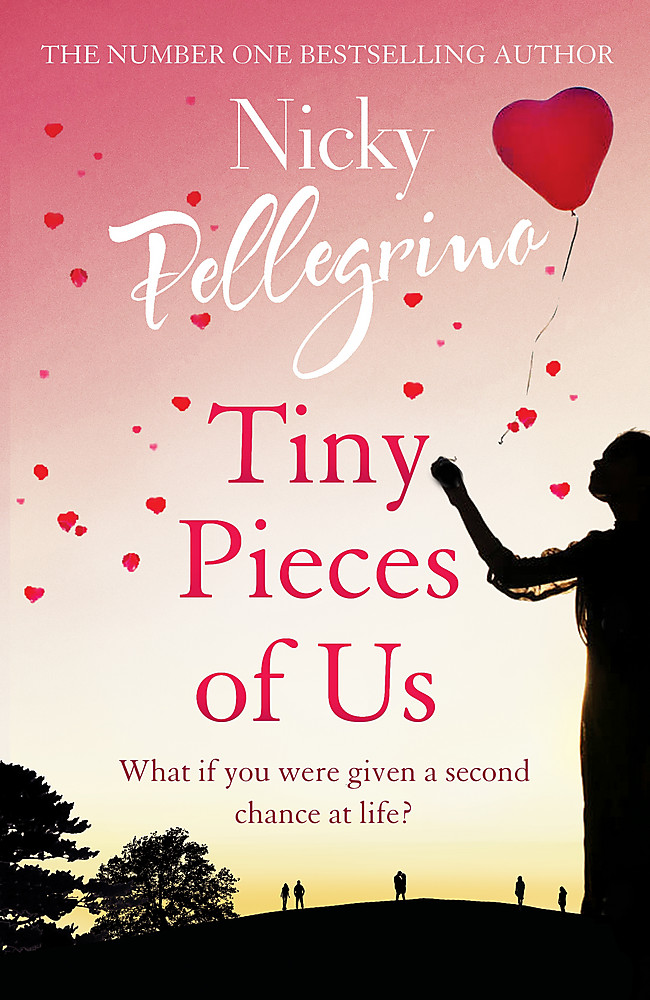
Tiny Pieces of Us
by Nicky Pellegrino

.
Hachette


$29.99


ISBN: 9781869713850
Publisher: Hachette NZ
Published: June 2020
Pages: 320
Format: Paperback


Reviewed by Rosetta Allan


When peaches are being squeezed by hand in the kitchen of an iconic Italian homestead with terraced gardens running down to a picturesque seaside coastline, you know you’re reading a Nicky Pellegrino novel. Tiny Pieces of Us is her twelfth novel, and a progression on her usual motifs: food, love, and pensive contemplation on decks with glass after glass of fantastic wine.

Elements of her previous work still figure in Tiny Pieces of Us. We return to Villa Rosa for a summer holiday in Pellegrino’s imaginary Italian village, Triento. Raffaella Moretti steps out of a previous book, Summer at the Villa Rosa, to make the customary sumptuous courses using locally sourced produce. However, before the long afternoons reclining on loungers, or the swimming in a naturally carved salt pool in the rocky shore, or the driving down a coast road slightly too fast with a gorgeous young cheesemaker, we spend the first half of the story in London with the novel’s main protagonist, Vivi.

Vivi was ‘born with a heart that couldn’t be trusted’. At nineteen, she is one of 165 young people in urgent need of a matching donor, when a catastrophic event occurs that ends one life, and miraculously saves another. Jamie McGraw is the boy who will soon give Vivi his heart. We meet him flying home on his bike to share the news with his mother, Grace, of his unexpected scholarship for summer school in robotics.

Jamie is a smart boy, athletic and optimistic. He wears all the safety gear his doting mother has insisted on, including the high-vis vest, but none of this can save him on tarmac greasy from rain and an oncoming car. I would have liked to linger longer with Jamie in the beginning – to be with him when he hands in the application for the scholarship, or to see his surprise when he receives it. But his promising future is cut short, as is our time with him.

Seven years on, Dan, Vivi’s ‘unsuitable’ lover and pushy boss at the Daily Post hatches a plan to use Jamie’s story: he wants to lobby government to change the law of organ donation to make it an automatic ‘Yes’ option, unless someone proactively opts out.

Tiny Pieces of Us is told mainly from Vivi’s first-person point-of-view, with other chapters in the third-person of Jamie and his mother Grace, as well as the recipients of Jamie’s kidney, lungs, corneas, and liver.  After reading Vivi’s story in the paper, Grace steps forward, although it’s against the rules to contact donor families or other transplant recipients. The pain and loss of letting her son go, to switch off the life-machine seven years earlier, is still raw. The decision she made to give away pieces of his body so others may go on breathing each day sits heavily.

Vivi wants to prove – to herself and to Grace – that she is living a life worthy of Jamie’s heart: ‘I was the headline, and Jamie was the story’. She searches for the other recipients of his organs, and they begin forming what Vivi’s sister, Imogen, calls the ‘transplant family.’ Imogen doesn’t resent the closeness of the transplant siblings, though she does fret about the speed at which it occurs. Having spent her childhood watching out for Vivi, Imogen is a voice of caution, endlessly fussing and fearing for Vivi’s safety. This same sense of anxiety extends into Imogen’s own home after the birth of her children. She can now ‘only ever sleep if she has a plan. Pyjamas she could quickly throw a jacket over, sneakers within reach, car keys by the door. Imogen is ready, although she is not sure what for.’

Vivi’s job as a tabloid journalist is uninspiring. Dan keeps her busy interviewing reality TV stars even though she would rather be working on ‘newsier, investigative pieces.’ She rents a dingy crash-pad in a bay-fronted villa in Highbury with ‘barely enough space for a large single bed and a clothes rack’ – although she could choose to accept some of the millions her mother and father are in the ‘Gooding’ process of giving away.

Dan doesn’t buy into the usual careful-careful mode of handling transplant recipients.

They spend evenings drinking at the Prince of Wales pub, though Vivi knows she shouldn’t be risking her health this way. The fear of heart-failure never leaves: ‘Fear wakes and stalks you in the night, when you touch your chest and feel where they cracked it open to pull out your old sick heart, when you count up the borrowed time and wonder how much more of it lies ahead, when your new heart thumps harder at the thought of it.’  ‘No one is ever safe’, says Stefano, Jamie’s cornea recipient. ‘That’s why it’s important to make the most of life.’

So, in typical Pellegrino style, her characters escape into an Italian idyll, hoping to be healed and entertained. The descriptions of place and food are detailed and vivid, as we would expect from the author.  Although the novel has a more serious theme than some of her other books, Tiny Pieces of Us remains hopeful and warm-hearted, offering insights into the process of organ donation that continues well beyond the miracle of the transplant.

The novel includes ‘news articles’ as Vivi’s law gathers momentum to become a social movement to promote organ donation. This is a complicated topic to portray, and Pellegrino deals with the subject with sensitivity and thoughtfulness. Sadly, we are not given a resolution to the results or ongoing success of Vivi’s Law campaign. (In my parallel imaginary universe, I have Vivi picking taking back the ownership of this campaign from pushy Dan, to find fulfilment in the form of her own ‘Gooding’.)  Some moments in the novel would have benefitted from a little more action rather than character contemplation.

Pellegrino’s books consistently haunt New Zealand’s top ten sales list for good reason: they have a big heart, and like many readers I enjoy being whisked away to her Italy, especially in these uncertain times of Coronavirus restrictions and fears. To Tiny Pieces of Us, I raise my glass of chilled prosecco and say Hai fatto un bel lavoro.


Rosetta Allan is the author of two bestselling historical novels, Purgatory and The Unreliable People. She lives in Auckland.

'Character to some extent is much a construction of the reader as it is of the writer.' - Lloyd Jones

Read more

.

.

.

The Goddess Muscle
by Karlo Mila

Huia Publishers


$35.00


ISBN: 9781775504009
Publisher: Huia
Published: October 2020
Pages: 300
Format: Softback


Reviewed by Lana Lopesi


I wonder what exactly a goddess muscle is. Do you know if you have it? Do I have one, buried deep down in a part of my body I’m yet to know? I wonder if, like intergenerational trauma, a goddess muscle and its memory is something which is inherited, an epigenetic configuration forming and reforming, again and again. Since reading Karlo Mila’s latest collection of poetry, I’ve been thinking about the premise of its title Goddess Muscle. Of the way muscles get stronger only through their repeated use and what this means in relation to being a goddess, and how this can be committed to muscle memory developed over a period of time.

Goddess Muscle, Mila’s third poetry collection, includes poems which range from being incredibly personal, charting the end of a marriage, to political commentary about events, such as the murder of Tamir Rice and at Ihumātao. Dreaming of an alternative possibility at Ihumātao where Jacinda might actually visit the whenua Mila writes, ‘I dream Jacinda truly felt/ that this history stinks like sewage/ as she drove into the shit-show’. It is littered with moments of introspection and pain, hope and healing. The collection as a whole, with its many sections, takes readers on a turbulent ride, weaving through many different experiences and modes of thinking – something to expect in a collection spanning over a decade of writing.

As well as being a poet, Karlo Mila is Programme Director of Mana Moana, Leadership New Zealand. The well-known Mana Moana programme uses Mila’s own postdoctoral research, which acknowledges the place of Indigenous language and ancestral knowledge in contemporary leadership contexts. This mode of operation, which centres Indigenous knowledge, similarly takes hold throughout the collection. Despite the collection’s varied themes, we are constantly reminded of Indigenous conceptions of the world in poems like ‘Tagaloa: The Order of Things’, ‘Papatūānuku’, Kūkaniloko’, ‘Te Korekore’, which act as anchor points, or moments of respite before being taken on another journey. Mila returns readers to the source, as the closing line of the collection reads, ‘All of us tributaries/ in the return/ to source.’

The poems written for others constitute a stunning thread of Goddess Muscle – people like Teresia Teaiwa, Epeli Hauʻofa, Jim Viviaere, Albert Wendt, her son Maka Toa and a poem commissioned by her Nana offer beautiful tributes to the people in and around her life and poetry. In some instances, they read like love letters, which place this work in an intellectual gafa or history, acknowledging those who inform Mila’s own thinking. For Teaiwa, Mila writes:


You are,

Maraea nailed it,

‘kaupapa as’

unafraid,

yet overburdened

with community service


The lighter moments are harder to come by, but when then they do, they offer welcome moments of humour, like in ‘Tūhoe Boys’ which reads:


Because you can lead a horse

to water,

but if you can force them to drink

they aren’t a Tūhoe boy.


The book in and of itself has a great materiality to it. The textured cover has a portrait of Mila mirroring the cover of her first collection Dream Fish Floating. Full colour is reserved for the cover; inside pages use flat planes of colour backgrounds with variously coloured text. Shades of blue plunge us into the ocean for tributes to Pacific scholars and writers, while blacks pull us into te pō or the darkness. On some pages the white text against colour can be a little difficult to read, but it’s an intriguing design feature of the collection, a helpful device to shift the reader quickly into the site of each poem.


You’ve written a lot of poems

he said.


Yes.


It’s how I turn mess

into tidy.


How I organise chaos

into clean.


It’s how I turn

self-harm,

into

black blade

on white page.


And it’s clear that Goddess Muscle turns Mila’s mess into tidy sections that roll through moments of intensity. If we think with this concept of the goddess muscle being something that strengthens with repetition, it’s not a stretch to say that Karlo Mila’s own goddess muscle comes through the repeated writing of poetry, repeated experiences, and repeated ceremonies of healing. At over 200 pages with poems, Mila has definitely been flexing her own goddess muscle. Some poems could have been shortened, but then I wonder if they would have been long enough to commit the memory to one’s muscle.

In a recent review of Tusiata Avia’s The Savage Coloniser Book, Selina Tusitala Marsh acknowledges that sometimes we need to go through our wounds and back through them several times. This sense of repetition, of knowing ones wounds so intimately that one can move beyond it to a space of healing, is the memory we commit to our muscle. For Mila that involves evoking the goddess muscle that has been built over the past 10 years of writing. In the end, it’s a collection about empowerment, of a voice that won’t dim for others, and a voice that beyond all else relies on its own Goddess Muscle through it all. This is a valuable collection, one that I will draw from for years to come.


Lana Lopesi is an editor, critic and author based in Tāmaki Makaurau Auckland. She has worked as editor-in-chief at the Pantograph Punch and the Creative NZ Pacific Art Legacy project, and in 2020 served as a judge at the Ockham NZ Book Awards. Her most recent book is False Divides (BWB 2019).

‘Inspiration is the name for a privileged kind of listening’ - David Howard

Read more

.

.

.

Bus Stops on the Moon: Red Mole Days: 1974–1980
by Martin Edmond


Otago University Press


$39.95


ISBN: 9781988592510
Publisher: Otago University Press
Published: October 2020
Pages: 274
Format: Paperback


Reviewed by Philip Matthews 


At the endlessly useful NZ On Screen site, you can find an hour-long documentary, directed by Sam Neill, titled Red Mole on the Road, that was first broadcast on local television in 1979. It seems to be all that can be easily seen or heard of a nearly legendary, avant-garde theatre group that was said to have been dreamed up by Alan Brunton and Sally Rodwell in an opium den in Laos in 1973 and only ended with Brunton’s sudden death in Amsterdam in 2002. A lot happened in those three decades, and quite a bit of it happened overseas, but it was ephemeral by its very nature – hard to repeat, impossible to copy, rarely recorded.

Brunton had a kind of missionary zeal, born of 60s idealism and a Rimbaudian derangement of the senses (‘I want to go where there’s no beyond,’ he said). The group put together cabaret, slapstick, comedy, political satire, songs, puppetry and mask work. Someone called it futurist vaudeville. Other people called it surrealist. A left-wing perspective on the times was a given (a character with a pig’s head didn’t need much explaining to New Zealanders in 1979), and their itinerant outsiderness puts them between the last gasps of hippiedom and the imported shock tactics of punk rock. The mid-late 70s was a fertile time for oppositional culture that challenged the national slumber.

Red Mole on the Road gives you as good a sense as anything else might of what Red Mole did, what they looked like, why they existed and what New Zealanders of the 1970s thought about them, whether they were ecstatic school kids in Murchison, bemused shoppers in Christchurch or discerning theatregoers in Auckland. As he steers one of the group’s rickety vehicles from south to north, Martin Edmond, who was in the group as an actor, technician and critic, or historian in training, tells Neill that their job was to show ordinary people the gap between what they think is going on in New Zealand, and what the reality is. He’s in stage make-up as he says this, and he’s wearing a Charlie Chaplin bowler hat. Red Mole clearly didn’t mind committing the cardinal sin in New Zealand cultural life, which is being pretentious. Edmond’s central place in the film, as a spokesperson for Red Mole, also seems contrary to the sense he gives us in his own, newly published account of being marginal or peripheral, and somehow tolerated in the group. Edmond’s account refers a few times to the dominance of the so-called Gang of Three, made up of Brunton, Rodwell and Deborah Hunt, who were also in a ménage à trois. Well, it was the 70s.

That account, Bus Stops on the Moon, is really doing two things at once. On one hand, it’s a detailed history, drawing on the Brunton and Rodwell archives, of Red Mole’s activity during the six years he was attached to the group, a time when he was also married to musician Jan Preston, sister of film-maker Gaylene, who led the associated band Red Alert. Using archival papers, contemporary reviews and his memory, and he admits that the latter may be the least reliable of the three sources, Edmond reconstructs a series of Red Mole shows. Sometimes that can be like hearing someone recount their dreams, as in this description of the action in the Polynesian noir Slaughter on Cockroach Avenue, from 1977:

‘Frank sent his offsider, Sunshine, a pest exterminator, up north to look for clues. There were scenes in a country store, at the Pūhoi pub, on a commune where a group of hippies worshipped a guru called Don Heke. They took ritual doses of tutu berries harvested from the grave of James K. Baxter at Jerusalem. Sunshine, wearing a rat mask, ended up dead, killed by the hippies in a drug-induced frenzy. Frank discovered the body in a nightclub called The Crypt, where he had gone to rendezvous with the Blonde. Maybe she had something to do with the death of her brother after all.’

As Edmond says, Slaughter on Cockroach Avenue ‘had a storyline that didn’t cohere and wasn’t meant to either’. Arthur Baysting’s Neville Purvis character, later immortalised as the first person to say ‘fuck’ on New Zealand television, was in the show, as were two dancers from Limbs and Midge Marsden’s band the Country Flyers. Amazingly enough, this wayward exercise in 70s surrealism was performed at Phil Warren’s Ace of Clubs in central Auckland for a nightclub crowd that came out to see Marcus Craig’s saucy drag act, Diamond Lil.

As well as being a Red Mole history, Bus Stops on the Moon is also an Edmond memoir that links The Dreaming Land, the book that covered his rural childhood in the 1950s and 60s in a fairly straightforward way, to the more hallucinatory, less reliable Luca Antara, which opened with Edmond’s arrival in Sydney in 1981. This is the decade in the middle, but the peculiar thing is that Edmond seems less free here than he did when he recollected his childhood or other parts of his adult life, a problem he anticipated when I interviewed him about The Dreaming Land in 2015 (‘There are things about those times I don’t want to write about,’ he said of the 70s). There is a greater sense of detachment and distance than before, and the personal life, the interiority, is often missing. By the end, you can see that it’s about how Edmond’s slow but steady development towards a point where he could call himself a writer was interrupted by the years when he ran away with the circus. He goes from writing art reviews for the university paper to helping Brunton, Ian Wedde and others with the avant-garde journal Spleen to taking on a day job as a writer of adult fiction while Red Mole were based in New York (he can recall one title of the six books he wrote under pseudonyms: Diary of a Well-Whipped Wife). Writing, he learns, is all about sitting down and delivering, even if it’s pulp or porn.

Bus Stops on the Moon is also valuable for the ways in which Edmond measures the tension and paranoia of the times. It’s the 70s Wellington of the Bill Sutch spy story and the secretive, coded world of Carmen’s Balcony nightclub, where Red Mole famously did a season. It’s the Auckland of the pre-gentrification Ponsonby. It’s San Francisco when Jonestown happens, Harvey Milk is killed and the entire city seems ‘death-obsessed’. A three-day drive across the country puts them in New York just as the Three Mile Island nuclear plant is melting down. Blackouts across Manhattan seem apocalyptic. Events in the news start to appear like omens with personal significance.

Was it really as strange and dark as all that? Edmond concedes that ‘The amount of dope I smoked in those days might have contributed to my paranoia’. He knows they’re talking about him when he hears someone say, ‘You mean that guy who always looks like he’s out of it?’ Flirtations with madness and altered states are familiar territory for Edmond, who went to where there was no beyond and came back to tell us about it in Chronicle of the Unsung, Dark Night, Luca Antara and The Resurrection of Philip Clairmont. But it’s only in the last chapter that the love story and long-running creative partnership between Brunton and Rodwell that was the heart and soul of Red Mole comes fully into view for both Edmond and the reader. It leaves you wanting to know more about them.


Philip Matthews is a Christchurch journalist. 

'Character to some extent is much a construction of the reader as it is of the writer.' - Lloyd Jones

Read more

.

.

..


Remote Sympathy
by Catherine Chidgey

Victoria University Press


$35.00


ISBN: 9781776563203
Publisher: Victoria University Press
Published: October 2020
Pages: 528
Format: Paperback


Reviewed by Sally Blundell


‘There is no such thing,’ wrote Buchenwald survivor Jorge Semprún, ‘as an innocent memory’. Catherine Chidgey has tested these words before – in her previous novel, the award-winning The Wish Child, she followed two children living in Nazi Germany as ‘the war keeps rolling on like bad weather’. It was provocative, persuasive, utterly readable.

In her latest novel Remote Sympathy – the title itself can be read on a number of layers – Chidgey tests the truth of these words once more. This time, she takes us into the camps themselves, to the Buchenwald labour camp, perched on the Ettersberg hill above the picturesque Weimar village.

Chidgey alternates between three main characters. Leonard Weber is a doctor of Jewish ancestry, inventor of the ‘Sympathetic Vitaliser’, an electrotherapeutic device he believes could cure – cure! – metastatic carcinoma. As he explains, if a singer can shatter glass when her voice reproduced its resonant frequency, ‘couldn’t we shatter a tumour in the same way? By causing its cells to vibrate in sympathy, couldn’t we turn it to dust?’

His invention attracts some interest. A month after treatment, around the time he should have died, ‘my first miracle rose from his bed and packed his suitcase’. But his success – and the survival of his test patient – is short-lived. He is fired from his job due to his ‘difficult ancestry’. His Sympathetic Vitaliser, as he explains in a series of letters from Buchenwald to his daughter Lotte, transported with her mother Anna to Theresienstadt in Czechoslovakia, is lost in the attic of failed science.

Until, that is, SS Sturmbannführer Dietrich Hahn, our second narrator, reads of his work. Hahn, a loving father and husband, was trained at the Dachau concentration camp under SS functionary Thomas Eicke, one of several real-life figures in the book and a key actor in the development of Nazi concentration camps. Promoted to the prestigious role of camp administrator at Buchenwald, Hahn and his young family leave Munich to take up residence in the ‘model’ labour camp. His wife Greta, our third narrator, is desperately hoping for a second child but her inability to conceive is found to be the result of ovarian cancer: ‘That’s what he suspected might be growing in her. Not a child: a tumour.’

Her husband is desperate. Could this machine, trialled a decade earlier at the Holy Spirit Hospital, be the answer? Could this Dr Weber, his trace of Jewish ancestry aside, prolong his wife’s life?

Just as faith in Weber’s device pivots on an unstable platform of desperation, hope and straightforward pretence, so the innocence in Semprun’s quote is strained by increasing evidence of the realities of the camp.

The Hahns’ new home is set within a picturesque forest, a park, a zoo, even a falconry. In Weimar, Greta admires the famous statue of Goethe and Schiller – ‘You see?’ she writes to her mother. ‘We’re quite civilised here.’ Through Weber’s letters, Greta’s diary and the transcribed recordings of Dietrich’s post-war trial, taken from the American Military Tribunal’s 1947 war-crimes trials at Dachau (including the account of Buchenwald camp administrator Otto Barnewald, on whom Hahn is based), Chidgey succinctly, unnervingly, unravels that assertion. A picnic in the park takes Greta close to the barracks, the wisp of smoke coming out of a chimney ‘pointing into the sky like a vast brick finger’ and the pervasive smell: fatty and smoky and too too sweet’. There is the sound of shouting in the distance, dogs barking, a gunshot. ‘What was that?’ asks a jittery Greta. ‘That’s where they bring you if you’re naughty,’ whispers her son’s new friend.

Hahn wrestles with corruption in the camp – ‘rife at every level’ (including his own) – and a system straining under a burgeoning population. Quickly, Semprun’s innocence begins to tear. The casual lies, the sloppy killings, the swastika baubles on the Christmas trees, the thriving vegetable crop (‘It’s the ashes’), the Little Camp with its ‘stinking stables full of Jews and lice and its piles of corpses’. Then the laboratory in the Hygiene Institute housed in Block 50 ­- ‘It was a decent source of revenue,’ reasons Hahn, ‘with pharmaceutical companies and medical institutes paying to conduct their trials inside the camp, where laws around experimental procedures did not apply. I hadn’t known that.’

‘Do you know,’ says Greta’s new friend Emmi, ‘they released some of the Polish child prisoners because they found out they had Aryan blood?’

‘Child prisoners?’ I said.

‘They gave them to good German families. So that’s a happy ending.’

Interrupting these personal records, like a diminished Greek chorus, the ‘one thousand citizens’ of Weimar voice their distaste, their disregard, ultimately their shame: ‘If you don’t eat your soup, we’ll send you up the hill: that was something we told our children when they misbehaved.’

The tension mounts, building on the failure of Weber’s machine, the progression of Greta’s illness (Greta’s death would end Weber’s protected status and presumably that of his wife and child) and the ever approaching forces of the Allies and the Red Army.

Any comprehension of the Holocaust, wrote Australian historian Inga Clendinnen, ‘poses almost direct threat to our confidence in our own personal integrity’. There is no culpability, she added; rather, the simple fact that those involved were people ‘very like ourselves’.

Like Semprum and Primo Levi, Chidgey describes Clendinnen’s ‘surreal rationality of the camps’ with calm restraint. Unlike these writers – these camp survivors – she enters imaginatively into the minds of her narrators to try and understand why people ‘very like ourselves’ can undertake or justify or ignore the atrocities that occurred at camps such as Buchenwald. This challenge is not entirely met. Greta suspects but does not see; her husband sees – even orchestrates – but is blind to any ‘remote sympathy’; the people of Weimar swing between blame and feigned ignorance. As readers, we are left with horror and, as always in relation to the Holocaust, bewilderment. But in its deft melding of fact and fiction (Weber in particular is finely drawn), its skilful examination of human sympathy and faith, its dramatic tension and quiet lyricism, Remote Sympathy takes us bravely, compellingly, into the uncertain heart of human complicity.


Sally Blundell is a journalist, writer and reviewer based in Ōtautahi Christchurch.

'Novels stand outside time, with their narrative structure of beginning, middle and end. They outlast politics, which are by nature ephemeral, swift and changeable and can quickly become invisible, detectable only to the skilled eye. ' - Fiona Farrell

Read more

.

.

.

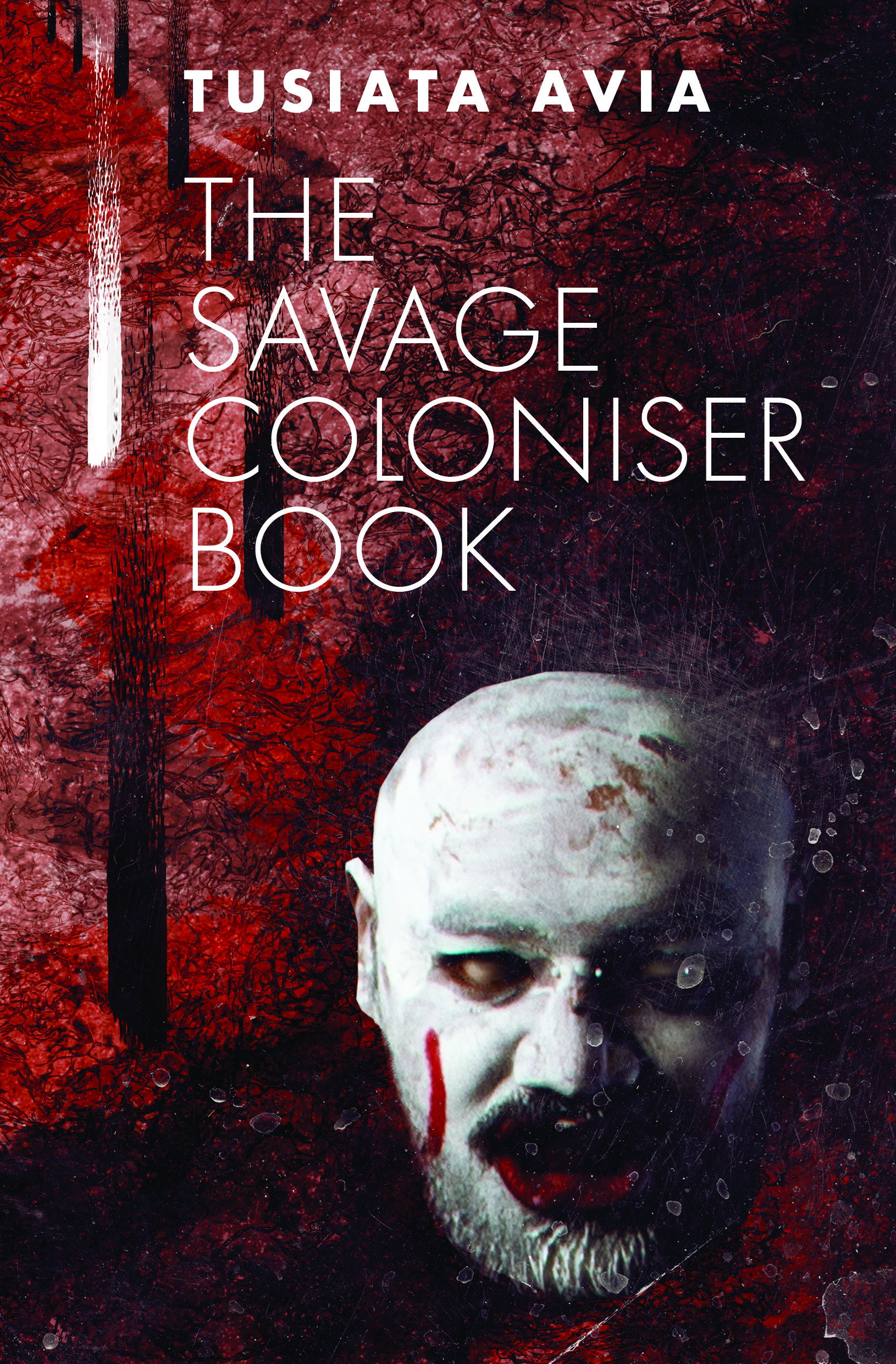
The Savage Coloniser Book
by Tusiata Avia


Victoria University Press


$25.00


ISBN: 9781776564095
Publisher: Victoria University Press
Published: October 2020
Pages: 96
Format: Paperback
.
.

Reviewed by Selina Tusitala Marsh


I remember listening to a Radio New Zealand review of Tusiata Avia’s third book, Fale Aitu/Spirit House. The reviewer, a well-known Pākehā male poet, said the word ‘dark’ over and over again. That adjective ‘dark’, and its mantra-like repetition, undermined what was otherwise a strong review of Avia’s poetry – her array of technical skill, assuredness of voice, the way she tackled issues with vivid, tensely packed language, and so on.  But it was ‘dark’. Fale Aitu hadn’t struck me – a fellow Pacific Island woman poet – as especially ‘dark’, irrevocably ‘dark’, indulgently, provocatively, ridiculously ‘dark’. It is life. Our lives. As experienced from within the body of a brown woman growing up in a ‘post’ colonial Aotearoa New Zealand.

In case any other critics leap on the ‘dark’ bandwagon for her latest collection, The Savage Coloniser Book, Avia wants to help. The first line of the final poem, titled ‘Some Notes for Critics’, reads: ‘Yeah, sometimes my poems are dark’.  It’s hilarious, an example of Avia’s characteristic knowing, sideways glance, like one of those kitsch dusky-maiden velvet paintings, or her Carmen Miranda-esque author photo at the back of the book where her hair holds the entire world, or the contents of her bedroom.

Rather than dark, this book is knowing. There’s a sophisticated knowing beneath the poems – the ‘fuck-you-James Cook’ type of poems; the ‘let’s-go-there-with-Jacinda’ poems; the ‘who’s-the-real-terrorists here’ poems. This stunner of a collection explores the savage in, around, behind, and before us – in a way I haven’t yet read articulated to this degree, with this much poetic aplomb. We know each other, this collection reminds us. We’re a small island, and poetry atolls are all connected beneath the surface, even if the water keeps rising.

The Savage Coloniser Book is divided into three parts by the symbol of the malu. This is the tattooed mark that appears on the most painful and sensitive part of a woman’s leg – the back of her knee.  In Samoan symbology, the diamond shape symbolizes protection. In Avia’s lexicon, the malu serves as a portal to other worlds.

Part One is written in a number of voices, both the savage and the coloniser. There are found poems from speeches made by Tame Iti, Martin Luther King, Alexandra Ocasio-Cortez, the ancestors of the policeman who lynched George Floyd, Ahmed Fareed (a survivor of the Christchurch massacre), and of our Teine Sa, Samoan spirit women. The first poem in the collection is the ‘Savage            Coloniser Pantoum’, where the split title visually creates two poems on the page. This is a call and response poem where subtle shifts in meaning throughout the repeated lines create a prism effect on the topic of colonisation as the ultimate ‘dumb game’. Its sardonic effect is again, hilarious, Avia’s way of easing you into a collection of politically astute poems that call out savage oppression and racism.  These poetic snapshots range from casual, interpersonal microaggressions to political, systemic, and global racism, like Australia’s human rights infringements from their treatment of Aboriginal First Nations Peoples to Manus Island refugees, to America’s Black Lives Matter movement, to the Christchurch massacre, to Auckland’s Ihumātao land occupation.

In Part Two we move from the body politic to the body personal, exploring sex, seizures, relationships with others, and the self (the ‘Jealousy’ sequences are particularly hard-hitting). We read about the body in performance and ritual in poems on FafSwag, our newest Arts Laureates, a Queer Pacific Arts collective invested in social change (a thematic first, perhaps?).  We experience the body of the poem on the page in shape poems that wonder: what if the gender roles in myths surrounding Samoan tattooing practices were reversed? What if the women, not men, received the pe’a, the male tattoo? The following poems, ‘Blacking out the Va (ii)’ and ‘Blacking out the Va (iii)’ face each other and in the Va (the interrelational spaces between) visually evoke the pe’a on the page.

Part Three mixes the personal and the political, beginning with ‘Covid in the time of Primeminiscinda’ and an exploration of the internal and external transmission of communicable dis-eases.  Avia explores the paradoxical situation of a global pandemic that forces us to experience life in smaller and tighter spaces: from globe to country to town to home to mind with sardonic assonantal-driven humour: ‘Jacinda has become my Krishna / Hare Jacinda / Rama Primeminiscinda’.

The entire book serves as a poetic record of historic reasons for group anger, a useful backdrop for poems like ‘How to be in a room full of white people’, a poem that acerbically ‘outs’ white people.  The instances of white-splaining are familiar, provocative and strangely refreshing to finally see in print:


Watch…..white people startle when you use the words white

…….people together

Listen……to white people tell you they don’t like being lumped

     …together like that

Watch…..white people when black and brown people are killed

      ..again because they are black and brown people

Hear……..white people say: It’s hard to be white too

Listen……to white people say: I feel culturally unsafe

Listen……to white people say: I’m a woman of colour, white’s a colour


That last line was said by MP Judith Collins.

The pacing throughout the collection is effective as Avia takes us to the edge with poetic and layered diatribes against colonial exploitation and white terrorist massacres, then turns the thematic corner to sex and death:  death by seizure, death by abortion, death by a thousand micro-racist papercuts.

Heavy – or ‘dark’ – themes that might overwhelm the more ‘delicate’ reader are carried by an assured lightness of voice that serves as a counter tone to its subject treatment.  This voice is casual, and ‘of the people’ – not in a homogenous way, but in a specific, nuanced, multifaceted, strategically essentialist ‘of the people’ and even ‘of the land’ way.  We lurch between savage, savaged, colonised and coloniser. ‘Fucking St Barbara (i)’ is written in the voice of the land and seabed being rape-mined. Four poems later we’re in the head of Derek Chauvin, the white police officer responsible for the death of George Floyd: ‘I’m looking straight into the camera … I’m holding my knee on his neck’.

The variation in use of language and tone makes for a rich reading experience. From the encoded and culturally nuanced ‘Ma’i maliu’, the Samoan phrase for ‘seizure’ (literally meaning ‘death sickness’), to the bald profanities as in ‘250th anniversary of James Cook’s arrival in New Zealand’: ‘Hey James / yeah, you / in the white wig / in that big Endeavour / sailing  the blue, blue water / like a big arsehole / FUCK YOU, BITCH.’  I’m not sure whether keeping the full expletive over more sanitised versions (F-k) rings the death knell for this book’s admission into school libraries, but if we can trust the nature of contraband, it will find its way into teen hands somehow and in some form.

Of things ‘dark’, of things unpretty, of pain, of red-black anger and wounds, Joy Harjo, the first First Nations US Poet Laureate says: ‘Poetry gives us a way to speak, a way to express our thoughts so we can find pathways to healing. Healing is not always a pretty thing. You have to go through the wound, sometimes you have to go back (through) several times’.

The Savage Coloniser Book poetically documents our wounds, and by doing this provides poetic catharsis. Avia goes through the wound – colonisation, slavery, genocide and racism – and back through it several times. It’s an uncomfortable read in many places. Some might avert their eyes, refuse to lift off their own bandages to see, but it’s a wound that belongs to all of us and one shared by people of colour the world over. These are wounds that leak into our day-to-day lives, whether you’re paying in a bookshop or praying in a mosque, whether you are having coffee with blithely racist friends or standing in a protest line.

The Savage Coloniser Book is designed to fit in your hand, and like a handbook it offers a poetic guide to colonisation past, present and future, outside, within and beyond us. Avia’s poetic seer’s eye, like the white aitu eyes that stare out from Pati Solomona Tyrell’s cover activation, holds the dark up to the light to heal our wounds.

.


Selina Tusitala Marsh (ONZM, FRSNZ), is the 2017-2019 NZ Poet Laureate, the 2016 Commonwealth Poet, and has written three acclaimed books of poetry.  She is also the author of Mophead, winner of the 2020 Margaret Mahy Supreme Book Award. Mophead TU: The Queen’s Poem is out this November.  She is an Associate Professor at the University of Auckland.

'Many of our best stories profit from a meeting of New Zealand and overseas influences' - Owen Marshall

Read more