The 2026 Ockhams Finalists

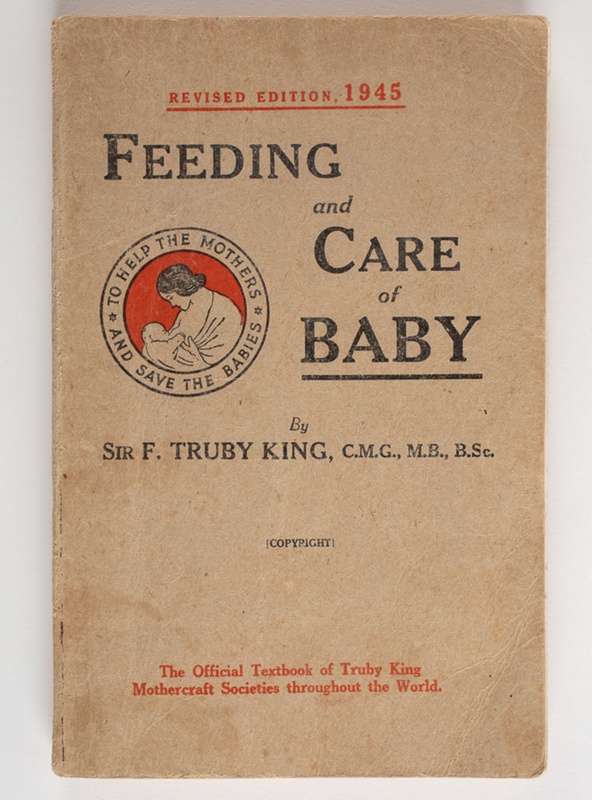
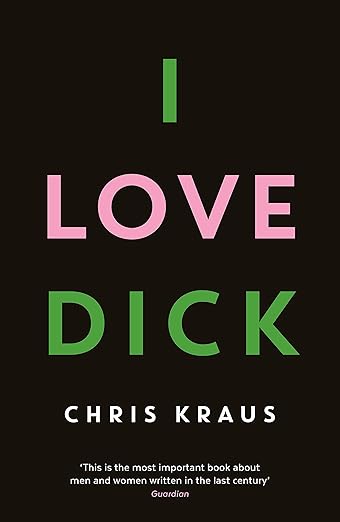
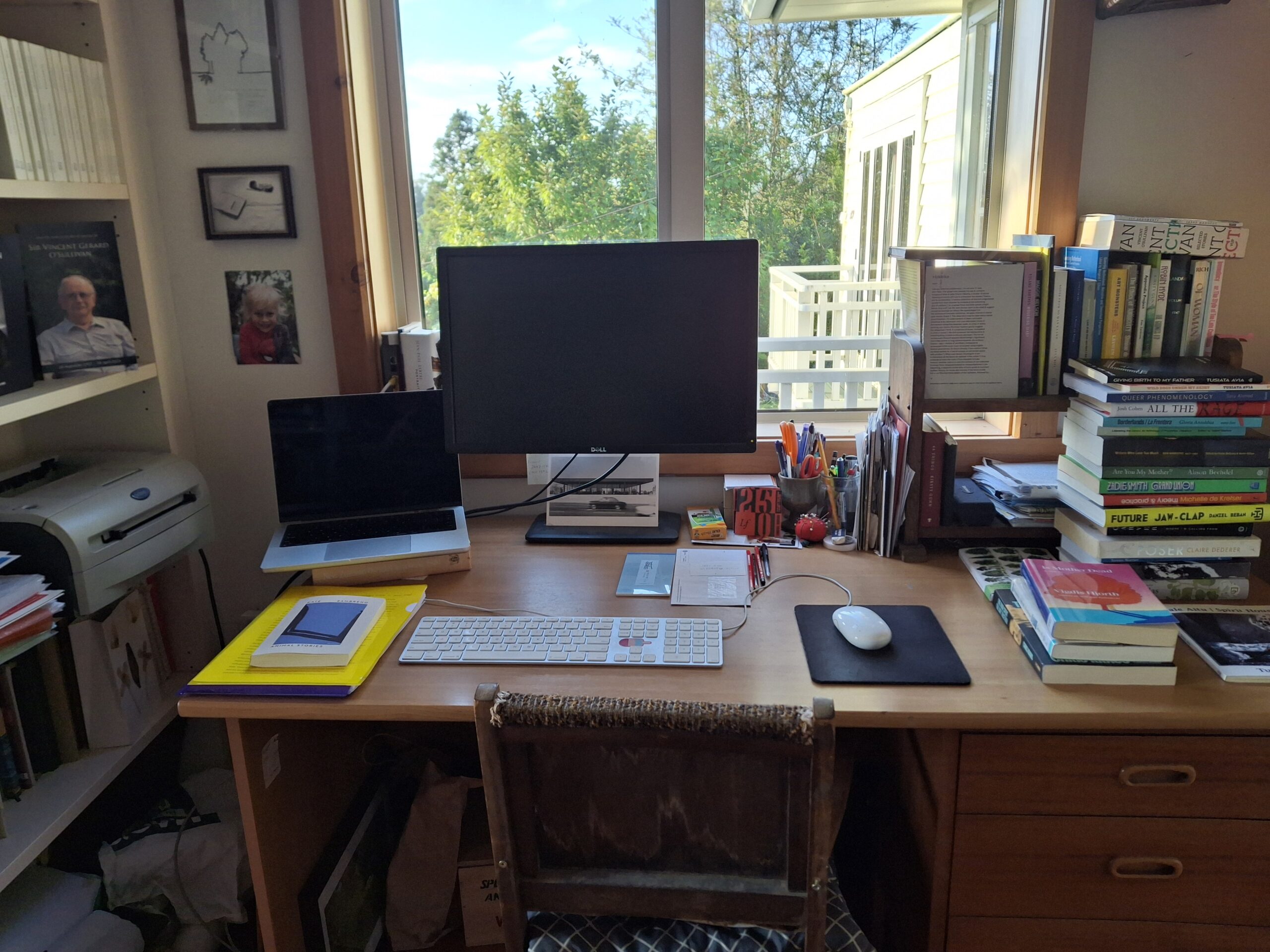
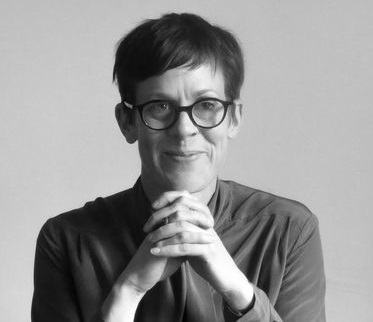
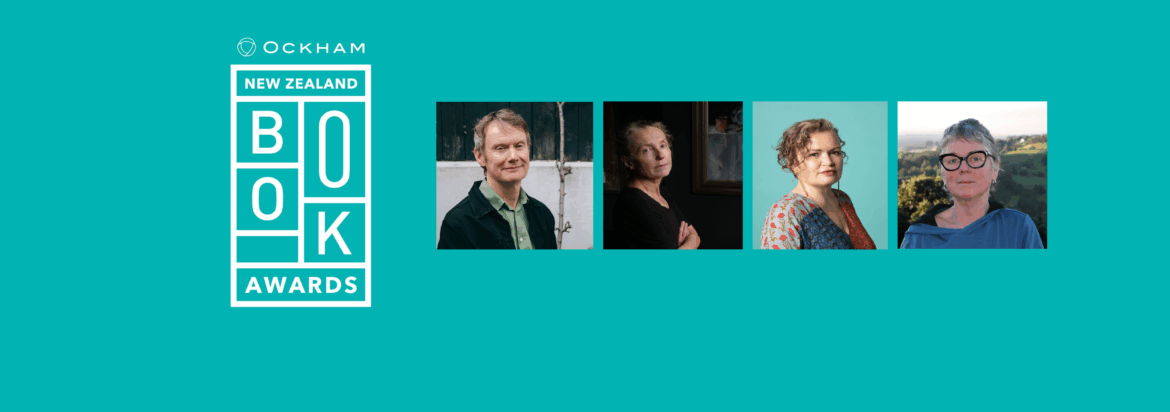
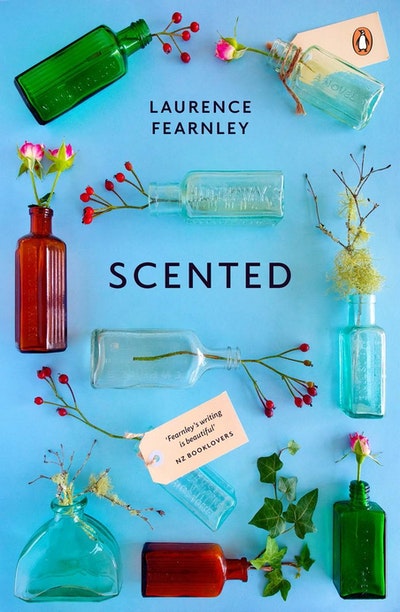
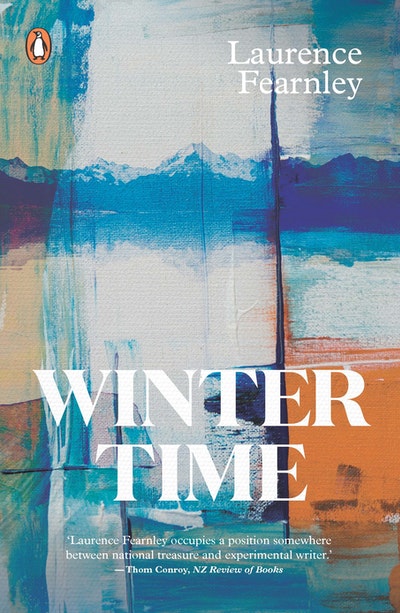
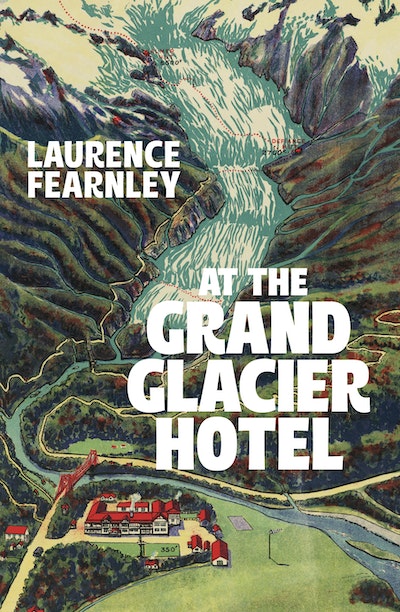
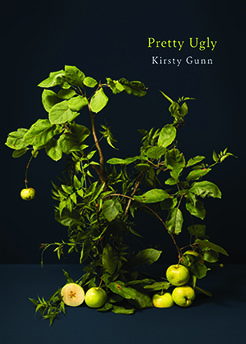
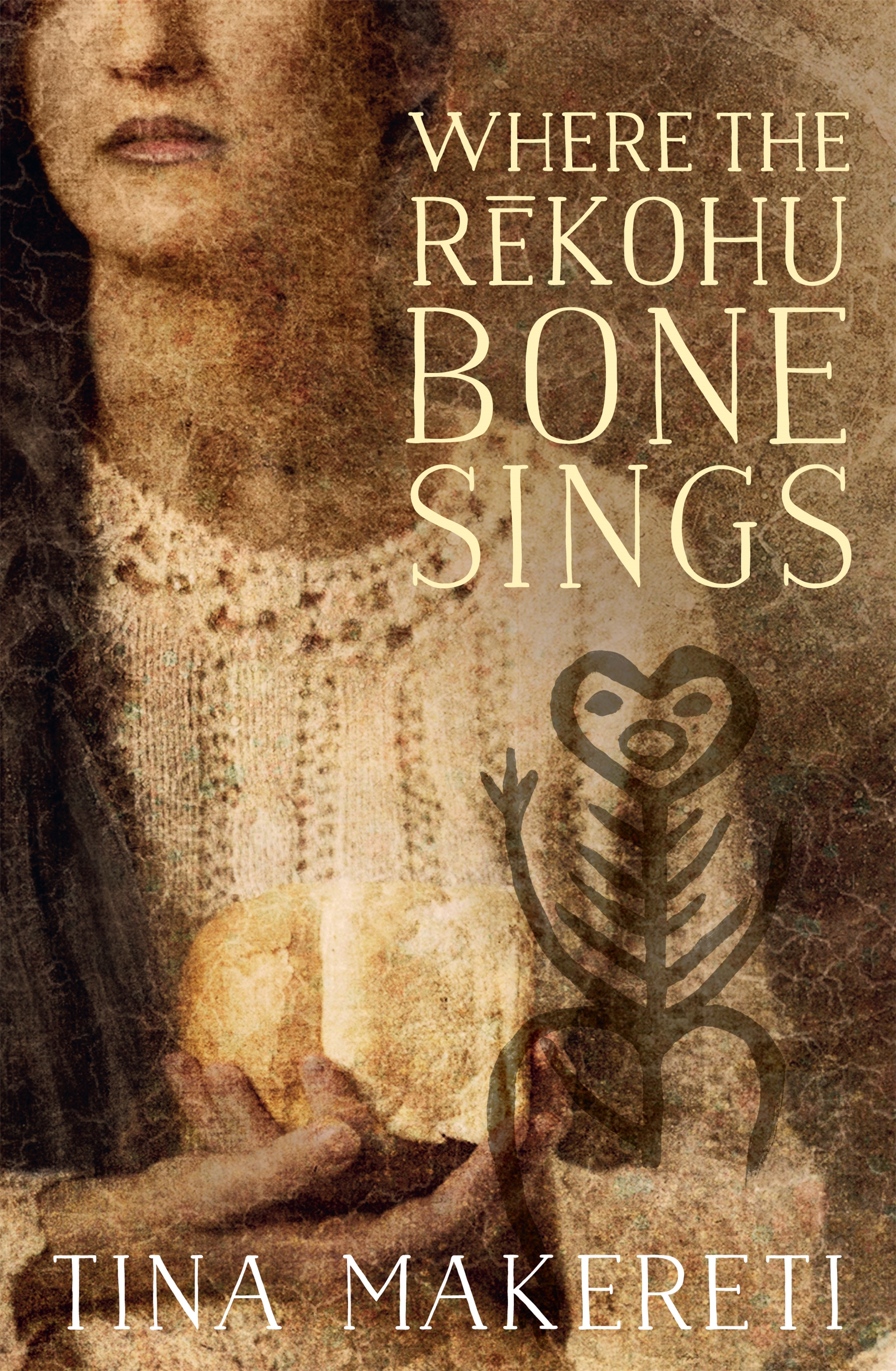
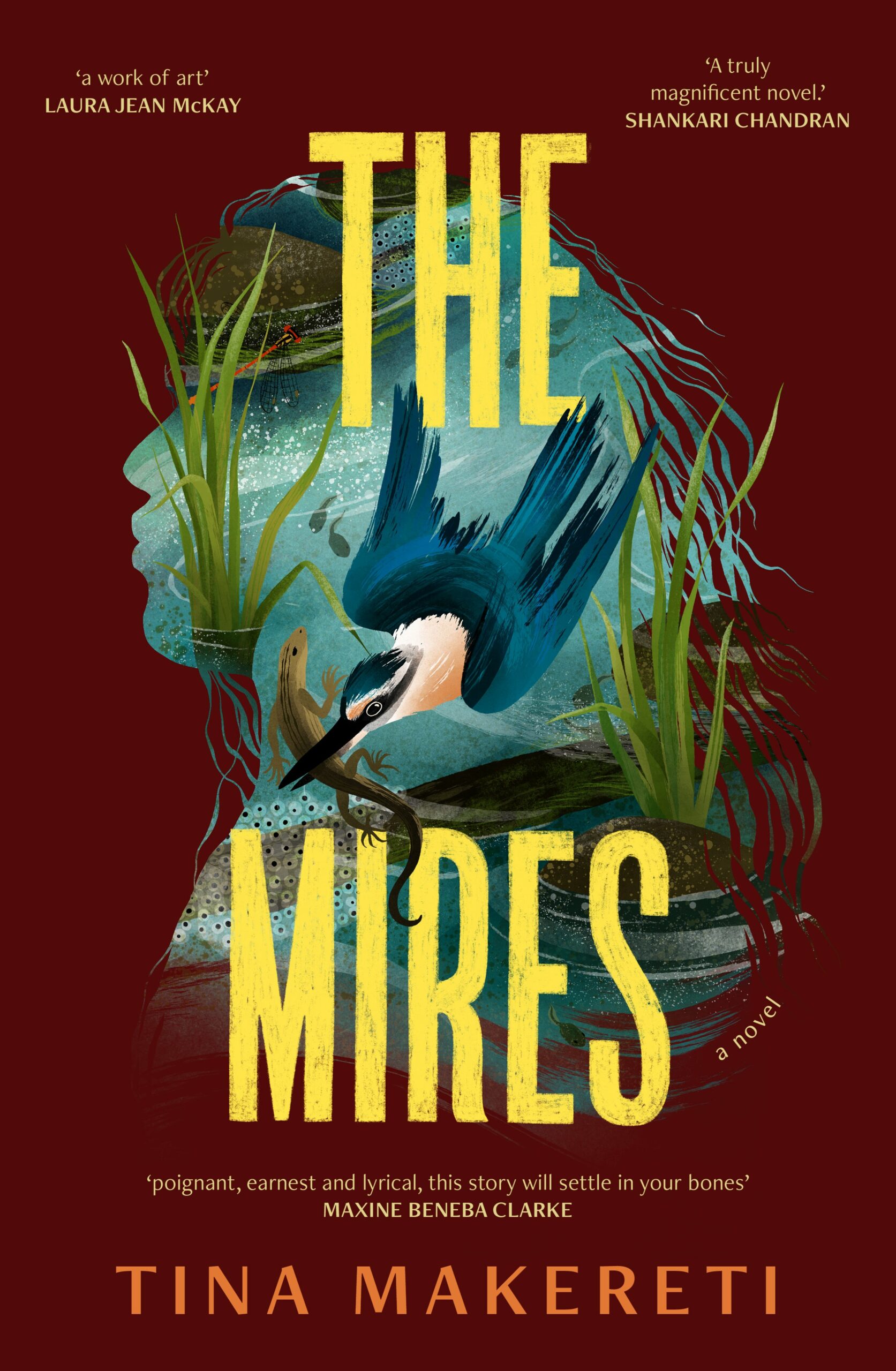
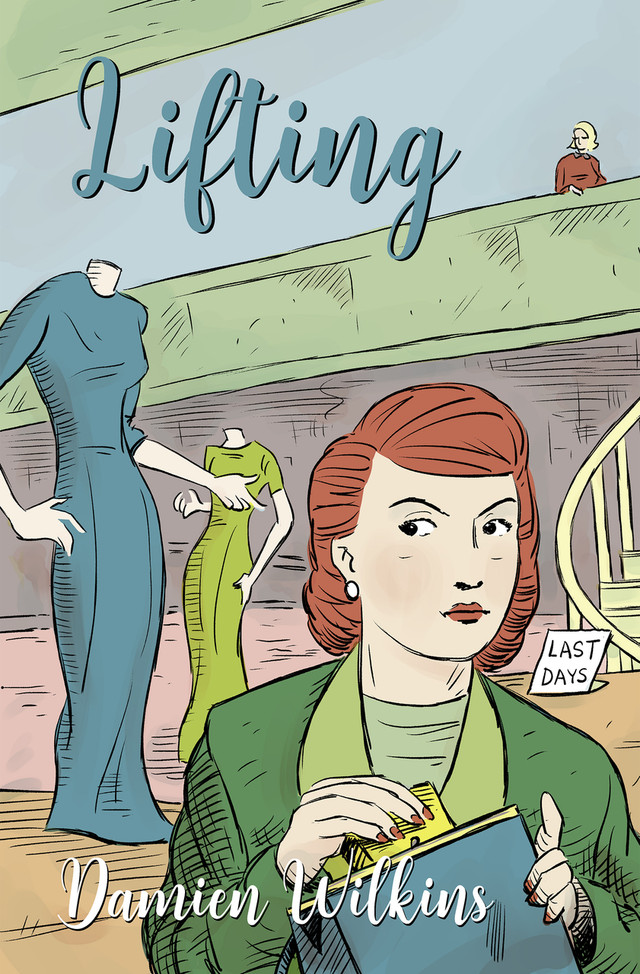
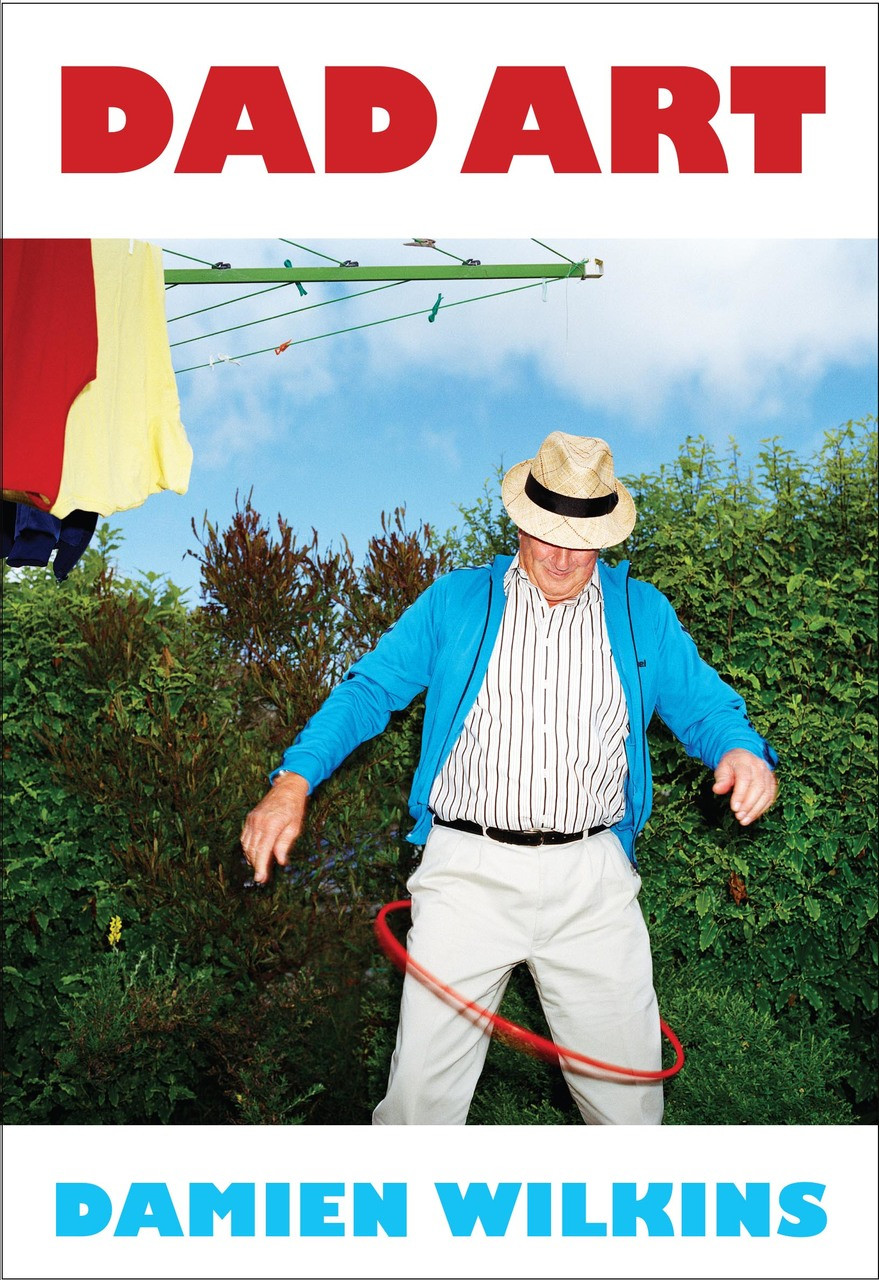
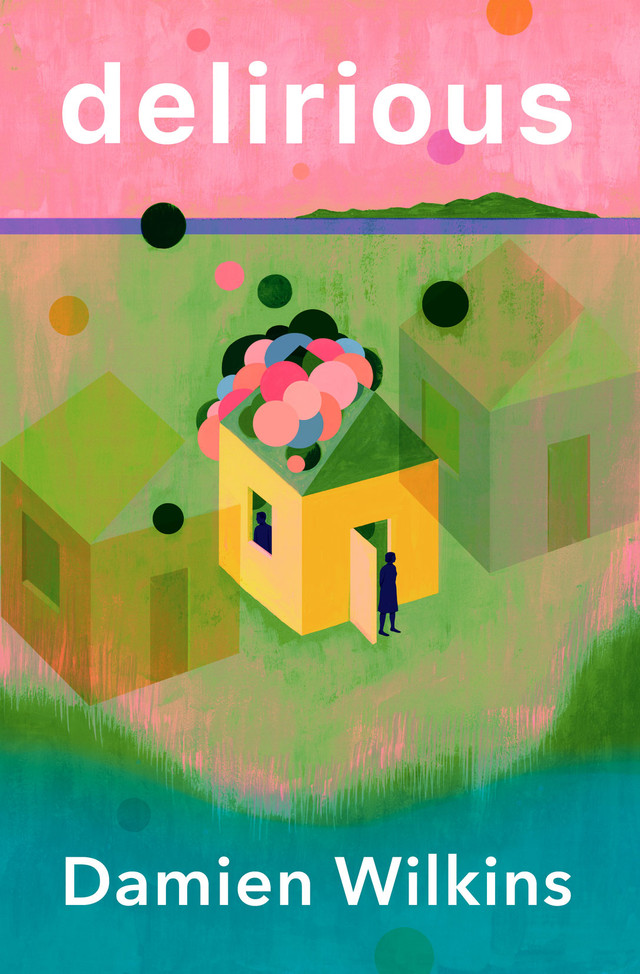
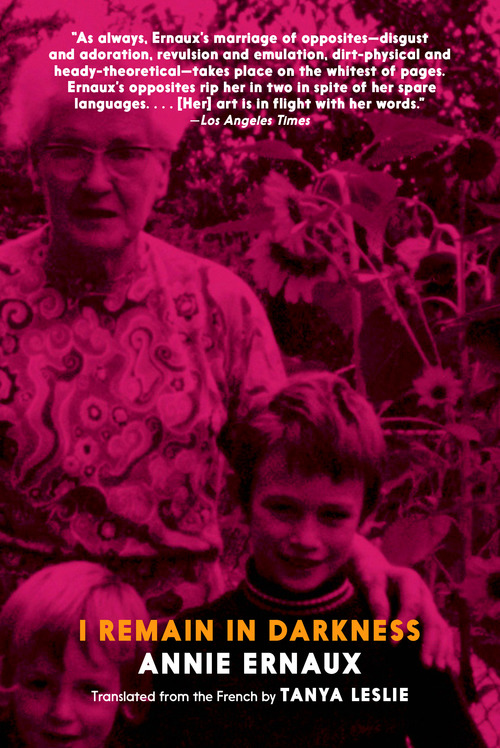
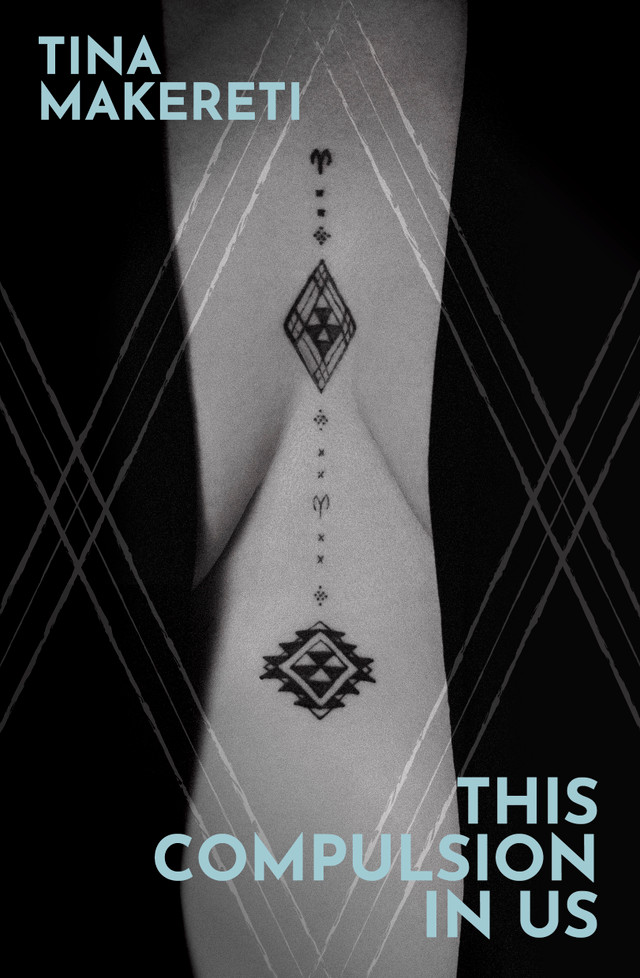
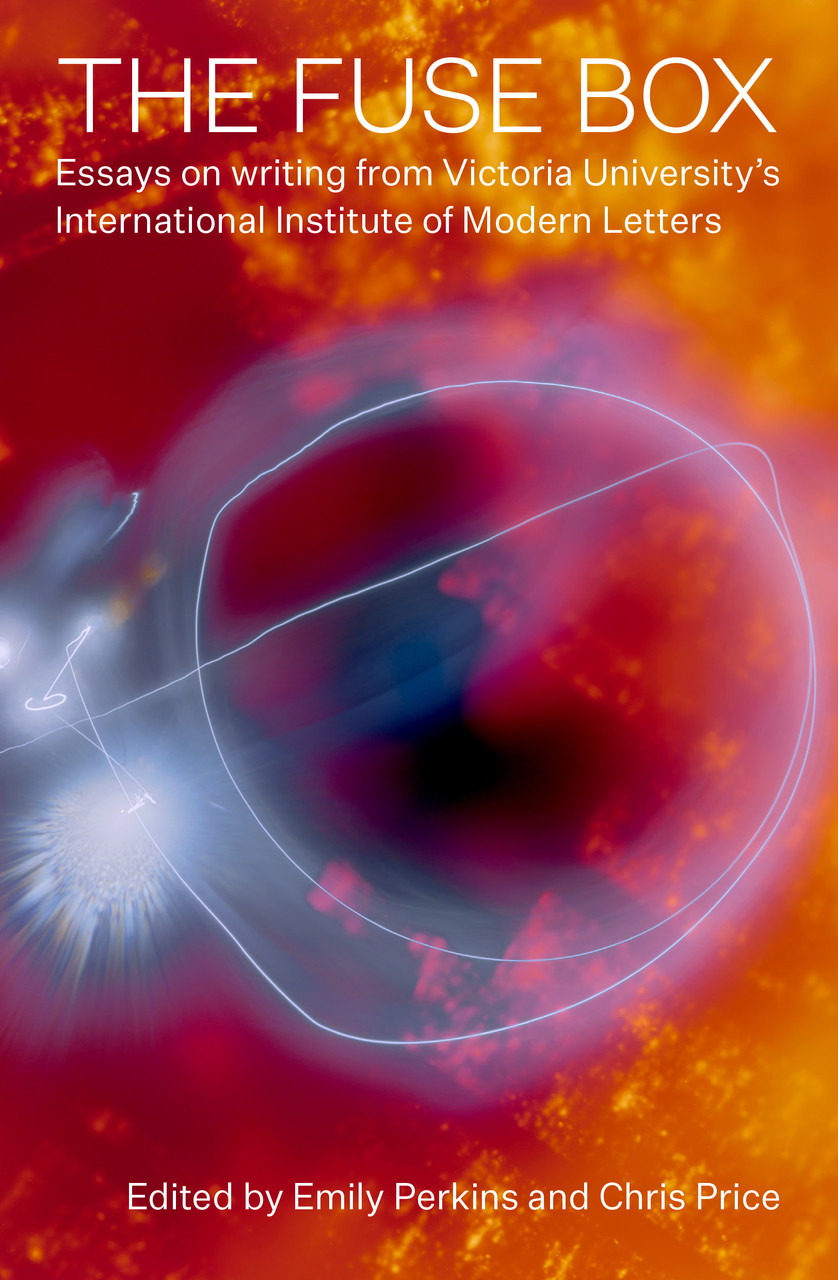
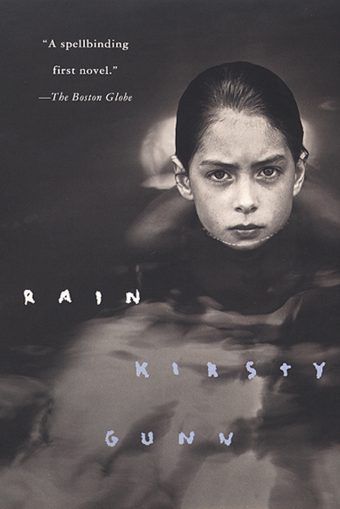
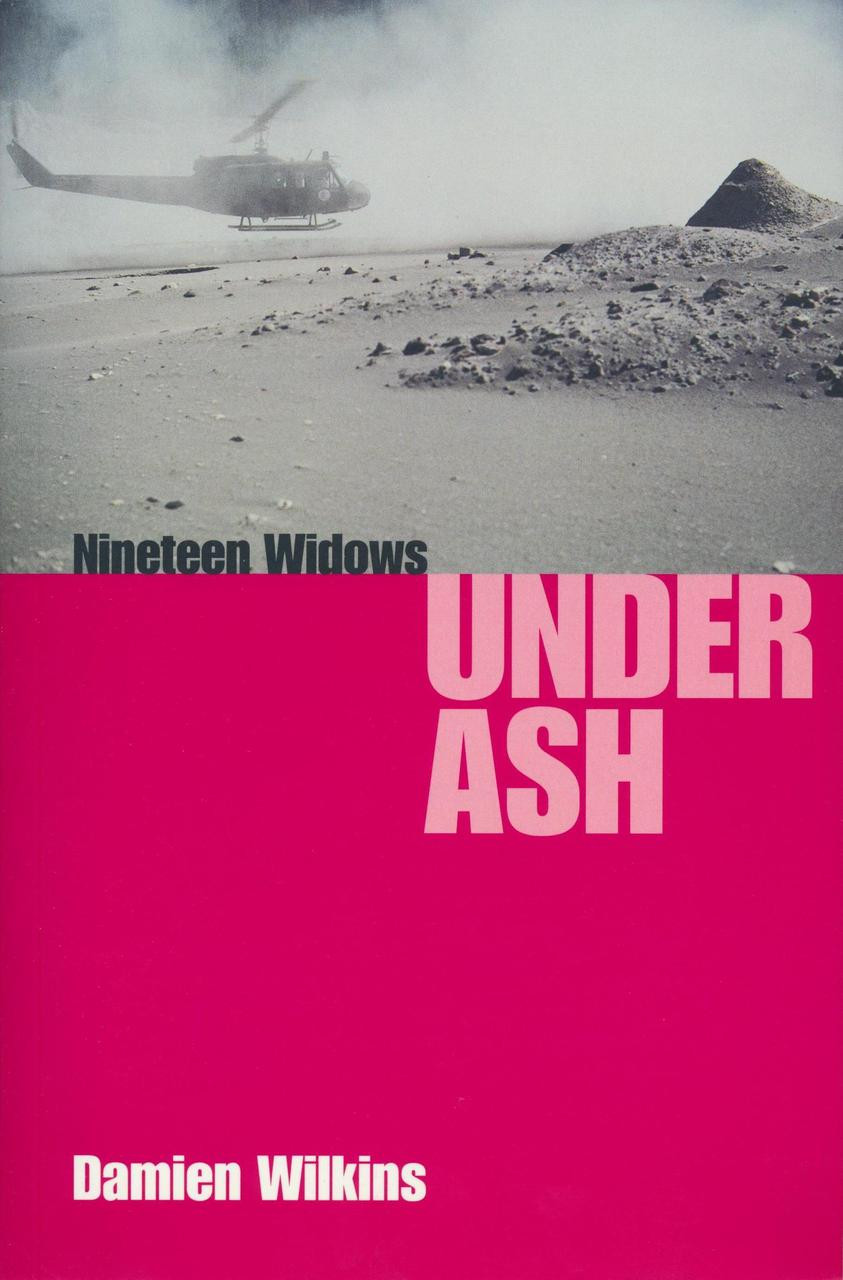
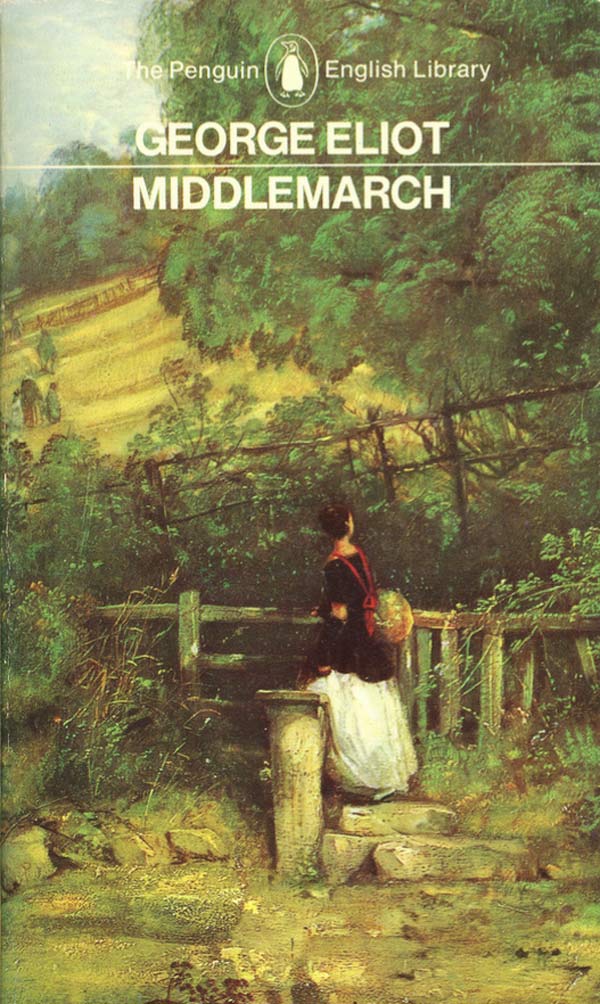
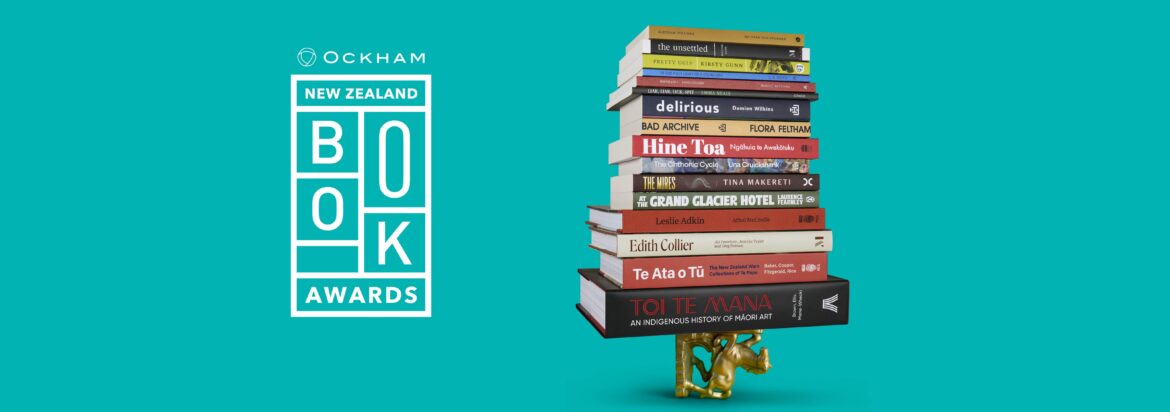
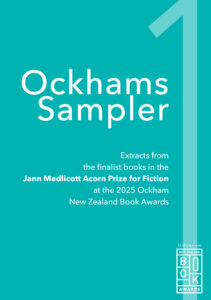
Explore the finalists for the 2026 Ockham New Zealand Book Awards in these four digital samplers, with extracts from all sixteen shortlisted books.

Over the next month we’re releasing a new digital sampler every week, each dedicated to a different awards genre: Fiction, Illustrated Non-Fiction, Poetry and General Non-Fiction.

You can view read-only versions at Issuu, the New Zealand Book Awards Trust website, or click on the covers below to download samplers and read at your leisure. Then seek out the complete books in bookshops and libraries countrywide.


….Jann Medlicott Acorn…………………………………..……….. BookHub Award for
……..Prize for Fiction………………………………………………..Illustrated Non-Fiction 

…………………………………


Mary and Peter Biggs……………………………………………….General Non-Fiction
……Award for Poetry……………………………………………………………Award 

………………………………….


'The thirty-five of us were in the country of dream-merchants, and strange things were bound to happen.' - Anne Kennedy

Read more

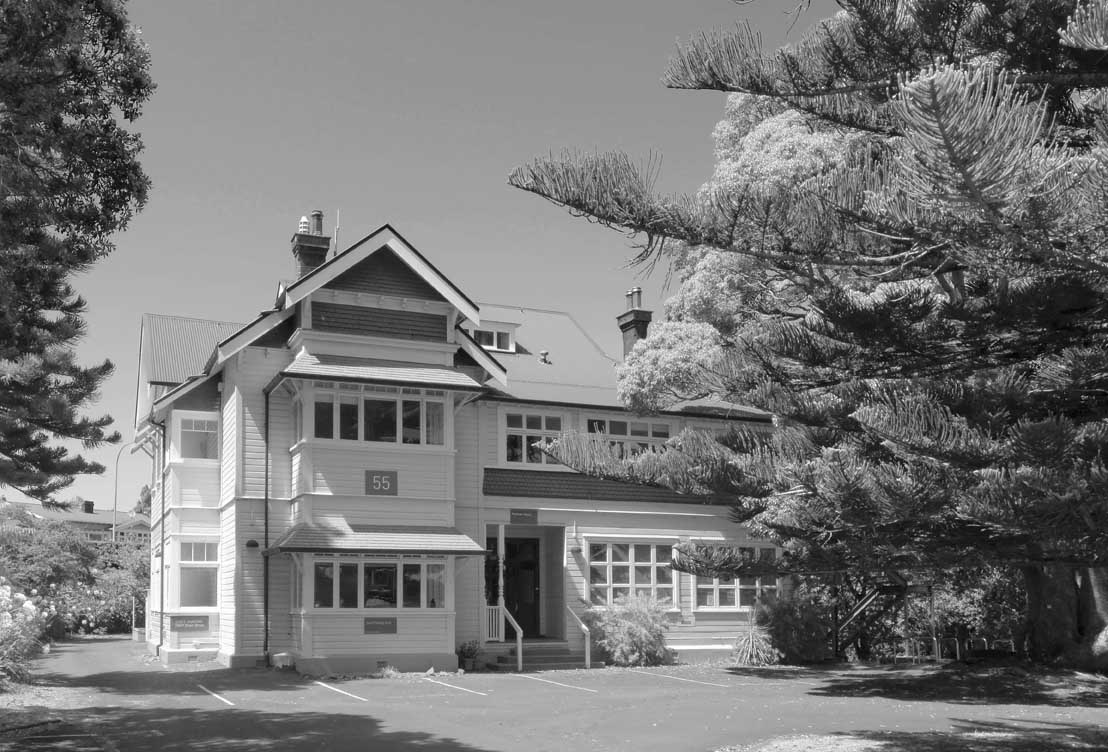
An update on Penman House

Time running out to save Robin Hyde’s sanctuary.


Paula Morris / Academy of New Zealand Literature / 4 November 2025


The Open Letter (now with over 200 signatures) – sent on 22 October to Hon Chris Bishop and the chief executives of Heritage NZ and Auckland City Council – has received no official ministerial response. A number of media outlets are now reporting on the story, including The Big Idea and The Post.

We learned today that the demolition of Penman House is said to be confirmed. This information was sent to a Stuff journalist by someone we choose not to name, because the statement was marked not for publication or attribution.

Asbestos removal continues at the property this week. After that, without ministerial intervention, it seems likely that demolition will begin.

Since the publication of the Open Letter, a number of people in the creative sector have offered funds toward moving Penman House to a new location, and in re-purposing it. Possible plans include a home for a new museum of New Zealand literature and a base for a Māori writing school.

We note that contrary to information published in a Reading Room newsletter, the planned housing development on this piece of land is not the work of Ockham Residential, the sponsors of New Zealand’s annual book awards. Ockham Residential is redeveloping land in partnership with Marutūāhu, between Gates 1 and 3 of the Carrington site only.

The Penman House remains held by the Crown and will be transferred to the Waiohua-Tāmaki Rōpū at an unspecified date.

We maintain that tikanga has not been observed has not been observed in the decision to demolish Penman House. It is a place of great historical and literary significance to our cultural community, and we have not been included in conversations about its fate. We are devastated about its impending destruction.


Photo credit: Haru Sameshima.

'I felt energised by the freedom of 'making things up’' - Maxine Alterio

Read more

Save Penman House

An Open Letter


(For an update on Penman House, see here)


To:

Auckland Council

Heritage New Zealand Pouhere Taonga

Hon. Paul Goldsmith MP

Hon. Chris Bishop MP


We, the undersigned, ask that Auckland Council issue a notice of requirement for a heritage order on Penman House at 155 Carrington Road. This is a building of nationally significant cultural heritage, in excellent condition, under threat of imminent demolition.

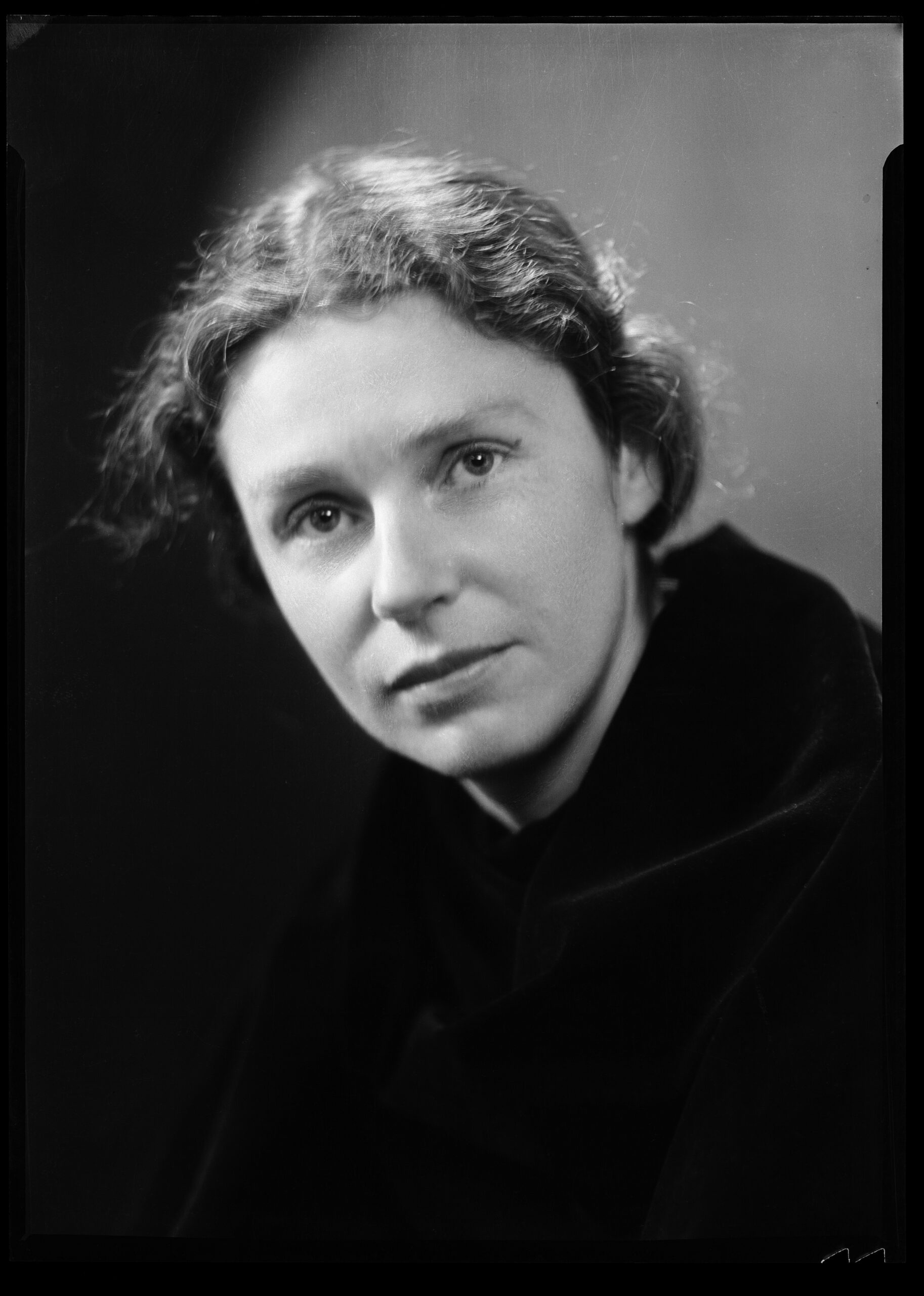
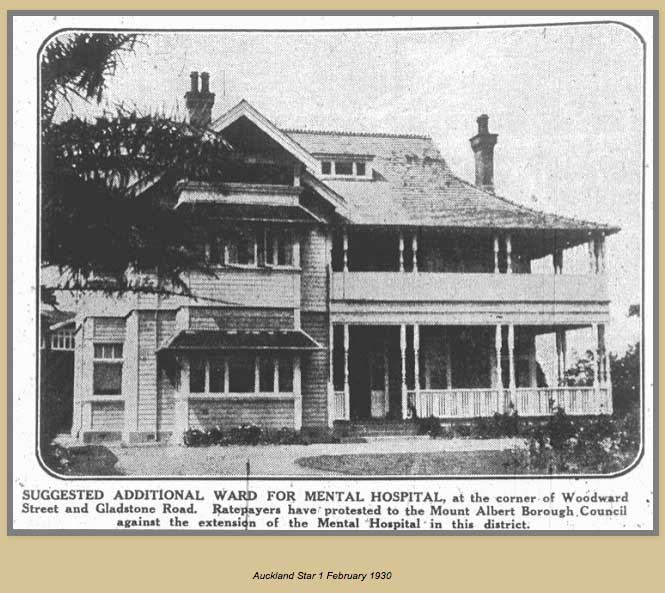
It was built in 1908 by staff and patients of Auckland Mental Hospital at Avondale for the superintendent and his family, converted in the late 1920s as a ward for voluntary women patients. The house is the site of groundbreaking work in modern psychiatry and psychology in New Zealand, and for four years in the 1930s was the refuge of one of our most important writers, Robin Hyde (Iris Wilkinson).

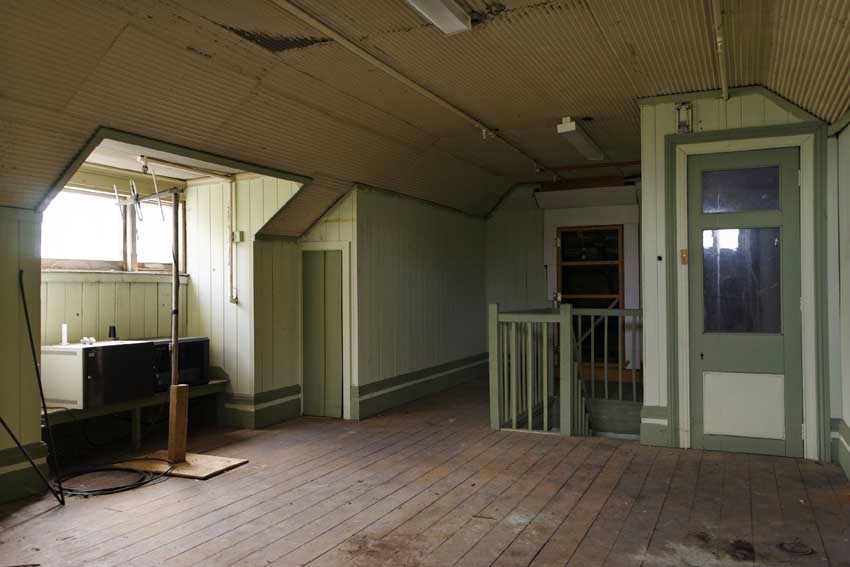
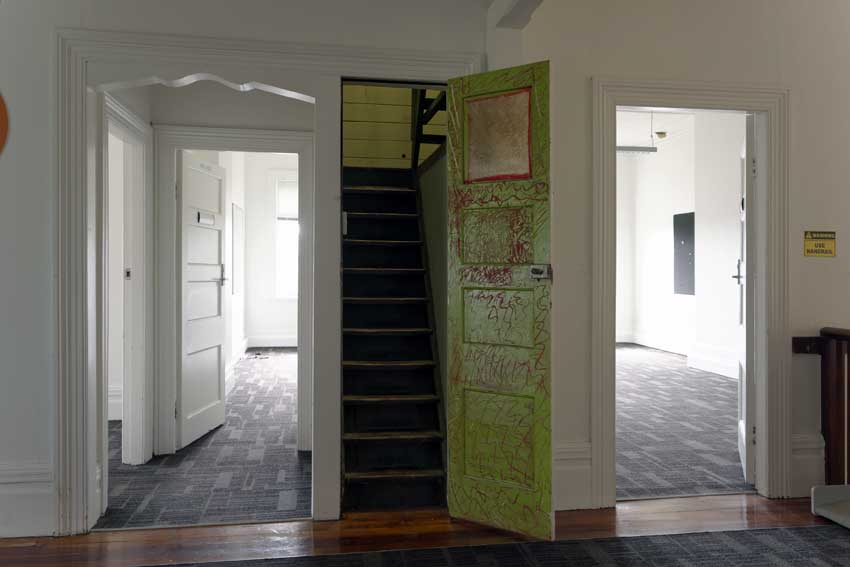
In the attic of Penman House Hyde wrote fiction and nonfiction books, as well as journalism. Her articles for the New Zealand Observer on the threatened eviction of Ngāti Whātua in Ōrākei were later cited by the iwi in their Te Tiriti claim.

Dame Fiona Kidman DNZM OBE describes Hyde as one of ‘the first significant women writers of Aotearoa/New Zealand. While Katherine Mansfield is honoured with memorials in buildings, statues and fellowships in her name, Hyde has not been given the same due.’ Kidman describes works like Passport to Hell – recording the life of the soldier James Stark (Starkie) of the NZ Expeditionary Forces – and the novel The Godwits Fly as ‘New Zealand classics. Their creator deserves recognition and honour. It would be very fitting if Penman House could be preserved in that spirit.’

Hyde’s work endures, taught at schools and universities in New Zealand and around the world. Her papers belong to UNESCO’s New Zealand Memory of the World Register. Penman House was essential to her personal survival and artistic development, and as a whare hirahira in the history of our city must not be destroyed.


Signed:

Elizabeth Aitken Rose: Chair, Frank Sargeson Trust

Tam Alexander: Going West Trust

Harriet Allan MNZN: editor

Rosetta Allan: Auckland writer; member of the Academy of New Zealand Literature

Jeremy Armstrong: Professor in Classical and Ancient Studies, Waipapa Taumata Rau, University of Auckland

Caroline Barron (Te Uri O Hau): writer; member of the Academy of New Zealand Literature

Fergus Barrowman: Publisher, Te Herenga Waka University Press

Pat Baskett: journalist

Carole Beu MNZM: Director, The Women’s Bookshop Ltd

Airini Beautrais PhD: writer; member of the Academy of New Zealand Literature

Weng Wai Bing: Auckland writer

Tom Bishop: Professor Emeritus, Waipapa Taumata Rau, University of Auckland

Julie Biuso: Auckland writer

Eleanor Black: Auckland writer

Diane Blomfield: Going West Trust

Jenny Bornholdt MNZM: writer; 2020 Minister’s Award for Literary Achievement in Poetry; member of the Academy of New Zealand Literature

Brian Boyd: Distinguished Professor Emeritus, Waipapa Taumata Rau, University of Auckland

Steve Braunias: journalist and author; member of the Academy of New Zealand Literature

Mark Broatch: Literary editor, NZ Listener

Diane Brown MNZM: writer; member of the Academy of New Zealand Literature

Linda Bryder FRSNZ: Professor in History; Co-ordinator of the Auckland History Initiative, Waipapa Taumata Rau, University of Auckland

Vanessa Byrnes:  Associate Professor and Head of School: Creative Industries, Unitec Institute of Technology Te Whare Wānanga o Wairaka

Alex Calder: Professor of English, Waipapa Taumata Rau, University of Auckland

Malcolm Campbell: Professor of History, Waipapa Taumata Rau, University of Auckland

Erin G. Carlston: Professor of English & Drama, Waipapa Taumata Rau, University of Auckland

Rose Carlyle: Auckland writer

Elynne Challis: widow of Derek Challis, Robin Hyde’s son

Janet Charman: Auckland writer

Catherine Chidgey: writer; Associate Professor of English and Writing Studies at Waikato University Te Whare Wānanga o Waikato; member of the Academy of New Zealand Literature

Stephen Clarke PhD: historian

Peter Clayworth PhD: historian

Jan Coates: Going West Trust

Gina Cole MNZM: writer; member of the Academy of New Zealand Literature

Glenn Colquhoun: writer; member of the Academy of New Zealand Literature

Sandra Coney QSO: writer and historian

Thom Conroy: writer; Senior Lecturer in Creative Writing, Massey University Te Kunenga ki Pūrehuroa; member of the Academy of New Zealand Literature

Hera Cook: writer and historian; Honorary Senior Lecturer at Department of Medicine, University of Otago, Wellington

Megan Cook: researcher and Historian

Belinda Cooke: Manager, New Zealand Book Awards Trust

Jack Remiel Cottrell (Ngāti Rangi): writer

Stephen Daisley: writer; member of the Academy of New Zealand Literature

Jodie Dalgleish: writer and art curator

Kiran Dass: Programme Director WORD Christchurch

Lynn Davidson: writer

Catherine Day: artist

Dorothy Butler Children’s Bookshop, Auckland

Adam Dudding: Auckland writer, journalist and podcaster

Kate Duignan: writer; Lecturer at the International Institute of Modern Letters, Te Herenga Waka—Victoria University of Wellington; member of the Academy of New Zealand Literature

Megan Dunn: Auckland writer; member of the Academy of New Zealand Literature

Simon During FAHA: Professor of English, University of Melbourne

Mark Easterbrook: Going West Trust

Elizabeth Easther: Auckland writer

Lynley Edmeades: writer; Lecturer in English at the University of Otago Ōtākou Whakaihu Waka; Editor of Landfall Tauraka; member of the Academy of New Zealand Literature

Jacob Edmond: Donald Collie Professor of English and Head of English and Linguistics at University of Otago Ōtākou Whakaihu Waka

Murray Edmond: writer; honorary academic in English and Drama at Waipapa Taumata Rau, University of Auckland

Ngarino Ellis (Ngāpuhi, Ngāti Porou): Professor of Art History, Waipapa Taumata Rau, University of Auckland

Barbara Else MNZM: writer and editor; member of the Academy of New Zealand Literature

Chris Else: writer; member of the Academy of New Zealand Literature

Marian Evans: Spiral Collectives

Paul Ewen: writer; member of the Academy of New Zealand Literature

Jan Farr: writer

Tracy Farr: writer; Wellington Writers Walk committee; member of the Academy of New Zealand Literature

Fiona Farrell ONZM: writer; 2007 Prime Minister’s Award for Literary Achievement in Fiction: Fellow of the Academy of New Zealand Literature

Laurence Fearnley: writer; 2019 Arts Laureate

Gigi Fenster: writer; Lecturer in Creative Writing, Massey University Te Kunenga ki Pūrehuroa; member of the Academy of New Zealand Literature

Catriona Ferguson: Managing Director, Auckland Writers Festival Waituhi o Tamaki

Lyndsey Fineran: Artistic Director, Auckland Writers Festival Waituhi o Tamaki

Esther Fitzpatrick: Senior Lecturer in Education, Waipapa Taumata Rau, University of Auckland

Janis Freegard: writer; member of the Academy of New Zealand Literature

Annelyse Gelman MFA: writer

Annie Goldson, ONZM, FRSNZ: Professor of Communication, Waipapa Taumata Rau, University of Auckland; 2023 Arts Laureate

Patricia Grace, DCNZM (Ngāti Toa, Te Ati Awa, Ngāti Raukawa): writer; 2006 Prime Minister’s Award for Literary Achievement in Fiction; Fellow of the Academy of New Zealand Literature

Paula Green MNZM: writer, 2017 Prime Minister’s Award for Literary Achievement in Poetry; member of the Academy of New Zealand Literature

Stacy Gregg: Auckland writer

Erin Griffey: Associate Professor of Art History, Waipapa Taumata Rau, University of Auckland

Mandy Hager: writer

Miranda Harcourt DNZM ONZM: actor

Penny Hartill: literary and arts PR specialist

Siobhan Harvey: writer; Senior Lecturer in Creative Writing, AUT University of Technology Te Wānanga Aronui o Tāmaki Makau Rau

Jennifer Hellum: Senior Lecturer in Classical and Ancient Studies, Waipapa Taumata Rau, University of Auckland

Harley Hern: writer; manager of the Academy of New Zealand Literature

Nikki Hessell: Professor of English, Te Herenga Waka—Victoria University of Wellington

Claire Hill: Programmes and Operations Manager, The New Zealand Society of Authors Te Puni Kaituhi O Aotearoa (PEN NZ Inc)

David Hill MNZM: writer; 2021 Prime Minister’s Award for Literary Achievement in Fiction.

Dominic Hoey: writer; member of the Academy of New Zealand Literature

Karen Holdom: Auckland writer

Roger Horrocks: Emeritus Professor, Waipapa Taumata Rau, University of Auckland

David Howard; writer; co-founder of journal takahē; member of the Academy of New Zealand Literature

Christine Hurley: Chair, Randell Cottage Writers Trust.

Witi Ihimaera DCNZSM QSM: writer; Chairman Te Kāhui o Ngā Kaituhi Māori: 2017 Prime Minister’s Award for Literary Achievement in Fiction; Fellow of the Academy of New Zealand Literature

Anna Jackson: writer; Associate Professor of English at Te Herenga Waka—Victoria University of Wellington; member of the Academy of New Zealand Literature

Miranda James: Auckland writer

Stephanie Johnson MNZM: writer: 2022 Prime Minister’s Award for Literary Achievement in Fiction: co-founder of the Auckland Writers Festival: Fellow of the Academy of New Zealand Literature

Alison Jones: Professor Emeritus, Waipapa Taumata Rau, University of Auckland

Daren Kamali: Auckland writer

Angelique Kasmara: Auckland writer and editor

Anne Kennedy: writer and teacher; 2021 Prime Minister’s Award for Literary Achievement in Poetry; member of the Academy of New Zealand Literature

Rina Kim: Senior Lecturer, Drama, Waipapa Taumata Rau, University of Auckland

Rachael King: writer; member of the Academy of New Zealand Literature

Elizabeth Knox CNZM: writer; 2019 Prime Minister’s Award for Literary Achievement in Fiction; member of the Academy of New Zealand Literature

Charlotte Lainchbury: Robin Hyde scholar, University of Otago Ōtākou Whakaihu Waka

Melanie Laville-Moore: Managing Director of Allen & Unwin Aotearoa NZ; Chair of the Coalition for Books

Maire Leadbetter; writer and human rights activist

Mike Lee: councillor

Nicola Legat ONZM: Publisher, Massey University Press; Chair, New Zealand Book Awards Trust

Alys Longley: Professor of Dance Studies, Waipapa Taumata Rau, University of Auckland

Claire Mabey: writer; founder Verb Wellington festival; Books editor, the Spinoff

Finlay Macdonald: journalist; Editor (NZ) of The Conversation AUNZ

Tsitsi Mapepa: Auckland writer

Selina Tusitala Marsh ONZM: writer: Professor of English at Waipapa Taumata Rau, University of Auckland; Commonwealth Poet Laureate; former Poet Laureate of New Zealand; member of the Academy of New Zealand Literature

Martinborough Bookshop

Michael Mawson: Maclaurin Goodfellow Chair, Theological and Religious Studies at Waipapa Taumata Rau, University of Auckland

Sharon Mazer: Professor of Theatre & Performance Studies, AUT University of Technology Te Wānanga Aronui o Tāmaki Makau Rau

Mary McCallum: writer; Publisher at Mākaro Press and The Cuba Press; member of the Academy of New Zealand Literature

Amy McDaid: Auckland writer

Tiopira McDowell (Ngāti Hine, Ngāpuhi): Senior Lecturer, Co-Head of School Te Wānanga o Waipapa, Waipapa Taumata Rau University of Auckland

Jan McEwan: Michael King Writers Centre

Stuart McKenzie: playwright, screenwriter and director

Naomi McLeary MNZM: Going West Trust

Frankie McMillan: writer; member of the Academy of New Zealand Literature

Eileen Merriman FRACP FRCPA AFRACMA: writer; Honorary Associate Professor, Waipapa Taumata Rau, University of Auckland

Gregory Minissale: Professor of Art History, Waipapa Taumata Rau, University of Auckland

Paula Morris MNZM (Ngāti Manuhiri, Ngāti Wai): writer and editor; Associate Professor of English, Waipapa Taumata Rau, University of Auckland; 2022 Arts Laureate; member of the Academy of New Zealand Literature

Jacqueline Mortimer-Hughes: Lecturer in School of Social Sciences and Humanities, AUT University of Technology Te Wānanga Aronui o Tāmaki Makau Rau

Jenny Nagle: Chief Executive, The New Zealand Society of Authors Te Puni Kaituhi O Aotearoa (PEN NZ Inc)

Nadine Rubin Nathan: co-founder and literary agent, High Spot Literary.

Emma Neale: writer and editor; member of the Academy of New Zealand Literature

Brendan O’Brien: Fine Arts printer

Gregory O’Brien MNZM: writer; 2012 Arts Laureate; 2012 Prime Minister’s Award for Literary Achievement in Nonfiction; member of the Academy of New Zealand Literature

Michael O’Leary (Te Arawa): writer and publisher

Vincent O’Malley FRSNZ FRHistS: historian; 2022 Prime Minister’s Award for Literary Achievement in Nonfiction

Nicola Olsen: film producer

Jessica Palalagi: General Manager, the Arts Foundation Te Tumu Toi

Richard Pamatatau: Programme Leader: Creative Writing, AUT University of Technology Te Wānanga Aronui o Tāmaki Makau Rau

Rachel Paris: Auckland writer

Mary Paul: Honorary Research Fellow, Massey University Te Kunenga ki Pūrehuroa,

Robin Peace CRSNZ: retired Associate Professor, Massey University Te Kunenga ki Pūrehuroa

Jock Phillips ONZM: historian; 2014 Prime Minister’s Award for Literary Achievement in Nonfiction

Kim M. Phillips: Head of School of Humanities and Professor of History, Waipapa Taumata Rau, University of Auckland

Kiri Piahana-Wong (Ngāti Ranginui): Publisher, Anahera Press; member of the Academy of New Zealand Literature

Ruby Porter: Auckland writer and lecturer

Chris Price: writer; Senior Lecturer, International Institute of Modern Letters, Te Herenga Waka—Victoria University of Wellington; member of the Academy of New Zealand Literature

John Prins: Auckland writer

Publishers Association of New Zealand

Maggie Rainey-Smith: writer; committee member, Wellington Writers Walk; member of the Academy of New Zealand Literature

Sudha Rao: writer

Read NZ Te Pou Muramura

Richard Reeve: writer and barrister; member of the Academy of New Zealand Literature

Harry Ricketts: writer; Emeritus Professor, Te Herenga Waka—Victoria University of Wellington; member of the Academy of New Zealand Literature

Claudia Rozas: Lecturer in Education, Waipapa Taumata Rau, University of Auckland

Al Rowland ONZM: retired research scientist, Institute of Molecular Biosciences, Massey University Te Kunenga ki Pūrehuroa

Alison Rowland: retired Manager of Student Liaison and Advice, Massey University Te Kunenga ki Pūrehuroa

Louise Russell: Publisher, Bateman Books

Haruhiko Sameshima: photographer; Publisher, Rim Books; Research Associate at the Auckland War Memorial Museum

Patrick Sandbrook PhD: Robin Hyde scholar; Massey University Te Kunenga ki Pūrehuroa

Elspeth Sandys: writer; member of the Academy of New Zealand Literature

Genevieve Scanlan: Librarian, University of Otago Ōtākou Whakaihu Waka

Marianne Schultz PhD: historian

Tracey Sharp: Going West Trust

Sarah Shieff: Associate Professor of English and Writing Studies, Waikato University Te Whare Wānanga o Waikato

Erena Shingade: Publisher, Spoor Books

Allan Smith: retired Senior Lecturer, Elam School of Fine Arts, Waipapa Taumata Rau, University of Auckland

C.K. Stead, ONZM, CBE: Professor Emeritus, Waipapa Taumata Rau, University of Auckland; 2009 Prime Minister’s Award for Literary Achievement in Fiction; Fellow of the Academy of New Zealand Literature

Paul Stewart: Publisher, Mākaro Press and The Cuba Press

Vivienne Stone: creative producer

Nicola Strawbridge: Going West Trust

Gavin Strawhan: Auckland writer

Erica Stretton: Editor, Kete Books

Jillian Sullivan: writer; member of the Academy of New Zealand Literature

Vanda Symon: writer; President, The New Zealand Society of Authors Te Puni Kaituhi o Aotearoa (PEN NZ); member of the Academy of New Zealand Literature

Apirana Taylor (Ngāti Porou, Te Whānau-ā-Apanui, Ngāti Ruanui): writer; 2014 Minister’s Award for Literary Achievement in Poetry; member of the Academy of New Zealand Literature

Philip Temple ONZM: writer, 2005 Prime Minister’s Award for Literary Achievement in Nonfiction; member of the Academy of New Zealand Literature

Margie Thomson: Auckland writer

Time Out Bookstore, Auckland

Sophie Tomlinson: Associate Professor of English and Drama, Waipapa Taumata Rau, University of Auckland

Chris Tse: writer; former Poet Laureate of New Zealand; member of the Academy of New Zealand Literature

Unity Books, Auckland

Bridget van der Zjipp: writer; co-curator Hamilton Literary Festival; co-curator Writers Write: Actors Read

Bryan Walpert: writer; Professor of Creative Writing, Massey University Te Kunenga ki Pūrehuroa; member of the Academy of New Zealand Literature

Jennifer Te Atamira Ward-Lealand CNZM: actor and director

Philippa Werry: writer; Chair, Wellington Writers Walk

Pat White: writer and artist; member of the Academy of New Zealand Literature

Gillian Whitehead DNZM (Ngāi te Rangi, Tūhoe): composer

Jeanette Wikaira (Ngāpuhi, Ngāti Pukenga, Ngāti Tamaterā): Chair, Hone Tuwhare Charitable Trust

Damien Wilkins: writer; Professor, International Institute of Modern Letters, Te Herenga Waka—Victoria University of Wellington; 2013 Arts Laureate

Haare Williams KNZM MNZM QCM (Te Aitanga-a-Mahaki Rongowhakaata Tuhoe): Amorangi, Companion of Auckland War Memorial Museum

Aaron Wilson: Associate Professor and Head of School of Curriculum and Pedagogy, Waipapa Taumata Rau, University of Auckland

Janet M. Wilson, FRS: Emeritus Professor of English and Postcolonial Studies, University of Northampton, UK; editor-in-chief of Journal of Postcolonial Writing

Alison Wong: writer and editor; 2024 Arts Laureate; member of the Academy of New Zealand Literature

Becca Wood: Senior Lecturer, Creative Industries, Unitec Institute of Technology Te Whare Wānanga o Wairaka

Briar Wood (Ngā Puhi nui Tonu): writer and lecturer; member of the Academy of New Zealand Literature

Paul Woodruffe: artist; Senior Lecturer in Creative Industries, Unitec Institute of Technology Te Whare Wānanga o Wairaka

Sue Wootton: Publisher, Otago University Press; member of the Academy of New Zealand Literature

Deborah Yates: former member, Waitematā Local Board

Grace Yee PhD: writer


Above left: Iris Wilkinson [Robin Hyde], 1936, Wellington, by Spencer Digby Studios. Spencer Digby / Ronald D Woolf Collection. Gift of Ronald Woolf, 1975. Te Papa (B.048932)
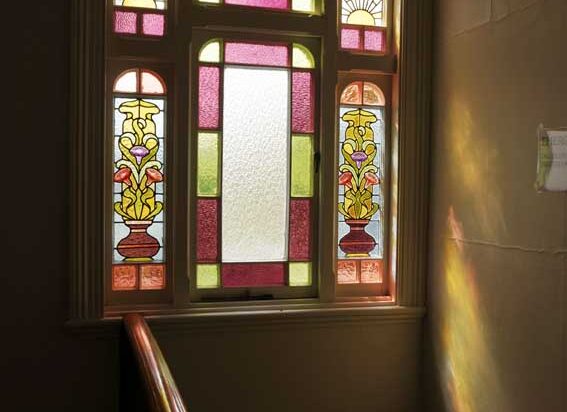
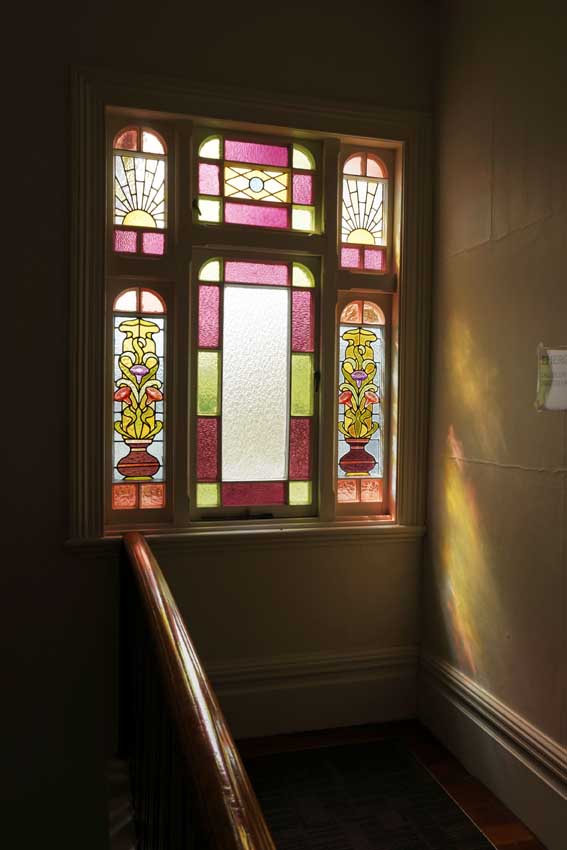
Above right: interior shot by Haru Sameshima, of the stained glass window Robin Hyde would have known.


Above: Historic photo of Grey Lodge.
.


Above left: Sameshima attic, where Robin Hyde wrote, in the most productive and supported years of her life.
Above right: The door to Robin Hyde’s attic.

'...poetry makes intimate everything that it touches.' - Michael Harlow

Read more

‘I wrote partly because Landfall was there’

Writers on their first publications in New Zealand’s oldest literary journal.


Landfall, New Zealand’s longest-running literary journal, was founded in 1947. This week it publishes its 250th issue and a new name, Landfall Tauraka. Many New Zealand writers – from Janet Frame to Keri Hulme to Robert Sullivan – found a first home for their work in Landfall.

To celebrate its impact on our local literary scene and the way it has nurtured and showcased so many emerging writers, we asked some of our ANZL Fellows and Members about their first-ever Landfall publication.


.

C.K. Stead

Landfall, September 1954
Editor: Charles Brasch

Karl’s work has appeared more than 70 times in Landfall and – at almost 93 – he is now the second-oldest living contributor. The oldest is Owen Leeming, born in 1930 and a longtime resident of Paris.

I began writing poems and offering them to editors in my teenage years and by the age of twenty had had poems published in the Listener, the New Zealand Poetry Yearbook, and in Australia’s Jindyworobak Anthology. I offered poems to Landfall longhand before I owned a typewriter. Editor Charles Brasch was encouraging but didn’t accept any until 1953 when I was 20.

This was very exciting. Everyone who wrote seriously aspired to be in Landfall where all the notables of New Zealand lit of that time were to be seen. Brasch took three of my poems and they appeared in 1954: ‘Trapped Rabbit’, ‘Night Watch in the Tararuas’ and ‘Unexpected Meeting’. Slightly amended versions of the first two survived into my Collected Poems 1951-2006.

I’m re-reading them now, very much poems of their time and place, the first in rhyming couplets, the second in 7-line stanzas rhyming ababcdd. I had been very much influenced by our own poets – Baxter, Curnow, Glover, Fairburn – and I think the influence is probably obvious. They are solid, serious, solemn poems, tending like Baxter’s to moralise, with nothing of the wit that came later when I found, or made space, to be myself. I remember discussing ‘Night Watch’ with my mother and she was too discreet to ask who I had been to bed with. The answer would probably have been ‘No one. It’s all imagined.’

I had yet to learn, as everybody did, that the approval of Charles Brasch was not an infallible guarantor of quality. But Landfall (with the Listener too in those days, which still preferred text to pictures) was the public forum for the literary life – far more than it is or can be now, in this age of the internet and photography. I’m glad to have been there in what was its heyday. It deserves to be honoured as an essential part of our cultural history.


Trapped Rabbit

When the rabbit rattled the drag of a grasping trap,
Ran a few steps, crouched, laid back the flaps
Of ears against quivering fur, then seemed to play,
Lifting a twitching face that grinned and prayed;
When it tripped and ran to the tune of the wind-singing fence,
Stepping light-footed in exquisite, nervous dance
On the knife-edge knowledge of death; then heard our steps,
Its graceful frenzy bound in the weight of the trap
Collapsing clenched against steel and the waiting earth;
O when the hands made hard by the cycle of birth
And pain, closed on the warm-furred neck, and the bone
Clicked crisp in crystal air, the small stone
Of the head drooping towards earth as though
To burrow in shame from the living blue
Of a sky that could only smile: then I felt
No frame for guilt or superfluous pity, but smelt
The clutching clay at my heels, manuka breath
In the clear air, denying this shapeless death.


Witi Ihimaera

Landfall 95, September 1970
Editor: Robin Dudding

Getting published in the 1960s was all about paying your dues and earning it. If you aspired to write literary fiction you had to make your reputation in the academy: you couldn’t just roll up to the gate and expect them to let any old Tom, Dick or Hori in. So my sights were clearly on the New Zealand Herald, the Press, the NZ Listener and Landfall. And I was in a hurry.

In 1969 I decided to start my assault by publishing one story a month anywhere and when I hadn’t heard from Landfall about a story submission after a few months (I think it was ‘Porcelain Pig’: I had pretensions to write in the Frame mould), I took the opportunity of a flight from Wellington to Christchurch to go to see Albion Wright at Caxton Press and Robin Dudding, Landfall’s editor.

Robin’s son Adam writes in his book My Father’s Island that I pulled out a taiaha and performed a warrior’s challenge on the steps of Caxton Press. What I performed was a wero and I had with me the mere that I had been given by Pax and Maaka Te Ao Mamaaka Jones with whom I was staying. I wanted at least to scare the bugger.

I spoilt an otherwise beautiful sunny day. Robin was taken aback but waited patiently. And then he took me inside and calmed me down. He didn’t accept the story I had sent him though, but he was interested in my proposed first novel, Tangi. The next year, 1970 – you had to wait ages to be published by Landfall, which was a quarterly – a chapter from Tangi appeared called ‘Journey.’

In the ‘New Contributors’ list in that issue, Witi was described this way: Does not want to be only a ‘Maori writer’—he feels he has the advantage of living in two worlds, both of which he hopes he’ll be able to capture with words. His story was illustrated by Peter Gossage, whose art was also appearing in Landfall for the first time.


Opening of ‘Journey’

This is where it ends and begins. Here on the railway station, Gisborne, waiting for the train back to Wellington.

Here begins the first step into the future, the first step from the past. I am alone now. So long reliant on my father, so long my hand in his; now myself, my own keeper, for his hand has slipped away.

The platform is crowded with people. They stand in small groups, talking to one another. A well-dressed woman smooths her dress and pats at her hair. A young boy kisses his mother, then looks around, hoping nobody has seen. A little girl holds tightly to her father’s hand. A group of girls laugh and joke with a friend who is travelling from Gisborne this day. Rows of shiny cars line the barrier to the station. A green station-wagon pulls to a halt, and a son opens the back to get his father’s suitcase. Together they rush to the booking office, disappearing among the crowd […]

Soon I will board the train. I will sit at the window, looking out upon the platform. It will be crowded with people, shouting farewells. The train whistle will blow. The bell on the platform will ring. The train will move away, along the railway tracks as they cross the road leading into Gisborne from Waikanae. Red lights will flicker on and off at the crossing. The traffic will stop, letting the train pass. And I will journey away from Gisborne.

But I will leave my heart here, to be reclaimed when I return. This is where my heart belongs; this is where my life begins.


Fiona Kidman

Landfall 96, December 1970
Editor: Robin Dudding

I had been knocking on Landfall’s door throughout the 1960s to no avail.  I had had a number of short stories published in the little magazines of the time – Mate, Arena and even Te Ao Hou – but the drawbridge round Landfall was firmly pulled up. Why did I bother knocking? I was a housewife from the provinces, and Landfall was the precinct of clever men: Wedde, Sargeson, Baxter, Glover. Just often enough I would see the names of Fleur Adcock, Ruth Dallas or Anne Spivey, and, to the eternal credit of editor Charles Brasch, that of Janet Frame, to give me hope that one day I would make it. I am not sure, but I think Elizabeth Smither had a poem accepted by Brasch.

Don’t get me wrong, I admired the journal, and the scholarly and seemingly remote figure of Brasch, who at least sent courteous little notes of rejection: Not quite what we are looking for, but thank you for submitting. It all just seemed so inaccessible, so gentlemen’s club to me.

Then there was a sea change; after various upheavals at Caxton Press, and amid Brasch’s declining health, Robin Dudding was appointed the new editor. He was young, his personal life family centred, and he was seeking a fresh look at Landfall. He accepted my story ‘Flower Man’ about a group of young people who commit a dastardly deed on the last night of their school lives, effectively removing themselves from their country upbringing as they face their future in the cities beyond. I felt as if my true life as a writer had begun. Dudding accepted several stories and poems from me in the years that followed, as I gradually built up a repertoire that would find its way into books I wrote in the late 1970s.

That same year, 1970, I had moved to Wellington with my family. There were two surprising outcomes following the publication of ‘Flower Man’. In 1971, I enrolled as an English student at Victoria University. Professor Joan Stevens was overseeing enrolments and there was some delay while she queried whether it was appropriate for me to be enrolling when I had ‘already been published in Landfall.’ I don’t know whether she thought I already had a secret degree tucked away, or whether I would simply be a misfit among the 18- year-olds in the class. As it turned out, I was. An old School Certificate didn’t cut it with the smart young things I found myself among, and I slunk out six weeks later.

The other outcome was, a year after that, I was interviewed by the bookseller Roy Parsons and historian, Keith Sinclair for a job as the founding secretary/organiser of the (then) New Zealand Book Council. ‘Ah,’ said Sinclair, ‘that darling story ‘Flower Man’ in Landfall.’ His poem ‘Logic of God’ had been published in the same issue. Minus any other qualifications, I got the job and stayed in it for several years.

Fifty-five years later, I still get a special frisson if I’m published in Landfall. I don’t submit a lot of work these days, more poems than short stories, but acceptance means as much as it ever did.


Opening of ‘Flower Man’

The magnolia tree towered high about the church hall casting skeleton shadows in the winter, and providing deep green shade in the summer. In the late spring foliage, blooms could just be seen, heavy and exotic, the colour of whipped sour cream.

From where we lay in the coarse kikuyu grass at the end of the school playing fields, we could glimpse the tree. It was November, the air stripped clean ready for a Northland summer, and the sea not far away, sang promise.

There were four of us, Phyllis, Geoff, David and myself, who they call Magog, though my name is Marguerite. The nickname is apt though, for I have a peculiar mockery of a face, Grock-like, but it’s never been the hindrance it should have been.

.


Patricia Grace

Landfall 102, June 1972
Editor: Leo Bensemann

In the late 1960s I was living with my husband and young family in a remote area of Northland. We were teaching at a small two-teacher school there. I learned of a Penwomen’s Club, based in Auckland and decided to join as a Country Member. The Club held meetings, in Auckland, once a month which I was unable to attend.  I hadn’t begun writing by then but was keen to try. The monthly writing competitions were just what I needed to get me started. I remember that I did quite well in these comps, especially in the category  ‘Maori Story’. As far as I know I was the only Māori member of the club.

I came out the winner each year in this category, except for once when I was disqualified. Judge, Harry Dansey, gave full and positive comments about the story, but regretted that it was a late entry. The Club encouraged us to seek publication, and directed us to a manual, which listed the many magazines, journals and publications which would consider publishing our work. I had several stories published here and there, these eventually forming the bulk of stories of my first collection Waiariki (1975).

I know that I would have been thrilled to have ‘A Way of Talking’ accepted for publication in 1972 – such a long time ago. To have work published in such a prestigious journal was such a great endorsement for a beginning writer at a time when I was still wondering whether writing was going to be a lifetime endeavour.


Opening of ‘A Way of Talking’

Rose came back yesterday, we went down to the bus to meet her. She’s just the same as ever Rose. Talks all the time flat out and makes us laugh with her way of talking. On the way home we kept saying, ‘E Rohe you’re just the same as ever.’ It’s good having my sister back and knowing she hasn’t changed. Rose is the hard case one in the family, the kamakama one and the one with the brains.

Last night we stayed up talking till all hours even Dad and Nanny who usually go to bed after tea. Rose made us laugh telling about the people she knows, and taking off professor this and professor that from varsity. Nanny Mum and I had tears running down from laughing, e ta Rose we laughed all night.

At last Nanny got out of her chair and said, ‘Time for sleeping. The mouths steal the time of the eyes.’ That’s the lovely way she has of talking Nanny, when she speaks in English. So we went to bed and Rose and I kept our mouths going for another hour or so before falling asleep.


Elizabeth Smither

Landfall 109, March 1974
Editor: Leo Bensemann

Elizabeth is one of the most published writers in Landfall, second only to first editor Charles Brasch himself, with 79 poems and stories published over the past 50 years.

I can’t remember the subject of my first poem in Landfall – something short with a woman and goldfish? I think I was trying for something Japanese. Charles Brasch had phoned me and told me he had read a poem I had written pinned to the wall of a room in Maureen and Michael Hitchings’ home. Charles had a habit of walking about people’s houses and at dinner parties he could fall asleep while seated in the most elegant manner and then wake and reclaim his share of the conversation.

The poem on the wall was about Narcissus looking at himself in a pool. ‘You should be writing,’ Charles said, and when he hung up, I felt like dancing in the hallway. He didn’t take my poems at first – it took a couple of attempts – but I still remember the feeling of pride and happiness. It was really prestigious to be in Landfall, to know that your work had been examined by one of the exacting and scrupulous editors on the planet and that by some miracle you had passed.


The Goldfish

Her hair is still beautiful.
Now in the garden the mistress
Is trying to catch fish from the pond
The house he has bought her has
Red and black goldfish
Like good and evil: her hair
Is the colour of the red goldfish

She laughs and the water
Runs through the sieve
It’s hopeless: good and evil
Are so well-blended
She pats her own sleek hair.


Owen Marshall

Landfall 134, June 1980
Editor: Peter Smart

I began writing short fiction in the 1970s and New Zealand literary periodicals were important to me, not just as possible publishers of my own work, but as a means of keeping me aware of what my fellow writers were creating. My first stories were published in small magazines like Morepork and Pilgrim. I remain very appreciative of their support and also that of more enduring periodicals such as Islands and Sport. The Listener too regularly published short fiction in the 70s and 80s.

Chief among all such worthy supporters of our literature is Landfall, partly I suppose because of its tenacious survival over so many years, more importantly because of the standards it maintains. ‘The First Saturday in May’ was the first piece of mine that appeared in– and others followed. I’m grateful and add my congratulations to Landfall and its team on the 250th issue.


Opening of ‘The First Saturday in May’

We left the car back from the river, and nosed under the birches, so that when daylight came it wouldn’t be easily seen from the air. We pressed the doors closed instead of slamming them, and gathered at the boot to put on all our gear. The belts were heavy, and the shot in some of Henry’s cartridges rattled as he fumbled with the buckle. ‘My god it’s cold though,’ he said. The parkas were stiff because of it, and crackled as we put them on. The scent of the oiled japarra was similar to that of the guns we held. ‘A bit early to walk up I suppose?’ said Henry. Each year we had the same indecision. Each year we stood in the chill darkness and wondered when it would get light. ‘We could make a move do you think?’ said Henry. Eric leant on the car. He had both hands in his pockets, and his shotgun, broken at the breach, in the crook of his arm.

‘Remember what happened last year,’ he said, and he lifted one leg in its heavy wader to nudge the head of his dog. The year before we went too early, and after we put the ducks off they started coming back in the dark. We lost a good many because of it.


Fiona Farrell

Landfall 144, December 1982
Editor: David Dowling

I was a late starter. My first poem was published when I was 35. I’d written poems and stories when I was a child, but in 1966, when I was 19, I showed one to a friend not much older than me, but he’d already had poems published in Landfall.

I’d never heard of Landfall before I came to Otago University. My family was more Oamaru Mail and Woman’s Weekly. But after a few months in Dunedin I knew it was important. Landfall was culture.

My friend laughed at my poem, and he was probably right. It was pompous, imitative of the Metaphysical poems I was studying. He had been reading the Americans. He knew a different kind of poetry was the future. So I stopped writing except for little scraps, gasps really, when life was just too big for prose. I kept them in a shoebox. Then in 1982 my father died, a difficult man, damaged by war, but loved, intensely loved. I wrote a poem to hang on to the chaos of feeling at his death, and another friend, a woman with whom I shared an office, glanced at it as I fiddled between classes one morning with full stops or commas. ‘That’s good,’ she said. ‘You should publish that.’

So I sent it to Landfall. And it did get published [under the name Fiona Poole], along with some other poems I’d written about the births of daughters and a son who didn’t make it.

When I was looking for that first poem for the Landfall exhibition at Otago University Library, I couldn’t remember the issue, but I did remember the cover: a sunlit veranda. Beautiful. Intensely female. Johanna Paul? Evelyn Page? I found it eventually and it was physical. Like finding a finger I’d somehow mislaid. I remembered how it had felt to see my words, not all smudgy from the Remington Portable, but typeset in a small space, a precious thing. My father with his damaged hands and cigarettes, his fishing sack and rages and frustrations and the warmth of his old gardening jersey was somehow being honoured here, his death noted among strangers.

That was the moment I knew I could write whatever I wanted and there were people out there who might listen. They’d nod and say. ‘OK. That’s interesting. Now, what else would you like to say?’


May ‘82

1
My father white as an onion dropped
heavy into earth hands
clamped to Christ.

Poppies dribble from old men.
They file towards the cannon on the hill
skirting the hole

this time.

2.
‘Cry for your kitten. Why
don’t you?’ he said. ‘Cry.’

But I dug my spoon in swallowed
every bit of cornflake furball swelling.
Tears—they’re easy.
For damp aunts and Bambi’s mother.

This pain is bulbous. It shoots
suddenly bud and branch.

Your throat hurts.

3.
The place is a mess and nothing
is where it used to be. Muddle and scatter.
And this fantail—poppybright
brisk as an angel—swings in the door.
For a minute death flirts in my kitchen.
On my cupboard. My curtains.
Death trills
that’s it
that’s it.

I crouch on an applebox cry for Dad
and an icecream from the shop
and a comic to make it better.

But the place is a mess and nothing
is where it used to be.


Anne Kennedy

Landfall 156, December 1985
Acting Editor: Hugh Lauder

Having a short story in Landfall in the mid-80s, when I was a baby writer, meant more to me than I can say – on so many levels. But firstly, and vitally important, was reading Landfall. I wrote partly because Landfall was there.

Then, being asked to submit a story to the prestigious journal I fan-girled – and by guest editor Sophie Tomlinson, who although very young was already an extremely fine scholar – was a huge boost to my confidence. I remember I’d just gone through a period of being silent for a while (long story), and being in Landfall got me back in the game.

The story, ‘Light Document’, was, I remember, more experimental in style than I’d attempted before. I was excited to be allowed space to spread my wings, and that feeling influenced my development as a writer. I’ve never stopped experimenting.

Seeing a piece in print was a thrill. Remember in those days, it was just print. Landfall continues to be gorgeously tactile. Congratulations on the 250th issue, Landfall Tauraka! And thank you.


Opening of ‘Light Document’

My greatgrandfather the lighthouse keeper keeping sea memorabilia:
1. Shanties
2. Ships-in-bottles
3. Miracle fish from the IHS
4. Trove trunks of pearl paua gold
5. Miscellany of hove to, cove cave cape Hope beach light lore of old salts and saps and boys who’d run away to sea now beached—beached and found—up Cape Maria van Diemen falling between the seas.
 ……………………………………………….a  n  d
6. Tales from the sea
Tales-from-the-sea-and-the-sky from over the sea and from the pale Irish sky and the dark land. Under the new light the new blue and the yellow floral light there was one tale that became foremost called ‘Greatgrandfather the Light’ and it was of Greatgrandfather: keeper collector curator hunter and gatherer his stories scenes sea: the light archive.
There were other stories there was ‘The Queen Street Incident’ and ‘Mother Learns to Knit’ but it was Greatgrandfather who was the lighthousekeeper.
A lighthousekeeper is a lighthousekeeper Great grandfather was a lighthousekeeper.


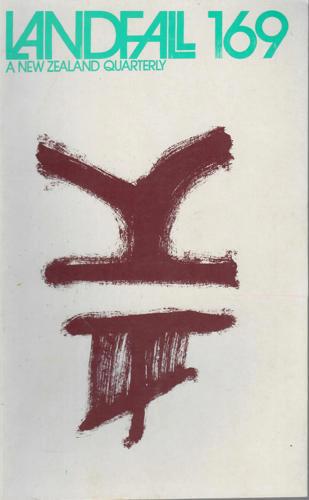
Stephanie Johnson

Landfall 169 March 1989
Editors: Hugh Lauder, Mark Williams, Iain Sharp

When Landfall accepted ‘The Littlest Angel’ I was living in Sydney. I was a young writer, with a collection of short stories and a volume of verse to my name. The story is set in Waverley Cemetery, which sits above the cliffs of Bronte Beach.

Reading it again filled me with nostalgia and also the pride that I felt to be published in New Zealand’s pre-eminent lauded literary journal. The editorial board included Iain Sharp, a leading poet, for whom I have great respect. I felt accepted and acknowledged by my home country.


Opening of ‘The Littlest Angel’

For as long as I can remember I’ve stood about in a yard with many others just like me.
It’s a corner yard with a motorway on one side, and a hospital over the road.

On sunny days our white flesh glistens like quartz, and we sometimes afford a small smile at
a neighbour when nobody is looking.
Someone looking through the chicken wire from the road might notice.
That heavy-legged woman on her way to visit her husband in hospital.
We can see her looking at us and thinking which one?
The one with her hands clasped?
The one with wings?
The one without?
Usually we find it is a woman who chooses us. They live for so much longer.

Or perhaps a child might detect the slightest lift of a lip.
One of those quickeyed brown children with darting pointing fingers.
One of those slow vain children we are copied from, only we lack the blonde curls, the
peaches and cream.
That pink one with the panama hat. She could net an indiscretion in her bored gaze.

One of the workers might see us. There are three of them, not counting the one inside in the
suit.
The other three bend over us all day until we are finished.
Then we are placed out in the weather, shoulder to shoulder, very still, until the truck comes.

I have seen my sisters loaded into trucks, sometimes not without accident. A chipped nose,
the loss of a fold in a robe, a blunted curl.
The survivors stand in the back above the spinning wheel as the truck disappears down the
onramp to the motorway.
For miles the white of my sisters’ faces pierces the clouds of blue fumes.
Lord knows that they are thinking as they leave us.


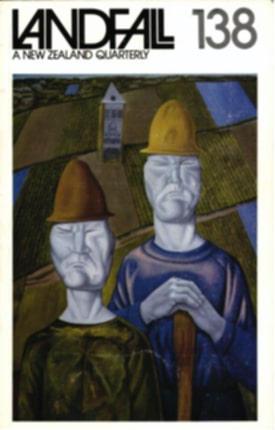
Gregory O’Brien

Landfall 138, June 1981
Editor: Peter Smart

Greg is another of Landfall’s most regular contributors: his work has been published in the journal 56 times.

As the 1970s came to a close, I was a solemn, 18-year-old, working as a journalist in Dargaville and spending long afternoons in my bedroom, listening to ECM records and reading James K. Baxter, D. H. Lawrence and recent issues of Landfall. The journal, around this time, had a strangely rural, not to mention ‘realist’, character. As an adopted son of Northland, I thought my poems would play well in that context, so I mailed three poems south, accompanied by a stamped, self-addressed envelope.

Under the editorship of Peter Smart at the time, Landfall was going through a particularly catholic (with a small c) phase. It was fresh, lively and youthful – definitely uneven in quality, but somehow reflective of the broader life of the nation. Peter accepted my poems for publication in 1980 but, on account of his editorial largesse, there was to be a wait of just under a year as he cleared all the backed-up poems in his acceptance tray to make way for my momentous, monumental offerings.

Whatever the shortcomings of my three short, earnest poems, how great it was, in June 1981, to share a two-page spread with a writer named Dawn Seed. But it was the cover art of the first three Landfalls in which I appeared that made me feel I had ‘arrived’, albeit only by proxy. Following on the heels of the Leo Bensemann painting on Landfall 138, my next two appearances in the journal were in issues ‘covered’ by Bing Dawe and then Rita Angus. When my debut issue, Landfall 138, arrived in the post, I stared long and hard at Bensemann’s ugly, potato-headed orchardists in the painting on the cover and felt I was now happily one of them; I had a hand on the wheelbarrow that was New Zealand arts and letters. And from there I proceeded along my writerly path.


The Choice

Her cousin places
a jar on the lawn
to catch the rain that
falls from the still
leaves above the
lawns,

Her cousin never
reads books, he objects
to them on the grounds
that all the words have
been used before.


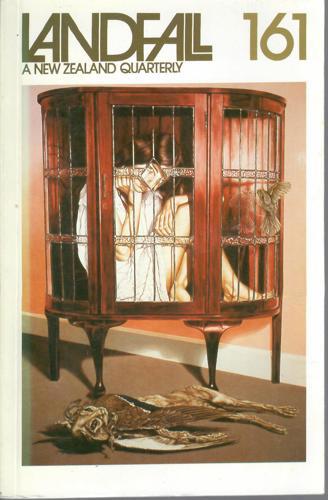
Robert Sullivan

Landfall 161, March 1987
Editor: David Dowling, Linda Hardy and Hugh Lauder

Robert was recently appointed Poet Laureate of New Zealand, the first Māori poet to be awarded this role since Hone Tuwhare.

The first time I was published in a literary journal was in Landfall 161 with work accepted in 1986 by poetry editor Michele Leggott. I wrote about the oxidation ponds at Mangere in a long walking prose piece, my first environmental poem too, incorporating lines from Allen Curnow at the end for a dramatic flourish. One of the two other poems that Michele also accepted was the title poem for my first book, Jazz Waiata.

It was a buzz, to say the least, and firmed up my commitment as an 18-year-old to poetry. That year I also began editing the poetry page of the University of Auckland student newspaper, Craccum.

The next time I appeared was in Landfall 175 alongside Allen Curnow. Talk about walking on sunshine! Poems from my sequence in Jazz Waiata called ‘Tai Tokerau Poems’ were published there. The journal has continued to support my writing over the decades, and I’ll always be grateful for that. I am so happy to see Landfall continuing to flourish. Happy 250th!


Time Means Time in Tarawera City

for Allen Curnow

a helicopter took me over your spleen today, dove
straight through that rift, couldn’t land

on anger, ‘unprofessional’ pilots said floating
past graffiti: Turangawaewae Forbidden Antix.

late I trudged village track buried in pylons,
Manukau bridge flats, cymbaled roads in posts
counted tohunga’s hut surrounded by oversized
rubble—pictures tacked in a gallery; no green tane me

only mud pools and guts to nurse tired words, pricks
to wake old harm: a poet hurt monitoring the hot line
on a boomerang spin from lumpy water ae, at you!
I hate that wooden chest; I loathe village tours.

even let me hurl these grappling lines of phlegm
at your formica-mountain. Retch/cryscream/splay your ground!

nothing remakes nothing—apart from time.
I am nothing, say it. return the strands of earth.


'NZ literature is such a vast and varied thing' - Pip Adam

Read more

Kelly Ana Morey: 1968–2025

.

‘I’ve always been the pain in the ass who wanted to row her own waka in her own way.’

– Kelly Ana Morey


By Paula Morris


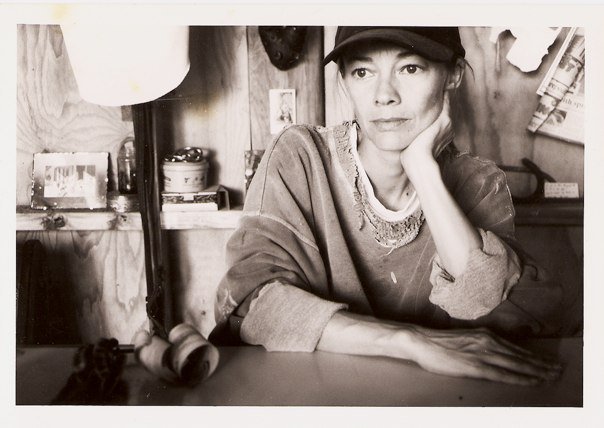
Kelly Ana Morey (Ngāti Kurī, Te Rarawa, Te Aupōuri), who died on Monday 1 September aged 57, was many things. Her friend Catherine Chidgey describes her as ‘novelist, historian, photographer, reviewer, and one of the hardest workers I’ve ever known.’ I’d add art writer, stylist, collector, fashion insider, aesthete, gardener, truth-teller, hard case and self-described ‘shit hot waitress’. In her misspent youth she was a denizen of Auckland’s nightlife, a beauty-about-town – after a childhood and adolescence moving between New Zealand and Papua New Guinea, always reading. ‘She was a considerable writer,’ says Elizabeth Aitken-Rose of the Sargeson Trust ‘and, more than this, a fierce, intelligent and enduring contributor to Aotearoa’s evolving cultural life.’

On her Facebook page KAM described herself a different way: ‘Half-assed novelist, animal hoarder and arsonist’. ‘I’ve never really been a joiner,’ she once told scholar Ann Pistacchi. ‘I’ve always known exactly who I am … hard to miss when all your Kaitaia relations are brown as, but I’ve always been the pain in the ass who wanted to row her own waka in her own way.’

.

Self portrait, 2001.


KAM and I met in Wellington in 2001, when both of us were finalists in what is now known as the Pikihuia Awards; our stories were published in a Huia anthology, and I took part in a public reading with KAM and fellow finalist James George. Both KAM and James made themselves cry during their readings and I wondered if this was normal. I returned to the U.S. and we didn’t meet each other again until 2005, at a book launch on Karangahape Road for my second novel, Hibiscus Coast. By then she was publishing abundantly imaginative novels with Penguin, and she seemed sparkling and lively – my kind of writer friend.

When her debut novel, Bloom, won the Hubert Church Award in 2004, KAM was only the fourth Māori – in almost 50 years of the prize – to win, following David Ballantyne (1949), Alan Duff (1991), and me (2003). She’d already been awarded the Todd Young Writers’ Bursary. Her second novel, Grace is Gone, was shortlisted for the international Kiriyama Prize; in the same year, 2005, she won the inaugural Janet Frame Literary Trust Award. In 2014 she was awarded the Māori Writer’s Residency at the Michael King Writers’ Centre. There would be another three novels: On an Island, with Consequences Dire (Penguin 2007), Quinine (Huia 2010) and Daylight Second (HarperCollins 2017), as well as social histories, stories, poems and a childhood memoir – of sorts – called How to Read a Book (Awa Press 2005). She was working on another novel – finished? Almost finished? – when she died.

Like so many writers in New Zealand, KAM had to divide her time to make fiction-writing possible: there were always bills to pay, animals to feed, an old house north of Auckland to fix and renovate. In op-ed for Stuff written in 2017, she described applying for a WINZ benefit two years earlier. ‘Given that I’ve chosen to live rurally and earn a living as a writer/waitress, my financial life could charitably be described as precarious,’ she wrote. ‘Generally I make it – something nearly always seems to come along in the nick of time. But sometimes the wheels can and do fall off my little sideshow.’ Sometimes it was too much. ‘I plant trees, dig drains, feed the animals and shiver as I do my fifth winter without heat,’ she wrote in 2017. ‘And I feel old and broken.’

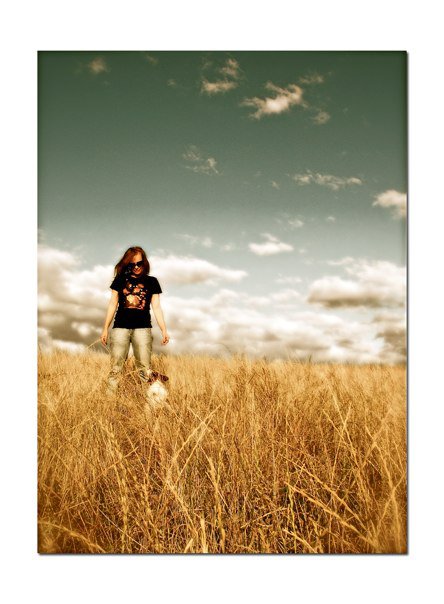
KAM at her Northland home in summertime.

.

Financial need meant she had to take on numerous nonfiction commissions and jobs as an oral historian. In April 2016, she emailed me to say she was ‘at home all week alternating between writing a concise yet entertaining summation of Bay of Islands Maori politics circa 1800 and editing the novel. Yay for editing the novel. I’m tired of the sight of the wretched thing.’ (The novel was Daylight Second, which she was still calling ‘Phar Lap’.) KAM ‘had the rare gift of making art while also juggling the sheer hard graft of making a living,’ says Chidgey, ‘and she never stopped creating’.

*

KAM was born in Kaitaia in 1968. Her mother was from Rotorua and of French/German heritage; she had, KAM told scholar Ann Pistacchi, ‘the most magnificent beehive’. Her father was the descendant of a Jewish trader who set up a general store in the Far North and a high-ranking Ngāti Kurī woman. Both parents were talkers and ‘voracious readers’, she recalled in How to Read a Book. But KAM absorbed her ‘mother’s trenchant unhappiness … in a location she never learned to love’. After years in the New Zealand Navy, her father became a shepherd in the Hokianga and then a surveyor, among other things.

The family moved to Papua New Guinea in 1971, where her father worked in various jobs and the family kept moving. It was, she told Pistacchi, ‘the most fabulous childhood. It was quite solitary and in many ways I think a perfect training ground for being a novelist because it taught me to be really happy with only my imagination to keep company with.’ Her mother encouraged her writing and both parents supplied her with books, though these weren’t always easy to find – embracing her identity as a ‘book-worm’ so they could ‘explain my (even then) pronounced singularity,’ she wrote in How to Read a Book. ‘I was not a “friends” kind of child.’ She was happiest with books, dogs and horses, as she would be all her life. She drew on the landscapes and history of Papua New Guinea for her fourth novel, Quinine.

At the age of 12 KAM was sent back to New Zealand to board at New Plymouth Girls’ High School. She preferred the heat and magic of Papua New Guinea and spent her five years at school ‘doing nothing very much in particular,’ she told Pistacchi. Her talent recognised by teachers, she was invited to take part in a special creative writing workshop run by David Hill. Other girls were drawn to her charisma. Auckland writer Karen Holdom arrived at the school in the sixth form and was delighted to be drawn into KAM’s circle.


She wasn’t one of the popular girls, the surfy, outdoors, ponytailed lovelies. Those girls couldn’t see what we could, which is that Kelly was the wittiest in the room, the prettiest, the smartest, and the bendiest (her legs and arms folded in impossible knots, those long, bent-back fingers begging a cigarette). She could keep a secret – and did. She was a bit goth, a bit rebellious, but also studious because she couldn’t help herself. She sported with the teachers, and the good ones didn’t mind. My sixteen-year-old self wrote to an expelled fellow student to say life without her would be like haybarns without sex, mountains without Yetis and ‘biology without Kelly Morey.’ The world was just more interesting with her in it.

.

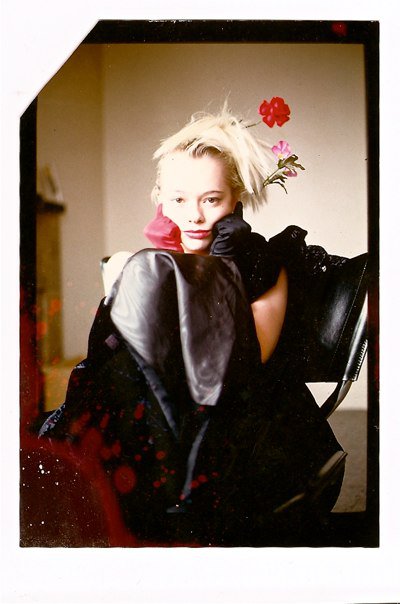
Kelly Ana Morey in her early twenties.

.

KAM repeated her sixth-form year then left for university in Auckland. In a 2022 essay for Reading Room, she described herself as ‘a provincial goth with the requisite spiky bleached blonde hair, heavy make-up, layers of black rags and all-important faux existential ennui’. Her stint in student halls was short – ‘I was a smoker who kept unsociable hours and dubious company’ – and she spent more time working in clubs and restaurants than studying. After ten years of part-time pursuit of a degree in English and Art History, KAM decided to commit. In 1997, Witi Ihimaera and Albert Wendt accepted her into their creative writing class, and her story ‘Māori Bread’ was accepted for publication in the anthology 100 New Zealand Short Short Stories (Tandem). By the time I met her in 2001, she had completed an MA in Art History and was hard at work on Bloom.

.

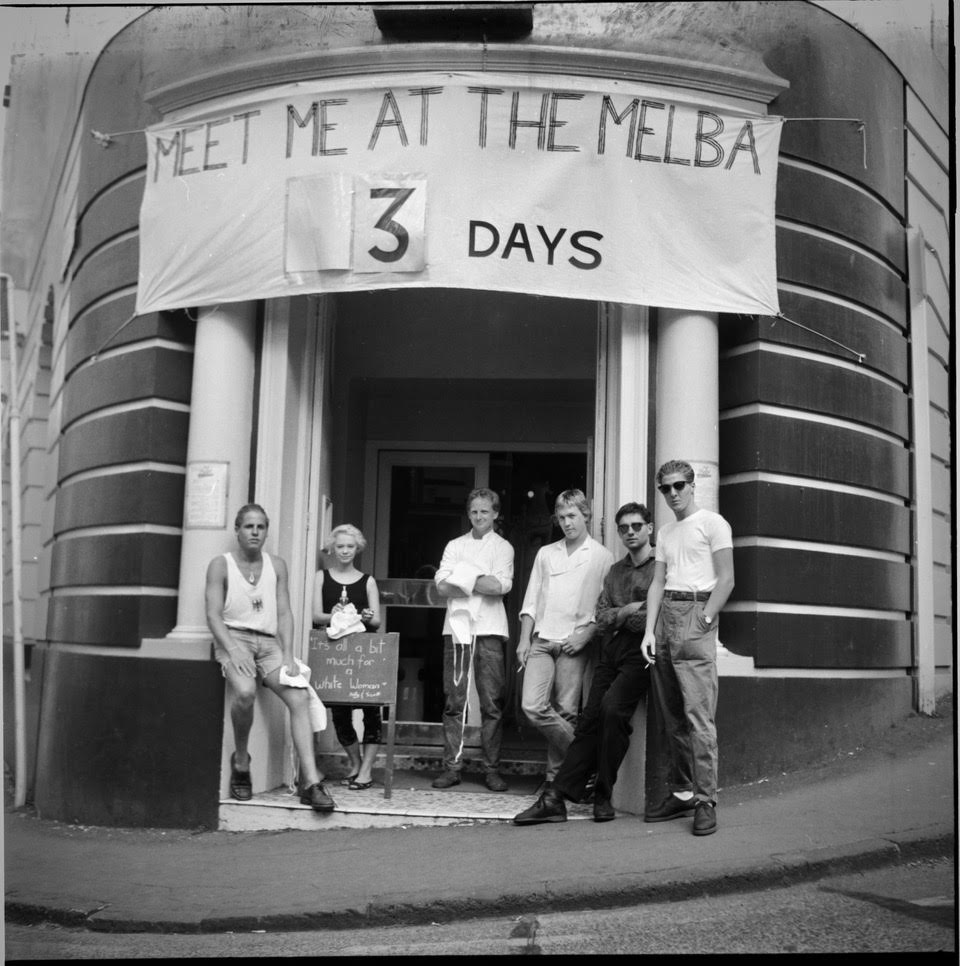
At ‘Meet Me At The Melba’, Dec 9 1987. Photo credit Darryl Ward.

.

.

For KAM, Auckland was a glamorous interlude. In her 30s now, joking that she was over-educated and unemployable, KAM returned to the north, and to the countryside. When Ann Pistacchi was writing her doctoral thesis, Morey’s writing career was in its early years but apparently embedded in the north. She talked to Pistacchi about how she liked to ‘write rural communities’ and Pistacchi declared that KAM was ‘anything but an urban dweller. While aspects of her narratives include recognition of violence, poverty, dislocation, and Māori activism, her novels have a decidedly non-urban spirit.’

Certainly, KAM loved her life in the country. She and Catherine Chidgey ‘compared notes on living with messy, sometimes destructive pets’ and Chidgey says she ‘was always moved by the deep love she showed her animals – her horses, hounds and cats.’ KAM considered becoming the Māori rep on the NZSA board but said ‘the travelling ruins it for me’. She preferred to stay at home but in the loop at the same time. Once when I asked her to do something she agreed because ‘my life is a bit slow at the moment as I’m just pottering around at home being a lady novelist’. Another time she agreed because ‘I’m not doing much more than hiding at home and writing ’.

.


……..

……………..A few of KAM’s beloved ‘critters’. Photo credit: Kelly Ana Morey.

.

In their introduction to the anthology Black Marks on the White Page, Witi Ihimaera and Tina Makereti talked about KAM’s story as an example of ‘radical ordinariness’, a way of presenting ‘the lives of ordinary people’ and ‘at the same time challenging our understandings about the way things are.’

But she was equally home in the supernatural or mythic. For the 2019 anthology Pūrākau, edited by Ihimaera and Whiti Hereaka, KAM wrote a story called ‘Blind’, imagining the ogress Rūruhi-Kerepō as an inmate of Kingseat mental asylum. The subject, KAM wrote, ‘was the obvious choice for me really.’

.

Evil old child-eater! How could I resist? But there were other reasons why I chose her, the main one being there was pretty much nothing written about her so that gave me the opportunity to take her anywhere I wanted, so I did. I also loved that her name translates as ‘old Woman’ and that got me thinking about hierarchies and how to be old, brown and a woman is to have no value.

.

As the years between novels stretched, she would think more and more about this. KAM was frank about her prevailing moods; she was given to love-hate relationships. She spent so much time alone that existential crises could settle in her house and in her mind. Sometimes she relished her outsider status. ‘There’s a reason why I’m a writer who doesn’t do the networking thing,’ she told Karen Holdom in 2020. ‘I am simply better by myself, the lit world does my head in’. (Later she told Karen, ‘I get more satisfaction doing beautiful gardens and houses and riding my horse’.) Many of her friendships were conducted virtually. ‘For 15 years we chatted online,’ says Chidgey, ‘a constant thread of conversation that wove through my life. We swapped recommendations for books, good TV and bad TV, interior decorating with antique treasures found on Trade Me or at auction houses.’


…….  

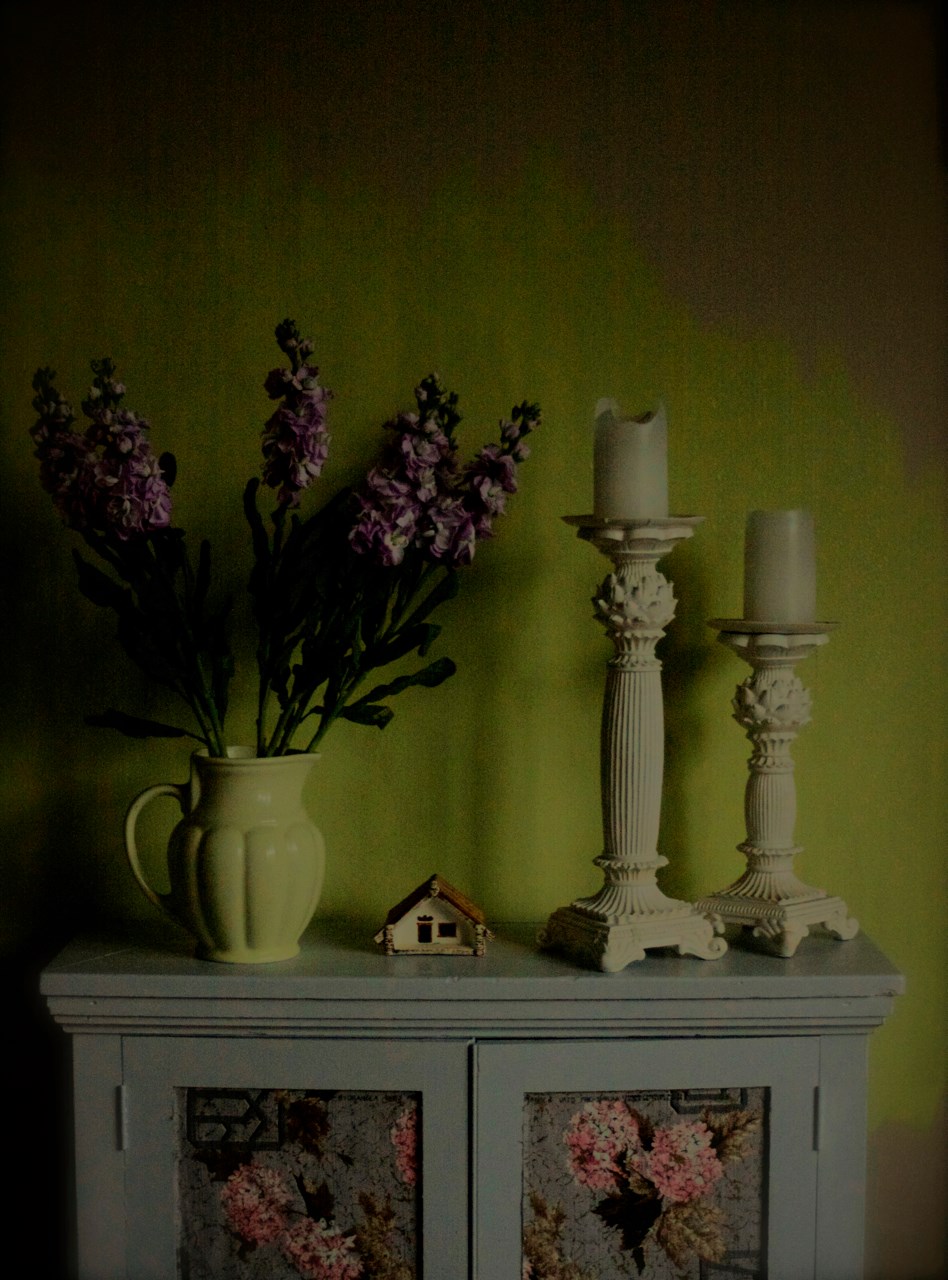
Some of KAM’s home treasures, including the green wall she often used for a backdrop to photograph her decor collections.

.

At other times this isolation led to bitterness and paranoia. KAM could lash out even at friends and supporters, especially when she was feeling professionally or personally overlooked. I’ve been on the receiving end of various lashings. In 2018 a Creative NZ delegation of writers was sent to London to participate in events around the Oceania exhibition at the Royal Academy. The writers were me, Witi Ihimaera, Tina Makereti, Karlo Mila and David Eggleton. KAM was furious that she hadn’t been invited – as an art historian as well as a writer – and vented in public mode on Facebook. I asked her to stop and said it was distressing to read the pile-ons from her followers. ‘Welcome to my world,’ she said.

But the storm always passed with us – or, at least, the whip was set aside for a while – because our issues weren’t personal. We liked each other, and we liked to moan to each other about the writing world, the writing life, the writing. We also relied on each other: I commissioned her to write book reviews and to serve as external examiner for some of my Master of Creative Writing students at the University of Auckland. She almost always said yes, in part because it suggested her judgement was valued. In 2016, when Harley and I were getting the Academy of New Zealand Literature up and running, KAM was a supporter and contributor, writing the ‘appreciation’ for Keri Hulme, interviewing Fiona Kidman and supplying a superb portfolio of photographs for us to use with features and essays.

.

.

.

Above, a selection from Kelly Ana Morey’s portfolio.

.

In 2021, when I asked her to be a fiction judge at the Ockham New Zealand Book Awards, she agreed at once: ‘I think it’s time to stand up and be counted.’ I really liked that about her. In a country where too many book reviewers will tell you, in private, what they really think, she would write what she thought. ‘Well this isn’t going to make me any friends,’ she told me, submitting review copy for a book by a popular writer. When a publisher had neglected to send her a book, she wrote: ‘Maybe they fear me’.

Also, she always needed money. When I asked her to examine another piece of gloomy realism, she wrote: ‘I’d give a three legged cat for something funny. Sadly I have to pay the last bit of said cat’s horrendous vet bill, so I’ll say yes.’ (‘I tell people, say what you like about Paula,’ she told me once, ‘but she always pays on time’. This was untrue: often I don’t pay on time. Also, I hadn’t realised ‘people’ were nasty about me. Welcome to my world.)

Like all friends and writers, we had in-jokes, and we sometimes complained about each other. In 2019, she told a mutual friend that ‘your friend St Paula takes all the Māori money’. This had been a running joke between me and KAM for years, dating back to some parody CNZ letters I wrote in the personae of other writers. (‘Please send me all the Māori money.’) But she emailed me when my father died, and when I was getting abuse from someone, she wrote: ‘Jesus what the hell is wrong with people.’ Once she told me that some writers couldn’t ‘take ‘KAM’s brutal truth’, and that became one of our favourite lines.

We also emailed and commiserated about the expectations and demands made of Māori fiction writers. Everyone should read her Spinoff essay from 2017, written not long after her own father died, about being ‘a Māori. In my own funny way.’ It examines KAM’s feeling of isolation within the prevailing Māori narratives. ‘I can’t be the “Māori” writer people want me to be,’ she wrote; ‘all I can be is myself. Mining the Māori world for material would somehow feel like an act of theft because my knowledge and connection feel so slight and arbitrary.


This is why I don’t write from the Māori perspective all that often in my fiction, and if I do those characters tend to be quarter-cast who are like me a little disconnected. They operate as individuals rather than cultural representatives. There are no marae visits or lovingly written tangi in my New Zealand novels. There’s the odd visitation from a ghost or two but every culture has that going on. And the narratives are concerned with the here and now of surviving and knowing who you are and being okay with that. The complicated world of identity and authenticity which challenges those of us who are neither one nor the other. So I shuffle between my realms, the problem child no one really wants.


That sense of herself as ‘problem child’ extended to our small literary world. Relationships with publishers were not always good; KAM often felt unsupported and ‘silenced’. She took rejections badly, writing in 2017 that she’d ‘written countless futile Creative New Zealand and writers’ residency applications’. That year, joining Auckland Museum’s oral history team and offered a writing contract by another museum, she wrote: ‘So after six years in the wilderness I’m back on track. See if Waikato Uni had given me their residency instead of my fifth rejection from them, none of this would have happened. Well done cow college.’ It took many, many applications to get the Sargeson Fellowship, in part because KAM would announce that she just wanted the money, not use of the writing residency on Albert Park. (She was awarded the residency – at last – in 2023.) Even when she got grants, she could complain. ‘I’ve only just got myself back into CNZ good books,’ she told me in 2015. There ‘have been far too many times in the last 6 years when it’s been a bit like the siege of Leningrad for me to shut the hell up and take my hush money’.

….Self portrait – in her favourite chainmail skull Commes des garcons shirt.

.

For someone so prickly, KAM was amenable about being edited, whether I was re-structuring a review or giving feedback on the fiction she submitted for inclusion in my anthology Hiwa: Contemporary Māori Short Stories. But she could drive me crazy. Each year the ANZL sends an ‘author showcase’ to hundreds of festival directors around the world, looking for international opportunities for New Zealand writers. After Daylight Second was published, a festival expressed interest in KAM. ‘Durban hosts the biggest horse race in South Africa,’ I wrote to her. They would pay for her airfare and hotel and give her a meal allowance. She made plans. ‘I have a week off work and critter sitter jacked up … now all I need is some anxiety meds, a passport and one more animal put to death’. I confirmed with the festival. And then she cancelled, saying ‘my spooky old lady skills aren’t happy about this one’.

But she was, as Chidgey says, ‘the one and only Kelly Ana Morey’ – funny, frustrating, smart and smarting. ‘Kelly was devoted to writing even though she knew it wasn’t good for her,’ says Steve Braunias, a long-time friend and admirer of her work. ‘There were a lot of disappointments and setbacks and general punishments, but she kept coming back for more.’ She could be angry or sad, but she was not deterred. KAM ‘needed to write,’ she wrote in the Spinoff, ‘because aside from thinking deep thoughts and waitressing, I’m not terrible good at anything else’. She also enjoyed making trouble: ‘I’m off to poke some tigers with a stick’.

.

Photo credit: Kelly Ana Morey.


As well as career setbacks, KAM suffered from ongoing physical pain. We asked each other a lot about health issues, but mine were just injuries and surgeries. KAM had Crohn’s Disease, and what she once told me was three decades of a ‘constant low grade chronic gut pain’. In passing she would mention ‘my last bowel resection’, but the most important thing was to get ‘back on a horse six weeks after’ and be able to work in her garden. She couldn’t come to the launch of Hiwa in 2023 because apart ‘from being a hermit I have the Covid. Fark. It’s been awful. Even getting dressed is a mission.’ This July she told me she’d been ‘battling influenza’ for a month.

On 19 August, she emailed me from Whangarei Hospital to say she was in intensive care; this meant she couldn’t get a book review finished. I asked her if she needed anything and she asked: ‘Can you post me some lollies. I’m desperate for snacks’. My old school friend Sally Wilkinson, who lives in Waipu, drove up two days later with the requested wine gums, jellies and M&Ms. ‘The absolute joy of lollies,’ KAM wrote. ‘Thank you so much for the lolly fairy.’

A week later:

KAM: On my way home this afternoon. feel better than i have done for months.

Me: I hope you have more energy, you poor thing!

KAM: I still have a way to go yet. I could probably get that book reviewed for you.

Me: Only when you feel up to it. There is a contract for you to sign as well, perhaps?

KAM: Oh yes and I need to confirm my bank account.

That was our final exchange. ‘Brave little Kelly walked a hard road,’ Braunias says. ‘New Zealand literature was the better for it. I will miss her very much.’ Chidgey says: ‘KAM’s extraordinary novels leave a legacy that speaks to her rich imagination and her tireless dedication to storytelling; her non-fiction projects show the same intelligence and commitment to the written word. I will so miss her conversation, her support and her friendship.’

I will miss her wit and her brutal truth. Two years ago, she told me: ‘I’ve counted up my lives and KAM the cat has four more left’. None of us thought those lives would be used up so soon. ‘The fires will continue to smoulder with or without me,’ she wrote in the Spinoff in 2017, calling out to ‘a group of incredibly well-educated, talented Māori women storytellers who take no prisoners and offer no apology for who they are and what and how they write’.

We will keep the fires going, KAM.

…..Kelly Ana Morey: 1968–2025


Links to KAM reviews on the Aotearoa Review of Books:

21 May 2025: Tina Makereti: This Compulsion In Us

11 April 2025: Whiti Hereaka and Peata Larkin: You Are Here

8 November 2024: Monty Soutar: Kāwai: Tree of Nourishment

6 September 2024: Kirsty Baker: Sight Lines

3 April 2024: Lauren Keenan: The Space Between

18 August 2023: Airana Ngarewa: The Bone Tree


.

'Character to some extent is much a construction of the reader as it is of the writer.' - Lloyd Jones

Read more

Still Waters Run Deep

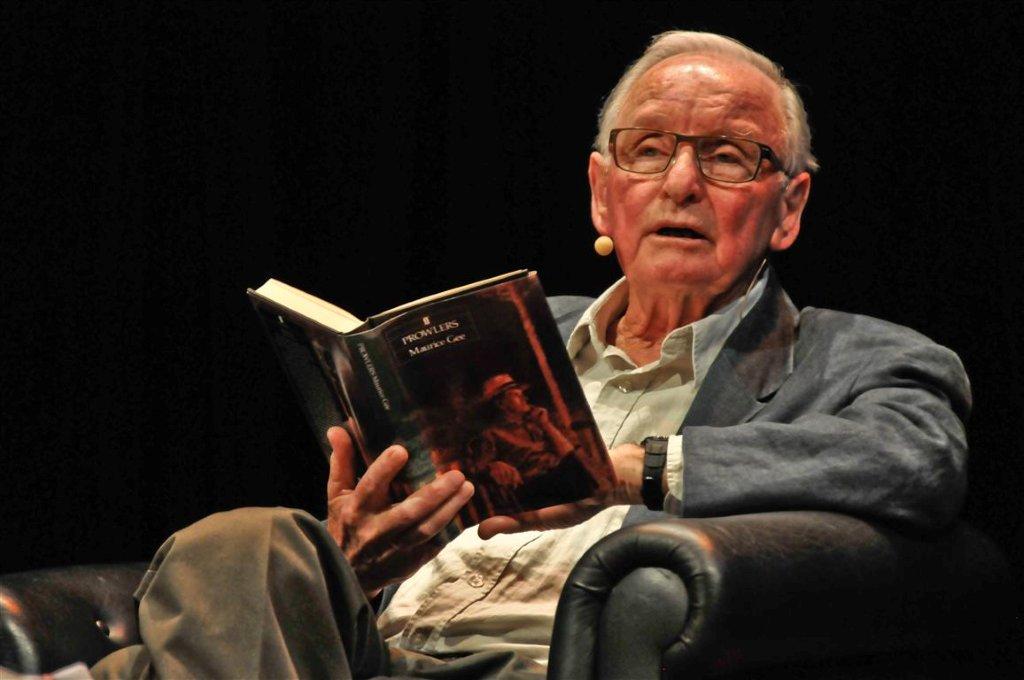
John McCrystal on the imaginative life and legacy of Maurice Gee.


The last time I saw Maurice Gee, he was literally wearing a grey cardigan. And slacks, and comfortable shoes and a wry, wary look. He was skulking (if that’s the right word) towards the back of a small-ish crowd attending a launch in our little, local bookshop. He blended in perfectly, and looking around the room, you might have mistaken him for the guy who would raise a tentative hand after the speeches and readings and politely ask the author where they got their ideas from.

I recognised him because I’d had the pleasure of interviewing him a week before. I was moderately surprised to see him, because during that interview, he had told me that he had pretty much nothing to do with ‘the book business’ anymore: whereas he’d always kept a low profile, he had now all but given interviews and festival appearances and readings away. His twelfth novel for adults – Ellie and the Shadowman – had emerged a matter of days beforehand, but this wasn’t his launch. I don’t recall whose launch it was, but Maurice, kind as ever, was there to show solidarity for a fellow author.

If there is a recurring theme in the press surrounding Gee, particularly in the latter years of his career and in the eulogism since his death last week, it is that he seemed so ‘ordinary’ (‘unassuming’, a ‘man in a grey cardie’) for someone who had produced such an extraordinary body of work. Damien Wilkins (who, curiously, I’ve always thought looks a bit like the younger Maurice Gee) has spoken and written about his resemblance to the archetypical (Pākehā) Kiwi bloke in early author photos: sleeves rolled up, ready for manual rather than intellectual labour. As he aged, he became indisputably avuncular. As he aged further, he began to look positively grandfatherly.

He looked mild and grandfatherly when I met him in person in 2001, and was moved to ask him, as so many interviewers had before me and have since, where he got his ideas from – those dark, haunting scenes in his writing featuring sex, violence, physical and psychological torment, and death. Sitting there in his cardie and slippers in his modest home on the slopes of Wellington’s Ngaio, he pretended to take the question seriously. It was only when I asked what his wife, Margaretha, thought of this kind of subject material that he raised an eyebrow and laughed nervously: Margaretha was in earshot. ‘You’d have to ask her,’ he said.


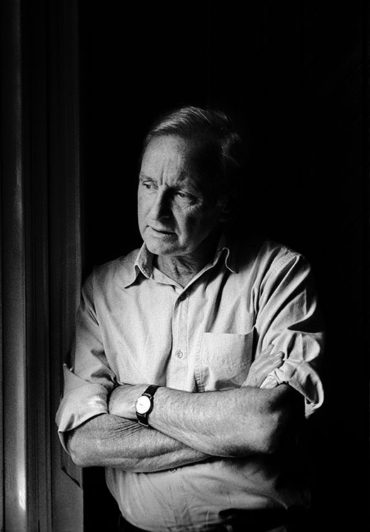
Photo credit: Gil Hanly.


It wasn’t as silly a question as it sounds. Because while Maurice looked about as unlikely to inflict harm or do ill as any human being alive, he spent his entire writing life preoccupied by the evil that men (and women, but mostly men) do.

Maurice Gough Gee was born in Whakatāne in 1931 and shifted to Newington Road in Henderson — then a hamlet lying to the west of Auckland city — when he was an infant, the middle child of three brothers. He moved away from his childhood home in his early twenties, but psychologically speaking, he never really left. He acknowledged that his emotional landscape comprised the warmth and safety of home (especially the kitchen, his mother’s domain), and the chill and darkness of the larger (mostly masculine) world, as epitomised by the creek that ran past the Gee family property.

The creek gave him wonderful memories — an adventure he and one of his brothers had, descending from Henderson to the Waitematā Harbour in homemade canoes — but he also nearly drowned in it, and saw a young man fatally break his neck when diving into a swimming hole at low tide. In 2009, he told Stuff’s Grant Smithies that he ‘couldn’t seem to get away from Henderson Creek. It runs right through my imaginative life.’ And so it does. Anyone who has swum in murky water with a creeping sense of unease at what lies beneath will recognise the same sensation evoked in Gee’s work.

After starting out as a writer of poetry, Gee soon moved to short fiction, with many of his stories collected in A Glorious Morning, Comrade, published in 1976. By the time this collection emerged, he had already published two novels (which he later described dismissively as ‘apprentice novels’): The Big Season (1962) and A Special Flower (1965). Apprenticeship duly served, it was as a novelist that he was to make his name. In My Father’s Den (1972) won him critical acclaim and a publishing contract with the prestigious UK house, Faber, with whom he had a long and fruitful association. His fourth novel, Plumb, based on the character of his austere maternal grandfather James Chapple (and the first in a trilogy) was published in 1978 and is probably his best-known and most widely admired.

Between then and 2009, when Access Road, his last, emerged, Gee published a novel every two or three years, for a total of 17. Many won awards (including several incarnations of the top fiction prize), Gee held a number of literary fellowships (including the prestigious Menton fellowship in 1992) and was awarded the Prime Minister’s Award for Literary Achievement in 2004. Few writers could boast they have had an entire literary festival named after one of their works (Going West). He was regarded as one of New Zealand’s best writers (if not the best), and hailed as a major figure in wider English letters: he was even mentioned as a possible nominee for the Nobel Prize for Literature — but it was thought that Janet Frame ought to be nominated first.


Maurice Gee at home. Photo credit: Robert Cross.


In genre terms, Gee was a realist. He was a master at evoking place and capturing the temper of times, even times that were not his own (Edwardian New Zealand in Plumb, New Zealand during World War II in Live Bodies). But it was people he did better than anyone. A man whom he befriended in the course of researching the nefarious business of property development for his 1994 novel Crime Story wrote to him that Gee’s ‘ability to see into people’s souls is becoming a bit frightening.’ This was acute, because that is precisely what his talent comprised: the ability to see human beings in the round, and then to capture them in his economical, limpid prose. Love, loathe, admire or despise them, it’s hard to see his characters as anything but real people.

This is certainly the way he saw them. When I talked to him about Ellie, the main protagonist in Ellie and the Shadowman, it was like discussing a mutual acquaintance; I was struck by how he spoke of her as though she were someone he had got to know rather than made up — as though there were aspects of her that baffled even him. Similarly, talking to an interviewer about the property developer character in Crime Story, for example, Gee said that he ‘didn’t like’ Howie, but there were some aspects of him that he admired. It may well be the case that his characters were made up of familiar and well-handled fragments of his own and of those of people he had known, but once he had stitched them together and thrown the switch to send the current of his imagination coursing through them, they fairly walked and breathed.

If realism was the strength of his novels, it was realistic fantasy that enabled Gee to forge an equally illustrious career as a writer for children and young adults. He published (by my count) 13 books for children, and won awards for these as well. While it can be presumptuous to declare anything to be ‘a classic’, a number of his children’s books are indisputably classics: Under the Mountain was acclaimed at the time (1979) and has endured, as has the trilogy comprising The Halfmen of O (1982), The Priests of Ferris (1984) and Motherstone (1985). Gee had the gift of taking his young readers seriously, probably because his own childhood still seemed so immediate to him. Even his fantastic landscapes feel familiar, and his characters find themselves in recognisable moral dilemmas. My 16-year-old daughter (who was stricken when I told her just now that Gee had died), appreciates the way he creates fantasy worlds in the New Zealand landscape (‘I wish I had a pair of magic glasses!’).

And in Gee’s view, you’re never too young to experience creeping unease. The creek! The malevolent wilberforces gnawing at the earth beneath suburban tranquility! The darkness in humanity of which children are mostly, but not completely, innocent. Gee understood the way young people confront and make sense of the world, something I felt when reading his 1990 (adult) novel, The Burning Boy. There is a scene where teenaged Hayley meets her boyfriend (who physically attracts and morally repels her) at a swimming spot, Freak’s Hole. She gives Gary a handjob as they bob about in the pool, but is suspicious as to why he has invited his two unsavoury friends along as well. Her fears are realised when the three boys attack her. She fights her way out of the situation, but afterwards it hits her how dire the danger is that she has just escaped. I recall how alone she seemed to me as I read it, negotiating the possibilities and perils of the world.


Maurice Gee reading from Prowlers at the 2012 Auckland Writers and Readers Festival. Photo credit: Gil Hanly.


It’s hard to say how Maurice Gee’s oeuvre will cellar. Perhaps his junior fiction will endure, as the update Under the Mountain was given in Jonathan King’s 2009 movie would suggest. As for his adult novels, it’s harder to say. Even in his prime, he was becoming unfashionable. Realism was ceding ground to post-modernism and experimentation with the form, such that Gee’s novels look conventional to the point of being old-fashioned when viewed through a contemporary lens.

What’s more, I was always surprised that whereas Owen Marshall seemed to attract the label of ‘provincialism’, Gee largely escaped it: he was unashamed of the ‘New Zealandy’ settings and sensibility of his fiction. But the New Zealand with which he was familiar and to which he returns in his fiction again and again has all but vanished, too. He grew up in a broadly conformist society, for the most part deeply sectarian, where even if you rejected religion (as Gee did), this was still to define yourself in relation to it. The New Zealand Gee grew up in seems somehow closer to George Plumb’s reality than to our own. By the mid-1980s, we were becoming conspicuously secular, and this trend has accelerated. Morality itself may have shifted. Gee was often accused of ‘puritanism’ and ‘moralism’.

I asked him if he considered his outlook to have been shaped by puritanism, but we ended up talking past each other. When in his memoir he described his young self as a puritan, he was referring to an adolescent’s horror of his emerging sexuality, and denial that there might be a female equivalent, whereas I thought I had identified in Crime Story a collision between the ‘decent’ communitarian values Gee grew up with and the flashy individualism that was emerging in the 1990s. (I thought I saw the same unease in some of the stories in Owen Marshall’s collection, Coming Home in the Dark, published around the same time: the crumbling of moral conventions as reflected in ‘Flute and Chance’ and the collection’s sublime and horrifying title story. Gee was intrigued by this hypothesis, but not convinced).

Karl Stead accused him of being too judgmental towards his own characters (as in the mingled dislike and admiration towards Howie referred to earlier). Gee himself said he ‘didn’t mind’ being thought of as a moralist. But I wonder whether this moralism itself will date his work, in a world that has only got flashier and more individualistic. And, of course, Gee was living and working in a New Zealand dominated by Pākehā men, and his work reflected his experience. As Ellie and the Shadowman showed, he was capable of writing the female perspective with conviction, but the bulk of his work is palpably masculine. In his fiction, he deliberately chose not to engage with the Māori renaissance that was gathering steam throughout his career, whereas more recent writers have turned to confront the shadow on the margins of New Zealand society, our colonial past.

Time will tell.

I would be hard pressed to name my favourite Gee novel. I admire Plumb (the book, and the trilogy, although I think I like the last, Meg, the most). Going West was one of the first I read, and would be up there. But I think, for me, Live Bodies was his finest work, where he simply nailed the character (of course) and especially the voice of Josef Mandl.

I would also commend Rachel Barrowman’s 2015 biography, Maurice Gee: Life and Work as a fascinating study in the alchemy by which a writer’s experience is rendered into fictional gold. Gee expressed satisfaction with it. And just as fascinating in light of Barrowman’s is Gee’s own memoir, Memory Pieces, not least for the intriguing choices he made as to what he included, what he left out.

Nearly a third of what is supposed to be his memoir is actually a telling of Margaretha’s story. The two were together for well over half a century, and Gee credits her with creating the conditions he needed to be as prolific as he was. She was never a ‘kitchen person’, he said, but she created the security of his childhood kitchen from which he could venture out to explore the creek. They made a wonderful match, and it is sad that it has ended. I loved the story Barrowman recounts of how Maurice and Margaretha sold their Nelson house to move into a retirement village, only to find they hated it. They managed to buy their house back again. (I loved that Damien Wilkins used the story in his 2024 novel, Delirious, and I’m sure Maurice would have been delighted, too). Gee often complained that he was ‘no good’ at endings, but it is the way of things that even the greatest of novelists, like all good things, must eventually reach an end. Maurice Gee was 93. Haere, haere, haere rā.


Maurice Gee (22 August 1931 – 12 June 2025). Photo credit: Rachel Barrowman.


Read Sue Orr’s portrait of Maurice Gee here.


** Feature header image from Portrait of author Maurice Gee. Graham, Reginald Kenneth, 1930-2007 :Photographs of prominent New Zealanders. Ref: PAColl-6458-1-08. Alexander Turnbull Library, Wellington, New Zealand. /records/23121102

'One of writing’s greatest magics is to allow us – to use Kiri Piahana-Wong’s phrase – to slide outside the trap of time.' - David Taylor

Read more

‘What did I miss?’ Ten years of the Ockhams

The Ockham New Zealand Book Awards celebrates its tenth anniversary. Paula Morris takes notes and makes disclosures.

Last year at the Ockham New Zealand Book Awards, the Prime Minister took some flak from some writers and audience members – including fiction finalist Pip Adam, who read a pointed defence of Te Tiriti. To avoid a repeat this year, the Hon. Paul Goldsmith, Minister for Arts, Culture and Heritage (historian and biographer of John Banks and Don Brash, among others), made a short speech and then a swift exit through the stage door, before any awards were handed out.

He was probably home long before Damien Wilkins – winner of the Jann Medlicott Acorn Prize for Fiction for his novel Delirious – managed to run onto the stage. It was almost 9 PM; host Miriama Kamo asked Nigel Gavin’s on-stage band to fill time after the fiction announcement, checking her phone to tell us Wilkins was hurtling his way from Auckland airport. Air New Zealand was the unexpected villain of the day: mechanical issues with an early-afternoon plane stranded Wilkins in Wellington airport for five hours and kept poetry sponsors Mary and Peter Biggs from flying up at all. (Wilkins’ wife, slumming it on Jetstar, arrived in plenty of time.) ‘What did I miss?’ Wilkins joked.

Some big hints, as people noted during the event’s after-party. All the non-awards speeches – including one by Ockham Residential founder Mark Todd, usually an event closer – were moved up to the start of the ceremony, possibly to buy time for the $65,000 winner. During the fiction category citation, Thom Conroy, the judging convenor, paused to ask if Wilkins had arrived yet. He hadn’t: his publisher and longtime friend Fergus Barrowman, of Te Herenga Waka University Press, did the reading on Wilkins’ behalf and accepted the award – a bright turquoise acorn – for him as well. ‘I’m still not Damien,’ he said, adding that Delirious was his favourite of all Wilkins’ novels.

Wilkins, who gave a thoughtful and generous speech, was a popular and deserving winner. ‘Delirious has a lot of what you’d expect from Wilkins,’ wrote Laura Borrowdale on the Aotearoa NZ Review of Books. ‘It’s a novel that’s about “something”, that has intellectual meat on its plot bones, beautiful writing, and a very, very New Zealand setting.’

This was the tenth anniversary of the Ockham New Zealand Book Awards, celebrated with a pacey ceremony, an expert host, and explosions of gold streamers at the end. It was also the 57th anniversary of our national book awards in one of its many previous incarnations. Paul Goldsmith noted that the first novel to ever win at these awards – not including best first book – was Smith’s Dream by C. K. Stead, in 1972. ‘He’s still here,’ said Goldsmith, and indeed he was, looking rakish in his striped scarf, a poetry finalist for his collection In the Half Light of a Dying Day. Aged 92, Stead is also the oldest-ever finalist in these national book awards, but this year the poetry prize went to the youngest of the four finalists, Emma Neale (born in 1969), for her superb collection Liar, Liar, Lick, Split.

In Wilkins’ speech, he joked that when he last won at these awards – in 1994, for his debut novel, The Miserables – all of New Zealand literature could fit in a small room, on a few pieces of furniture, their names on a one-page list. Times have changed. The number of submissions for the Ockhams this year sounded like a record: 55 books in General Nonfiction, 53 in Fiction, 37 in Poetry and 30 in the most glamorous (and expensive) category, Illustrated Nonfiction. The finalists in each category climbed onto the stage to read short excerpts from their books. In most categories, this meant four people. In Illustrated Nonfiction it was ten, (almost) all the writers and editors who created the four contending books. (Illustrated Nonfiction finalists also get a slide show.)

Neither of the nonfiction awards were a surprise, despite the strength of competition in both categories. Toi te Mana: An Indigenous History of Māori Art (Auckland University Press) by Māori art historians Deidre Brown (Ngāpuhi, Ngāti Kahu) and Ngarino Ellis (Ngāpuhi, Ngāti Porou) – (disclosure 1: they are my colleagues at University of Auckland). The book is so heavy – 600 pages! – the authors had to offload it onto publisher Sam Elworthy before sharing the podium for their acceptance speech. It’s ‘an outstanding contribution to Māori culture, arts and creativity,’ writes Maia Nuku (Ngāi Tai), Oceanic Arts curator at the Metropolitan Museum of Art in New York. Category convenor Chris Szekely described it as a book ‘of enduring significance’, begun 14 years ago by the late Jonathan Mane-Wheoki (Ngāpuhi, Te Aupōuri, Ngāti Kurī).

The General Nonfiction winner was Ngāhuia te Awekōtuku for her stunning coming-of-age memoir Hine Toa – ‘an important book,’ I wrote in a review published on the ANZRB and in shortened form in the Listener, describing it as ‘vital to write, vital to publish and vital to read’. Ngāhuia gave an eloquent speech, though she was trembling and said she was ‘feeling rather shattered’; her partner celebrated the win in the aisle with a haka.

At the end of her memoir, Ngāhuia asks: ‘What became of the revolution?’ Perhaps because of the absence of Prime Ministers at this year’s event, writers with a turn at the microphone said less about our own society and political issues, though nonfiction finalist Una Cruikshank – in her speech after winning best first book – gave a shout-out to her ‘anarchist friends in the audience and ended with ‘Free Palestine!’ Badges seemed the preferred protest mode: Te Tiriti, Palestine, the Rainbow flag. I asked poetry judge, the always-eclectic David Eggleton, about his badge. ‘It’s the old five-cent coin,’ he told me. (There’s a poem called ‘The Five Cent Coin’ in his 2009 collection Time of the icebergs.)

Most finalists wore black, though possibly without symbolism. Cruikshank wore black lace gloves but a bright dress (with panniers) that included Day-of-the-Dead skulls. Lawrence Fearnley, a fiction finalist, wore mountain-climbing boots, as though she had just stepped from the pages of her own novel. Robert Sullivan, a poetry finalist, held a Māori mouth flute he’s learning to play ‘like a cigar’, he said, in tribute to his smoker father. Emma Neale apologised that her speech was ‘a shitty first draft’. Mark Todd, in his sponsor’s speech, apologised because his most recent read was not local. It was East of Eden by John Steinbeck. (‘Fuck, it’s good.)

Last night the four Best First Book winners were announced: these awards include the oldest in New Zealand: the Jessie Mackay Prize for Poetry, first awarded in 1941, and the Hubert Church Prize for Fiction, established in 1945. They are now sponsored by the Mātatuhi Foundation (disclosure 2: I’m a trustee and also a past winner of the Hubert Church); the prize includes membership of the New Zealand Society of the Authors, a tribute to the NZSA’s important role in establishing both the Mackay and Church awards (disclosure 3: I’m a longtime NZSA member and former President of Honour). The NZSA included an insert on the history of these prizes in the Ockhams programme: the QR code, which we’ll add to the ANZL site, leads readers to a complete list of winners back to the 1940s.

The winners this year include two first books that were finalists in the main nonfiction categories: Sight Lines: Women and Art in Aotearoa and Una Cruickshank’s The Chthonic Cycle. The fiction winner was Michelle Rahurahu (Ngāti Rahurahu, Ngāti Tahu–Ngāti Whaoa) for her debut novel Rahurahu; the poetry winner was Manuali’I by Rex Letoa Paget. All the best-first-book winners were published by university or small independent presses. In fact, only one of the night’s eight winners, across all categories, was published by a multinational trade publisher – Hine Toa, published by HarperCollins NZ. This isn’t a surprise for a category like poetry, but with the other categories could reflect the increasingly commercial exigencies of the multinationals based here.

Penguin Random House used to be a major publisher of New Zealand fiction: will that continue with its reduced staff and local list? Only one Penguin fiction title made this year’s longlist: Fearnley’s At the Grand Glacier Hotel, also a finalist. Newcomer Moa Press, part of Hachette NZ, had two books on the fiction longlist: Shilo Kina’s All That We Know and Saraid de Silva’s debut novel Amma (disclosure 4: I run the Master of Creative Writing programme where de Silva wrote the first draft of this novel.)

Usually the Ockham NZ Book Awards are followed by social media complaints that memoirs and essays are overlooked in favour of Serious History, and that the General Nonfiction category should be split to ensure more space for creative nonfiction. In fact, six of the ten nonfiction winners in the Ockhams era have been creative nonfiction. This year none of the finalists were ‘straight’ history; the main award was for a memoir and the best first book was for an essay collection.

So let me raise a different issue for a different category. Saraid de Silva was the only Asian NZ writer on the fiction longlist. Overlooked this year were The Life and Opinions of Kartik Popat by past finalist Brannavan Gnanalingam and when I open the shop, the imaginative debut novel from Romesh Dissanayake. Last year’s fiction longlist included one Asian NZ novel, Emma Ling Sidnam’s debut Backwaters (disclosure 5: Alison Wong and I included work by de Silva, Dissanayake and Sidnam in our anthology A Clear Dawn: New Asian Voices from Aotearoa New Zealand.) Like de Silva, Sidnam was a contender for best first book (fiction) but did not win. The only Asian fiction writer to win at our national book awards remains my co-editor Alison Wong, for As the Earth Turns Silver in 2010.

As Damien Wilkins says, New Zealand literature has changed since 1992; it keeps changing, and growing more expansive and diverse. New stories, fresh voices, different audiences. Our national book prize judges began recognising Asian NZ poets in 2016 when Chris Tse won the Jessie Mackay Prize for his debut How to be Dead in a Year of Snakes. Chinese Fish by Grace Yee won the Peter and Mary Biggs Award for Poetry in 2024. Joanna Cho was a poetry finalist in 2023, Nina Mingya Powles in 2021. The absences in fiction prizes begin to look egregious.


From left to right: Damien Wilkins (Jann Medlicott Acorn Prize for Fiction), Ngāhuia te Awekōtuku (General Nonfiction), Emma Neale (Mary and Peter Biggs Award for Poetry), Ngarino Ellis and Deidre Brown (BookHub Award for Illustrated Nonfiction). Photo credit: LK Creative.


'...poetry makes intimate everything that it touches.' - Michael Harlow

Read more

The Ockham NZ Book Awards: Fiction Round Table 2025

This year’s finalists for the $65,000 Jann Medlicott Acorn Prize for Fiction are Laurence Fearnley (At the Grand Glacier Hotel), Kirsty Gunn (Pretty Ugly), Tina Makereti (The Mires) and Damien Wilkins (Delirious). Thom Conroy, convenor of the fiction judges, said: ‘Whether set in the Scottish Highlands, at the Fox Glacier, or on the Kāpiti Coast, each of these finalists evoked a visceral and often lyrical sense of place.’

Laurence Fearnley’s novel At the Grand Glacier Hotel is the third in a series based on the five senses: this book explores the experience of sound. A woman recovering from cancer surgery finds herself marooned in a historic hotel, cut off by a storm from her partner and the outside world. The novel, ‘set within the extraordinary environment of south Westland, is a riveting account of human frailty told with clarity and insight,’ wrote reviewer Sally Blundell. Laurence has won the overall fiction prize in a previous incarnation of the book awards, for The Hut Builder in 2011.

Kirsty Gunn last won the fiction prize at our national book awards in 2013, with her novel The Big Music. Her story collection Pretty Ugly is her third, and the inaugural title in a new short stories series published by Landfall and Otago University Press. It’s a book that reveals  ‘an abiding imaginative and intellectual curiosity about the possibilities of storytelling’, John Prins wrote in the Aotearoa NZ Review of Books. The ‘stories in Pretty Ugly will enhance her reputation as revolutionary and help to expand the boundaries of Aotearoa’s contemporary literature into new and interesting places’.

Tina Makereti is shortlisted for her third novel, The Mires. It ‘is set in a post-lockdown, not-too-distant time – a wā that could conceivably be any day from now,’ Natasha Lampard wrote in Kete Books. ‘It is a story of what it means to be at home: in this world, on this body of land, this body of water. And what it means to be at home in ourselves.’ Tina’s first collection of essays, This Compulsion in Us, is published this month.

Damien Wilkins has published 10 novels over thirty years. Delirious, wrote reviewer Laura Borrowdale, ‘has a lot of what you’d expect from Wilkins – a book that’s about ‘something’, that has intellectual meat on its plot bones, beautiful writing, and a very, very New Zealand setting’. In the novel, a couple wrangle with the implications of aging, and the ghosts and grief of the past: they ‘must decide how much they let the past into their present’. Damien won the fiction prize at our national book awards in 1994, for his debut novel The Miserables.

The conversation – with occasional questions from Paula Morris – was conducted remotely in April 2025. All four writers will appear at the Ockham New Zealand Book Awards on Wednesday 14 May, during the Auckland Writers Festival.


Paula: Welcome to our 2025 round table. You are all established fiction writers, authors of multiple books (with, in some cases, excursions into nonfiction as well). Would you each talk about your shortlisted book and how it follows – or departs – from what you’ve published before?

Laurence: Thanks, Paula. My novel belongs to a series I began in 2019 based on the five senses. The original idea came from walks on Signal Hill (Dunedin) and scent mapping the routes I took. I wanted to approach landscape in a new way – through scent rather than sight. Thus a visually ‘ugly’ area could be appreciated for its beautiful or complex scent. The original pieces I wrote were nonfiction (for the Massey University Press anthology Home and the Landfall Essay Competition (Landfall 234, The perfume Counter). 

My first novel was Scented, then Winter Time (touch) and At the Grand Glacier Hotel (sound). The sound element comes through in both descriptions of the natural and human world, and also in silences. I’ve finished the fourth novel, Dedication, based on sight, and am working on Rivers (taste). I like writing detail, and am most interested in creating immersive (tonal, atmospheric) works where plot is secondary. So, the five senses project has been enjoyable for that reason.


……………..


Kirsty: I love what Laurence just said about using different senses. I do think that, as writers,  it’s interesting to ‘sense’ our work differently with each project. That prevents it becoming stale, in my view – and keeps every new book of fiction fresh, a new idea, a new approach. With this latest collection of stories of mine, Pretty Ugly, I wanted to really test how far I could inoculate myself, as it were, against the horrors of late capitalism and a ghastly political situation that meant right wing thinking and authoritarianism was on the rise. 

So I worked very deliberately to create stories with truly awful people and situations…as a way of thinking them through – allowing these awful things, as it were – and so protect myself, I suppose, and my reader – I hope! – against what was going on in the world…Is what I mean by inoculation, perhaps. To face up to this stuff –  acknowledge it’s there, to think about it, that it exists – amongst the loveliness that is also this world. That deliberate kind of ‘making’, of fashioning something out of the contemporary situation that I could use for ethical purposes … That felt very new to me.
.


Tina: Kia ora tātou. I knew about Laurence’s series based on the senses, which I always thought was a very cool idea, and something I couldn’t imagine planning. It wasn’t until I had finished The Mires that I realised it might in fact be the final part of what seems to me to be a kind of trilogy that attempts to think through questions around racism, identity and community. Publishing The Mires felt like I’d come to the end of something more than just the book. I think I’ve come to the end of talking about identity and race head-on. I had thought I was writing very different things, but as our wise friend Lynn Jenner once said, ‘the end of one book is just the beginning of the next’.

But my novels are definitely three very different approaches to those kaupapa. I always want to do something technically different and challenging, and even though I have these big kaupapa questions, the only way to get at them is through character, so nothing can really emerge until they do. Where the Rēkohu Bone Sings is multiple-perspective, multiple timeline book that asks how we understand what happened to Moriori on Rēkohu through the experiences of five different characters; The Imaginary Lives of James Pōneke is a first-person account of a fictional Māori character who is taken to London to be exhibited, and encounters the savage world of early Victorian England; and The Mires is narrated by the roving perspective of the Swamp, who comes very close to the points of view of a group of characters in the very near future, as they grapple with the same tensions and dangers that we are unfortunately facing right now in a very real way.


…………….   


Laurence: All your novels also have a very strong sense of place, and what it means to belong (or not) in that space, which is something I also found interesting when reading Damien’s Delirious. Both this and The Mires are set in the same part of the country, and they almost seem like companion pieces. Yours has a sense of majesty and vastness, a primal quality whereas Damien’s is more of a domestic-scale, human-ordered landscape, but they both examine community, and who gets to live where, and how to come to terms with being part of, or within, this land.

Damien: My previous two novels had dealt respectively with a young mother (Lifting) and a middle-aged father (Dad Art). I hadn’t ever told a story from an old person’s perspective. Immediately this makes it seem a bit cool and calculated. Really I was overtaken by a bunch of real life events which pressed against me and my writing. My mother had delirium which became dementia; my father had a stroke. The collapse of agency was startling. I mean, intellectually I knew it – bodies and minds fail – but it was suddenly all very personal. In this hideous three-parter, my older sister had died a few years before. 

Delirious was where I tried to put a lot of this stuff. Not that it’s gone anywhere. I guess that your novel, Laurence, has similar pressures on it. The funny thing about making a novel out of this material is that although these strong feelings of pain and grief can seem all-consuming, they aren’t enough for the novel. You’ve still got to figure out things like scenes and a time-line and narrative shape and tone. You’re suffering but you’re also methodically working away at this strange craft. 


……………   


Laurence: I’d reread The Pilgrim’s Progress when I was sick and became very interested in the idea of carrying a burden. That book deals with faith, and the burden of sin, but I was more interested in the aspect of a physical burden, or a burden that strikes the body, and how to negotiate that through going on a physical ‘walking’ pilgrimage, aided by a stranger. I’ve noticed my characters are aging as I’ve aged and I guess I’m more tuned in to decline (physical, mental). I’m wondering if writing about your personal experience, Damien, was cathartic in any way; if it helped you make sense of things that were happening to your family? Mine was the opposite experience; writing was pretty bleak. I put that down to what you were saying about making a novel out of life experiences. With a novel you have to re-work, edit, re-read, polish. While that might make for a better book, it doesn’t necessarily help with ‘pain’. But maybe it did with you? And Tina: Your novel deals with heavy issues and material and I imagine that must take quite a toll.

Tina: You’re such a generous reader, Laurence. I find there’s a paradox for me in the writing – it’s not really hard on me emotionally – it’s definitely more like being lifted out of the heavy place. Writing brings me such a sense of connection and elevation. It’s a place where I feel like I’m part of something so much greater than me. The hard stuff is always with me in everyday life, and sometimes research is shattering, so writing actually relieves the painful nature of being alive. I can be writing about the painful thing or not, and it works just the same. Very rarely, I write something that makes me feel angrier. Then I know it’s too fresh to write about yet. 

I’m sorry At the Grand Glacier Hotel was difficult in that way, Laurence. Having said all of the above, I don’t know if I could write a whole novel about someone with cancer without finding it very difficult. Writing doesn’t leave many places to hide! 

Kirsty: I’m interested in the way we all seem to be circling around this idea of making art – that is, writing our novels and short stories – alongside living alongside them, inside them … living our lives. That we are engaged in the business of what it FEELS like to make these books, what they’ve come out, where they seem to want to go. I love that. I love the idea of this kind of … living writing. That these are not books sitting over there, as ‘entertainments’ as Katherine Mansfield described that kind of writing. 

No. These books of ours, as we are talking about them, are not spectacles in any way… But are part of our living, breathing worlds. Oh yes. That appeals to me hugely. That one can be a living writer, and not just some person who’s done the research, or who’s come up with the idea and now has a book to show for it. That we are all, instead, it seems, interested in this other thing, a kind of organic fiction.

Damien: I can’t say writing the novel was cathartic for me. (I’m envious about your feeling of elevation, Tina.) I am gratified that the novel has found readers and they felt something. Reading might be different. I remember reading Annie Ernaux’s amazing short memoir about the last period of her mother’s life, I Remain in Darkness. The title is a bit of a giveaway! She’s recording these details of her mother’s decline and her own difficult feelings about their relationship and she’s horrified by what she’s writing. She disowns literature, finds it appalling, a mistake. I found that oddly exciting. Yes, writing is a terrible mistake, now tell me more about your mother! 

.

.

Laurence:  I guess I have used so many life experiences in my work (notably my love/ gratitude for the remoter parts of the country) that it was almost a given that I would want to explore the experience of having cancer which I found absolutely fascinating, as it is a place where you truly find science, art, and craft in a kind of harmony. It was a beautiful thing, in that respect: meditative almost. I liked the solitude of it; it reminded me very much of writing.

One thing I’d like to ask you about is the notion of passivity, as it relates to characters. I’ve noticed that readers sometimes express irritation with characters that don’t seem to take action. They remark that they’d like to give a character a kick in the pants. But I feel that passive, inward-looking characters are very true to life. It can take a long time to process information, experiences, and it’s a choice whether or not you act. Being slow and thoughtful is not a weakness in my eyes. I was thinking of this reading both your novels, Tina and Damien. The sense of simply ‘carrying on’ and not changing course showed up, the reluctance to change…and the force to change is sometimes external, forced on the characters. I prefer to understand my characters (as they are) rather than move them around as chess pieces on a board and I sensed something similar reading your novels too. 

Tina: I was challenged about this re: Sera in an early draft, and I did give her more to do, but I didn’t think her quietness was ‘passive’. I thought of it as a different kind of power. More meditative. Women need to rest when we can, and I liked giving this character who had been through so many horrors, the time and space to just be. This might have been influenced by my own experience with cancer, which became a kind of reckoning with all kinds of things. There was a lot of walking and doing as little as possible. Rest is resistance! (although, she has a toddler, so maybe not resting that much).

Kirsty: Going back to your point about interiority and lack of action, Laurence…Isn’t this one of the great pleasures of reading? In English language literature, at least? That glorious immersion in the inside of things…We start having access to that in Hamlet – thinking versus action – and take it from there. It’s a sort of education in imagination and thoughtfulness and developing depth of feeling. I love things not happening! But when they do – yes, that is interesting…But we need space around the explosion of ‘event’, is my view, I guess. We need the time that surrounds stuff happening on the page just as we need it in life. We need those seconds, minutes to pass…so we can think, feel, react for ourselves about it and not because the fiction has hurried us along.


Paula: Expanding on that idea of an ‘education in imagination’, what other writers and artists helped form your own (for each of you)? 

Tina: Coincidentally, I had reason to check my PhD thesis from 2013 for something today, and I came upon this passage again, from Margaret Mahy’s wonderful essay ‘A Dissolving Ghost’ (1991): ‘She wrote of a “marvellous code” – something present in


all our lives, so deep-set and omnipotent that it informs everything we do and cannot

be dismantled. “Broken into bits,” she suggests, “it starts to reassemble itself like the

Iron Man described by Ted Hughes, and creeps back into our lives patient but

Inexorable […] I am referring to story, something we encounter in childhood and live with all

our lives. Without the ability to tell or live prescribed stories we lose the ability to

make sense of our lives.”’ 


There is an essay in my forthcoming collection, This Compulsion in Us, that talks about the writers and artists who influenced me early on, including: Alice Walker, Jeanette Winterson, Ngahuia Te Awekotuku, Keri Hulme, Merata Mita, my grandmother, NZ filmmakers of the 1980s, my father for letting me watch them, and Masterpiece Theatre! It wasn’t an exhaustive list – add to that, fairy tales, creation stories, Robyn Kahukiwa, Patricia Grace, Robert Jahnke, Toni Morrison. After that the list just expands ever outwards. 


Damien: Circling back again to Laurence’s question about passive characters…I tried to work out what I thought in an essay on this very topic years ago. (It was republished in The Fuse Box, VUP 2017, next to one of Tina’s essays). I won’t rehash the argument but I do think passivity gets a bad rap. As Tina suggests, so-called passivity can be strategic and political. It can also, as Kirsty says, be another way of getting at interior lives. I connect it with the question of personal transformation and whether narratives are basically about characters who change. To escape that potentially coercive vocabulary (change your life!), I came up with something more modest, as in, I like to read about someone who has gone through something. A good novel makes us feel things more intensely. 


I read all the early Jean Rhys novels a while ago. You couldn’t say that her lead characters are transformed – but I was a bit. Their stuckness was the point. And then somehow the power of the language lifted and consoled – consoled the reader, not the characters. If change can’t be firmly or credibly located in a character, I reckon the book itself is the site of change. That said, I don’t think there’s automatically something more ‘serious’ or even interesting about a character who mooches around. Everything in writing is earned. Laurence: I’ve just started reading your novel. (Sorry, catching up!) There’s a wonderful small moment when the narrator, who is recovering from cancer, apologises to her partner for the fact that the café where he’s left his glasses is closed. Of course it’s not her fault. And she thinks how she’s become an apologiser since her diagnosis. Such a beautiful and surprising insight! Already this character feels like good company – someone alert to the changed world.

Laurence: I suppose I have been drawn to early 20th Century American novelists like Edith Wharton (House of Mirth) or Henry James (Washington Square) for the depth of insight into character and the pressures of society that squeezes and constricts. Stylistically, I was a big fan of Robert Walser, Marguerite Duras, Patrick Modiano etc –those immersive, sensory, European writers. 


……………………………………   


I remember that Kirsty’s Rain made a big impact on me when I was starting out because of its atmosphere and tone, and later, when I was living in Germany I had a copy of Damien’s which I must have read three or four times, almost studying it in terms of craft. Later still, meeting Tina because we did our PhDs together, was a very special experience, notable for the depth and care you showed towards the lives and stories you told through your novel. It made me think very deeply about who owns a story, who gets to tell it, and how important it is to acknowledge and respect where ideas come from. It had a big impact on me when I was writing my novel Scented, when I was learning about the Grand Māori Perfume. I became very aware of my lack of understanding.

Tina: Oh my goodness, The Grand Māori Perfume? I am also very aware of my lack of understanding about this! I feel, not for the first time, that I may be the least well-read person in this virtual room, and humbled by the care and attention to fiction that each of you show. It’s like fiction gives each of us the opportunity to look at something so closely and deeply, and to turn it on different angles, and see how the light is refracted, or what shadows fall. I feel so lucky to be able to do that and to be in the company of others who do it. I am playing a very long game of catch-up, but I did read Middlemarch for the first time in 2022 when I was just beginning the full draft of The Mires and was/am just in awe. Talk about a novel about someone/s who have ‘gone through something’, that ‘makes us feel things more intensely’! If I had time, I’d read it once a year. 

.

.

Damien: Oh yes, Middlemarch! Like Laurence, I also love Edith Wharton, and Henry James was huge for me. Then William Faulkner. Then Thomas Bernhard, Gerald Murnane, Penelope Fitzgerald. More recently (last twenty years!), I’ve been drawn to a certain wonkiness of prose style in writers such as Christina Stead, Elizabeth Bowen, Doris Lessing, Norman Rush, Joy Williams, Dermot Healy, where the sentences don’t end in the expected places. I think I was trying to move on from smoothness to a kind of ugly or awkward — not in subject matter but in the prose. But truly the greatest reading experience (separate from writing influence) of my life has been The Story of the Stone, the 18th-century Chinese novel by Cao Xueqin. Five volumes in the incredible translation by David Hawkes and John Minford. Better than Proust. When I went to China a few years ago, someone helped me buy a second-hand copy in Mandarin. My retirement will be learning the language so I can read that book. The novel is also known as Dream of the Red Chamber. And that is my dream. (The novel is full of characters who are deluded.)


…………………………….. 


Kirsty: It seems, a year after his death, I am still thinking about the powerful influence the work of Vincent O’Sullivan has been in my own education – academic, intellectual and imaginative. His scholarship and work on Mansfield lifted her, as a literary subject, right out of the bookshelf at home and the schoolrooms of my childhood in Wellington, and placed her bang-slap at the centre of literary Modernism in the English language. That was a game changer for me. That one could imagine a context of ‘home’ that was also ‘away’. 

Mansfield had taught me that idea first – but it was O’Sullivan’s work that gave the whole thing ballast and authority and…heft! All his own literary work is an expansion of that same idea. His poetry and novels and stories. He brings both hemispheres together, wraps pasts into presents and futures, and shows us that the imagination can…roam!


Paula: Where are you all thinking about roaming, in any sense, in the near future?

Laurence: The area that means the most to me, where I roam on a daily basis, is Signal Hill above Dunedin. The more time I spend on the hill, moving slowly and looking at things the greater my appreciation for nature. At the moment there is a fly agaric that is pushing its way through the rock-hard, compacted clay on the edge of the track. The ground is as hard as concrete and it is a marvel that it can actually break through. It just fills me with wonder every time I see it. 

At this time of year the lower bush is almost a cathedral of bird calls: bellbirds, tūī and fantails, and the sound enfolds  me as I walk through the trees. Down on the playing fields each morning a large flock of black-backed gulls gather and feed on the grass and then -it’s quite incredible -they all rise up together and circle once or twice while calling out loudly. The noise is intense – I don’t understand how they have the energy to fly and clack-call so loudly, both at the same time. They disappear over the stadium and once they land they’re quiet again. In the evening they fly past my house, up North Valley to roost up on Upper Junction, near Mt. Cargill. It’s magic.


Gulls flying above Dunedin. Image supplied by Laurence Fearnley.


Tina: I love that sense of repetition, and watching a place over time, and close attention that your relationship with Signal Hill reveals, Laurence. That kind of relationship with walking around Paraparaumu Beach was at the heart of The Mires. It’s the last place I thought I’d write about, because I like to get away from my immediate life and my immediate surrounds imaginatively when writing, but when I read Elif Shafak’s incredible evocation of Istanbul in 10 Minutes and 38 Seconds in this Strange World, I wondered if I could write something anywhere near as vivid about my own neighbourhood, which is not considered the best place to live on the Kāpiti Coast. Why not? In Aotearoa we live in these incredibly beautiful places and a lot of the time, we take it for granted. In general, I don’t think we take time to really look properly, so I love what you’re describing, Laurence.


.

If I’m lucky enough to go overseas for anything, I kind of use that as an opportunity to retrain my seeing. Wandering and wonder and curiosity are so key for a writer, so I spend as much of my time in other countries doing that if I can. Last year I went to Japan with the express purpose of seeking awe – Japan is such an extraordinary place for that for lots of reasons – the mixture of very ancient and very modern culture, the reverence for nature and for quietness. But when I come back, I’m always trying to bring my new eyes with me, to see my homeplaces the way someone else might see them if they’d never been here. In writing, my next project is short stories, which for me is kind of the literary equivalent of this wandering and wonder. It’s very freeing. I don’t have to know where I’m going or how I’m going to get there, although I do know that given the times we live in there may be a fair bit of dark humour and horror.


Paraparaumu Beach, Kapiti Coast.


Damien: Paying attention is everything. The comedy of getting things wrong is also high on my list of pleasures from fiction. I’m going to talk about At the Grand Glacier Hotel again because that’s what I’m reading. The narrator’s yearning to know more and to connect more deeply with the natural world is such a strong thread and such a good source of the comedy and pathos of the novel. She makes these difficult, tentative forays outside the hotel and has thoughts: What is that bird singing to me? And: I won’t admit that I can’t remember its Māori name. Our longing for meaningfulness is so close to ridiculousness. 

But then, because Laurence’s narrator is recovering from the surgery on her leg and is disabled, she must also study again everything she thought she knew, such as how to get out of the bath. The scrambling of our usual coordinates is a great prompt for fear and uncertainty and hence story. If our old habits don’t work, what’s the new narrative? I think that’s how fiction can be sneakily political without leaving the bathroom. Our subject matter doesn’t need the obviously public to get at issues of significance. It drives me nuts when this writing is referred to as ‘quiet’. When Laurence’s narrator, dreading all kinds of humiliation, ends up crawling over the sides of the bath and then is pressed face down on the floor, this is not ‘quiet’.

I’m really not sure what’s next for me, fiction-wise. I’m finishing a set of songs which I’ll release later in the year. It’s really good to be involved in music since the words aren’t doing all the work! I can stop saying all these things and just let the guitar or the keyboards take over.

Kirsty: I love how everyone has that place of nourishment and return…And, as Tina says, these kinds of environments – places where we look and re-look and learn to look, and remember – are vital, and not only for writers. Everyone desires that special point of reference; it’s part of what makes us human. And these locations, contexts, geographies – they work upon our imagination to comfort us and bring replenishment and joy…A kind of homecoming. 

For me, the special places have a kind of overlay, a sort of doubling – they make of my here a there, and vice versa; they ease the past into the present and back again. Because I no longer live in New Zealand, New Zealand remains a powerfully present landscape to me. There’s not a day goes by when I’m in London or the Highlands of Scotland where I also live and am not flooded with that sense of homecoming; the feeling that really, I am in New Zealand and that the world of my childhood has never left me, that it’s all around. So I’m not in Sutherland or West London, at all, then, but that the other beloved place is the only here and now. And the New Zealand of my infinite return and replenishment is Wellington and the Wairarapa, each overlaying my experience of cities and the countryside respectively. 

So, say, I look up from my desk in Sutherland and see a landscape of low hills and paddocks, a big sky and a view that stretches on into a green faded by the sun and wind – and I am straight back to my past: long holidays with my grandmother, and aunt and cousins on their farm. Or I’m walking past a cafe somewhere, and there: I’m really in Wellington. Doesn’t matter where I actually am; as far as I’m concerned I’m in Thorndon, for sure. I remember once when I’d asked Bill Manhire to give a reading to some of my students at Dundee, and afterwards, we were walking around that city and I said to him, ‘See? Doesn’t Dundee make you think of Wellington too? The same layout, combination of hills and water? The same kind of streets? Don’t you think it’s exactly the same feel and mood?’ Bill gave me a funny look and said: ‘I think you’ve been here a long time, Kirsty …’ But truly, this stuff for me is real. It’s the stuff of my imagination and my experience, both, and it’s powerful and exciting and real.………………………Alfredton in the North Wairarapa. Image supplied by Kirsty Gunn.


'I started to feel very guilty, as though I’d perpetrated a crime, a rort' - Stephanie Johnson

Read more

The 2025 Ockhams Finalists

Explore the finalists for the 2025 Ockham New Zealand Book Awards in these four digital samplers, with extracts from all sixteen shortlisted books.

Over the next month we’re releasing a new digital sampler every week, each dedicated to a different awards genre: Fiction, General Non-Fiction, Poetry and Illustrated Non-Fiction.

You can view read-only versions at Issuu, the New Zealand Book Awards Trust website, or click on the covers below to download samplers and read at your leisure. Then seek out the complete books in bookshops and libraries countrywide.


….Jann Medlicott Acorn…………………………………..……….. BookHub Award for
……..Prize for Fiction………………………………………………..Illustrated Non-Fiction

………………………………….


Mary and Peter Biggs……………………………………………….General Non-Fiction
….Award for Poetry……………………………………………………………Award

………………………………….

‘Inspiration is the name for a privileged kind of listening’ - David Howard

Read more

Photo credit: Kevin Rabalais.

‘I became obsessed’

ANZL writers on what they’ve been reading in 2024 – new books, classics, books for research, books for pleasure, books from Aotearoa NZ or around the world.


                *                           *                             *


Tina Shaw  

Tina’s recent book A House Built on Sand (Text Publishing, 2024) was the winner of the 2023 Michael Gifkins Prize.
.

 
.

In my Book Discussion Scheme book group, 2024 accidentally turned into the year of the memoir. The one I liked best was Featherhood by Charlie Gilmour. It contained many elements that were great to discuss, such as a guy’s obsession with his absent, eccentric father; becoming a father oneself; and the journey of taking care of a rescue magpie named Benzene. It is a story about an ‘interspecies family set-up’ that weaves human and magpie beings into a larger metaphor to do with real life.
.

           
.

In my other book group, we take turns to choose a book each month to read. One book I chose was Carl Nixon’s The Waters (and why wasn’t this novel shortlisted for the Ockhams?), about the Waters family – practical, athletic Mark; beautiful Davey; and the baby of the family, Samantha – who have had to face more than their fair share of challenges. Described as ‘a novel in 21 stories’, Carl riffs on family dynamics with a deft touch.


Another book I introduced to the group was The Deck by Fiona Farrell (honestly, why wasn’t this amazing novel not even longlisted for the Ockhams?). A group hunker down at a modern coastal retreat and share stories. There are images from this novel that have stayed with me: the girl lying under a plum tree who connects with a young deer. The mysterious yacht anchored in the bay below the house.

Judging the YA category of the Storylines Notable Book Awards, I was impressed with Migration by Steph Matuku, a story about friendship, featuring a school for training fighters, strategic thinkers and military personnel.


.

Other reading … To inform the novel I’m currently writing, I’ve been reading Resistance by Australian author Jacinta Halloran. I love the conversations that take place in this novel and how the characters are defined by what they say – or don’t say. It’s about a family therapist who is talking to a family who took off into the outback. It’s subtle, empathetic, political.

Not Australian, but somehow connected in my mind to Resistance are the works of Rachel Cusk (author of the Outline trilogy). This year, Parade was released. It isn’t my favourite Cusk work, but it’s still very interesting. As the Guardian put it (better than I could): ‘it pursues and deepens her lifelong interest in the relationship between art and life in a narrative sequence that also explores fraught alliances between men and women, the nature of gender and the complications involved in losing a parent.’

I kept thinking: This would never have been published in New Zealand!

There have been random discoveries: Western Lane by Chatna Maroo, a coming-of-age story about girls playing competitive squash, and fathers; and Boulder by Eva Baltasar (translated by Julia Sanches) about a woman nicknamed ‘Boulder’ by her lover. Working as a cook on merchant ships, she becomes obsessively connected with a Swedish woman, giving up freedom to take up life on land, like ordinary folk. What is so compelling about this short novel is its strong and poetic language, described as ‘prose as brittle and beautiful as an ancient saga’.


..   


My latest find is All Fours by Miranda July. OMG. I have to take this one to my book group: it’ll shake them up! Put in simple terms, a 45-year-old artist and perimenopausal woman sets off on a road trip but ends up only 30 minutes from home at a nondescript motel where she discovers a beautiful boy who comes to obsess her and remakes her motel room into five-star luxury. Trying to deal with her obsession, she has a kind of sexual awakening. It’s a story about ageing and one woman’s quest for a new kind of freedom. Totally engrossing; a crazy ride.
.


.

To end on a non-fiction note (a genre I don’t read much, unless it’s for research): The Crewe Murders: Inside New Zealand’s most infamous cold case by James Hollings and Kirsty Johnstone. Fascinating stuff.
.


.
Brannavan Gnanalingam

Brannavan’s latest work The Life and Opinions of Kartik Popat (Lawrence & Gibson, 2024) is available now.
.


I am very structured with my reading, and essentially have three categories of reading. The first, is when I’m reading for pleasure, and read whatever I feel like. For me, this is the period when I’m between books, a kind of ‘fallow ground’ period. The second period, is when I’m reading around the idea of the book I’m planning to work on, when I’m getting myself ready to write and am building the clear sense of what the book is about e.g. if I’m writing a horror novel, like Slow Down, You’re Here, I’m reading a lot of horror. The third is when I read to get around problems I might be having when I’m writing, and I read to work things out.

This year was dominated for me by the writing of The Life and Opinions of Kartik Popat, the idea of which, came to me at the start of the year. The book is a parody of the political bio, a form that forced me to think how ‘events’ could be structured in my book, and how I’d need to downplay momentum and focus more on episodic storytelling. I read memoirs / autobiographies of politicians from all sides of the spectrum, including Rodney Hide (My Year of Living Dangerously), Helen Clark (Helen Clark: Inside Stories by Claudia Pond Eyley and Dan Salmon), Jim Bolger (Fridays with Jim by David Cohen), and John Tamihere (Black and White). I noticed the caginess of most political bios, as politicians sought to protect their legacies, or at least not burn too many bridges. I found Simon Bridges’ National Identity the most interesting, as he was more thoughtful than most, and honest in his own failings but also some of the challenges he encountered.


I also read books relevant for the themes, such as Byron C Clark’s Fear, around the rise of the online far right in Aotearoa, along with a few famous novels about the interwar period and the immediately aftermath of the war including The Magic Mountain by Thomas Mann, Djiboutian writer Abdourahman A Waberi’s Harvest of Skulls (about Rwanda), All the King’s Men by Robert Penn Warren, Irmgard Keun’s After Midnight (a magnificent novel about the rise of 1930s fascism, that is both light and hilarious, while also deeply chilling in the way ordinary people can collude with fascism and scapegoating) and The Tin Drum by Gunter Grass (I was less enamoured by this one, although I suspect that that was due to the awkwardness around Grass’ own complicity with the Nazi regime).


This was unusual writing period for me, in that Kartik’s voice came out fairly clear and sustained. It meant I didn’t read all that much when I was working at quite a feverish pace. Accordingly, it also meant I didn’t have to read around any problems. One book that did stand out though was reading Huo Yan’s Dry Milk, which is a rare novel about Asian immigrants in which the protagonist is thoroughly dislikeable. Dry Milk taught me not to be worried about maintaining my tone / steely gaze on the utter failings of my protagonist (not that I needed much encouragement given the political figures who inspired my book), and one of the joys this year, has been discovering how much of an impact Dry Milk has had among Asian writers in both Aotearoa and Australia. It’s like a secret club.


I have enjoyed being able to read for pleasure though, since finishing my book. Local highlights include Saraid de Silva’s AMMA, which along with romesh dissanayake’s When I open the shop (which I had read as romesh’s MA supervisor) showcased two assured and brilliant Sri Lankan writers in this country, and I hope more people read their work. Tusiata Avia’s Big Fat Brown Bitch is Avia at both her most vulnerable and scabrous best, and Avia’s continued targeting by certain politicians is an ongoing scandal. Simone Kaho’s beautiful Heal! looks at the messiness of trauma while also emphasising defiance and survival and subversion in the aftermath. Stacey Teague’s Plastic pulls together the various strands of identity and how fraught making peace with it all can be. Talia Marshall’s Whaea Blue is one of the most ruthless self-eviscerations I’ve ever read, and her sentences force the reader to shake their complacency in ways few writers bother to do. JP Pomare’s Seventeen Years Later showcases Pomare’s complete mastery of narrative, while adding a political resonance to his excellent and underrated body of work. Jared Davidson’s Blood and Dirt tells the histories of how much of Aotearoa’s infrastructure (streets, ports, buildings) have been built by slave labour / prisoner labour, which we also managed to export to Samoa, Niue, and the Cook Islands – like the best histories, it forces you to see your country in a completely different light. Maddie Ballard’s Bound is a lovely and assured debut collection of essays, in which Ballard incorporates her love of sewing into examining ideas of identity, belonging and holding space for yourself in the world.


Global highlights include Michael Winkler’s brilliantly chaotic Grimmish, Zimbabwean writer Dambudzo Marechera’s The House of Hunger, Palestinian author Ghassan Kanafani’s short stories (including in the collection Men in the Sun), David Wojnarowicz’s Close to the Knives (the current political environment doesn’t feel all that removed from the horrors of the religious right / Republican response in the ’80s to AIDS, as brutally depicted by Wojnarowicz’s ruthless memoir).
.

       
.

I have a very large TBR pile, and I look forward to cracking into a bunch of the summer, including Tina Makereti’s The Mires, Lee Murray’s Fox Spirit on a Distant Cloud, Cher Tan’s Peripathetic, David Coventry’s Performance, and Olive Nuttall’s Kitten.
.


Rachael King

Rachael’s latest work The Grimmelings (Allen & Unwin, 2024) is available now.
.

    
.

Quite a few people I’ve talked to lately have had a hard time reading this year. Keeping on top of the news cycle fractures my brain and makes it hard to concentrate on either reading or writing, so, like many, I haven’t read all the books I intended to, and I have veered away from ‘difficult’ books to more comforting reads. I also had a book published this year, which is a distraction in itself, and I have read more children’s books than adults’ because that is my writing community now, and I want to support the eco-system. Middlegrade books are having a moment in Aotearoa, with some strong and beautifully crafted books on offer for tweens and under (and over – these books are for everyone). There were ten novels on the recent Storylines Notable Books list, with only two on the Young Adult section. Two! Why this is warrants further investigation.


My notable mentions in children’s books are Claire Mabey’s The Raven’s Eye Runaways, a gorgeous debut from a beautiful writer; Jane Arthur’s poignant and poetic Brown Bird; another intelligent cli-fi from Bren MacDibble, The Apprentice Witnesser; Stacy Gregg’s Margaret Mahy Award winner, Nine Girls, which combines a quirky family story with a history lesson; and Tania Roxborogh’s exciting and topical Charlie Tangaroa and the God of War, the second in a planned trilogy. All these books would make excellent Christmas presents for young people in your life (and then steal them and read on a beach yourself).


.. 


I became obsessed with the British author Catherine Storr when I reread the frankly terrifying 1958 children’s novel Marianne Dreams in preparation for my Backlisted debut (if you haven’t found the best books podcast go and get it now). I also read Marianne Dreams’ lesser-known sequel Marianne & Mark, and fell in love with Thursday, a young adult novel that sets the Tam Lin myth in 1970 suburban London, and I have hunted down many more of her books to read next year.


..     


A Backlisted recommendation led me to my favourite novel of the year, Joan Barfoot’s Gaining Ground (published by The Women’s Press in 1980), which is extremely hard to get, but good old Christchurch City Libraries have a well-worn copy to borrow. It made me want to cut off all my hair and move to an isolated cottage somewhere.

Also memorable was a newer book – I hesitate to call it a novel – Ben Tuffnell’s The North Shore, an eerie and singular work that starts out as folk horror, but transforms into a series of essays on art and nature and back again. One to read slowly and thoughtfully.


Two non-fiction books that I loved were Alan Garner’s sublime Powsels and Thrums, essays and reflections on creativity and his life, and Sam Leith’s brilliant The Haunted Wood: A History of Childhood Reading, which is accessible, humorous and fascinating. And big. I’m reviewing it for the Listener so I’ll leave it at that for now.


Finally, my list is haunted by the books I bought but didn’t read, so this summer I’m looking forward to Tina Makereti’s The Mires, Louise Wallace’s Ash, Mary-Anne Scott’s The Mess of Our Lives, and Gareth and Louise Ward’s The Bookshop Detectives: Dead Girl Gone.


….  

.


Vanda Symon

Vanda’s latest work Prey (Orenda Books, 2024) is available now.
.

   
.

One of the fun reading challenges I gave myself this year was to read from around the world. I realised I was tending to read books from the English speaking world, so decided to expand my horizons and seek out translated books to read. It was such a great challenge that I am going to continue with it in 2025. My best pick of these was a bit of a cheat because French writer Fred Vargas was already a favourite author. I adore her Inspector Adamsberg books, and This Poison Will Remain did not disappoint. This case weaves in death by spider venom, dark local intrigue from the past, and the absolutely fascinating history of the recluses.


I read a lot of non-fiction and memoir and one of my favourites this year was Knife: Meditations After an Attempted Murder by Salman Rushdie. Rushdie was grievously injured in 2022 while about to deliver a lecture on the importance of keeping writers safe when he was attacked by a man wielding a knife. This memoir is stunning and gives such insight into his immense journey to recovery, and the power of love. It was a moving and an uplifting read.


I always have New Zealand fiction and non-fiction on the go and the book that was a surprise hit for me was the memoir The Bookseller at the End of the World by Ruth Shaw. What an amazing life she has lead, with adventure and heart-break. It made my life feel so tame! I will have to go visit her tiny bookshops in Manapouri now.


My favourite book of the year though was The Trials of Marjorie Crowe by C.S.Robertson. This novel beautifully ties together the modern day tendency to accuse and try by social media, and the terrible historic legacy of burning women who were different, of burning the witch. The titular character is odd, and complex and has no choice but to try and solve the murders she is accused of before they try to burn the witch.


Paula Morris

Paula’s new novel Yellow Palace is forthcoming in 2025.
.


.

One of my projects this year is editing the letters Robin Hyde sent back from Asia and Britain in 1938 and 1939, the last two years of her life. I’ve been reading a lot directly related to China and the Sino-Japanese War – James Bertram, Agnes Smedley, Edgar Snow. A recent book by Chris Elder, Interesting Times: Some New Zealanders in Republican China, was useful preparation for a research trip to China in November. I had foot surgery in August, so ended up – like Hyde – relying on a walking stick there, limping around Hong Kong, Guangzhou, Wuhan, Xuzhou, Qingdao and Shanghai.
.

 
.

As usual, I was also led down various garden paths by other books, including the glorious Bosshard in China: Documenting Social Change in the 1930s and the brief but bizarre The China Letter by Dr George Hill Hodel, who worked in a war-devastated Wuhan (Hankow) in 1946. Until the book arrived from the US, looking as though it was produced in someone’s garage, I didn’t realise that Hodel is more famous as an (alleged) serial killer in Los Angeles.
.

   
.

To get a stronger sense of Shanghai in the 30s I read the charming Remembering Shanghai: A Memoir of Socialites, Scholars and Scoundrels by Isabel Sun Chao and her daughter Claire Chao, and of course became obsessed with the brilliance and style of Eileen Chang. The stories and novellas Love in a Fallen City are set in Hong Kong and Shanghai, ranging from the end of Imperial China through the Republican era to the fall of Hong Kong to the Japanese. A small bilingual book called Eileen Chang’s Shanghai by Chun Zi, Wang Zhendong and Feng Hong was an indispensable guide to the city where she was born – in 1920 – and became first a literary sensation, then a pariah.

For the novel I’m finishing work on, I read Africa is Not a Country: Notes on a Bright Continent by Dipo Faloyin, a book that is sharp, funny, informative and depressing, and An African History of Africa by Zeinab Badawi. (I also saw the fantastic documentary Dahomey, directed by Mati Diop, in this year’s International Film Festival.) Although I have never been interested in anything even vaguely scientific, I learned a lot from Nicolas Niarchos in essays like ‘The Dark Side of Congo’s Cobalt Rush’ in the New Yorker and ‘In Congo’s Cobalt Mines’ in the New York Review of Books.

Also for the novel I dived one again into the insanity that was the relationship between Alma Mahler and Oskar Kokoschka. I keep taking Oskar Kokoschka: A Life by Frank Whitford out of Auckland Public Library to read about the life-size doll OK commissioned after Alma left him. He cavorted with it in public even though it was covered in a feathery swanskin and didn’t look much like Alma at all. Finally, at a party sometime in the 1920s, he cut off its head.
.

.

My novel is not about Kokoschka or Alma Mahler, or about mining in DRC, but these are things I needed to read.


'There’s a kind of heaven that comes from hearing another writer interpret the mysteries of process' - Tracey Slaughter
Read more