Fiction Writers’ Round Table 2021

This year’s finalists for the Jann Medlicott Acorn Prize for Fiction are novelist Pip Adam (Nothing to See); short story writer Airini Beautrais (Bug Week): Catherine Chidgey (Remote Sympathy); and Brannavan Gnanalingam (Sprigs). The writers talked via Google doc in April 2021, with questions from Paula Morris


Paula: Congratulations on your shortlisting for the big prize in fiction. How is this particular book different for you? What are you doing (or trying to do) in this book that moves you somewhere new as a writer?

Catherine: For me, the book marks a return to the same historical period I explored in The Wish Child. Yet it also feels like new and challenging territory. In that earlier novel, the story unfolded in domestic settings and the camps existed only as shadows in the margins. In Remote Sympathy, I step inside the fence, as it were, with Buchenwald forming the backdrop. It felt like a step onto hallowed ground, and I was aware of a real responsibility to represent that particular place and history as accurately as possible

Brannavan: This book is much bigger than anything I’ve written, both in terms of physical size and scope. That took a lot more effort emotionally and intellectually, and hopefully I do the subject matter justice. It was terrifying to writeI’m nervous most of the time when I writebut I knew I could easily get things wrong or contribute nothing to the discourse. So I found myself thinking harder and being more ruthless in the edit than I’ve ever been before.

Pip: Nothing to See is a book that feels to me like it sustains an idea in a bigger time and space frame than my other books. I still feel like I can’t actually write a novel but I’m quite obsessed with the form. I love the puzzle quality of it. I have friends that do Sudoku and crosswords and I think I get the same stimulation out of writing novels. I think I’m a lot more vulnerable in this than my previous writing.

I was raised by ‘tough books’, often written by authors who turned out to be terrible people, and I’ve become really interested in what this meant to the way my imagination was formed. I feel like this book was the beginning of me ‘re-parenting’ my imagination into ways of writing that are willing to approach certain topics, tough topics, in ways that are perhaps less damaging, that show more of my experience and try not to fall into narratives from the mainstream that re-traumatise. Brannavan and I have talked a bit about this. I have been really interested in how you’ve talked about this in relation to Sprigs.

Airini: This book is a different genre for me, as I’ve previously published poetry books. I’ve always tinkered with short fiction, but it took me until 2018 to finish the collection that is now Bug Week. What I was trying to do was figure out how to successfully write a short story. I was also very interested in exploring female experiences from a variety of angles.
.

Paula: Is every book a way of figuring out how to successfully write it, even for those of you who have published fiction before?

Catherine: Every time I start a new book, I can’t remember how to do it. A strange amnesia sets in. I think the euphoria of finishing a novel, for me, obliterates the memory of the sheer difficulty of the task, along with the memory of how I came up with solutions to seemingly insurmountable problems.

Often I’ve found myself asking my husband: Did I face these same dead ends with the last one? (Yes, dear.) What did I do then? (Swore a lot and stuck some more Post-Its on the wall.) But every book is different and is trying to tell a story in a different way. Every book requires its own particular manual, even if that’s just an idea of the finished text that you keep in your head throughout the writing process.

Pip: So agree, Catherine!! Last year, someone showed me ‘Of Modern Poetry’ by Wallace Stevens. It has this line in it:

It has
To construct a new stage. It has to be on that stage
.

And I was like, ‘That’s it!’ Like every new idea or scenario or group of people seems to demand something new from the form. I’m in awe of the way Airini does it in Bug Week. It’s like when you do yoga and you inhale then exhale into a new position. Each story demands a new pressure on the language.

I think this reimagining of the form is what I love about the novel. I get excited when I see other people do it. It’s in all these books but also in the high-wire machinery Catherine set in motion in The Beat of the Pendulum. And the way Brannavan sort of winds up the second-person narrative so tight and then lets it go in You Should Have Come Here When You Were Not Here. People often try to proclaim the novel dead but it’s like some amazing Frankenstein’s monster, loved and sewn back into being out of necessity because each new story demands new science.

Catherine: Ah, I love that Wallace Stevens quote, Pip. Must remember it. And thank you for name-checking Pendulum! That felt very risky, form-wise, and in lots of other ways. I love books that push against what fiction is supposed to do and at the same time I’m aware of not wanting to indulge in gimmickry for gimmickry’s sake … ugh, but we can tie ourselves up in knots! In the end you just have to write the thing that is demanding to be written and hope that some other people might enjoy it too.

Brannavan: I agree with all of this! It has to start afresh each time, as well, which is irritating because you think you’ve got it sorted by the time you’ve hit your umpteenth edit of your previous book. For me, form always follows content and I always structure my books around a question I’m trying to answer. It means, for me, the structure of the book lends itself towards answering that questionI know, I know, I’m trained as a lawyer and with the whole idea of a theory of the case structuring an entire period of work.

The thing I find fascinating is how weird all of our books are formally, yet people seem to have responded to them despite (or because) of thatnone of them follow any sort of traditional novel structure. And they’re all so different from your previous work, which seems to confirm Paula’s question. But your books don’t feel self-conscious in terms of structure either, in that there’s a really strong sense of narrative and character.

Catherine: Yes, a question you’re trying to answer, Brannavanthat’s a wonderful description. What is your central question in Sprigs?

Brannavan: My question was: how does the system bury a victim’s / survivor’s voice (and how can they find it, nevertheless)? And from there, it was trying to figure out what the ‘system’ is.

Catherine: So important to start with something specific like that and allow it to inform the ‘bigger’ questions/themes.

Pip: I love this idea so much. I love thinking about that question in regards to Sprigs. And it reminded of, erm, another quote. Bahaha. I have *no* original ideas. China Miéville (via Jordy Rosenberg): ‘Fiction is not so dissimilar to scholarly writing. Both have arguments. But fiction writing isn’t driven by the necessity that the argument of the work be right.’

I love this idea of argument/question being a way into and around a story. And YES! I love what you say, Catherine, about the story that is demanding to be told. I like the way all these ideas kind of subvert the idea of the lone artist in a garret and point toward something about communities and conversations and maybe the way things come to us/me when we’re/I’m *in* the world. I’ve always been interested in that word ‘Zeitgeist’. I don’t think I totally understand what it means but I sort of mis/understand it as a bigger conversation or consciousness.

Catherine: I would translate it as ‘the spirit of the times’i.e. the spirit of a particular era. And there’s also that weird and maddening phenomenon of what feels like a totally original idea coming to you, and then you hear that same week that another book is about to be released that is very similar. Or a movie. Or a Netflix series.
.

Paula: I was interviewed recently about the fiction shortlist and asked what it ‘says’ about NZ literature right now. Do you have any thoughts on this?

Brannavan: I’m wary of making grand statements about what the four books might be saying about New Zealand literature, because that runs the risk of excluding books that are doing completely different things but are also firmly ‘New Zealand literature’. It creates the risk of assuming geographical location creates some sort of unified approach or model. I think our four books are quite different, even if they’re all quite political. I found your three books all so assured and confidentif anything, that could be something I see as a commonality across your works and could be expressing something about the state of New Zealand literature, but maybe that confidence isn’t new or unusual, I don’t know.

That said, I know Sprigs was heavily influenced by a bunch of New Zealand writing, such as Pip’s The New Animals, Carl Shuker‘s The Lazy Boys, Tina Makereti’s The Imaginary Lives of James Pōneke, for example. I think there are also some thematic similarities (e.g. damaged people dealing with trauma) in mine to other recent books like Nothing to See or David Coventry’s Dance Prone, even though we all wrote our books independently. Ultimately, I’d like to think my book is part of wider conversations we’re having within our various literatures and have been having for a while.

Catherine: Perhaps it’s folly to draw conclusions from a sample of four. I will say that when I think of the fiction published here in the last year, though, I’m excited at the range of our voicesthe creative risks we are taking, the difficult, funny, provocative stories we are telling. I see that in my students, toothe desire to take their writing to sometimes uncomfortable places in order to produce work that matters.

Pip: I agree with what Brannavan and Catherine said. I feel like NZ literature is such a vast and varied thing. And I want to echo Catherine’s thoughts about how excited I feel at the moment about all the writing that is happening in so many different ways and forms. I feel really excited about the spaces people are making and the connections we are building between and through those spaces.

I know there are still folk and stories missing. I think it’s always important to ask of any room I’m in ‘who’s not here?’ It makes me sad and angry and want to try harder when I think about this, and I do have hope that through work to create and strengthen our communities we’re also building the skills to support and make space for new voices and forms.

Airini: I think it’s important to remember this is an award judged by a panel of humans and there are going to be processes to follow. There’s no such thing as an objectively judged award. It’s a little like how every year poets get excited or upset about Best New Zealand Poems. Someone got asked to pick 25 personal favourites and they did. There will always be lots missing.

I think choosing the award judges is important and working on a panel by consensus is important. In a small country it’s easy to feel a sense of responsibility or owing people favoursor the opposite. People do hold grudges. The NZ Book Awards doesn’t look like the way it did in the 1980s but does it look like an accurate representation of who is writing in New Zealand? No, but we do need to keep talking about why/why not.

This morning I was in Whitcoulls with my kids and I saw the NZ top 50 books (by Whitcoulls sales) on the shelf. It’s not an accurate representation of what people are reading but it does show some trends. I was happy to see Elizabeth Knox in there.

.
Paula: So, who is not here—not just on the Ockhams shortlist or longlist, but in general? This is a discussion I’m involved in all the time.

Airini: I want to go right back to how books get written in the first place. I think we need to ask ourselves how inequalities in literacy arise and are perpetuated. To write books you need to write well. You also need to read well. I have worked in education for 15 years in a bunch of different fields and met a lot of people who struggle with writing especially. Many of these people were intelligent, interesting people with a lot of stories to tell.

If we live in a country where functional literacy, i.e. the ability to read and write beyond what’s required for everyday life, is low, that is going to affect both the amount and the diversity of local writing being written, published and read.

Our ‘literary’ culture in NZ still has very strong roots in the Western canon, but that’s not the only form of storytelling or communicating. It’s a little like how contemporary classical music has European ancestry, but there’s all these other musical genres that get dismissed as ‘popular’ or ‘world’, i.e. not intellectual.

So I think we need to address massive socioeconomic and political inequalities on a societal level, and work on decolonisation, before we can get better diversity in the book world, but we also need to ask ‘what are books?’ And ‘why are books?’

Catherine: I completely agree with you, Airini, that we need to drill down into inequalities in education. Who is the system still failing, and why? I see those inequalities expressed in my studentsand they are the ones fortunate enough to have made it to tertiary level. In terms of who is not here, in a wider senseit does feel that things are changing, but a lot of voices remain under-represented. Writers of colour, queer writers, disabled writers, refugee writers.

I have to say, in New Zealand I’ve never really felt marginalised as a woman writerand now, I suppose, a mature woman writer (yikes). However, I definitely see that process in play overseas. It’s all about debuts in the UK and US publishing scenes: youth is the trump card, but particularly so if you’re a woman. A ‘mature’ writer friend of mine, who’s trying to get her absolutely brilliant novel published offshore, has been told as much: it’s not her writing that’s unmarketable, it’s her age. I haven’t heard of a single equivalent story from male writers.

The diversity of my students’ work gives me enormous hope for our up-and-coming voices, though (and up-and-coming includes voices of mature writers): one student has produced a queer Māori sci-fi novel and a queer Māori adaptation of Hamlet; another a joyous, funny, provocative coming-out memoir; another an Indian YA fantasy novel; another a futuristic fantasy with a queer disabled narrator.

Airini: It’s interesting that you mention age, Catherine. While acknowledging the privileges I do have, my personal experience as a writer has been very tied up with being a woman. It seemed like a non-issue until I had children and also until I was over 30. There was a really weird sense of having lost some kind of cultural capital and that this was somehow tied to my ovarian supply. Perhaps I had the misfortune to know some older male writers with a blatant fetish for hot young women. The stalkers of Instagram and Twitter.

At that point you think, well, it’s not about the writing! I also had an experience at a festival where I was talking to one of my heroes and she mentioned some younger writers had just scoffed at her and walked away. She said, ‘I just feel so over.’ So if our success is tied up with our marketability, and that’s tied up with youth and physical appearance, what the fuck. It’s something I rage about a lot.

I agree with what you’ve said above about marginalised groups, but I do think gender equalityfor all gendershas a long way to go. On a related note, while working towards diversity, we need to stop ‘othering’ writers of different cultures, genders and sexualities, and expecting them to write into a stereotype. Michalia Arathimos has written a lot about this.

Brannavan: I certainly agree with Airini that these are structural issues and reflect wider socio-economic factors. I do think though that literature is well behind other artforms in terms of prioritising other voices. Its various gatekeepers (publishers, universities, agents, funding bodies, review sections, awards) are much more conservative than other artform gatekeepers. It’s perhaps because my background was in film and popular music that I see literature as well behind the times. Of course, film and music have their own issues and many of the issues raised above, but the conversations are much louder there. I’d like to think it’s changing (especially as there are so many diverse voices on the margins) but institutionally and structurally, I don’t think it’s changed all that much from Janis Freegard’s analysis a few years back that showed published New Zealand literature does not come remotely close to representing New Zealand demographically.

I think there’s also a question of what form of books get excluded too, as Pip and Airini have mentioned earlier. I unashamedly write political fiction on serious topics because that’s what I do and it’s what I’ve always done. It wasn’t deliberate, but I’ve also come to realise that that’s the writing that tends to get reviewed or funded and, it must be said, considered for awards. Writers who work in genre (whatever that actually means) or in other forms tend to be marginalised in those conversations.

I’ve never considered myself closed off to other forms of writing especially given my own reading habits, but I also wonder if I need to be doing more to promote other writers, or use my voice to promote other types of writing, where possible i.e. the barriers become more real because writers like me who benefit from the current barriers aren’t actively trying to break them down.

Pip: I loved reading these answers. So much to think about and I agree with so much of it. I don’t have a lot more to add but I am interested in how culture shapes politics and is used by politics to justify and shore up certain ideals and policies. When I say ‘politics’ I mean it in a really broad sense, not just ‘government’ but in all sorts of places where we do things and where power hierarchies establish themselves and structures of capitalism take hold. I’m thinking especially around rape culture, but I think it’s true for white supremacy, the prison industrial complex, anti-queer hate, ableism.

I’m becoming very interested in para-social grooming. I used to think it felt a bit paranoid and conspiratorial to keep asking the ‘snake eating itself’ questions, ‘Who’s in the room? How are the stories we’re privileging affecting who’s in the room?’ But I think anyone who reads anything about, for instance, Dylan Farrow’s story, can see that if we don’t question the stories, we’re giving room to we set the odds against certain folk’s stories. This is why I feel hopeful, I think. I listened to an interview with Laurie Anderson last night and she was talking about the idea of how it’s impossible to be an individual, to stand out, in the current world. I felt really excited about this. It seemed like such an exciting dissolution of power and the ‘singular genius’.

When I watch how folk are curating their own cultural landscape these days I get very excited. Through different forms of publishing and broadcast, communities are able to talk in ways that are accessible to people inside and outside those communities. This multiplicity of experience seems to mean it’s very hard for certain experiences to be entrenched or pervasive. I feel very hopeful and love that these conversations are going on.
.

Paula: Brannavan, you’ve talked about the books you feel influenced Sprigs. In Salman Rushdie’s essay in the Guardian about Midnight’s Children at 40, he writes a great deal about the books and writers that influenced him writing this – and also how they helped answer some questions about structure, voice and point of view. All of you: are there any particular books that have shown you the way? (Or a way, at least.) If not for this book, for another?

Brannavan: The three books I mentioned earlier were hugely influential. I loved the way Pip’s narrative focus ‘floated’ from character to character in The New Animals, and I think Part 3 in particular was shaped by that approach (I also found Virginie Despentes’ Vernon Subutex and a lot of Svetlana Alexieviche as well extremely influential in that regard). With The Imaginary Lives of James Pōneke, I was heavily influenced by the way Tina shows how subjects are constituted and reconstituted (by trauma or otherwise). And I just love Carl’s writingI think he’s one of the most interesting writers around, whether it’s thematically or formally.

Plus there are heaps of fearless writers from Aotearoa who you can’t help but be impressed by their forthrightness and refusal to pull any punchesI’m thinking the likes of essa may ranapiri, Hana Pera Aoake, Tusiata Avia, Chris Tse, Rose Lu, Anahera Gildea, Greg Kan. When you see writers as uncompromising as they are, it certainly helps with your own confidence. Plus my Lawrence & Gibson ‘stablemates’ Murdoch Stephens, Rhydian Thomas, Thomasin Sleigh and Sharon Lam are all so fantastic, and I’m so stoked to be working with them and learn from them.

The overall structure was heavily influenced by the way Balzac approaches his narrative. He spends more time on his ‘set-up’. He doesn’t dive straight into the action and takes his time to build the characters and setting.  That means, when he lets the narrative go, you can get a lot of momentum by using emotional reactions and ‘inevitability’ to create pace. I’m a real sucker for French writing generally. Part 4 was heavily influenced by Maurice Blanchot’s ideas on the impossibility of words to capture experience. Georges Bataille was also important. Another reference point for Part 4 was M Nourbese Philip’s remarkable poetry book Zong! in which the way language collapses in response to horror.

Thematically, I was heavily influenced by Melissa Gira Grant’s and Sara Ahmed’s writing (particularly The Cultural Politics of Emotion). My background is theory and cultural studies though, as I did my MA in itso that work (Foucault, Gramsci, Butler, Stuart Hall, Spivak, Bhabha etc.) underpins a lot of my writing and always has.

I genuinely could go on: I’ve barely scratched the surface of my influences for Sprigs. I haven’t even talked about film (my epigram is from Jean Renoir’s Rules of the Game) and music (Elvis Costello’s ‘This Year’s Girl’ was the song I listened to over and over again while writing this) and theatre (Victor Rodger and Ahi Karunaharan in particular) and TV, which have all been crucial to Sprigs as well.

Pip: I love the way questions like this build this web of ‘family’ connections. I find writing a book a really collaborative act in communion with other people’s work and thinking. I’m looking back at my notes for Nothing To See and I was very concerned with the ‘uncanny’probably starting with Carmen Maria Machado’s response to a question about the ‘uncanny’ and the pull of it for women writers. She said, ‘I think there are probably lots of reasons [for this], but one of them is that being a woman is inherently uncanny. Your humanity is liminal; your body is forfeit; your mind is doubted as a matter of course. You exist in the periphery, and I think many women writers can’t help but respond to that state.’

I feel like this experience of ‘being inherently uncanny’ is not limited to women and the idea interested me’an uncanny lived experience’, one that is determined by others and impossible to escape. This led me back to my Gothic favourites, Wuthering Heights, Jane Eyre and also got me on a horror film bender. A moment of epiphany was the clam shell ‘from the future’ phones in It Follows. The device is completely out of context and time and is never explained, it acts as this interruption to time and place. I’m in love with the type of horror that is ‘just’ off. This ‘just’-offness is what drew me back and back and back to Bae Suah’s Nowhere to Be Found. It feels like realism, but is it?

A huge influence was Fleur Adcock’s poem ‘Gas’, which Helen Heath introduced me to when we recorded a podcast about her book Are Friends Electric ? Adcock’s poem is such an incredible work. I love it so much for its atmosphere and I think it says some interesting things about the passive experience. That was another thing I was interested in, ‘How can I write a ‘victim’ experience?’ I think Brannavan and I share this interest. I was reading every piece of fiction I could find about rape (I so wish Sprigs had been around) and there were certain ‘rhythms’ that kept coming up that I found really upsetting. I wonder if we also talk about death this waya sort of necessary ‘getting over it’, a celebration of ‘resilience’ and this really disturbing idea that kept coming up, that violence is somehow ‘the making of us’, that something good comes out of it. One book I found at the time that really stands out as a counter to these kinds of stories is Elena Savage’s Yellow City.

In trying to get a handle on all this I was also grateful to a conversation between Jordy Rosenberg and China Miéville where they touch on the grotesque and sadism, and the sadism of capitalism. This was on the occasion of Miéville’s amazing novella The Census-Taker, which was also very helpful for my book. Miéville says this incredible thing in the conversation, ‘‘Just because the grotesque can be about sadism doesn’t mean it can’t be anti-sadistic. An anti-sadistic grotesque.’ Rosenberg’s own novel Confessions of the Fox was also a massive shining light for me, as was Andrea Lawlor’s Paul Takes the Form of a Mortal Girlboth were very helpful models for dealing with interruptions to reality. I also fell in love with Kafka, especially ‘A Hunger Artist’ which I read over and over.

There were also, of course, countless writers closer to home. Jackson Nieuwland’s work showed me another kind of the uncanny that had the potential for humour. Rebecca Hawke’s work was, of course, incredibly helpful when I was looking at the grotesque and the uncanny. Also, conversations with Annaleese Jochems but also her magnificent book Baby. Cassandra Barnett’s MA manuscript showed me how big the novel could get. Sinead Overbye’s poetry and short stories helped me see new narrative structures and new ‘ways into’ a story. Anahera Gildea’s essay Kōiwi Pāmamao—The Distance in our Bones’ blew my mind and made me question a lot of what I was doing. Then there is, of course, my good friend Laurence Fearnley, who read some early bits of the book and who was writing her book Scented at the same time, so these books are in conversation in that way.

Catherine: How fascinating to learn about these wide-ranging influences! That’s the glorious thing about readingyou never know when you’re going to stumble across something that feeds your work in ways that can feel absolutely vital and sometimes spookily pre-ordained.

I held Bernhard Schlink’s The Reader in my mind at times during the writing of Remote Sympathy, because of the fearless way that book engages with Germany’s difficult past. My book is very much concerned with the tendency to look the other way when confronted with uncomfortable truths, and although Lionel Shriver’s We Need to Talk About Kevin is a very different work, the narrator’s husband turns an astonishingly blind eye to the malevolence developing in his own home, concerned as he is with building the perfect American family. I also believe Turtle’s grandfather and her teacher in Gabriel Tallent’s uncomfortably compelling My Absolute Darling can be read as partly complicit by their failure to take action to stop the abuse of the 14-year-old narrator.

It’s a long time since I read Graham Greene’s The End of the Affair, but it has stayed with me, and I think Remote Sympathy strikes similar chords in its exploration of marital complexities and the nature of faith: what our beliefs can allow us to accept or reject.

Finally, Justice at Dachau by Joshua M. Greene gave me a chilling insight into the natures of many men like my SS officer character Dietrich. Greene tells the story of the chief prosecutor in the war-crimes trials that attempted to dispense justice to the perpetrators of Buchenwald and other camps. What struck me in reading this book, as well as in reading thousands of pages of trial transcripts, was just how ordinary these men sounded, and just how ordinary their home lives werehome lives peopled by spouses who must have had some knowledge of their actions. Those voices certainly shaped the voice of Dietrich.

Brannavan: I love hearing other people’s influences for a particular book and I agree, Pip, it really shows how collaborative writing actually is. One of the things I feel I don’t get to do enough is just talk about other artists’ work (I guess my background was reviewing).  My response to the question was also influenced by Sara Ahmed’s idea that ‘citation is how we acknowledge our debt to those who came before; those who helped us find our way when the way was obscured.’  Ahmed notes that there’s a real political act in citation, particularly if in doing so, marginalised writers and thinkers get illuminated, but also more generally in the setting out ideas of solidarity and conversation that you both have mentioned.

Airini: I find it a bit hard to pinpoint anything that helped ‘show the way’ for Bug Week as a whole, as I wrote the stories over a decade or more. I think it was Katherine Mansfield that I first fell in love with as a young reader of short stories. Not just her writing but the whole bohemian mythology around her. I tend to go for the big female power hitters like Margaret Atwood, Jeanette Winterson, Alice Munro and Annie Proulx.

I really loved Frank Sargeson’s stories, although the New Zealand they describe is so different to the one we live in today. I’m a big fan of Ronald Hugh Morrieson and I think the dark comedy in my work is a bit of channelling of him. Patricia Grace, Witi Ihimaera, Tracey Slaughter, Emily Perkins, Lawrence Patchett and Tina Makereti are other local short fiction writers whose work I’ve admired. Pip’s collection Everything We Hoped For is freakin’ amazing, right from the opening lines.

I did a PhD on narrative in poetry and I think I learned a lot from that about structure and economy. Some all-time favourite poetic narratives are Anne Kennedy’s The Time of the Giants, Tusiata Avia’s Bloodclot, and Dorothy Porter’s The Monkey’s Mask (probably actually my favourite book ever).
.

Paula: Pip mentioned asking herself a question (‘How can I write a victim experience?’) that speaks to the essence of fiction writing: making the imaginative leap into lives and/or times that are not your own. What challenged you all most with these books? Does the imaginative leap thrill or scare you?

Pip: Just for transparency and clarity, the victim experience I was talking about was my own. That being said, this is not memoir. So even though the work starts with me trying to understand something about myself and my place in the world, to work out how to carry onto answer the questions I have I very quickly have to move to imagination/fiction. That is how my brain works. ‘How do I care for myself, without the necessity to “get over” past pain?’ very quickly led to imagining a splitting of a person over two bodies.

I think the imaginative leap that I found most difficult was portraying a splitting rather than a doubling. I quickly decided against an imposter narrative. I didn’t want there to be the dynamic of an original and a usurper. It was one of the hardest things to try and express this shared history, shared being but separated bodies. It was challenging at a language level which is where I like my challengesit feels like a puzzle that I am trying to figure out and I love that. I think I am at my happiest when I’m not sure I can do something. Like when I don’t have the skills to write what I’ve imagined. I remember Eleanor Catton saying once, she wasn’t sure she could pull off The Luminaries until she pushed send on the final version and that’s where I want to live.

Airini: It’s been interesting as a poet-turned-fiction-writer that the assumption of autobiography follows you. I’ve had people ask me if my stories are true and I just say ‘I’ve never been a man named Barry’ or something dumb like that. One or two of them do draw on direct experience (with some fictional details) and that has been pretty painful to write about. Now I want to write about it more but through a nonfiction lens: I want to write a collection of feminist essays where I just travel through the wreckage unravelling stuff and interrogating why things happen. I guess sometimes there’s adrenaline involved.

Apart from trauma-related personal stuff, the other thing I find hard is imposter syndrome. I have a science undergraduate degree and work as a science teacher, and I often feel like I’m not a ‘proper’ writer because I haven’t completely devoted my life to it. I’ve gone through phases of being immersed in the literary world and phases of being divorced from it. I’m at a low ebb currently with reading and writing. That part doesn’t thrill or scare me, it just makes me feel inadequate and embarrassed.

I broke some big creative writing workshop rule writing this collection. I have a talking bird and a conscious dead person. I’ll always find more personal value in writing that comes from a desire to experiment and create, than in writing that plays it safe. I trust my publisher not to publish something where an experiment went bad.

Brannavan: I totally get where you’re coming from, Airini, on the imposter syndrome side of things too. I’m not a formally trained writer, I didn’t do any creative writing courses at university (apart from a film scriptwriting course), and I kinda became a novelist by accident (a friend asked if I was going to write about a trip I was doing, and I said, sure, why not). I hate the idea that imposter syndrome is this thing where structural inequalities are foisted on individuals working within a particular system; that it’s left for the individuals to navigate themselves, rather than something to be fixed by those with the actual power.

I always write from a position of fear. All of my books have some deep part of me in them, but I use fiction to hide myself from it. That imaginative leap becomes a bit of a wardrobe for me to hide in. But the moment you start inhabiting other people’s worlds, that’s where, for me, I become utterly terrified I’m going to make a mistake. I don’t know who my audience is, but I know I have an audience and I have to keep in mind what I write has consequences (even if it’s just my Mum reading). I think writing from fear is a healthy position, because it means you’re more likely to take care in your writing. But fear can be a debilitating thing for a writer, so it’s a hard thing to manage. But ultimately, I want to create connections with my writing, or with other writers or narratives, or more generally create this sense of collaborationthat, for me, makes the imaginative leap also thrilling.

Airini: A lot of the writers I’ve talked to experience this fear and self-doubt. It can be completely paralysing. On the other hand, I feel it’s so important what you’ve said about writing having consequences. And I think those consequences are something I’ve seen change over the last couple of decades. It feels like we are finally able to say ‘I don’t want to read this *classic novel* because it’s racist/ misogynist etc’ instead of just being told to shut up and read the novel because it’s great. Our behaviour as people can affect the reception of our writing too. There are a growing number of publishers/ editors who are electing not to publish work by known rapists/abusers etc. I think that’s good.

On the other hand, I think there are some things we have less responsibility to as writers, or more freedom to play with. As a Pākehā writer I feel comfortable bending the truth with Pākehā history. For me, it’s strange seeing people get upset about something like The Crown not accurately portraying the monarchy. Sometimes it’s better to tell a good story than replicate fact. I think the Royal Family can cope.

Catherine: Oh, the imposter syndrome comments resonate for me too. Really, I think that state comes naturally to most writers. And to touch on what you said, Airini, I’m not sure that many of us, these days, CAN completely devote their lives to their writingunless they strike it big and it starts to pay well!

The imaginative leap thrills me and scares me. Like you, Brannavan, I worry that I won’t get it right. But that doesn’t stop me wanting to try once an idea has its hooks in me. With Remote Sympathy, I was trying to embody characters whose lives are nothing like my own. In that situation, I think it’s useful to include small aspects of your own lived experience in order to make them three-dimensional and ‘genuine’, somehowthe memory of a particular taste, a particular injury or garment.

And bring on the talking birds! My next novel is narrated entirely by a magpie. That felt very freeing.
.

Paula: Three of you here have novels on the shortlist; Airini has a collection of stories. It’s unusual for a story collection to make the finalists’ list and in some other fiction prizes (e.g. the Booker), story collections aren’t even eligible. Could we close our conversation by talking about short stories? Is there a (published) story that you wish you’d written? For me it’s Am Strande von Tanger’ by James Salter, which I love and envy.

Catherine: I didn’t know that about the Booker. How very depressing. I am delighted to see short stories on the Ockham’s shortlist, and I fail to understand why this is so rare, especially in New Zealand. We have a long, proud tradition of the form; Katherine Mansfield remains one of our most famous exports, after all. That the short story is the novel’s poor cousin seems to be a self-fulfilling prophecyI know that agents and publishers (especially overseas) pressure insanely talented short-story writers to make the move to long-form fiction, and often the most brilliant collections go unpublished. That being the case, if readers are not exposed to the work, how can they develop an abiding taste for it? It’s maddening beyond belief. I’m proud to have initiated the Sargeson Prize in 2019 as a way of celebrating and nourishing the form here in New Zealand.

Borges’ ‘The Gospel According to Mark stuns me every time I return to it. The mounting sense of unease, the sly socio-political commentaryand a blood-chilling ending. You can’t achieve that kind of intensity in a novel. Utterly brilliant.

Brannavan: I love having these sorts of conversations and finding out points of solidarity and mutual recognition. I agree that that’s frustrating about short stories, and how they’re marginalised as a form (thanks to all three of you for flying the short story flag).  I don’t have the skill to write short stories, so I’m in awe of people who can.

My response will be relatively straight down the line. For me it’s Chekhov’s ‘Easter Eve’. I read it when I was about 25 and it has stuck with me ever since, one of those moments where you reconsider everything you think art should be doing. Chekhov was obviously a master at short stories, but I was in awe at the way he was both deeply political and extremely compassionate in this. It’s also just beautiful and heart-breaking. It’s one of the things I’ve been conscious of trying to be better at. It’s easy to be cruel when writing politically, but if you’re trying to build solidarity, then care and compassion have to be at the heart of things.

Airini: So hard to pick! One story I can read and reread is ‘Spaceships Have Landed’ by Alice Munro. It has parties in the 1950s. It has alien abduction. It’s structurally weird. I love her matter-of-fact style.

Studying narrative poetry was a big eye opener in terms of how we distinguish forms and genres. Poems can be in prose and novels can be poetic. A lot of poems are stories. A lot of fiction is nonfiction and vice versa. I think we have tight genre boundaries to make library and bookstore shelving, and award categories, manageable. But I like to think as writers we have the freedom to blur the distinctions and just make what we want to make. I loved your approach to fiction and non-fiction in False River, Paula.

Pip: I love short stories so much. I love the scope it gives for a different type of character arc and the room there seems to be for experimentation. I always think about those published lectures by Frank O’Connor, The Lonely Voice, and how it offers ideas about how the short story has a different narrative voice and shape to novels. I don’t know about wishing I had written it, because I feel like it could only have been written by the author but I absolutely love Eru Hart’s story ‘May Board’ which is in Stories on the Four Winds. I also really love Emma Hislop’s story ‘The Game’ which was published in NewsRoom. Emma is writing some amazing stories that investigate power and feel very important to the moment we’re in.

I love the work of Sinead Overbye as well. I am quite excited how a few writersSinead and Cassandra Barnett come to mindare really pushing through all sorts of genre and language boundaries, so the short story is getting to spread out into work that looks like poetry or nonfiction. It’s a really exciting time, I think. I guess I am also quite in love with Kafka’s short stories. I am so late to this party it’s embarrassing, but I read ‘A Hunger Artist’ over and over and over because it is so strange and heart-breaking, and I am currently reading and re-reading his short story The Burrow’ because of the way it deals with sound. Thanks again, everyone. I’m really honoured to be in your company.


The Ockham New Zealand Book Awards take place on Wednesday 12 May in the Aotea Centre, Auckland, as part of the Auckland Writers Festival.


'I want you to think about what you would like to see at the heart of your national literature ' - Tina Makereti
Read more

Ockham NZ Book Awards Finalists

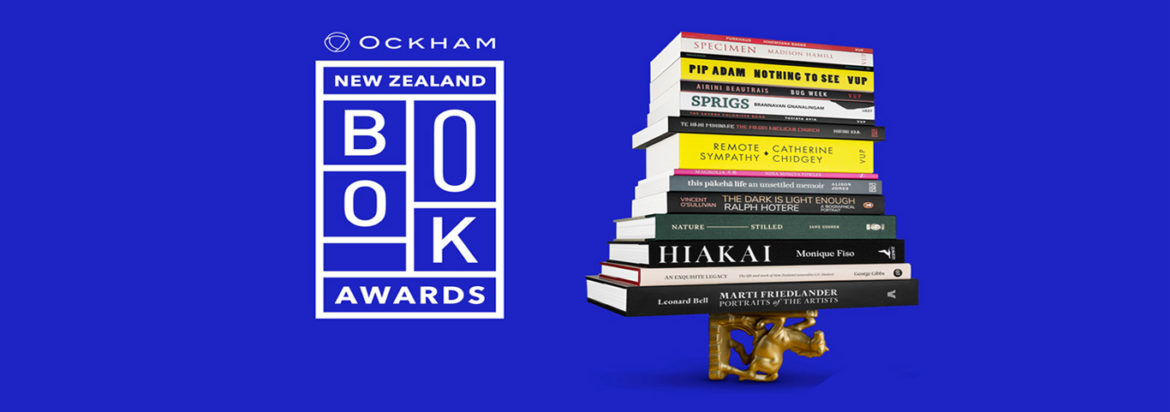
This year’s finalists for the Ockham New Zealand Book Awards are sixteen books that offer rich reading experiences, attitude, experience and ambition across four categories: Poetry, Fiction, Illustrated Non-Fiction and General Non-Fiction.

Together with the NZ Book Awards Trust, the Academy of NZ Literature has created e-samplers for each category, with extracts from each shortlisted book. You can find read only versions here and also below on this page for you to both read and download. Each extract is prefaced with the judges’ comments about that particular book.

The Ockhams ‘recognise excellence in New Zealand books for adult readers written in English or te Reo Māori’. Some iteration of a book awards has run since 1968, taking in mergers, inter-sponsor blips and different approaches to categories and finalists. For example, Alan Duff’s first novel, Once Were Warriors, was eligible in two different contests: the 1991 Goodman Fielder Wattie Book Awards and its rival New Zealand Book Awards. In the Wattie, only three books were recognised each year, and Once Were Warriors won second prize, although it was the only fiction title on the podium. At that year’s NZ Book Awards, the winning fiction title, with its own specific award (the other awards were for Poetry, Non-Fiction and Book Production), was Maurice Gee’s The Burning Boy. By 1997, when Duff’s second novel, What Becomes of the Broken Hearted?, was in contention, the two awards had merged into the Montana NZ Book Awards, with eight different prizes offered in addition to three best-first-book awards. That year Duff won the big Fiction prize.

The Ockhams era began in 2016, when Ockham ResidentialAuckland-based housing developers and ‘urban regenerators’stepped into the sponsorship void. (Click here for a brief history of book awards’ sponsors.) In the recent past, the awards were an industry event, a ritzy dinner for booksellers and publishers. Now they’re a public event held every May, part of the mammoth Auckland Writers’ Festival, in the Aotea Centre’s Kiri Te Kanawa Theatre. This year’s date is Wednesday 12 May.

Compared with the Montana years, where more than a dozen different prizes, as well as the three best-first-book awards, were awarded on the night, the Ockhams era feels more streamlined. No more People’s Choice or Readers’ Choice or Booksellers’ Choice; no more runners-up or third places; no more overall medal rewarding a book that has already won a prize in the awards. From a book buyer’s point of viewor even that of a booksellerthe distillation may be welcome. There are still forty longlisted titles each year, twenty of which are General or Illustrated Nonfiction.

However, Nonfiction is no longer subdivided into six different categories, often to the chagrin of publishers of nonfiction, and sometimes to writers who feel that someone else’s memoir has squeezed out their work of history, or that someone else’s major work of reference has squeezed out their collection of essays. The historians may have more excuse for teeth-gnashing. In the five years of the Ockhams to date, the General Nonfiction category has been won by memoirs or personal essays four times: Witi Ihimaera’s Māori Boy (2016); Ashleigh Young’s Can You Tolerate This? (2017); Diana Wichtel’s Driving to Treblinka: A Long Search for a Lost Father (2018); and Shayne Carter’s Dead People I Have Known (2020).

Judging this year’s General Non-Fiction Award are editor Sarah Shieff, associate professor of English at the University of Waikato (convenor); filmmaker and lecturer in Māori history at Victoria University Wellington Arini Loader (Ngāti Raukawa, Te Whānau-a-Apanui, Ngāti Whakaue); and Dunedin bookseller Michael Yeomans.

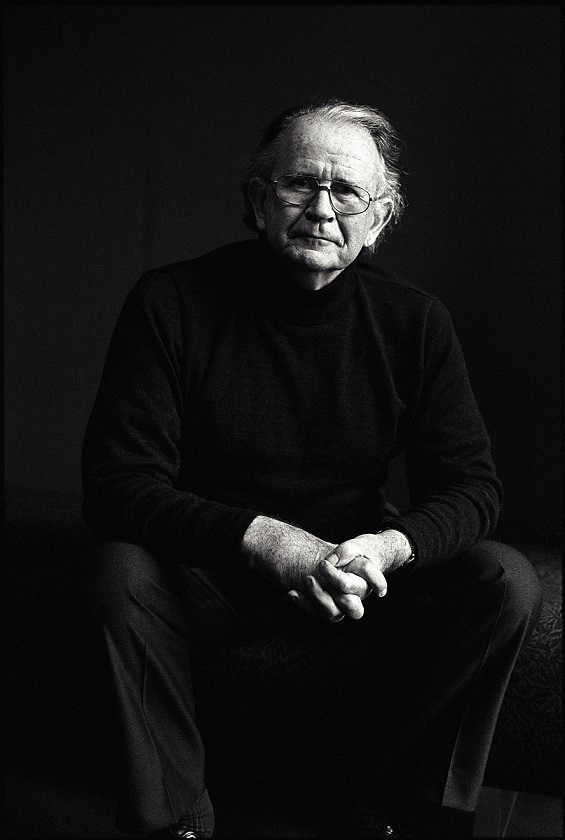
The four finalists are Specimen: Personal Essays, a debut collection by Madison Hamill; another debut, Te Hāhi Mihinare |The Māori Anglican Church by Hirini Kaa; The Dark is Light Enough: Ralph Hotere A Biographical Portrait by Vincent O’Sullivan; and This Pākehā Life: An Unsettled Memoir by Alison Jones.

The judging panel describes the finalists’ books as alive with the flows of history and power that shape all of our lives. ‘These four books, each in its own way an extraordinary achievement in the category’s defining parameters of story-telling, research and memory work, will enrich the conversations we have about ourselves and this place for years to come.’

The judges for the Booksellers Aotearoa New Zealand Award for Illustrated Non-Fiction are Dale Cousens (Ngāruahine) of the National Library of New Zealand (convenor); bookseller and former publisher Brian Phillips; and writer, graphic designer and magazine art director Jenny Nicholls.

The shortlisted titles are An Exquisite Legacy: The Life and Work of New Zealand Naturalist G.V. Hudson by George Gibbs; Hiakai: Modern Māori Cuisine by Monique Fiso; Marti Friedlander: Portraits of the Artists by Leonard Bell; and Nature — Stilled by Jane Ussher.

The judging panel says, ‘The four finalists are standout examples of a dazzlingly broad range of passions, from the arts and sciences to food, adventure and the outdoors, distilled into beautiful and engaging works.’

The Mary and Peter Biggs Award for Poetry is arguably this year’s most ground-breaking shortlist. Finalists are: The Savage Coloniser Book by Tusiata Avia; Funkhaus by Hinemoana Baker; National Anthem by Mohamed Hassan; and Magnolia 木蘭 by Nina Mingya Powles.

This year’s judges are convenor Briar Wood (Te Hikutu ki Hokianga, Ngāpuhi Nui), 2018 Ockham New Zealand Book Awards finalist; award-winning poet and novelist Anne Kennedy; and professor of English at the University of Otago Jacob Edmond. ‘It’s an exciting situation for New Zealand poetry,’ they write. ‘The four shortlisted collections are striking, all exhibiting an acute global consciousness in difficult times.’

The Jann Medlicott Acorn Prize for Fiction is judged by reviewer and writer Kiran Dass (convenor); books editor and feature writer Paul Little; and writer Claire Finlayson, former programme director of the Dunedin Writers & Readers Festival. They are joined in deciding the ultimate winner from their shortlist of four by award-winning American writer Tommy Orange.

The finalists are the collection Bug Week & Other Stories by Airini Beautrais; and three novels: Nothing to See by Pip Adam; Remote Sympathy by Catherine Chidgey; and Sprigs by Brannavan Gnanalingam

This year’s fiction judging panel says the three novels and one short story collection on the 2021 shortlist all pack an immense literary punch. ‘Craft, nuance, urgent storytelling, rage against injustice, and new perspectives are at the forefront of these four impressive books.’


The 2021 Ockhams Samplers

The new series of digital samplers feature extracts from all 2021 finalist books for your reading enjoyment, and hopefully to entice you to go out and buy the books, or loan them from your local library. You can view read-only versions here, or click on the covers below to download samplers.


Jann Medlicott Prize for Fiction…………Booksellers Aotearoa New Zealand …………………………………………………………Award for Illustrated Non-Fiction


Mary and Peter Biggs…………………….General Non-Fiction Award
…..Award for Poetry          


.


Paula Morris is a fiction writer and essayist, and has served on the NZ Book Awards Trust for the past five years. Her novel Rangatira won the Fiction prize at the 2012 NZ Post Book Awards.

'I felt energised by the freedom of 'making things up’' - Maxine Alterio

Read more

The room where it happened

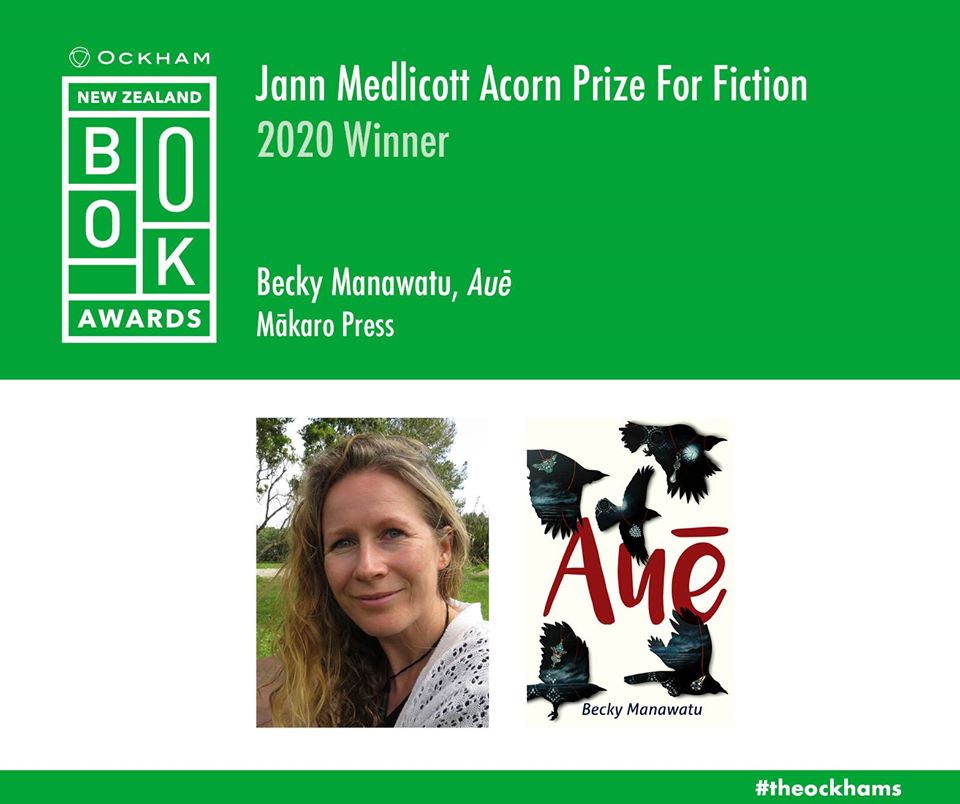
Everyone now knows that the best New Zealand novel of the year is the fine and electric Auē by Becky Manawatu, and all that remains is to clear up the small matter of how the judges – I was one of three for the fiction category – came to that apparently surprising decision.

Literary awards are famed for their surprises. Just before being asked to judge, I’d coincidentally read Edward St Aubyn’s Lost for Words, an arch satire about the ‘Elysian Prize’. This is a world-respected award for Commonwealth books funded by an agricultural company that specialises in ‘radical herbicides and pesticides’ and GM crops that splice the genes of wheat with arctic cod and lemons with bullet ants. London’s salon-society machinations, by the author of the Patrick Melrose series, would bear little comparison to what we were to experience, but there was to be some truth to the claim, as a lover of one of the Elysian judges says, that literary prizes are ‘comparison, competition, envy and anxiety’. Real life agrees. Boyd Tonkin, a UK literary editor who judged the rather similar Man Booker Prize in the early noughties, noted, ‘The birth-pangs of the Booker endure five or six months and unfold in a glare of media gossip, innuendo, spite, envy, and authentic or concocted quarrels.’

But before any of this comes the reading. We – two writer/editors and surely one of the best-read booksellers in the country – had to assess the 46 fiction titles submitted this year. This was fascinating, enlightening, hard mahi. But it was genuinely, for the largest part, a joy and a privilege to read the best books in a year, something you’d normally not have the time, or possibly the inclination, to do.

As we said publicly when the shortlist was announced, it turned out to be a terrific year for fiction in New Zealand. The longlist was the best I could recall.

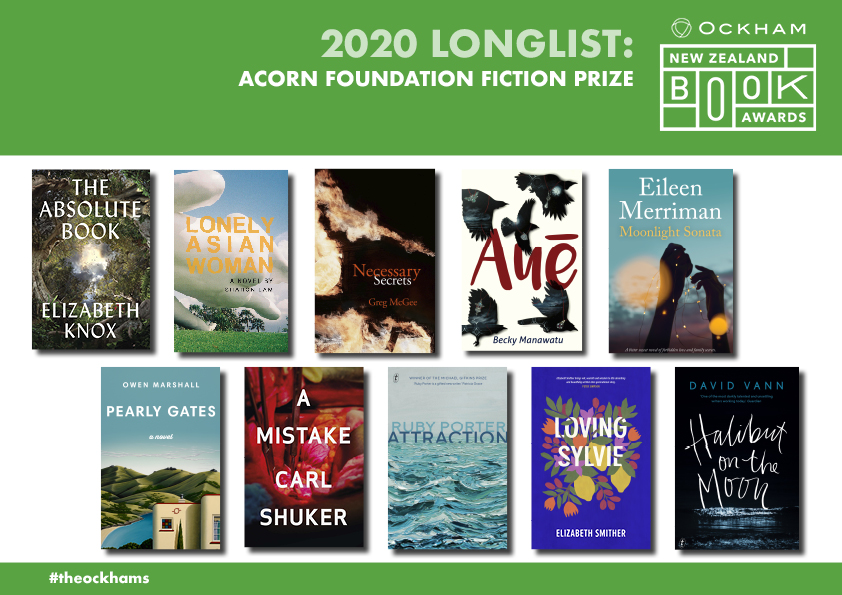
Less heartening was the criticism. Not just the predictable 280-character gripes online. As Stephen Stratford put it: ‘I have been a judge five times, three times chair of judges, of our national book awards – Wattie, Goodman Fielder Wattie, Montana, Montana NZ, NZ Post – but back then we never had the benefit of Twitter telling us how we had got it so wrong.’ It also arrived by way of stories in the mainstream media over one novel which didn’t make the fiction shortlist – it would be peculiar not to name it as Elizabeth Knox’s The Absolute Book.


To be fair, there were also complaints about the non-fiction and poetry shortlists – particularly the exit from contention of books of personal essays and a research-heavy history tome – but they were more grumbles than shrieks. Radio NZ, The Listener (RIP), The Spinoff and even The Guardian (snappy headline: ‘Ockham’s erase her’) weighed in, the nation’s public broadcaster reporting that the author would rather not comment, but her publisher – who is also her husband – said the judges had got it wrong and it was a disappointing result. Did the other five longlist authors or their publishers feel similarly aggrieved at missing out on making it to the final four? We don’t know. They and their publishers weren’t asked.

A couple of years ago, not one but two of the judges of the fiction award took to print to defend their decision, some reviews of the winning book having been puzzled by it or even unfriendly. So let me explain the inexplicable, why to our minds there really were no surprises.

One January morning, before Covid-19 infected all our lives, we three sat in a room at the University of Auckland to find our longlist. We had already had a couple of phone conversations while working our way through the two boxes of books, novels and story collections, so had a pretty good idea of what each other thought. On the day, a few very good novels hovered around the outside of that impressive pile of ten, a few in it came under discussion for possible defenestration. We settled on our longlist. Over the next hour, we swapped books in and out, arguing their merits, whittling down our top four. Then we went to lunch.

The honest truth is, there was very little disagreement, no Rug Doctor needed for blood spilt.

We were very close to being of one mind, which surprised me at least. I expected some horse-trading. There was none. Some books in the longlist were never going to make the shortlist. To be a finalist a book needed to have the whole enchilada: storytelling and characters that fascinated us, insight and judgment and wit that startled us and made us envious, but most of all the writing – it had to sweep us along.

When the shortlist was finally revealed, some thought that not only should the aforementioned book have been on it, it should have been a shoo-in for the win. Several former judges, who know well the tricky task that’s required of them, thought its omission an obvious travesty, despite one or two having not actually read it.

It was impossible to avoid the conspiracy theories. New Zealand judges don’t like speculative fiction. They prefer literary fiction over other genres – a theory perhaps fuelled by a few well-selling novels not actually being submitted. One book on the shortlist, Halibut on the Moon by the American-born David Vann – of course we checked his eligibility – had pushed it out to sit alongside the other shortlisters, Carl Shuker’s A Mistake and Owen Marshall’s Pearly Gates. The Miles Franklin Award is given to ‘a novel which is of the highest literary merit and presents Australian life in any of its phases’. Perhaps because we are a slightly younger, less parochial country, there is nothing in the Ockham rules that says a winning book must be about the people or country of the award. Nobody mentioned the absent book’s 650 pages. UK critic and broadcaster Mark Lawson, a Booker judge in 1992, recently mused about whether Hilary Mantel’s third Booker might be denied due to judges’ resentment – he might have been projecting – about having to read longer books: The Mirror and the Light tops 750 pages. It wasn’t a factor. I mean, hello, The Luminaries.

The writer Rick Gekoski said when he was approached to be a Booker judge in 2005 he asked about the rules. The prize’s chief chortled. ‘There aren’t any. Choose the best book.’

What are the Ockhams’ judging criteria? ‘Impact of the book on the community, taking account of factors such as topicality, public interest, commercial viability, entertainment, cultural and educational values … the degree to which the book engages and nourishes the reader’s intellect and imagination.’ In other words, choose the best book.

But how do you choose? In the early stages, you ‘sort the sheep from the goats’, as author Val McDermid has said. Taste is, of course, subjective; but it’s also, hopefully, the accumulation of knowledge and discrimination, what TS Eliot called ‘the common pursuit of true judgment’. It’s not without flaws or biases; nothing is. I’ve been a judge a few times now, four times a peer-assessor for Creative NZ, a judge in all but name, and an arts editor, which as anyone who’s done it knows is like a constant beauty contest for books. Regardless of personal predilections, judging is usually a joint activity. Judges have to agree. The Booker regularly gets knickers twisted, not least the most recent one, the judges breaking explicit rules and awarded it jointly, to Margaret Atwood’s The Testaments and Bernadine Evaristo’s Girl, Woman, Other. As Spectator literary editor Sam Leith, who was a judge in 2015, wrote, ‘BOOKER JUDGES, YOU HAD ONE JOB. Pick a sodding winner … That’s what you’re formally empanelled to do, and paid to do, and trusted to do. That’s what the public are expecting you to do. That is the whole point of the prize.’


For us it wasn’t a problem: the final vote for Auē was unanimous. Although it wasn’t for us like one of the judges of that earlier winner who said: ‘If pressed, we probably could have picked a winner in the first minutes of our initial meeting.’ The other judge for that year noted correspondence from author Philip Temple: ‘I concur with the widespread feeling that it has been a complete disgrace that Fiona Farrell’s novel Decline and Fall on Savage Street was not even included on the Ockham longlist. This may well go down as the worst omission in local book awards history.’ Temple clearly had no crystal ball to this year.

Judges get it wrong. It’s true, they do. We’ve all read prize-winning books that we’ve wanted to throw off a high bridge. And publishers get it wrong, bringing attention to one author over another, pinning their hopes on lesser works in a thin year, turning down promising manuscripts.

Surprise is always good. Debate is always good. One literary insider privately used the term ‘healthy flak’ and that’s right: we’re talking about books, a bit grumbly and a bit wrongheaded sometimes, but we’re talking about books. The arts get precious little attention as it is.

I do hope people read the shortlist, let alone the longlist, and decide for themselves. In Lost for Words one contender is an ‘ambitious and original’ novel written by a young New Zealander from the point of view of William Shakespeare. Needless to say, it doesn’t win.


Mark Broatch is a writer, critic and the author of four books. He is a former books and arts editor at the NZ Listener and Sunday. His fellow fiction judges at the Ockhams were Chris Baskett and Nic Low, joined for the final round by international judge Tara June Winch.

'There’s a kind of heaven that comes from hearing another writer interpret the mysteries of process' - Tracey Slaughter

Read more

Ockham NZ Book Awards: Shocks and Stats

The 2020 Ockham New Zealand Book Awards took place in the waning hours of Level 3 COVID-19 lockdown, which meant no Auckland Writers Festival crowds, no disco ball, no live drummers, no wardrobe malfunctions, no awkward smile-with-sponsor photo ops, and no students crashing the post-event drinks in the Spiegeltent. Instead we had the ever-beaming Stacey Morrison in a studio in front of a harakeke flower display, two ‘ceremonies’ live-streaming on YouTube and stop-start winners’ speeches via Zoom.

We also had a somewhat unexpected parade of winners, and some interesting stats. The Best First Books winners — sponsored by cellular-science company MitoQ — were announced via a discrete programme live-streamed at six p.m. on Tuesday night. (One highlight: bright illustrations by Sarah Laing of the writers for whom each of the first-book awards are named.)


This year a number of first-time writers featured in all four main-category longlists, and debut books made it through to three of the shortlists. That meant three of the ‘Best First Book’ winners were no surprise at all: Shayne Carter for his memoir Dead People I Have Known (the only debut on the General Nonfiction shortlist); Chris McDowall and Tim Denee for the graphic marvel that is We Are Here: an Atlas of Aotearoa (the only debut on the Illustrated Nonfiction shortlist); and Becky Manawatu for her novel Auē (the only shortlisted Fiction debut).

Poetry was the category that offered no clues: three debut collections appeared on that longlist, and none on the shortlist. The choices were Jane Arthur’s Craven (VUP), Ransack by essa may ranapiri (VUP), and Because a Woman’s Heart is Like a Needle at the Bottom of the Ocean by Sugar Magnolia Wilson (AUP).

The winner for best first book of poetry was Jane Arthur, who gave a short, elegant speech, thanking Paula Green, ‘the pilot light of New Zealand poetry’. (Green was a finalist in this year’s General Nonfiction category for Wild Honey: Reading New Zealand Women’s Poetry.) In 2018, Arthur won the Sarah Broom Poetry Prize, judged by iconic US writer Eileen Myles: Myles called her ‘a poet of scale and embodiment’. The Ockhams poetry judges said of the poems in Craven: ‘They did that thing that the best lyric poetry does: they showed us an emotional interior’.


The three debut poets on the Poetry longlist were all published by Auckland University Press and Victoria University Press, along with another longlisted book, Under Glass (AUP), Gregory Kan’s second collection. All four finalists for the Mary and Peter Biggs Award for Poetry were also published by those same two university presses. The other two longlisted books were from Otago University Press — Lynley Edmeade’s second collection Listening In, and Back Before You Know by Murray Edmond, who published his first collection in 1973, before most of the other poets on the list were born. His publisher, artsy indie Compound, is the only non-University press here — surprising, perhaps, when the local poetry scene is so fertile, and 35 books were entered in this category.

This year’s longlist featured no Pasifika poets, only one Māori poet (ranapiri), and one Asian poet (Kan). Convenor of the Poetry judges, Kiri Piahana-Wong, noted the ‘dismaying’ statistic that under ten per cent of entered books were by ‘writers of colour’. (New collections are due in 2020 from Hinemoana Baker, Daren Kamali and Karlo Mila: maybe they’ll feature on next year’s longlist.)

The main awards were live-streamed at seven p.m., and launched with a video message from is-she-everywhere Prime Minister Jacinda Ardern. The virtual ceremony was pacy, if not the rapid-fire of the Best First Books announcements. It was only slowed in its tracks a little by sponsor interludes — Mark Todd of Ockham Residential in a video, other sponsors via screen messages — and was nothing like the grim march of other recent online book awards (most infamously the Australian Stella Awards, which dragged on for an hour and handed out one prize). At the end, the technical chaos of the live winners’ speeches was a reminder of the perils of lockdown live-streaming.

One of the (more welcome) surprises of the night: the winners of the four categories each had different publishers: Auckland University Press for Poetry, Victoria University Press for General Nonfiction, Te Papa Press for Illustrated Nonfiction, and feisty indie Mākaro Press for Fiction. AUP or VUP were the only publishers in contention for the Mary and Peter Biggs Award for Poetry, with four excellent finalists, including Anne Kennedy’s Moth Hour, Steven Toussaint’s Lay Studies and How I Get Ready by Ashleigh Young.


The winner was Helen Rickerby for How to Live (AUP).  How to Live is her fourth collection, a series of lists and playful digressions, essay-like discussions, investigations and ‘conversations’ with some of history’s ‘unsilent women’ — Hipparchia, George Eliot, Ban Zhao, Mary Shelley. Rickerby ‘brings her title question to the lives of women,’ wrote Paula Green on NZ Poetry Shelf, ‘in shifting forms and across diverse lengths, with both wit and acumen’. ‘How to Live is a great collection,’ declared Marcus Hobson. ‘It bills itself as poetry, but to me it feels like a book of poetry that has no poems. Instead we are constantly pushing the boundary as to what is a poem, what is prose and what is an essay’.

Testimony to our proactive and resourceful local lit scene: Rickerby herself is managing editor at the boutique Seraph Press, publisher of Nina Mingya Powles’ 2017 debut Luminescent.) First book winner Jane Arthur is one of the founders of NZ children’s literature website The Sapling.

Competition was similarly tight in the Illustrated Nonfiction category. ‘Our shortlist,’ wrote judging convenor Odessa Owens, ‘showcases just how good illustrated non-fiction can be when the literature, design and production are all of the highest quality’. Best First Book winner We Are Here (Massey UP) didn’t take the main prize, though might have won a popular vote: it’s already been reprinted twice. Justin Paton’s McCahon Country (Penguin Random House / Auckland Art Gallery Toi o Tāmaki) edged Peter Simpson’s Colin McCahon: There is Only One Direction, also on the longlist, and was picked by many to win the main prize.


Te Papa Press had two books on this list: one was Crafting Aotearoa, edited by Karl Chitham, Kolokesa U Māhina-Tuai and Damian Skinner. The other book took the $10,000 category award – Protest Tautohetohe: Objects of Resistance, Persistence and Defiance, edited by Stephanie Gibson, Matariki Williams and Puawai Cairns. ‘Readers are drawn into Aotearoa’s rich and raw stories from contact to now,’ said the judges. A ‘tactile, hand-hewn approach to design complements the huge variety of assiduously collected objects’.


The lack of review outlets in New Zealand – made even worse since the abrupt closure of Bauer media – means a stunning book like Protest Tautohetohe isn’t as well-known as it should be beyond the Te Papa book shop. Extracts, including images, have appeared on the Pantograph Punch and The Spinoff, but the book’s major review to date, by Simon Wilson in the NZ Herald, only peers out occasionally from behind the paywall. Wilson described Protest Tautohetohe as a collection of everything from the ephemeral to the political, ‘not a straight history, but a record of movements and events told through the presentation of objects … that somehow ended up in the collections of museums’.

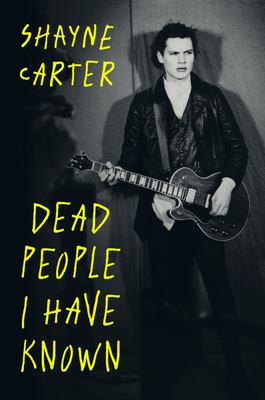
The big story of the night: two of the Best First Book winners took away the main-category prizes as well. In General Non-Fiction, a category that is always keenly contested, Shayne Carter won for Dead People I Have Known. ‘Rock star writing,’ said the judges. Carter’s memoir had ridden a steady wave of positive reviews upon its release; fellow ‘80s rocker/writer (also lit festival impresario) Rachael King, writing in The Spinoff, praised ‘Shayne’s ability to fully recreate a scene as if he is standing right there experiencing it, and we are standing there with him’. Steve Braunias on Newsroom said the opening pages ‘stack up with the best writing of New Zealand childhood ever written’. In the Landfall Review Mark Broatch described the book as ‘a Venn diagram of insightful and often humorous personal revelation, an insider’s view of the Dunedin rock scene as the fast-beating young heart of New Zealand music, and of an upbringing in a household reeking with booze, domestic violence, psychiatric dismay – and love’.


When the Ockham longlist was announced back in January, there was a small flurry of complaints about the exclusion of creative nonfiction in favour of weightier works of scholarship like Vincent O’Malley’s The New Zealand Wars (BWB), Catherine Bishop’s colonial history Women Mean Business (Otago UP or Jared Davidson’s examination of censorship and subversion after World War I, Dead Letters (also OUP).

Memoir readers need not have worried. Since our national awards were re-invented under the Ockham banner in 2016, four of the five winners in the General Nonfiction category have been creative nonfiction writers rather than historians: Witi Ihimaera for his memoir Māori Boy (2016); Ashleigh Young’s essay collection Can You Tolerate This (2017); and Diana Wichtel’s memoir Driving to Treblinka (2018), also her first book. The only exception to date is 2019 winner Joanne Drayton for her biography Hudson and Halls: The Food of Love. Historians like O’Malley – who has published two major works of New Zealand history since 2016, and missed out on shortlistings both times – may be feeling each panel of judges leans towards memoir.

The winner of the $55,000 Jann Medlicott Acorn Prize for Fiction – a mouthful, but worth it for that much money – was debut novelist Becky Manawatu. The judges liked its its uniquely New Zealand voice, its sparing and often beautiful language’; international judge, Australian novelist Tara June Winch, said ‘there is something so assured and flawless in the delivery of the writing voice that is almost like acid on the skin’.


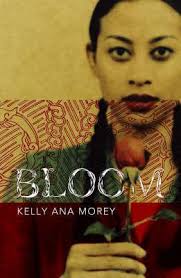
Becky Manawatu is first Māori writer to win the main fiction prize at our national book awards since 2012, when Paula Morris won for her novel Rangatira, and the first Māori writer to win best first book in fiction since Kelly Ana Morey with her novel Bloom in 2004. Manawatu is the first writer to win the main fiction prize with a debut novel since Stonedogs by Craig Marriner in 2002.

Arihia Latham in the Landfall Review said: ‘Manawatu has an ability to write grisly, horrifying details yet also keep one eye on our hearts. She builds tangible characters that have beauty and wonder, bright dreams and enduring strength.’ Last October Catherine Woulfe in The Spinoff wrote that Auē ‘hasn’t had a lot of attention yet, certainly no prizes, but holy shit, it should … It reminds me of The Bone People and of Once Were Warriors. The writing has a wild, intuitive sort of magic’. Steve Braunias called it the ‘best book of 2019 — and it really is immense, a deep and powerful work, maybe even the most successfully achieved portrayal of underclass New Zealand life since Once Were Warriors’. (That comparison again.)

Like Auē, Once Were Warriors won best first work of fiction (back in 1991), but placed second overall in the Goodman Fielder Wattie Book Awards that year. Alan Duff didn’t win the main fiction prize until 1997, for What Becomes of the Broken Hearted?. Keri Hulme’s The Bone People won the main fiction category at the New Zealand Book Awards in 1984.

In the recent (endless) Stella Prize ceremony, we heard numerous times that in Australia women writers are less likely to win big prizes. This doesn’t seem so much of an issue in New Zealand. Since 2016, when Ockham Residential started sponsoring the awards, only one man has won the big fiction prize: Stephen Daisley for Coming Rain in 2016. Subsequent winners were Catherine Chidgey (2017), Pip Adam (2018), Fiona Kidman (2019) and, this year, the only woman in the category, Becky Manawatu.

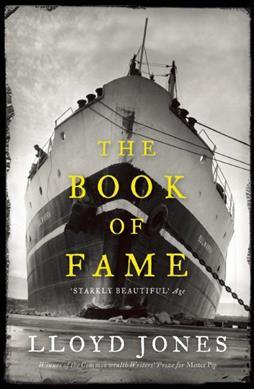
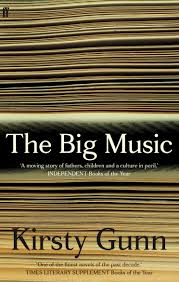
In fact, aside from Daisley in 2016, you have to go back to 2007 and Mister Pip by Lloyd Jones to find another male winner in the fiction category. All the other winners during the final years of the Montana era and the entire New Zealand Post era of the awards were women: Charlotte Grimshaw, Emily Perkins, Alison Wong, Laurence Fearnley, Paula Morris, Kirsty Gunn and Eleanor Catton.

Poetry also skews a little to women writers: Helen Rickerby this year, Helen Heath (2019), Elizabeth Smither (2018), Andrew Johnson (2017), David Eggleton (2016), Vincent O’Sullivan (2014), Anne Kennedy (2013), Rhian Gallagher (2012), Kate Camp (2011), Brian Turner (2010), Jenny Bornholdt (2009), and so on into the mists of time.

The nonfiction categories are harder to assess, as pre the Ockhams era there were a phenomenal six categories (versus the current two): History, Biography, Environment, Lifestyle and Contemporary Culture, Illustrative, and Reference and Anthology. So many categories, not enough time. (Even the Pulitzer Prize only has three – History, Biography and General Nonfiction.)

‘A great book,’ said William Styron, ‘should leave you with many experiences, and slightly exhausted at the end’. As should a national book awards. Congratulations to all the longlisted writers, the shortlisted writers, and their publishers. Thanks to the sponsors and supporters who make the Ockham New Zealand Book Awards possible each year. With lockdown easing to Level 2, the rest of us have no excuse: we should buy the books.


Tom Moody is an American writer and editor living in Auckland.

'There’s a kind of heaven that comes from hearing another writer interpret the mysteries of process' - Tracey Slaughter

Read more

Writers’ Round Table | 2020

This year’s finalists for the Jann Medlicott Acorn Prize for Fiction are four novelists: Becky Manawatu (Auē), Owen Marshall (Pearly Gates), Carl Shuker (A Mistake) and David Vann (Halibut on the Moon). The writers talked via Google doc – from locations in Wellington, Otago, the west coast of the South Island and the west coast of the US – between 15 April and 3 May. With occasional questions from Paula Morris.


Paula: This year’s Ockham NZ Book Awards will be a virtual ceremony, broadcast via YouTube at 7 PM (New Zealand time) on 12 May. Not the same as an in-person celebration, but a necessary measure in these strange times. How have you all been spending and dealing with the COVID19 lockdown?

David: I’ve been building my aluminium sailing trimaran in Napa California (wine country) ten or twelve hours per day, so it’s actually been a good way to get through the virus, no time to think about it.

Owen: Lockdown should be no problem for writers — right? Lots of time to write and no interruptions? In fact, I’ve found it very unsettling for a raft of reasons. One is that we shifted house the day before lockdown and now find ourselves in a smaller place with the accumulated possessions of 34 years in the previous house, and no means of selling, donating or dumping any of it. And no technicians available to set up various connections. However, I do have email, and realise my inconveniences are trivial in relation to the difficulties faced by many. I hope you are all coping well.

Becky: Going into lockdown felt very surreal. So much unknown. We have two children and one is a teenager. He’s not over the moon, but our youngest is really relaxed and enjoying all the whanau time. Me and the teen have a deal though; we have to stick with doing this hour-and-a-half loop mountain walk together three times per week. (It’s walking distance from our house, no driving.)

That’s been cool. We chat heaps. We got into a yarn about books the other day, because it concerns me that he doesn’t love, love, love reading, lol, and he started going on and on about how the best books have animals in them. And if they have an animal on the cover, it’s a winner, and by the way he once read a book which had a moose, wolf, bear, I think a mountain lion and a badger. Best book ever, he said. People are so boring, he said. I was in hysterics. Guess you had to be there, but it was funny. It was like a weird motivational TedTalk.

Does the extra time mean you are writing then, Owen? I suppose you don’t really have time if you’ve moved so recently — with all the unpacking.

Owen: I like animals in books too. When rather younger than Becky’s son I loved The Wind In the Willows, partly perhaps because of my father’s enthusiasm for it. Oddly, neither of our daughters, although avid readers, took to it. Fashions and tastes do change, and English whimsy is perhaps too tame for a modern generation. As to my own writing at present — although finding concentration difficult as I mentioned — I have returned to short fiction after several novels. I was fortunate enough to receive a grant from Creative New Zealand, which enabled me to make that decision. I find it invigorating to move from one genre to another and look forward to the challenges of the short story after time with longer forms of fiction, and poetry. I envy Becky her mountain walk!

Carl: Lockdown for me is with a two year old and an eight year old, and a nearly fulltime job. The usual parental whingeing I know, but it is REAL. When I’m not with kids or working, I am finding immense satisfaction and peace — as I do with writing — in banging nails into stuff. But, under lockdown rules, I’m fast running out of nails.


Paula: May I pick up on something Owen has said, about changing fashions and tastes re children’s lit? Do you think the same is true for adult lit? Is there a novel you’ve read and loved that you don’t think stands the test of time — or you still love, but is a hard sell to others? I persuaded some of my students in Scotland to read Lucky Jim by Kingsley Amis, and none of them found it funny at all.

Becky: I think for me that’s easily related to film (for me because my kids simply won’t read anything I request them to read), eh. Often, I’ll show my kids a film like The Wizard of Oz expecting them to love it, and they don’t as much as you want them to. I feel like fiction is far more robust, in that sense. It ages better.

Thanks Owen, I admit we are very lucky to be able to walk to either the beach or mountain. Missing friends and family a lot, though.

David: I like hearing about the walks and family time and writing time. I find I’m really missing my house in NZ now and regretting selling, because it would have been perfect for this time, sitting in the spa pool to watch the sunset in one direction over the hills and seeing ocean and islands the other direction, going for a run before that on the beach each evening, often going out sailing or hiking or mountain biking in the hills. But I was no longer married and was alone there, so that would have made this time hard, not as free to go see friends. I don’t have kids, so I’m not experiencing the family time boost, but it sounds potentially great, and I wonder if it will be enduring and an unexpected positive effect of the virus.

In California, it’s a shelter in place but not enforced. It’s still possible to drive anywhere and see anyone, but restaurants are takeaway only. Today I noticed a big change here in the boatyard. Several groups of people had parties on their boats, just hanging out together and fixing food together, not social distancing, and one of them said the virus was over. But, of course, the virus is not over. They just want it to be over. I wonder if that mindset is going to be widespread and cause more spreading in the coming month.

Carl: It’s fascinating hearing US details. It’s like the virus targets everything that makes the contemporary US tick. In suburban capital-city New Zealand the birds are back, even deafening. I think about wasps, I think about concrete. I have friends and colleagues who have spent weeks prepping, extending the ICUs, building airlocks. But it’s all eerily quiet.

I so love Lucky Jim and smile right now at the thought of picking it up again, but I get how contemporary audiences might not get it at all. I quote Kingsley to my eight-year-old sometimes, as an example of childish adults and childishness generally: ‘I want more than my share and I want it before anybody else’ for example. Ha ha, don’t be like that naughty man, etc. Still funny, but some of that situational stuff about class and sex just won’t fly anymore. Just zero wings for charming man-children.

And that applies even more so to his later stuff and a LOT of his son’s output. There’s something in the accomplishment (because we shouldn’t doubt that accomplishment in a lot of cases) but coupled with a sense of Look At Me, Being Accomplished, And I Have A Right To You Looking At Me, Because I Am So Accomplished — something grating to younger eyes, I think. There’s something in the tone that doesn’t work anymore, despite the line-by-line brilliance.

I’m thinking particularly of that Amis Senior transcription of a drunken sentence Amis Junior so liked: ‘June I haggle unction.’ Meaning, likely, ‘Julian and I had a luncheon.’ So, yes, that’s brilliant. That’s true slurring. That’s actually perfect. But still there’s this problem of someone ‘having a luncheon’ at all, and being a drunk young man telling a young woman this. It must be hard, as a young reader/writer, to see the good and learn from it when your spine so strongly responds to tone over technique.


Paula: You’re all recording your Ockhams readings via laptops or phones at the moment, for broadcast on our YouTube channel. How does this differ from ‘live’ readings for you? Do you prefer it? Anyone thinking of starting their own podcast series?

Owen: I too loved Lucky Jim. I first read it as a seventh former and used to pull the `sex rites in ancient Egypt’ face and others, but it has dated in several ways as Carl says. It has a pervasive sort of arrogance when read now, although still clever. As to the Ockham readings — I’m clumsy with anything involving IT and much prefer traditional face-to-face communication.

David: Yes, I prefer a live audience to interact with during a reading, and in fact, I like the French model of not giving a reading at all but just having a discussion for an hour and a half. I write my books and then go to France to find out what they’re about. The booksellers there have always read all my books and thought about the connections and ask me things I’ve never been asked before. They make me see as if I’m a reader coming to them for the first time.

What makes France the best country for books by far out of the 30 I’ve visited on book tours is having these independent booksellers in every neighbourhood. Like having a Unity Books in really every part of every town. Imagine that. The US is a desert by comparison, and there’s not much in the Far North either. I struggled to find any book culture in the Far North and gave only one reading there many years ago.

I do have to say that James [from Lotech Media, who provided technical support] made the video recording really easy and pleasant, which I appreciated as a techno dimwit. I did teach courses online long ago in creative writing, and I was surprised that they were better than in-person classes because written responses were so much more thoughtful than verbal ones.

Carl: I haven’t done a lot of festival-type reading until this book, but giving a reading online is both less nervy and less rewarding — there is zero verbal or non-verbal feedback to suggest if you connected or not, if you pulled it off. It’s a mirror reading, really. Some authors are really good at it, but there’s something about the Internet going on — for the author there’s a ton of risk but no confirmation either way, and for the audience there’s a ton of power and no risk. The weight of judgment and exposure is completely skewed and different.

That being said, live readings are a new thing to me — reading has always been an engagement between me and an author in a silence, a heavily engaged and crackling peace. The public aspect of this is still new to me. Though I get the appeal (there’s nothing like hearing Antony Beevor talk in person), and I think I’m getting better at public stuff, it’s still strange.

Becky: One thing I am consistent on is behaving embarrassingly — whether I arrive at an online platform or in person — until I settle in. Read above, with my animal chat, awesome lol! I was fully being silly. I have an overwhelming sense of not belonging, something all we writers live with, don’t we? Or us humans often, eh? I’m not unique for this, I know.

When I was at the Wellington Verb and Nelson Arts festivals, I enjoyed very much hearing the other discussions; virtual doesn’t quite cut it. In Nelson I could clearly see the people in the room, and I enjoyed that, it helped me relax. In Wellington the lights were bright on the stage and so I could not see people’s faces. At first I struggled, but I could still sense the people in the room — they laughed, breathed etc, there was energy there. My first radio interview was a struggle not being able to see the person, but again, I relaxed in the end.

I enjoyed reading the extract of my book in the comfort of my home, and like David said, James did a great job, made it feel a bit fun. My family giggling at me in the background also helped. I’ll never do a podcast series; I detest the sound of my voice.


Paula: May we talk about the private element of writing — that is, writing a book itself, before anything is revealed to another reader, or published? Would you each talk a little about the seeds of the story (for your nominated novel)?

David: I wrote about the genesis of Halibut on the Moon in an author’s note:

Why write about my father again twenty years after Legend of a Suicide? I learned something new from my stepmother. The last time she saw my father, in a hotel in California, he brought his loaded .44 magnum pistol into the room in his toiletries bag. The moment she saw it, she knew it was for her.

Less than a year earlier, my stepmother had lost her parents to a murder/suicide, her father killed by her mother with a shotgun before she killed herself with a pistol. My father seemed to have a similar plan, to take someone with him.

In the end, my father killed only himself, alone in Fairbanks, Alaska, but I kept thinking of this loaded pistol in the hotel room. In the more than thirty-five years since his death, it had never occurred to me, this possibility of him killing someone else first. I wrote a nonfiction book, Last Day on Earth: A Portrait of the NIU School Shooter, about someone who killed five and wounded many others as part of his suicide, but I had never imagined my father capable of this.

And there was another disturbing thing. Everyone feels guilty after a suicide, and this is true throughout the world, as I know now from book tours and interviews in thirty countries. Whether you’re in China, Turkey, Norway, or the US, if someone close to you dies by suicide you will feel the same things everyone else does, including a very long period of guilt, surpassed in length only by your rage. The guilt will focus on what you could have done differently that might have made a difference. My father asked me to spend a year in Alaska with him and I said no, then he killed himself after. It’s an unfair guilt, because life is messy and we all could have done things differently. Survivors need to know it was not their fault; it was the suicide’s choice.

But after thirty-five years, I had a shift. I knew that he would have stayed alive longer, at least, if I had said yes to spending that year with him. It’s not my fault, but my decision had an effect. I feel most sorry for my uncle, Doug, who suffered for a long time afterward because he was supposed to accompany my father from California to Alaska and not leave him alone. My father talked him out of it at the airport, convincing Doug he was fine.

So Halibut on the Moon was born of two things: the unsettling new idea that he might have considered taking some or one of us with him, and a new desire to consider how we each failed him in the end — a final stage, I hope, of four decades of guilt.

I use some of our real names here, and the real places, but every scene is imagined, and I’ve found that I’ve lost him, finally, that the Jim here is not my father and I can no longer summon him. But this is the essence of suicide bereavement, to forever continue this conversation with no one. The novel, like his suicide, is not a choice. It is only a momentum.

Owen: Most of my work is concerned with the scrutiny and delineation of character, and Pearly Gates is no exception. People are the most important element in our lives, especially ourselves, and so it’s no surprise that readers come to books programmed to search for character: a considerable advantage for fiction writers in particular. I hope to move from stereotypes to stress the complexity of personality even in ordinary people and the moral issues faced by us all in the business of living.

Pearly is made to realise his own failings and the effects on others of his selfish decisions. His journey is a moral one and the destination ambiguous. The novel has no car chases, no unmasking of international espionage, no melodrama, just the traverse of ordinary life with its mundane surface and mysterious depth. My other main intention, I suppose, is to depict the lifestyle and setting of provincial New Zealand, particular those of the lower South Island. I wished it to be done realistically and from the inside, but also with a degree of benevolence.

Settings are important to me in my own reading, and I try to achieve authenticity in my writing: to show where my characters are as well as who they are. Landscapes and cityscapes affect the people who live there, and people in turn affect their environment, both physical and cultural. So character and setting are themes for me, but I’m aware that what readers take from the novel may be very different from my intentions. And that’s okay.

Thank you, David, for your candid and excellent comment on your own book. I was moved and impressed.

David: Thank you, Owen. I like what you say about landscapes affecting people. In all my novels I’ve really focused on describing the place as a kind of Rorschach test to reveal the inside life of the character. Your book sounds great. I’m looking forward to reading it as soon as I finish this boat. Twelve-hour days still, but done within a month, I hope.

Carl: Many people may not be aware of this, but my parents lived right beside Owen’s house in Timaru for many years. I wasn’t living at home — I was in my twenties, struggling towards some idea of becoming a writer, finishing a manuscript of a novel (The Lazy Boys) sending it out to initial interest and ultimate blanket rejection. I visited you once, Owen, do you remember? With Anna, on a holiday back from Japan. Everything you said went straight into my head without a ripple. You were interested in Japan and you spoke about keeping a writer’s journal there. I have done that at times in my life, but that advice has sown a seed of guilt and a niggling sense of my unseriousness I’ve assuaged with complaints of busyness ever since.

I used to read stories from When Gravity Snaps when I came home, knowing you were there, just twenty meters or so away. My particular favourite at the time was ‘Diseases of the Strong’ — a brilliant story of NZ masculinity where a brilliant man returns from a brilliant career overseas, crippled by depression, and he reaches out to the Nick Carraway-esque narrator for help. It was desperately moving, moving in that way when you know a place and its people, and you know how hard it is or would be for someone from that milieu to reach out in that way.

I also loved ‘A Poet’s Dream of Amazons’ — the poet of the title has a father who loves only rugby and associated NZ tropes, and the son takes great delight in knowing the details of every team in the provincial league and every score, and torturing his boorish father with the details his father knows he doesn’t care at all about. All this was so perfectly right for the Timaru, Christchurch, Oamaru of the time, where time moves more slowly and Owen’s eighties remained essentially completely germane in the 2000s.

The seeds of A Mistake were, for me, those of failure, what it feels like and what happens in the time afterward. The quiet of failure. I was — and still am — very interested in the way our health services, with their centuries-old legacies of paternalism and class, feel only a recent push or need to be transparent around how well they actually perform. I’m interested in the surrender we so willingly undergo when we confront a doctor, and the effects of that system on the mentality of (some) doctors.

All this is fairly straightforward but I got really interested in the idea when I decided my lead surgeon character would be an extremely high-performing woman in a very masculinist, macho milieu like medicine, and surgery in particular. What would happen to a woman who had submerged herself in her work, sacrificed so much to be elite, and then be told by publicly available data she was not as good as she thought she was, despite all she had done to succeed? This too was fairly straightforward conceptually, but I got I hope somewhere deeper when the titular mistake — as these things do — had more complex origins or root causes, if there are such things — than one individual’s actions.

Working this out over a really super-short frame, as compact as I could make it, and as economical as I could make it, was the good challenge. I struggled with the voice, coming off a novel set among highly literate employees of a medical journal. I hadn’t written New Zealand in a long time and when I had it had been feverish, multi-claused, big long paragraphs, set among witty, catty boys, mostly. Then I happened across a Taumarunui singer named Sarah Mary Chadwick, and her song ‘Yunno What’ on the radio. Driving. Her accent was more Bridges than Bridges, her delivery slow, almost excruciatingly awkward. The song is like seven minutes long and it builds from this stilted awkwardness into total transcendent beauty and that was when I knew what the voice was. Monosyllables in the dialogue, strip it all back.

‘Yup.’

‘Yeah.’

‘Mm.’

This was how people intimate with one another would speak. And then it all began to sing  for me.

David: Wow, such a small world! And beautiful description, Carl. I love it.

Becky: Yes, beautiful alright!

Owen: Yes, Carl, I do indeed recall that meeting. Long ago now, but through Alan and Dawn, our good neighbours for many years, we have been able to follow your successful writing career. South Canterbury is pleased to claim you! Interesting that you say failure is at the heart of your novel. Often, I find more fascination in how an individual copes with failure than with success: perhaps it’s a greater test. Failure tends to strip away pretension and falsity.

Do any others of you share an odd sense of distancing when discussing our writing in this way, when there is such upheaval in the world around us?

David: I agree that the virus has taken over all. The biggest disruption since World War II and biggest economic collapse since the Great Depression. It’s hard to get my head around it. We had to take measures to be safe, but those measures are destroying us in an historic way.

Becky: Yes, so odd, Owen. Feels like a lull, the calm, before some very challenging times ahead. (I loved reading the whakawhanaungatanga between Carl and Owen, by the way!)

David, ka aroha koe. I am sorry for you. But I am happy for you that you were able to transmute the loss . . . into something special.

Owen, I liked what you said about it being okay for the reader to take something from the book you didn’t intend to offer — have you always been okay with that? Or does that come with experience? Carl and David, too — how do you deal with this knowledge?

Honestly that’s been difficult for me. Just briefly on my own ‘seed’ — it is mostly desire. Desire to say something. Arundhati Roy sums it up, I think: ‘Fiction is my great love and my first love. The novel to me is the church for writing. It is the most beautiful, complicated, complex way of saying something.’

Like Roy, possibly like you guys too, fiction is my great love and first love. Narrative soothes me. Pieces of plot are pills. Addictive pills. Once you find one pill and you pop that, you wander about high until you need to get searching for the next and the next and the next. Maybe that’s why plot gets a bad rap sometimes, but I like it. Actually, I love it.

And then there is this mana-enhancing privilege of being able to express something. You start out with the seed of wanting to say something, and when you discover you also just might be saying something then, that’s good.

David: Becky, it’s cool to read your thoughts on plot. I never think of it or focus on it, but I like what you say here. And regarding readers, I didn’t have them for 22 years, so I still don’t really think about them. But I love meeting them at festivals and bookstore events and hearing how they’ve connected their lives in some way with one of my books. That’s often been illuminating. I found out, for instance, that suicide bereavement has the same stages and timing around the world. Whether someone is in Turkey or Norway or New Zealand, they experience similar guilt, anger, etc. We’re less different culturally than I had expected. So meeting readers provides insights and context like that.

Becky: Yeah, I don’t think of plot either, really. While writing, at least, the characters are leading the way — that’s just the label it’s given ‘outside’ the experience, I guess. But I mean when you stumble on bits of plot, it’s addictive, eh. I think that’s what I think.

Owen: What a poetic writer Roy is. A great line given from Becky about the novel as the church for writing. Character is the focus for me when writing, but I suppose from the relationships among characters a plot tends to naturally arise. I don’t write for any particular readership, but hope that what concerns and interests me at the time will have relevance for others.

Carl: I remember someone powerful telling me when I was really young that ‘plot has to be more than a series of things happening’ and that haunting me through my first novel. ‘Oh God, my plot is just a series of things happening,’ etc.

I remember dissecting a novel I loved — a brilliant if a little derivative piece of minimalist fiction that affected me deeply — ‘til I understood how it worked like it did. Even if it seemed totally static and tableauish — this happens, then this happens, and it’s all pretty meaningless in the specific details — still, it steadily led toward a place of total darkness, then rose from that (or didn’t — maybe the character carried the darkness away with it). From that I realised something about the mechanics of plot in ‘lit fic’ (if that’s what we’re doing) being based on characters’ responses and changes (or lack of them) in relation to events and choices. Not necessarily on delivering dopamine charges to readers’ brains with development. I.e., some of us at, least, are interested in the revelation and evolution of character in response to change.

In A Mistake I was definitely interested in different pacings of stressor events or powerfully agential actions and lull times afterwards, how things feel to read after major actions. I was stronger, I think, in terms of understanding a reader’s brain absorbing big change and reading on while still absorbing and considering a complex event. The process of composition is so slow that keeping track of a responsive reading brain’s reaction to a fictional event can be really distorted. I got really interested in the power of minutiae.

I got interested in — and I realised that I think a lot of us are interested in — the tiny things people do in a day not necessarily solely as some revelation of their character but as a revelation of their character in response to an event or action and a downtime for understanding and reader computation. So I try to have my cake and eat it at least in this book. Event, then a lull, leading to more or less unpredictable development. I guess this is pretty conventional but for me at least this book didn’t want to be avant-garde in any particular way, and I had no drive or desire for anything meta anymore. I guess that comes down to the contemporary moment.

At least for me, I don’t really think we need reminding we’re reading anymore.

Owen: Interesting, Carl. Yes, plot can be dismissed as merely a mechanical construction that requires less `artistic’ talent than other aspects of a work, but a convincing, authentic and uncontrived plot is a powerful vehicle for issues and character. I think plot is especially useful in the longer form of the novel to contain and give momentum to a full body of words. Some short stories are highly plotted, but because of their intent and brevity others hold attention without one and are over before the absence detracts. The Irish master William Trevor said, `Although a story need not have a plot, it must have a point.’

Carl: That’s beautifully put. ‘Over before the absence detracts.’

David: I agree about not needing meta or being reminded that we’re reading. And what I find interesting is to see that something written with no plan or outline ends up having events and lulls and such and a tremendous amount of pattern even if not understood while writing, and that all of it fits what a reader will expect and want even if the author hasn’t thought of readers at all, simply because we’re still living and writing Greek tragedy whether we like it or not, part of the tradition.

Even something which is not tragedy uses all the patterns of tragedy. Romantic comedy, for instance, is built on the time during which the lovers are separated. I think the reason writing programs in the US are so against plot and thinking of plot or talking about plot is because plot is often the attempt to consciously control a story, thinking an idea can be worthwhile, and so the story doesn’t surprise and do the things it otherwise might in order to come alive. Or, actually, maybe that’s just me and not writing programs generally. I can remember now entire courses devoted to plot in some programs, including where I teach now at U of Warwick in the UK. Some course about the seven plots of all stories etc. But at Stanford and Cornell and Florida State, the best programmes I experienced, no plot.

Carl: We’re expected to be waaaay beyond that kind of thing. But I’d suggest you get way beyond something by learning how to do something and transcending it, i.e., the hard way.

David: What do you mean, Carl? Way beyond which kind of thing? And the hard way about what? I lost the plot here, haha.

Carl: I meant that I think there is a view that literary fiction is supposed to be beyond plot, beyond plain genre, to somehow transcend it. And I think you don’t truly transcend something without being able to do it. So ‘the hard way’ is to learn those genre tricks and then upscale them, mix them up, tweak them for weird, extraordinary, additional effects.


Paula: What were you reading while you were working on your novels?

David: For Legend of a Suicide, my first book, I can say exactly what I was reading and how it influenced me writing particular stories. Marilynne Robinson’s Housekeeping and Elizabeth Bishop’s poems for ‘Ichthyology,’ more generous voices to counter the Flannery O’Connor school of meanness, haha, the idea that we see who someone is when they’re being awful. These other two offered something else. And for the next story, Carver and minimalism. Then Chaucer’s Legend of Good Women for ‘A Legend of Good Men.’ McCarthy and Faulkner for the novella, Garcia Marquez for ‘Ketchikan,’ Barthelme for ‘The Higher Blue.’ But since then my books have influences that are far less clear to me, and I read a lot of books now before they are published, for review or blurb or books of friends. And I have to read so many books, I sometimes read only the first 50 pages before having to move on. So at this point I can’t even remember what I was reading when I wrote Halibut on the Moon. I’ve written two other novels since then. It’s all more of a casserole in my head now.

Owen: When concentrating on the long slog of writing a novel my reading suffers, and like David my recollection of particulars is vague. I do try to keep up with New Zealand fiction as much as I can, and recall enjoying novels by Fiona Kidman and Vincent O’Sullivan and a variety of flash fiction on websites. I also re-read some Jane Austen and L P Hartley’s The Go-between, a favourite of mine.

I’m interested in ancient history and went again to Cicero’s letters which bring such a marvellous immediacy to a crucial time in Roman history. After this invigorating discussion with you all I will certainly seek out your work to enjoy with a greater awareness of the mind behind the words.

David: Thanks for that explanation, Carl, about what you said about plot. I think that’s really interesting. My favourite novel, Blood Meridian, is genre fiction raised to a higher level (western). Bakhtin said one of the two ways to make great art is to raise the low to a higher level (like a Campbell’s soup can on a canvas).

Becky: I would say that I read Clarissa Pinkola Estee’s Women Who Run with the Wolves, even in part, at some point while I was writing Auē. I definitely read Ann-Marie MacDonald’s The Way the Crow Flies over that time, having read her book Fall on Your Knees some years before and wanting more of her work. She is one of my favourite writers. Ann-Marie MacDonald has a very unique way of capturing children’s voices and their innocent take on the world and contrasting them against adult themes. Those themes are often disturbing, but she manages this well and is a master of characterisation.

Meanwhile, I usually read Women Who Run with the Wolves to encourage my braveness and creativity. The book reminds me that having the ability to tell a story is a beautiful thing and should be nourished as if my life depended on it.

The book’s opening lines are: ‘Wildlife and the Wild Women are both endangered species. Over time, we have seen the feminine instinctive nature looted, driven back and overbuilt. For long periods it has been mismanaged like the wildlife and the wildlands.’

The author goes on to say that spiritual lands or the feminine psyche have been plundered or burnt, dens bulldozed, and natural cycles have been forced into unnatural rhythms to please others. One of the book’s focuses is intuition, and it uses retelling of old stories to make the lessons accessible. Stories including ‘Bluebeard’, ‘Manawee’, ‘The Red Shoes’, ‘The Ugly Duckling’ and of the ‘Dirty Goddesses’ are shared or retold, and the author gives an in-depth analysis of what the stories mean at a deep level, or what they warn of.

The book says our intuitive voices are often beaten back or silenced by our distrust in them.

I have learned this distrust starts and festers in many places where we might be told our thoughts or dreams are wrong or at least not entirely right. Some of the many places doubt can get its hooks into our psyche includes schools, institutions, society, our own homes.

Colonisation has played a monstrous part in working to replace the intuition and spiritual values which thrive in indigenous communities with inferior and destructive patriarchal values.

Maya Angelou said anyone who can read should read Women Who Run with the Wolves and Maya Angelou is an actual goddess (I’m pretty sure I read at least three of Angelou’s autobiographical books including I Know Why the Caged Bird Sings, while writing Auē too) so now this book (which is probably found in the self-help section of any good bookstore) is one of my Bibles.

Carl: So brilliant and refreshing to read you, Becky. Three white guys from ca. 2.5 generations and … you. There’s this thing that happens sometimes, when you’re doing your work, when I’m doing my work at least. There’s a plan or a rough guide of where to go, what to do next day, that’s fairly hairy maybe, pretty uncertain, but the goal is there. So you turn up and you do that work. Maybe 70% of you is turned on, maybe a character says something or does something unexpected and true, and that’s really cool, great, a buzz, but basically you get the work done that day, the scenes shot, as it were. You turn up and get the thing progressing.

But then sometimes you have a little more gas in the tank, psychically or emotionally, and you say, I’m just going to say a little bit more here — and something new will offer itself up — this is for me so often the feeling people talk about of being a ‘conduit’ for something. You say something, you extend something, you follow a bit more, you go through a door, and something altogether exponential happens (if that word is not now damned through association). You become, or at least feel like, some kind of relay for a signal that pre-existed you and you get to pass on.

I’ve heard people talk about this feeling so many times. Something sings through you. Is it ‘intuition’, your ‘truest voice’? Who knows. But for me that’s always the essential work. Surfing the very crest of an unsurfable wave that came from nowhere. I always find myself laughing at it, the work then. No matter what the material; hard, dark, deeply serious stuff, it doesn’t matter. It makes me laugh because it’s the purest play and I think I’m always looking for that. Most unselfconsciously myself. To have that distrusted, mistrusted, beaten out would be the worst punishment.

Becky: That’s pretty lovely, Carl. ‘Most unselfconsciously myself.’ Love it! All anyone wants is to find their truest voice and that it be understood. What a ride when you do, eh.


A special Ockham New Zealand Book Awards YouTube channel has been set up for the 12 May announcements, which will also be shared live across social media channels and on the New Zealand Herald site. You can hear the four fiction writers – and all other finalists – reading from their work on this channel, under the banner ‘Ockhams Out Loud’.


'I started to feel very guilty, as though I’d perpetrated a crime, a rort' - Stephanie Johnson

Read more

The Interview: Vincent O’Sullivan

Majella Cullinane writes:

Vincent O’Sullivan was born in Auckland in 1937 and is considered one of New Zealand’s foremost writers. Author of several poetry collections, his collection Us Then won the 2014 New Zealand Post Book Award. He has written three novels:  Let the River Stand, which won the 1994 The Montana NZ Book Awards; Believers to the Bright Coast, which was shortlisted for the 2001 Tasmania Pacific Region Prize, and his most recent All This by Chance which was shortlisted for the 2019 Ockham New Zealand Book Award for Fiction. He has written several short story collections, and his Selected Stories: Vincent O’Sullivan was recently published November 2019. As well as writing plays and libretti, he was joint editor of the five-volume Letters of Katherine Mansfield and has edited a number of major anthologies and a biography of John Mulgan, Long Journey to the Border. In 1994 he was the Meridian Energy Katherine Mansfield Fellow in Menton, France. He was made a Distinguished Companion of the New Zealand Order of Merit in the 2000 Queens Birthday Honours and was the New Zealand poet laureate 2013–2015. He lives in Dunedin.

I first met Vincent when I moved to Dunedin to take up the Robert Burns Fellowship in 2014. In 2016, he kindly agreed to be my secondary supervisor for my doctorate in Creative Practice which I completed in 2019. Vincent discusses what shaped him as a writer, his poetry and fiction, his writerly preoccupations and what he’s working on currently.


Vincent and Philip Mann (director) during the first production of ‘Shuriken’ at Downstage, 1983. Photo credit: Robert Cross.


MC: You have said before that you prefer not to be called a poet or a fiction writer, but rather consider yourself as a ‘writer,’ was the decision not to choose one form of writing conscious or accidental? What I mean here Vincent is, do you think there’s a danger that if as ‘writers’ we write in more than one form we may possibly not reach the same degree of excellence were we to choose one form only?

VO’S: It’s not so much what you want to be called as simply what you do. You think, ‘that mightn’t be a bad idea for a story,’ or the line comes of a poem you decide to keep on with. Or you’re reviewing a book, correcting an essay. That’s ‘writing’ too. One way or another, it’s what you spend most of your time doing, as another person might make a living adding up figures or building a house. It’s what you do because you like doing it, and one hopes, it will be worth the effort. You do it to the point when in other people’s eyes it is what predominantly defines you. Which make it ‘ordinary’ in a way that matters to me. I’m sceptical about any group, whatever their work or tastes happen to be, who want others to regard them as ‘special,’ as in some way ‘the chosen.’ Just get on with your job. If it turns out to be cutting diamonds rather than picking apples, then bully for you.

I know what you mean by the dangers, as they’re sometimes called, or spreading yourself too widely. But why think if you wrote less poetry, say, you’d write better prose? You can become a bit precious if you agonise over it. Is spending a day on a story costing you a sonnet? As if it matters much to anyone else. (Remember Flaubert musing on having sex – ‘There goes another novel.’) It’s workshop stuff really, a matter of deciding where your time’s likely to be best spent. And of course, what you most have the urge to do. You have to listen to that.

MC: Do you consider yourself a disciplined writer or do you write when the spirit moves you so to speak? Do you have any specific rituals that you need to enact before getting started?

VO’S: Every writer is ‘disciplined’ while they’re writing, even if it doesn’t particularly seem so at the time. What the question usually means is do you work with a structured time table, or more haphazardly? I tend to be in the second group. Some writers I know won’t answer the telephone during writing hours. Others wouldn’t call off a day watching cricket even if it meant breaking a deadline. What it comes down to is sooner or later finding the time in a way that suits your temperament, or that fits in with other obligations. Novelists, not surprisingly, are more likely to be better organised, because the scale of what they take on makes such demands. The fact is poets don’t need to get out of bed in the same way prose writers do or spend so long at their desks.

MC:  So you don’t plan too much what you’re going to write either then I suppose?

VO’S: Not at all. I remember visiting the home of William Faulkner, my favourite modern novelist, and being struck by the way he had written the plan of A Fable around the walls of his study; what would happen on Monday, what on Tuesday, and so on, as his story followed through the events of Holy Week. (Drink, as well as fiction, partly accounted for this.) I’ve envied writers who know what’s going to happen from their first capital letter to their last full stop. For me, knowing one’s characters is the compelling drive. Once they’re in mind, something has to happen, and the story grows from our knowledge of them.


William Faulkner’s study at Rowan Oak with bed and writing for ‘A Fable’ on the wall.


MC: Irrespective of how many novels, poetry books, etc. that a writer may have written, writers often talk about frequent spells of debilitating doubt. Do you think this doubt or fear lessens as you go on, or is that niggling always there? Or perhaps some writers are immune to it?

VO’S: If you don’t have doubts about your work then you’ve lost a very useful friend leaning over your shoulder. You can’t afford to fret too much, but if misgivings aren’t there to some extent, you’re at a disadvantage. In any case, other writers and reviewers usually prevent you getting too far away from a fairly clear-eyed assessment, unless you’ve already networked a bevy of obliging train-bearers. Which is not so rare as you might think.

MC: In terms of writerly influences who would say has influenced or impressed you the most?

VO’S: I think the authors we most admire may not be the ones that most obviously influence us, because they may be the ones we take the most care not to sound like. We don’t want to sound derivative. Years ago I heard someone saying an interesting thing – the writers we may learn from the most from are good writers we read in translation. Anything we pick up or learn from them may be thematic or formal but not stylistic, in the sense it might well be with a writer in our own language.

MC: Although you were born and bred in New Zealand, your father and many of your extended family were Irish or of Irish heritage, how much, if at all, do you think this affected your writing in terms of style, interest and perspective?

VO’S: When I was in my teens I couldn’t believe, when I first read Portrait of the Artist and Stephen Hero, that Joyce knew so much about the kind of life that was so close to the Auckland world I grew up in. But for better or worse, when I began to have a shot at short stories myself, I felt it would be a mistake to write about that kind of overlap, without sinking into parody. Perhaps the biggest challenge for a young writer is not to sound like someone else. No doubt it was a matter of sheer lack of confidence as well, or to put it a little differently, a matter of accepting the discrepancy between what and where I was, and the scale of what I admired. In a vague way, I suppose, I realised it was better to try to sound like where you came from, dull as that might be in comparison, rather than where I might like to be. But I regret now of course that it was also silencing a legitimate part of oneself.

This leads on to a discussion that some New Zealander writers find uncomfortable. But what do we mean, if we want to talk about a European New Zealander’s literary whakapapa? Some I have spoken with seem to feel that from the moment their forebears arrived here from wherever, a kind of fernleaf guillotine came down, severing from what preceded us, as we moved towards becoming ‘something no one had counted on.’ You’re here now, mate, you’re not there. Of course, it’s not that easy, and in literary terms, impossible. There can be a curious sense with some that one is obliged to suppress too close an allegiance to one’s own past beyond a certain date – the very reverse of what whakapapa or its equivalent may be in any language. To some extent of course there is a sense of fabrication in what we personally make of things, but no one has the right to label it invalid. Keats is a much part of my ancestry when it comes to the language I speak and write, as if I was born in Putney. So is Swift. So is Lawrence. If we say they are. It seems curious that at a time when individualism, when personal display, at least theoretically can make peacocks of us all, there might be resentment at choosing, in Rimbaud’s phrase, our ‘imaginary museum,’ our defining ourselves by what matters most to us. To deny that too vehemently easily becomes a cute variation on censorship.


Vincent O’Sullivan (2001). Photo courtesy of Victoria University Press.


MC: You’ve spent quite a bit of time abroad. In England as a student in Oxford. You show a deep affinity for Greece and Greek mythology, which features in your poetry and more recently in your latest novel All This By Chance. You’ve travelled in South America and worked as an academic in Australia. How important do you think it is for the writer to experience time overseas and now, if at all does it feed into the work? Do you think it’s more important for a New Zealand writer, in the sense of distance from the rest of the world, to travel?

VO’S: Keith Sinclair used to say there was nothing like travel to confirm one’s prejudices.  It is hardly an issue any longer, with travel made so easy and inexpensive. But essential – it will always remain that. For a Pākehā writer, it confirms how important it is to trace at  first-hand the strands of our own traditions; to put some distance between ourselves and the sometimes fashionable silliness of thinking that as south Pacific white folk, we are unanchored from what we came from, either recently, or a few generations back. The European waka is a capacious one. But travel is also centrally important to come by a sharper assessment of what we are as writers at home. It is easy to think of Wellington, say, or Christchurch, as the all-defining arbiter of taste or value – until we’re a few hours offshore. Travel is the shortest cut to independent thinking.

MC: You didn’t write your first full-length novel Let The River Stand until you were in your fifties, a novel which draws on your childhood experience of living and working in the Waikato. Your second Believers to the Bright Coast came five years later and is told from multiple perspectives. Undoubtedly these years were filled with writing poetry, short stories, biographies, etc, but was there any particular reason you didn’t write your first novel until the 1990s?

VO’S: The main reason I didn’t write a novel earlier was really a matter of confidence. I’d written quite a lot of short fiction, but that’s a very different kind of writing, asking for a different set of interests and intentions. I’d always thought novels were just too big an ask. Once I left Waikato though at the end of the Seventies, my feeling for the place, my long family connections with it began to stir in a new way, and shorter stories weren’t so appropriate for what I wanted to do. The next novel Believers to the Bright Coast, covered a far wider narrative reach, but then with full time work at the university, the long haul of co-editing the five volumes of Manfield’s Letters , the years working on the Hotere biography that Ralph had invited me to write, and its being sabotaged by his Pākehā ‘minders’, another novel seemed a mountain range too far. I know ageing gets a bad press, but one thing it can be generous with is time.

MC: Could you talk a little about your first two novels: Let The River Stand and Believers To the Bright Coast. I believe you consider Believers to the Bright Coast as your favourite novel. If so, why?

VO’S: Let The River Stand twists the strands, as it were, where the life of each character also defines the lives of the others. Yet each has to stand (or try to) in the currents of time as individuals, variously implicated, free, contradictory, as of course people are. We all want to live straightforwardly, but being human means this intention is always taken off course by how others impact on us. The great contradiction in life and in fiction, is we still believe in freedom, even as entanglements throw a net across us.

I enjoyed working on Believers to the Bright Coast more than on anything else, as it set the challenge of making believable what a precis of the book would suggest are pretty weird characters and situations. Fiction also seems to me the obvious way to consider ‘morality’. How people relate is always, sooner or later, an ethical question, but as writers we still have the obligation to make our telling entertaining. The title suggests some people are ‘believers’ in one of many kinds of behaviour that will take them to a ‘bright coast’ that in one way or another will fulfil them. When ordinary good people run up against inexplicable evil, then everything about them sharpens, their behaviour is raised to a more significant level, as their assumptions are challenged, their notions of reality tested. With Believers, I wanted the characters to be as diverse as possible – a French nun, the madam of a brothel, a backward young man, an ‘evil’ and enigmatic killer, and to throw them into a narrative pattern where their lives were convincingly probable. There is no ‘underlying message’ beyond the lives themselves.


Vincent O’Sullivan at the 2018 Ockham Awards.


MC: Your third novel All This By Chance was shortlisted for the 2018 Ockham Fiction Award, and was described by The Listener as a ‘landmark book’. It received rave reviews. This novel begins just after WWII when Stephen, a kiwi training to be a pharmacist meets Eva who has grown up in England unaware of her Jewish ancestry. Can you talk a little bit about what prompted the story?

VO’S: I’d read off and on about Jewish experience, and for a boy who started school during the Second World War, and later became more aware of European history, the Shoah remains the most significant human event of my lifetime. I don’t see how you can separate it from Jewish experience anywhere. If there was only one Jew living in New Zealand, then it would, inevitably, be part of New Zealand as well. But I couldn’t be more insistent that All This By Chance is not a ‘Holocaust novel’. That’s quite beyond my competence, and in my view, beyond my right to deal with simply as a story. The novel is about a number of individual characters, some Jewish, some not, most of whom live in an ordinary Auckland suburb, and how their lives are touched to various extents by War, and what it led to. The section that deals explicitly with an concentration camp for women is mainly told through the eyes of a non-Jewish prisoner. It was important for me not to barge in, pretending to a perspective which could never be mine. In fact, I’d not have pushed on with the novel were it not for an old friend and archivist at the Holocaust Centre at the Wellington Synagogue. He was constantly encouraging and patient with what must have seemed my outsider’s chutzpah. Of course, there was going to be a great deal I didn’t and couldn’t know. But we have more in common with others, than we have separating us. Avoid errors, he advised, do your homework, write what it is about your characters that you think you can fairly say. The effort of that establishes its own level of respect. If your story then works, well fine.  If it doesn’t convince, it is only a novel that doesn’t come off, after all. That may be a reason not to read it. But it is not an argument against making the attempt. That was wise advice. I weary of those self-appointed horses of wisdom who neigh on about ‘appropriation’.

MC: The novel moves around in time and location, starting in the 1940s and then jumps forward to the 1960s, 1970s and then forward to the 2000s. Can you tell us how you decided on the structure and setting?

VO’S: It was a story across seventy or more years, and because of the fracture lines and fragmentation of history, it could only be told as a kind of verbal jigsaw. It needed small and convincing narrative details to suggest a perspective that was not possible overall. In some ways, it’s not an ‘easy read’, but then it had to be true to perhaps the final truth of the twentieth century – a dislocation of a world that nothing could restore as it had been. Each section, whether set in Westmere or Africa or Athens or Wroclaw, is the story of a splinter from a picture that doesn’t exist.

MC: I get the sense that you have a deep respect and interest in your characters Vincent. Are you one of those writers who believer characters dictate a story or are you very much the master of their destiny. Are the characters in your novels or short stories you’ve disliked and if so, why?  

VO’S: Yes, whatever narrative theories come and go, and which generally don’t interest a writer half as much as they do academics, almost every reader is primarily interested in character. Even straight-out adventure stories have to happen to someone. For a writer, it is not only what characters do, but the numerous ways in which there are discrepancies between what is done, and what is intended or thought about, that carries us through. And it doesn’t necessarily have much to do with liking a character. Writing fiction is a structure enterprise – a trademan’s challenge to find the most satisfactory way to get this or that effect. For example, there are two pretty vile New Zealanders in All This By Chance, shallow, self-obsessed, who see life in terms of spectacle rather than responsibility. They share a particular kind of moral vacuum. But as a writer, to try to get them across convincingly is not at all a matter of approving or reprimand, but of how their story is told. And you hope they might be entertaining for a reader, as well as repellent. There are ones I’m glad I don’t have to have anything to do with, but they’re more the self-satisfied,  got-a-tip-about-themselves typical New Zealanders of a certain kind. Really unattractive bastards, like the Chow in Believers, or Fergus in Believers, I’m drawn to in a way because there’s always a fascination in making characters do unspeakable things. It doesn’t do to think about this too deeply!


MC: I remember reading somewhere that writers essentially write the same book over and over with perhaps slight variations in terms of setting or characters. Are there themes or concerns in your work that are intrinsic across forms, or does it vary depending on whether you are writing a short story or poem or novel, for example?

VO’S: I suppose as writers we all like to think we don’t repeat ourselves too obviously, or work over the same few obsessions or patterns, although even the greatest writers do that don’t they – Faulkner, Stevens, Yeats. But it can take a while to know what our own compelling drives happen to be, until they’re pointed out to us. This is a question that readers are more likely to get right than we are.

MC: Is there anything that has been said about your writing that you believe has not quite captured what it is you were trying to say?

VO’S: The one thing that deeply irritates me is the way some critics in our own small pond like to slap the label ‘realism’ on anything grounded in the experienced everyday world. The word in fact covers the greater part of fiction if used loosely, which is the very reason it should not be. Fiction demands far more subtlety when a work’s style or narrative method or depiction of time is at the centre of its telling. I think the short story has suffered the most from this simple-minded approach, and the dominance of a banal academic expertise in pedalling it.

MC: Moving on from your fiction to your poetry Vincent, in Judith Dell Panny book: Let the Writer Stand, she writes about you: In poems that may initially seem light-hearted and amusing, irony and satire can mask, and subsequently disclose harsh reality or human deceptiveness.  Do you agree? What is writer Vincent O’ Sullivan attempting to mask? (if anything) Does the writer reveal and hide, do you think? 

VO’S: The poems may mask something, but that is not the same as the writer masking or keeping something under wraps. A poem is shaped and placed ‘out there’, like a piece of pottery say. ‘Masking’ suggests it refers back to the author through a cunning biographical by-way. Sometimes a poem may of course speak directly, from the writer to the reader, but mostly there’s a ‘wobble’ in the line of communicating, diversions of pace, reference, rhythm , line length, imagery, all kinds of things you want the reader to attend to that aren’t autobiography yet aren’t necessarily  an attempt to mask it either. But a ‘personal’ poem is a long way from ‘Here, I  want to confide…’‘ (As far as Dickinson from Whitman.) There’s a possible difficulty at times in that I see a poem as a fictional construction, much as a story may be. No one thinks for a moment that the first-person narrator of a story is the real life ‘me’ of the writer. But many poetry readers persistently expect the ‘lyrical I’ when it comes to poetry, the assurance that the first person is a ‘real’ and not a fictive persona, a signal of confessional intent. I tend to think of ‘tell me a story’ and ‘tell me a poem’ as rather similar statements. There may be shreds of real experience, elements of personal emotion, but the entire link with biographical fact is undercut by the form and traditions of poetry, which allow so much leeway in how a poem elaborates or pares down. But anything like a generalisation about poetry can of course be rattled by a contrary example. ‘True of this poem’ is at times as much as we might reasonably say.

Early poetry collections by Vincent O’Sullivan. Photo courtesy of Victoria University Press.


MC: When you began writing poetry was there any conscious decision/influence to emulate a particular school of poetry? For example, many New Zealand poets of your generation were drawn to American poets, e.e Cummings and the Beatnik poets, for example. Who are/were your influences? 

 VO’S: I suppose I came to an interest in poetry in fairly much the same way as many people – being carried away by Keats as a teenager, seeing the RSC New Zealand tour of Othello as a fourth former, being fortunate with a fine English teacher. The excitement of reading Fairburn and Glover and Mason and realising poetry was written here at home. At university, I tended to be drawn to the English/Irish modern writers, because, although I might be at the other side of the world, there was no wrench of feeling  ‘distance’. I was stunned by Robert Frost because of how immediate his poetry was to the grain of everyday life, and to the way we talk about it. My own early poetry and first books were dire, chopping blocks that resembled nothing more than the solemn dull chunks they were. I wasn’t drawn as those ten years younger were to the ‘new’ American verse. I had nothing in common with it and found the excitement when Robert Creeley visited several times impossible to share. It took me a long time later to come to Wallace Stevens, still the modern poet I admire most. Often of course the poets you consistently return to are not the ones you obviously picked up ‘leads’ from. They were too big, too magnetic, to risk getting too close to. The only ‘fashion’ that counts is the one assembled for oneself, however eccentric it may seem to others.

MC: What inspired your series on the Butcher and co, and the Butcher Papers?  [They are funny, irreverent and poignant].  [‘We have been so priestly faced/a whore couldn’t have seen him without shedding hymns.’ ] Were you trying to push boundaries a wee bit, do you think?

VO’S: Ever since I was a child, butchers shops struck me as places of shivery enchantment, a step away from the everyday and yet there at the centre of it. Even talk seemed different in those white tiled spaces, saltier, cheekier, with the carcases clanging along on their huge hooks, the sawdust floors,  the great chopping block’s altar, the striped aprons, the leather holsters with their flashy knives. If this wasn’t romantic, then just let me know what was? The Butcher poems drew on that childish sense of the exotic and allowed me a different kind of diction that could handle a slab of meat or chatter on about religion and love or whatever, but in a distinctly Kiwi way. The trouble was one had to break free from that kind of verse, but it had given me the confidence to use my own voice, to bring the high and the low notes closer together.


Butcher shop on Aro and Epuni Streets, Aro Valley, Wellington. Ref: 120-0050-d-F. Alexander Turnbull Library, Wellington, New Zealand. /records/22818907


MC: The theme of death is significant throughout your poetry. Do you think this is at all connected to being brought up in the Catholic faith, or do you think writers in general are drawn to exploring mortality?

VO’S: It becomes something of a cliché, this suggestion that my sometimes writing about death means I am obsessed with it in an inevitably Catholic way. It seems to me pretty hard to imagine not being aware of what is inevitable, and twinned with birth, what no one can get away from. If death defines the kind of being we are, then how we think of it can be as diverse as there are individuals. If you’re not aware of death to some degree, then you’re pretending to be other than you are. Every story ends with it, if it is told long enough. But the story, for all that, need not be obsessed with it. Just don’t make out it’s not there.

MC: There was a sense in the 1970s, as some critics suggested, that having established your reputation in poetry, you wanted to spread your wings into short fiction and novels? Would you say this is true? In terms of form, what commonalities helped you make the cross-over? (if you can call it that)? 

VO’S: Although I know it may seem a contentious answer, I think that it’s a useful and probably healthy thing for a poet to have an interest in some other form of writing. Unfortunately, in a world of few poetry readers, the atmosphere surrounding those who are interested in writing and reading it can became rather too like a hot-house. It’s important that we take poetry seriously, but there are some unattractive ways of doing so. When I read a contemporary American poet who writes that poetry ‘recreates the most primal sense of entitlement to breath and music, to life itself,’ I want to go outside and watch kids throwing stones. Poetry confers no special status on the person who writes it, whatever the enlightenment or charm that the best poetry offers. When I began writing prose fiction ‘spreading my wings’ had damn all to do with it. I liked the idea of trying to write stories, and to try something so different from poetry, but without giving poetry up. To go into a different kind of form because it was challenging, I suppose, and because it was also a satisfying thing to do if it came off.  It’s a lovely form of narrative – concise, focused, laser-accurate when it is in the hands of a Mansfield or a Salter or a Tóibín, or others one can think of. There isn’t time in a short story for things to go wrong and then to be patched up. It’s the litmus test for how quickly, how precisely, a character can take shape, a situation defined. And there’s a great sense of freedom too, of language let off for a run, but too briefly for it to be bailed up by quite other demands, as it is with novels.

MC: Victoria University Press, your publisher for some years now, recently brought out your Selected Short Stories, which includes thirty-five stories from seven collections published over the last four decades, what’s next on your writing agenda?

VO’S: I’ve enough poems on hand for what I hope will be a Collected Poems next year, and I’m working in a spasmodic way on some new fiction. But for a writer to talk about what he has in mind reminds me always of boxers at a weigh-in before a fight; fifty percent will wish they said nothing.


Majella Cullinane writes fiction and poetry. Her debut novel The Life of Death and second poetry collection Whisper of a Crow’s Wing were published in 2018. She recently completed her PhD in Creative Practice at the University of Otago.

'I started to feel very guilty, as though I’d perpetrated a crime, a rort' - Stephanie Johnson

Read more

Collaborative opera 'Water Globe' performed in Ljubljana, 2019, libretto written by David Howard.

Listen, Memory


In September 2019 David Howard, representing Dunedin, took up a UNESCO City of Literature Residency in Ulyanovsk, Russia. His project, the church that is not there, organically divided into a triptych. In the left ‘panel’, resurgent trees, lyric fragments were inspired by the 1905 and 1947 clockwork figurines made by the Morozovs and now displayed at the Ulyanovsk Regional Puppet Theatre. The central ‘panel’, roll of honour, references Russian poets. The right ‘panel’, Sakharov meets Oblomov (1943), imagines that the (future) creator of the bomb visits Oblomov in the house of the author Ivan Goncharov.


To arrive is to arrive at a departure, ta-daaaa! The coordinator of Ulyanovsk City of Literature, Gala Uzryutova, walks me to a park opposite the old house of novelist Ivan Goncharov, the author of Oblomov, a novel that will loom large in my project. But I don’t know that yet, nor do I understand how being here will reconfigure the co-ordinates of my self. I do not fill Goncharov’s shoes, but I do try on Oblomov’s slippers: they are made of bronze. There is a yellow lime-tree leaf over the left one. How did it get so late so early? I walk back to my hotel, slip-sliding away from one past into another. So this is what bronze feels and sounds like, I think, taking another step.

The next day I visit the Regional Puppet Theatre to engage with wooden clockwork figurines made in 1905 and 1947 by the Morozov family. The two dioramas show different universes: one pre-revolutionary, one post-war Soviet. Here is a task for language, to measure the distance between them and to make that space oscillate. I begin to speak Russian with a New Zealand accent.

But I am not at the bottom of the world, squatting in the margin of the universe. No, I am ‘all over the place’. And I inhabit multiple time zones simultaneously. My first weekend here is marked by a reading, near a statue of Clio, in Karaminsky Park as part of Municipal Library event. While the Muse of History watches over us like a suspicious grandparent Sergei Gogin translates my words: they go out over the locals who nod, applaud, wait for either more or a merciful end, I’m not sure. But the response that stays with me comes when a sparrow that could be from New Zealand hops towards me. Yes, in Lenin’s birthplace!


David reading at Karaminsky Square.


Continuing to research, I visit the museum of the cartridge factory where Andrei Sakharov worked for the Great Patriotic War effort in the early 1940s. I see how to draft a dialogue between the father of the bomb and that superfluous man the fictional Oblomov was. Afterwards, no boatman, I follow the Volga River’s current from a stony bank. When I was a child my father taught me how to skip stones over the rivers of Canterbury. Fifty years and nearly 16,000 kilometres later one of those stones has dropped into the Volga alongside Ulyanovsk. I bend, as if in prayer, to recover that stone from the shallows. My guide Gala, the translator Olga Turina, and the sculptor Dmitry Potapov look on. What in God’s name is he doing? It used to be Lenin’s name that was ‘taken in vain’.

How to move on without staring over my shoulder, feeling my shirt collar stiffen with the formal starch of the past? Perspective modifies who you are when both the historical and the geographical scale is so great. We are walking a stretch of water 40km wide that is straddled by the second longest road bridge on the European continent. That’s one challenge, what has brought me here is another: how to spin language in a poem so that it lifts off paper like a skipping stone over water?


Clockwise from top left: David being interviewed for Russian TV and Pravda, delivering his keynote at the opening of the “Lipki”International Forum of Young Writers, speaking at the opening of the “Lipki”, and signing autographs after the City Day.

.

How to lift off? I hazard a guess when I deliver a keynote at the opening of the “Lipki” International Forum of Young Writers, addressing over 150 young writers, I speculate that a writer has to move from invisibility to visibility and back again. I maintain there are also inner and outer aspects of invisibility: how not to be seen in the work and how not to be seen in the world. Ego-driven ambition is essential to public success, yet it must be overcome while making the work because it obstructs perception, and a compelling work leaps from perception to perception – that is why and how it appears new. While it sounds (and often feels) tenuous, a writer needs to attend to the work before it is made, by listening to silence, summoning the work into being. Inspiration is the name for a privileged kind of listening.

I say that we should consider the value, while gathering material, of not being seen by others. Yes, I nod, I learnt this early; when I was eleven I took up a paper run. I would cycle around the eastern suburbs of Christchurch – already one of the poorest areas in New Zealand – and found I was invisible. People carried on conversations with me in ear-shot; they’d be in the garden arguing while I paused at the mailbox. I got to hear a lot of home truths.

But once the work is made the writer has to be seen and heard so (in turn) the work can be. A few of the audience nod – finally, he’ll say something useful – then they shake their heads in dismay when I say that I chose not to do this for nearly thirty years, becoming known as ‘fiercely independent’. God, what is he on about? Well, my prolonged invisibility let me shape a distinctive body of work without external pressure. Yet I lost a lot of opportunities because of it. For most young writers (they stir in their seats) it is better to set off on that long walk through the minefield of networking, during which many false steps threaten.

I close with a few cautionary words: the most prominent author is also the most dangerous for a young writer. They may praise your work but they will never let you threaten their supremacy; they rarely acknowledge (living) equals only followers, so you will be expected to act as a cheerleader rather than as an independent thinker. It’s better to move with and towards those you respect regardless of their (lack of) status. Trust is the most wonderful catalyst for growth. If you do this you will never act in bad faith. There is staccato clapping, then it is continuous if brief – like all attention.


David Howard interviewed on Russian TV.


But it’s a new day. The tireless Sergei Gogin is chairing the Ulyanovsk English Club. Who, from New Zealand, should we read? I shiver. I am fifteen again, reading Owls Do Cry in a tiny bedroom of one of the poorest suburbs of New Zealand, yet the walls fall away and the threadbare sheen of my street disappears as I turn each page: Read Janet Frame, I say, and younger Dunedin authors like Lynley Edmeades, Emer Lyons, Emma Neale, Robyn Maree Pickens, and Sue Wootton. The notebooks are opened. Afterwards Sergei takes me to see a play from the company ‘Enfant-terrible’. It is an allegory about exploitation and consumption. I can almost hear the words ‘Lenin’ and ‘God’. But I taste vodka because this drama has the astringency of strong spirit.


Composer Sofia Filyanina after conducting her setting of David’s ‘Roll of Honour’ at the Opening of the Creative Cities space in Ulyanovsk, September 2019 . Photo credit: Dmitry Potapov.


Time may be an illusion but, if so, the illusion is over. Forty eight hours before I am supposed to fly out of Ulyanovsk, the UNESCO Creative Cities Space is opened with a performance of Sofia Filyanina’s suite roll of honour: a setting of eleven fleeting lyrics by me, each section references a Russian classic. As Sofia conducts I feel myself beginning to levitate like an anonymous figure in a Chagall painting. Soon enough I am over Moscow, heading for London. From a long way off I hear applause. Thank you, I sigh, thank you.


Danila Nozdryakov reads a translation of David’s work.


David Howard is a poet, writer, editor and co-founder of the long-standing literary magazine takahē. His works have been widely published and translated into a variety of European languages. His collection The Ones Who Keep Quiet is out now through Otago University Press.

'I felt energised by the freedom of 'making things up’' - Maxine Alterio

Read more

Our Many Pasts: Historical Fiction

In a 2006 piece for Historical Novel Society, Loren Teague decreed that historical fiction had come of age in New Zealand: many of our bestsellers and top literary prizes hailed from the genre, including Fiona Kidman’s The Captive Wife (2005), a classic retelling of the story of Betty Guard’s captivity by Ngāti Ruanui Māori, and Jenny Pattrick’s first novel, The Denniston Rose (2003) and its sequel, Heart of Coal (2004), landmark bestsellers, stirring a new interest in historical fiction among publishers and readers.

The Vintner’s Luck (1999) by Elizabeth Knox, set in early nineteenth-century France, had already achieved bestseller status in New Zealand and attracted considerable attention overseas. Novels like Maurice Shadbolt’s Season of the Jew (1986)  – an account of the story of the leader Te Kooti, told from the perspective of one of his pursuers – and Believers to the Bright Coast (1998) by Vincent O’Sullivan had also received critical acclaim; both are still considered classics in the genre. Witi Ihimaera’s The Matriarch (1986) was a watershed publication of historical fiction in New Zealand.


The most visible internationally is The Luminaries by Eleanor Catton, set on South Island goldfields in the 1860s, not far from Pattrick’s mining town of Denniston. The Luminaries – Catton’s second novel – won the Man Booker Prize in 2013 and the fiction prize at the NZ Post Book Awards in 2014. A BBC television series based on the book, filmed on the West Coast of the South Island and starring Eve Hewson, Himesh Patel and Top of the Lake‘s Ewen Leslie, is due to be released in 2020.

An appetite for historical fiction, both in popular and literary fiction, continues to grow. Sales of The Denniston Rose are over 60,000 domestically. Over the past two decades, New Zealand’s top fiction award has gone to historical novels twelve times – including The Book of Fame (published 2000) by Lloyd Jones, about the 1905 New Zealand rugby tour of Britain and Ireland; Alison Wong’s As The Earth Turns Silver (2009), the first historical novel to chronicle the experience of Chinese migrants to New Zealand; and Kirsty Gunn’s The Big Music (2012), set in Scotland and presented as a collection of found papers. The most recent winner is Fiona Kidman, awarded the $50,000 Acorn Foundation Prize for Fiction for This Mortal Boy at the 2019 Ockham NZ Book Awards. With sales in the genre still relatively robust, historical fiction may be emerging as the defining genre in our contemporary literary culture.  So dominant is the genre that in his review of The Luminaries in the New Zealand Listener, Guy Somerset questioned whether ‘Catton is [yet] another New Zealand writer escaping into the past’.


Historical  fiction might seem like an unlikely candidate for its recent success. Virginia Woolf believed that while there was a kind of veracity in both fiction as well as historical chronicle, the two breeds of truth could not be joined in the same text. ‘Truth of fact and truth of fiction are incompatible,’ she wrote, unhappy with the invention employed by Lytton Strachey in his ‘history’ Elizabeth and Essex. In this era of alternative facts and ‘fake news’, Woolf’s concern for the incompatibility of history and fiction has a contemporary ring: if we don’t keep our facts and fictions clearly divided, we run the profound risk of allowing almost anything at all to be read as historical reality. To lose sight of what really happened in the past is akin to abandoning our ancestors, and, by implication, to lose our links to who we are now. As the ghost of Nanny reminds Connie, the protagonist of Kelly Ana Morey’s dual contemporary/historical novel Bloom (2003), ‘That’s your job, Connie. To remember. To keep the home fires burning’.

With its emphasis on narrative over veracity, historical fiction – in New Zealand and elsewhere – often takes poetic license. British critic Stephanie Merritt, who writes an historical thriller series under the pen name of S. J. Parris, maintains that historical novelists must get their research right before playing ‘fast and loose with historical fact’. But their first loyalty is to the ‘vigour’ of the story they’re telling. Novelists, she contends, ‘are not history teachers. It’s not our job to educate people, and if we start using words like “duty” and “responsibility” about historical fiction – or any fiction – we’re in danger of leaching all the vigour out of it with a sense of worthiness’.


Does historical fiction allow an escape from reality or promote a confrontation with it? Hugh, the narrator of C. K. Stead’s The Singing Whakapapa (1994), seems to seek the former: ‘But there was for Hugh, always had been, the solace of history, the shapeliness of narrative, the comfort of retrospect, of the long look back’. An unprincipled version of this impulse can manifest itself as cultural reimagining grounded in revision, omission, detachment, or even amnesia. ‘Historical fiction’, critic Mark Williams writes in his article ‘Repetitious Beginnings: New Zealand History in the Late 1980s’, ‘can easily serve as a kind of travel literature in which the past figures as exotic territory to be interpreted in terms of the familiar world left behind; the result is usually the reinforcing of favourite myths rather than their banishment.’

Williams’ warning reminds us of the authority invested in historical accounts. As versions of the past that associate themselves with truth, narratives shape the way we approach both the past and the present. In Aotearoa New Zealand, our engagement with the past remains open, continent, and hotly contested, as was evident in the 2018 incident in which Massey University banned Hobson’s Pledge advocate Don Brash from speaking as part of the university’s move to become Treaty-led. At one level, every historical novel is, in fact, a novel about history itself: what it is, where it is, and to whom it belongs, and where it ends. In a bi-cultural society where one culture’s dominance arose from historical violence against the other, it might be said that any account of this history from a Pākehā point-of-view must always be a story grounded in the prior fact of this violence. In his 2002 essay ‘Being Colonial/Colonial Being’, Stephen Turner argues:

Stories about being colonial/colonial being are always something of a cover-up. Such stories mask, or bridge, an historical discontinuity (that there is a before and after your arrival). Whether these narratives are historical and/or fictional and/or personal, they provide an illusionary continuity, a more or less seamless sense of place and history.


Photo credit: Kelly Ana Morey


Pākehā accounts of history arise out of a position of cultural dominance and almost inevitably shape their narratives as ways to shore up this dominance. Even in the transition from the oral culture of pre-European Aotearoa to the written culture introduced by the early missionaries, there is a kind of erasure, a loss that registers as something askew in the fabric of written historical accounts. In the experimental historical novel They Who Do Not Grieve (2001), Samoan writer Sia Figiel reminds us of the inevitable erasure inflicted by the act (and inevitable omissions) of writing. ‘My only advice to you: Don’t Write Anything Down’, Grandma Lalolagi tells the protagonist Malu. ‘It’s the easiest (and surest) way to forget things’.

Witi Ihimaera’s The Matriarch (1986) spans decades of family and iwi history, combining historical documents with myth, operatic interludes, as well as more conventional modes of fiction. The novel is underpinned, Mark Williams contends in  Leaving the Highway (1990), by Ihimaera’s ‘need to show how the wholeness, connection, and meaning he finds at the heart of traditional Maori life were subsumed under the brokenness, alienation, and loss that have permeated and shaped Maori life since colonisation’. In The Matriarch, Ihimaera’s primary subject is the erasure of or ‘cover up’ cited by Turner, and the narrator is direct in his recognition of the bearing a storyteller’s history and ethnicity have on the construction of a tale, regardless of whether it is had been designated as history or fiction: ‘All truth is fiction really, for the teller tells it as he sees it, and it might be different from some other teller. This is why histories often vary, depending on whether you are the conquerer or not’ (Ihimaera The Matriarch 403).

In addition to addressing the overwhelming impact of colonisation on Māori life and identity, Ihimaera employs a form in The Matriarch that grounds his epic in culturally appropriate aesthetics and cosmology. In his author’s note to the revised edition of The Matriarch (2009), he explains that in ‘both The Matriarch and The Dream Swimmer [the sequel to The Matriarch] I had devised a structural framework for all the material, based on the Maori concept of the koru or spiral’.

The structural or formal aspects of historical fiction by some Māori authors are often linked to an underlying exploration of an aesthetics grounded in cultural traditions and mythology. In an interview with Adam Dudding for the Academy of New Zealand Literature, Patricia Grace spoke about the interweaving of narrative strands in her novels. In foregrounding her own relationship to the structure of the narrative, Grace described a process that many critics have claimed is grounded in the aesthetics and cosmology of a Māori worldview:

I have tried to explain before how I position myself in the writing. I don’t have a sense, when I begin a new work, of standing at the beginning of a long road and looking along it to an end. Instead I have a sense of sitting in the middle of something – like sitting in the centre of a set of circles or a spiral – and reaching out to these outer circles, in any direction, and bringing stuff in.


Photo credit: Kelly Ana Morey


History and the living presence of Māori mythology may be traced through all of Grace’s fiction. Tu (2004) chronicles the grueling experiences of the Māori Battalion in and around Cassino, Italy during World War II. A critically acclaimed and popular book, Tu is perhaps more conventional in its structure than Grace’s other novels, but it incorporates spiraling timelines and historical research, including material from archives, military reports, publically available diaries, and personal family history.

Some Pākehā authors of historical fiction have managed to negotiate the mythologising of history in Aotearoa without masking the discontinuity of the colonial invasion. Rather than writing historical novels grounded in the fantasy of cultural coherence or reconciliation, such narratives imagine historical disruption and often highlight the act of violence or erasure embedded in the act of telling. In a review of the historical novels R. H. I. (2015) by Tim Corballis and Trifecta (2015) by Ian Wedde, author Hamish Clayton describes this dual nature of historical fiction:

. . . any narratives designed to sketch history are themselves gestures which also erase history. Telling a story might feel like a constructive act, but it always comes at an ironic expense: the story which seems to represent the thing itself is only ever another layer of mediation between perception and reality.

Clayton’s own debut historical novel, Wulf (2011), seems aware of this dual nature of historical. Narrating the historical incident in which the Ngāti Toa rangatira Te Rauparaha hired the brig Elizabeth to launch a sneak attack on Ngai Tahu at Akaroa Harbour, Clayton’s novel embraces both Pākehā and Māori storytelling traditions.


Tina Makereti’s novel The Imaginary Lives of James Pōneke (2018) narrates an imagined version of the story of the historical figure of James Pōneke, a young Māori man who agrees to work as a ‘professional spectacle’ in Victorian London, spending his days as part of an exhibition of exotic treasures in the Egyptian Hall. The novel is self-consciously an escape into the pageantry and spectacle of London, and in case we mistake it for a proper historical narrative, Makereti reproduces the two-page account of James, or Hēmi, Pōneke from 1847 edition of The New Zealander and pens an author’s note explicitly marking the novel as fiction: ‘I reproduce [the article from The New Zealander] here so that it is clear that the rest of the story is made up. This novel in no way represents the real historical figure’.

While the character’s liberation from historical constraints clearly locates The Imaginary Lives of James Pōneke in the genre of fiction, it also renders the historical and contemporary commentary all the more poignant. Maggie Trapp in her Listener review suggested that the ‘plot speaks to us now as it also wrestles with the constraints of the era it’s set in. This is a story of two worlds, 2018 and 1846, just as James is of two worlds, Aotearoa and England.’


Painting by Charles Heaphy: Bream Head, Whangarei. c1855 Watercolour.


Of course, much historical fiction in New Zealand incorporates certain conventions of the genre, from the long sea voyage (often plucked wholesale from the pages of an unpublished old diary), to the confrontation between Māori attired in dogskin and pounamu and colonials outfitted in oilskin and corsets. Some books, however, navigate a less familiar course. Perhaps one of the most dramatic formal experiments in the genre remains Ian Wedde’s Symmes Hole (1986), which narrates the parallel stories of a contemporary researcher and the nineteenth-century shore whaler James ‘Worser’ Heberely, a virtuoso exercise in deconstructed voice and a lacunae-like narrative structure.

Other escapes from the conventions of historical fiction turn to yet other iterations of the twinned present and past parallel narrative structure – including Tim Corballis’ The Fossils Pits (2005), Rachael King’s Magpie Hall (2009), and Witi Ihimaera’s The Parihaka Woman (2011).


Another notable example of the twinned contemporary/historical novel is Paula Morris’s Queen of Beauty (2002). At the launch of Morris’s novel Rangatira (2011), Steve Braunias lamented the genre’s reputation:

We have to call it that because it’s true, but it seems a shame. Historical novel – the term itself is like mildew, something stale and unfortunate, old news. And it’s even worse when you say ‘New Zealand historical novel’. You instantly think, oh God, here we go, petticoats and pounamu, Penguin and plagiarism. You think, no fun.

While Rangatira does challenge many of the conventions of historical fiction—particularly by turning the gazing eye of the Māori narrator upon the European—Morris’s Queen of Beauty (2002) works toward nothing less than a subversion of the form by interweaving open-ended and largely discursive contemporary and historical stories. The novel begins with a brief historical incident of a water rescue that works as a backdrop for both the narratives that follow. Virginia, the story’s protagonist, is employed in New Orleans as a research assistant to the successful American historical novelist Margaret Dean O’Clare. Virginia’s description of her role as the provider of ‘the facts and dates and events to hang the story on’ serves as metafictional comment on the familiar structure of some historical fiction: ‘Virginia thought of it as one of those elaborate organisational systems for closets. She was to provide the shelves and rails and sliding baskets. Margaret would fill them with expensive clothes’.


Even without shedding the familiar trappings of crinoline and sea voyages, historical fictional can offer an encounter with history in ways that challenge the strict dichotomy between escape and confrontation. In my own historical novel, The Naturalist (2014), for example, I chronicle the 1839 visit of naturalist Ernst Dieffenbach to New Zealand as part of the New Zealand Company’s land-buying expedition in the Marlborough Sounds, Wellington, and Whanganui.

Out of the tropes of the long sea voyage and lost visionary, my intention was to resuscitate the historical figure of Dieffenbach and offer a more nuanced version of the early interactions of colonials and Māori. In the ethnography portion of his own Travels in New Zealand (1843), Dieffenbach advocated for complete equality between peoples, writing, ‘I am of the opinion that man, in his desires, passions, and intellectual faculties, is the same’. A longer version of Dieffenbach’s quotation serves as the epigraph to The Naturalist, and my hope is that it frames ‘the novel as one that asks readers to reassess notions of a New Zealand past that was less progressive and less intellectually sophisticated than the present’.


Also based on the story of a real-life historical figure, Annamarie Jagose’s Slow Water (2004), challenges historical conceptions of sexuality and romance. Set almost entirely during a four-month sea voyage from England to Australia in 1836, Jagose’s novel depicts the love affair between English clergyman William Yates and third mate Edwin Dennison in a style that fuses the lyricism of nineteenth language with the density of more contemporary prose, creating a sea-bound world in which social mores fall away to reveal an unexpected eroticism.

Other recent titles include: Lawrence Patchett’s I Got His Blood on Me (2012), a collection of historical short fiction exploring encounters with the past; Tina Makereti’s Where the Rēkohu Bone Sings (2014), the first historical novel set on the Chatham Islands/ Rēkohu; Fiona Kidman’s All Day at the Movies (2016), spanning 55 years of social and cultural history; and Fiona Farrell’s Decline & Fall on Savage Street (2017), an experimental historical novel recounting a century of the history occurring on a single spot of earth in Christchurch.


Notable works of historical fiction by Kiwis set in other countries include C. K. Stead’s My Name was Judas (2006), a re-telling of the story of Jesus’s life from the perspective of Judas; Damien Wilkin’s Max Gate (2013), a chronicle of the last days of Thomas Hardy’s life in Dorset; Patrick Evan’s Salt Picnic (2017), a novel set on the island of Ibiza in the era of Francisco Franco’s Spain; and Mandy Hager’s Heloise (2017), an unauthorised but historically accurate re-telling of the story of the medieval French lovers Heloise and Abelard.

The secret at the heart of historical fiction is the unsolvable and alluring mystery of the past itself, and historical novels offer us confrontation with truth on imaginative terms. In the pages of the best historical fiction we are offered the possibility of truth and the promise of escape in a single gesture. In Fiona Kidman’s This Mortal Boy (2018), Kathleen, the mother of the eponymous boy walks Belfast thinking of her son, Albert, accused of murder on the other side of the world. Kathleen makes her way to St. George’s Church, a petition to spare her son’s life tucked inside an apron pocket, and she is returned to the lost River Farset that flows unseen beneath her:

The walk along High Street always makes her think of the River Farset that flows under the pavement, the water completely shrouded on its journey toward the junction with the River Lagan. She has never seen this river, it was covered over long before she was born, but just the idea of it there in the dark beneath her feet makes her imagine things that lie below the surface.

Here, the memory of the River Farset is an image of history that is lost but still open to the prospect of narrative, like the stream that still runs below Queen Street in Auckland, the novel’s other setting. As Kidman writes, ‘just the idea of it there in the dark’ is enough to unlock imagination. As the memory of the watercourse sparks Kathleen to recollect all that remains unseen, so historical fiction renders anew the living absences of our many pasts.


Photo credit: Kelly Ana Morey


Thom Conroy is the author of The Naturalist (2014) and The Salted Air (2016). He is a Senior Lecturer in Creative Writing at Massey University, and edited the 2017 anthology Home.

'I want you to think about what you would like to see at the heart of your national literature ' - Tina Makereti

Read more

A Communist in the Family: Searching for Rewi Alley by Elspeth Sandys


About the writer:

Elspeth Sandys has been a full-time writer for the last 35 years. She has published nine novels, two collections of short stories and two memoirs. Her novel River Lines was a finalist in the 1996 Orange Prize. In 2006, Elspeth was awarded the Officer of the Order of New Zealand for Services to Literature in the Queen’s New Year Honours. She has written extensively for the BBC and for RNZ as well as for TV and film. Her stage plays have been produced in the UK, the US and New Zealand. Elspeth lived for many years in the UK but has been back in her home country of New Zealand since 1990.

About the book:

A Communist in the Family: Searching for Rewi Alley is a multi-layered narrative centred on New Zealander Rewi Alley and his part in the momentous political events of mid-twentieth-century China. Part-biography, part-travel journal, part-literary commentary, A Communist in the Family brings together Alley’s story and that of his author cousin, Elspeth Sandys.

In 2017, Sandys travelled to China with other family members to mark the ninetieth anniversary of Rewi’s arrival in Shanghai in 1927. One strand of this book follows that journey and charts Sandys’ impressions of modern China. Another tells the story of Rewi’s early life, in an insightful meditation on the complex and always elusive relationship between memory and writing.

By placing the man, Rewi, and his work in the context of his time, Sandys is able to illuminate the life of this extraordinary New Zealander in a way that is both historically vivid and relevant to the world of today. Her focus on the role poetry played in his life – both his own and that of the Chinese poets he translated so prolifically – provides moving glimpses of the man behind the myth.

Threaded through A Communist in the Family are Sandys’ evolving insights into a nation that looms ever larger in the day-to-day realities of New Zealand and the world. The strange – and strangely intimate – link between the two countries Rewi regarded as home is one in which he played, and continues to play, a crucial role.

‘Rewi is hugely respected in China.  I do believe New Zealand has Favoured Nation Status in China because of him,’ says Elspeth Sandys.


(Otago University Press, 2019)


Extract from A Communist in the Family: Searching for Rewi Alley by Elspeth Sandys.


I’M standing, as instructed, by the Cathay Pacific check-in sign, searching the faces of passers-by to see if any of them are my Alley cousins. Ten of us, 21 if you count spouses, partners and family friends, are headed for China to attend the celebrations marking 90 years since Rewi Alley’s arrival in Shanghai. (Nine is a sacred number in Chinese lore, being one of two numbers – nine and five – associated with the majesty of the emperor. There hasn’t been an emperor in China for over a century, but the significance attached to those numbers remains.)

I’m an hour early. A friend recently predicted that the day would come when my fear of missing planes – and trains and buses – would take off into the stratosphere, and I’d end up sleeping at the airport to be sure I didn’t miss my flight! Even when, as today, the journey has been meticulously planned, not by me but by my redoubtable first cousin Jocelyn, anxiety hovers like a threatened headache. Have I packed the right clothes? Did I remember to bring a sleeping pill for the journey? My cellphone is where it’s supposed to be in my handbag but where did I put the charger? Did I even pack it? (I needn’t have worried. The Great Firewall of China will render my phone redundant.)

That this journey, three years in the planning, is happening at all is something of a miracle. ‘When Alleys want you to do something they just keep talking till you give in and do it’  – a saying familiar to me since childhood – probably had something to do with it. Jocelyn may not have had the same hurdles to surmount as our famous cousin, but she was dealing with a bunch of highly independent individuals with built-in resistance to doing what they’re told! That she got us all into line with our fares paid and visas stamped is testament to her good-natured persistence. Whether we will come up to scratch over the next two and a half weeks is not so certain. We’ve been told to pack formal gear for a banquet in the Great Hall of the People and other official occasions. Some of us have agreed under pressure to give speeches. I suspect it’s going to be a bumpy ride.

Still no sign of the familiar Alley face: the long nose (Rewi was called High Nose, Gao Bizi, in China); the spiky red-gold hair; the intense gaze (many people remarked on Rewi’s intense blue eyes). On my mother’s side, the Alley side, I have 56 first cousins. The Alleys are famous, some might say notorious, for many things, including an enthusiasm for breeding. My grandfather sired 18 children, which I used to think was a world record till I discovered that Johann Sebastian Bach had 20. Four of my 56 cousins should be appearing any minute: Jocelyn and Zeke (Philip), children of Uncle Digger, my mother’s youngest brother; and Carol and Christine, daughters of the next youngest, Uncle Bert. Digger’s youngest son, Ross, a music lecturer and pianist who lives in England, will join us, along with his friends Peter and Irene, in Beijing. Also on the trip are four cousins less closely related to me: Maurice, son of Rewi’s brother Pip (Philip), a professor at Massey University and active member of the New Zealand–China Friendship Society (NZCFS); Maurice’s niece Sarah; Rachel, granddaughter of my mother’s brother John; and Alison, who is related to Rewi on both sides of the family tree.

Together we will travel, by plane, bus and train, from one side of China to the other, a distance of 6000 kilometres. We will stay in Beijing, Shanghai, Xi’an, Fengxi’an, Lanzhou, Zhangye and Shandan. Multiple events are planned for every day. We will have almost no free time. My anxiety, usually associated with travelling on my own, has shape-shifted to a worry that I won’t be up to the task that has been allotted to me. Most of my costs have been paid on the understanding that I will write a book. Not a travelogue, but a book about Rewi, the man to whom we are all, in our different ways, connected, in whose footsteps we are ostensibly walking. (In fact we will be following a circuitous route of our own, ending in Shanghai where Rewi started, doubling back on our tracks to meet the requirements of a complex schedule.) For the last six months I have been reading everything I can lay my hands on by and about him. I have put myself through a crash course in Chinese history. Not enough, the voice in my head accuses. You will never know enough …

Someone is waving. Zeke and his wife Judy. Hurrah! Two hours and some panicked moments later – Carol and Christine couldn’t be found: they’d disobeyed instructions and checked in early – we are all assembled in the departure lounge. Jocelyn does a head count. With the addition of Maurice’s wife Dorothy, Rachel’s husband Stewart, Carol’s husband Laurie, Alison’s partner David, and friends Maurice Beeby, Betty Gray and Helen Foster, the number is 21. This ritual of counting will be repeated every day from now on. On two occasions people will go missing – not for long, but long enough to conjure up images of police searches and diplomatic embarrassment.

We’re a motley lot. Clutching bags and bottles of water, we rummage for our boarding passes and talk, in the way of people who don’t know one another very well, about things common to travellers – past experiences, the best ways to get to sleep in economy class, the prospect of catching up on a film or two. Ahead of us is a 12-hour flight to Hong Kong, a two-hour stopover, then a four-hour flight to Beijing. As it turns out, 18 hours of travel stretches to 22 and we reach Beijing four hours behind schedule. We have five hours to shower and rest before kick-starting our itinerary at noon Beijing time.

On the other side of the world the Chinese president, Xi Jinping, has just arrived at Palm Beach to meet with the American president, Donald Trump, in his opulent summer residence, Mar-a-Lago in Florida. The New York Times is describing it as ‘a vital meeting for the two nations, the Asia and Pacific region, and the globe as a whole’. The focus of these high-level talks was to have been trade, but the situation has changed. Top of the agenda now is North Korea.

'NZ literature is such a vast and varied thing' - Pip Adam

Read more

Writers’ Round Table | May 2019

Featuring fiction finalists: Vincent O’Sullivan (All This by Chance), Fiona Kidman (This Mortal Boy), Lloyd Jones (The Cage) and Kate Duignan (The New Ships). Interviewer: Paula Morris


Paula: Congratulations on your Acorn Foundation Fiction Prize shortlisting in a rich year for New Zealand novels. Could we begin with each of you saying a little about why this novel NOW for you  a few seeds of the stories, perhaps?

Fiona: The theme for This Mortal Boy had been around for a long time, the idea that the young are vulnerable, even though they think they are immortal. Good young people can have a terrible moment and then lives are changed. One day I picked up a newspaper story that was about Albert (Paddy) Black, the second to last person to be hanged in New Zealand, and that old story from my growing up years came flooding back. I was fifteen, and Paddy was twenty. My era, my time and my concerns. I knew it was time to write the book. Paddy was ‘this mortal boy.’

Vincent: While you’re writing a story you can’t be sure why – or if this is the NOW book for yourself, or for anyone else. I doubt that one even thinks about that too much until it’s finished, until you can stand back a little, and watch it wobblingly try to find its own feet apart from its parent. Almost anything one says or writes about the Holocaust is likely to be as inadequate as it is, to some extent, intrusive. The telling can go very wrong. But for me, as for many of us not immediately touched by it, it nevertheless was the defining event of the century. I began thinking about the novel, remembering as a child a neighbouring Jewish family who more and more, as I grew a little older, seemed a part of history that was not mine, and yet, however distantly, belonged to all of us. We may try to make that fact fictional as the made-up story of a small number of people, but nothing can erase the way it is, however told, the same story over and over – how our view of humanity cannot be the same, once we know about that piece of history.

Kate: One of the early templates for The New Ships was Shakespeare’s Pericles. I love the T.S. Eliot poem ‘Marina’. That poem draws on a scene from the play where King Pericles recognises his long lost daughter. She was born at sea and he thought her dead. The reunion scene takes place on a boat in Mytilene: I made the arbitrary decision that the daughter in my novel would also be born ‘at sea’, and that the novel would end in Mytilene. That led me to lots of other connections and associations. At heart, Pericles is a similar story to the Book of Job: it’s a pattern of great loss and great restitution. It’s also a resurrection story. I took those themes and patterns with me as I started writing the novel. One of the questions of the book became: can we ever get the dead back? Obviously that we can’t, and yet so much of what has occupied homo sapiens over millenia creating art, constructing religions is infused with that longing.  


On Landfall Online last year, Chris Else made a distinction between ‘self-regarding’ novels that ‘show an attention to the values of “fine writing” that have tended to dominate our recent new fiction’ in New Zealand, and a novel that ‘is driven by concern for matters beyond itself … [and] is unselfconsciously about something.’ What do you think of this distinction and these definitions?

Fiona: My novels have always been about something or someone. Perhaps I’m just coming into vogue. Nice, but it’s taken a while.

Kate: Well, I’ve gone back to read Chris Else’s review of The Cage in order to respond to this. With all respect to Chris, this seems to me like an unhelpful distinction to make. It seems to me not only to falsely divide novels into two categories, but then also damn novels in both camps as failing: that either they fail to be finely written, or they fail to be ‘about something’. What is this ‘something’ Chris speaks of, ‘something’ that is not ‘self-regarding’, this ‘concern for matters beyond itself’? I suspect it’s a code for ‘something political’.   

We could have a very long discussion about what constitutes a political novel. I’m not sure how fruitful that conversation would be. In any case, it seems strange to me to suggest that Pip Adam’s The New Animals, with its deadpan critique of capitalism in the form of fashion, and its keening lament for a broken, plastic-glutted ocean, is not ‘about something’. Equally Baby [by Annaleese Jochems]: I haven’t read this novel, but if it actually does take us deep into the mind of a narcissist, isn’t that, in this moment of history, ‘about something’?  

Even Caroline’s Bikini [by Kirsty Gunn] which is claustrophobically obsessed with the nature of writing, and utterly self-regarding, seems to me to quietly mock the logic of capitalism. The novel, in its haplessness, sends-up the idea that a story must be ‘useful’ and must ‘do something’, as the writer-narrator keeps failing to participate economically and nothing ever really is achieved. (Vincent wrote a tremendously insightful review of Kirsty Gunn’s novel, which I thoroughly enjoyed reading. He might have more to say about this.)

Having said all that, I greatly appreciate Chris’s discussion of the nature of the cage in Lloyd’s book. I’m halfway through The Cage at the moment. Chris’s idea that the cage is not, or not only, a metaphor for literal incarceration, but also for our inability to enter other minds, and therefore stands in for the predicament of the journalist/ observer: that’s giving me a lot to think about. Perhaps because the literal images of refugees in cages are so strong and ubiquitous in this moment (Manus Island, the US border), I have been finding it hard to think beyond that.  

But I’m digressing from the topic here.  And perhaps ranting a bit.

Vincent: Almost every writer wants to ‘write well’, however variously that might be defined or however partially achieved, and I doubt that there are many who think that there’s  any discord between that, and what they want to write about. Subject and style aren’t like those conjoined twins in Mark Twain’s story, who take each other prisoner during the Civil War. If they seem inseparable, it’s because the writer has put a lot of work into keeping them together. You can’t get away with ignoring either. I’m glad Kate brought up Kirsty Gunn’s novel. It infuriates readers who think they have the novel form nicely sussed. That is one of Gunn’s intentions. The fact that it’s so well written is another political act, her defiance through form.

Lloyd: I’m fiddling with my pens and pencils I read Chris’s review, but it was some time ago and I’m liable to get something wrong here. But wasn’t he speaking about engagement? The need to respond to the world we are living in?

I think it is a bit simplistic to ask that writers respond politically. It is more complex than writing ‘about something’. A distinction made by Beckett when he was asked by journalists ‘what is Mr Joyce writing about?’ (Beckett was his secretary at the time). Beckett replied: ‘Mr Joyce isn’t writing about anything. He is writing something.’

If we are asked to describe something that is all we will end up achieving. That ‘thing’ we need to write comes within, surely. Something is born of a necessity to tell.   

Fiona: Yes, indeed Lloyd. I agree. We either care or don’t care about various things to do with how the world works, or doesn’t. What we care about, what matters, is there in the work. And what matters is fluid and constantly evolving as time passes. Passions change. The young write much about their bodily functions and sex lives, which is fine by me, I used to do a fair bit of that myself, and it’s legitimate and interesting to read, and in its way political, spelling out the human condition and our physical response to it and our right to certain freedoms. But my passion (and experience!) has changed in this respect nowadays, I am passionate about the survival of the young, and the shape of the world they live in, and how as an old person I might still make some contribution to the quality of their lives.

At the risk of appearing self-centred about my own book, This Mortal Boy wasn’t planned as a particular ‘plea’, for want of a better word, but as I wrote it, it became apparent that I was making the case for a better understanding of how things can go wrong for kids and how authority might  better understand circumstances, rather than make blanket judgements of the young.

So, in The Cage, Lloyd, I see your passion, and compassion, for the outsider emerging and I wonder how aware you were of this as you began your book?

Lloyd: I am surprised to hear that, Fiona. Considerable indignation is what sits behind The Cage. I was working on something else at the time, but was hijacked by the refugee situation in Europe. I was living in Berlin in 201516 time where I was lucky enough to have received a DAAD residency. On a trip to Budapest to team up with my daughter, we ran head on into the situation at Keleti Station where around 3000 largely Syrian refugees (although their number included people from Myanmar, Pakistan and Afghanistan). The dignity of these people was tremendously moving.

I have written about it in an essay for the Massey University Press Home anthology [edited by Thom Conroy] the sight of women sweeping the edges of a few sheets of cardboard on which families camped. The indifference of the locals and in a few instances straight out belligerent antagonism was very upsetting. But, there was also a cool uninvolved bureaucratic regard from the government.

In The Cage I have tried to adopt that coolness in the language of witnessing. Sport’s reports to the Trustees in the hotel offer a passionless recounting of the strangers’ days. Actually, there is another strand to all this. I confronted a couple of young guys flying a drone over the refugees camped in the station below a street-level balustrade where the locals gathered to look and stare as if they were at the zoo. They were surprised that I took exception. They explained they were making a podcast to show back in Germany. That seemed valid but not the way they went about it. Months later when my daughter was working in a refugee camp in Greece she sent me a photo of a hoarding the refugees themselves had written: ‘We are not zoo animals.’

Beyond the raw experience, the question the biggie really is how to make a piece of art out of it. Moreover how bring the far near. That is why I opted for the fable/allegory approach and shifted the territory to somewhere that looked like home. The hotel, the backyard, the sheep, etc.  

Fiona: Yes, I get it. Fantastic answer, and my question was probably a bit wet. The fact that your daughter was working in a camp, all those things that you witnessed and cared about enough to write about them, amount to indignation, passion, call it what you like. It also means that you care and not everyone does. I spent a fair bit of time in refugee territory (Cambodia, the Thai border and Vietnam) in the early nineties, tried to write about it, found it difficult.

Lloyd: It is difficult – establishing the relationship between yourself/narrator and the material, finding a language. Mind you, I find all writing difficult.

Actually, I wanted to bring up the matter of research. There is an enormous amount of research in your book. I found the dialogue and voices of the historical figures very persuasive. The territory of the book overlaps with my own upbringing in the Hutt which is the area the Mazengarb Report targeted. I remember visiting the Naenae shopping centre with my mother and the grassy square designed by Plischke as a ‘European civic space’ covered in bodgies and widgees. By today’s standards they seem as harmless as grass. I don’t think Ebe’s milkbar was still around, though.

However, I did visit the hanging yard at Mt Eden years later a sinister place. You spoke earlier about the vulnerability of youth, small mistakes leading to life-changing circumstances. Yes, sure. But I’m still wondering what it was in you that made That Mortal Boy such a compelling subject/narrative. I’ve put that a bit clumsily. But perhaps you know what I mean when I say we write from inside out.    

Fiona: Oh yes, yes, that hanging yard is still sinister,even though the prison is deserted, or that old part is.  

As for the rest, hmm. I know Naenae. My old chap, now gone, taught at the College for 35 years, and our kids went there too. So I went there a lot. The Plischke concept was good, but I don’t think it was really recognized for what it was. The language of the fifties didn’t need research because that was my era, I was a teenager from 1953 onwards, and at one stage a wannabe widgie. I wore my cardigans back to front with the sleeves pushed up and all that stuff, and thought I was very cool and the dance halls in Rotorua were pretty amazing then blues, rock n roll, all that stuff. I kind of cherish those memories.

Lloyd: Well, I am pleased to hear you’ve stopped doing that all part of one’s personal evolution. But I was thinking about the politicians of the day Jack Marshall and co.

Fiona: I knew Jack Marshall (coughs in her hankie). Well anyway, you ask what inner self made me go there. Tough question. I think that although I gave the vulnerability and ‘mistake’ to Paddy Black, I see that my own life could have come seriously unstuck. I had the good fortune to be ‘saved’, for want of a better word when I started to work in a library. As you say, that lifestyle was pretty tame when you look at it now, but those followers had some hefty choices as their lives progressed. I think that I got lucky, I wasn’t destined to be a wild child.

Kate: I love what you say back there, Fiona, about a shifting field of interest. I sort of ‘grew up’ over the long years writing The New Ships, and I feel like both the world changed, and my preoccupations changed. While I wrote it, it always felt at risk of becoming totally incoherent. I feel quite flighty, often, in my preoccupations now, which is perhaps a reflection of too much social media. That feeling of having a massive affective response to the news of the day, but then nothing to follow. I think you said something about this in an interview, Lloyd. That we see something terrible, then go and make a cup of tea.

Adding to our discussion now a day later I’m connecting this feeling of futile watching with your descriptions above of Keleti station and Greece, with the voyeuristic strain in our consumption of other people’s traumas and miseries (and I’m really struck in The Cage by the way the locals insist and insist and insist that the strangers describe the Catastrophe that’s one element of the novel, although not the only one, which makes me feel quite painfully complicit.)

Fiona: I don’t ‘do’ social media because I’m scared of it, the loss of privacy, the addictiveness, see how I’m getting hooked into this conversation already, and of simply not having enough time to do other things. But I am a political junkie, endlessly reading newspapers online. Can I do anything about what I read, besides make donations and worry myself to another night’s sleeplessness?. Well, I have this rather folksy belief that we can be ‘cells of good living’ which, put into practice simply means being a bit kinder to one another,and seeing people for who they really are, and hope that it sticks. So to come back to The Cage and how we respond to outsiders is a part of that, there is work to be done. We still have the power to do and be better. Kate, it is so impressive that you have stuck with The New Ships for such a long time and I wonder how you were able to sustain your belief in the book?

Kate: Oh, Fiona, I lost faith in the book, and in the writing process, for long stretches of that time. I was constantly tempted to start something new, but on some level I realised that I’d just get similarly stuck in the same place. What I needed to develop was skill and momentum, and I realised that ultimately problem was with the author, not the material. I’m still very much learning how to write novels …

That position of Paddy/Albert as an outsider is a strong part of your novel too though: did you have an intuitive feel about the position of the Irish in New Zealand at the time, or was that part of the research?

Fiona: I have a book I return to over and again, a collection of essays by women writers, artists and scientists, talking about their work processes, and a particular one by an American called Virginia Valian, is about how finishing things is the mark of a successful writer, how we learn to place value on what we write. You did it.

My father was born in England of Irish parents (County Cork and County Leitrim). When he came to New Zealand he was lost and never, I think, really found himself, another outsider. Aspects of Paddy are based on my father. But I did go to Belfast in the course of researching the book.

I’d just like to go back to an earlier comment of Kate’s in which she asks if we can ever get the dead back. I am reminded of Margaret Atwood’s book of essays, Negotiating with the Dead. In the title essay,  she explores the journeys writers take into the Underworld. I remember reading this book for the first time when I was sitting on a  balcony overlooking the Aegean Sea, and I thought oh my gosh, this is what we do, we negotiate with the past all the time, even the recent past, as I think is illustrated by Kate’s character Peter.

Here is a quote from Atwood’s essay: ‘All writers must go from now to once upon a time; all must go from here to there; all must descend to where the stories are kept; all must take care not to be captured and held immobile by the past. And all must commit acts of larceny, or else of reclamation, depending on how you look at it. The dead may guard the treasure, but it’s useless treasure unless it can be brought back into the land of the living and allowed to enter time once more which means to enter the realm of the audience, the realm of the readers, the realm of change.’

I felt pole-axed by this. But there is another quote that I like, perhaps even better, from the French writer Marguerite Duras, who suggested that writers enter ‘the deep sleep of their lives’ when they write. And what I take from this is that, within us, all that we ever knew of the past lies in wait, all our dormant senses that inform us who we are and where we come from, and where our characters are formed, are there, ready to be awakened. Another way of putting it is that when we begin to write we might have an idea of what we are going to write and how things might turn out. But until we get down to it, we don’t know how it is all going to go because it is only  in the act of writing that we rediscover what we have always known, through this awakening.

Kate:  Yes! That Atwood essay crystallized my thinking about what I was doing in early drafts of my novel: the recovery of the dead became a conscious idea, with Orpheus and so on. On Duras a navigation between a state of dormancy and a state of awakeness that captures very well the strange state you go into when writing a novel.  


Further to that Atwood quote, and her reference to ‘the realm of the audience, the realm of the readers’: do any of you have an ideal reader in mind when you write? Is the art the thing, rather than the reception of it? Do you ever doubt there’s a realm of readers waiting?

Fiona:  Well, I don’t know how it is for the rest of you but once I’ve sat down to begin a novel everything like the audience just moves away. I don’t care what anyone thinks of what I’m writing. Because, if I did, I know I would start self-correcting. I’ve worked in other genres where audience was everything journalism, television drama, and so on. But writing fiction is different, it’s about following the idea and being true to one’s personal vision. Of course, when the editor steps in, or even before that, you have to ask yourself some questions about how the audience will read the work. But, at the risk of a truism, the writer has to be true to him or herself and that excludes concerns about the potential reader. I care when the book has a cover and is sitting in the book shops. Not until then.

I seem to have been talking a lot. I will leave you all to chat for a few days as I’m on a mission and it may well take me out of coverage. Sometimes the life lived takes over from the fictions.

Kate: I love this essay, ‘What writers really do when they write’, by George Saunders. In Part Four he talks about writing with the reader in mind: ‘imagining that your reader is as humane, bright, witty, experienced and well intentioned as you, and that, to communicate intimately with her, you have to maintain the state, through revision, of generously imagining her. You revise your reader up, in your imagination, with every pass. You keep saying to yourself: “No, she’s smarter than that. Don’t dishonour her with that lazy prose or that easy notion”’.

Lloyd: Can I jump in here … to address that comment of George Saunders by agreeing with Fiona (above). Speaking for myself, I’ve never given ‘the reader’ a single thought. At times, it has even seemed presumptuous to believe there might be one. I know how language shifts and stiffens when it is directed to someone (in a good way, finds its honest intent), and I certainly don’t want to disqualify that notion. Except to say if I have a reader in mind then it is myself. And, if I am writing well, then I am listening as intently as I am speaking to. Hoping to go deeper while listening out for any false notes. That’s the writer-reader loop that I am mainly interested in.

Although for years up until his death, my agent Michael Gifkins was my first reader whenever I thought I had completed something. Perhaps at some subconscious level everything I wrote was directed to him as someone I thought worth wanting to impress.  Difficult to say.

Kate: My experience was the opposite to Fiona’s. The idea of a reader saved me in The New Ships. There was a particular moment when I had the clear realisation: I’m doing this for someone to read, there’s a real human on the other side of this process. It’s not just me at a desk, muttering to myself. I had been lost for I guess what felt like forever in futile and maybe solipsistic circling around one part of the novel. It was the idea of a reader that finally got me past the looping, got me focused on producing something that could actually be read from beginning to end. It felt like the same shot of adrenalin that you get when you have to stand up and speak in front of people, when real faces are looking back at you, in anticipation.  

One decision I made after that moment came from reading Elena Ferrante’s Neapolitan Quartet, reading those books voraciously on my couch, more or less ignoring my kids and my baby, and having, for the first time in such a long time, that feeling of being lost inside a story, spellbound. My ten-year-old spends a good chunk of her life in that state, and I remember how it feels, but I don’t often get that experience anymore.  

Ferrante uses very short sections to structure those long novels, and shamelessly deploys narrative hooks to pull you through into the next one. I tried to copy that. I thought: I’m competing with Facebook, and Netflix and all the rest to get a reader’s attention. So, yes, I feel now like I was trying to do whatever I could to avoid losing a reader, once she’d started into the book. And at the same time, as Saunders says, trying to assume a very smart reader.  (There was no shortage of actual smart readers around me when I was working on this in a PhD programme.) Who knows if any of it works in practice, but that was my thinking in the way I finally did write it.  

Vincent: I’m late in the day joining the discussion, I’m afraid. I was struck by Kate’s frankness in touching on those circles of solipsism we sometimes get caught up in as we write, hoping that when the prose strikes it will work for others as we would like it to do for ourselves. But, self-centred as it may seem, when we are writing the only reader available is oneself. If we imagine another, that seems to me a kind of ventriloquism. We can’t imagine a reader who reprimands or indulges us, who isn’t ourselves in one guise or another. We hope that our concerns, passions, dislikes, or whatever it happens to be that drives the narrative, will become a shared, communal voice once the story is ‘out there’. But we can’t assume that until print settles it.

Kate: I too experience the solitude, the closed-in world, the silence of creating a story – or perhaps eavesdropping on a story as it unfolds on my keyboard. However, having no thought or conception or hope of a reader did lead me to a very marooned place. It’s not a ‘high art’ line to take, but there it is. I agree, Vincent, that an idea of a reader is a piece of our imagination, but then, isn’t that the business we’re in? This strange matter of imagining other minds.

I also warm to the idea in Saunders’ essay that the famous ‘empathy’ achieved in fiction is not just between reader and character, but also between reader and writer. I like the notion that part of what a reader does in deciphering a text is to imaginatively construct the writer, inching towards an idea of who might write such a text (at least this is what happens if book festival appearances, and on-line interviews and all the other hyper-marketing stuff doesn’t get in first – another reason I love Elena Ferrante is that her anonymity preserves the simplicity of the reader/writer relationship).

I suppose the context in which a person writes makes a difference here too. It didn’t feel presumptuous to me to imagine a reader when I was the second stage of composing this novel: I knew I would be making twelve copies of my work in progress and handing them out to my PhD workshop. They weren’t the only readers I imagined and wrote towards, but they were amongst them. I won’t have that context for my next book, so perhaps it will happen differently.  

Lloyd: ‘Wrote towards…’ I like that phrase. And, where empathy truly lies is a good point to make, Kate. I always feel that the reader is a collaborator who fleshes out the thinnest of characters by reading their own life experience back into what they are given. Character to some extent is much a construction of the reader as it is of the writer.

Kate: Yes, that’s precisely put, Lloyd: co-construction.  I think of art in general as a field of energy that moves to and fro between maker and receiver through whatever medium the art form takes: paint, clay, stone, wood, a human body as it moves or makes sound, words on a page.  


Do any of you have a favourite New Zealand novel (or novels or novelists)? There’s lots of talk about the short story being NZ’s form, but we have a stellar history of novelists.

Fiona: I have some favourite New Zealand novelists. Several. Vincent O’Sullivan, Lloyd Jones and Kate Duignan. Obviously. Novels by Fiona Farrell and Stephanie Johnson are always Events (capital intended). Owen Marshall is ambidextrous, writes novels as good as his famous short stories. Favourite novel? Oh plenty. But I’m pretty keen on a book called The Life and Loves of Lena Gaunt, by Tracy Farr. And I love Tina Makereti’s new book, The Imaginary Lives of James Poneke.

The mission I mentioned earlier is over, although not as accomplished as hoped. We still hope Pike River Mine will re-open.

Lloyd: I can’t give away trade secrets. Do I have favourite writers? I have favourite books… and they tend to trade up and down according to what next comes across my desk.   

Vincent: I hope I’m not picking too many quarrels when I say the phrase ‘favourite New Zealand novelists’ makes sense to me only if we are confining ourselves for some reason, such as a specifically regional history, or for an anthology. A novel by a New Zealander I read in the same way as I do a novel by an English or Australian or Irish novelist. If I say I admire Maurice Gee or Kirsty Gunn, it is because I have read them as I might take up Julian Barnes or John Banville. I don’t read with my hand on my heart, like Aaron Smith during the national anthem.

Lloyd: Quite agree. Writers are internationalists at heart.

Kate: Besides the excellent novels on the shortlist, and, for that matter, the longlist (I’ve read several, but not all), this question got me to thinking about my childhood reading. Some of the most treasured novels of my childhood were by New Zealand authors: The Happy Summer, by Alistair Campbell; all the Maurice Gee books, particularly The Halfmen of O; Alex, and its sequels by Tessa Duder; Joy Cowley’s books, particularly The Silent One. I spent three years from age five living in London with my family, and I think I was voraciously hungry to read about New Zealand then, and afterwards. Witi Ihimaera’s Tangi was an intense reading experience for me as a teenager. I remember sobbing and sobbing. I also have strong memories of studying The New Net Goes Fishing at school. I feel grateful now that those books were there, that they taught me about where I lived. I also read Anne Holden’s Rata, advertised as being about a ‘half-caste’ child at best, I imagine, a problematic book now. Damien Wilkins has one of his characters give a mini-lecture on Rata in Dad Art, which was thought-provoking and made me remember the book for a first time in a long time.  

Later loves were and are Janet Frame, Barbara Anderson’s Portrait of the Artist’s Wife, Elizabeth Knox, Nigel Cox, Maurice Gee’s Live Bodies and others. There are several newer novelists I find really exciting: Pip Adam, Carl Shuker and Tina Makereti amongst others. I’m glad you mentioned James Poneke, Fiona: the narrator Hemi’s view of London, and of the role he is asked to play within it is fantastically complex and alive. I’m keenly looking forward to new work from Rachael King, Emily Perkins and Anna Smaill too.
Fiona: Witi Ihimaera. Indeed. He’s in a first loves category all of his own. Of the children’s writers you mention, Kate, I have read some to my grandchildren and great grandchildren, but they weren’t around when I was a kid. Or even when my children were so they didn’t have quite the same impact though I know they are wonderful.


Also, I’m interested in your influences as novelists, which are likely to be international, of course.

Kate: I was influenced, in different, specific ways, by several novels when writing The New Ships: Colm Toibin’s The Heather Blazing, Richard Ford’s Frank Bascombe trilogy, Marilynne Robinson’s Gilead, J.M. Coetzee’s Disgrace, Teju Cole’s Open City, Jean Rhys’ Good Morning Midnight, and Elena Ferrante, as described above. There are particular things, large and small, I took from all those books.  Toibin and Coetzee both fascinate me, Toibin for his seemingly effortless evocation of emotion, Coetzee for his interrogation of ethics within fictional form.  So does Jean Rhys – because she centres ‘shameful’, female forms of pain. Paula, I’m looking forward to talking to you about her.   

I went through a long phase of reading novels coming out of India. I think this started with Arundhati Roy’s visit to New Zealand,  which took me to Salman Rushdie, to Vikram Seth, Manju Kapur and Pankaj Mishra (who actually only wrote one novel, and is now more of a critic/historian). Rohinton Mistry is a great love of mine: A Fine Balance was a devastating book. I’ve enjoyed writers telling stories of the Indian diaspora, such as Monica Ali, and Jhumpa Lahiri. More recently, and from Pakistan rather than India, I very much admired Kamila Shamsie’s Home Fire. I can’t wait to see her session in Auckland

It’s obviously a generalisation, but I feel like there’s a super-abundance of story, an exploration both of history and of the complexity of family within the wider setting of culture and nation, that comes through in all of these writers. I feel like that’s what I’m drawn towards.

Fiona: When I was a teenager I worked in a library. The head librarian was a remarkable woman who took my unlettered self and led me to her own reading passions, late 19th-century Russian and French writers. Don’t ask me to go into that in depth, I can barely remember some of them. But I learned something about narrative voice and I think it stuck. And about the great drama of life. I moved on to French women writers like Colette and Marguerite Duras, from whom I discovered that it was permissible to write about what had seemed forbidden topics sex, desire, longing. In my twenties, surrounded by domesticity and suburbia, I was inclined towards my contemporaries: Margaret Drabble, Marilyn Duckworth for instance, and I remain grateful to them. And I wished that I could write with the purity of Jean Watson in her near-forgotten masterpiece, Stand in the Rain. Book by book, I can’t really remember now, but I was gradually working towards a voice of my own.

The only time I can recall going to a novel for answers was when I struck structural problems with Mandarin Summer. I had been reading Ruth Prawer Jhabvala’s work, and I turned to Heat and Dust, which was very helpful, both structurally and atmospherically, as I was writing about Raj people who had gone to live in Kerikeri where I spent part of my childhood.

The big influence on my writing has been Alice Munro, not a novelist at all. A lot of New Zealand writers say this. I think it is because of the similar temperaments of New Zealanders and Canadians (in my opinion). I love the way she loops in and out of small town lives with such elegance and page turning style in her short stories. In the end, we find our own way, listen to those insistent voices in our heads, having ongoing conversations with any number of imaginary characters, both our own and those of other writers. I mean, if I had read Anna Burns’s Milkman while I was writing This Mortal Boy would I have written it at all? I might have been totally intimidated. So I’m glad it happened the way it did; I enjoyed Burns’s book for its own pleasures, not what I might have taken from it.

Lloyd: Alice Munro? Yes. I can see that.


Paula: Thanks everyone for taking part in this conversation. I look forward to seeing you all at the Ockham New Zealand Book Awards on Tuesday 14th March. [Note: the prize value for this year’s Acorn Foundation Fiction Prize is $53,000.]


'...poetry makes intimate everything that it touches.' - Michael Harlow

Read more